
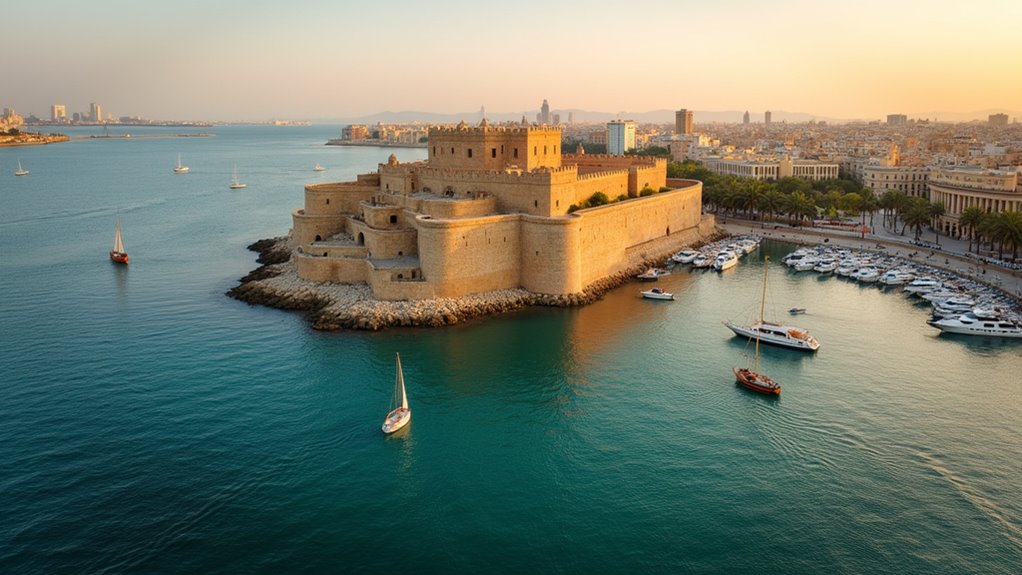
You’ll discover that Alexandria isn’t just another Mediterranean port city—it’s where ancient mysteries meet modern marvels in ways that’ll surprise you. From descending into Roman catacombs adorned with fascinating fusion art to hunting for pieces of the legendary lighthouse among fortress stones, this Egyptian gem offers experiences you won’t find anywhere else. Whether you’re drawn to underground adventures or prefer seaside strolls past royal palaces, Alexandria’s got something extraordinary waiting around every corner.
- Descend Into the Catacombs of Kom El Shoqafa for Ancient Underground Art
- Watch the Acoustics Work at the Roman Amphitheatre
- Stand Beneath Pompey’s Pillar and Explore the Serapeum Ruins
- Hunt for Lighthouse Stones at Fort Qaitbey
- Spend an Afternoon Reading at the Bibliotheca Alexandrina
- Browse Alexandria’s Multicultural Past at the National Museum
- Walk the Corniche From Eastern Harbor to Montaza Palace
- Eat Fresh Seafood at Abu Qir Bay
- Explore the Underwater Museum Sites by Glass-Bottom Boat
- Shop for Antiques and Books in the Attarine District
- The Sum Up
Descend Into the Catacombs of Kom El Shoqafa for Ancient Underground Art
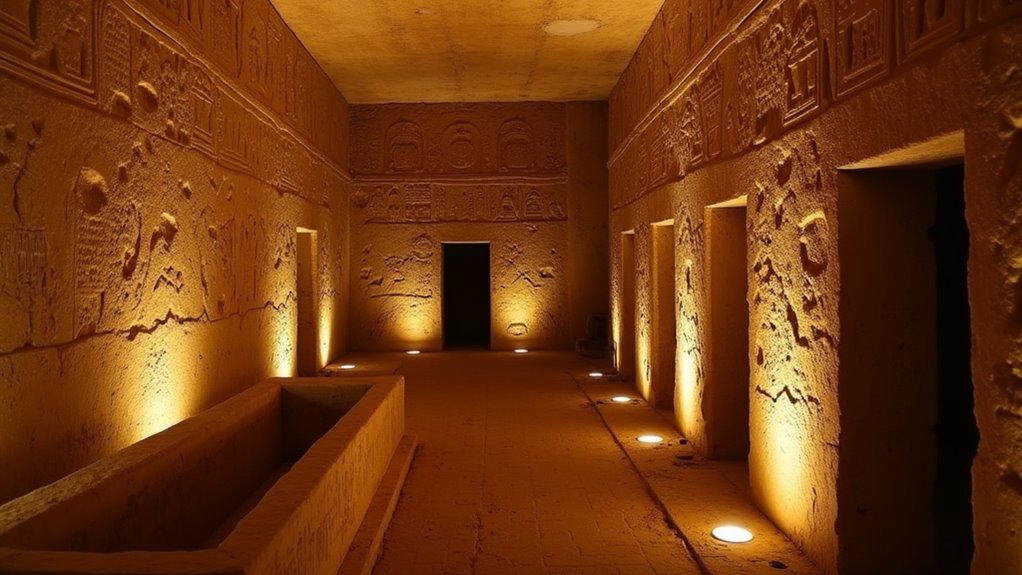
When you descend into Alexandria’s Catacombs of Kom El Shoqafa, you’ll witness one of antiquity’s most remarkable examples of cultural fusion carved directly into limestone bedrock. You’ll explore three levels of interconnected chambers where Egyptian deities wear Roman attire alongside Greek architectural elements.
This 2nd-century burial complex originally served wealthy Alexandrian families and eventually accommodated 300 corpses across diverse social classes.
You’ll marvel at the intricate relief carvings, statues, and inscriptions that showcase the city’s cosmopolitan nature. The rotunda’s central well creates dramatic atmosphere, while the triclinium and burial niches reveal ancient funeral practices. The site remained hidden until 1900 when a donkey accidentally fell through an opening, leading to this extraordinary archaeological discovery.
This underground archaeological treasure earned recognition as one of the Seven Wonders of the Middle Ages, making your visit an unforgettable journey through multicultural Alexandria.
Watch the Acoustics Work at the Roman Amphitheatre
After exploring Alexandria’s underground marvels, you’ll discover another architectural gem that showcases the city’s Roman heritage above ground. The Roman Amphitheatre at Kom El Dikka isn’t your typical gladiator arena—it’s actually a small odeum built in the 4th century for musical performances and poetry recitals.
You’ll be amazed by the acoustics when you visit this intimate venue. Stand in the horseshoe-shaped cavea and listen as your voice carries clearly across the 33-meter diameter space. The original domed compartments were engineered to amplify sound, and you can still experience this acoustic marvel today.
With thirteen marble-seated rows that once held 600-800 spectators, you’ll spot Roman numerals marking the seating arrangements and ancient graffiti referencing chariot-racing factions. This remarkable structure represents the only remaining example of a Roman amphitheatre in Egypt, making it a truly unique archaeological treasure.
Stand Beneath Pompey’s Pillar and Explore the Serapeum Ruins
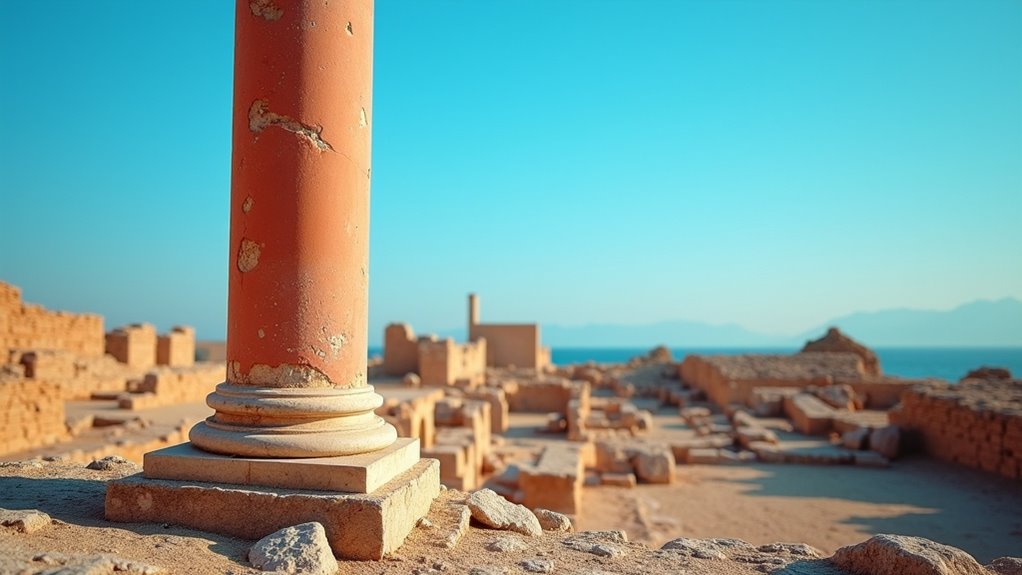
Rising 88 feet into Alexandria’s sky, Pompey’s Pillar commands attention as the largest monolithic column you’ll find outside Rome and Constantinople. This 285-ton red granite giant isn’t actually Pompey’s monument—it honors Emperor Diocletian’s victory over Alexandria in 297 AD.
You’ll discover it was built from gratitude after Diocletian provided grain during famine and reduced the city’s taxes.
Explore the surrounding Serapeum ruins, once a magnificent temple complex dedicated to Serapis, Alexandria’s protector deity. You’ll walk among remnants where 400 columns once stood in a grand portico. The temple was destroyed in 391 AD when Christian leader Theophilus brought an end to pagan worship at this sacred site.
Don’t miss the two sphinx statues near the pillar’s base and the rock-cut galleries behind the temple. The black basalt Serapis statue discovered here now rests in Alexandria’s Graeco-Roman Museum.
Hunt for Lighthouse Stones at Fort Qaitbey
From Alexandria’s towering monuments, you’ll find yourself drawn to its coastal defenses where history takes a fascinating turn. Fort Qaitbey offers you an extraordinary treasure hunt – discovering actual stones from the legendary Lighthouse of Alexandria embedded within its walls.
Built between 1477-1479, Sultan Al-Ashraf Qaitbay’s fortress literally rises from the lighthouse’s ruins, incorporating limestone blocks from this ancient wonder as foundational materials.
You’ll walk through a structure that transforms Alexandria’s maritime legacy from guiding beacon to defensive guardian. Each stone you spot connects you to both classical antiquity and medieval Islamic architecture.
The fortress withstood Ottoman sieges, French bombardments, and British attacks, making your exploration a journey through layers of conquest and resistance. The construction required hundred thousand gold dinars, reflecting the immense value placed on this strategic defensive position.
This hunt reveals how Alexandria continuously reinvents itself while preserving its magnificent past.
Spend an Afternoon Reading at the Bibliotheca Alexandrina
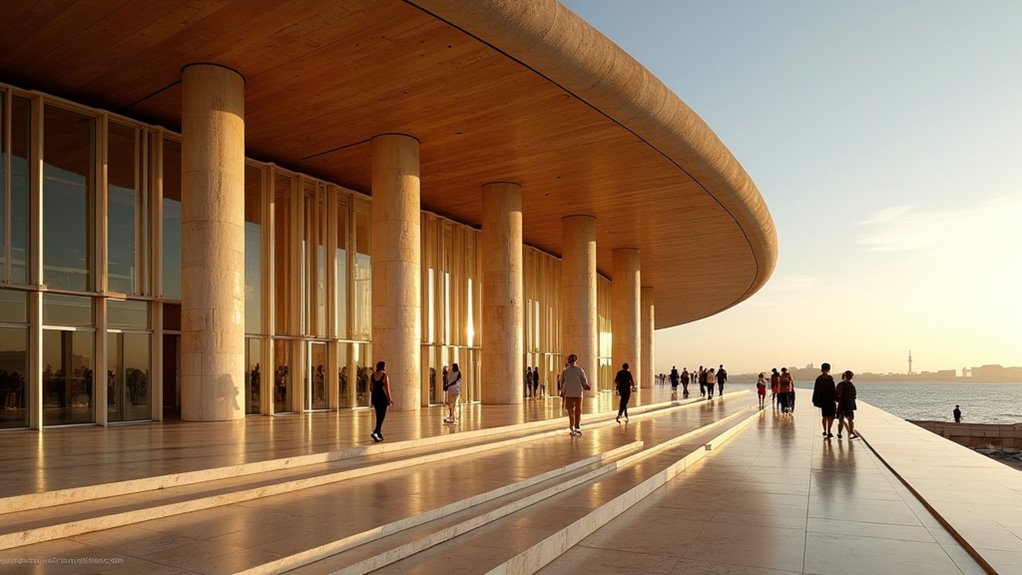
Seven cascading levels of knowledge await you at the Bibliotheca Alexandrina, where Alexandria’s ancient scholarly legacy lives on in stunning modern form. You’ll be amazed by this tilted cylindrical masterpiece that rises like a sun from the Mediterranean coast, its granite walls engraved with 4,000 characters representing 10,000 years of written history.
Inside, you can explore up to eight million volumes across seven floors, with the oldest treasures housed on the lowest level. Don’t miss the massive Francophone collection of 500,000 books donated by France’s national library.
Whether you’re researching, reading quietly, or attending cultural events, you’ll experience the same intellectual energy that once drew scholars like Euclid and Archimedes to ancient Alexandria’s legendary library. The library welcomes approximately one million visitors annually, making it one of Egypt’s most popular cultural destinations.
Browse Alexandria’s Multicultural Past at the National Museum
Where else can you journey through 2,000 years of Alexandria’s remarkable cultural tapestry under one elegant roof? The Alexandria National Museum transforms a stunning 1926 Italianate mansion into Egypt’s first narrative museum dedicated entirely to the city’s multicultural heritage.
You’ll explore three floors arranged like archaeological strata—descending from modern times to ancient Egypt. Start in the basement with Pharaonic treasures, including recreated burial chambers and royal statues.
The first floor showcases spectacular Greco-Roman artifacts, plus sunken treasures recovered from the submerged cities of Canopus and Heracleion. Don’t miss the black granite Isis statue and Alexander the Great’s marble head.
With 1,800 artifacts spanning millennia, you’ll witness how Pharaonic, Greek, Roman, Coptic, and Islamic cultures blended to create Alexandria’s unique identity. The museum also houses precious holdings from the Muhammad Ali family, including jewelry, silver, and gold once used by Egyptian royalty.
Walk the Corniche From Eastern Harbor to Montaza Palace
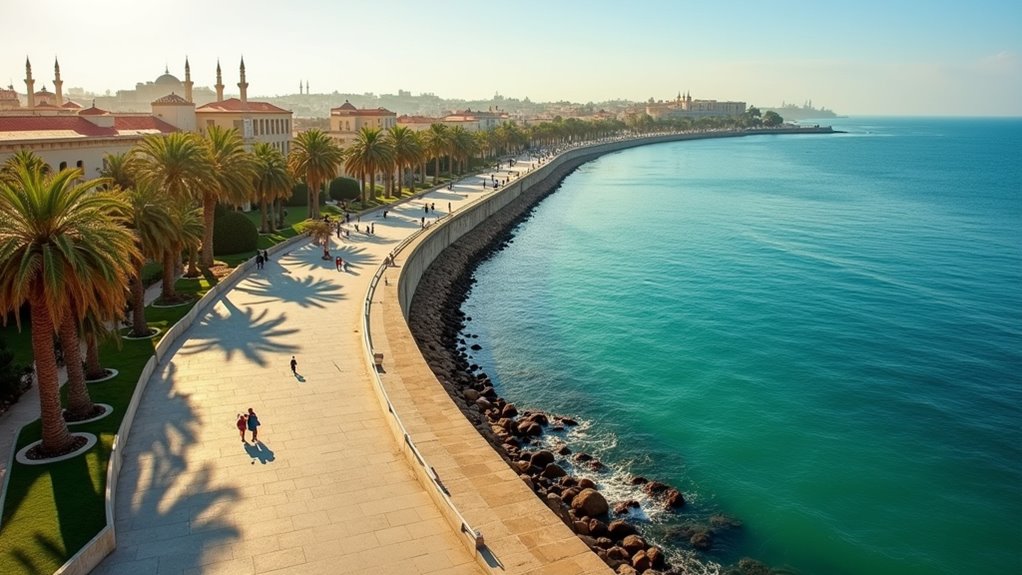
After enjoying Alexandria’s layered history, you’ll want to experience how this cultural heritage unfolds along the city’s most spectacular waterfront.
The Alexandria Corniche stretches 26 kilometers from Eastern Harbor to Montaza Palace, offering an epic Mediterranean walk that connects the city’s greatest treasures. This remarkable waterfront road took nine years to complete, with construction spanning from 1925 to 1934 across six phases.
You’ll pass the legendary Citadel of Qaitbay, built where the ancient Lighthouse once stood, then cross the striking Stanley Bridge with its panoramic sea views.
Traditional fishing harbors reveal local maritime life, while cafes and restaurants provide perfect rest stops with coastal cuisine.
Your journey culminates at Montaza Palace, where Ottoman and Florentine architecture meets 150 acres of lush gardens and sandy beaches.
Break this ambitious walk into segments—it’s designed for extended exploration, not rushed sightseeing.
Eat Fresh Seafood at Abu Qir Bay
Nothing beats the satisfaction of selecting your own fresh catch from ice-filled displays at Abu Qir Bay, where Mediterranean waves practically deliver dinner to your table. You’ll find everything from grilled local fish to calamari and shrimp platters at waterfront restaurants offering stunning sea views.
Whether you choose upscale spots like Zephyrion Fish with its Greek-inspired touches and 4.5+ rating, or venture down side streets for authentic budget-friendly eateries, the experience remains memorable.
The atmosphere’s particularly lively during evenings and weekends, with open-air seating maximizing coastal breezes. Most restaurants emphasize simple Mediterranean preparations that let fresh flavors shine. While enjoying your meal, you can watch local fishermen working the same waters where the ancient sunken city of Thonis-Heracleion once thrived as a major trading port.
You’ll discover generous seafood platters perfect for sharing, and even vegetarian options through Egyptian appetizers. Reserve ahead during peak times to secure the best seaside tables.
Explore the Underwater Museum Sites by Glass-Bottom Boat
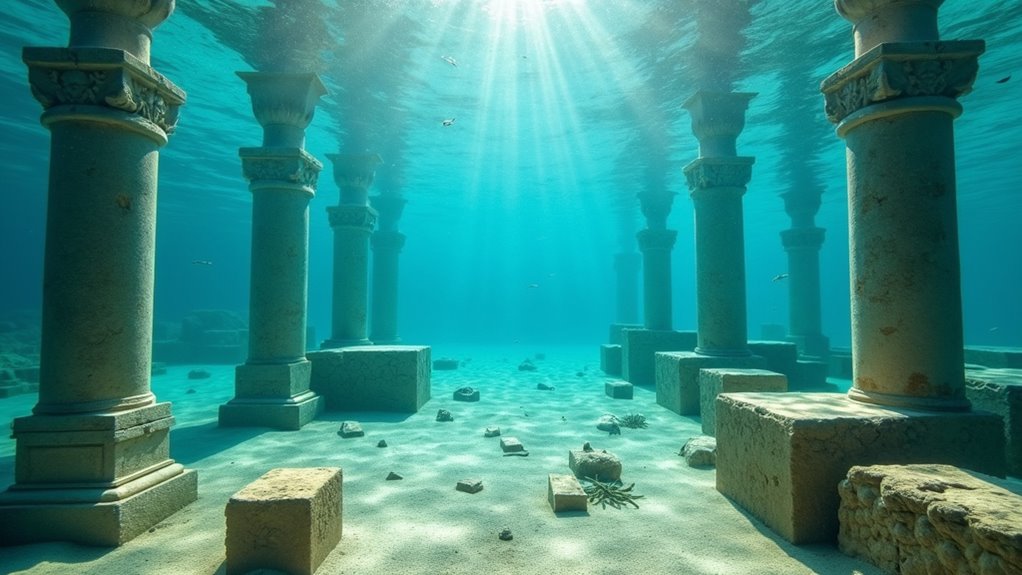
While Egypt’s underwater museum remains in development, you can already glimpse Alexandria’s submerged treasures through glass-bottom boat tours that reveal 2,500+ ancient relics resting 20 feet below the Eastern Harbor’s surface.
You’ll spot massive stone blocks from the legendary Pharos lighthouse—one of the Seven Wonders that collapsed into these waters during the 13th century. The clear waters showcase what’s believed to be Cleopatra VII’s palace ruins, along with busts of Caesarion and Ptolemy XII positioned on the seafloor. The proposed underwater museum will feature fiberglass tunnels designed by French architect Jacques Rougerie to safely transport visitors to view these ancient artifacts in their original underwater setting.
These artifacts have remained untouched for over 1,400 years, offering you an authentic glimpse into Ptolemaic Egypt. Book tours departing from Alexandria’s marina—they’re your best current option for accessing these remarkable underwater archaeological sites.
Shop for Antiques and Books in the Attarine District
Three centuries of commerce have transformed Alexandria’s Attarine District into a treasure hunter’s paradise where antique dealers and booksellers line the narrow alleys near Nabi Daniel Street. You’ll discover vintage European furniture, ornate mirrors, and brass treasures waiting to be restored.
The area’s name comes from “perfumers,” reflecting its spice-selling origins, but today you’ll hunt through second-hand shops for one-of-a-kind pieces. Many pieces gained prominence after the 1952 revolution, when departing foreigners sold their belongings at remarkably low prices before leaving Alexandria.
Don’t miss the legendary bookshops, including Al Ahram at the Nabi Daniel-Horreya intersection. You’ll find rare texts in Arabic, English, and French, plus old maps and postcards.
Visit weekday mornings for the best selection and bring cash for bargaining. Whether you’re an interior designer or curious traveler, Attarine’s maze of shops offers authentic Alexandria character you won’t find elsewhere.
The Sum Up
You’ll discover that Alexandria’s magic lies in its perfect fusion of ancient mysteries and modern pleasures. Whether you’re exploring underground chambers, hunting for lighthouse stones, or savoring fresh seafood by the Mediterranean, this city delivers unforgettable experiences at every turn. Don’t rush through—Alexandria rewards those who take time to absorb its layers of history. Pack comfortable shoes, bring your curiosity, and prepare to fall under this coastal gem’s timeless spell.