
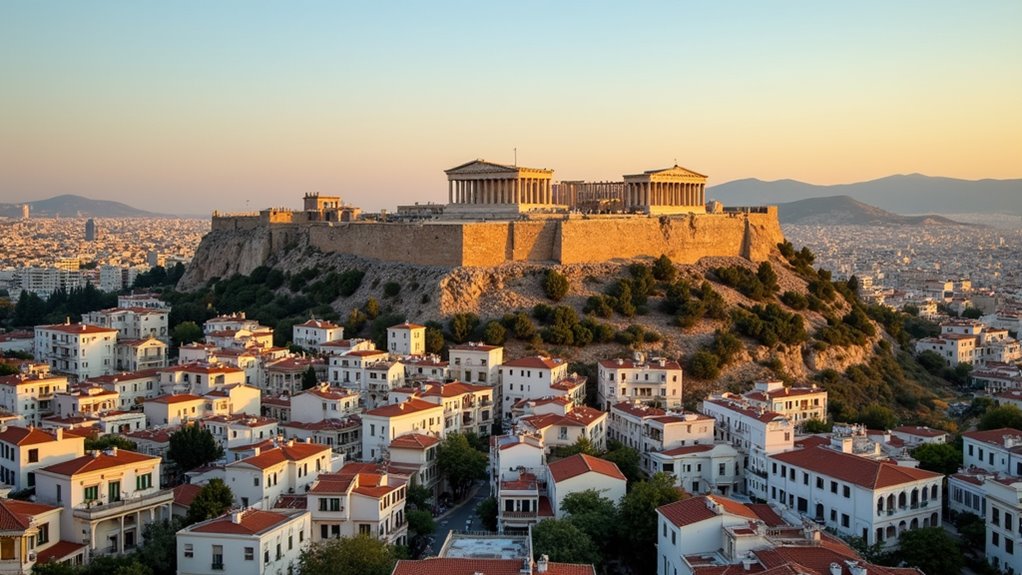
You’ll find Athens packed with ancient wonders and modern charm, but traversing this historic city isn’t always straightforward. Most travelers rush to the obvious spots and miss the real gems that locals cherish. Whether you’re working with a tight budget or simply want to experience Athens like someone who actually lives there, there’s a smarter way to explore this captivating capital that’ll save you money and crowds.
- Climb the Acropolis Early to Beat the Crowds
- Explore the Acropolis Museum’s Perfectly Aligned Galleries
- Walk Through the Ancient Agora Where Democracy Was Born
- Hunt for Treasures at Monastiraki Flea Market
- Get Lost in Plaka’s Maze of Neoclassical Streets
- Discover Anafiotika’s Hidden Island Village
- Watch Sunset From Lycabettus Hill
- Visit the Temple of Olympian Zeus and Its Towering Columns
- Step Back in Time at the Roman Agora’s Tower of the Winds
- Hike Philopappos Hill for Acropolis Views Without the Crowds
- Browse World-Class Antiquities at the National Archaeological Museum
- Experience Greek Culture at the Benaki Museum
- Explore Hadrian’s Library Ruins in the City Center
- The Sum Up
Climb the Acropolis Early to Beat the Crowds
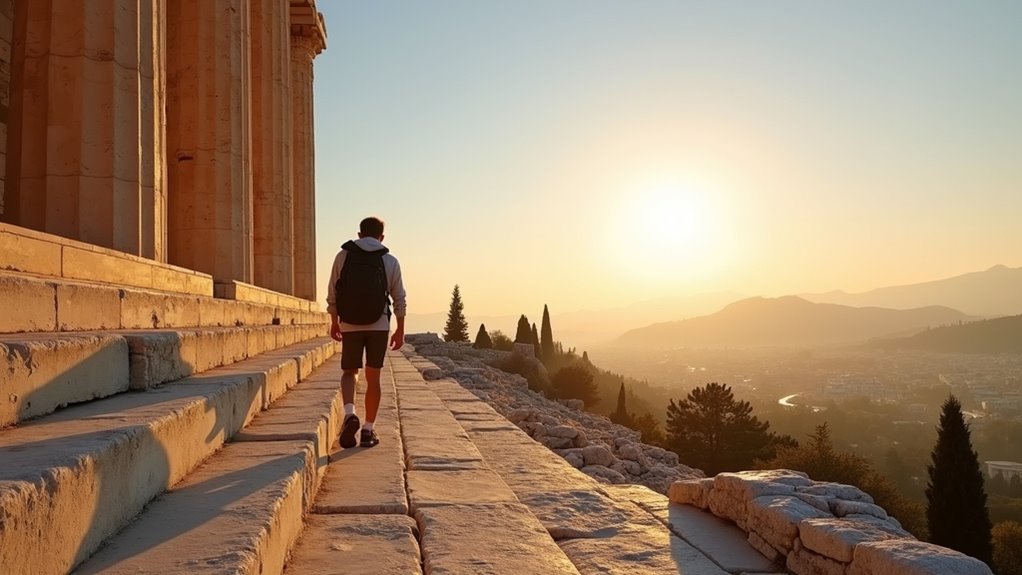
Why struggle through sweltering crowds when you can have the Parthenon almost to yourself? Arrive 30-45 minutes before the 8:00 a.m. opening to experience the Acropolis in peaceful morning light. You’ll skip the brutal queues that form after 10:00 a.m. when cruise ships and tour groups descend.
Visit during shoulder seasons (April-May or September-October) for the best combination of mild weather and fewer travelers—50% fewer than peak summer. Skip June through August unless you enjoy 38°C heat and massive crowds.
Buy tickets online beforehand to bypass ticket office lines. Wear non-slip shoes for uneven stone paths, bring water, and use restrooms before entering since facilities inside are limited. Note that strollers are prohibited inside the Acropolis, so bring a carrier if traveling with young children.
You’ll have prime photography opportunities and can explore thoroughly before the midday chaos begins.
Explore the Acropolis Museum’s Perfectly Aligned Galleries
After climbing down from the Acropolis, you’ll discover that the museum’s Parthenon Gallery isn’t just another exhibition space—it’s an architectural marvel that recreates the temple’s original layout right before your eyes.
The massive rectangular hall matches the Parthenon’s exact dimensions and sits rotated 23 degrees to align perfectly with the temple above.
You’ll walk around the central core viewing the 160-meter Panathenaic procession frieze at eye level—much easier than craning your neck at the actual temple.
Glass walls flood the space with natural light while offering direct views of the Parthenon itself.
The metopes hang between steel columns that mirror the temple’s original spacing, creating an immersive experience that connects ancient artifacts with their architectural home. At the east and west ends, the colossal pediment figures rest on low pedestals, making these massive sculptures accessible for close-up viewing.
Walk Through the Ancient Agora Where Democracy Was Born
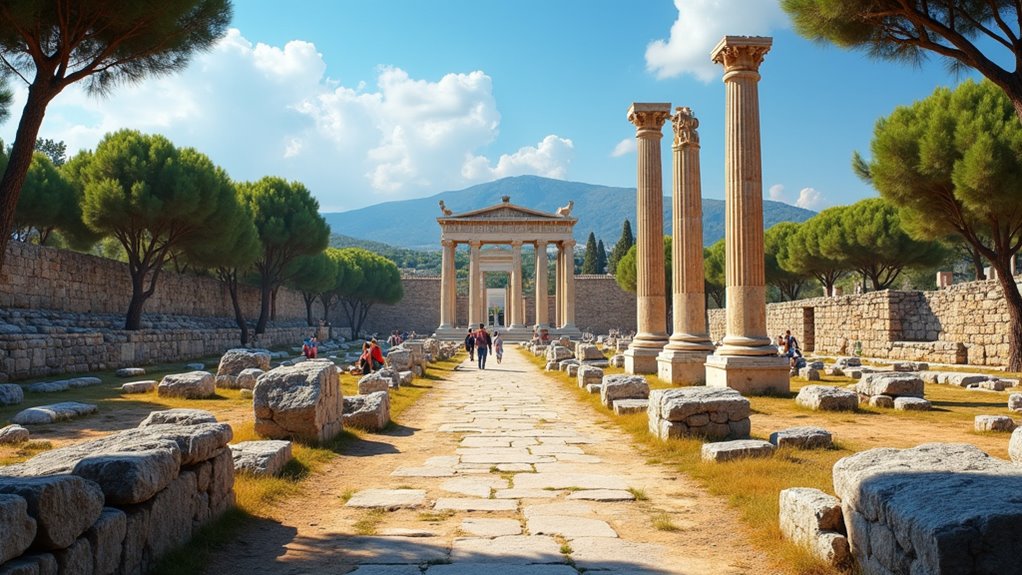
Just a ten-minute walk northwest from the Acropolis, you’ll enter the sprawling archaeological park where Athenian citizens once gathered to debate laws, elect officials, and fundamentally invent democracy as we comprehend it. The Ancient Agora served as Athens’ political, commercial, and social heartbeat for centuries.
You’ll walk the same paths where Socrates taught and citizens assembled. Don’t miss the remarkably preserved Temple of Hephaestus—it’s one of Greece’s best-surviving Doric temples. The reconstructed Stoa of Attalos houses the site’s museum with fascinating artifacts.
Follow the ancient Panathenaic Way, the sacred road that connected this democratic birthplace to the Acropolis. Among the museum’s most intriguing displays are ostraca fragments bearing names like Themistocles—pottery shards used by citizens to vote troublesome politicians into ten-year exile. It’s incredible standing where Western political thought began, imagining the heated debates that shaped civilization.
Hunt for Treasures at Monastiraki Flea Market
Five minutes from the Ancient Agora, you’ll discover one of Athens’ most vibrant shopping experiences at Monastiraki Flea Market.
Sunday’s the prime time to visit when the full market comes alive from 9:00 AM to 4:00 PM, though weekdays offer a quieter browsing experience until 7:00 PM.
You’ll find handmade leather sandals, intricate ceramics, vintage treasures, and local spices scattered throughout the stalls.
Head to Avissinias Square for the best antiques, while Pandrossou Street offers jewelry and souvenirs.
The Monastiraki Metro station sits right outside the entrance—no tickets needed to explore. Be prepared for cobblestone streets that can be challenging to navigate, so wear comfortable walking shoes.
Bring cash and don’t hesitate to haggle, especially for unique items.
Early morning visits help you avoid crowds and score the best finds.
Get Lost in Plaka’s Maze of Neoclassical Streets
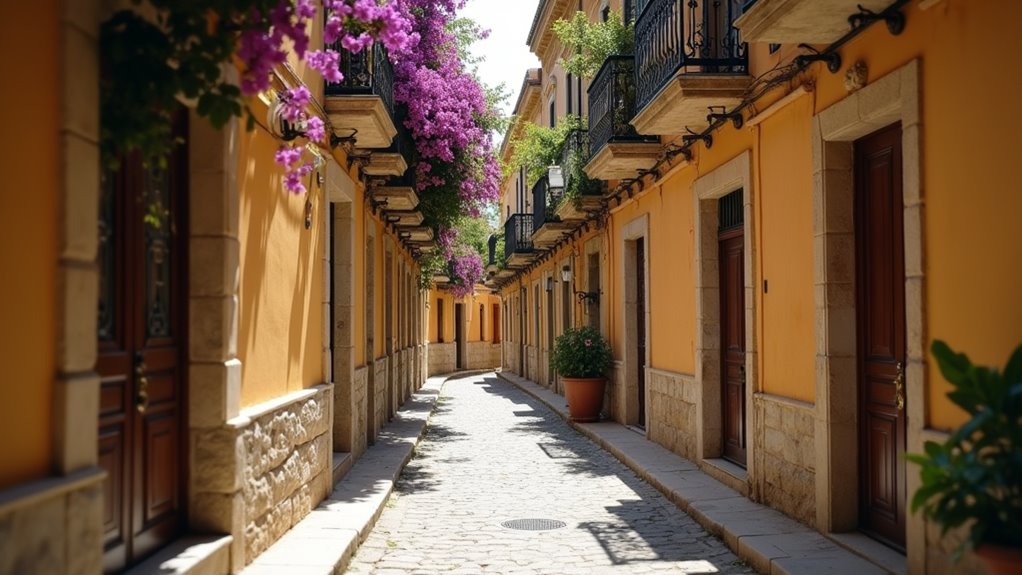
While the Monastiraki Flea Market buzzes with vendors and travelers, Plaka’s winding neoclassical streets offer a quieter escape just steps away from the Acropolis. You’ll discover a maze-like network of narrow, numbered streets that’ll transport you back to 19th-century Athens. Don’t worry about getting lost – that’s half the fun.
Wander past beautifully restored neoclassical buildings with Corinthian columns and temple-front facades. Stop by the Athens University History Museum in the historic Cleanthis-Schaubert house, where Greece’s first university operated in 1837. Grab coffee at Orea Ellas café, serving locals since 1839.
The neighborhood’s village-like atmosphere contrasts sharply with central Athens’ hustle. You’re walking through layers of history – ancient residential areas, Ottoman remnants, and neoclassical gems all coexist in this charming labyrinth. Extend your exploration to nearby Thisseio and Monastiraki, where additional neoclassical architecture awaits discovery.
Discover Anafiotika’s Hidden Island Village
Climb higher up the Acropolis slope from Plaka’s neoclassical charm, and you’ll stumble upon one of Athens’ best-kept secrets – Anafiotika, a tiny island village frozen in time within the bustling capital.
Built by craftsmen from Anafi island in the 1840s, this maze of whitewashed cubic houses and cobblestone alleys feels like you’ve been teleported to the Cyclades.
You’ll find just 45 original houses tucked into the northeastern slope, their blue shutters and bougainvillea creating Instagram-worthy shots without the crowds.
There’s no street names here – just narrow passages barely wide enough for two people.
Don’t miss the two small churches, Agios Georgios of the Rock and Agios Simeon, both rebuilt by the original Anafiote settlers after being found half destroyed.
Access it via Plaka Steps, turning right at the first landing.
It’s completely free to explore and offers peaceful respite from Athens’ chaos.
Watch Sunset From Lycabettus Hill
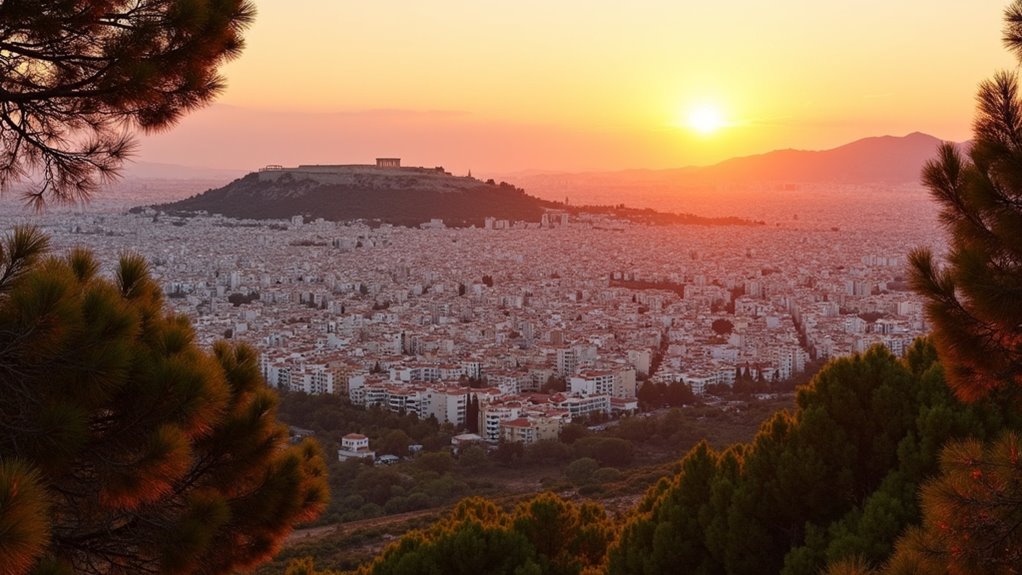
As golden hour approaches, you’ll want to make your way to Lycabettus Hill – Athens’ highest peak at 277 meters that delivers the city’s most spectacular sunset views. You can reach the summit by walking the switchback trail (15-20 minutes, free) or taking the funicular from Plutarch Street (€7 one way, €10 return).
From the top, you’ll see panoramic 360-degree views including the Acropolis, Saronic Gulf, and Piraeus port. The vantage point sits nearly double the Acropolis’s height, offering unmatched perspectives of Athens’s white buildings against green hills and sea.
The summit features St. George’s Chapel, a café, and restaurant Orizontes Lycabettus. While the restaurant’s pricey, you can enjoy the sunset from free viewing areas. Arrive early – it gets crowded during good weather. Be sure to keep your funicular ticket until the end of your visit for validation and access back down the mountain.
Visit the Temple of Olympian Zeus and Its Towering Columns
Just a short walk southeast from the Acropolis, you’ll discover the Temple of Olympian Zeus – one of ancient Greece’s most ambitious architectural projects that took over 600 years to complete.
Though only 16 of the original 104 towering Corinthian columns remain standing, they’re absolutely massive at 56 feet tall, giving you a sense of this temple’s incredible scale.
You can visit the archaeological site with a single ticket that also includes Hadrian’s Arch nearby.
The temple was dedicated to Zeus and finally finished under Roman Emperor Hadrian in 132 AD. Due to its historical significance, there are actually multiple temples with this same name throughout Greece, making Athens’ version particularly noteworthy as the most famous.
Walking among these ancient ruins, you’ll appreciate why this was intended to be the grandest temple in the ancient world – even in its incomplete state today.
Step Back in Time at the Roman Agora’s Tower of the Winds
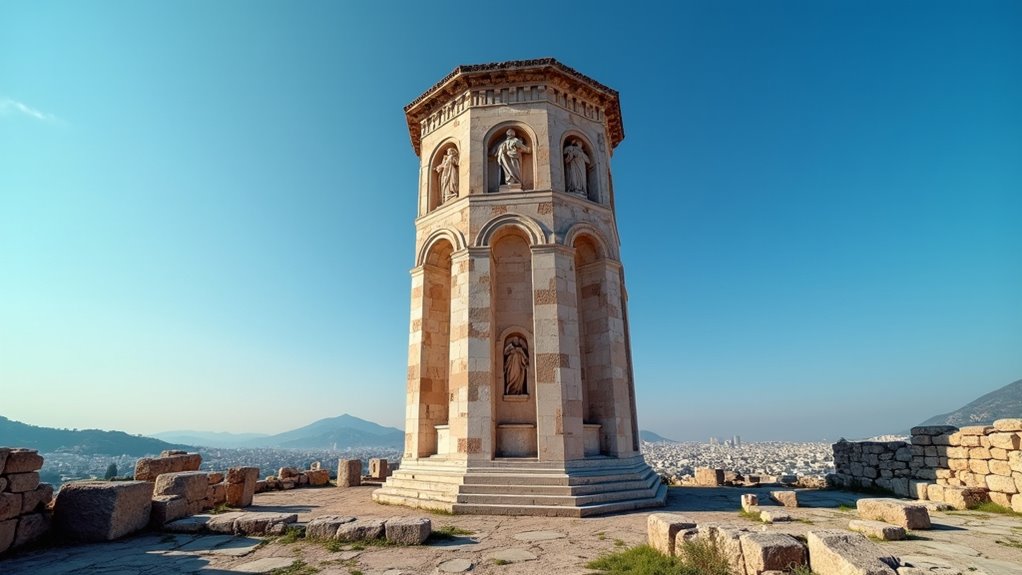
While exploring the northern side of the Acropolis, you’ll encounter one of Athens’ most fascinating ancient structures – the Tower of the Winds at the Roman Agora. This octagonal marble tower, built around 50 BC by astronomer Andronikos of Kyrrhos, served as an ancient weather station and timepiece.
You’ll notice eight wind gods carved into each side, representing different wind directions.
What makes this site budget-friendly is its inclusion with the Roman Agora entrance ticket. Inside, you can imagine the sophisticated water clock that once operated here, while exterior sundials still mark the tower’s walls.
The 42-foot structure combines practical Roman engineering with Greek artistry. The Roman Agora itself was established in the late 1st century BC with funding from Julius Caesar and Emperor Augustus. Don’t miss the reliefs depicting the Anemoi wind gods – each telling a story about ancient Greek understanding of weather patterns.
Hike Philopappos Hill for Acropolis Views Without the Crowds
When you’re craving stunning Acropolis views without battling tourist crowds, Philopappos Hill offers the perfect escape just a 10-minute walk from the Acropolis Museum. This free public park stays open 24/7, making it perfect for budget travelers seeking breathtaking panoramas of the Parthenon, southern Athens, and the Aegean Sea.
The 15-20 minute hike suits most fitness levels, with well-maintained paths leading through pine and olive trees to ancient ruins. You’ll pass the Church of Dimitris Loumbardiaris and Kimon’s Tomb before reaching the 2nd-century Monument of Philopappos at the summit. Look for the mysterious Prison of Socrates, a cave-like rock formation traditionally linked to the philosopher’s final days, though its true purpose remains unknown.
Start from Apostolou Pavlou street and wear sturdy shoes—some marble and limestone sections can be slippery. Early morning and sunset visits offer the most spectacular lighting for photos.
Browse World-Class Antiquities at the National Archaeological Museum
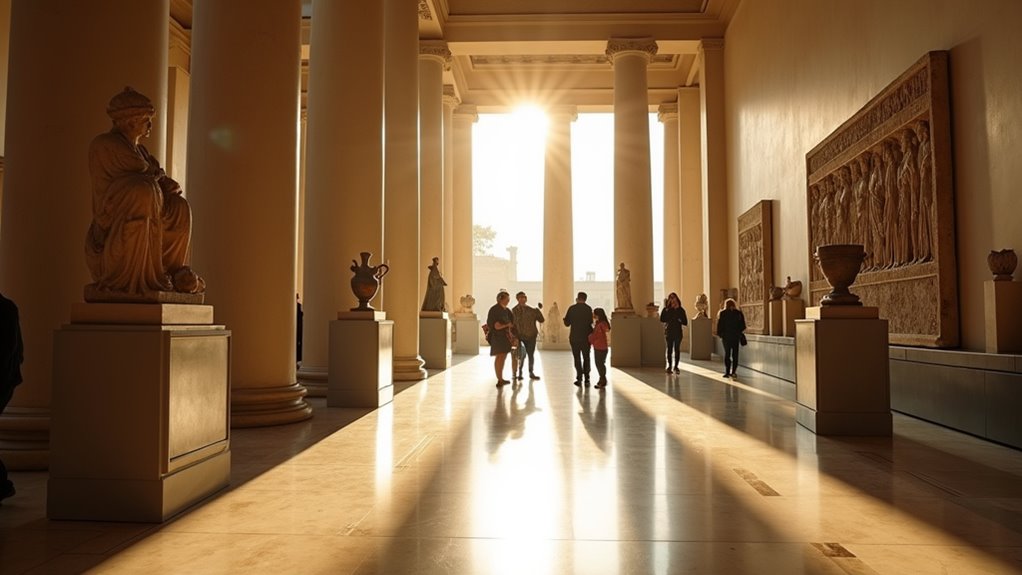
Housing Greece’s most impressive collection of ancient artifacts, the National Archaeological Museum puts 5,000 years of history at your fingertips without breaking the bank. You’ll explore treasures spanning from 7000 BC to 500 AD, including the famous Mask of Agamemnon and stunning Mycenaean gold jewelry.
The museum’s chronological layout makes it easy to follow Greece’s artistic evolution through prehistoric Cycladic figurines, classical sculptures, and ancient ceramics. The bronze collection features remarkable discoveries from the Antikythera shipwreck, including the famous ancient computer known as the Antikythera Mechanism.
Don’t miss the sculpture collection’s 1,000 displayed pieces or the fascinating Egyptian antiquities section.
Located in central Athens, it’s easily accessible and offers incredible value compared to other world-class museums.
Plan at least three hours to properly appreciate the highlights across dozens of halls showcasing Greece’s archaeological wealth.
Experience Greek Culture at the Benaki Museum
Where else can you journey through 7,000 years of Greek culture under one elegant neoclassical roof? The Benaki Museum offers exactly that experience, housing over 100,000 artifacts spanning prehistoric times to modern Greece.
You’ll discover Byzantine icons, ancient ceramics, ecclesiastical metalwork, and historic family heirlooms that tell Greece’s complete story.
Don’t miss the Ghika Gallery’s modern Greek paintings or the unique Islamic Art collection—Greece’s only dedicated Islamic museum.
The restored mansion opposite the National Garden creates an intimate setting that larger museums can’t match. Following earthquake damage, the museum underwent a major $20 million renovation before reopening in 2000.
Budget tip: Check for free admission days and temporary exhibitions.
After exploring, grab affordable traditional Greek cuisine at the on-site restaurant with garden views, making this cultural deep-dive surprisingly wallet-friendly.
Explore Hadrian’s Library Ruins in the City Center
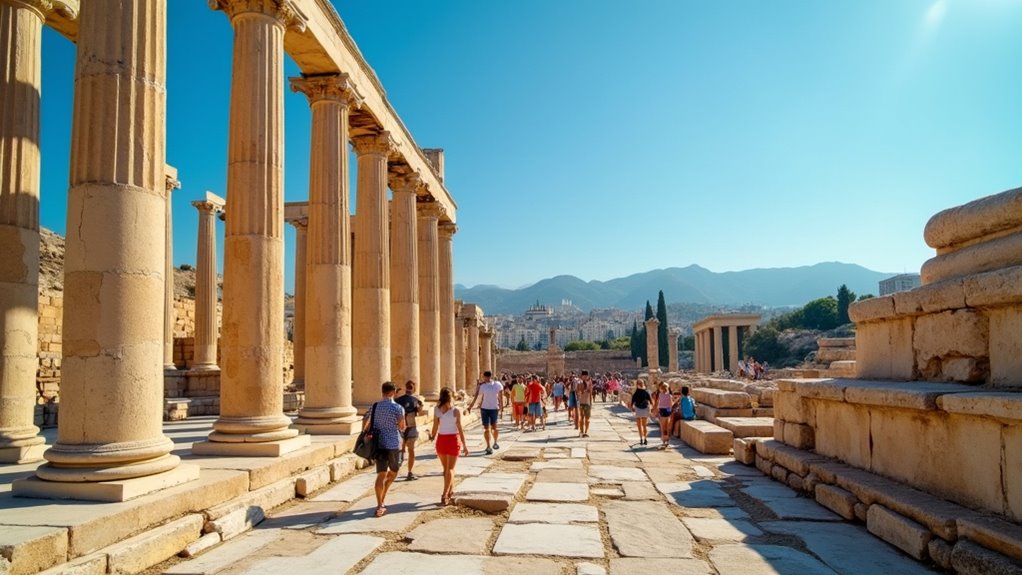
Why settle for reading about ancient Roman grandeur when you can walk through Emperor Hadrian’s actual 2nd-century cultural complex? You’ll discover Hadrian’s Library right in Athens’ city center, where towering Corinthian columns still mark the original entrance to what once housed 16,800 scrolls.
You can explore the rectangular courtyard, examine surviving walls, and spot Byzantine church foundations that replaced the central cistern over centuries. The site reveals layers of history—from Roman construction in AD 132 through successive Byzantine churches, including Athens’ first cathedral. The library suffered major destruction during the Herulian invasion of 267 AD but was later repaired and incorporated into the city’s defensive walls.
Your combined Ancient Athens ticket covers admission, making it budget-friendly alongside the Acropolis. Don’t miss the colossal Nike statue discovered during excavations. It’s a compact site perfect for understanding how Romans and Byzantines shaped Athens.
The Sum Up
You’ve got endless ways to explore Athens without breaking the bank. Most archaeological sites offer combo tickets that’ll save you money, and many neighborhoods like Plaka and Anafiotika are free to wander. Pack water and snacks for hill climbs, visit museums on free admission days, and don’t forget comfortable walking shoes. Athens rewards curious travelers who take their time—you’ll discover something amazing around every corner.