
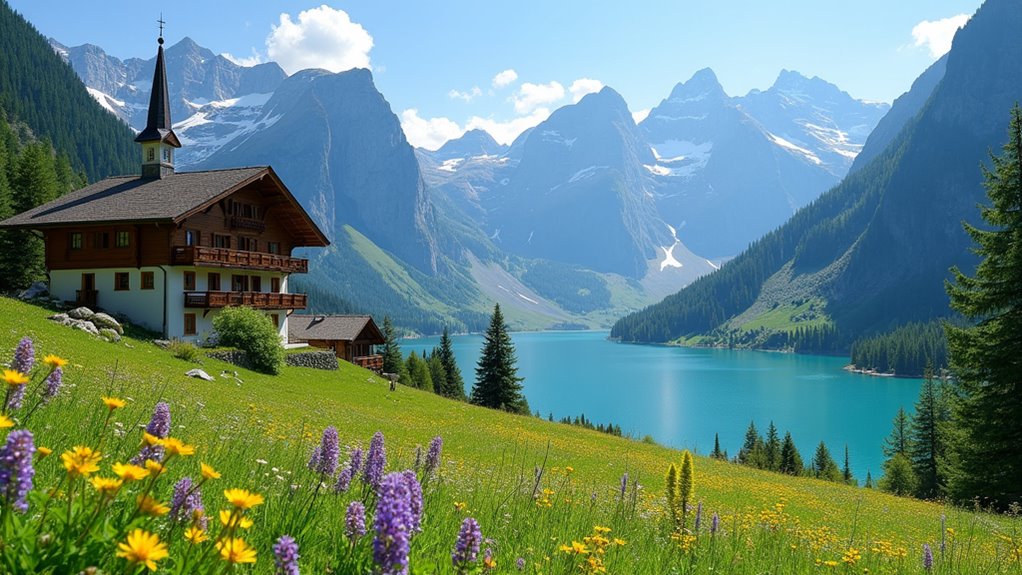
You’ll find Austria packs remarkable diversity into its compact borders, offering everything from imperial palaces to alpine adventures without breaking your budget. Whether you’re drawn to Mozart’s musical heritage in Salzburg, Vienna’s grand architecture, or the country’s stunning mountain landscapes, there’s something here that’ll match your travel style. The best part? You don’t need to choose between culture and nature—Austria delivers both in spades, and we’ve identified the essential experiences that’ll maximize your time and money.
- Explore Vienna’s Schönbrunn Palace and Imperial History
- Wander Mozart’s Salzburg and Climb Hohensalzburg Fortress
- Experience Hallstatt’s Salt Mine Legacy and Lakeside Charm
- Drive the Grossglockner High Alpine Road to Austria’s Highest Peak
- Cruise the Danube Through Wachau Valley’s Vineyards and Castles
- Hike the Karwendel Nature Park’s Via Ferratas and Alpine Trails
- Discover Innsbruck’s Golden Roof and Ski the Tyrol Alps
- Soak in Bad Gastein’s Historic Thermal Springs
- Navigate Graz’s UNESCO Old Town and Modern Kunsthaus
- Walk Among the Clouds on Baumzipfelweg Treetop Trail
- Marvel at Krimml Falls, Europe’s Highest Waterfall
- Swim and Sail Lake Wörthersee Near Klagenfurt
- Explore Linz’s Ars Electronica Center and Danube Culture
- The Sum Up
Explore Vienna’s Schönbrunn Palace and Imperial History
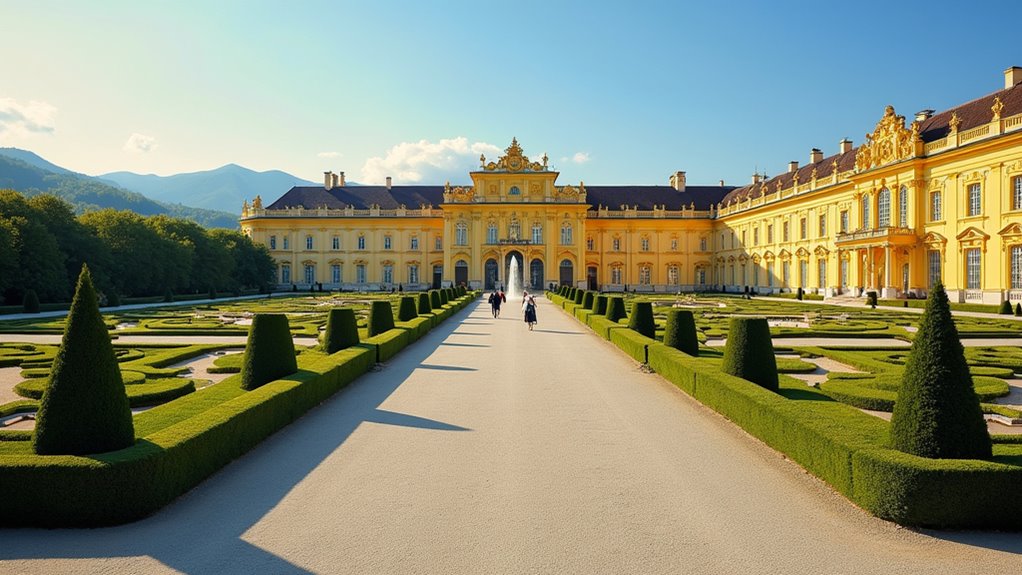
Step into Austria’s most magnificent palace, where over 450 years of Habsburg imperial history comes alive in 1,441 opulent rooms. You’ll explore 45 accessible chambers, including the stunning Millions Room with its rosewood paneling and the Blue Chinese Salon where Emperor Charles I ended the monarchy.
The distinctive yellow Baroque façade houses authentic imperial furnishings from Maria Theresa’s era through Franz Joseph’s reign.
Don’t miss the expansive gardens featuring the Gloriette monument and historic maze – they’re free to wander. You can catch classical concerts in the Orangery for an authentic Habsburg experience. The palace grounds also house the world’s oldest zoo, founded in 1752 and still operating today with diverse wildlife including giant pandas.
Audio guides help you navigate efficiently through state rooms where Napoleon once stayed. This UNESCO World Heritage Site offers multimedia tours that bring centuries of Austrian imperial legacy to life affordably.
Wander Mozart’s Salzburg and Climb Hohensalzburg Fortress
Two magnificent experiences await you in Salzburg – exploring Mozart’s baroque birthplace and conquering one of Europe’s largest medieval fortresses.
You’ll discover Hohensalzburg Fortress perched dramatically on Festungsberg’s rocky peak, offering breathtaking panoramic views across Salzburg’s old town and the Alpine landscape beyond.
Built in 1077 and never conquered, this perfectly preserved medieval complex showcases centuries of architectural evolution.
Take the historic funicular railway up – it’s one of the world’s oldest and saves your legs for exploring the fortress itself.
Inside, you’ll find Gothic princely rooms, St. George’s Chapel, and fascinating museums detailing the fortress’s 900-year history. The fortress features four key viewpoints including bastions overlooking the Old Town and a southern bastion with spectacular Alpine vistas.
The fortress houses over 300 people during sieges and remains Austria’s second most-visited attraction after Schönbrunn Palace, making it essential viewing.
Experience Hallstatt’s Salt Mine Legacy and Lakeside Charm
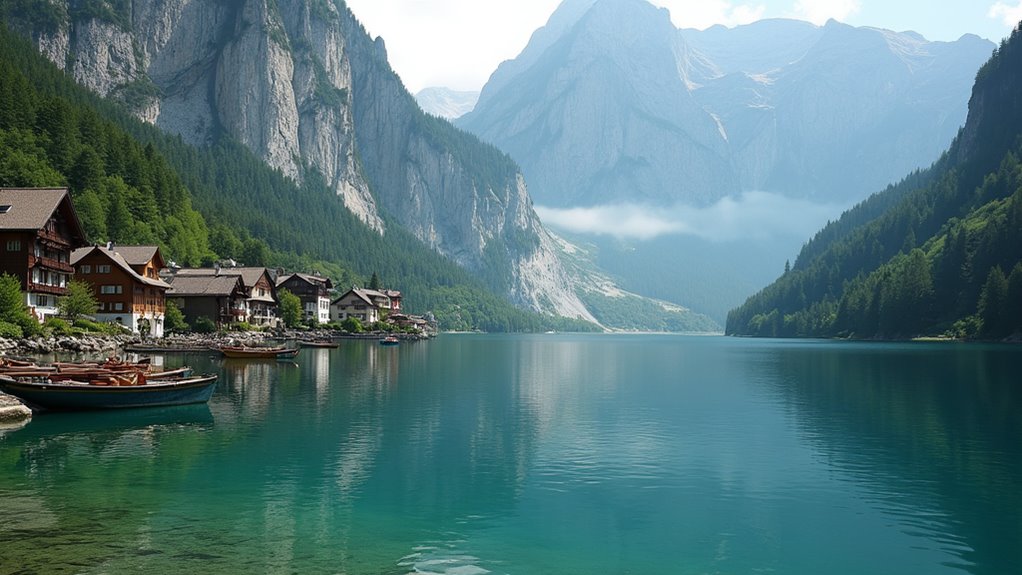
While most travelers snap photos of Hallstatt’s postcard-perfect lakeside houses, you’ll discover the village’s true treasure lies 330 meters underground in the world’s oldest salt mine. You’ll explore 7,000 years of mining history through prehistoric wooden staircases and tunnels where Bronze Age miners once worked with simple tools.
The salt’s preservative effects have perfectly maintained ancient textiles, wood, and leather artifacts that’ll give you goosebumps.
Don’t miss the archaeological site with 980 graves documenting early salt miners’ lives. After your underground adventure, you’ll enjoy free hiking around Lake Hallstatt’s stunning alpine scenery.
The village’s cobbled streets and distinctive architecture provide perfect photo opportunities without spending extra euros. The experience includes a thrilling ride on the 64-meter-long miners’ slide that takes you deep into the mountain’s heart. Budget tip: combine your mine visit with lakeside walks for a full day of affordable exploration.
Drive the Grossglockner High Alpine Road to Austria’s Highest Peak
Austria’s highest surfaced mountain road will take you on a breathtaking 48-kilometer journey through 36 hairpin curves to reach 2,504 meters above sea level.
The Grossglockner High Alpine Road connects Bruck and Heiligenblut while winding through Hohe Tauern National Park’s stunning glaciers and waterfalls.
You’ll pay a 36-euro toll, but it’s worth every cent for access to spectacular viewpoints like Kaiser Franz Josefs Höhe and Edelweißspitze.
From these vantage points, you’ll witness Austria’s highest mountain at 3,798 meters and the Eastern Alps’ largest glacier stretching nine kilometers long.
Plan your visit during the six-month snow-free season when the road’s open.
You’ll join nearly one million annual visitors who consider this drive among Austria’s top three tourist attractions. This remarkable route was built between 1930-1935 using natural stones that harmonize perfectly with the alpine landscape, creating an engineering masterpiece that remains virtually unchanged today.
Cruise the Danube Through Wachau Valley’s Vineyards and Castles
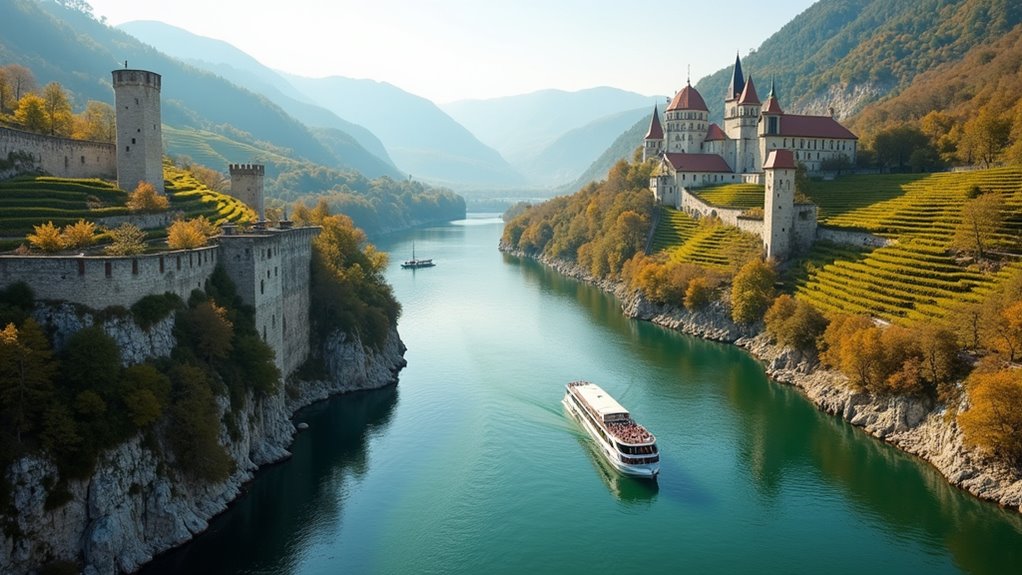
When you cruise down the 36-kilometer UNESCO World Heritage stretch of the Danube between Melk and Krems, you’ll glide past terraced vineyards, baroque monasteries, and medieval castle ruins that define Austria’s stunning Wachau Valley.
DDSG Blue Danube operates five daily boats from May through September, with downstream trips taking 1.75 hours and upstream journeys requiring three hours against the current.
You’ll spot Melk Abbey‘s imposing baroque architecture, Dürnstein’s distinctive blue and white church tower, and Aggstein Castle’s dramatic hilltop ruins.
The valley’s terraced vineyards produce excellent Grüner Veltliner and Riesling wines you can sample in towns like Weissenkirchen.
Visit in late April for apricot blossoms or September for ideal weather and fewer crowds than peak summer. Budget-conscious travelers can find basic tickets starting around €25–€30, with options to upgrade for luxury amenities.
Hike the Karwendel Nature Park’s Via Ferratas and Alpine Trails
As you tackle Austria’s largest nature park, the 70-kilometer Karwendel High Alpine Trail will test your endurance with 9,000 meters of elevation gain across six challenging days. This black-category route runs between Reith and Scharnitz, featuring five mountain huts for overnight stays.
You’ll encounter easy via ferrata sections (Level A/B) on stage five, including access to Großer Bettelwurf peak.
Plan your trip between July and September when weather’s most stable—late summer offers the best conditions and distant views. For beginners seeking alpine experience, the Mittenwalder Höhenweg provides a moderate 12.5-kilometer route with spectacular Karwendel scenery and manageable exposed sections.
Don’t worry about completing everything at once. You can split the route into weekend trips, join or exit at any hut, or use two cable cars to shorten stages one and three.
You’re guaranteed chamois sightings throughout this rewarding alpine adventure.
Discover Innsbruck’s Golden Roof and Ski the Tyrol Alps
While Emperor Maximilian I built the Golden Roof in Innsbruck to flaunt his imperial wealth, you’ll discover it’s now one of Europe’s most accessible royal landmarks—and it won’t cost you a cent to admire from the street. The 2,657 fire-gilded copper tiles create stunning photos against the alpine backdrop.
If you’re curious about Habsburg history, the Golden Roof Museum costs just a few euros and displays original sandstone reliefs from the 16th-century loggia. The museum also features a viewing platform where you can examine the gilded tiles and intricate fresco details up close.
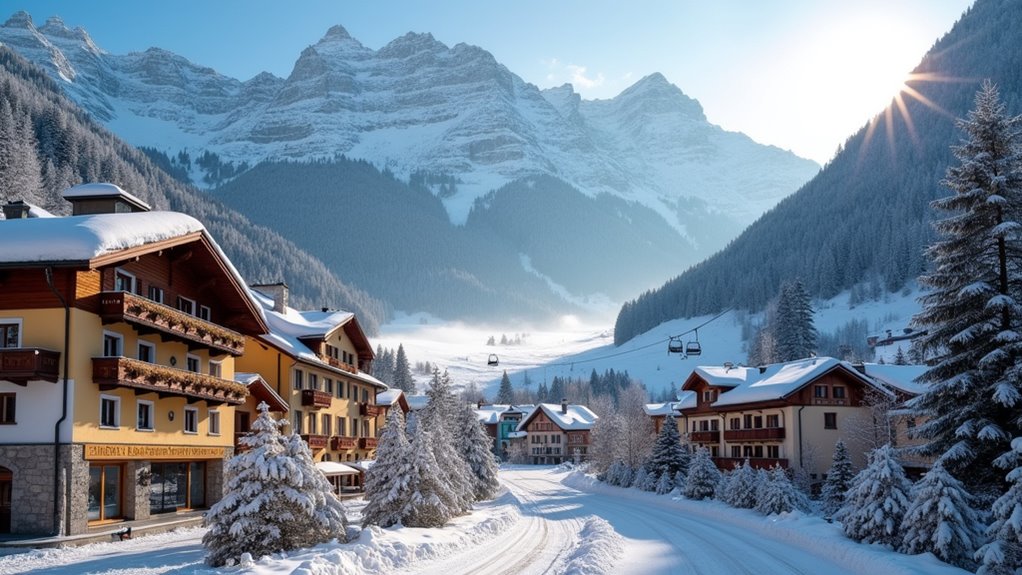
Winter transforms Innsbruck into a budget-friendly ski destination. You can reach four major ski areas—Nordkette, Patscherkofel, Axamer Lizum, and Stubai Glacier—directly from the city using public transport.
Nordkette offers the quickest access with panoramic views, while Stubai Glacier provides nearly year-round skiing conditions.
Soak in Bad Gastein’s Historic Thermal Springs
From Innsbruck’s alpine adventures, you can head southeast to Bad Gastein, where therapeutic thermal springs have been drawing visitors since the 7th century. The town’s 17 thermal springs at Graukogel mountain contain radon-enriched waters that naturally relieve pain and treat musculoskeletal disorders.
Visit Felsentherme Bad Gastein, Austria’s first public thermal bath opened in 1968. You’ll find thermal pools, saunas, and a unique rock grotto with waterfall. The complex features facilities built into rock, where architects excavated parts of the mountain to create the Silent Spa and other areas that blend seamlessly with the natural stone formations.
The mineral-rich waters flow through mountain ore veins, creating healing properties that once attracted European nobility like Emperor Franz Josef.
The spa combines affordable wellness with medical therapy year-round. Bad Gastein earned the nickname “Monte Carlo of the Alps” for good reason – these therapeutic waters offer authentic alpine healing without breaking your budget.
Navigate Graz’s UNESCO Old Town and Modern Kunsthaus
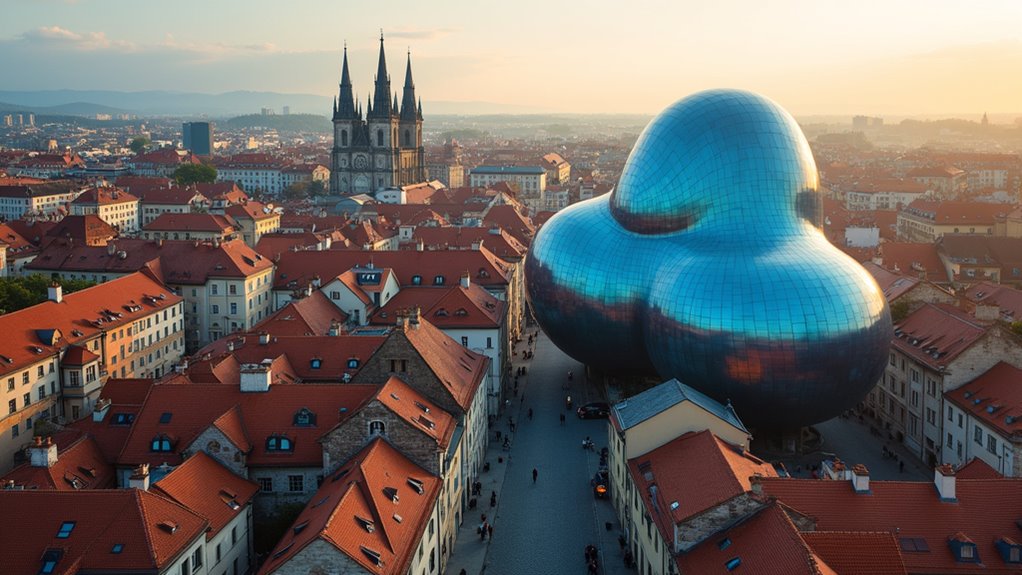
Austria’s second-largest city offers you a rare combination: one of Europe’s best-preserved medieval centers alongside bold contemporary architecture that’ll make you do a double-take.
Start at Hauptplatz, Graz’s main square, then explore the 1,000+ listed buildings showcasing Gothic, Renaissance, and Baroque styles across 100 hectares of UNESCO-protected streets.
Climb Schlossberg’s 260 steps to reach the iconic Clock Tower for panoramic views over terracotta rooftops—or take the funicular if you’re feeling lazy. This former fortress defended Graz through numerous sieges during the Turkish Wars before Napoleon’s forces demolished most of it in 1809.
Don’t miss the world’s largest historic armory at Landeszeughaus with 32,000 weapons.
For modern contrast, visit the blue, bubble-shaped Kunsthaus Graz (“The Friendly Alien”) and walk across Murinsel, an artificial island floating in the Mur River.
A self-guided tour takes 3-4 hours.
Walk Among the Clouds on Baumzipfelweg Treetop Trail
If you’re craving a bird’s-eye view of the Austrian Alps without the hefty price tag of a helicopter tour, head to Europe’s highest treetop trail in Hinterglemm. The Baumzipfelweg offers a thrilling 1-kilometer elevated walkway that’ll have you walking 30 meters above the forest floor.
The highlight? A 200-meter Alpine “Golden Gate” suspension bridge that spans 42 meters above the valley where the Saalach river begins. You’ll navigate larchwood platforms, towers, and bridges while enjoying panoramic mountain views.
Reach the trailhead via a scenic 2-kilometer circular route through meadows and forests. In summer, catch the valley train; winter visitors can opt for horse-drawn sleighs.
The trail features interactive play stations, making it perfect for families. The experience welcomes nature lovers, families, school groups, and senior citizens alike. Grab free sledges for your return trip to the parking lot.
Marvel at Krimml Falls, Europe’s Highest Waterfall
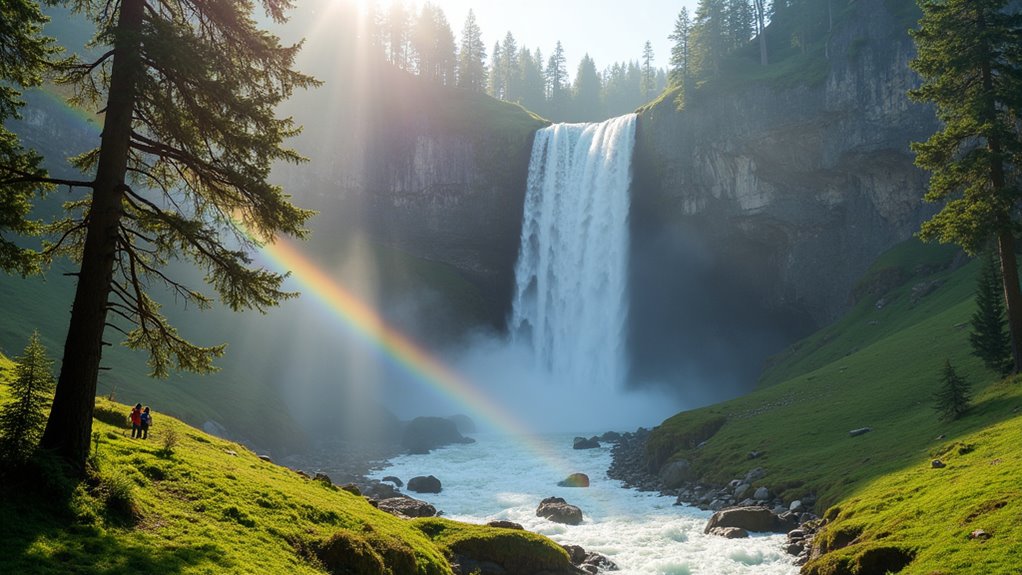
While treetop trails offer stunning alpine perspectives, nothing compares to the raw power of Austria’s most spectacular natural wonder. At 380 meters tall, Krimml Falls towers as Europe’s highest waterfall, cascading down three dramatic stages within Hohe Tauern National Park.
You’ll find the well-marked 4km trail surprisingly accessible, reaching the lowest falls in just 10-15 minutes from the base. The full hike takes about 75 minutes, with plenty of rest stops and viewpoints along the way.
Visit between June and July for peak water flow, when 5.6 cubic meters rush down per second.
Take the budget-friendly Pinzgauer Lokalbahn train from Zell am See, then catch a local bus to the falls. The waterfall attracts approximately 400,000 visitors annually, making it one of Austria’s most popular natural attractions.
The interactive Krimml WaterWorlds nearby offers fascinating insights into the waterfall’s hydrology.
Swim and Sail Lake Wörthersee Near Klagenfurt
Known as the “Austrian Riviera,” Lake Wörthersee transforms into a Mediterranean paradise just outside Klagenfurt. You can swim in crystal-clear waters that reach comfortable temperatures perfect for extended dips.
Head to Strandbad Klagenfurt/Maiernigg for affordable public beach access with marked swim lanes and shallow entry areas.
You’ll find budget-friendly boat rentals including electric boats, rowboats, and pedal boats from May through October. Try stand-up paddleboarding or kayaking—some resorts include free SUP rentals.
For thrills, join group banana boat rides or rent windsurfing equipment at reasonable rates. The Wörthersee Sports & Sailing School in Velden offers professional instruction for those looking to improve their sailing and water sports skills.
The lake’s exceptional water quality makes it ideal for open-water swimming, while scheduled boat services let you explore surrounding towns affordably.
Night swimming events offer unique experiences with illuminated routes and safety support.
Explore Linz’s Ars Electronica Center and Danube Culture
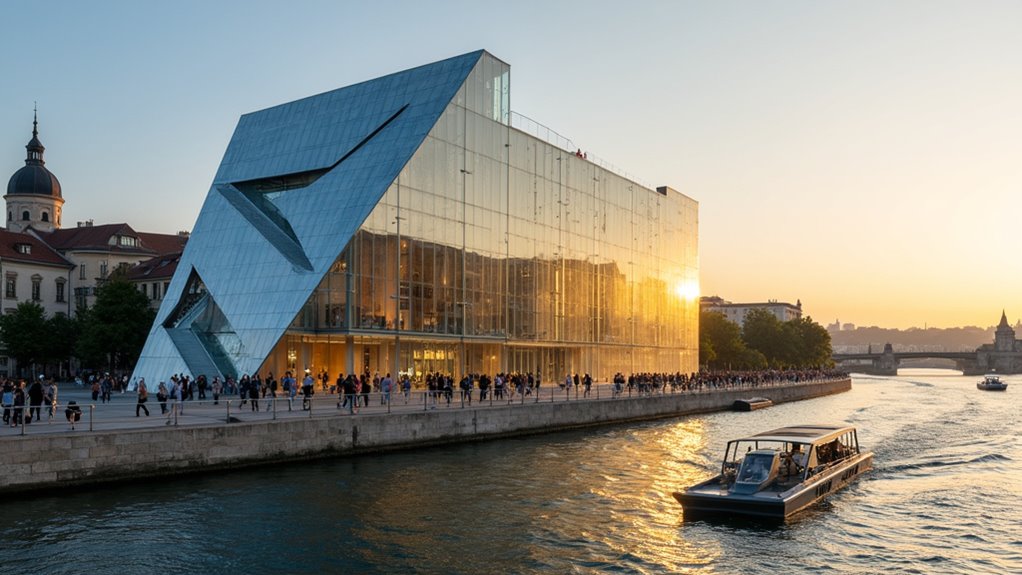
Austria’s cultural scene extends far beyond alpine lakes to cutting-edge technology experiences, and you’ll find one of Europe’s most innovative museums right along the Danube River in Linz. The Ars Electronica Center, dubbed the “Museum of the Future,” combines art, technology, and interactive learning in ways you’ve never experienced.
You’ll explore artificial intelligence, robotics, and virtual reality through hands-on exhibits. The Deep Space 8K delivers mind-blowing immersive projections, from space flights to microscopic worlds. The recent technical enhancements have made the visual experience even more spectacular with sharper images and improved color quality. Kids love the Research Laboratory‘s STEM activities, while you can actually train neural networks and program robots.
If you’re holding a Linz-Card, you’ll get free entry. Plan 2-3 hours for your visit, and don’t miss controlling the building’s LED facade from the Danube promenade.
The Sum Up
You’ve got endless options across Austria, from free castle walks in Salzburg to budget-friendly hiking trails with million-dollar views. Don’t miss the affordable thermal spas or pack picnic lunches for those scenic drives. Many attractions offer student discounts, and staying in guesthouses saves serious cash. Whether you’re chasing Mozart’s footsteps or conquering alpine peaks, Austria delivers unforgettable experiences without breaking the bank. Plan smart, travel light, and you’ll stretch every euro further.