
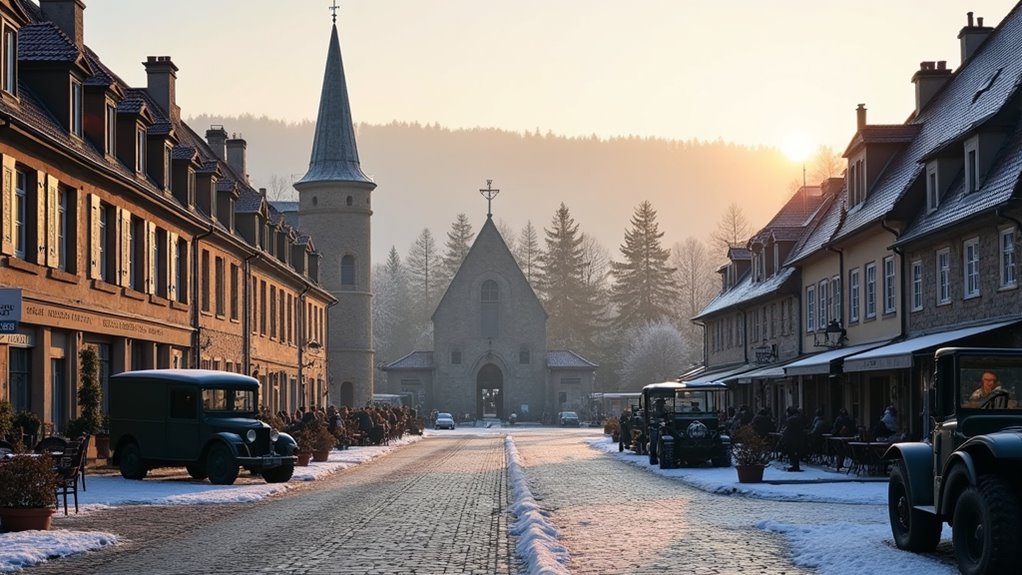
You’ll discover that Bastogne isn’t just another European town—it’s where American paratroopers made their legendary stand during WWII‘s brutal winter of 1944. I’ve walked these battlefields myself, and there’s something deeply moving about standing where history pivoted. The good news? Most attractions won’t break your budget, and you can easily explore the key sites in a weekend. But here’s what most visitors miss about planning their time here.
- Explore the Bastogne War Museum’s Immersive Battle of the Bulge Experience
- Walk the Preserved Foxholes at Bois Jacques Battlefield
- Pay Respects at the Mardasson Memorial
- Discover Military Hardware at Bastogne Barracks
- Visit the 101st Airborne Museum “Le Mess”
- Stroll Through Bastogne’s Historic Town Center
- Take a Guided Battlefield Tour to Chaumont and Patton Sites
- The Sum Up
Explore the Bastogne War Museum’s Immersive Battle of the Bulge Experience
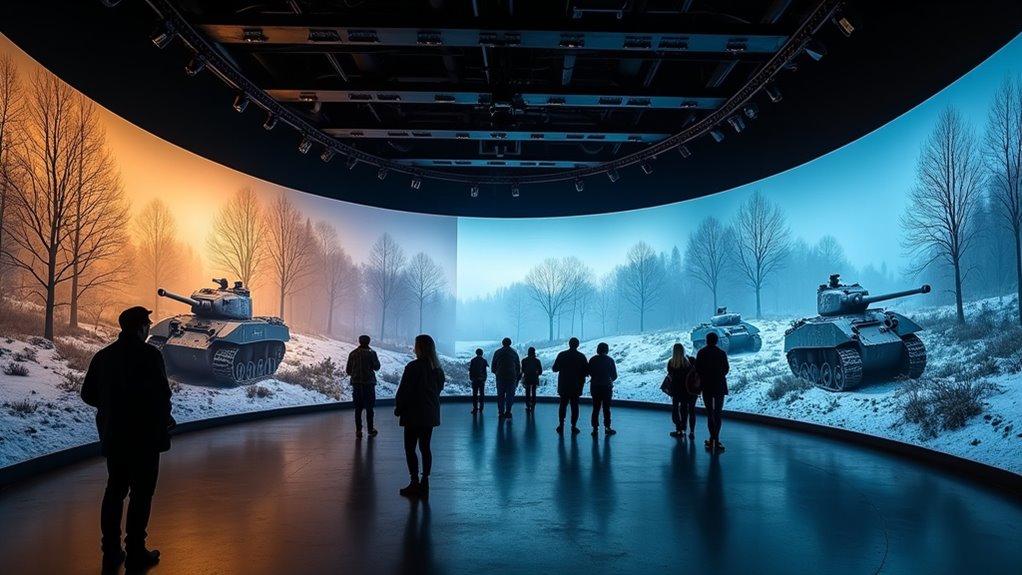
While most war museums display static artifacts behind glass, the Bastogne War Museum throws you directly into the chaos of December 1944. You’ll follow four fictional characters—an American soldier, German soldier, Belgian resistance woman, and local child—whose stories unfold through your audio guide as you navigate the star-shaped building.
The real magic happens in three immersive theater shows. One plants you in a soldier’s foxhole with combat sounds echoing around you, while another simulates hiding in a cramped cellar as enemy troops march overhead. These multi-sensory experiences use sound, light, and 3D effects to convey the battle’s intensity without glorifying war.
Budget at least two hours for the chronological exhibition covering 1918 through the Cold War era. Don’t miss the Thunderbolt Sherman Tank from the 11th US Armored Division, positioned near the museum’s end and fully renovated to showcase the armored warfare of WWII.
Walk the Preserved Foxholes at Bois Jacques Battlefield
Standing among the quiet fir trees at Bois Jacques, you’ll find yourself walking the same ground where Easy Company’s paratroopers dug in during the brutal winter of 1944. The preserved foxholes appear as small depressions scattered throughout the woodland, marking actual defensive positions from the Battle of the Bulge.
You can explore these remnants for free year-round, making it a budget-friendly historical experience. Download the augmented reality app before visiting—it transforms your walk with 360° videos showing what soldiers experienced in these very spots.
The wooden crosses and memorial plaques add emotional weight to your visit. This exceptional cultural heritage site has been officially recognized since 2017 for its historical significance.
Park easily on-site and allow an hour for reflection. The adjacent Bois de la Paix features 4,000 memorial trees, each honoring individual veterans.
Pay Respects at the Mardasson Memorial
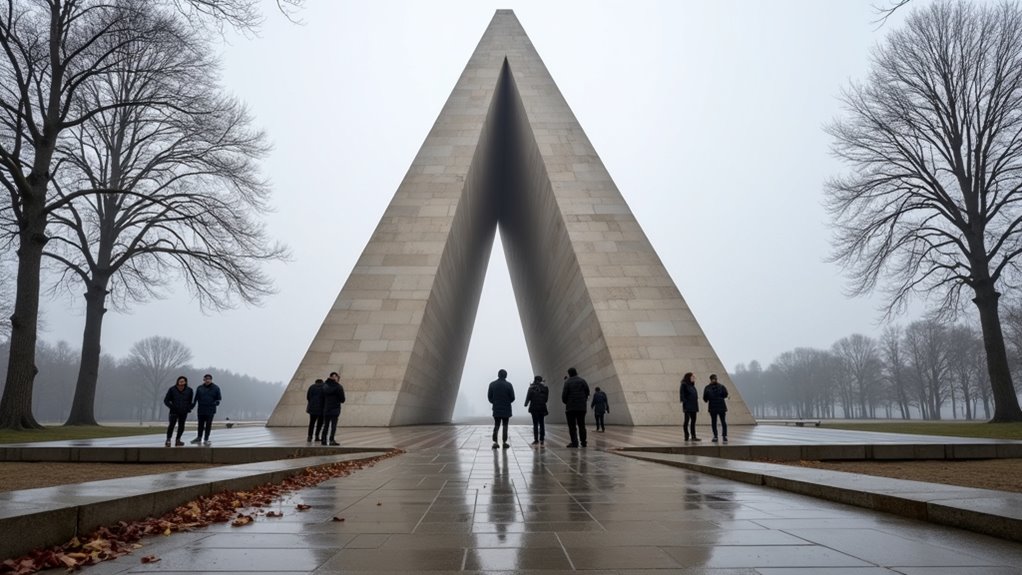
How do you properly honor 76,890 American casualties from the deadliest battle in U.S. Army history? You visit the Mardasson Memorial, a striking 12-meter tall star overlooking Bastogne‘s countryside. This free attraction lets you walk through carved stone passages detailing the Battle of the Bulge while taking in panoramic Ardennes views.
Don’t miss the underground crypt with three religious altars decorated by French artist Fernand Léger. The memorial’s design brilliantly incorporates all 50 U.S. states on its parapet, creating a thorough tribute to American sacrifice.
Take bus route “Bastogne Route Du Mardasson” for budget-friendly access. Combine your visit with the nearby Bastogne War Museum for deeper historical context. The memorial has been maintained in good condition since its hotel, ensuring visitors can properly experience this solemn tribute. You’ll leave with profound appreciation for the soldiers who fought here during World War II’s most brutal winter battle.
Discover Military Hardware at Bastogne Barracks
Where else can you get up close with 13 authentic WWII tanks and artillery pieces that actually fought in the Battle of the Bulge? Bastogne Barracks delivers an incredible hands-on history lesson across its massive 2,350 m² exhibition hall and three outdoor pavilions.
You’ll walk among operational Sherman tanks, German Panzers, and howitzers that rolled through these very Ardennes forests. The dedicated restoration team keeps these war machines in near-working condition, so you’re seeing authentic details down to original paint schemes and battle scars.
Since the barracks has operated continuously since the 1930s, you’re experiencing living military history. The outdoor displays let you circle vehicles freely, while indoor galleries provide context about armored warfare tactics. Beyond the impressive hardware, the museum features interactive exhibits with audio transmissions that bring the battlefield stories to life. It’s accessible year-round and perfectly complements other Bastogne battlefield sites.
Visit the 101st Airborne Museum “Le Mess”
Why settle for generic war museums when you can explore the actual building where American paratroopers once recovered from battle? The 101st Airborne Museum “Le Mess” occupies the former Officers Mess building from 1936, where soldiers actually lived during the Battle of Bastogne.
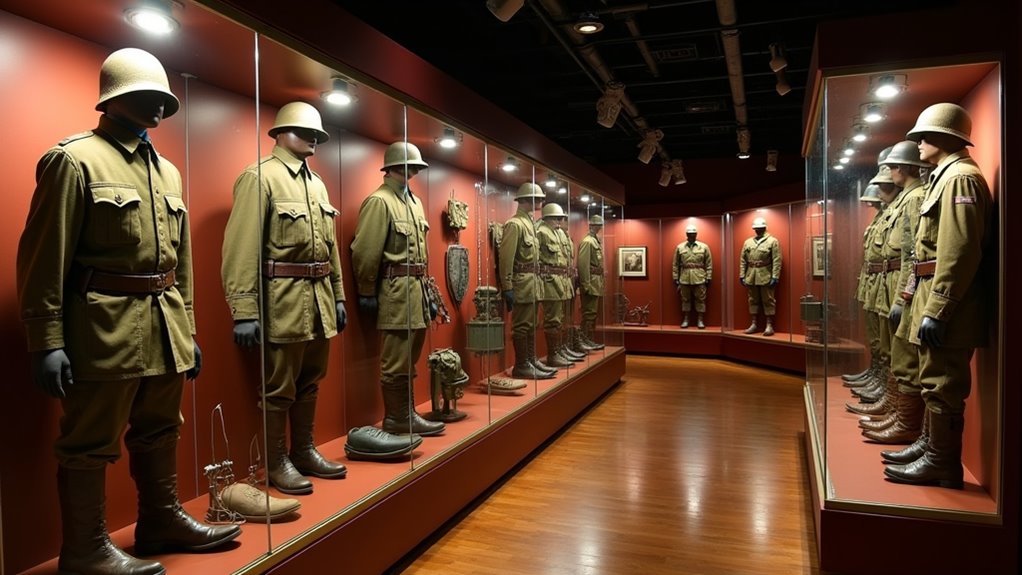
You’ll walk through three floors of authentic artifacts—uniforms, weapons, and personal gear recovered from local battlefields. The bombing simulation with sound and smell effects genuinely conveys air raid terror. Don’t miss the original bombshelter and medic post.
At €10-12 per person, it’s budget-friendly compared to larger museums. The owners often give personal tours, sharing stories you won’t find elsewhere. During the war, the building served as a German Unteroffiziersheim before American forces arrived. Open seasonally (closed Mondays), so check their schedule at www.101airbornemuseumbastogne.com before visiting.
Stroll Through Bastogne’s Historic Town Center
Once you’ve absorbed the wartime history at the museums, Bastogne’s compact town center offers a perfect blend of medieval charm and WWII remembrance that you can explore in under two hours.
Start at Place Général McAuliffe, where you’ll find the preserved Sherman Barracuda tank that’s stood guard since 1946. The square’s lined with affordable cafés perfect for a coffee break between sightseeing.
Don’t miss the 12th-century St. Peter Church and the medieval Treves Gate from 1332—both free to admire and beautifully restored after wartime damage. The church features an impressive 18th-century pulpit that survived the wartime bombings.
I recommend picking up a walking map at the tourism office on the main square.
The Tank Turret Monument and various memorial plaques throughout the streets tell Bastogne’s story without requiring expensive guided tours.
Take a Guided Battlefield Tour to Chaumont and Patton Sites
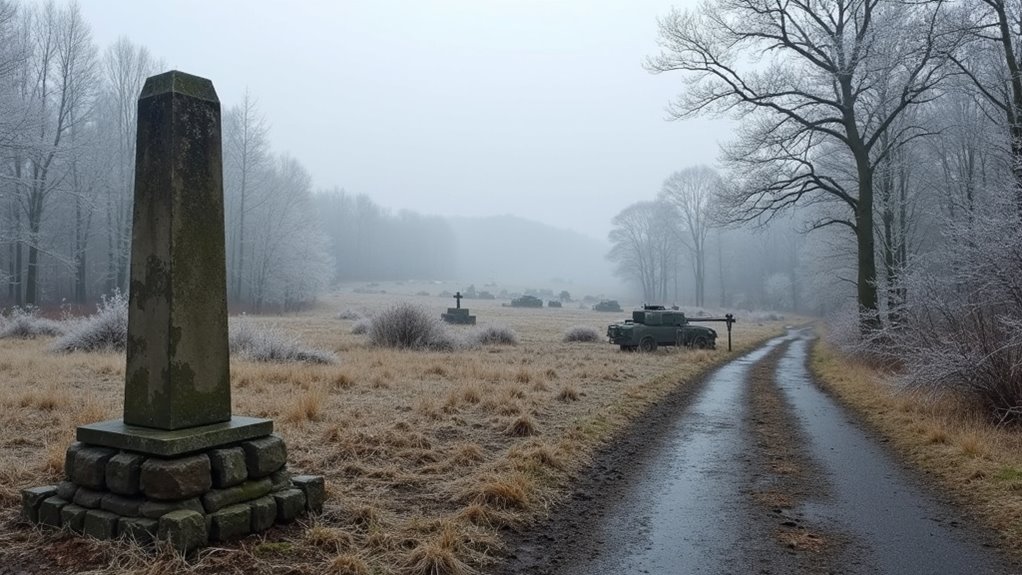
After exploring the town center on foot, you’ll want to venture beyond Bastogne’s streets to see where the actual fighting took place. A guided battlefield tour takes you to the exact spot where Patton’s 3rd Army linked up with the 101st Airborne on December 26, 1944, breaking Bastogne’s siege.
You’ll visit Kessler Farm, where the famous “NUTS!” response happened, and see preserved Sherman tank turrets marking defensive positions.
The tours include stops at the château that housed the 502nd Parachute Infantry Regiment headquarters and Hemroulle’s artillery positions. Most tours cost around €40-60 per person and last half a day. Many tours also take you to nearby Bois Jacques, where you can explore preserved foxholes from the battle.
Book group tours to save money, or consider the hiking routes if you’re budget-conscious—they’re free and cover the same historical ground.
The Sum Up
You’ll find Bastogne’s WWII sites surprisingly affordable—most museums cost under €15, and battlefield walks are free. I’d recommend buying the combined museum ticket to save money. Pack comfortable walking shoes since you’ll cover significant ground at the foxholes and memorial sites. Don’t rush through; each location offers profound moments that deserve time. The town’s compact size means you can easily walk between attractions, saving on transport costs while experiencing this moving piece of history.