
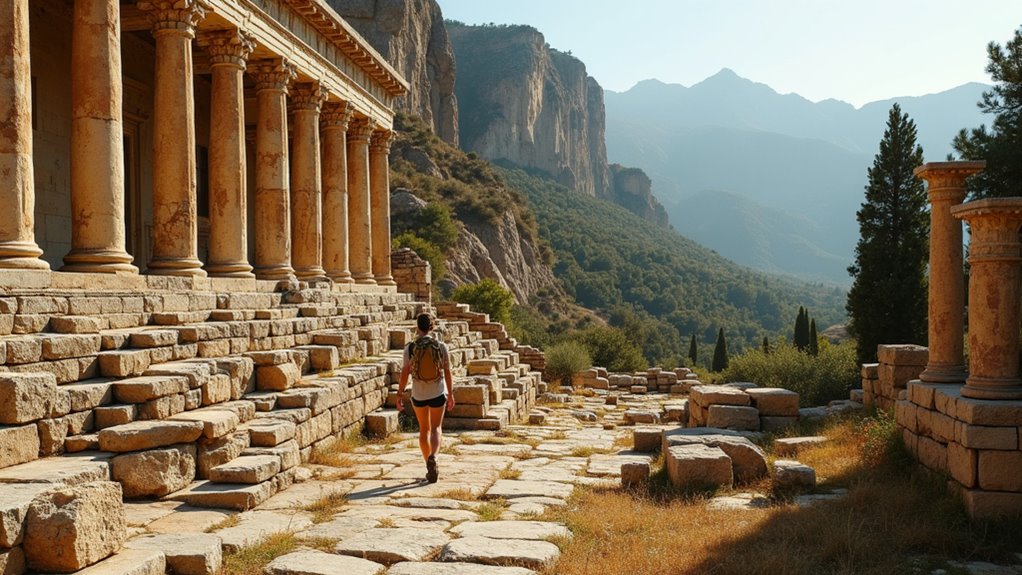
You’re planning a trip to Delphi, but you’re probably wondering what’s actually worth your time and money at this ancient Greek site. Sure, you’ve heard it’s where the famous Oracle once delivered prophecies, but there’s so much more to discover beyond the typical tourist photos. From hidden springs that’ll give you chills to breathtaking mountain hikes that won’t cost you a dime, Delphi offers experiences that most visitors completely miss.
- Walk the Sacred Way to the Temple of Apollo
- Explore the Delphi Archaeological Museum
- Visit the Sanctuary of Athena Pronaia and the Tholos
- Take in the Views From the Ancient Theatre
- Find the Omphalos Stone and Learn About the Oracle
- Purify Yourself at Castalia Spring
- Hike Mount Parnassus for Panoramic Views
- Discover the Museum of Delphic Festivals
- Visit the Byzantine Monastery of Hosios Loukas
- The Sum Up
Walk the Sacred Way to the Temple of Apollo
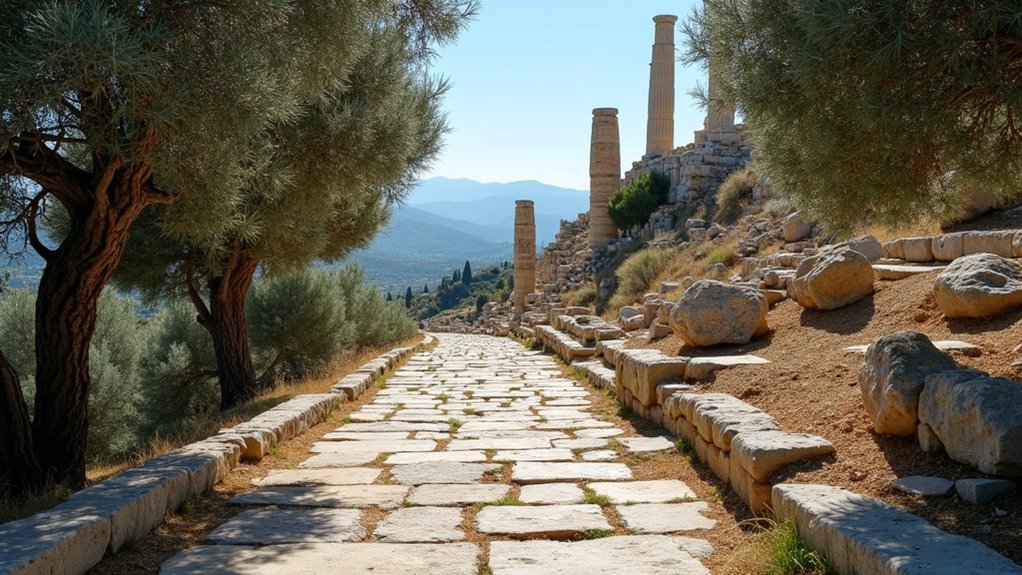
When you step onto the Sacred Way at Delphi, you’re following the exact same stone path that ancient pilgrims walked over 2,000 years ago to reach Apollo’s temple. This steep, winding route takes you uphill past reconstructed treasuries where Greek city-states stored their offerings to Apollo.
You’ll see remnants of statues and monuments that once lined this ceremonial street, each telling stories of military victories and religious devotion.
The climb’s challenging, but that’s intentional – ancient Greeks designed it as a transformational pilgrimage experience. Before reaching the temple, visitors would purify themselves at the Castalian Spring, following ancient rituals that prepared them spiritually for their encounter with Apollo’s oracle. As you walk toward what they considered the “navel of the world,” you’ll understand why this journey felt so sacred.
The path culminates at the Temple of Apollo, where the famous oracle Pythia once delivered prophecies that shaped Mediterranean politics.
Explore the Delphi Archaeological Museum
After your spiritual journey along the Sacred Way, you’ll want to head straight to the Delphi Archaeological Museum to see the incredible treasures that once filled these ancient grounds. The museum’s 14 rooms showcase artifacts spanning from prehistory to late antiquity, making your entrance fee worthwhile.
Don’t miss the famous Charioteer of Delphi, a stunning bronze statue that’s considered one of Greece’s finest classical sculptures. You’ll also discover the marble Kouroi statues of Cleobis and Biton, the impressive Sphinx of Naxos, and the sacred Omphalos stone that Greeks believed marked earth’s center.
The museum’s chronological layout helps you understand Delphi’s evolution. Plan about two hours to properly explore the collection, including the beautiful friezes from various treasuries and countless bronze votive offerings left by ancient pilgrims. The museum’s thoughtful design was created under the leadership of Patroclos Karantinos, whose architectural vision enhances the visitor experience.
Visit the Sanctuary of Athena Pronaia and the Tholos
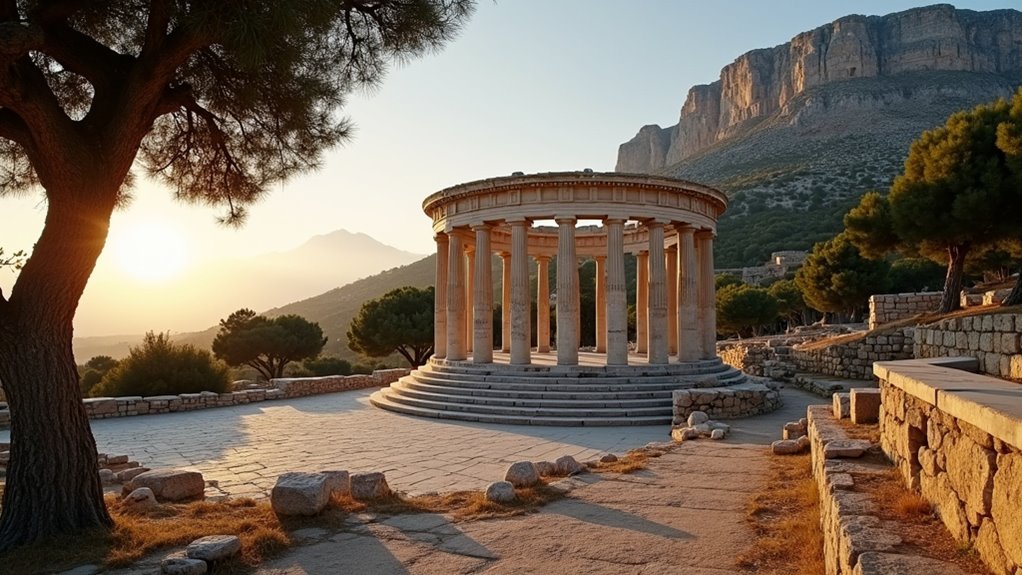
Just a half-mile walk from the main archaeological site brings you to one of Delphi’s most enchanting spots: the Sanctuary of Athena Pronaia and its iconic Tholos. This circular temple, dating to 380-360 BC, combines elegant Doric and Ionic columns in a design that’ll captivate any architecture enthusiast.
You’ll find the atmosphere here more peaceful than the crowded main site, making it perfect for contemplative exploration.
The sanctuary’s three temple phases span from the 7th century BC to the 4th century BC, showcasing Greece’s architectural evolution. Ancient pilgrims stopped here first before ascending to Apollo’s temple, seeking Athena’s protection. The earliest temple featured twelve columns with distinctive shallow flutings and uniquely low capitals that set it apart from later architectural styles.
Don’t miss the detailed stonework and polygonal foundations—they’re architectural masterpieces that cost nothing extra to admire.
Take in the Views From the Ancient Theatre
Climbing to Delphi’s ancient theatre rewards you with some of the most breathtaking panoramic views in all of Greece. Perched on Mount Parnassus’s slope above the Temple of Apollo, this 4th-century BCE venue offers spectacular vistas of the Pleistos River valley, the entire sanctuary below, and surrounding mountains.
You’ll appreciate how the 4,500-seat cavea creates perfect sightlines not just for ancient performances, but for today’s photo opportunities.
The theatre’s elevated position lets you grasp Delphi’s sacred landscape in one sweeping view. Built from local limestone, it blends seamlessly with the natural setting. This remarkable venue once hosted theatrical performances and musical competitions during the Pythian Games, which ranked second in importance only to the Olympics.
Take time to explore the well-preserved seating areas and orchestra – admission’s included with your sanctuary ticket, making this commanding viewpoint an essential stop.
Find the Omphalos Stone and Learn About the Oracle
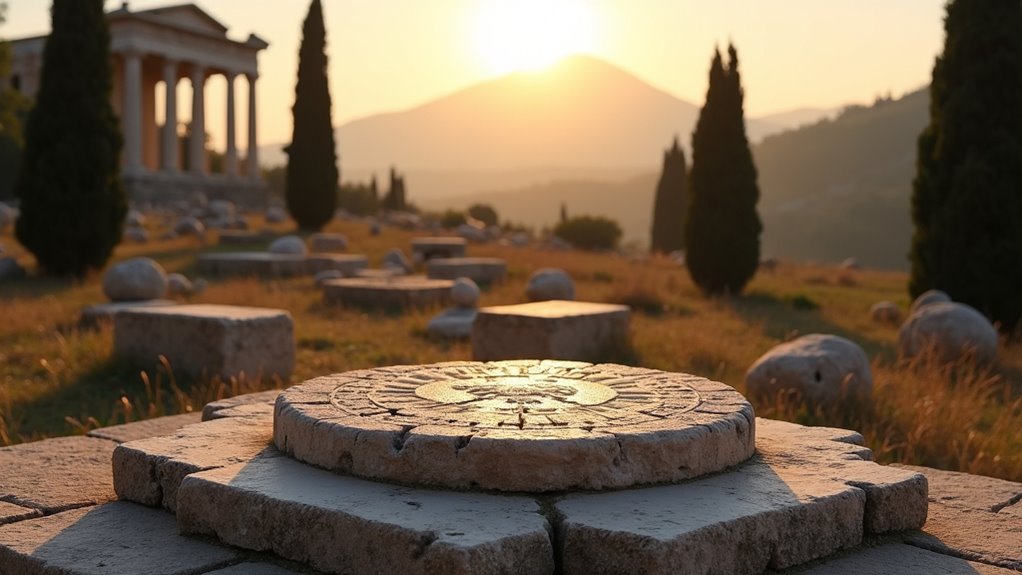
While exploring the Temple of Apollo‘s sacred grounds, you’ll discover the legendary Omphalos Stone – a beehive-shaped marble monument that ancient Greeks believed marked the very center of the Earth. According to myth, Zeus released two eagles from opposite ends of the world, and they met right here above Delphi.
The stone you’ll see today is actually a replica housed in the Delphi Archaeological Museum, since the original discovered in 1913 later disappeared. Standing 1.23 meters tall with intricate carved patterns, it features a central hole that once channeled vapors used by the Oracle of Apollo. Ancient descriptions by Pausanias reveal that the original monument was adorned with precious stones shaped like mermaids and gilded eagles.
The Pythia, Apollo’s high priestess, inhaled these mystical vapors to deliver prophecies that shaped ancient Greek civilization. Don’t miss the inscriptions and artifacts that bring this fascinating oracular tradition to life.
Purify Yourself at Castalia Spring
Before entering Apollo’s sacred sanctuary, you’ll need to purify yourself at the ancient Castalia Spring, just as pilgrims have done for over 2,500 years. Located in a narrow gorge near the main archaeological site, this sacred spring was where the Pythia priestess cleansed herself before delivering prophecies.
You’ll find two fountain structures—an archaic stone version from 600 B.C. and a later Roman-era rock-cut basin with descending steps.
The spring flows from the slopes of Mount Parnassus through seven lion-head spouts into a rectangular courtyard. The site also features rock-hewn niches above the basin where ancient visitors placed small votive offerings like figurines dedicated to the nymph Kastalia.
While you can’t drink from it today, you can still appreciate the spiritual significance of this spot where ancient Greeks believed the waters inspired poetic genius and divine wisdom.
Hike Mount Parnassus for Panoramic Views
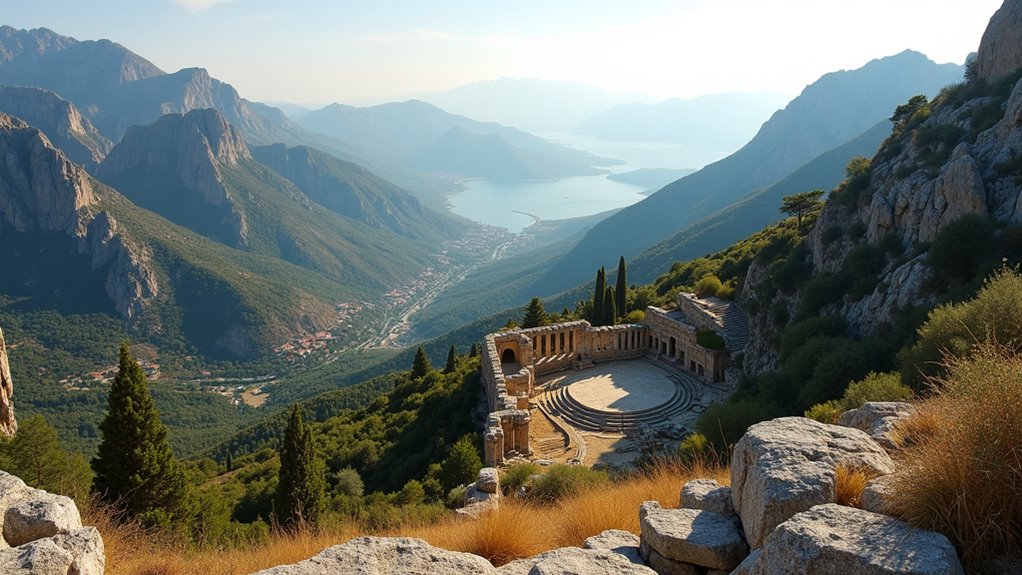
After experiencing the spiritual cleansing at Castalia Spring, you’ll want to explore the dramatic mountain landscape that frames this sacred site. Mount Parnassus offers incredible hiking opportunities with trails for every skill level.
You can tackle the moderate Eptalofos-Delphi route, part of the E4 international trail, which takes about 7 hours and won’t cost you anything beyond transportation.
For a challenging adventure, try the 6-mile hike to Corycian Cave, a sacred sanctuary steeped in mythology. The ancient Corinthian trail, roughly 4,000 years old, provides stunning panoramic views from over 8,000 feet elevation. Along the way, you’ll pass Pangia church with a natural spring where you can refill your water bottles.
Spring hiking rewards you with wildflower blooms and lush valleys. Pack water and snacks, as these free trails offer natural refreshment points along mountain streams.
Discover the Museum of Delphic Festivals
Since you’ve worked up an appetite exploring Mount Parnassus, you’ll appreciate that the Museum of Delphic Festivals offers both cultural enrichment and a chance to rest your legs.
Housed in Eva Palmer Sikelianos and Angelos Sikelianos’s former residence, this intimate museum showcases the ambitious Delphic Festivals of 1927 and 1930.
You’ll discover fascinating photographs, handcrafted costumes Eva designed herself, and Angelos’s personal manuscripts including his 1939 poem *Styx’s Oath*.
The neo-Gothic stone building near the Archaeological Museum provides excellent views of Mount Parnassus and Amfissa valley.
The couple’s vision transformed Delphi into a modern cultural center celebrating ancient Greek arts through drama, athletics, and folk exhibitions. The festivals drew international politicians, scholars, actors, and artists from around the world to this sacred site.
Though financial exhaustion ended their dream, their legacy lives on through this thoughtfully curated collection.
Visit the Byzantine Monastery of Hosios Loukas
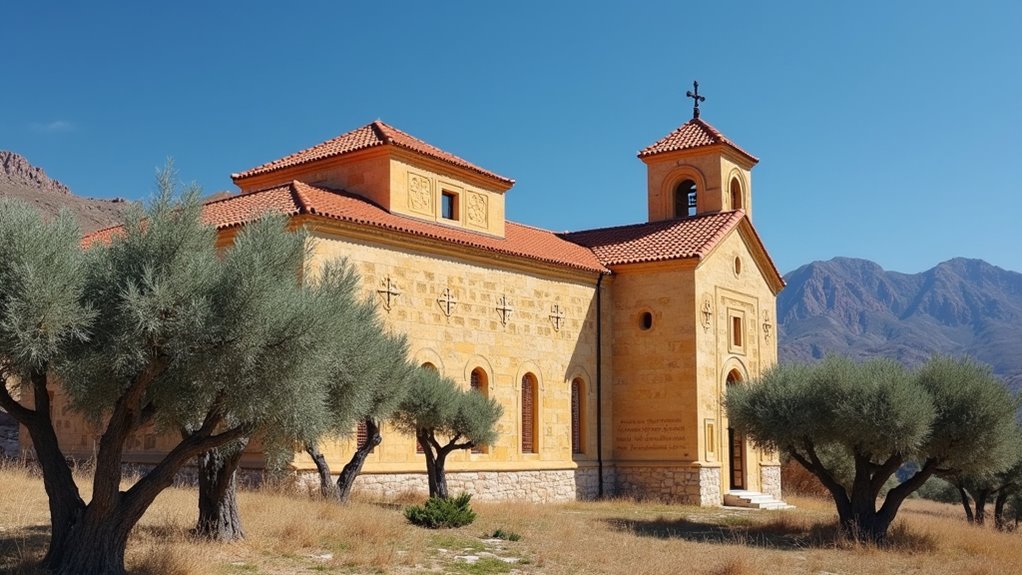
Just 30 minutes southeast of Delphi, you’ll find one of Greece’s most remarkable Byzantine treasures at the Monastery of Hosios Loukas. This UNESCO World Heritage site won’t cost you anything to explore since entrance is free, making it perfect for budget travelers.
You’ll marvel at the stunning golden mosaics and ancient frescoes that’ve survived nearly a thousand years. The main church features an impressive dome-octagon design, while the atmospheric crypt houses the tomb of Saint Luke himself. Don’t miss the healing oil called myron that still seeps from the saint’s relics.
The monastery sits beautifully on Mount Helicon’s slopes, offering peaceful valley views. It’s an active place of worship, so you’ll experience authentic Byzantine spirituality alongside incredible medieval art and architecture. Consider booking a private driver to reach the monastery efficiently, as they can accompany you inside unlike at the Delphi ruins.
The Sum Up
You’ve got an incredible mix of ancient history, stunning views, and spiritual experiences waiting in Delphi. Don’t try to rush through everything in one day – you’ll appreciate the sites more if you take your time. Pack comfortable walking shoes and plenty of water, especially if you’re planning that Mount Parnassus hike. Most attractions offer student discounts, so bring your ID. Delphi’s magic lies in its layers of history you’ll uncover.