
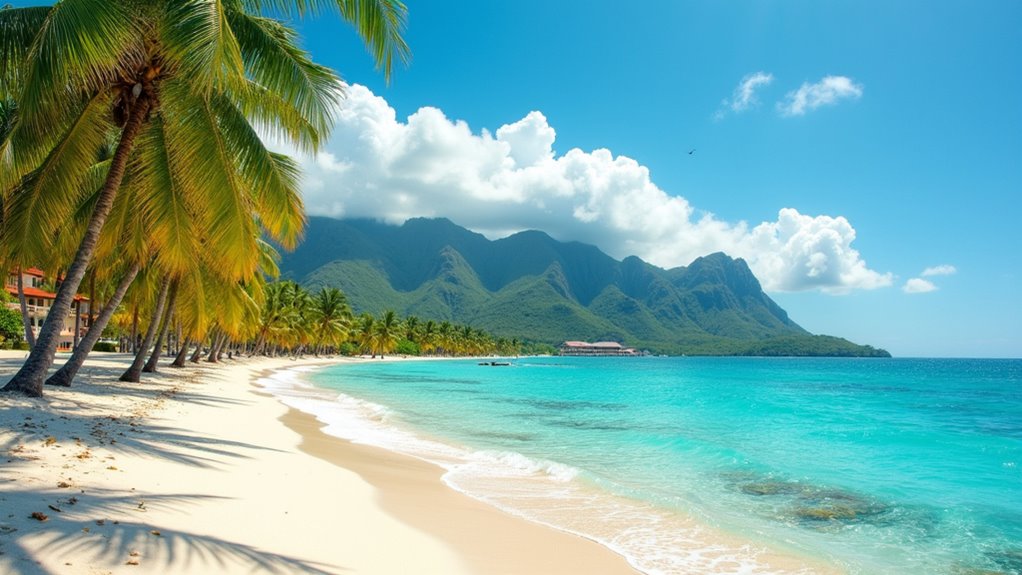
You’ll discover the Dominican Republic offers everything from 500-year-old colonial streets in Santo Domingo to whale watching in Samaná Bay during peak season (January-March). Adventure seekers can conquer Pico Duarte, the Caribbean’s highest peak, or slide down natural waterfalls at 27 Charcos de Damajagua. Explore ancient Taíno caves at Los Haitises National Park, spot crocodiles at Lake Enriquillo, and unwind on pristine Bahía de las Águilas beaches—all without breaking your budget. These highlights barely scratch the surface of what awaits.
- Wander Through Santo Domingo’s Colonial Zone Like You’re Walking Through 500 Years of History
- Experience Humpback Whale Season in Samaná Bay From January Through March
- Conquer Pico Duarte, the Caribbean’s Highest Peak
- Slide Down Natural Water Slides at 27 Charcos De Damajagua
- Explore the Mangrove Caves and Taíno Rock Art at Los Haitises National Park
- Learn to Windsurf or Kitesurf in Cabarete’s Legendary Winds
- Cool Off in the Blue Lagoons of Los Tres Ojos National Park
- Spot Crocodiles and Iguanas at Lake Enriquillo, the Caribbean’s Lowest Point
- Chase Waterfalls Around Jarabacoa’s Adventure Hub
- Escape to the Remote Beaches of Bahía De Las Águilas in Jaragua National Park
- The Sum Up
Wander Through Santo Domingo’s Colonial Zone Like You’re Walking Through 500 Years of History
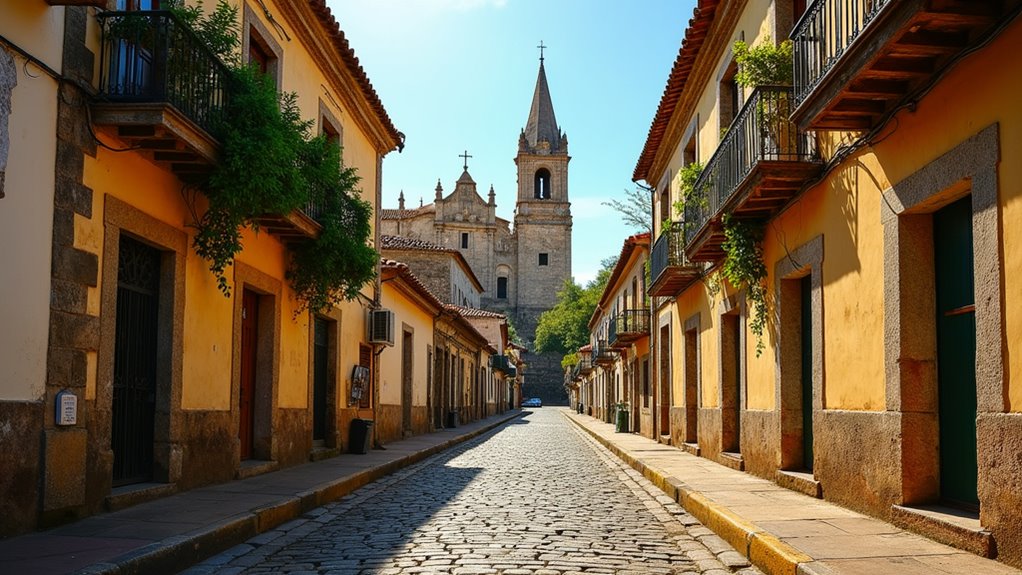
When you step into Santo Domingo’s Colonial Zone, you’re walking through the oldest continuously inhabited European settlement in the Americas—a living museum where 500 years of history unfolds on cobblestone streets that’ve witnessed everything from Spanish conquest to modern-day merengue.
You’ll explore the first cathedral, university, and hospital in the Americas while spending virtually nothing on admission fees. Start at the Cathedral of Santo Domingo, then wander to Alcázar de Colón and the historic plazas laid out in the original Renaissance grid from 1498. The imposing Fortaleza Ozama, one of the oldest forts in the Americas, stands as a testament to the zone’s strategic importance in protecting against pirate attacks throughout the colonial era.
The compact district is perfectly walkable, letting you discover colonial houses, convents, and defensive walls without expensive tours. Pack water and comfortable shoes—you’ll cover centuries in a single afternoon.
Experience Humpback Whale Season in Samaná Bay From January Through March
Every winter, over 1,500 North Atlantic humpback whales travel more than 5,000 miles to transform Samaná Bay into the Caribbean’s most spectacular whale-watching destination—and you’ll witness this incredible migration phenomenon for a fraction of what similar experiences cost in places like Alaska or Hawaii.
You’ll catch peak action from mid-January through late March, when males breach dramatically and sing complex 30-minute songs while females give birth in the bay’s calm waters. February delivers the most consistent sightings and active behavior.
Book morning tours from Santa Bárbara de Samaná for calmer seas and better photography conditions. With sighting rates above 90% during peak season, you’re virtually guaranteed encounters with mothers, newborn calves, and courting adults in this protected marine sanctuary. The bay’s calm, clear waters create ideal conditions for both whales and observers, making Samaná one of the world’s premier whale-watching locations.
Conquer Pico Duarte, the Caribbean’s Highest Peak
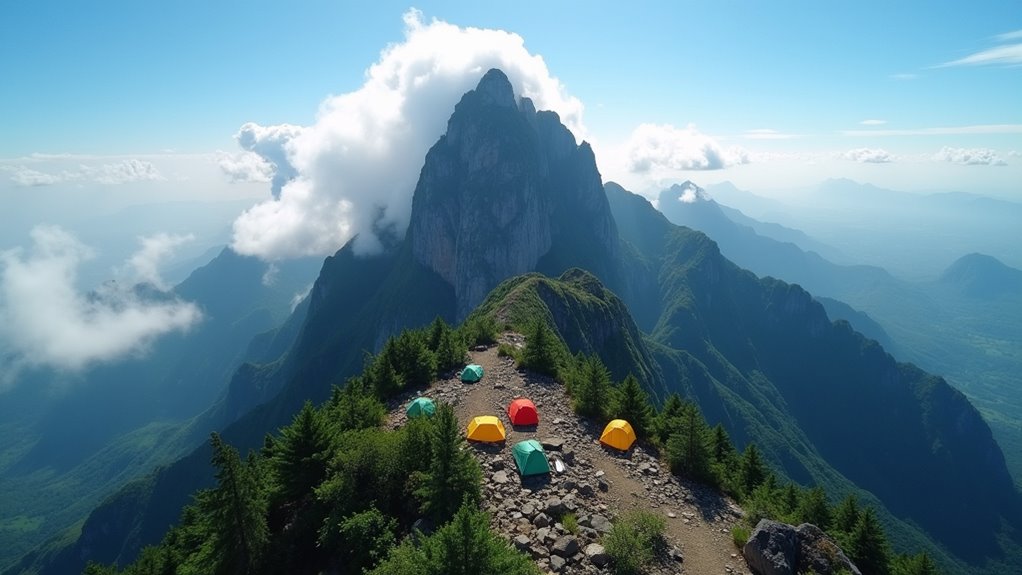
At 10,164 feet above sea level, Pico Duarte towers over every other peak in the Caribbean—and you can conquer this legendary summit for under $150 with a guided three-day trek that includes meals, camping gear, and mule support through some of the most pristine mountain wilderness in the Dominican Republic.
You’ll start from La Ciénaga park headquarters, where mandatory certified guides handle permits and logistics. The classic route takes you 18 miles to La Compartición camp on day one, then to the summit and back on day two, before returning to the trailhead on day three.
Pack warm layers—nighttime temperatures drop below freezing at elevation, and weather changes rapidly in these cloud-draped peaks. The challenging terrain places you within the Dominican Alps, offering hikers an authentic alpine experience unique to the Caribbean region.
Slide Down Natural Water Slides at 27 Charcos De Damajagua
From the mountain peaks, head to the northern coast near Puerto Plata where you’ll find one of the Dominican Republic’s most thrilling natural attractions—27 Charcos de Damajagua. This protected reserve features crystal-clear turquoise pools connected by natural rock slides carved by the Damajagua River over thousands of years.
You’ll hike upriver for 30-45 minutes, then slide down smooth limestone chutes, jump from ledges, and swim through narrow canyon passages.
Tours offer 7, 12, or full 27-pool options starting around $6-9. Guides are mandatory and provide helmets and life jackets. You’ll need moderate fitness levels and closed-toe water shoes. The experience provides approximately 7 hours of adventure activities including hiking, ziplining, swimming, and canyoning.
Visit during drier months for best conditions, as rainy season brings stronger currents and potential closures.
Explore the Mangrove Caves and Taíno Rock Art at Los Haitises National Park
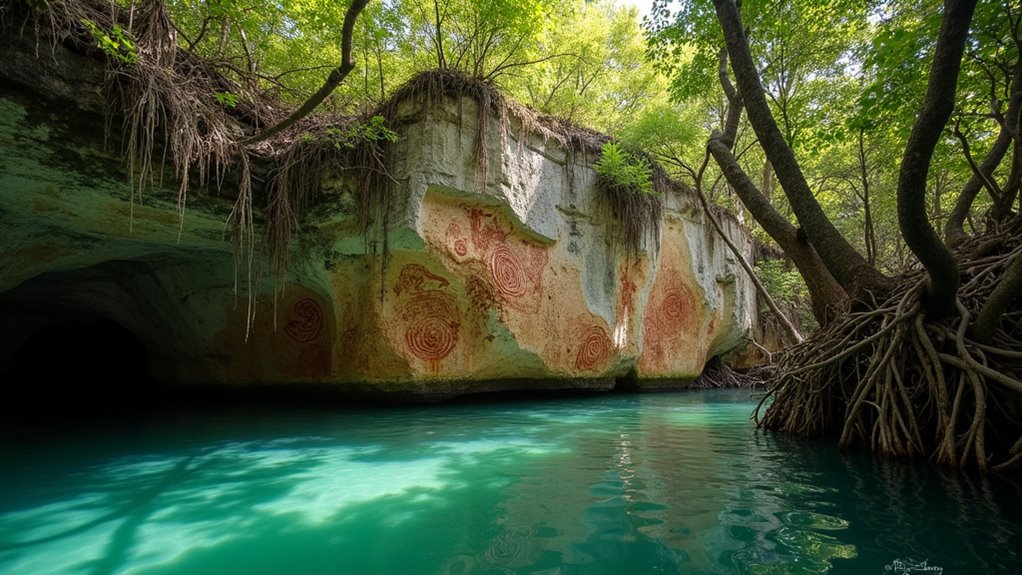
While most visitors flock to the Dominican Republic’s beaches, you’ll discover something far more extraordinary at Los Haitises National Park—a mystical world where ancient Taíno rock art adorns limestone caves hidden within the Caribbean’s largest mangrove forest.
You’ll navigate narrow mangrove channels by boat to reach caves like Cueva de la Línea and Cueva de San Gabriel, where 500-year-old petroglyphs and pictographs cover the walls. These sacred spaces showcase human faces, animals, and ceremonial symbols that tell stories of pre-Columbian life.
The park’s 1,600 km² of karst terrain features dramatic limestone mogotes rising from emerald waters. You’ll spot over 200 bird species, including frigatebirds and brown pelicans, while bat colonies emerge from cave roosts at dusk. This remarkable landscape is part of a 50-million-year-old karst system that has shaped the region’s unique marine and terrestrial ecosystems.
This UNESCO-worthy destination costs considerably less than typical tourist attractions.
Learn to Windsurf or Kitesurf in Cabarete’s Legendary Winds
Picture yourself harnessing 20-knot trade winds that blow 300 days a year—that’s exactly what awaits you at Cabarete Bay, the Caribbean’s undisputed wind sports capital.
Here, beginners can master kitesurfing and windsurfing faster than anywhere else in the world.
You’ll find multiple schools offering affordable lessons along Kite Beach. The consistent east-to-west trade winds create perfect onshore conditions that safely push you back toward shore.
The daily wind cycle builds from noon to 6 p.m., giving you predictable lesson times in warm 77-86°F water. For 80kg riders, kite sizes 8-11m² work best during these peak wind hours.
Peak seasons run January-March and June-July, with summer offering stronger 20-25 knot winds for rapid progression.
The sandy bottom and open launch zones let you practice water starts and self-rescue techniques without worry.
Cool Off in the Blue Lagoons of Los Tres Ojos National Park
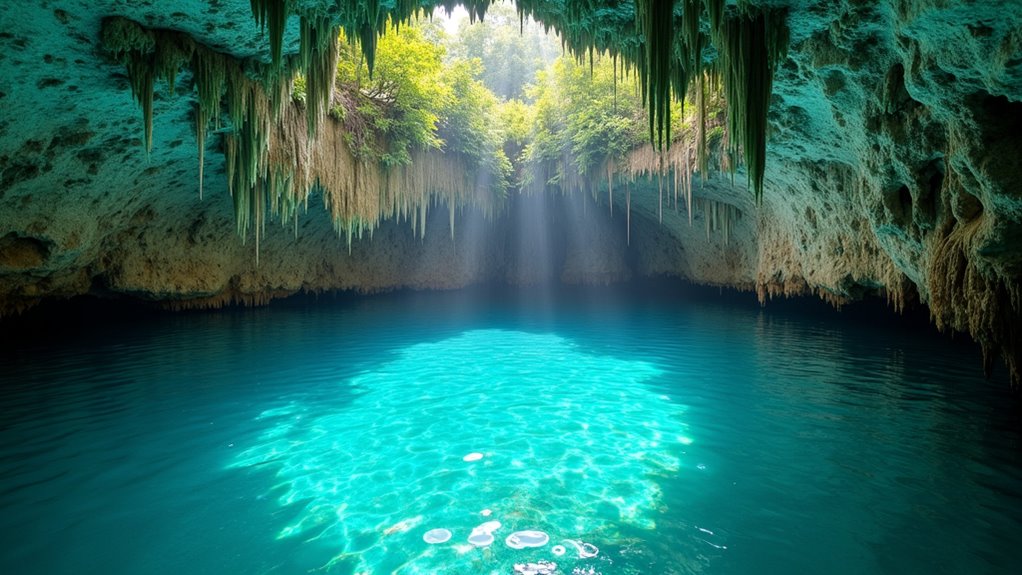
After working up a sweat mastering those trade winds, you’ll want to escape Santo Domingo’s heat at Los Tres Ojos National Park, where three stunning freshwater lagoons hide inside a collapsed limestone cave system just 5 miles east of the city center.
You’ll descend steep steps into the cool cave system to explore Lago de Azufre’s turquoise waters, La Nevera’s darker depths, and Lago de las Damas’ emerald-green pools. The real highlight comes when you take a hand-pulled raft through a narrow cave opening to reach Los Zaramagullones, a hidden fourth lagoon surrounded by jungle vegetation.
Plan 1-2 hours for your visit and bring comfortable shoes for the stairs. These caves once served as sacred sites for the indigenous Taíno people, who likely used them for ceremonies and spiritual rituals. Entry fees are charged in pesos, making this an affordable natural escape from the city.
Spot Crocodiles and Iguanas at Lake Enriquillo, the Caribbean’s Lowest Point
Venture 140 feet below sea level to Lake Enriquillo, the Caribbean’s lowest point and largest lake, where you’ll encounter the region’s most impressive wildlife spectacle in the Dominican Republic’s remote southwest.
You’ll spot around 200 American crocodiles basking near mangroves during affordable boat tours to Isla Cabritos. The hypersaline waters also attract hundreds of flamingos, ibises, and herons. Don’t miss the critically endangered Ricord’s iguanas—some over 30 years old and house cat-sized—lounging around park trails and visitor facilities.
Visit the park entrance 3km east of La Descubierta for easy access. Time your trip between March and June when desert cacti bloom spectacularly. The lake has experienced dramatic size expansion in recent years, with flooding impacting surrounding farmland and communities.
This UNESCO Biosphere Reserve offers unmatched reptile watching in unique wetland-desert ecosystems you won’t find elsewhere in the Caribbean.
Chase Waterfalls Around Jarabacoa’s Adventure Hub
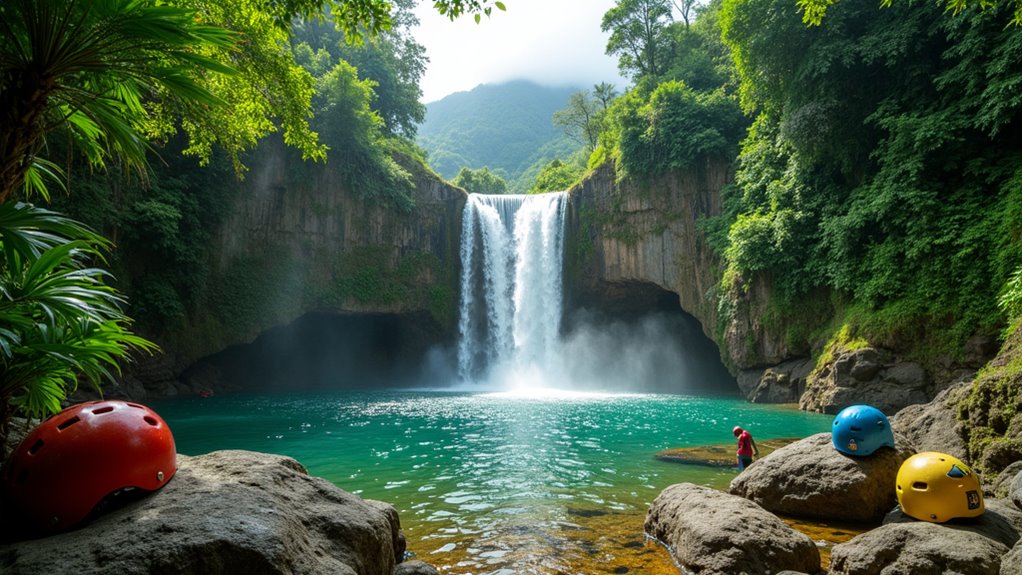
Three spectacular waterfalls await you within 30 minutes of Jarabacoa, the Dominican Republic’s adventure capital nestled in the cool, pine-covered mountains of the Cordillera Central. You’ll find budget-friendly access to all three cascades, with entrance fees around 100 pesos and minimal driving required.
Start with Salto de Baiguate – just 10 minutes from town with an easy walk to jade-colored swimming pools. For an authentic mountain experience, consider the horse ride option that lasts 30-50 minutes with a guide for $30 per person.
Salto de Jimenoa Dos offers the gentlest hike (15 minutes) through lush vegetation, perfect for families.
Save Salto de Jimenoa Uno for last if you’re fit – the steep 30-minute descent rewards you with dramatic rock walls reminiscent of movie sets.
Pack sturdy shoes, water, and snacks since on-site services are limited. Local tour operators offer canyoning and rappelling packages if you’re craving more adventure.
Escape to the Remote Beaches of Bahía De Las Águilas in Jaragua National Park
When you’re ready to trade crowded resort beaches for pristine wilderness, Bahía de las Águilas delivers the Dominican Republic’s most spectacular untouched coastline. This 5-mile stretch of diamond-white sand and turquoise waters sits within Jaragua National Park, about 5 hours from Santo Domingo.
You’ll need to plan ahead since there’s zero infrastructure – no hotels, restaurants, or shops. Most visitors take a 20-minute boat ride from Cabo Rojo rather than tackling the rugged park roads. Pack plenty of water, food, and sun protection since natural shade is scarce.
The payoff? Crystal-clear waters perfect for swimming and snorkeling, where you’ll spot sea stars, colorful fish, and lobsters just offshore. You might even encounter manatees and sea turtles in this protected marine habitat. The only sounds you’ll hear are ocean and nature, creating an atmosphere of untouched serenity that’s impossible to find at crowded resort beaches.
The Sum Up
You don’t need to break the bank to experience the Dominican Republic’s incredible diversity. From free beach days at Bahía De Las Águilas to budget-friendly hiking adventures on Pico Duarte, there’s something for every traveler and wallet. Pack your sense of adventure, bring comfortable walking shoes, and you’ll discover why this Caribbean gem offers some of the region’s best value. Your Dominican adventure awaits – just pick your starting point.