
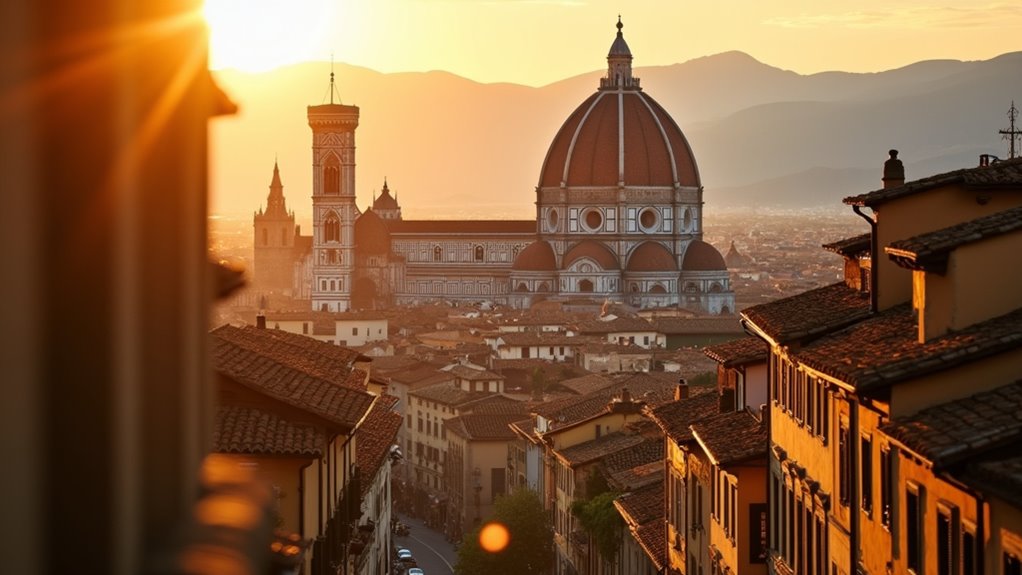
You’re standing in Florence for the first time, and the weight of Renaissance history surrounds you at every corner. With countless museums, churches, and viewpoints competing for your attention, it’s easy to feel overwhelmed by choice. The city’s compact center makes everything walkable, but that doesn’t mean you should wander aimlessly. Smart planning separates travelers who glimpse Florence’s surface from those who truly experience its artistic soul and discover why this city changed the world forever.
- Climb Brunelleschi’s Dome at the Duomo for Florence’s Best Views
- See Michelangelo’s David at the Accademia Gallery
- Explore the Uffizi Gallery’s Renaissance Masterpieces
- Walk Across Ponte Vecchio and Browse the Jewelry Shops
- Discover the Basilica Di Santa Croce and Famous Tombs
- Wander Through Piazza Della Signoria and Its Outdoor Sculptures
- Visit the Bargello Museum for Renaissance Sculpture
- Take in the Panorama From Piazzale Michelangelo
- Explore the Medici Chapels at San Lorenzo
- Stroll Through the Boboli Gardens Behind Pitti Palace
- Climb San Miniato Al Monte for Views and Romanesque Beauty
- Take a Day Trip to the Chianti Wine Region
- The Sum Up
Climb Brunelleschi’s Dome at the Duomo for Florence’s Best Views
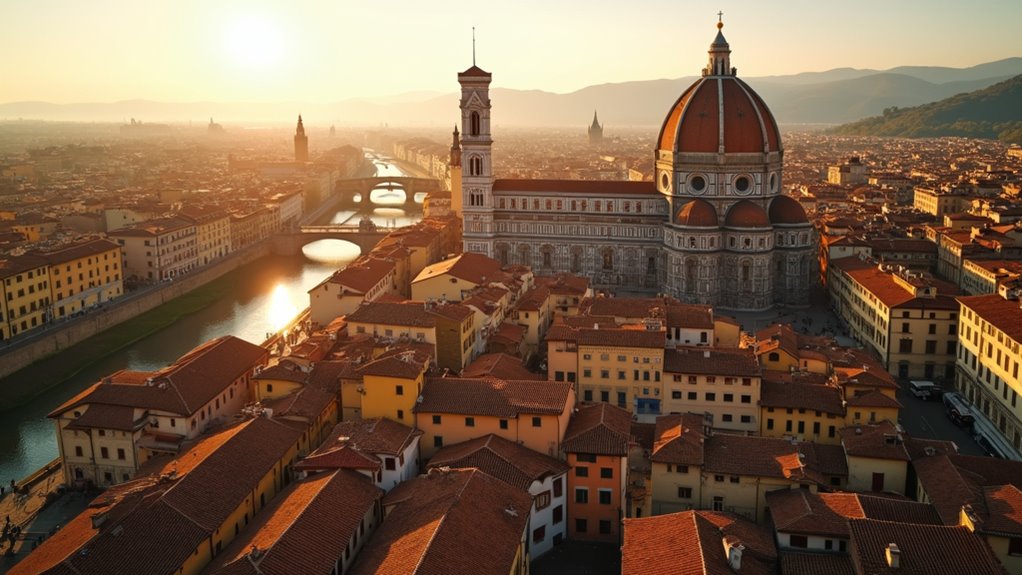
While Florence offers countless breathtaking vistas, you’ll find none more spectacular than the panoramic views from atop Brunelleschi’s Dome at the Duomo. This Renaissance masterpiece requires climbing 463 steep steps through the cavity between two shells—it’s physically demanding but absolutely worth it.
You’ll need advance reservations with timed tickets (around €30 for the Brunelleschi Pass), and the entire experience takes about 45 minutes.
During your ascent, you’ll pass stunning frescoes of the Last Judgment by Vasari and Zuccari, plus eight drum windows featuring works by Donatello and Ghiberti.
The climb isn’t recommended if you have heart conditions, claustrophobia, or mobility issues. Wear comfortable shoes and leave large bags at the mandatory free luggage storage area next to the Opera del Duomo.
Access begins at Porta della Mandorla on the cathedral’s north side, typically open from 08:15 to 18:45.
See Michelangelo’s David at the Accademia Gallery
Standing at 17 feet tall and carved from a single block of Carrara marble, Michelangelo’s David remains one of the world’s most celebrated masterpieces—and you’ll find the original housed in Florence’s Accademia Gallery.
Created between 1501 and 1504, this Renaissance icon depicts the biblical hero before his battle with Goliath, symbolizing Florence’s strength and independence.
The Accademia Gallery sits on Via Ricasoli, near Piazza San Marco and just steps from the Duomo.
David was moved here in 1873 for protection after nearly 370 years outdoors in Piazza della Signoria.
The specially designed tribune enhances your viewing experience of this remarkable sculpture.
Book timed entry tickets in advance—this compact museum gets crowded. Beyond David, you’ll discover Michelangelo’s unfinished “Slaves” that showcase his extraordinary mastery of form and technique.
You’ll need 60–90 minutes to fully appreciate David and the surrounding masterpieces.
Explore the Uffizi Gallery’s Renaissance Masterpieces
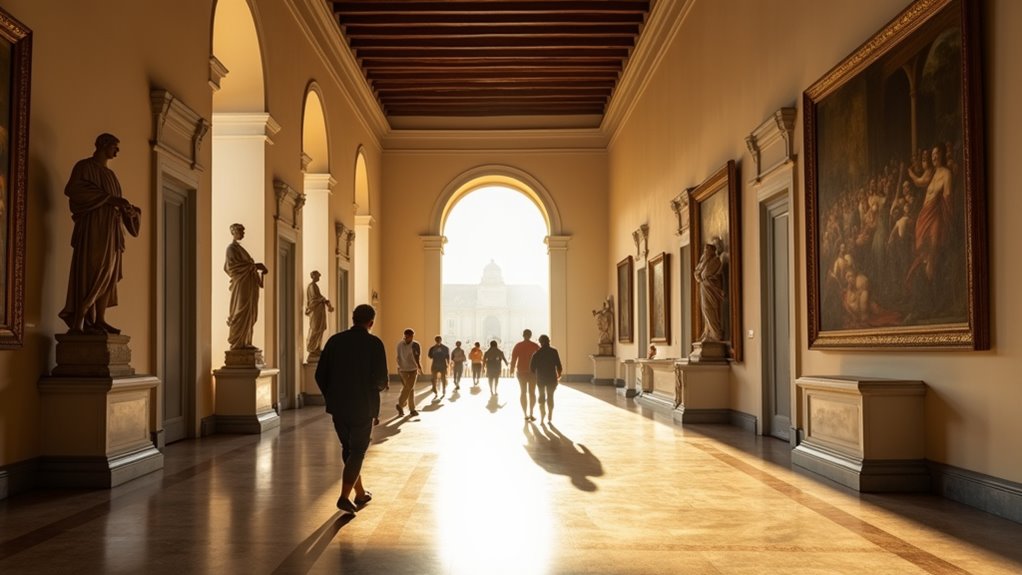
The gallery displays about 2,200 artworks at any time, spanning 13th to 17th centuries. Ancient Roman sculptures line the corridors, including the famous *Venus de’ Medici*. Don’t miss Botticelli’s Birth of Venus, which depicts the goddess arriving on Cyprus on a scallop shell in Rooms 10-14.
Book tickets in advance—the museum’s popularity means long queues. Focus on the second floor’s Renaissance rooms for the most iconic pieces.
Walk Across Ponte Vecchio and Browse the Jewelry Shops
After enjoying Renaissance art, step outside and make your way to Florence’s most famous bridge. Ponte Vecchio, completed in 1345, stands as the city’s most iconic symbol and offers a unique shopping experience you won’t find anywhere else.
As you cross the three-arched stone bridge, you’ll notice jewelry shops jutting out on wooden supports over the Arno River. These goldsmiths replaced the original butchers and fishmongers in the late 16th century when Duke Ferdinando I de’ Medici transformed the bridge’s commerce to match its prestige.
Browse the glittering displays of fine gold and artisanal pieces while enjoying panoramic river views. Don’t miss Benvenuto Cellini’s bust, where couples attach love padlocks to symbolize their eternal bond.
The bridge’s innovative segmental arch design was revolutionary for its time, requiring fewer supporting piers than traditional Roman bridges and allowing better navigation along the Arno River below.
Discover the Basilica Di Santa Croce and Famous Tombs
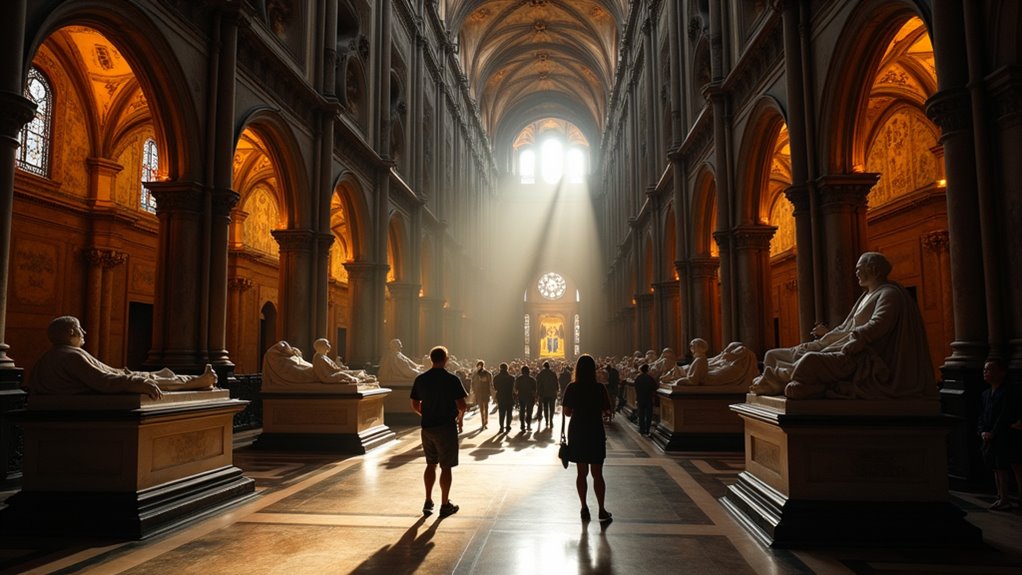
You’ll be amazed by Giotto’s stunning 14th-century frescoes in the Bardi and Peruzzi chapels, considered among Florence’s finest artistic treasures.
The church’s striking neo-Gothic facade, completed in 1865, features intricate marble work and an interesting Star of David detail.
Don’t miss the elegant Pazzi Chapel in the main cloister—it’s one of Renaissance architecture’s earliest examples, traditionally attributed to Brunelleschi. The chapel features beautiful glazed terracotta roundels created by Luca and Andrea della Robbia.
The basilica’s original stained-glass windows create a rare continuous collection spanning five centuries.
Wander Through Piazza Della Signoria and Its Outdoor Sculptures
When you step into Piazza della Signoria, you’re entering Florence’s beating heart—a magnificent open-air museum that’s served as the city’s political center since 1299. The unusual L-shaped layout resulted from destroyed Ghibelline houses, creating this dramatic civic space anchored by the imposing Palazzo Vecchio with its massive crenellated tower.
You’ll discover an incredible collection of sculptures throughout the piazza, but don’t miss the Loggia dei Lanzi—a stunning 14th-century arcade that’s now an open-air gallery. Here you can admire Cellini’s Perseus with the Head of Medusa and Giambologna’s Rape of the Sabine Women up close. The centerpiece Fountain of Neptune, created by Ammannati and Giambologna, was commissioned for a 1565 Medici wedding and symbolizes Florentine dominion over the sea.
The piazza’s witnessed executions, political rallies, and centuries of Florentine drama, making every corner rich with history.
Visit the Bargello Museum for Renaissance Sculpture
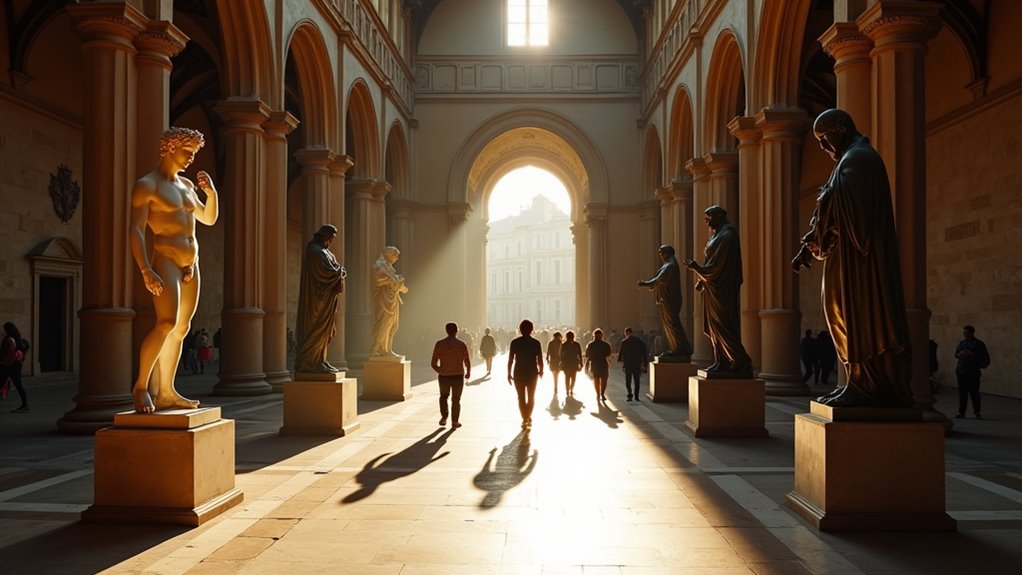
Just steps away from the bustling crowds of the Uffizi, the Bargello Museum houses the world’s most extraordinary collection of Renaissance sculpture in a fortress-like palace that’s witnessed over 750 years of Florentine history.
You’ll discover masterpieces by Donatello, Michelangelo, and Cellini displayed in rooms where prisoners once awaited execution. Don’t miss Donatello’s revolutionary bronze David—the first freestanding nude sculpture since antiquity—alongside his marble Saint George in the soaring 18-meter-high Donatello Hall.
Michelangelo’s powerful Brutus bust showcases his sculptural genius, while Cellini’s intricate bronzes reveal his goldsmith precision. The museum also houses fascinating collections of Renaissance medals, weapons, fabrics, and decorative arts that once belonged to the powerful Medici family.
Originally Florence’s town hall, this Gothic palace transformed into Italy’s first national museum in 1865, preserving both artistic treasures and architectural gems like Giotto’s restored frescoes.
Take in the Panorama From Piazzale Michelangelo
For Florence‘s most breathtaking panoramic views, climb to Piazzale Michelangelo, where the entire Renaissance city unfolds beneath you like a perfectly preserved postcard. You’ll spot iconic landmarks including the Duomo’s massive dome, Ponte Vecchio spanning the Arno River, and Palazzo Vecchio’s imposing tower.
The square features bronze replicas of Michelangelo’s David and sculptures from the Medici Chapel, celebrating Florence’s artistic heritage.
Skip the steep uphill walk and take bus lines 12 or 13 instead. While sunset draws crowds, visit at noon for ideal photography without backlighting issues.
The piazzale was redesigned in 2016 to reduce traffic, creating a more peaceful atmosphere. After exploring the viewpoint, you can easily descend on foot to Florence’s city center in just 15 minutes. Grab refreshments at nearby cafés while soaking in 360-degree views of Florence’s terracotta rooftops and surrounding Tuscan hills.
Explore the Medici Chapels at San Lorenzo
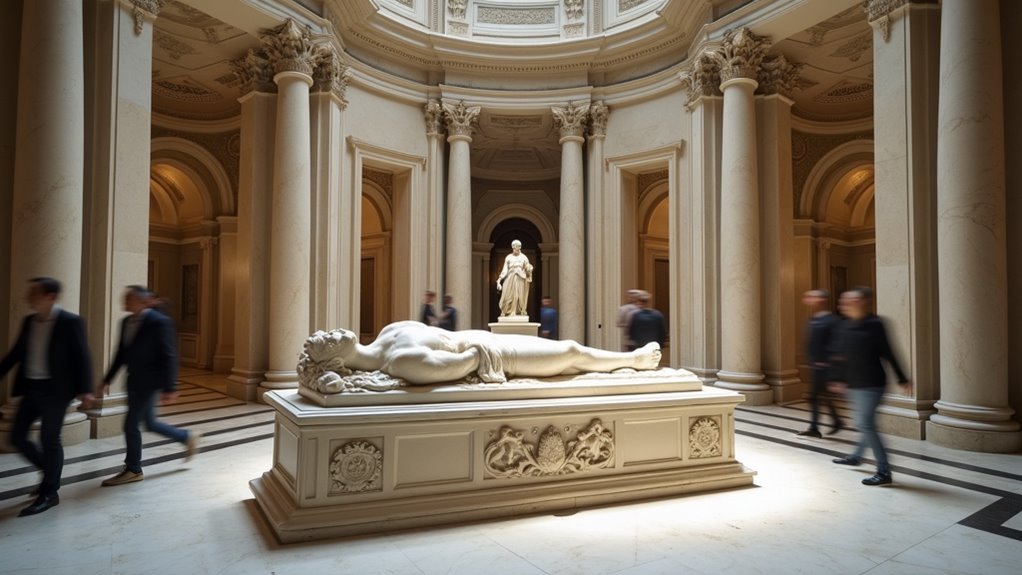
After taking in Florence’s skyline, step inside one of the city’s most significant artistic treasures at the Medici Chapels within San Lorenzo Basilica. You’ll find the entrance on Piazza Madonna degli Aldobrandini, separate from the main church.
The complex houses two remarkable sections: Michelangelo’s New Sacristy and the opulent Chapel of the Princes.
In the New Sacristy, you’ll encounter Michelangelo’s masterful sculptures representing Night, Day, Dawn, and Dusk adorning the Medici tombs.
The Chapel of the Princes dazzles with its octagonal design and walls encrusted with rare marbles and semi-precious stones. The interior dome was originally planned to be entirely lapis lazuli, though it was left incomplete.
These chapels served as the Medici family’s spiritual center and final resting place, showcasing their dynastic power through monumental funerary architecture that spans nearly two centuries of artistic evolution.
Stroll Through the Boboli Gardens Behind Pitti Palace
Behind the imposing Pitti Palace, you’ll discover one of Florence’s most enchanting escapes in the expansive Boboli Gardens. These 45-hectare Renaissance gardens, begun in 1549 for the Medici family, offer a perfect blend of art, nature, and history.
You’ll wander through geometric pathways lined with ancient Roman statues and Renaissance sculptures, creating an open-air museum experience.
Don’t miss the spectacular Buontalenti Grotto with its artificial stalactites and water features, or the impressive Amphitheatre crowned by an Egyptian obelisk from 1300 BC. The gardens showcase a fascinating axial development design that begins from the rear façade of Palazzo Pitti and rises up Boboli Hill, culminating at the magnificent Neptune Fountain.
The terraced design provides stunning panoramic views of Florence from multiple vantage points.
Plan at least 2-3 hours for your visit, wear comfortable shoes for the gravel paths and slopes, and combine your ticket with Pitti Palace entry for maximum value.
Climb San Miniato Al Monte for Views and Romanesque Beauty
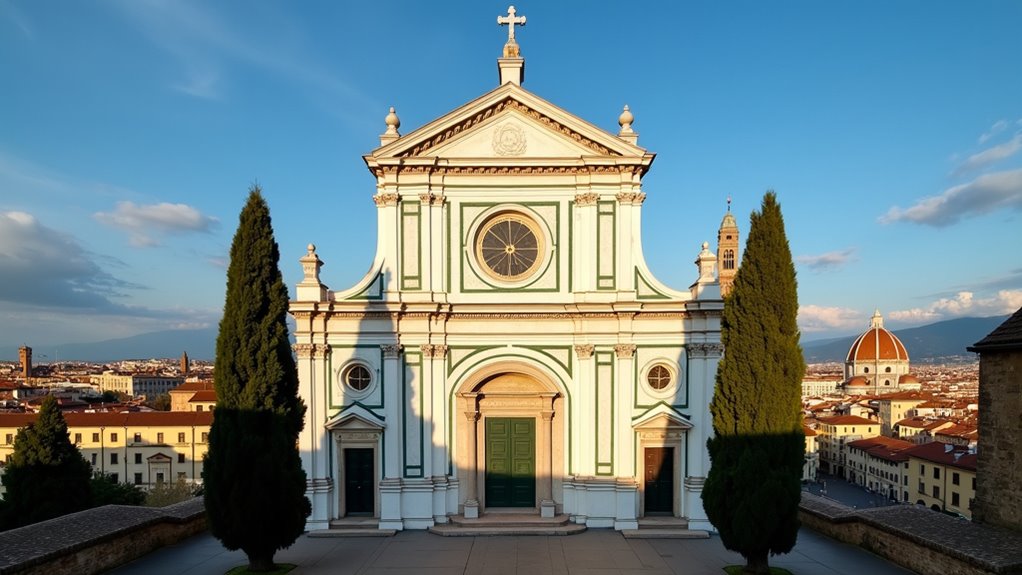
Just a short climb uphill from the city center, San Miniato al Monte rewards your effort with breathtaking panoramic views and some of Florence’s most stunning Romanesque architecture.
You’ll find yourself at one of Tuscany’s finest examples of the style, with its distinctive geometric white and green marble façade and striking 13th-century mosaic of Christ.
Inside, don’t miss the beautiful zodiac marble flooring from 1207 and Michelozzo’s elegant Chapel of the Crucifix.
The crypt features 36 marble columns salvaged from Roman buildings. The church’s interior showcases distinctive black and white marble panels that complement the decorated painted timber truss roof.
Perched 100 meters above the Arno River, this 11th-century basilica offers spectacular city views while showcasing Florence’s rich architectural heritage in a peaceful hilltop setting.
Take a Day Trip to the Chianti Wine Region
Twenty minutes south of Florence lies one of Italy’s most celebrated wine regions, where rolling hills dotted with cypress trees and medieval stone villages create the quintessential Tuscan landscape.
You’ll find yourself winding along Via Chiantigiana (SS 222), the scenic route connecting vineyards and hilltop towns between Florence and Siena.
Book a full-day tour that includes visits to two prestigious wineries for guided cellar tours and Sangiovese tastings paired with local cured meats and cheeses.
Many tours combine wine experiences with stops in medieval villages like Greve in Chianti or Montefioralle.
You’ll enjoy traditional Tuscan lunch featuring handmade pasta and farm-fresh ingredients.
Small-group tours offer personalized attention, while some include olive oil tastings and opportunities to purchase wines directly from producers. For a more adventurous experience, consider tours that feature off-road driving through scenic Tuscan landscapes in custom 4WD vehicles.
The Sum Up
You’ve got an incredible itinerary ahead of you in Florence. Don’t try to cram everything into one day—you’ll burn out quickly. Book your Uffizi and Accademia tickets in advance to skip those notorious lines. Wear comfortable walking shoes since you’ll be covering lots of ground on cobblestones. Start early to beat the crowds, and don’t forget to pause between museums to soak in the atmosphere with some gelato.