
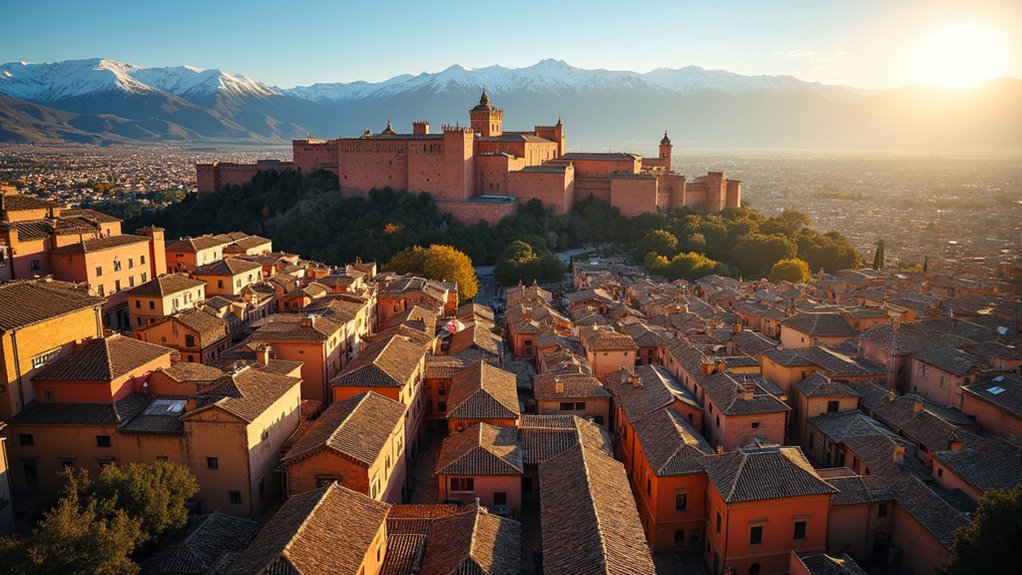
You’ll find Granada isn’t your typical Spanish city. Nestled beneath the Sierra Nevada mountains, it’s where Moorish palaces meet bustling tapas bars, and ancient cobblestone streets wind past world-famous gardens. Whether you’re drawn to the architectural masterpiece that is the Alhambra or prefer discovering hidden viewpoints where locals gather at sunset, this Andalusian gem offers experiences that’ll reshape how you think about Spain’s cultural landscape.
- Tour the Nasrid Palaces at the Alhambra
- Explore the Alcazaba Fortress for City Views
- Wander Through the Generalife Gardens
- Visit Granada Cathedral and the Royal Chapel
- Get Lost in the Albaicín’s Moorish Streets
- Watch the Sunset From Mirador De San Nicolás
- Experience Flamenco in Sacromonte’s Caves
- Stroll Along the Carrera Del Darro
- Relax at a Traditional Hammam Spa
- Go Tapas Hopping in the City Center
- Discover Hidden Viewpoints Beyond the Crowds
- The Sum Up
Tour the Nasrid Palaces at the Alhambra
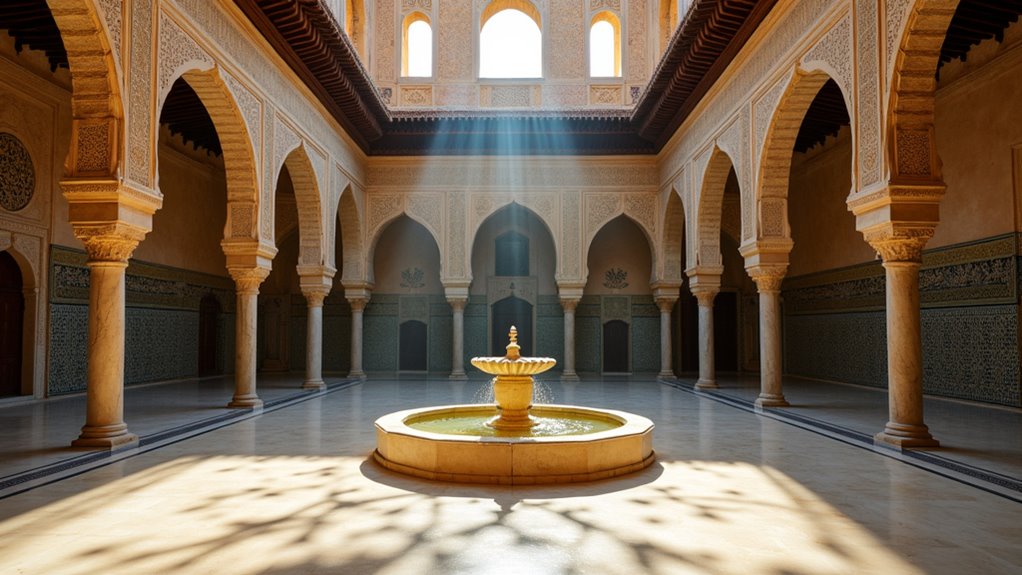
When you step into the Nasrid Palaces at the Alhambra, you’re entering one of the world’s most exquisite examples of Islamic architecture. Built between the 13th and 14th centuries by Nasrid rulers, these palaces served as the royal residence and administrative center.
You’ll explore three main areas: the Palacio de Comares with its grand Hall of the Ambassadors, the stunning Palacio de los Leones featuring 124 marble columns and a central lion fountain, and the Mexuar council chamber.
Don’t miss the intricate muqarnas vaulting, Arabic inscriptions, and elaborate stucco work throughout. The Hall of the Two Sisters features a remarkable muqarnas dome with 8,017 pieces of intricate Islamic carpentry that creates stunning natural lighting effects.
The palaces showcase brilliant water integration with channels, fountains, and reflecting pools that create cooling effects.
Book tickets well in advance since entry is limited and timed.
Explore the Alcazaba Fortress for City Views
After exploring the ornate beauty of the Nasrid Palaces, head to the Alcazaba fortress for a completely different experience that combines military history with Granada’s best panoramic views.
You’ll climb through the oldest part of the Alhambra complex, dating back to the 9th century, where thick rammed earth walls and defensive towers tell stories of centuries-old battles. Built during intense conflicts between Muslims and muwalladins, the fortress served as both a royal residence and military stronghold under Mohammed I’s rule.
The real payoff comes when you reach Torre de la Vela, the fortress’s watch tower. From here, you’ll get commanding views of Granada’s red-tiled rooftops, the snow-capped Sierra Nevada mountains, and the sprawling valley below.
It’s the same strategic vantage point that once allowed guards to spot approaching enemies. Don’t miss exploring the interconnected towers and narrow pathways that reveal the fortress’s ingenious defensive design.
Wander Through the Generalife Gardens
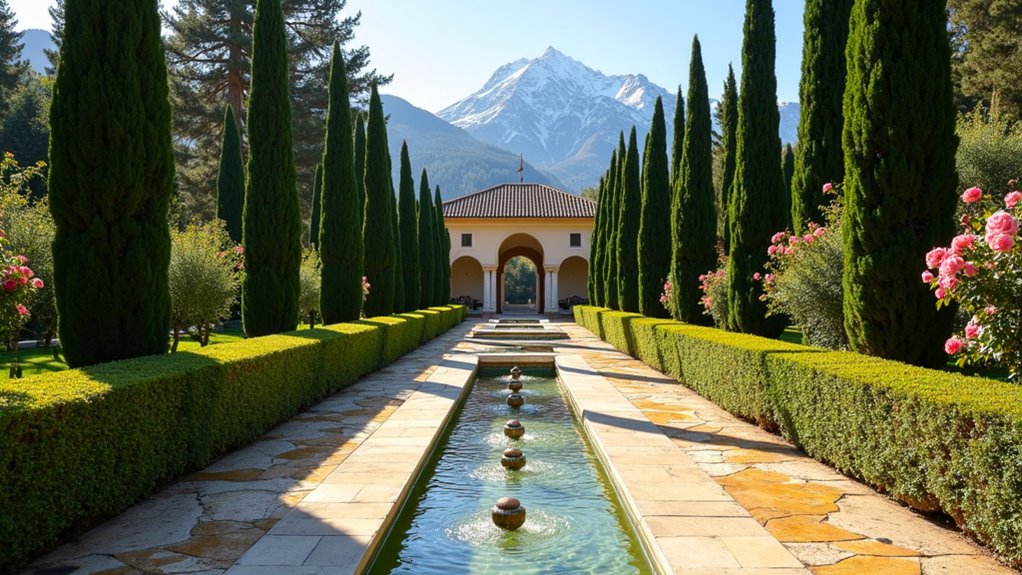
Just steps away from the fortress walls, you’ll discover the Generalife Gardens—a 13th-century paradise that served as the Nasrid rulers’ summer retreat and country estate.
You’ll walk through terraced gardens where water cascades through channels and fountains, creating natural cooling in Granada’s heat.
The layout follows traditional Islamic design with citrus trees, pomegranates, jasmine, and roses filling the air with fragrance.
Don’t miss the Court of the Myrtles with its central water canal and perfectly manicured myrtle hedges.
The gardens blend ornamental beauty with practical function—they originally produced food for the Alhambra complex. The 16th-century Water Stairway features terraced steps with carved stone handrails that create whirlpools where water channels meet.
As you explore the various levels, you’ll experience how Moorish architects created an earthly paradise using advanced water engineering and symbolic plant choices.
Visit Granada Cathedral and the Royal Chapel
From the serene gardens of the Alhambra, you’ll find Granada’s spiritual heart in its magnificent cathedral and Royal Chapel, where Christian Spain literally built its legacy on top of Islamic foundations.
The cathedral, constructed on the former main mosque’s site, showcases 181 years of evolving architecture—Renaissance meets Baroque meets Gothic in stunning harmony. You’ll be struck by its five-nave layout and soaring central dome designed for community worship.
Don’t miss the adjacent Royal Chapel, where Catholic Monarchs Isabella and Ferdinand rest eternally. Built earlier in Gothic Isabelline style, it contrasts beautifully with the cathedral’s Renaissance grandeur. The chapel’s stunning altarpiece, crafted by Felipe Bigarny, depicts intricate scenes from Saint John the Baptist and Saint John the Evangelist with remarkable detail.
The ornate altarpieces and intricate woodwork create an atmosphere of solemn majesty that’ll transport you back to Spain’s golden age.
Get Lost in the Albaicín’s Moorish Streets
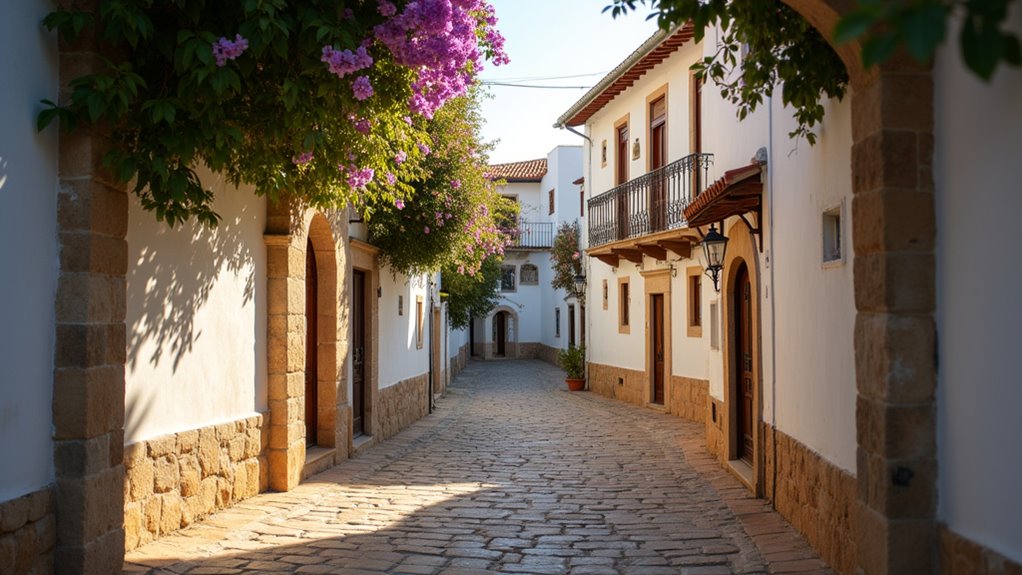
While the cathedral represents Granada’s Christian transformation, you’ll discover the city’s Islamic soul by wandering through the Albaicín’s maze-like streets. This ancient neighborhood, Granada’s oldest district, preserves its medieval Nasrid street plan from the 13th-15th centuries.
You’ll navigate narrow cobbled alleys that wind between whitewashed houses and hidden courtyards, following the same paths Muslims walked centuries ago.
Don’t worry about getting lost—that’s the point. The labyrinthine layout leads to unexpected discoveries: traditional cármenes (walled garden villas), remnants of Moorish architecture, and small plazas perfect for catching your breath. The name Albaicín itself comes from the Arabic al-bayyāzīn, meaning “neighbourhood on a slope or incline.”
Look for Nasrid-era details like carved plasterwork and central courtyards with pools. This UNESCO World Heritage site offers Granada’s most authentic glimpse into its Islamic past.
Watch the Sunset From Mirador De San Nicolás
Your wandering through the Albaicín’s winding streets will eventually lead you to one of Granada’s most spectacular rewards: the sunset view from Mirador de San Nicolás. This hilltop square offers breathtaking panoramic views of the Alhambra fortress with the Sierra Nevada mountains as a dramatic backdrop.
You’ll want to arrive well before sunset to secure a good spot, as crowds gather nightly to watch the golden light transform the Alhambra’s palaces and towers into a canvas of shifting colors.
The atmosphere buzzes with flamenco guitar music and street performers, creating Granada’s most iconic experience. The viewpoint is named after the nearby Church of San Nicolás, which was built in the 16th century on the remains of the former Azitini Mosque following Granada’s Christian conquest.
Even former President Bill Clinton praised this view as one of the world’s most beautiful sunsets. The viewpoint’s free and always accessible, making it an essential Granada experience.
Experience Flamenco in Sacromonte’s Caves

As you descend from the Mirador into the ancient caves of Sacromonte, you’ll discover Granada’s most authentic flamenco experience. This historic gitano neighborhood remains one of Spain’s flamenco birthplaces, where traditional Zambra performances unfold in centuries-old cave dwellings carved into the hillside.
You’ll witness raw emotion and intimate artistry at venues like Cueva Flamenca Los Amayas or Cuevas Los Tarantos. Performers from multi-generational flamenco families showcase complex footwork, passionate singing, and expressive guitar work. The wooden floors amplify every stomp, creating an electrifying sensory experience.
Shows typically last one hour and start around €28-33 per person. Book online ahead of time since these authentic caves seat only 25-60 people. You’ll sit close enough to feel the dancers’ intensity in an unforgettable culture. Local flamenco schools also offer workshops where you can learn the fundamentals of this passionate art form.
Stroll Along the Carrera Del Darro
When you need a peaceful escape from Granada’s bustling squares, the cobblestone path of Carrera del Darro offers one of Spain’s most romantic walks. You’ll stroll alongside the gentle Darro River between Albaicín and Alhambra hills, with stunning views of the fortress above.
The street showcases Granada’s layered history through 16th and 17th-century palatial houses, Arab-style buildings, and Renaissance churches. Don’t miss Casa de Castril’s Archaeological Museum or the ancient El Bañuelo Arab bathhouse.
Historic bridges like Puente Cabrera span the slow-flowing river, while crumbling remains of the 11th-century Moorish Puente del Cadí hint at the area’s deeper past.
Low shrubs along the riverbank and faded painted façades create an authentic bohemian atmosphere that’s remained largely untouched by time. The area comes alive after sunset with sophisticated LED lighting systems that illuminate the historic bridges and riverbed, enhancing the nighttime experience without disturbing the cultural heritage.
Relax at a Traditional Hammam Spa
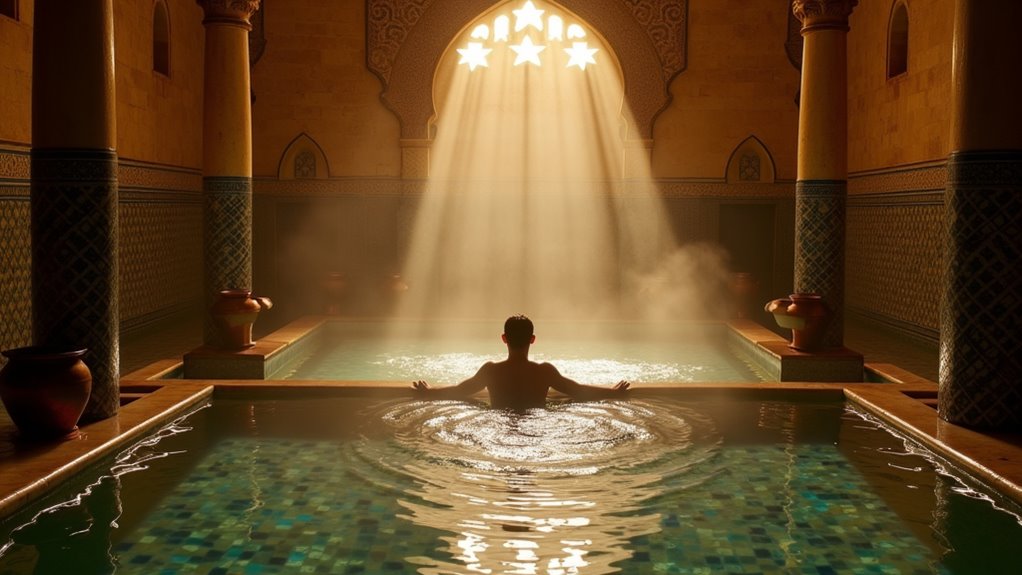
After exploring Granada’s historic streets, you’ll find the perfect way to unwind at one of the city’s authentic hammam spas. Four main traditional Arab baths await: Hammam Al Ándalus at Plaza Nueva, Al-Haram on Calle Santa Paula, Baths of Elvira on Calle Santa Ana, and Hammam Palacio Nazarí near the Cathedral.
You’ll experience thermal circuits with hot, warm, and cold pools that improve circulation and promote detoxification. The steam rooms use aromatherapy for relaxation, while exfoliation services renew your skin.
Most hammams feature stunning Moorish architecture with mosaics, marble fountains, and intricate arches that transport you back centuries. These historic bathhouses served as social gathering spots with separate areas for men and women during the Moorish period.
Book ahead during peak season, as these intimate spaces fill quickly. Expect to pay around 79 euros for the full experience, including pools and massage options.
Go Tapas Hopping in the City Center
Head to El Realejo quarter for Bar Poë’s vegetarian-friendly options and traditional croquettas.
Don’t miss La Sitarilla’s hidden location behind the main shopping area for family-run specialties like spinach cheese potatoes.
Try local favorites including patatas bravas, albóndigas, and fried aubergines.
Expect to stand at busy authentic spots—the crowds signal quality. For an exceptional wine experience, visit Taberna La Tana where knowledgeable staff provide personalized pairing experiences to complement their extensive selection.
Focus on districts like Realejo, San Matías, and around Campo del Príncipe for the best hopping experiences.
Discover Hidden Viewpoints Beyond the Crowds
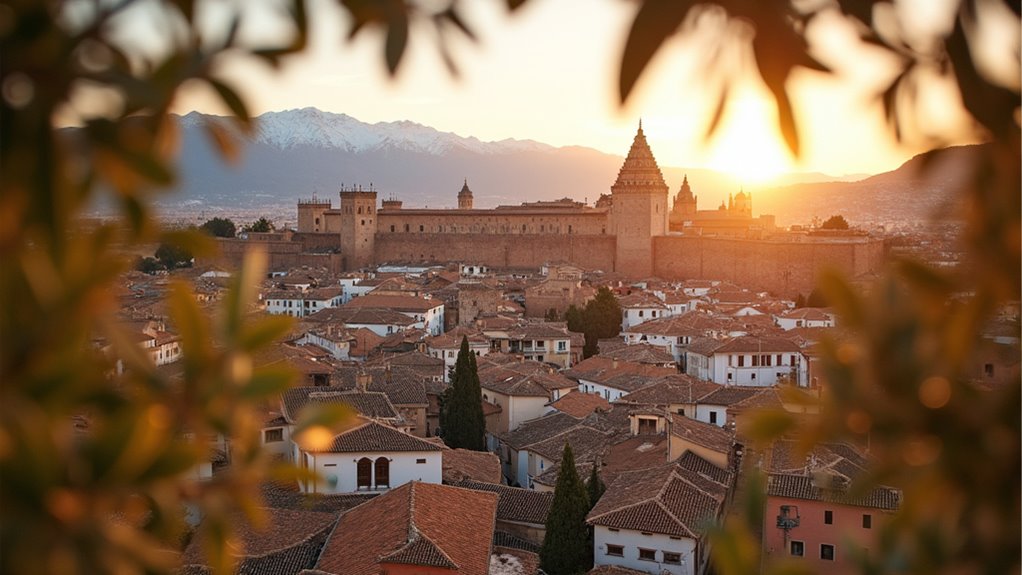
While most visitors flock to Mirador de San Nicolás for the classic Alhambra shot, Granada’s best panoramic views often lie tucked away in quieter corners of the city. You’ll find peaceful alternatives at Placeta de Carvajales, where intimate Alhambra views come without the crowds.
For the ultimate vantage point, tackle the 40-minute hike to San Miguel Alto—Granada’s highest viewpoint offering spectacular 360-degree vistas.
Don’t overlook Mirador de San Cristóbal, positioned at Albaicín’s top with historical Zirid wall views and far fewer travelers. The Sacromonte area surprises many visitors with its unexpected panoramas from the cave museum district. Additional scenic spots like Mirador de la Lona and Mirador Plaza Victoria provide excellent alternatives for capturing memorable sunset photos.
These hidden spots let you photograph Granada’s skyline in tranquility while discovering the city’s authentic character beyond typical tourist trails.
The Sum Up
You’ll find Granada’s magic lies in its perfect blend of cultures and experiences. Whether you’re marveling at Moorish architecture, getting lost in narrow cobblestone streets, or savoring tapas with locals, each moment here feels authentic and unforgettable. Don’t rush through your visit—Granada rewards those who take time to soak in its atmosphere. Pack comfortable walking shoes, book your Alhambra tickets in advance, and prepare for a city that’ll capture your heart completely.