
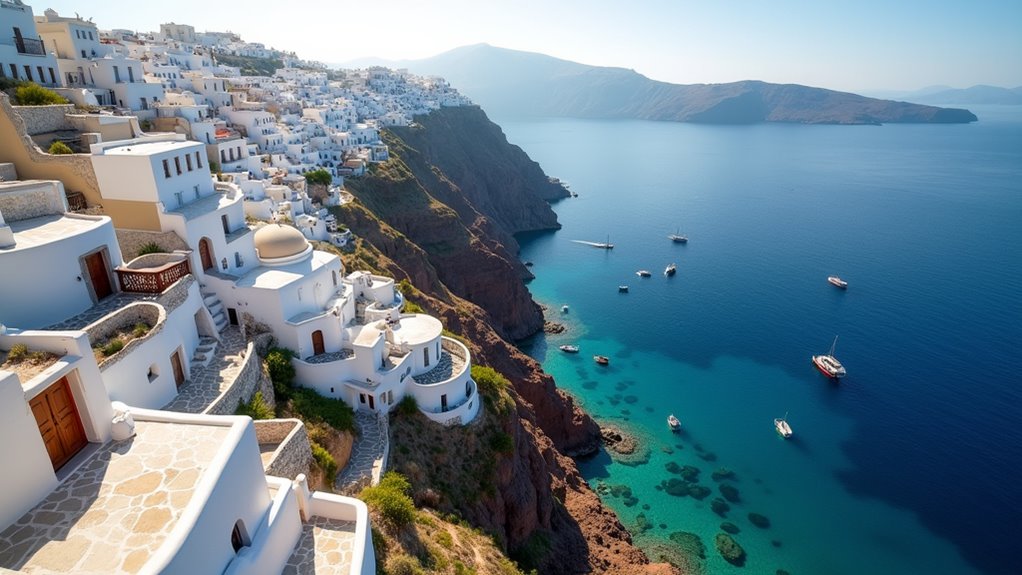
You’ll find Greece offers incredible experiences without breaking your budget, from wandering ancient ruins to swimming in crystal-clear waters. Whether you’re drawn to Athens’ historical treasures, Santorini’s dramatic cliffs, or hidden gems like underground lakes, there’s something for every type of traveler. The key is knowing which sites deliver the most value for your time and money. Here are the essential experiences that’ll help you make the most of your Greek adventure.
- Explore the Acropolis and Its Museum in Athens
- Wander Through Plaka and Monastiraki Neighborhoods
- Take a Day Trip to the Temple of Poseidon at Cape Sounio
- Experience the Cliff-Top Villages of Santorini
- Hike Through the Monasteries of Meteora
- Discover Minoan Civilization at Knossos Palace in Crete
- Relax at Elafonissi Beach’s Pink Sands
- Walk Through the Samaria Gorge
- Explore the Medieval Old Town of Rhodes
- Visit Shipwreck Beach on Zakynthos
- Tour Ancient Olympia’s Athletic Grounds
- Experience Thessaloniki’s Byzantine Heritage and Modern Culture
- Take a Boat Trip to Delos Island
- Swim in Melissani Cave’s Underground Lake
- The Sum Up
Explore the Acropolis and Its Museum in Athens
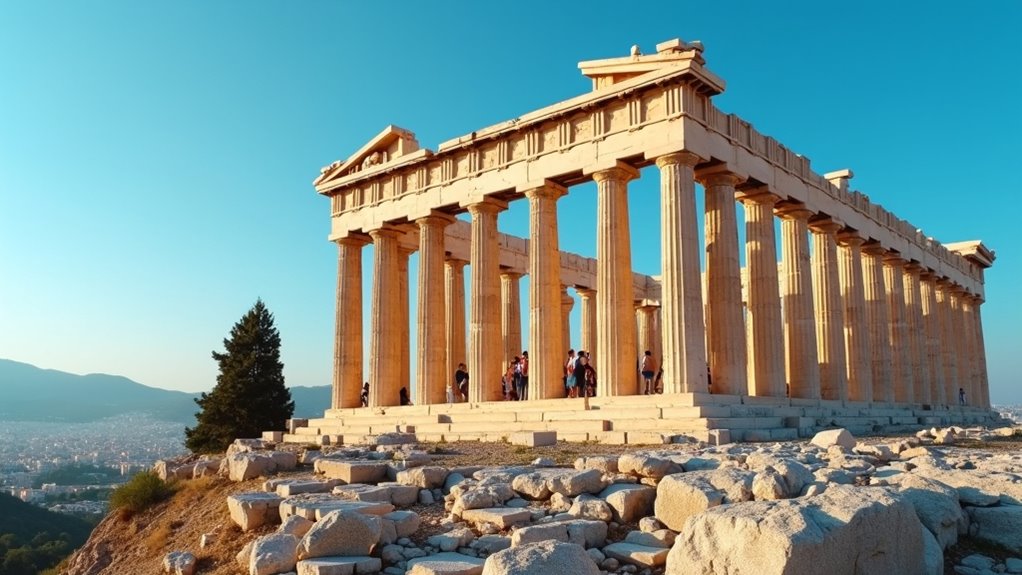
When you stand before the Acropolis, you’re looking at 2,500 years of history perched 150 meters above Athens on a rocky outcrop that’s been significant since 1400 BCE.
The Parthenon is your main attraction—a stunning Doric temple with white Pentelic marble that’ll take your breath away.
Don’t miss the Erechtheion’s famous Caryatids, where six female sculptures serve as columns.
You’ll enter through the impressive Propylaea gateway and spot the small Temple of Athena Nike on the southwest corner.
After exploring the ruins, head to the nearby Acropolis Museum where you can see original artifacts and sculptures, including authentic Caryatid statues. The architects used clever optical techniques to make the structures appear perfectly straight and level from any viewing angle.
The museum provides vital context that’ll deepen your understanding of what you’ve just experienced on the ancient citadel.
Wander Through Plaka and Monastiraki Neighborhoods
After soaking up the ancient grandeur above, you’ll want to explore the charming streets below where locals actually live and work. Plaka, Athens’ oldest neighborhood, spreads beneath the Acropolis with labyrinthine streets and neoclassical buildings. You’ll discover it’s nicknamed the “Neighborhood of the Gods” for good reason – ancient ruins peek through modern sidewalks.
Don’t miss Anafiotika’s narrow alleys lined with whitewashed Cycladic houses, built by island workers centuries ago. Monastiraki offers bustling flea markets and vibrant squares where you can bargain for treasures.
Both neighborhoods are pedestrian-friendly with cafes, tavernas, and traditional shops tucked into historic corners. The area has been continuously inhabited since antiquity, making it a living testament to Athens’ enduring legacy. Visit Brettos distillery for colorful bottles and traditional spirits. These areas perfectly blend ancient history with authentic Greek street life.
Take a Day Trip to the Temple of Poseidon at Cape Sounio
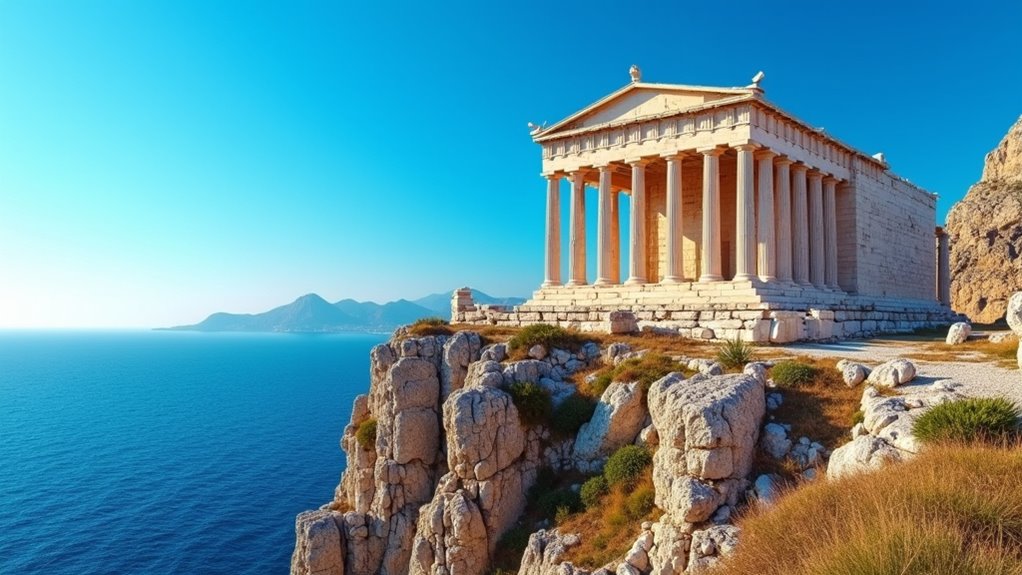
Just 65 kilometers south of Athens lies one of Greece’s most spectacular ancient sites – the Temple of Poseidon at Cape Sounio. You’ll find this 5th-century BCE marvel perched dramatically on clifftops overlooking the Aegean Sea, where thirteen surviving Doric columns still stand from the original thirty-four.
Plan your visit for late afternoon to catch the legendary sunset – it’s absolutely worth timing your trip around this magical moment when golden light illuminates the marble ruins. The temple served as a vital landmark for ancient sailors, and you’ll understand why when you see the panoramic sea views stretching endlessly before you. Built as a victory trophy following the Greek triumph over the Persians in 479 BCE, the temple stands as a testament to ancient Greek resilience and devotion.
Don’t miss exploring the nearby beaches for a revitalizing swim before or after your temple visit, making this an affordable yet unforgettable day trip from Athens.
Experience the Cliff-Top Villages of Santorini
While Athens offers incredible ancient history, Santorini’s cliff-top villages showcase Greece’s most dramatic natural beauty combined with stunning Cycladic architecture.
You’ll want to explore Fira first—it’s centrally located with panoramic volcano views, plus affordable shopping and nightlife options.
Don’t miss Oia for those Instagram-worthy blue-domed churches and sunset shots, though expect crowds and higher prices.
For budget-conscious travelers, consider staying in quieter Imerovigli, which offers excellent views without Oia’s premium costs.
Hike the challenging Skaros Rock for free panoramic vistas.
Pyrgos provides medieval charm with over 50 churches and fewer travelers, while Megalochori offers authentic village life surrounded by wineries. This fortified Venetian town dates back to the 15th century and features narrow, winding lanes that lead to spectacular panoramic views from the castle walls.
The 3-4 hour Fira to Oia hiking trail connects these villages affordably while delivering spectacular photo opportunities.
Hike Through the Monasteries of Meteora
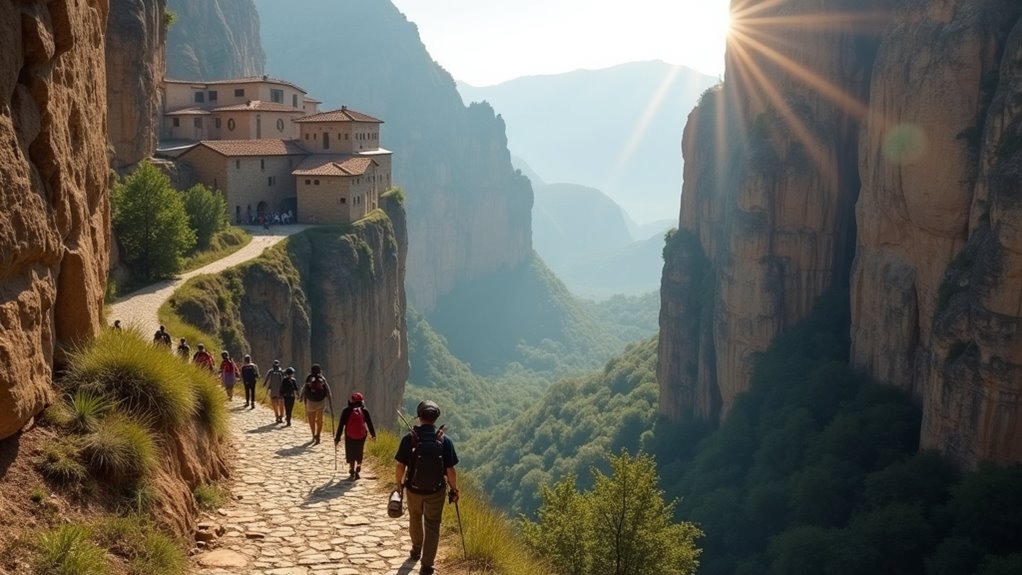
Though Santorini dazzles with its clifftop beauty, Meteora offers an equally stunning experience where six historic monasteries perch dramatically on towering rock pillars in central Greece.
You’ll find hiking trails starting from budget-friendly towns Kalambaka and Kastraki, where you can base yourself affordably.
The three-hour monastery circuit doesn’t require expensive gear—comfortable shoes and basic supplies suffice. You’ll tackle varied terrain from forest paths to stone steps, with the Holy Monastery of Great Meteoron offering the steepest challenge.
St. Stephen’s Monastery provides the easiest access via a simple bridge crossing.
Pack water and snacks to save money, and consider the Footpath to Holy Spirit for adventurous scrambling. The landscape offers panoramic views of cliffs and monasteries, making it a unique sight.
With over 100km of marked trails available, you’ll capture incredible photos while experiencing Greece’s spiritual heritage without breaking your budget.
Discover Minoan Civilization at Knossos Palace in Crete
From Meteora’s spiritual heights, you can explore another side of Greece’s rich history on the island of Crete, where Knossos Palace reveals Europe’s oldest civilization. This massive 15,000-square-meter Minoan complex dates back to 1900 BC and offers an incredible glimpse into advanced Bronze Age society.
You’ll wander through labyrinthine corridors that inspired the Minotaur myth, admire vibrant frescoes like the famous Bull-Leaping scene, and visit the remarkable gypsum throne room. The palace’s sophisticated architecture includes light wells, workshops, and storage areas that showcase Minoan ingenuity.
Don’t miss the on-site museum displaying original artifacts including serpentine items and snake goddess figurines. The palace lacks fortifications, reflecting the peaceful Minoans’ confidence in their maritime security.
It’s an affordable cultural experience that brings ancient mythology to life. Beneath this grand palace lie even deeper roots, as the site has been continuously inhabited since 7000 BCE, beginning with Neolithic settlers who first established their village using simple wattle and daub construction.
Relax at Elafonissi Beach’s Pink Sands
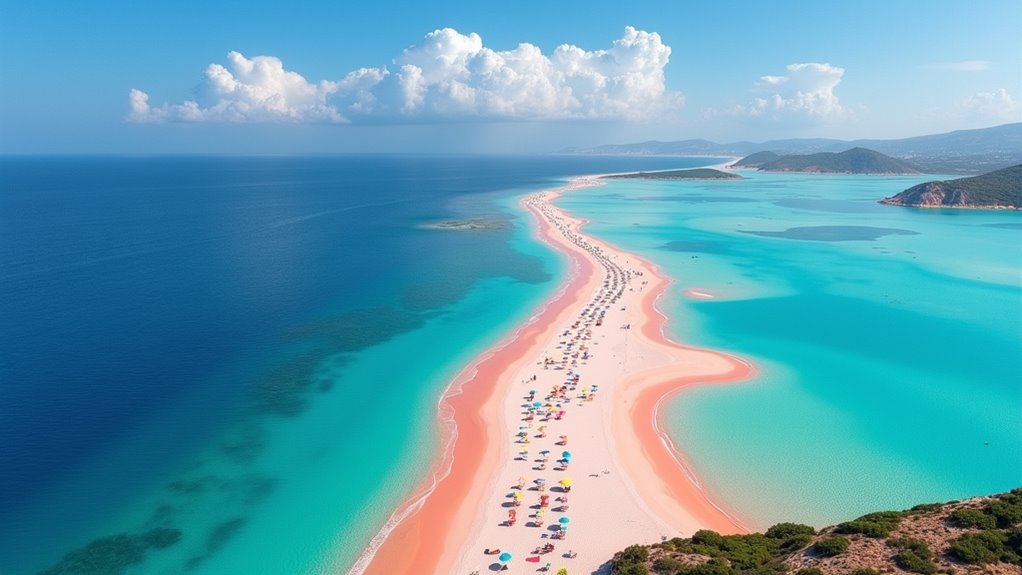
After exploring Crete’s ancient history, you’ll find paradise at Elafonissi Beach, where soft pink sands meet crystal-clear turquoise waters on the island’s southwest coast. This protected nature reserve earned Tripadvisor’s “World’s Best Beach” title in 2025, thanks to its unique pink-hued sand created from crushed foraminifera shells.
Visit in May, June, or September to avoid summer crowds, and arrive before 10 a.m. to snag the best spots. Sunbeds cost around 20€, with limited snack bar options available on-site.
You can wade across to Elafonisi Island during calm conditions, making it perfect for families with children. The lagoon surrounding the beach provides habitat for rare sea turtles and migratory birds, adding to its natural significance.
Remember: removing sand is illegal and fines apply. Consider exploring nearby Kedrodasos Beach for a quieter, equally stunning alternative.
Walk Through the Samaria Gorge
While Crete’s beaches offer relaxation, the island’s rugged interior promises one of Europe’s most spectacular hiking adventures. The Samaria Gorge stretches 16 kilometers through Crete’s White Mountains, descending from 1,250 meters to sea level at Agia Roumeli.
You’ll navigate towering 300-meter walls and squeeze through the famous Iron Gates, just four meters wide. The full-day hike covers about 15 kilometers of mostly downhill terrain, so pack plenty of water and wear sturdy boots.
This UNESCO Biosphere Reserve protects over 450 species, including the rare kri-kri goat you might spot along the trail. The gorge operates May through October, attracting around 1,000 daily visitors during peak season. For a quieter experience, consider visiting during May or September, when visitor numbers are significantly lower than the busy August period.
Starting early helps you avoid crowds and afternoon heat while experiencing this incredible natural wonder.
Explore the Medieval Old Town of Rhodes
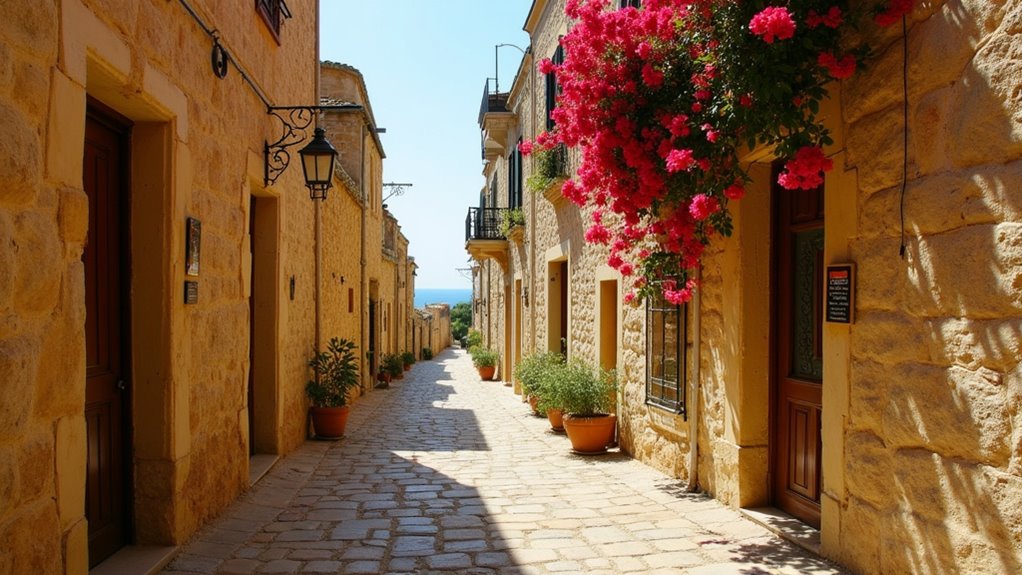
Step through the massive stone gates of Rhodes Old Town and you’ll enter one of Europe’s best-preserved medieval cities. This UNESCO World Heritage site showcases stunning Gothic and Renaissance architecture from the Knights Hospitaller period, blended with Byzantine and Ottoman influences.
You’ll want to walk the famous Street of the Knights, where medieval inns line cobblestone paths, and visit the Palace of the Grand Master museum. Don’t miss exploring the massive fortification walls—some reach 12 meters thick—for incredible harbor views.
The Archaeological Museum, housed in the former Knights’ Hospital, offers fascinating artifacts without breaking your budget. Wander through La Juderia‘s Jewish Quarter and discover centuries of cultural layers as you navigate atmospheric squares and narrow medieval streets. The area also features the historic Kahal Shalom Synagogue, reflecting the diverse religious heritage of this ancient crossroads.
Visit Shipwreck Beach on Zakynthos
One of Greece’s most photographed destinations, Navagio Beach on Zakynthos Island captivates visitors with its dramatic combination of turquoise waters, white pebble shores, and the rusted remains of the MV Panagiotis cargo ship that ran aground in 1980.
You’ll need to join a boat tour to see this iconic spot, as it’s inaccessible by land due to towering limestone cliffs. Tours typically cost around €20-30 and take 20-25 minutes from nearby harbors.
Note that you can’t actually step onto the beach since it’s been closed since 2022 due to rockfall risks. However, you can still appreciate the stunning scenery from your boat and snap incredible photos.
Many tours combine Shipwreck Beach with visits to nearby Blue Caves for better value. For a panoramic view from above, visit the Navagio View Point on the cliffs overlooking the bay, which offers spectacular photo opportunities of the wreck and beach below.
Tour Ancient Olympia’s Athletic Grounds
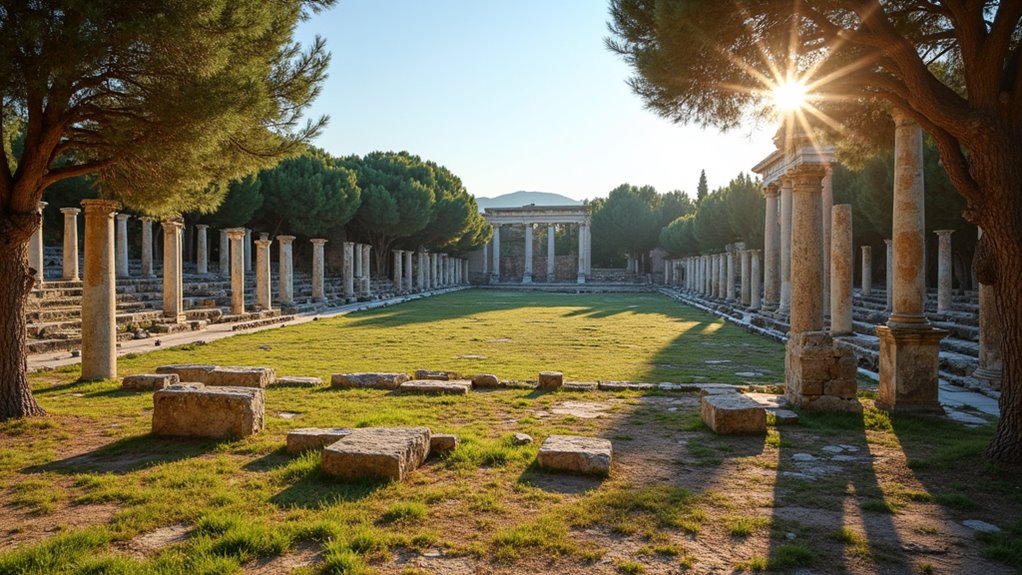
From Zakynthos’s dramatic coastal scenery, Greece offers another type of breathtaking landscape steeped in ancient history. You’ll find Ancient Olympia nestled in a fertile valley where the original Olympic Games ran from 776 BC to 393 AD.
Walk through the 212-meter stadium where ancient athletes competed in running, wrestling, and chariot racing. You can see the stone starting blocks that aligned runners for fair competition.
The Palaestra’s colonnaded courtyard provided training space, while thermal baths helped athletes recover. The site also features the Hermes of Praxiteles, a stunning 2.10-meter marble statue discovered in 1877 that depicts Hermes holding the infant Dionysos.
Don’t miss the Temple of Zeus ruins, which once housed one of the Seven Wonders. Entry costs around €12, and you’ll need comfortable walking shoes. The site’s compact layout makes it perfect for a half-day visit combining athletic history with stunning natural surroundings.
Experience Thessaloniki’s Byzantine Heritage and Modern Culture
While Ancient Olympia showcases Greece’s athletic legacy, Thessaloniki reveals the country’s profound Byzantine heritage through fifteen UNESCO World Heritage monuments spanning nearly a millennium. You’ll discover architectural gems like the 4th-century Rotunda of Saint George and the impressive Church of Saint Demetrios with its stunning mosaics. Don’t miss Hagia Sophia’s decorated dome or Panagia Chalkeon’s distinctive red brickwork.
Walk the ancient City Walls for panoramic views over the Thermaic Gulf, then explore the Museum of Byzantine Culture‘s eleven galleries showcasing icons, manuscripts, and daily life artifacts. The White Tower offers another perspective with its historical exhibits and city vistas. These monuments remarkably survived the Ottoman conquest in 1430, preserving their architectural integrity through centuries of changing rule.
Most sites charge modest entrance fees, and you can easily spend days wandering between churches, fortifications, and cultural spaces that bring Byzantine civilization to life.
Take a Boat Trip to Delos Island
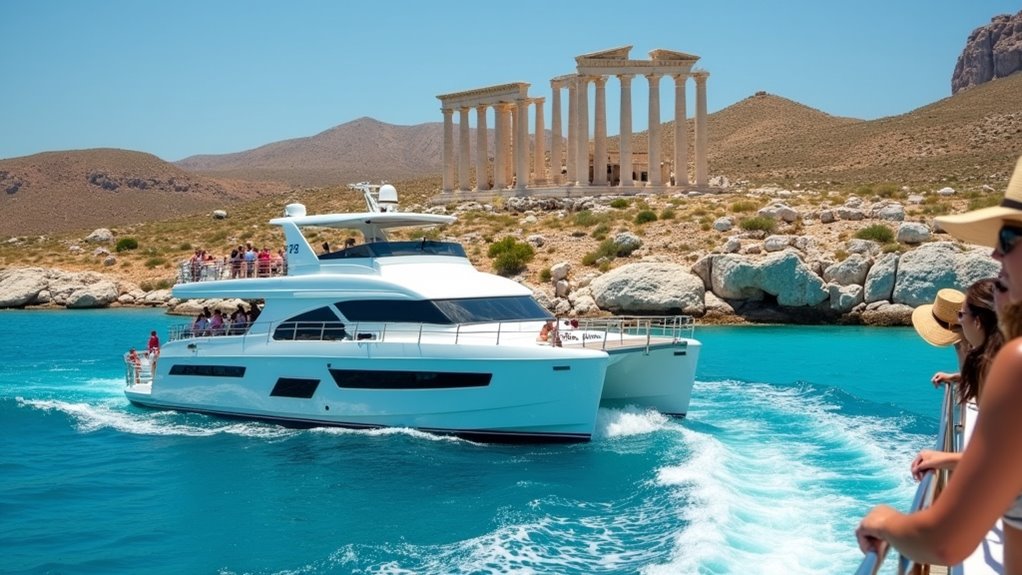
Just thirty minutes by boat from Mykonos lies Delos, a UNESCO World Heritage Site that’s practically an open-air museum floating in the Aegean Sea. You’ll pay around €20 for round-trip ferry tickets plus €12 entrance fee – a bargain for exploring ancient temples, theaters, and mosaics spanning Greek and Roman periods.
Boats depart Mykonos old port four times daily during high season, giving you three hours to wander the archaeological ruins. Pack water, sunscreen, and comfortable shoes since there’s limited shade and no amenities. Don’t miss the Delos Museum, which houses original mosaics and artifacts with free admission included in your entrance fee.
Many tours combine Delos with nearby Rhenia Island, where you can swim and snorkel after soaking up ancient history. Book early morning departures to beat crowds and secure your spot on this fascinating journey through classical antiquity.
Swim in Melissani Cave’s Underground Lake
Deep beneath Kefalonia’s surface, Melissani Cave shelters an ethereal underground lake that’ll leave you speechless – though you can’t actually swim in its mystical waters. Instead, you’ll take a 15-minute paddleboat tour through this legendary Cave of the Nymphs, where brackish waters create stunning blue reflections when sunlight streams through the collapsed ceiling.
Visit mid-afternoon for the most spectacular lighting effects. The cave sits just five minutes from Sami, with parking and facilities available. Your boat guide will share stories about the nymph Melissanthi while you marvel at stalagmites and underwater passages extending 240 meters into darkness. Archaeological excavations have revealed ancient artifacts from the 4th and 3rd centuries BC, showing this sacred site was once used for worship of Pan and the Nymphs.
At roughly €7 per person, this affordable adventure connects you to both geological wonder and ancient Greek mythology in one unforgettable experience.
The Sum Up
You’ve got endless possibilities across Greece’s islands and mainland. Don’t try cramming everything into one trip—you’ll burn out and blow your budget. Pick 3-4 highlights that genuinely interest you, whether that’s ancient ruins, beach hopping, or mountain hiking. Book accommodations early for better deals, especially on popular islands like Santorini. Travel during shoulder season if you can—you’ll save money and dodge the crowds while still enjoying great weather.