
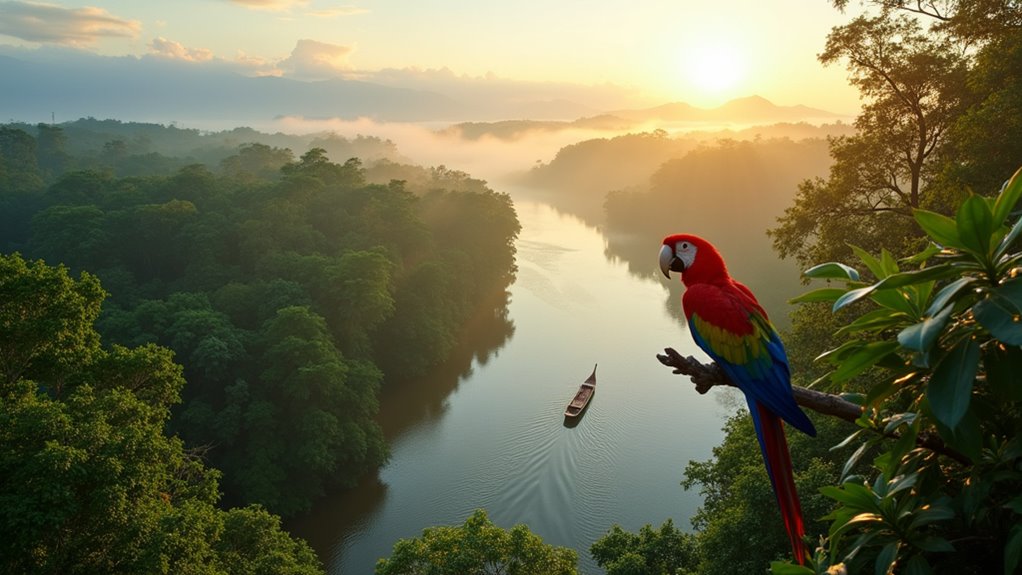
You can witness Kaieteur Falls‘ thundering 226-meter drop via scenic bush plane, explore Georgetown‘s towering wooden cathedral and colonial waterfront, or walk 30 meters above rainforest canopy at Iwokrama. Experience indigenous Makushi culture in the vast Rupununi Savannah while spotting jaguars and giant otters, sample unique fruit wines at Pandama Winery, take speedboat tours on the Essequibo River, ride ATVs through challenging savannahs, or visit the historically significant Jonestown site for a complete adventure.
- Marvel at Kaieteur Falls by Bush Plane
- Explore Georgetown’s Wooden Cathedral and Waterfront Markets
- Walk Through the Rainforest Canopy at Iwokrama
- Experience Rupununi Savannah’s Indigenous Culture and Wildlife
- Sample Local Fruit Wines at Pandama Winery
- Take River Excursions on the Essequibo
- Go ATV Riding Through Linden-Soesdyke Savannahs
- Visit the Historical Jonestown Site at Port Kaituma
- The Sum Up
Marvel at Kaieteur Falls by Bush Plane
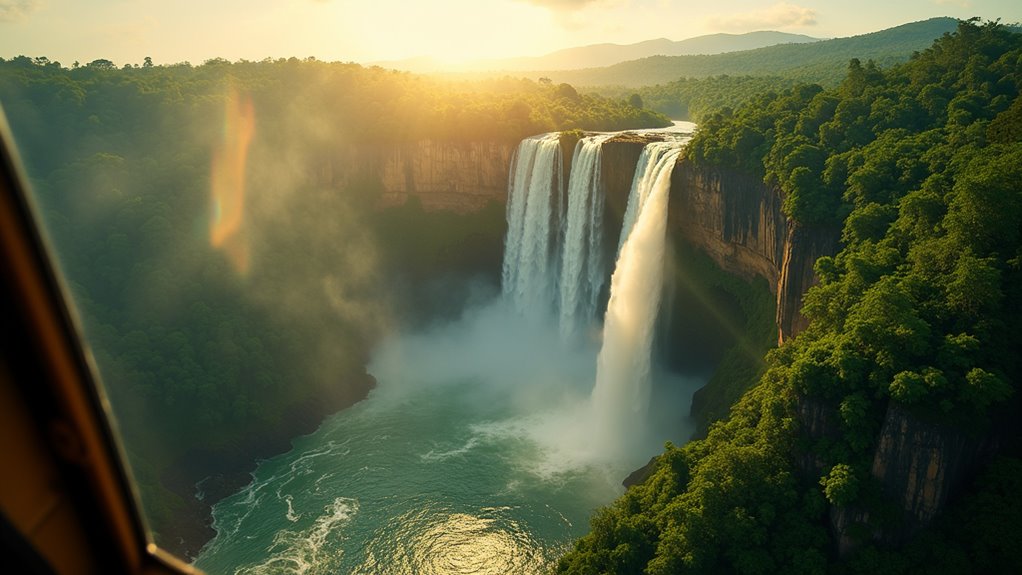
One of Guyana’s most spectacular natural wonders awaits via scenic bush-plane flight from Georgetown to Kaieteur Falls, where you’ll witness a thunderous 226-meter single-drop waterfall plunging over ancient sandstone cliffs.
Charter flights depart from Eugene F. Correia/Ogle Airport, taking approximately one hour to reach Kaieteur International Airport within the national park. You’ll traverse uninterrupted rainforest canopy and Potaro Plateau before landing just 15 minutes’ walk from prime viewing points.
Your day trip includes 1.5–2 hours exploring designated cliff-edge lookouts that showcase frontal and side perspectives of the massive plunge. The falls’ 663 m³/s flow rate makes it among Earth’s most powerful single-drop waterfalls—roughly four times higher than Niagara Falls, emphasizing its exceptional scale and remote wilderness setting. The waterfall sits atop the Guyana Shield, an ancient geological formation recognized as the world’s oldest rock layer at 2.99 billion years old.
Explore Georgetown’s Wooden Cathedral and Waterfront Markets
Where else can you explore a Gothic Revival masterpiece constructed entirely from local greenheart timber? Georgetown’s St. George’s Cathedral stands 143 feet tall, earning recognition as the world’s largest wooden church building. You’ll marvel at the pointed arches, flying buttresses, and traceried windows that create an unexpectedly airy interior despite the all-timber construction.
Don’t miss Queen Victoria’s gifted chandelier hanging prominently in the nave, alongside stained glass that beautifully filters Guyana’s intense equatorial light.
After exploring this national monument on Church Street, you’re within walking distance of Stabroek Market’s bustling waterfront activity. The cathedral serves as the seat of the Bishop of Guyana and represents Georgetown’s most impressive architectural achievement, blending British colonial Gothic design with exceptional local craftsmanship using rot-resistant greenheart wood. The current structure was completed in 1894, replacing two previous churches that faced structural challenges.
Walk Through the Rainforest Canopy at Iwokrama
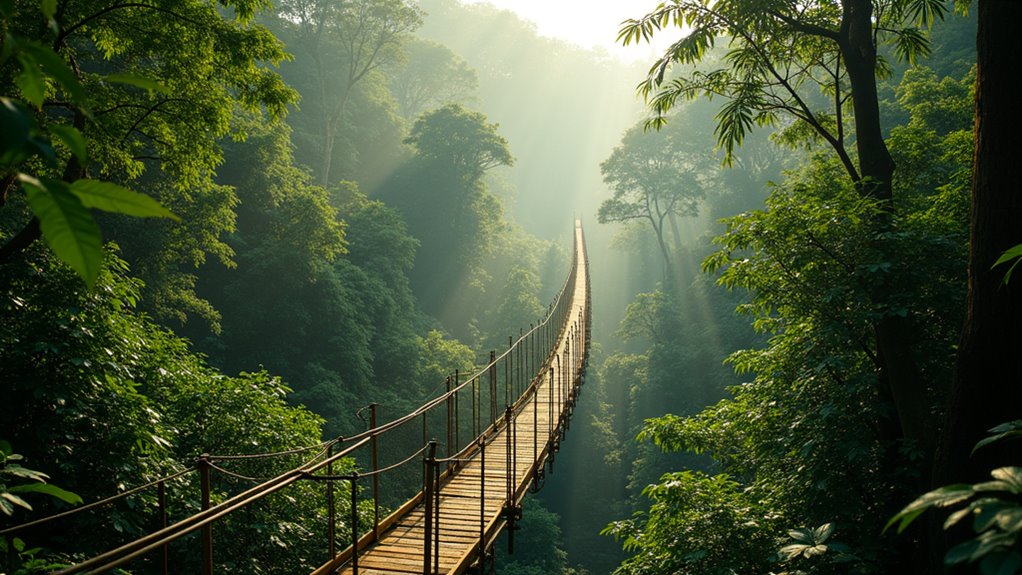
Suspended 30 meters above the forest floor, the Iwokrama Canopy Walkway stretches 154 meters through pristine rainforest, offering you an unparalleled perspective of one of only four remaining pristine rainforests worldwide.
You’ll traverse steel suspension bridges connecting multiple platforms while spotting Green Aracaris, Scarlet Macaws, and Red Howler Monkeys among the canopy.
The walkway provides close access to epiphytes like orchids and bromeliads, plus endemic species including Greenheart and Waramadan trees.
Access requires a 60km drive from Iwokrama River Lodge, followed by a 15-minute forest trail with steep climbs. You can extend your adventure with an overnight stay at the nearby Atta Rainforest Camp, located just 500 meters from the walkway and surrounded by tropical rainforest.
Visit at dawn or dusk for ideal wildlife viewing.
Entrance costs $25 for adults, including guided tours by local Makushi naturalists.
Experience Rupununi Savannah’s Indigenous Culture and Wildlife
Beyond the forest canopy, the vast Rupununi Savannah opens into 8,000 square miles of grasslands, wetlands, and scattered forests where indigenous communities have thrived for over 6,000 years. You’ll encounter the Makushi people in the northern savannah and the Wapishana in the south, both ancient custodians of this remarkable ecosystem.
Join village tours to witness traditional cassava cultivation and bread-making processes. You can purchase handcrafted items from local artisans and explore ancient petroglyphs at sites like Barawatau. This pristine landscape attracts eco-travelers from around the world seeking authentic natural environments.
The region supports jaguars, pumas, and giant otters, with over 25 endemic species calling it home. Navigate the Rupununi River by dugout canoe or kayak to spot black caimans and diverse birdlife while experiencing authentic water-based transportation methods.
Sample Local Fruit Wines at Pandama Winery

How does Guyana’s tropical climate translate into distinctive wines? You’ll discover the answer at Pandama Retreat & Winery, where master winemaker Warren Douglas transforms local fruits into world-class wines.
Located on 20 forested acres near Madewini, this pioneering operation crafts small-batch wines from pineapple, jamoon, sorrel, carambola, and other indigenous fruits.
You’ll taste aromatic, well-balanced wines ranging from dry to sweet styles during on-site tastings. The natural fermentation process creates smooth profiles that pair beautifully with local cuisine.
Purchase bottles directly from the source, including limited experimental blends unavailable elsewhere. The winery also offers a special tonic wine called Pulse, made from native barks.
Reserve your visit to this eco-retreat, accessible via one hour’s drive from Georgetown. Extend your experience by staying overnight in rustic cabins, swimming in the blackwater creek, or relaxing in hammocks among tropical palms.
Take River Excursions on the Essequibo
While you’re savoring distinctive fruit wines at Pandama, you’re already positioned perfectly for exploring Guyana’s greatest waterway adventure. The Essequibo River stretches 1,010 kilometers through Guyana’s most scenic landscapes, featuring 365 islands and lush rainforest corridors.
Full-day tours from Georgetown cost around US$125 per person, departing at 6:00-6:45 a.m. for 11-12 hour excursions.
You’ll visit Fort Kyk-over-al, a 400-year-old Dutch fort ruin, and Fort Island’s colonial heritage sites. Tours include speedboat transfers, lunch, and stops at Bartica mining town plus Baracara Falls for swimming. Activities like kayaking and volleyball are available at Sloth Island Resort in the rainforest setting.
The moderate activity level suits average fitness levels, requiring sun protection and insect repellent. Group minimums typically require 12-16 participants for these extensive river adventures.
Go ATV Riding Through Linden-Soesdyke Savannahs

After exploring Guyana’s waterways, you’ll discover an entirely different adventure across the rugged Linden-Soesdyke savannahs, where ATV riding transforms the hilly sand and clay terrain into your personal off-road playground. Savannah Tours Guyana operates guided excursions through this Region 4 landscape, steering sandy tracks, clay pans, and creek crossings while showcasing wide savannah vistas and blackwater creeks.
You’ll experience varied terrain challenges—from loose sand and exposed clay ruts during dry season to mud pits and slippery inclines when rains arrive. Routes pass through seven indigenous communities including Yarrowkabra, Sand Ville, and Kurukururu, combining adventure with cultural interactions.
The annual Epic Savannah Drive attracts 50+ vehicles for competitive events like mud races and obstacle courses, with official Guyana Tourism Authority backing positioning this as premier sport-tourism. Located approximately one hour from Georgetown near Cheddi Jagan International Airport, this accessible adventure makes it convenient for international visitors to experience Guyana’s unique terrain.
Visit the Historical Jonestown Site at Port Kaituma
Though visiting Jonestown requires careful planning and emotional preparation, this historically significant site near Port Kaituma offers a sobering glimpse into one of the 20th century’s most tragic events.
You’ll need to fly from Georgetown to Port Kaituma airstrip, then arrange 4×4 transportation through local guides since no public transport serves the area.
The remote jungle location, where 918 people died in 1978, now lies largely reclaimed by vegetation. The settlement was originally established on a 3,800-acre lease of isolated jungle land that Jim Jones’s Peoples Temple obtained from the Guyanese government in 1974.
You’ll find concrete foundations of the central pavilion where the mass poisoning occurred, along with scattered debris and remnants of living quarters.
There’s no official museum or preserved structures—just haunting ruins that serve as an unofficial memorial to the Peoples Temple tragedy.
The Sum Up
You’ll find Guyana offers incredible diversity within its compact borders. From thundering waterfalls accessible only by bush plane to indigenous communities preserving ancient traditions, you’re guaranteed unique experiences. Don’t skip the rainforest canopy walks or river expeditions—they’re essential for understanding this country’s natural wealth. Pack lightweight, waterproof gear and bring cash since remote areas don’t accept cards. Book domestic flights early, and you’ll discover why Guyana remains South America’s best-kept secret.