
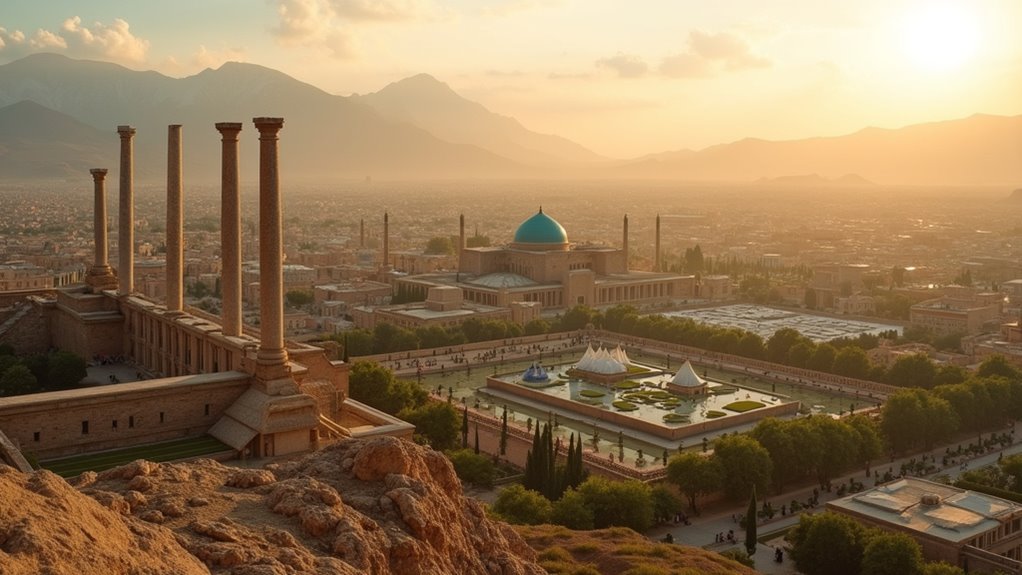
You’ve probably heard mixed messages about visiting Iran, but here’s what travel experts won’t tell you: this country offers some of the world’s most spectacular archaeological sites and warmest hospitality you’ll ever experience. From the mind-bending ruins of ancient Persian empires to stunning mosques that’ll leave you speechless, Iran’s cultural treasures remain largely undiscovered by mainstream tourism. There’s just one challenge—deciding which incredible experiences deserve your limited time.
- Explore the Mind-Blowing Ruins of Persepolis
- Get Lost in Isfahan’s Naqsh-e Jahan Square
- Marvel at the Pink Mosque’s Morning Light Show in Shiraz
- Wander Through Yazd’s Ancient Mud-Brick Maze
- Pay Your Respects at Cyrus the Great’s Tomb in Pasargadae
- Experience the Massive Imam Reza Shrine in Mashhad
- Navigate Tehran’s Sprawling Grand Bazaar
- Cool Off in Ali Sadr’s Underground Water Caves
- Stroll Through Kashan’s Perfect Persian Garden
- Venture Into the Alien Landscape of Lut Desert
- Discover Armenian Heritage at Vank Cathedral
- Escape to Qeshm Island’s Salt Caves and Mangroves
- The Sum Up
Explore the Mind-Blowing Ruins of Persepolis
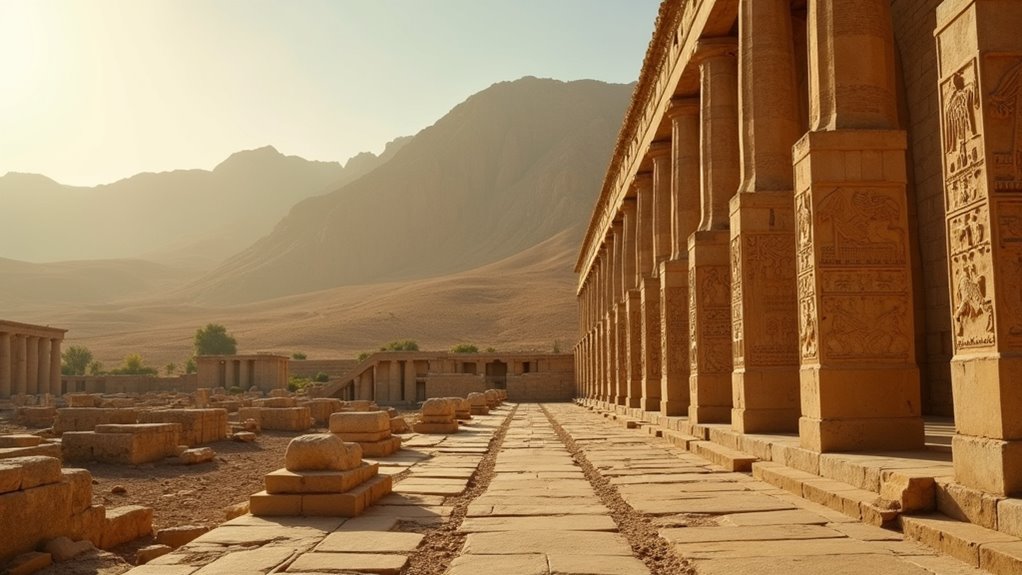
Why do ancient ruins captivate travelers more than any modern marvel? You’ll find your answer at Persepolis, Iran’s crown jewel located 50 miles northeast of Shiraz. This UNESCO World Heritage Site served as the ceremonial capital of the mighty Achaemenid Empire, founded by Darius I around 518 BC.
You’ll walk across massive stone terraces built without mortar, marveling at the precision of ancient Persian craftsmen. Don’t miss the towering Apadana audience hall with its 13 remaining columns, or the Gate of All Nations with its imposing winged bull guardians.
The intricate reliefs depicting 23 nations bringing tribute will transport you back 2,500 years. Though Alexander the Great’s army destroyed much in 330 BC, what remains showcases the empire’s incredible power and architectural mastery. Remarkably, the fire that devastated the complex actually preserved the invaluable Persepolis Administrative Archives by preventing their gradual deterioration from natural elements and human interference.
Get Lost in Isfahan’s Naqsh-e Jahan Square
From the ancient grandeur of Persepolis, fast-forward to Isfahan’s Naqsh-e Jahan Square, where you’ll step into one of the world’s most magnificent urban spaces. This 17th-century masterpiece showcases four architectural gems: the ornate Shah Mosque with its stunning tilework, the exclusive Sheikh Lotfollah Mosque once reserved for royalty, the six-story Ali Qapu Palace with elaborate frescoes, and the Qeysarie Gate leading to the Grand Bazaar.
You’ll find yourself wandering through 200 traditional shops nestled in two-story arcades that frame the square. The space still pulses with life—locals gather for prayers, vendors sell handicrafts, and travelers marvel at intricate Persian calligraphy and mosaics. Look for the two ancient stone polo gates, remnants of when this square hosted royal polo matches and are considered the oldest polo gates in the world. It’s where Iran’s royal, religious, and commercial heritage converges in breathtaking harmony.
Marvel at the Pink Mosque’s Morning Light Show in Shiraz
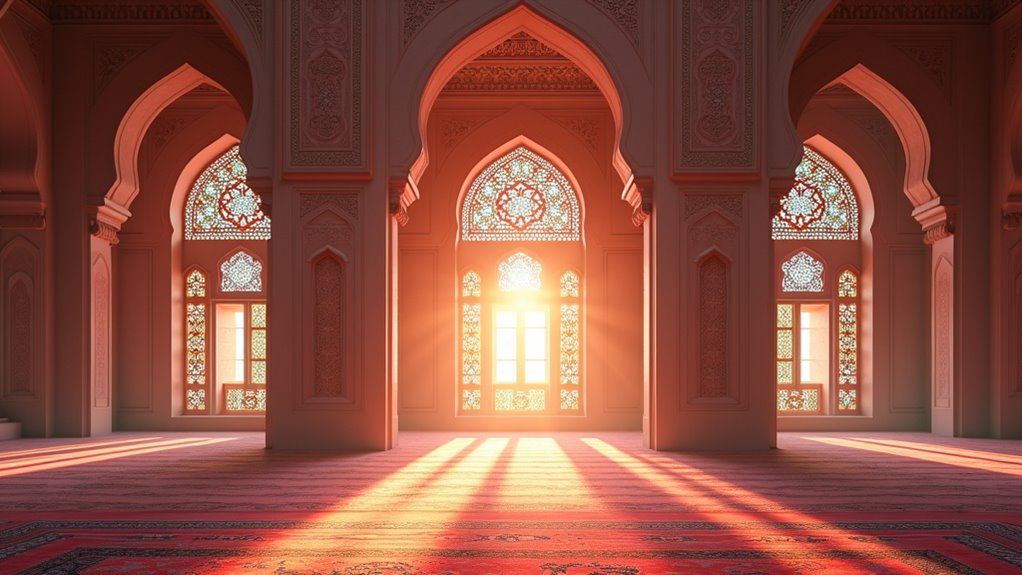
When dawn breaks over Shiraz, you’ll witness one of Iran’s most enchanting architectural spectacles at the Nasir al-Mulk Mosque, better known as the Pink Mosque. Built during the late 19th century, this Qajar-era masterpiece creates a magical “rainbow carpet” effect as morning sunlight streams through hundreds of stained-glass windows onto the prayer hall’s floor.
You’ll want to arrive between 7:00 and 9:30 AM for the most intense light show, when vibrant kaleidoscopic patterns dance across the intricate pink tilework. The east-facing windows capture the rising sun perfectly, creating dynamic displays that shift as daylight grows stronger.
Remember to dress modestly and bring your camera – this rare architectural phenomenon showcases Persian craftsmanship at its finest, blending traditional Islamic design with European-influenced aesthetics. The mosque spans 2,216 square meters and uniquely lacks the traditional dome found in most Iranian mosques.
Wander Through Yazd’s Ancient Mud-Brick Maze
Step into Yazd’s historic quarter and you’ll find yourself steering through the world’s largest mud-brick city, where centuries-old adobe walls create a labyrinthine network of narrow alleys and hidden courtyards.
Navigate the maze-like passageways that wind between traditional houses adorned with towering windcatchers, designed to channel desert breezes through thick mud-brick walls.
You’ll discover architectural marvels like the Jameh Mosque with its soaring minarets and the symmetrical Amir Chakhmaq Complex.
Climb onto rooftops for panoramic views of the mud-brick skyline dotted with badgirs and domed water reservoirs. This ancient city became a safe refuge for migrants throughout history due to its remote location between Iran’s vast deserts.
The old city’s UNESCO-protected streets reveal Zoroastrian fire temples, traditional bazaars, and elaborate houses like Khan-e Lari, all showcasing ingenious climate adaptations perfected over millennia.
Pay Your Respects at Cyrus the Great’s Tomb in Pasargadae
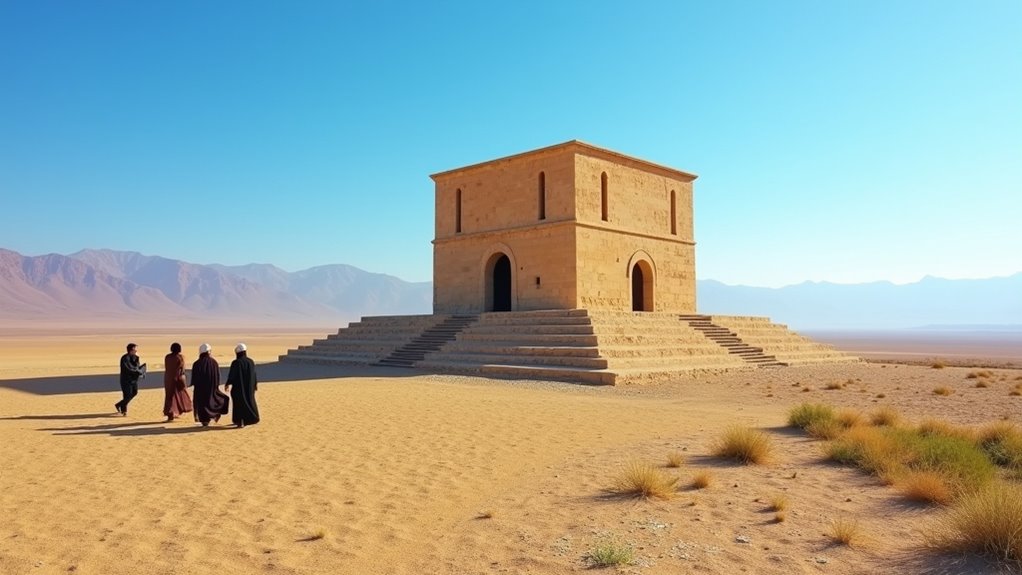
Standing before the weathered limestone steps of Cyrus the Great’s tomb, you’ll witness one of history’s most profound monuments—the final resting place of the Persian king who created the world’s first great multicultural empire over 2,500 years ago.
Located in Pasargadae, about 130 kilometers northeast of Shiraz, this UNESCO World Heritage site represents the birthplace of the Achaemenid Empire.
The tomb’s six-stepped platform rises eleven meters high, resembling ancient Mesopotamian ziggurats. Though grave robbers emptied the golden sarcophagus centuries ago, the structure’s simple elegance remains powerful. The monument’s design reflects influences from Lycia and Phrygia, regions conquered by the Persians after 547 BC.
You’ll find yourself in the company of historical giants—Alexander the Great himself visited here in 330 BC. The surrounding royal park and palace ruins complete this extraordinary glimpse into Persia’s golden age.
Experience the Massive Imam Reza Shrine in Mashhad
As you approach the sprawling complex of the Imam Reza Shrine in Mashhad, you’ll encounter one of the world’s largest mosques and Iran’s holiest pilgrimage site—a breathtaking fusion of nearly a thousand years of Islamic architecture that draws over 20 million visitors annually.
You’ll marvel at the iconic golden dome rising 31 meters high, flanked by towering minarets that dominate the skyline.
Inside, intricate mirror-work from the Qajar era creates dazzling reflections throughout the sacred chambers.
You can explore twenty-three roofed arcades spanning over 5,600 square meters, each representing different historical periods.
The main mosque accommodates 10,000 worshippers, while peaceful courtyards with water features offer quiet contemplation. The complex has grown through multiple cycles of expansion and reconstruction, from the modest dome built over Imam Reza’s grave shortly after his death in 818 AD to today’s magnificent structure.
Don’t miss the remarkable library housing 34,000 volumes of Islamic scholarship.
Navigate Tehran’s Sprawling Grand Bazaar
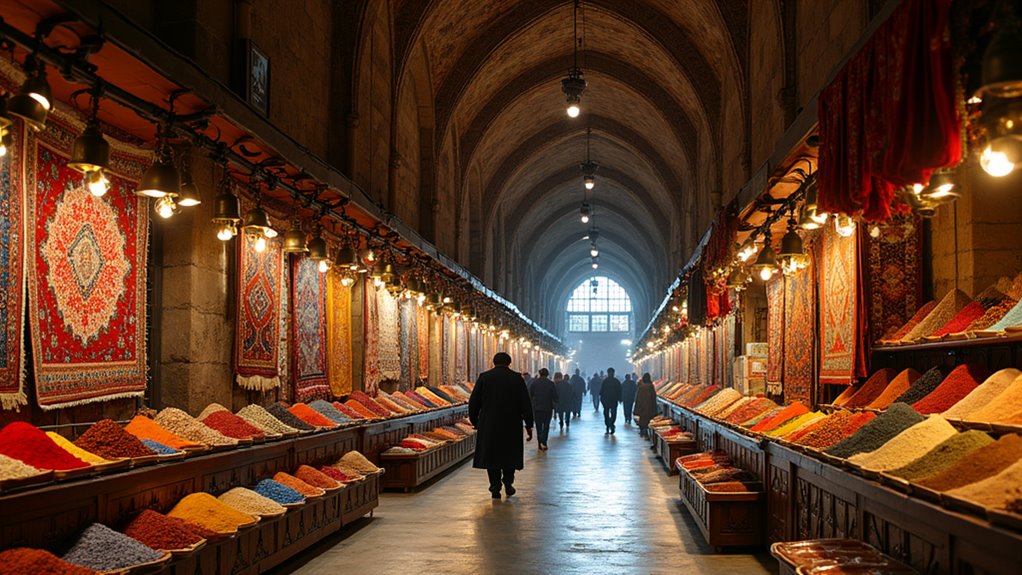
From the spiritual heights of Mashhad, Tehran’s Grand Bazaar brings you into the beating heart of Iran’s commercial and cultural life. This 400-year-old marketplace spans over 10 hectares with 20 kilometers of winding corridors housing thousands of shops.
You’ll find everything from handwoven carpets and precious jewelry to aromatic spices and traditional textiles across 180 different shop types.
Plan at least two hours to navigate this labyrinthine wonder that attracts up to 2 million daily visitors. The bazaar’s specialization by districts helps—head to specific areas for jewelry, carpets, or spices rather than wandering aimlessly.
Don’t miss the traditional eateries serving affordable rice and kebab dishes. The marketplace showcases traditional Persian architecture with its characteristic arched passageways, courtyards, and decorative tile work that reflects centuries of Iranian craftsmanship.
Beyond commerce, you’re experiencing a living piece of Iranian heritage where political movements once gathered and cultural exchange continues today.
Cool Off in Ali Sadr’s Underground Water Caves
While Tehran’s bazaar pulses with urban energy, Iran’s natural wonders offer an entirely different spectacle—none more mesmerizing than Ali Sadr Cave’s subterranean waterways. Located northwest of Hamadan, this underground marvel stretches over 11 kilometers through crystalline waters and towering chambers.
You’ll glide through the cave by boat, steering through passages where crystal-clear water reveals depths up to 17 meters below. The constant 12°C temperature provides perfect relief from Iran’s summer heat.
As you drift past massive stalactites in the famous “Wedding Room,” calcium carbonate formations create an otherworldly cathedral of white and yellow crystals. The cave’s remarkable formations have been shaped over 190 million years, dating back to the Jurassic Period when these ancient rocks first formed.
The cave’s fresh, dust-free air and spectacular lighting along the 2.4-kilometer tourist route make this Iran’s premier underground adventure—a cool sanctuary beneath ancient Persian soil.
Stroll Through Kashan’s Perfect Persian Garden
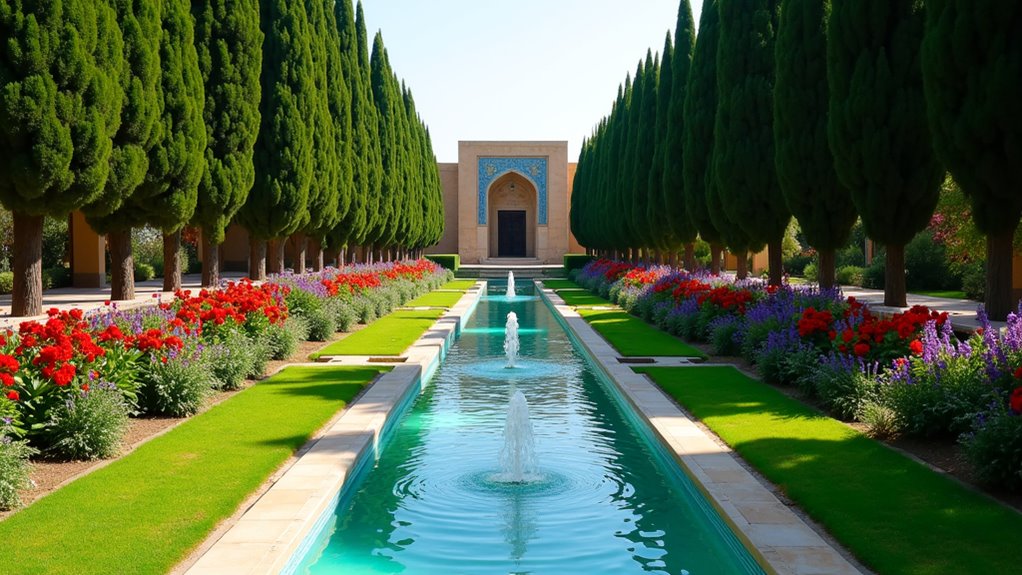
Don’t miss the central pavilion offering panoramic views of this walled paradise. The ingenious qanat water system still irrigates the garden as it did centuries ago, maintaining this desert oasis.
You’ll understand why Persians called such spaces earthly representations of Eden—the harmony between architecture, water, and nature creates an almost spiritual experience that’s captivated visitors since Shah Abbas I’s reign. The garden’s Chaharbagh layout divides the space into four symmetrical sections with a central axis, following the classic Persian design that symbolizes cosmic order.
Venture Into the Alien Landscape of Lut Desert
When you step into Iran’s Lut Desert, you’ll find yourself on what feels like the surface of Mars—a place so otherworldly that NASA has recorded the highest surface temperatures on Earth here, reaching a staggering 70.7°C. This UNESCO World Heritage Site spans 480 kilometers of alien terrain featuring massive wind-carved ridges called yardangs, endless stony plains, and towering volcanic peaks like Mount Hazararan at 4,419 meters.
You’ll witness nature’s raw power as relentless winds sculpt the landscape into surreal formations. The Kaluts area offers the most accessible adventure, where you can explore these natural sculptures safely. Among the remarkable features are sand mounds called nebkhas that tower around desert vegetation, reaching heights of 12 meters or more—the tallest known anywhere on Earth.
Visit during cooler months and stay near Shahdad town for accommodations. This isn’t just sightseeing—you’re experiencing one of Earth’s most extreme environments.
Discover Armenian Heritage at Vank Cathedral
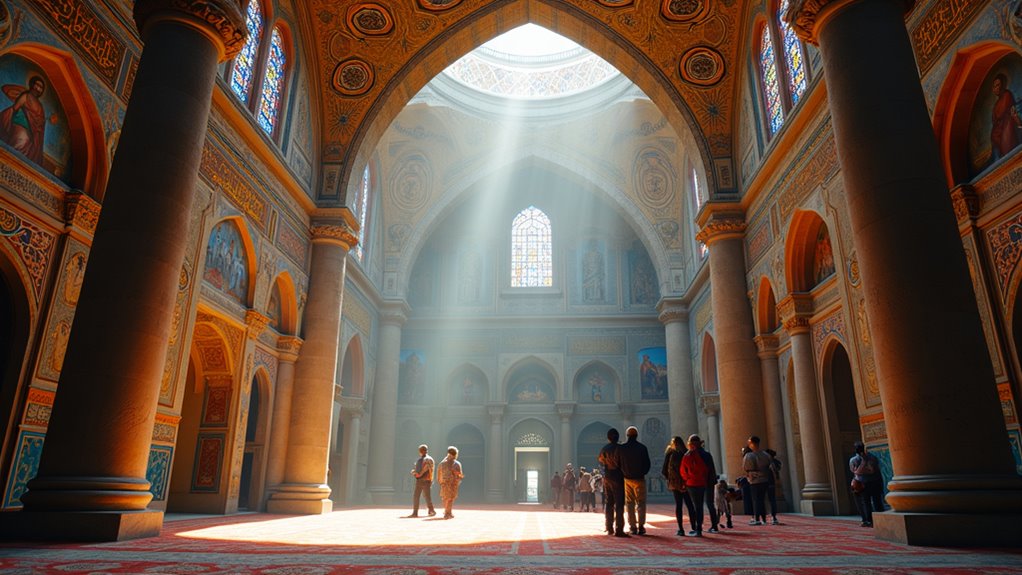
As you enter Isfahan’s Armenian quarter of New Julfa, you’ll encounter one of Iran’s most remarkable architectural treasures—Vank Cathedral, where 400 years of Armenian heritage comes alive through stunning frescoes and unique Persian-Armenian design.
You’ll notice the cathedral’s modest brick exterior contrasts dramatically with its breathtaking interior. Inside, vibrant murals depicting Biblical scenes cover the walls and blue-gold dome, showcasing creation stories and Christ’s life through a fascinating blend of Armenian iconography and Safavid artistic influences.
Don’t miss the three-story bell tower with its massive 300kg clock, and explore the courtyard’s graves of Orthodox Armenians and Protestant Christians.
The adjacent museum, established in 1871, houses valuable artifacts that deepen your understanding of Iran’s Armenian community’s resilience and cultural contributions. The museum also features a historical printing press that showcases the technological and cultural advancements of the Armenian community in Iran.
Escape to Qeshm Island’s Salt Caves and Mangroves
While mainland Iran captivates visitors with its historical treasures, Qeshm Island offers an entirely different adventure where you’ll explore the world’s longest salt cave and pristine mangrove forests in the Persian Gulf.
You’ll discover Namakdan Salt Cave, stretching an incredible 6.58 kilometers through crystalline formations that’ve developed over 500 million years. Inside, you’ll walk among multicolored salt stalactites in shades of pink, purple, and crimson while breathing therapeutic salt air that benefits respiratory conditions.
The cave’s natural spring creates mirror-like reflections that’ll leave you mesmerized. Your footsteps will produce a distinctive cracked sound as you walk across the crystalline salt floor.
Plan your visit between October and April when temperatures are manageable. You’ll need flashlights and sturdy footwear for the trek. Don’t forget to explore Qeshm’s surrounding mangrove ecosystems, which complement this UNESCO Global Geopark‘s diverse geological wonders perfectly.
The Sum Up
You’ll leave Iran with your perspective completely transformed. The country’s incredible hospitality, mind-blowing architecture, and layers of history will stick with you long after you’ve returned home. Don’t let media headlines stop you from experiencing this cultural goldmine firsthand. Pack your curiosity, bring an open mind, and prepare for a journey that’ll challenge every preconception you might’ve had. Iran isn’t just a destination—it’s a revelation waiting to happen.