
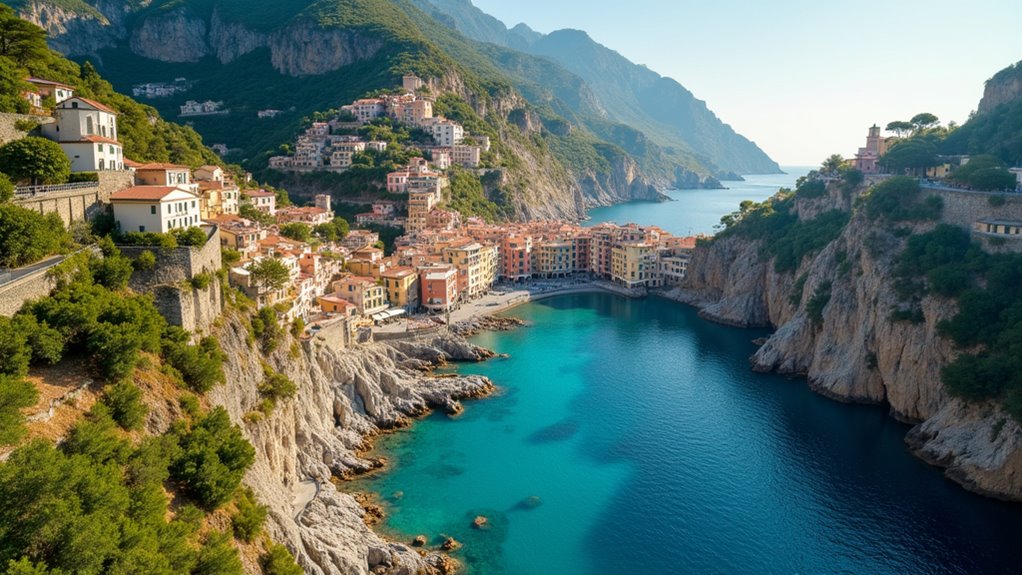
You’ll find Italy’s most extraordinary moments aren’t always in the guidebooks. Sure, you’ve heard about the Colosseum and gondola rides, but there’s something magical about learning mask-making from a Venetian artisan or soaking in Saturnia’s hidden hot springs at dawn. These experiences transform a typical vacation into something deeper—moments that’ll stay with you long after you’ve returned home. Here’s how to unearth Italy’s most unforgettable secrets.
- Learn Venetian Mask Making From Master Artisans
- Glide Through Venice’s Grand Canal by Gondola
- Watch the Sunset Over Florence From Piazzale Michelangelo
- Walk Through Rome’s Ancient Colosseum
- Toss a Coin at the Trevi Fountain
- Hike the Cinque Terre’s Coastal Trail
- Cruise Lake Garda’s Castle-Dotted Shores
- Drive the Dramatic Amalfi Coast
- Enter Capri’s Mystical Blue Grotto
- Relax on Sardinia’s Pristine White Sand Beaches
- Take a Hands-On Italian Cooking Class
- Eat Authentic Neapolitan Pizza Where It Was Born
- Explore Matera’s Ancient Cave Dwellings
- Attend an Opera in Verona’s Roman Arena
- Soak in Saturnia’s Natural Hot Springs
- The Sum Up
Learn Venetian Mask Making From Master Artisans
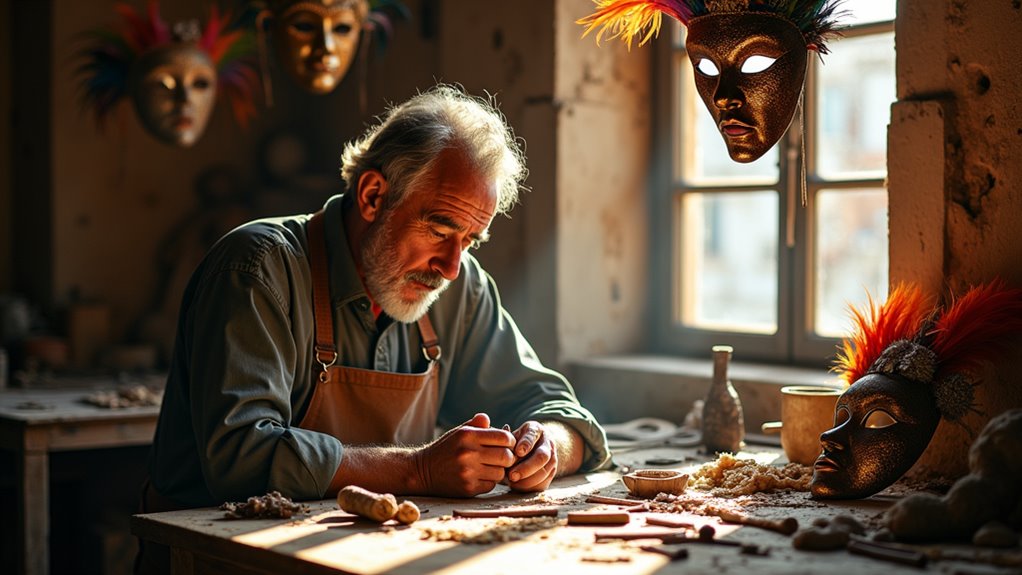
While Venice captivates millions with its canals and architecture, you’ll discover something far more intimate when you step into a traditional mask-making workshop tucked away in the city’s quieter quarters. Master artisans at workshops like Ca’ Macana will guide you through centuries-old techniques, starting with sculpting clay models and creating plaster molds.
You’ll layer papier-mâché by hand, sand your creation smooth, and cut precise eye holes before the real magic begins. Each mask develops its own character during the drying process, as wet paper pulp naturally forms slight variations that make every piece distinct from its original mold.
The decoration process lets you explore traditional tempera painting, gold leaf application, and intricate detailing with fine brushes. Choose from classic black and white schemes or rich jewel tones, then add feathers, ribbons, or gems. These workshops refuse mass production, ensuring your mask becomes a unique masterpiece that captures Venice’s artistic soul.
Glide Through Venice’s Grand Canal by Gondola
After creating your handcrafted mask, you’ll want to experience Venice from its most iconic perspective—aboard a gondola gliding through the Grand Canal.
Book a morning ride to avoid crowds and enjoy cooler temperatures. You’ll pay 80 euros for a standard 25-30 minute daytime journey (120 euros at night), accommodating up to six people.
Your gondolier will navigate the asymmetrical 36-foot vessel through quieter side canals before entering the Grand Canal, where you’ll glide past the Rialto Bridge and Basilica di Santa Maria della Salute.
The boat’s unique design counterbalances your gondolier’s right-side rowing technique, creating that signature smooth motion. These elegant vessels are handcrafted in specialized workshops called squeri using premium woods like oak, mahogany, and cherry.
Listen as your gondolier shares historical insights about Venice’s architecture and landmarks. This isn’t just transportation—it’s experiencing 900 years of Venetian maritime tradition firsthand.
Watch the Sunset Over Florence From Piazzale Michelangelo
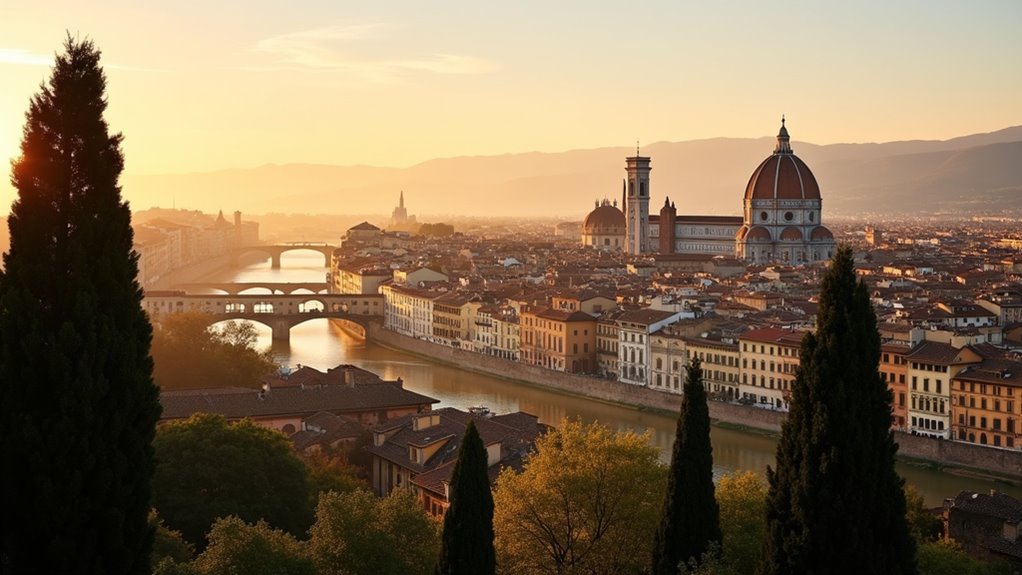
As the day winds down in Florence, head to Piazzale Michelangelo for the city’s most spectacular sunset viewing experience. You’ll find unmatched panoramic views of the Ponte Vecchio, Arno River, and Duomo from this elevated terrace on the south bank.
Arrive about 30 minutes before sunset to watch the sky transform into vivid colors that cast golden light across Florence’s rooftops and landmarks.
While the bronze replica of Michelangelo’s David makes for great photos, expect crowds during peak sunset hours. For a quieter alternative, duck into the Rose Garden just below the piazza – you’ll get intimate views toward San Niccolò district with fewer travelers. The garden stays open until 8 pm during summer months, giving you plenty of time to enjoy the golden hour.
The walk up from central Florence through scenic paths adds physical engagement to this romantic, painterly experience.
Walk Through Rome’s Ancient Colosseum
When you step through the ancient arches of Rome’s Colosseum, you’re entering the world’s most famous amphitheater where gladiators once fought for their lives before roaring crowds of 65,000 spectators.
You’ll walk through corridors that once buzzed with anticipation as Romans filed to their assigned seats based on social status.
Don’t miss the underground hypogeum where wild animals and slaves waited before being lifted to the arena floor.
As you explore the four levels, notice the three classical column orders—Doric, Ionic, and Corinthian—that support the 80 arched entrances.
The sheer scale becomes overwhelming when you realize this engineering marvel from 80 AD witnessed nearly 400,000 deaths over four centuries of brutal entertainment. The amphitheater was constructed using travertine limestone, tuff, and brick-faced Roman concrete, materials that have allowed this ancient structure to endure for nearly two millennia.
Toss a Coin at the Trevi Fountain
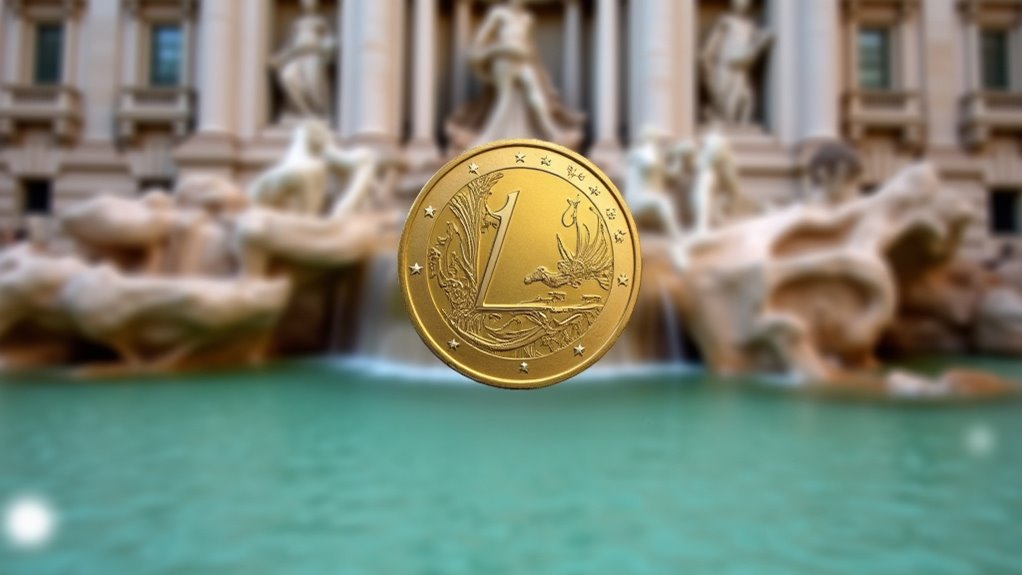
Three million euros worth of coins splash into the Trevi Fountain every year, but you’ll want to master the proper technique to guarantee your wish comes true. Stand close to the fountain, turn your back to it, and toss your coin with your right hand over your left shoulder. Make your wish discreetly before throwing—one coin ensures you’ll return to Rome, two coins guarantees you’ll find love, and three coins means you’ll marry a Roman.
This ancient ritual connects you to centuries-old pagan traditions of offering coins to water spirits. Your contribution joins the daily 3,000 euros collected for Roman charities like Caritas. Choose a personally meaningful coin to enhance the emotional impact of this timeless expression of hope. The tradition gained widespread recognition through cinematic portrayals, particularly the 1954 film Three Coins in the Fountain which helped popularize this romantic custom globally.
Hike the Cinque Terre’s Coastal Trail
While Rome captures your heart with ancient wishes, Italy’s rugged coastline will challenge your legs and reward your soul. The Cinque Terre’s Blue Trail connects all five cliffside villages across 12 kilometers of breathtaking terrain. You’ll need about six hours and moderate fitness to tackle steep staircases, narrow paths, and substantial elevation gains.
Start in Vernazza rather than Monterosso to minimize brutal initial climbs—trust me on this insider tip. The Monterosso-Vernazza segment spans 3.5 kilometers, while the trickiest Corniglia-Manarola stretch covers 5.4 kilometers. Purchase your Cinque Terre Card for trail access and follow the white-red stripe markers. Remember that flip-flops are banned on the trails, so proper hiking shoes are mandatory for your safety.
Pack trekking poles for steep sections and prepare for panoramic views that’ll make every challenging step worthwhile when all five villages appear simultaneously.
Cruise Lake Garda’s Castle-Dotted Shores
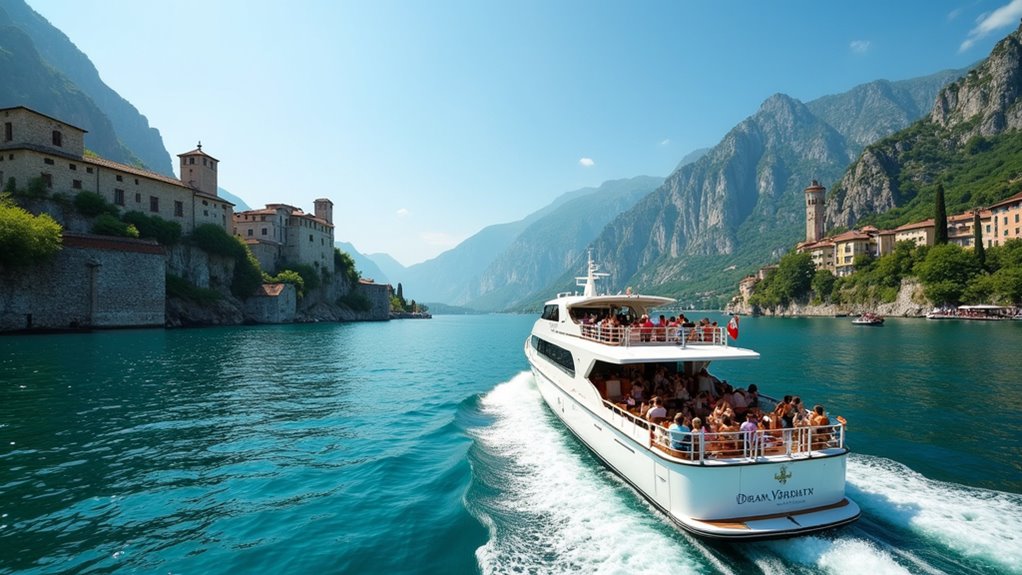
After conquering Cinque Terre’s demanding trails, you’ll find Lake Garda offers a gentler yet equally spectacular way to explore Italy’s historic treasures.
Book a 4-hour castle cruise departing from Sirmione, Lazise, or Peschiera del Garda to see three magnificent Scaliger fortresses dotting the shoreline.
You’ll cruise past Sirmione’s 14th-century Castello Scaligero, one of Italy’s best-preserved medieval castles. Then continue to Malcesine’s dramatic 13th-century fortress perched on rocky cliffs. Don’t miss Torri del Benaco Castle overlooking the waterfront among cypress trees.
Choose wine-tasting cruises featuring local Bardolino varieties for an authentic experience. Your guide will share fascinating histories while you pass Roman ruins at Grotte di Catullo and scenic Punta San Vigilio. For the best experience, plan your cruise during late spring or early fall when the weather is warm and pleasant with fewer crowds.
Prices range from $100-$427 depending on group size and luxury level.
Drive the Dramatic Amalfi Coast
Once you’ve experienced Lake Garda’s tranquil castle views, it’s time to tackle Italy’s most thrilling coastal drive along the legendary SS163. This 50-kilometer route from Positano to Vietri sul Mare delivers breathtaking Mediterranean vistas, but demands respect—you’ll navigate hairpin turns and narrow lanes with cliffs plunging into azure waters below.
Drive east from Sorrento to keep the sea on your driver’s side for ideal views. Budget 6-8 hours for the full round trip including stops in iconic Positano, historic Amalfi, and elevated Ravello with its stunning gardens.
Rent a compact car and avoid peak summer months when traffic becomes nightmarish. Starting in early mornings will help you secure better parking and avoid the worst congestion that plagues this route. If you’re inexperienced with mountain roads, consider ferries or local buses instead. The narrow roads leave little room for error.
Enter Capri’s Mystical Blue Grotto
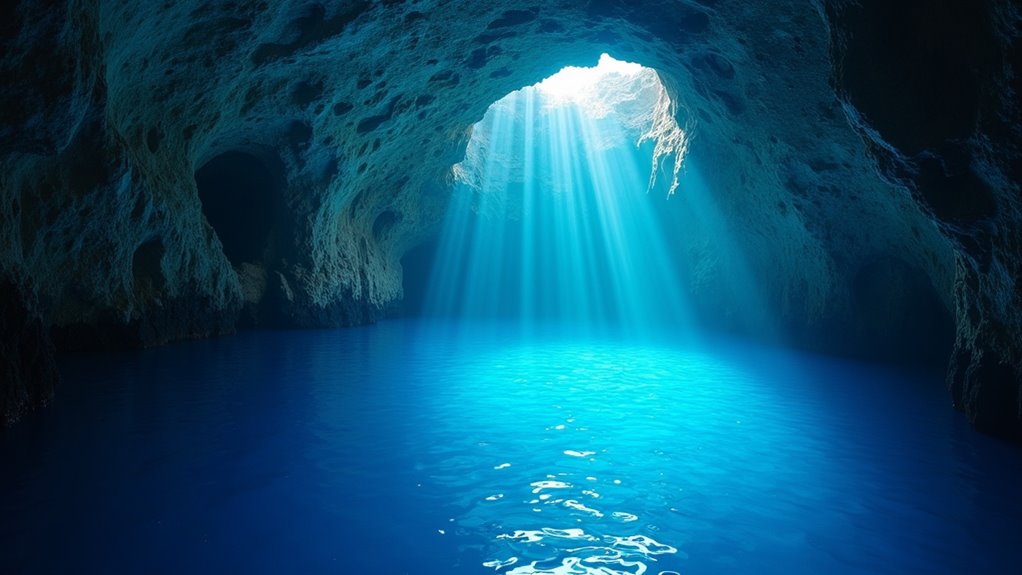
From Amalfi’s dramatic clifftop roads, ferry over to Capri where you’ll discover one of Italy’s most extraordinary natural wonders—the Blue Grotto. This 60-meter sea cave creates an otherworldly azure glow when sunlight filters through an underwater cavity, reflecting off the white sandy bottom.
You’ll need to lie flat in a tiny rowboat as your oarsman navigates the narrow entrance—just one meter high and accessible only during calm seas and low tide. Swimming’s prohibited, but the brief journey inside reveals the same luminous waters Emperor Tiberius once enjoyed as his personal pool. Ancient Roman statues of Neptune and Triton discovered on the grotto floor confirm this cave’s sacred significance as a marine temple.
Expect to pay around EUR 18 and coordinate with licensed boatmen from Marina Grande. Visit between April and October for the best conditions, as winter storms often close this mystical attraction.
Relax on Sardinia’s Pristine White Sand Beaches
While the mainland boasts stunning coastlines, Sardinia’s beaches will redefine your idea of Mediterranean paradise with their Caribbean-like white sand and impossibly turquoise waters.
Start with La Cinta Beach in San Teodoro—you’ll experience that distinctive “squelchy” sand feel while enjoying views of Tavolara Island’s dramatic cliffs. Arrive early to secure parking and seating as this popular stretch fills up quickly throughout the day.
For families, head to Cala Brandinchi, nicknamed “Little Tahiti,” where shallow waters and pine forests create perfect conditions for snorkeling and relaxation.
Don’t miss La Pelosa in Stintino, where crystal-clear, seaweed-free waters are protected by Isola Piana islet.
Book accommodations early near popular beaches—Stintino for La Pelosa access or San Teodoro for La Cinta’s water sports.
Remember that some pristine spots like Cala Biriola require boat rides or hiking, but you’ll be rewarded with untouched natural beauty.
Take a Hands-On Italian Cooking Class
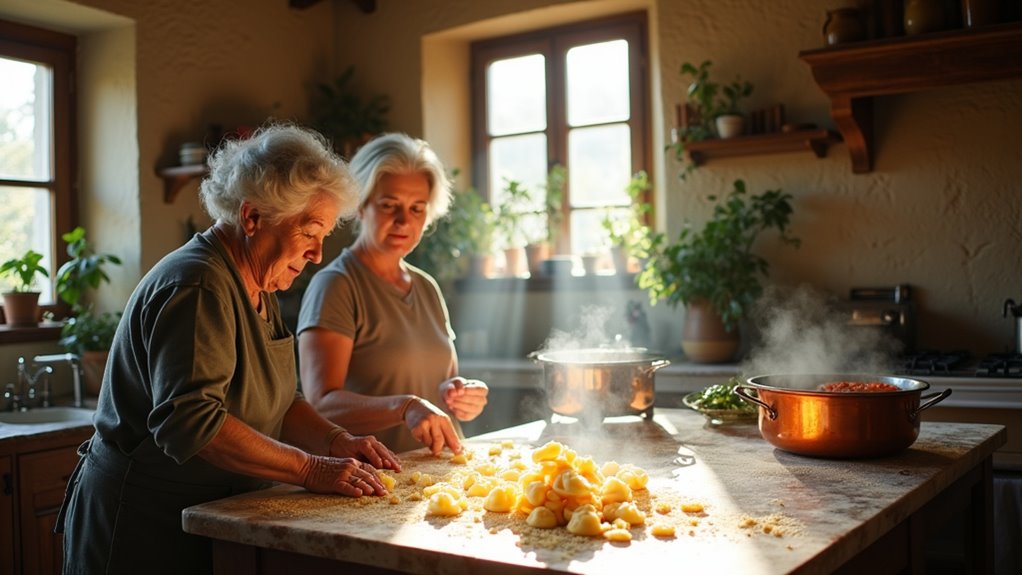
Beyond sampling Italy’s renowned cuisine at restaurants, you’ll discover the true soul of Italian cooking by rolling up your sleeves in a hands-on cooking class. Choose Bologna for authentic pasta-making with prosciutto di Parma, Florence for traditional Tuscan techniques, or Rome to master carbonara and tiramisu through immersive experiences like Eat & Cook Italy.
You’ll learn to hand-roll tagliatelle, shape tortellini, and craft sauces using time-honored methods that emphasize fresh, regional ingredients. Classes accommodate all skill levels and typically end with communal dining, creating memorable social connections.
These experiences go deeper than tourist restaurants, teaching you authentic recipes you can confidently recreate at home. The hands-on approach connects you directly with Italian culinary heritage while building practical skills. Many cooking schools also offer hybrid formats that combine in-person instruction with online follow-up sessions to help you practice techniques after returning home.
Eat Authentic Neapolitan Pizza Where It Was Born
When you’re standing in the narrow cobblestone streets of Naples, you’re not just visiting another Italian city—you’re at the birthplace of pizza itself. Here, authentic Neapolitan pizza follows strict standards set by the Associazione Verace Pizza Napoletana.
You’ll taste the difference immediately—dough made from “00” flour creates that signature soft, silky crust, while San Marzano tomatoes and mozzarella di bufala provide unmatched flavor.
Look for pizzerias using wood-fired brick ovens that reach 800°F, cooking your pizza in just 60-90 seconds. This creates the characteristic charred, bubbly edges you can’t replicate elsewhere.
Order either Pizza Marinara or Margherita—the two classics that showcase true Neapolitan tradition. The Pizza Margherita was first created by Raffaele Esposito in 1889 for Queen Margherita, featuring the colors of the Italian flag. Each 11-inch pizza serves one person, typically unsliced and meant to be folded while eating.
Explore Matera’s Ancient Cave Dwellings
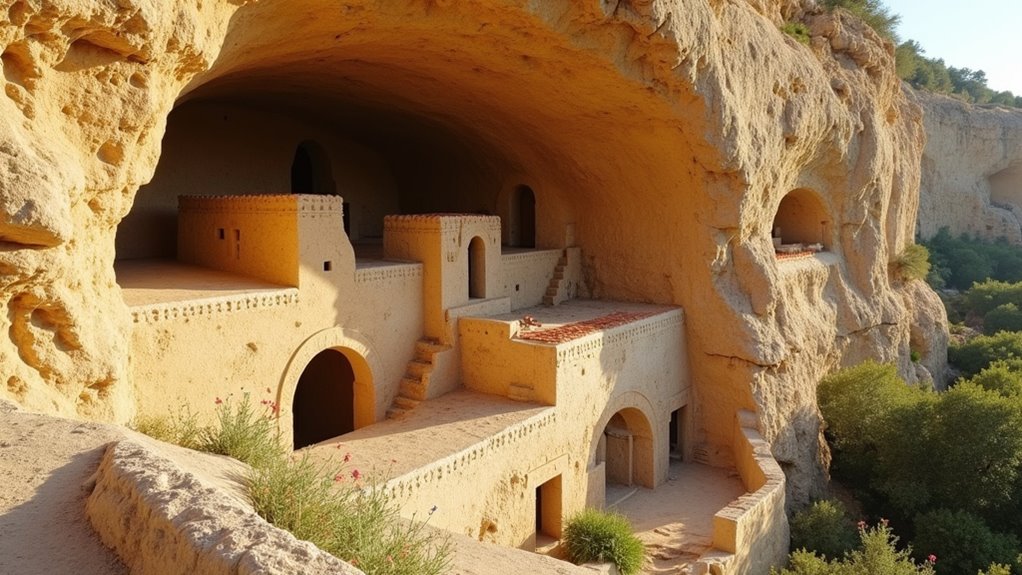
As you descend into Matera’s limestone labyrinth, you’re entering one of the world’s oldest continuously inhabited settlements—a place where humans have carved out lives from rock for over 15,000 years.
You’ll discover the Sassi districts—Sasso Caveoso and Sasso Barisano—where cave dwellings stack vertically, creating streets that run above houses in an upside-down urban maze.
Don’t miss the 150+ rupestrian churches carved into tufa rock, many adorned with stunning Byzantine frescoes.
Look for the ancient cistern systems beneath your feet—some now house atmospheric restaurants and spas.
Plan your visit early morning or late afternoon for the best lighting to photograph these UNESCO sites. The area gained UNESCO recognition in 1993, which helped promote conservation efforts and establish Matera’s international profile as a World Heritage destination.
Many caves offer overnight stays, letting you experience authentic troglodyte living with modern comforts.
Attend an Opera in Verona’s Roman Arena
From ancient cave dwellings carved into rock, Italy’s theatrical heritage reaches its pinnacle in Verona’s magnificent Roman Arena, where you’ll witness opera performed in the world’s largest open-air venue.
Built in the 1st century AD, this amphitheater transforms into pure magic when 13,000 spectators gather for performances that begin at dusk.
You’ll want to book Verdi’s Aida – it’s the festival’s crown jewel with spectacular three-dimensional staging that matches the arena’s grandeur.
Don’t miss the traditional candlelight moment when audiences light their “moccoletto” candles, creating an unforgettable atmosphere.
Legendary voices like Pavarotti and Callas have graced this stage since 1913. The arena’s exceptional acoustics were first recognized by Giovanni Zenatello, inspiring him to organize that inaugural opera performance with Verdi’s Aida.
Pro tip: arrive early to soak in the Roman architecture and grab dinner nearby before curtain call.
Soak in Saturnia’s Natural Hot Springs
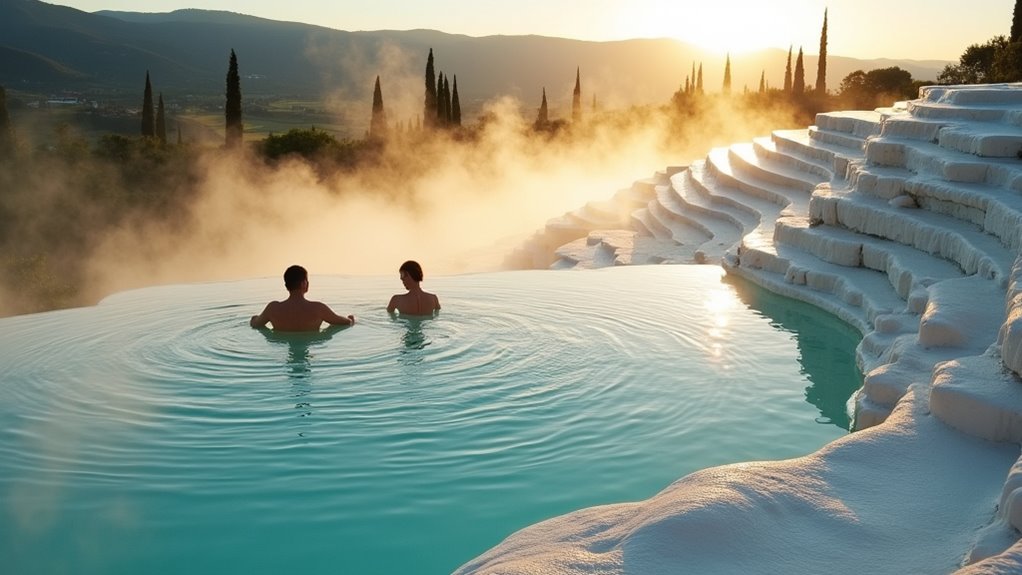
While most travelers chase crowded tourist attractions, you’ll discover one of Italy’s best-kept secrets in southern Tuscany’s rolling hills – Saturnia’s natural hot springs. The mineral-rich waters maintain a perfect 37.5°C year-round, flowing at 800 liters per second over stunning limestone terraces.
Head straight to Cascate del Mulino, the free natural pools that’ve been attracting visitors since Etruscan times. You’ll find these travertine waterfalls just outside town, open 24/7 with no entrance fee. Arrive before 7 AM to avoid crowds and enjoy a peaceful soak.
The sulphurous waters contain beneficial minerals like calcium, magnesium, and hydrogen sulphide – perfect for your skin and relaxation. These waters also dilate blood vessels and promote better circulation throughout your body.
Combine your visit with exploring nearby Maremma towns for an authentic Tuscan experience.
The Sum Up
You’ve got nine incredible experiences mapped out, but Italy’s got so much more waiting for you. Don’t try cramming everything into one trip—you’ll burn out fast. Pick three or four that really speak to you and dive deep instead of rushing around. Book those gondola rides and cooking classes early, especially during peak season. Trust me, taking your time means you’ll actually remember these moments instead of just checking boxes.