
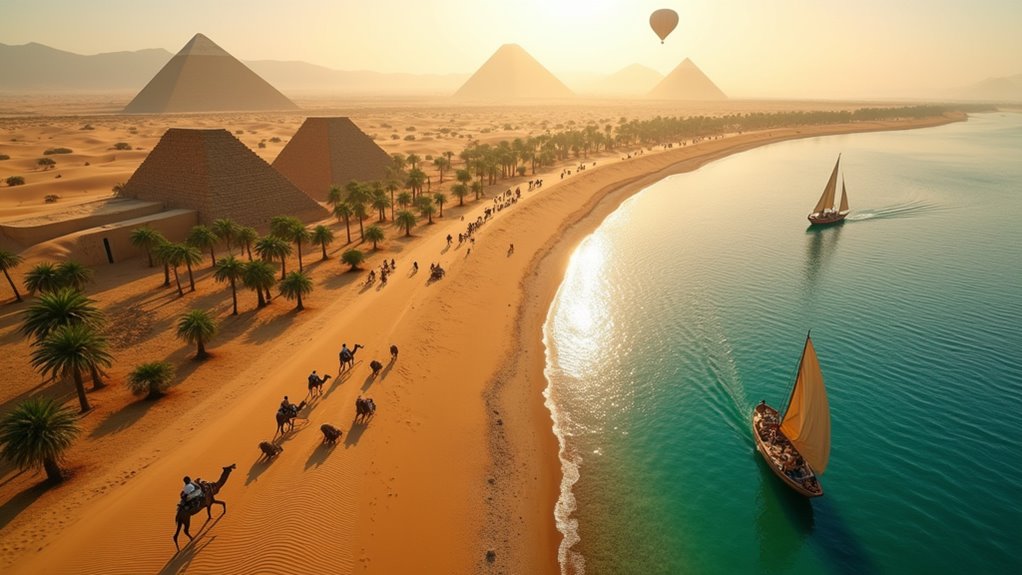
You’ve probably dreamed of exploring Africa and the Middle East, but where do you start with two vast continents offering everything from ancient wonders to wildlife spectacles? Whether you’re working with a tight budget or have some flexibility, there’s something extraordinary waiting for every type of traveler. From floating in the Dead Sea to tracking gorillas in Rwanda’s misty mountains, these 25 experiences will completely reshape how you see adventure travel.
- Stand Atop Table Mountain Using the Cable Car or Hiking Routes
- Experience the Thunder of Victoria Falls From Both Zambian and Zimbabwean Sides
- Trek Mount Kilimanjaro via the Machame or Marangu Routes
- Spot Wildlife in Ngorongoro Crater’s Compact Ecosystem
- Camp Under Stars in Egypt’s White Desert Among Chalk Formations
- Explore the Pyramids of Giza Early Morning Before Tour Groups Arrive
- Walk Through Petra’s Siq to Reach the Treasury at Sunrise
- Visit Abu Simbel Temples During the February or October Sun Festival
- Spend a Full Day at Luxor’s East and West Bank Temple Complexes
- Navigate Fez’s Ancient Medina With a Local Guide
- Stay at a Desert Resort in the Empty Quarter for Dune Experiences
- Take a Multi-Day Sahara Trek From Merzouga or M’hamid
- Sleep Under Stars at a Wadi Rum Desert Camp
- Ride Camels and Dine in Traditional Bedouin Camps
- Hike the Fish River Canyon’s Multi-Day Trail
- Walk Through Islamic Cairo’s Historic Mosque Quarter
- Visit Burj Khalifa’s Observation Decks and Dubai Mall’s Aquarium
- Experience Cape Town’s Bo-Kaap Neighborhood and Local Food Scene
- Follow the Via Dolorosa and Visit Jerusalem’s Western Wall
- Bargain in Marrakech’s Jemaa El-Fnaa Square and Surrounding Souks
- Take Hot Air Balloon Rides Over Cappadocia’s Fairy Chimneys
- Dive the Coral Reefs at Aqaba’s Marine Reserve
- Float Effortlessly in the Dead Sea’s Mineral-Rich Waters
- Track Mountain Gorillas in Rwanda’s Volcanoes National Park
- Safari the Okavango Delta by Traditional Mokoro Canoe
- The Sum Up
Stand Atop Table Mountain Using the Cable Car or Hiking Routes
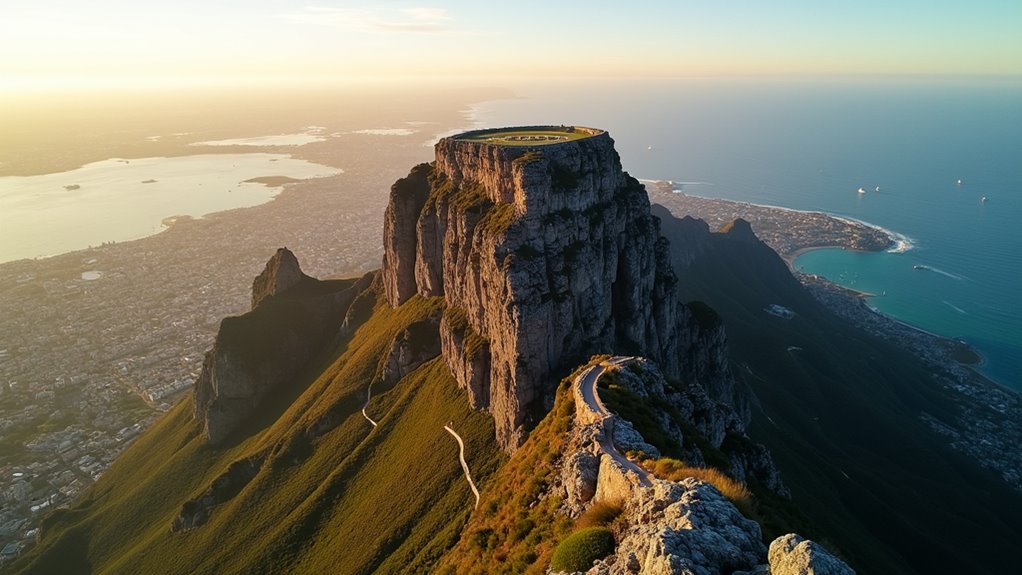
Whether you’re seeking an adrenaline rush or a leisurely ascent, Table Mountain offers multiple ways to reach its iconic flat summit overlooking Cape Town.
The cable car whisks you up in 5-7 minutes with rotating floors for 360° views, costing around 210 rand round-trip. Book online to skip lengthy queues during peak season.
For hiking enthusiasts, Platteklip Gorge provides the most straightforward 5.5km route taking two hours. More challenging options include Skeleton Gorge through indigenous forest or India Venster with rock scrambling.
Smart budget tip: hike up and cable car down since tickets stay valid for seven days. Pack water, sun protection, and warm layers as mountain weather changes quickly. Always hike in groups during daylight hours. At the summit, enjoy amenities including a café, restrooms, and free Wi-Fi for sharing your achievement.
Experience the Thunder of Victoria Falls From Both Zambian and Zimbabwean Sides
When you stand before Victoria Falls, the thunderous roar hits you long before the mist soaks your clothes—this UNESCO World Heritage site spans both Zimbabwe and Zambia, giving you two completely different perspectives of one of the world’s most spectacular waterfalls.
Zimbabwe’s side offers sweeping panoramic views from elevated walkways, showcasing about 75% of the falls including Devil’s Cataract and Rainbow Falls. You’ll get those classic postcard shots here.
Zambia gets you closer to the action with water-level views and the thrilling Knife Edge Bridge. During dry season, you can even swim in Devil’s Pool—a natural infinity pool right on the edge. The entrance fee is just $20 on the Zambian side, making it significantly more budget-friendly than Zimbabwe’s $50 charge.
Visit April through September for maximum water flow, though Zambia’s side works best during lower water months when visibility improves.
Trek Mount Kilimanjaro via the Machame or Marangu Routes
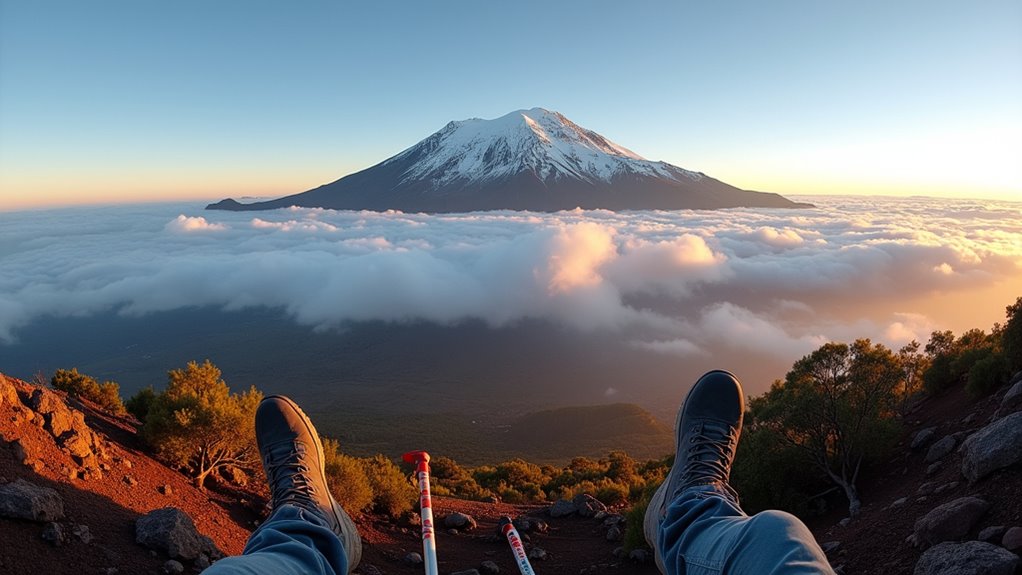
Standing at 19,341 feet, Mount Kilimanjaro beckons adventurous trekkers with two main routes that couldn’t be more different—and choosing between them shapes your entire experience on Africa’s highest peak.
The Marangu Route, nicknamed the “Coca-Cola” route, offers dormitory-style huts and gentler slopes perfect for beginners. You’ll complete it in 5-6 days, but the quicker ascent means lower summit success rates due to limited acclimatization time. This route includes a unique trek to Mawenzi base camp for an exclusive acclimatization opportunity.
Machame Route demands more from your fitness level but rewards you with diverse landscapes, camping under starlit skies, and better summit odds. Its 6-7 day itinerary follows the “climb high, sleep low” strategy, giving your body essential adjustment time.
You’ll witness glaciers earlier and experience varied climatic zones that make every day visually stunning.
Spot Wildlife in Ngorongoro Crater’s Compact Ecosystem
Tucked within Tanzania’s highlands, Ngorongoro Crater functions like nature’s amphitheater where you’ll witness Africa’s most concentrated wildlife spectacle. You’ll spot approximately 25,000-28,000 large mammals year-round within this 260-square-kilometer natural enclosure.
The crater hosts one of the world’s densest lion populations alongside endangered black rhinos, whose numbers have stabilized around 55 individuals thanks to conservation efforts.
During migration seasons, you’ll see over 1.7 million wildebeest and 260,000 zebras passing through. The crater’s enclosed geography creates intense predator-prey interactions, making wildlife viewing exceptionally rewarding.
You won’t find giraffes or impalas here due to unsuitable habitat, but elephants, buffalo, zebras, and hyenas thrive in the grasslands and swampy areas. Lake Magadi’s shallow, alkaline waters attract thousands of lesser flamingoes that create stunning pink displays across the crater floor. This compact ecosystem delivers maximum wildlife diversity with minimal travel time.
Camp Under Stars in Egypt’s White Desert Among Chalk Formations
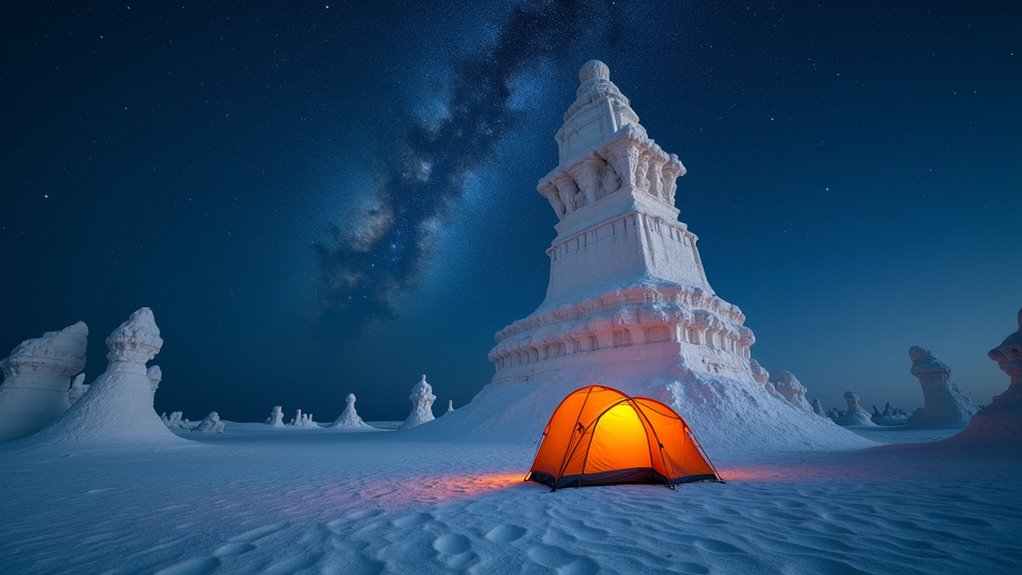
While most desert camping involves sandy dunes and cacti, Egypt’s White Desert offers something completely different—a surreal landscape of gleaming chalk formations that’ll make you feel like you’ve landed on another planet. Located 45 kilometers north of Farafra town, this protected national park features bizarre white chalk sculptures carved by wind erosion into mushroom and animal shapes.
You’ll camp among these otherworldly formations under crystal-clear skies perfect for stargazing. Most tours include Bedouin-style tents, traditional meals cooked over open fires, and 4×4 desert safaris.
On full moon nights, the chalk rocks glow ethereally, creating an unforgettable experience. The desert is also home to endangered wildlife including the rare Rhim gazelle and desert foxes that roam these ancient formations. Two to four-day tours typically cost less than luxury hotels while offering authentic cultural interactions and activities like sandboarding and fossil hunting.
Explore the Pyramids of Giza Early Morning Before Tour Groups Arrive
From Egypt’s remote desert wonders to its most famous ancient monuments, timing makes all the difference in your experience. You’ll want to arrive at the Pyramids of Giza right when they open—7:00 AM in summer or 8:00 AM in winter—to beat the massive tour groups that descend between 9:30-10:30 AM.
Early morning visits offer cooler temperatures, peaceful exploration, and superior photography lighting without competing with crowds. You’ll have better access to the Pyramid of Khufu’s interior chambers and can enjoy camel rides around the complex in relative quiet. The Sphinx and Queen’s Pyramids become more immersive experiences when you’re not jostling for position.
Purchase tickets in advance, bring water and sun protection, and prepare for possible schedule changes during holidays. A typical visit lasts 2 to 4 hours for the main sights, though you can explore for a full day if you want to visit the Solar Boat Museum and smaller temples.
Walk Through Petra’s Siq to Reach the Treasury at Sunrise
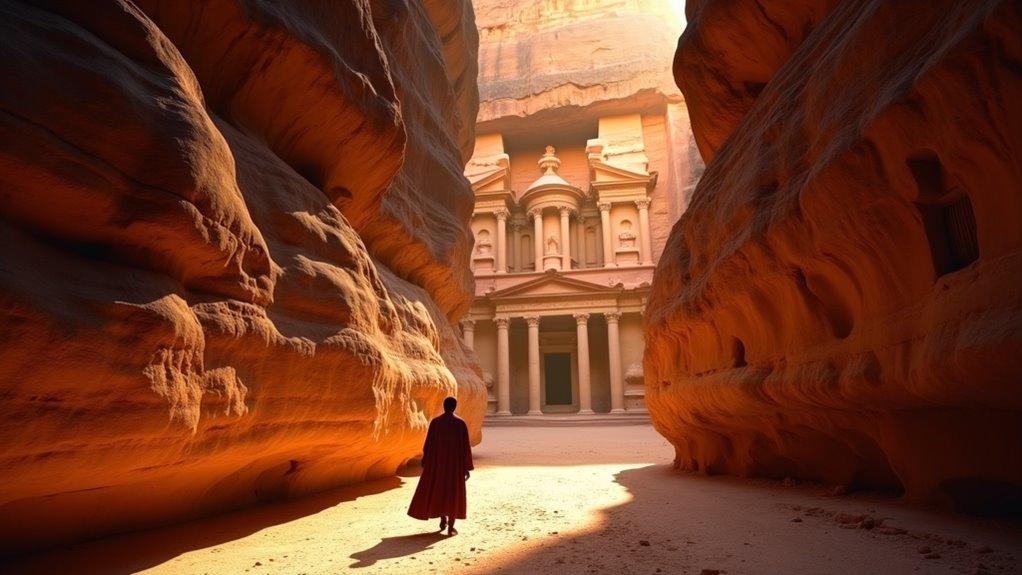
Jordan’s ancient city of Petra reveals its most magical moment when you walk through the narrow Siq canyon at sunrise, arriving at the Treasury before the crowds descend. You’ll need to start early—arrive at Petra’s entrance by 6:00 AM to catch the golden light illuminating the Treasury’s facade.
The 1.2-kilometer walk through towering sandstone walls takes 20-45 minutes, building anticipation as glimpses of the Treasury appear through the narrow opening.
The early timing means cooler temperatures and peaceful exploration of this UNESCO World Heritage site. While the one-day pass costs around $77, you’re experiencing one of the world’s most atmospheric ancient walks.
Wear comfortable shoes, bring water, and prepare for an unforgettable journey through Nabataean history. Along the way, you’ll discover carved niches, ancient water channels, and remnants of Nabataean engineering that showcase the ingenuity of this lost civilization.
Visit Abu Simbel Temples During the February or October Sun Festival
Egypt’s Abu Simbel temples offer one of the world’s most spectacular ancient light shows during their biannual Sun Festival on February 22 and October 22. You’ll witness sunrise illuminating statues of Ramses II and Egyptian gods through a 60-meter tunnel—a phenomenon that’s occurred for over 3,200 years.
The 20-minute event celebrates the pharaoh’s birthday and coronation while showcasing incredible ancient engineering. During the alignment, Ptah remains in complete darkness, symbolizing the ancient Egyptian balance between light and shadow in their mythology.
February offers milder weather and smaller crowds, making it budget-friendly for independent travelers. October coincides with ideal conditions for combining with Nile cruises.
You’ll need advance bookings since thousands attend annually. The festival includes traditional Nubian performances alongside the solar alignment.
Consider tour packages from Aswan that bundle transportation, guides, and entrance fees for better value than arranging everything separately.
Spend a Full Day at Luxor’s East and West Bank Temple Complexes
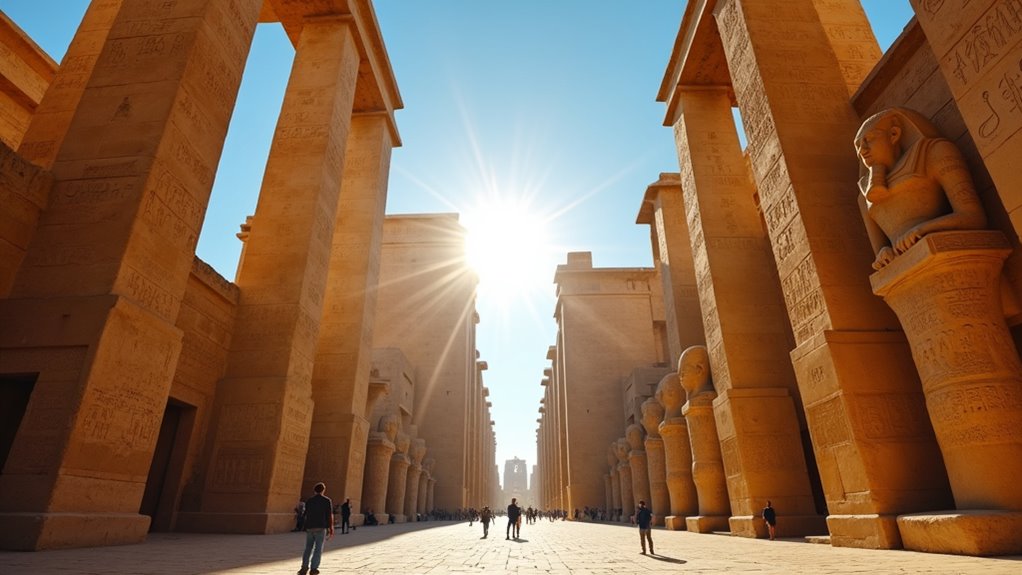
While most visitors rush through Luxor’s ancient wonders in half a day, you’ll need a full day to properly explore both sides of the Nile and truly appreciate what’s considered the world’s greatest open-air museum.
Start early on the West Bank to beat crowds and heat at the Valley of the Kings, Temple of Hatshepsut, and the towering Colossi of Memnon. After lunch, cross the Nile to explore the East Bank’s magnificent Karnak Temple Complex—the world’s second-largest temple site built over 2,000 years.
Don’t miss the jaw-dropping Hypostyle Hall with its 134 massive columns, each 23 meters high. End at nearby Luxor Temple, connected to Karnak by an ancient sphinx-lined avenue. The 2.7-kilometer processional road was originally used for annual festivals parading statues of Amun and Mut between the two temples. Your Karnak ticket includes the open-air museum, so maximize your value by exploring the reconstructed shrines.
Navigate Fez’s Ancient Medina With a Local Guide
Getting lost in Fez’s medina isn’t just likely—it’s practically guaranteed without a knowledgeable local guide leading you through its maze of 9,000 streets and alleyways. Your guide will navigate the 800-acre labyrinth while sharing stories about the Idrisid dynasty’s 9th-century founding and subsequent architectural developments.
You’ll discover hidden souks specializing in textiles, leather, and metalwork that you’d never find alone. Your guide explains traditional crafting methods, helps with bargaining, and provides historical context about the Qarawiyyin Mosque—one of the world’s oldest continuously operating universities since 859 AD.
They’ll tailor your route based on your interests, whether that’s architecture, cuisine, or artisan workshops. Most importantly, they’ll help you respect local customs when visiting religious sites and guarantee you experience authentic daily life within this UNESCO World Heritage treasure. Your guide will point out the distinctive horseshoe arches that reflect the city’s architectural influence from al-Andalus and set the decorative standards for subsequent Moroccan Islamic buildings.
Stay at a Desert Resort in the Empty Quarter for Dune Experiences
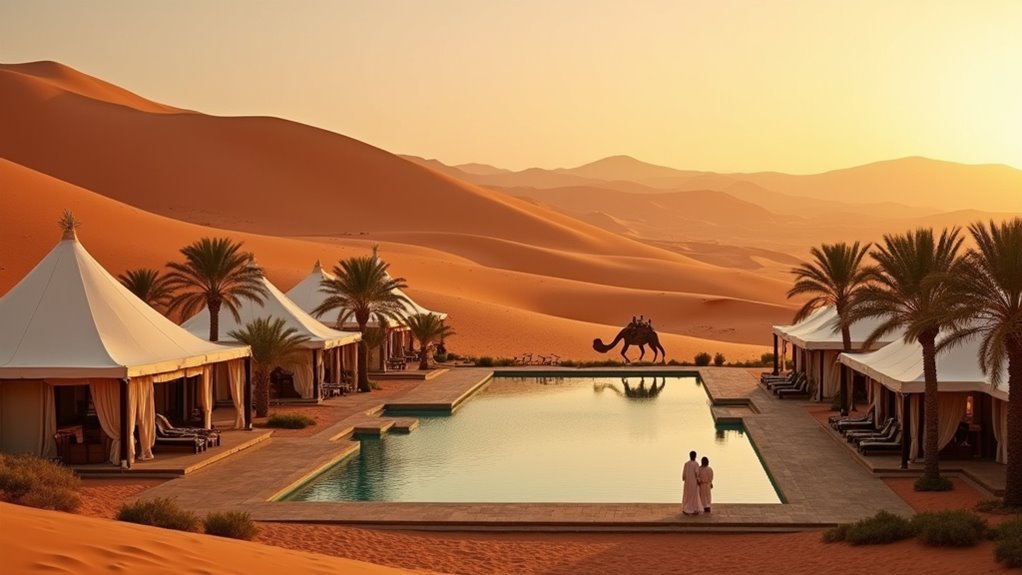
Beyond the bustling cities of the UAE and Oman lies the Rub’ al Khali—the world’s largest continuous sand desert—where luxury resorts offer you an unforgettable escape into endless golden dunes.
You’ll find properties like Qasr Al Sarab featuring traditional sandstone architecture, with options ranging from standard rooms to private pool villas with butler service.
Book camelback rides, 4WD safaris, and sandboarding adventures to explore the vast landscape.
Evening entertainment includes Bedouin cultural performances and stargazing sessions.
For budget-conscious travelers, smaller eco-lodges provide authentic desert experiences without the premium price tag. Some resorts feature unique amenities like filtered sulphur-water bathing lakes that provide natural relaxation after a day of desert exploration.
Expect a 2-3 hour journey by 4×4 from major cities—the remote location guarantees you’ll disconnect completely while enjoying spa treatments and traditional Arabic cuisine under desert stars.
Take a Multi-Day Sahara Trek From Merzouga or M’hamid
As the sun begins its descent over Morocco’s golden dunes, you’ll mount your camel for an authentic multi-day Sahara adventure departing from either Merzouga or M’hamid—two gateway towns that offer dramatically different desert experiences.
You’ll traverse the towering Erg Chebbi or Erg Chegaga dunes, spending nights in traditional Berber camps under star-filled skies.
Budget-conscious travelers can find 2-day treks starting around €350, while 3-day adventures run about €450.
Your all-inclusive package covers 4WD transport, camel trekking, meals, and desert camp accommodation.
Book at least 48 hours ahead since camp capacity’s limited.
Pack warm layers for chilly desert nights, plus sunscreen and comfortable shoes.
October through April offers ideal weather, avoiding summer’s scorching temperatures. These tours support local education initiatives, emphasizing responsible travel while providing authentic cultural experiences with Berber guides.
Sleep Under Stars at a Wadi Rum Desert Camp
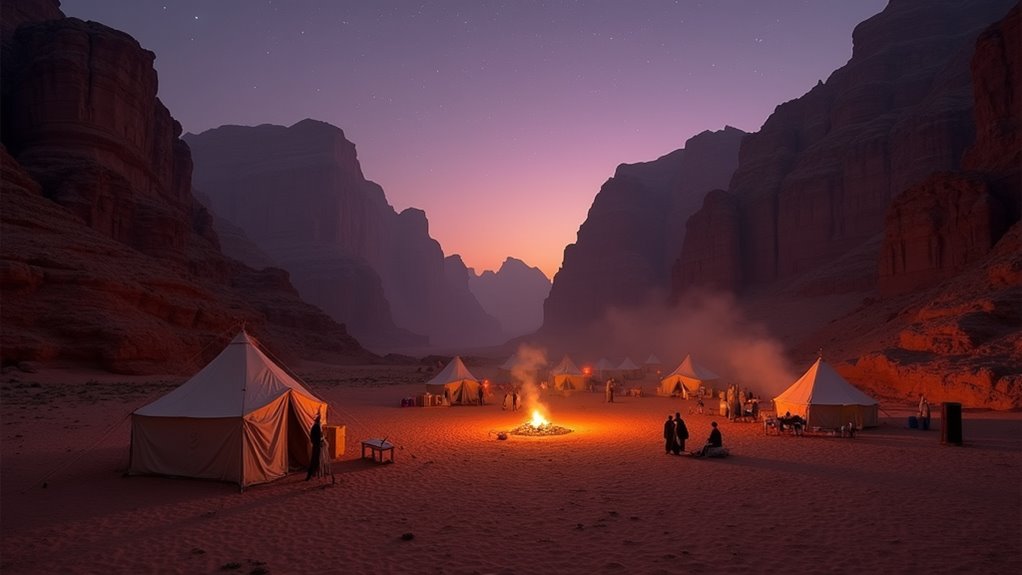
When you’re seeking an otherworldly desert experience that rivals Morocco’s Sahara, Jordan’s Wadi Rum offers equally spectacular stargazing with better accessibility and diverse accommodation options. This protected 280-square-mile desert sits just 40 minutes from Aqaba and two hours from Petra, making it perfect for multi-destination trips.
You’ll sleep in everything from traditional Bedouin tents to luxury accommodations with en-suite bathrooms and heating for chilly nights.
The real magic happens after dark—zero light pollution means you’ll see the Milky Way, constellations, and meteor showers with stunning clarity.
Days bring jeep tours, camel rides, and hiking with local Bedouin guides who’ll cook traditional zarb meals underground. Adventure seekers can try sandboarding on the region’s large, soft dunes when conditions permit.
Some camps offer hot air ballooning for aerial desert views that’ll leave you speechless.
Ride Camels and Dine in Traditional Bedouin Camps
Where else can you trade your morning alarm for a camel’s gentle grunt and swap restaurant reservations for meals cooked underground in the desert? Bedouin camps across the Middle East offer authentic cultural experiences without breaking the bank.
You’ll ride camels through Jordan’s Wadi Rum or Oman’s towering dunes, guided by locals who know every trail.
The real magic happens at dinner, where you’ll taste “Zarb” – meat and vegetables slow-cooked in underground pits that create incredible smoky flavors. You’ll share communal meals under starlit skies, starting with traditional Arabic coffee and dates.
From luxury tents in Oman to basic family-hosted camps, there’s an option for every budget while experiencing genuine Bedouin hospitality. Many camps enhance the evening with drumming sessions and bonfire gatherings that bring guests together under the desert stars.
Hike the Fish River Canyon’s Multi-Day Trail
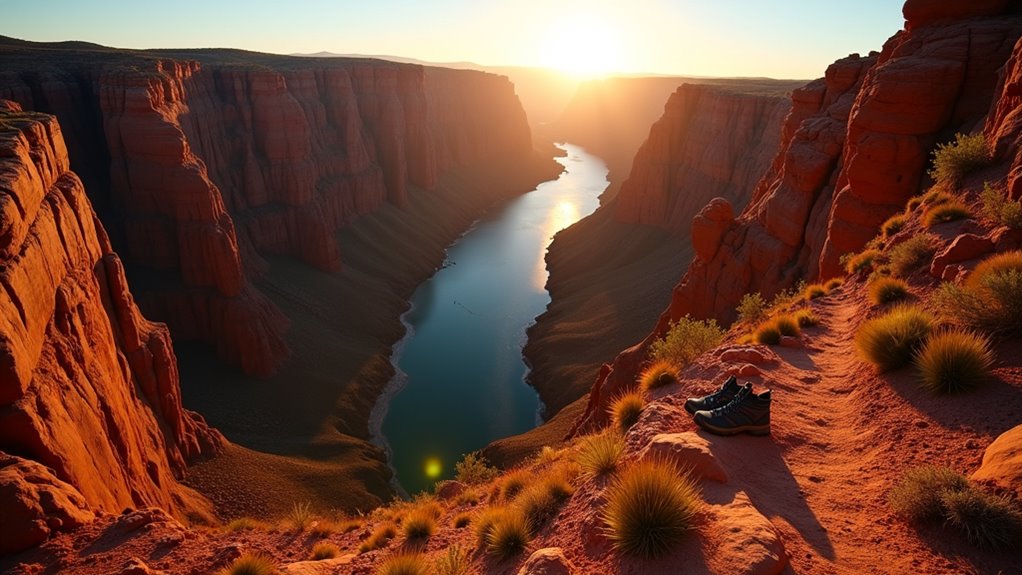
Why settle for ordinary hiking trails when you can tackle Africa’s most epic wilderness challenge? Fish River Canyon’s multi-day trail delivers an unforgettable 85-90km trek through the world’s second-largest canyon.
You’ll need 4-6 days to complete this demanding hike, carrying all your gear and supplies since there aren’t any facilities along the route.
Book your permits at least a month ahead through Namibia Wildlife Resorts – they’re required and spots fill quickly. Groups must have a minimum of 3 people to secure trail permits.
The trail’s open May through mid-September when temperatures are manageable.
You’ll face steep descents, rocky terrain, and 6-8 hour hiking days, but the rewards are incredible: ancient rock formations, wildlife viewing, river pools for swimming, and spectacular stargazing.
This isn’t for beginners – you’ll need solid fitness and wilderness experience.
Walk Through Islamic Cairo’s Historic Mosque Quarter
Step into Islamic Cairo’s mosque quarter and you’ll find yourself wandering through the world’s largest collection of historic Islamic architecture. Start your journey on Al-Muizz Street, a pedestrian-friendly kilometer-long stretch that’s like walking through an open-air museum.
You’ll encounter stunning mosques spanning centuries, from the 642 AD Mosque of Amr ibn al-As to the magnificent Sultan Hassan Mosque with its soaring Mamluk walls.
Don’t miss Al-Azhar Mosque, a 1,000-year-old center of Islamic learning that’s still active today. The Ahmed ibn Tulun Mosque offers impressive early Islamic architecture with its distinctive spiral minaret.
Visit during evening hours when illuminated monuments create magical atmospheres with street performers adding local flavor. Most mosques welcome respectful visitors, making this UNESCO World Heritage site accessible for budget-conscious travelers seeking authentic cultural experiences. The district was originally founded as Al-Qahira by the Fatimid caliphate in the 10th century, establishing it as a political and religious center that would grow under successive Islamic dynasties.
Visit Burj Khalifa’s Observation Decks and Dubai Mall’s Aquarium
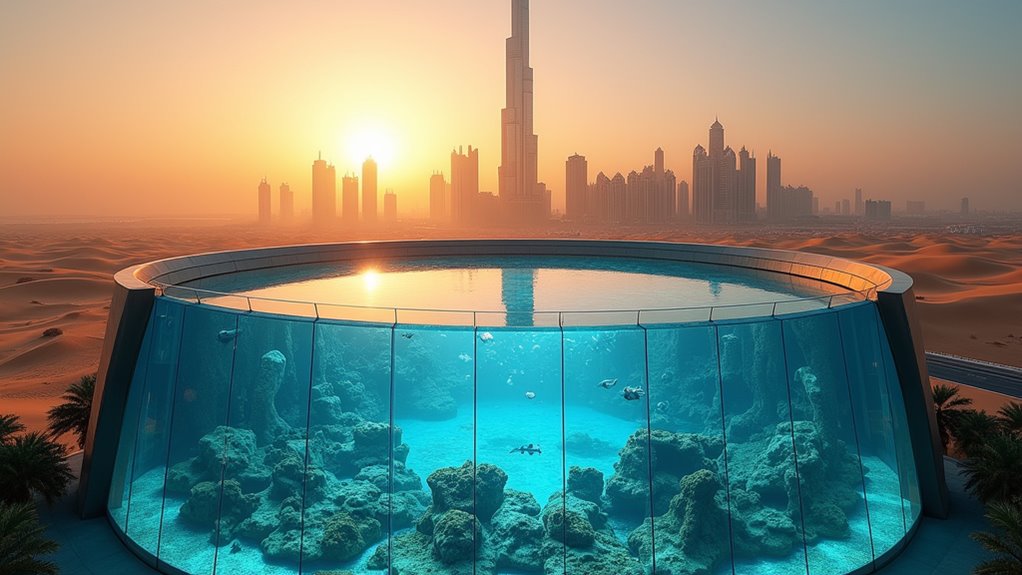
When you’re in Dubai, you’ll want to experience the city from both its highest point and beneath the waves at two of its most iconic attractions.
Start with Burj Khalifa’s observation decks on floors 124-125, standing 452 meters high with panoramic city views. If your budget allows, upgrade to the 148th floor “At The Top SKY” at 555 meters for desert and mountain vistas. Book time-specific tickets in advance to avoid crowds and higher walk-in prices.
After descending, head to Dubai Mall’s massive aquarium housing 10 million liters of water and thousands of marine species. You’ll walk through underwater tunnels surrounded by sharks and rays. The aquarium’s location inside the mall makes it a perfect pairing with your Burj Khalifa visit.
Experience Cape Town’s Bo-Kaap Neighborhood and Local Food Scene
From Dubai’s towering skyscrapers, we head to Cape Town’s colorful streets where Bo-Kaap’s vibrant houses tell stories of resilience and cultural preservation. You’ll wander cobblestone streets lined with bright Georgian and Cape Dutch homes, each painted facade symbolizing freedom from colonial oppression.
Start at the Bo-Kaap Museum in an original 1768 house to understand Cape Malay history. Visit Auwal Mosque, South Africa’s oldest mosque established in 1794, where the call to prayer still echoes daily.
Don’t miss the food scene—join affordable cooking workshops to learn bobotie and Malay curry preparation from local families. You’ll taste koeksisters and experience authentic Cape Malay cuisine at neighborhood eateries. These culinary adventures support local businesses while connecting you to centuries-old traditions and flavors.
Follow the Via Dolorosa and Visit Jerusalem’s Western Wall
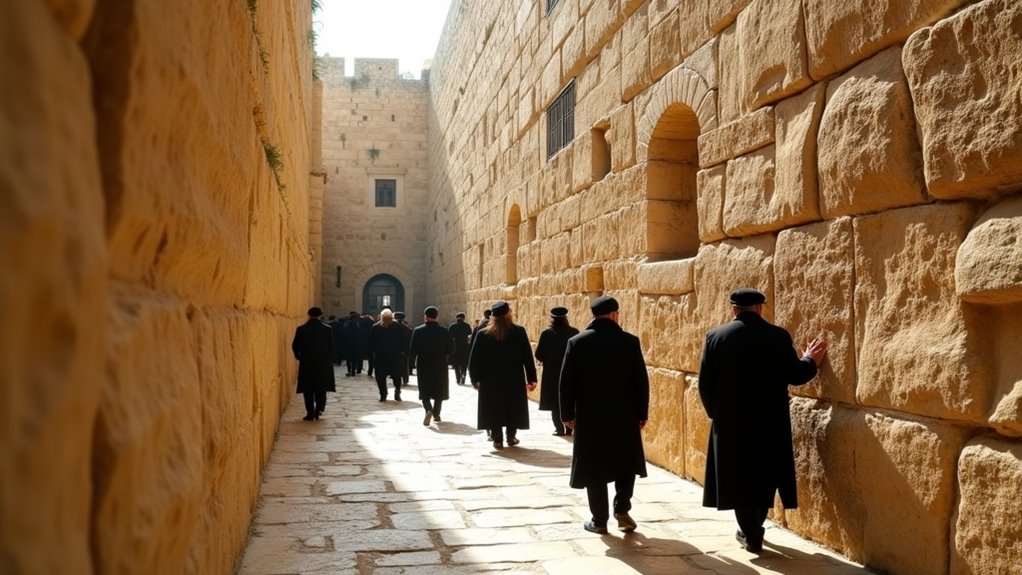
While Cape Town showcases vibrant cultural resilience, Jerusalem’s ancient stones hold even deeper spiritual significance.
As you walk the Via Dolorosa—the path Christians believe Jesus took to his crucifixion—you’re traversing a 600-meter route through the Old City. This route connects 14 Stations of the Cross, beginning near the Antonia Fortress where Pontius Pilate condemned Jesus and ending at the Church of the Holy Sepulchre on Mount Calvary.
You’ll find yourself pausing at each station for reflection, whether you’re deeply religious or simply curious about history. The journey costs nothing but offers profound experiences.
Afterward, visit the nearby Western Wall, Judaism’s holiest prayer site and the last remaining wall of the Second Temple. Both sacred spaces sit within walking distance, making Jerusalem an unparalleled destination for spiritual exploration.
Bargain in Marrakech’s Jemaa El-Fnaa Square and Surrounding Souks
Moving from Jerusalem’s sacred quiet to Marrakech’s sensory overload, you’ll discover that Jemaa El-Fnaa square pulses with an energy that’s existed since the 11th century. This UNESCO World Heritage site transforms into Morocco’s ultimate shopping theater each afternoon.
You’ll find the surrounding souks organized by specialty—spices, textiles, leather, and metalwork. Here’s your bargaining strategy: start at 30% of the quoted price, stay polite but firm, and don’t hesitate to walk away. Vendors expect negotiation, so initial prices are inflated.
Visit during late afternoon when storytellers, musicians, and snake charmers create an intoxicating backdrop for your shopping. Bring cash in small bills, compare prices between stalls, and remember—bargaining isn’t aggressive haggling, it’s a respected cultural dance that connects you to centuries of trade tradition.
Take Hot Air Balloon Rides Over Cappadocia’s Fairy Chimneys
As dawn breaks over Turkey’s volcanic wonderland, you’ll drift silently above Cappadocia’s otherworldly fairy chimneys in a hot air balloon—an experience that costs around €85 but delivers memories worth far more.
Your 50-75 minute flight starts before sunrise when weather conditions are calmest, and you’ll share the basket with 16-28 other passengers.
From 3,000 feet up, you’ll witness the surreal landscape of Red Rose Valley and Pasabag, where volcanic rock formations tower up to 40 meters high.
Don’t worry about missing out—around 100 balloons launch daily during peak season.
Your package typically includes hotel transfers, a safety briefing, Turkish breakfast, and a flight certificate to commemorate this bucket-list adventure.
Dive the Coral Reefs at Aqaba’s Marine Reserve
Beneath the crystal-clear waters of Jordan’s Aqaba Marine Reserve, you’ll discover one of the world’s most resilient coral ecosystems—home to over 157 hard coral species and 512 colorful fish varieties that thrive in these northernmost Red Sea reefs.
You can explore over 30 dive sites suitable for all skill levels, with underwater visibility reaching 100 meters. Popular spots include Coral Beach’s dense reefs and Blue Flag-certified Blue Beach.
You’ll encounter hawksbill turtles, groupers, and occasionally whale sharks or manta rays among the vibrant corals.
What makes this destination special is the reef’s exceptional heat tolerance, creating a unique diving experience that’s also vital for climate research.
The one-square-kilometer reserve protects endangered species while offering affordable access to world-class diving.
Float Effortlessly in the Dead Sea’s Mineral-Rich Waters
While most bodies of water require effort to stay afloat, you’ll find yourself bobbing like a cork in the Dead Sea’s incredibly dense, mineral-rich waters. At ten times saltier than regular seawater, this unique body of water sits 430 meters below sea level, creating extraordinary buoyancy that makes swimming impossible—you’ll simply float.
Beyond the novelty, you’re soaking in 21 therapeutic minerals, including magnesium for muscle relaxation and potassium for hydration. The mineral-rich mud along the shores costs nothing to scoop up and provides natural exfoliation and skin benefits. Many visitors report relief from psoriasis, eczema, and joint pain after just one visit.
Pack waterproof sunglasses since you can’t duck underwater, and bring fresh water to rinse salt from your eyes.
Track Mountain Gorillas in Rwanda’s Volcanoes National Park
From floating in mineral waters to tracking endangered primates, Rwanda’s Volcanoes National Park offers one of Africa’s most extraordinary wildlife encounters. You’ll trek through dense bamboo forests at 2,500-4,000m altitude, spending just one magical hour with habituated gorilla families once you find them.
The $1,500 permit fee isn’t cheap, but it directly funds conservation and local communities.
You’ll start early from Kigali (2-3 hour drive), joining groups of eight maximum per gorilla family. Treks last 1-3 hours depending on the gorillas’ location.
Book permits well ahead—demand’s high for good reason. The park’s conservation success has increased mountain gorilla populations, making this one of only three places worldwide to witness these incredible creatures in their natural habitat.
Safari the Okavango Delta by Traditional Mokoro Canoe
As you glide silently through the Okavango Delta’s crystal-clear channels in a traditional mokoro canoe, you’ll experience Africa’s wildlife from a perspective that’s remained unchanged for centuries. Your local poler will expertly navigate using a wooden ngashi pole, steering you through reed-lined waterways where elephants wade and hippos surface nearby.
This budget-friendly safari option puts you centimeters above water, offering intimate encounters with red lechwe, sitatunga antelope, crocodiles, and countless bird species like African fish eagles. The slow pace creates perfect conditions for photography and quiet observation.
Most excursions include island walks for additional wildlife viewing. Water levels vary seasonally, so some lodges only offer mokoro safaris during wet months. You’re directly supporting local communities while experiencing this authentic, eco-friendly adventure.
The Sum Up
You’ve got incredible adventures waiting across Africa and the Middle East, from budget-friendly hikes up Table Mountain to once-in-a-lifetime gorilla tracking experiences. Don’t let costs hold you back—many destinations offer affordable camping, local transport, and free natural attractions. Mix expensive bucket-list activities like Kilimanjaro treks with cheaper options like exploring Morocco’s medinas. Start planning now, book flights early, and consider traveling during shoulder seasons. These unforgettable experiences are more accessible than you’d think.