
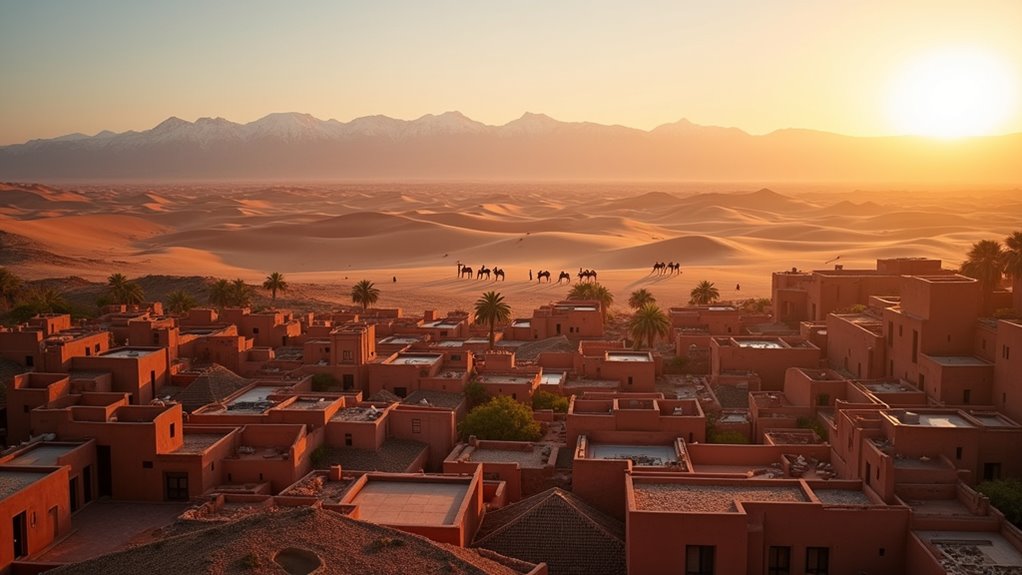
You’re probably wondering if Morocco’s worth the hype – and honestly, it delivers more bang for your buck than most destinations. From haggling in ancient medinas to camping under desert stars for less than a hotel room costs back home, this North African gem offers experiences you simply can’t find elsewhere. Whether you’ve got two weeks or just a long weekend, there’s a strategic way to tackle Morocco’s highlights without breaking the bank or missing the must-sees.
- Wander the Ancient Medina of Fez
- Experience the Sahara Desert at Erg Chebbi
- Get Lost in Marrakesh’s Djemaa El-Fna Square
- Marvel at the Hassan II Mosque in Casablanca
- Explore the Blue Streets of Chefchaouen
- Hike Through Todra Gorge’s Towering Canyon Walls
- Visit the Film-Famous Kasbah of Aït Ben Haddou
- Discover Roman History at Volubilis
- Cross the Atlas Mountains via Tizi N’tichka Pass
- Surf and Relax in Essaouira’s Coastal Charm
- Trek to Morocco’s Highest Peak in Toubkal National Park
- Cool Off at Ouzoud Falls
- Browse Authentic Crafts in Rabat’s Kasbah of the Udayas
- The Sum Up
Wander the Ancient Medina of Fez
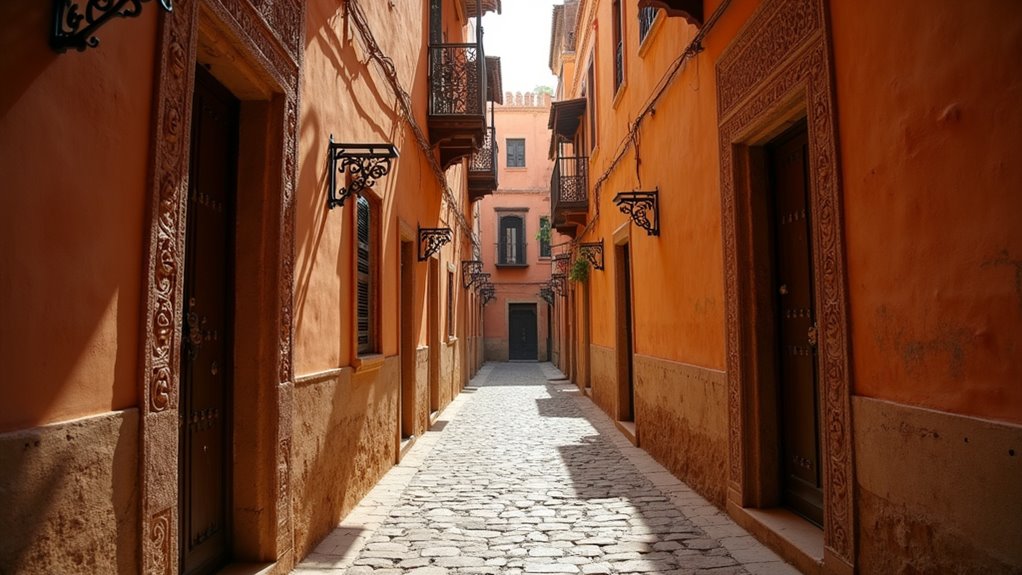
When you step through the ancient gates of Fez’s medina, you’re entering a living museum that’s buzzed with activity for over a thousand years. Navigate the maze-like alleys of Fez el-Bali, where donkeys still carry goods through passages too narrow for cars.
You’ll discover the world’s oldest university at Al Quaraouiyine and ornate 14th-century madrasas showcasing intricate zellige tilework and carved cedar wood. The medina’s architecture beautifully reflects Andalusian, Oriental, and African influences that have shaped this multicultural society over centuries.
Haggle in the vibrant souks for spices, leather goods, and textiles, then visit the famous Chouara Tannery to watch ancient leather-making techniques.
Don’t miss the Blue Gate (Bab Bou Jeloud) and Moulay Idris II shrine. Wear comfortable shoes for the uneven cobblestones, bring cash for purchases, and consider hiring a local guide to avoid getting lost in this UNESCO World Heritage labyrinth.
Experience the Sahara Desert at Erg Chebbi
As you venture into Morocco’s southeastern desert, Erg Chebbi’s towering sand dunes offer an authentic Sahara experience that’s surprisingly accessible without breaking the bank. Located near Merzouga village, these 150-meter-high dunes stretch for miles and provide incredible value for adventure seekers.
You’ll find budget-friendly camel treks starting from basic day rides to overnight camping experiences under star-filled skies. The minimal light pollution makes stargazing spectacular, while sandboarding adds thrills without extra costs.
Don’t miss visiting nearby Khamlia village to experience traditional Gnawa music and culture. The dunes transform into a photographer’s paradise as their golden colors shift dramatically during sunrise and sunset hours.
The area’s well-developed tourism infrastructure means you can choose from simple Berber camps to luxury options. At 462 kilometers from Fès, it’s easily accessible by road, making this iconic desert adventure surprisingly affordable.
Get Lost in Marrakesh’s Djemaa El-Fna Square
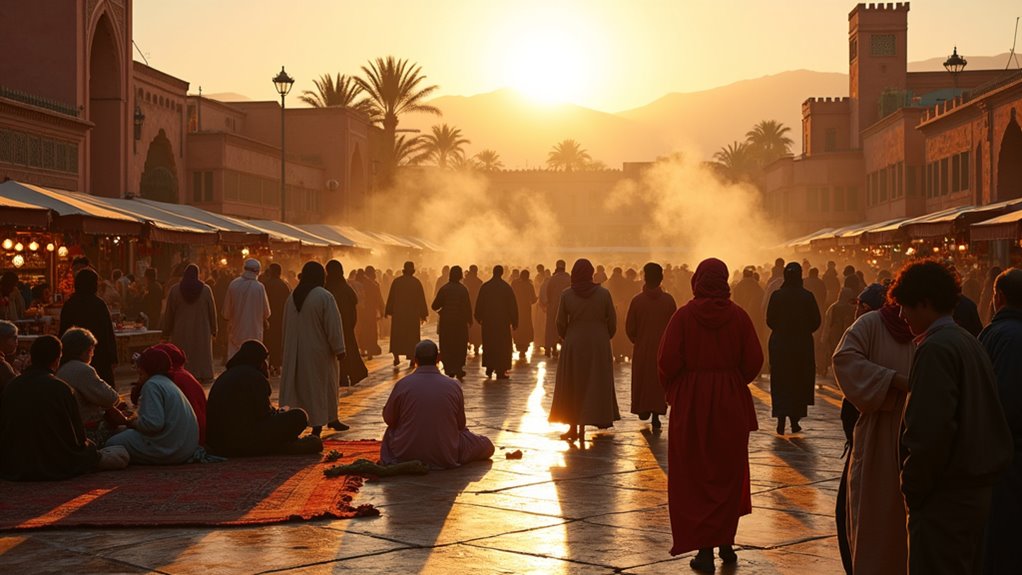
While most travelers rush through Marrakesh’s iconic Djemaa El-Fna Square snapping photos, you’ll discover its true magic by slowing down and absorbing the sensory overload that’s unfolded here for nearly a millennium.
This UNESCO-recognized cultural treasure transforms throughout the day—storytellers captivate crowds with ancient Berber tales, snake charmers display their mesmerizing skills, and musicians fill the air with traditional melodies. The square’s roots trace back to 1062 when the Almoravids founded Marrakesh, establishing this space as a vital gathering point that has served the city for nearly a thousand years.
You don’t need deep pockets to enjoy this living museum. Grab mint tea from a café terrace overlooking the square, then wander freely among the performers.
When evening arrives, food stalls emerge offering budget-friendly tagines and grilled meats. Position yourself centrally and let the chaos wash over you—this authentic culture costs nothing but delivers memories that’ll last forever.
Marvel at the Hassan II Mosque in Casablanca
Since Morocco’s spiritual heart beats strongest in Casablanca, you’ll want to witness the breathtaking Hassan II Mosque—a masterpiece that proves you don’t need to venture into expensive tourist traps to experience the country’s most awe-inspiring architecture.
This spectacular mosque features the world’s second-tallest minaret at 200 meters, complete with a laser beam pointing toward Mecca. You’ll marvel at the intricate horseshoe arches, hand-carved plaster moldings, and stunning zellige tilework crafted by 6,000 Moroccan artisans.
The prayer hall accommodates 25,000 worshippers and boasts a retractable roof—a rare architectural feature. Built on the Atlantic coast, it’s inspired by the Quranic verse “The throne of God was upon the water,” making your visit deeply meaningful. The mosque was built through voluntary participation of the Moroccan people, with contributions based on individual means and generosity.
Explore the Blue Streets of Chefchaouen
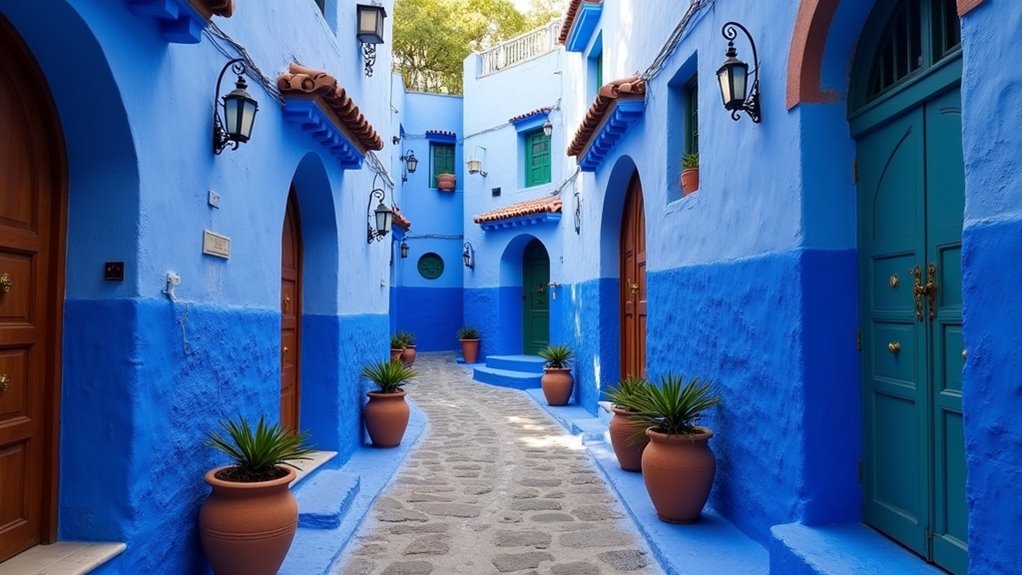
Why do thousands of travelers flock to a small mountain town in northern Morocco just to walk through blue-painted streets? You’ll understand once you step into Chefchaouen’s medina, where every wall, doorway, and alley glows in mesmerizing shades of blue.
This isn’t just Instagram-worthy scenery – it’s living history shaped by Jewish and Muslim refugees who painted their new home to symbolize peace and divinity.
You can explore the narrow Andalusian-style streets for free, discovering hidden courtyards and local craft markets tucked between blue buildings. The tradition continues today with residents regularly revitalizing the paint to maintain Chefchaouen’s “Blue Pearl” identity.
Don’t miss the nearby Ras el-Maa Waterfall, where locals gather and the blue architecture perfectly frames the natural landscape. For panoramic views of the entire blue city, take the short hike to the Spanish Mosque, which offers stunning photo opportunities from its hilltop perch.
Hike Through Todra Gorge’s Towering Canyon Walls
Though most travelers rush between Morocco’s imperial cities, you’ll discover one of the country’s most dramatic natural wonders tucked away in the eastern High Atlas Mountains. Todra Gorge’s limestone canyon walls soar 300-400 meters high while narrowing to just 10 meters at their tightest point, creating an otherworldly hiking experience.
You’ll find trails for every fitness level, from easy valley floor walks following the Todra River to challenging rim routes requiring climbing shoes. The popular 3-4 hour loop takes you through riverbeds, narrow passageways, and lush palm groves contrasting the arid surroundings.
Start early to avoid crowds and capture the colorful rock formations in prime light. Pack sturdy shoes, plenty of water, and offline maps since cell coverage is poor. Local guides offer valuable navigation help and cultural insights. The gorge’s limestone faces feature over 400 established climbing routes, making it a world-class destination for rock climbers seeking vertical adventures.
Visit the Film-Famous Kasbah of Aït Ben Haddou
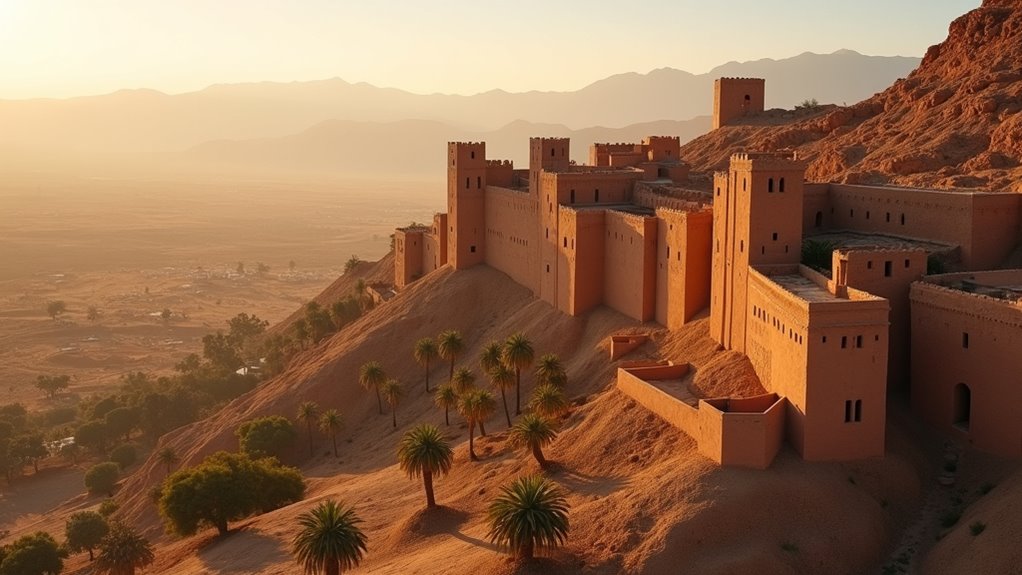
From the natural drama of canyon walls, you’ll find equally impressive architecture at Morocco’s most photographed fortress. Aït Ben Haddou’s mud-brick kasbah has starred in countless Hollywood films, from Lawrence of Arabia to Gladiator, making it instantly recognizable.
You’ll climb through this UNESCO World Heritage site’s winding alleys, discovering multi-story houses built into the hillside using traditional rammed earth techniques. The 11th-century ksar once housed 90 families along ancient trade routes connecting Marrakech to Sudan.
Don’t miss the communal granary and mosque that showcase the site’s social complexity. While erosion threatens the clay structures, ongoing preservation efforts maintain their authenticity. The buildings’ strategic positioning on the hillside provides flood protection while offering commanding views of the surrounding valley.
You can explore this cinematic wonder on a budget-friendly day trip from nearby Ouarzazate, experiencing Morocco’s architectural heritage firsthand.
Discover Roman History at Volubilis
While most visitors flock to Morocco’s imperial cities, you’ll discover one of North Africa’s best-preserved Roman ruins at Volubilis, just 30 kilometers from Meknes. This UNESCO World Heritage Site showcases exceptional Roman colonial architecture including the impressive Arch of Caracalla, built in 217 AD, and remarkably intact mosaic floors throughout merchant homes and public buildings.
You can explore the forum, basilica, and Capitoline Temple while walking along ancient streets where olive oil production once drove the economy. French archaeologists uncovered roughly half the 100-acre site between 1912-1955, revealing how this frontier outpost connected remote Morocco to Mediterranean trade networks.
Plan a half-day visit and bring sun protection—there’s limited shade among the limestone ruins scattered across the fertile plains. The site offers extensive archaeological remains that illustrate ancient Roman provincial life, making it an essential destination for understanding how Roman civilization flourished in North Africa.
Cross the Atlas Mountains via Tizi N’tichka Pass
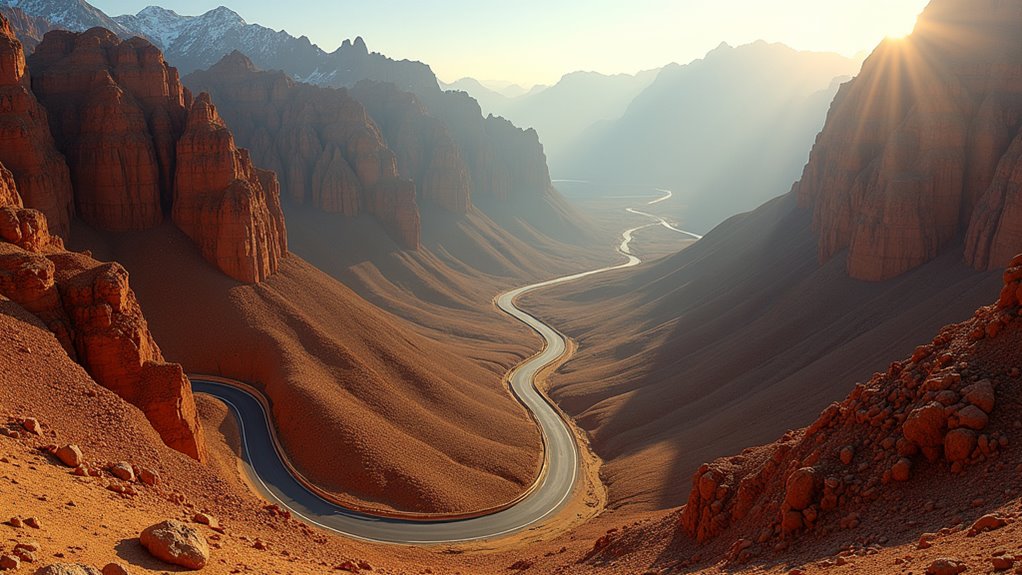
When you’re ready to experience Morocco’s most spectacular mountain scenery, you’ll tackle the legendary Tizi n’Tichka Pass—North Africa’s highest major mountain pass at 7,415 feet above sea level. This dramatic route connects Marrakesh to Ouarzazate via National Route 9, covering 70 kilometers through breathtaking hairpin bends and steep ascents.
You’ll witness stunning contrasts as fertile plains transform into arid desert landscapes. Traditional Berber villages with mud-brick homes dot the mountainsides, while local vendors sell crafts and snacks along the route. This region holds significant historical importance, as the last wild Barbary lion in Morocco was shot near the pass in 1942.
The paved road’s generally good condition makes self-driving possible for experienced drivers, though hiring a local driver’s often more relaxing.
Plan 2-3 hours for the journey, allowing stops for photos and village exploration. Winter travel requires checking conditions due to occasional snow closures.
Surf and Relax in Essaouira’s Coastal Charm
Once you’ve conquered the Atlas Mountains, you’ll discover that Essaouira offers Morocco’s perfect blend of Atlantic surf culture and UNESCO-protected charm.
This exposed beach break delivers consistent waves year-round, perfect for intermediate surfers seeking mellow rides over sandy bottoms. You’ll find ideal conditions from September to April when northwest swells meet offshore winds, creating both left and right-hand breaks.
Pack a 3/2mm wetsuit for cooler months, though summer sessions only need a shorty. The southern beach section offers the best waves and defined peaks.
Between surf sessions, you can explore the medina’s narrow alleys and artisan shops, stroll the coastal promenade, or feast on fresh grilled seafood. The scenic coastline provides stunning views of the nearby Isle de Mogador while you wait for the next set.
Water temperatures stay comfortable at 16-22°C, making Essaouira an ideal year-round destination.
Trek to Morocco’s Highest Peak in Toubkal National Park
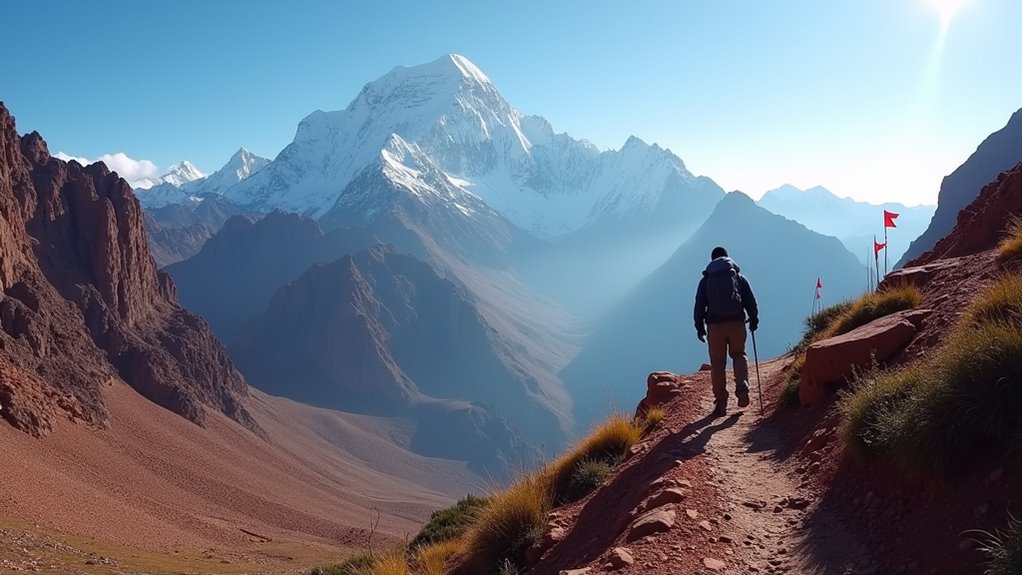
Rising 4,167 meters above sea level, Mount Toubkal stands as Morocco’s highest peak and North Africa’s ultimate trekking challenge. You’ll start your adventure in Imlil village, just two hours from Marrakesh, where local guides are mandatory for the trek.
The standard two-day itinerary covers 18-22 kilometers round-trip. Day one takes you through Berber villages to Toubkal Refuge at 3,200 meters—expect 5-7 hours of hiking with serious elevation gain.
Day two begins before dawn with a steep climb to the summit, rewarding you with panoramic views of the Atlas ranges and Sahara Desert. The peak features a pyramidal metal marker that serves as the official summit point.
Plan your trek between April and October for the best weather. You’ll need decent fitness levels and should budget for guide fees, but it’s an accessible introduction to high-altitude trekking without technical climbing skills.
Cool Off at Ouzoud Falls
Just 150 kilometers northeast of Marrakech, Ouzoud Falls plunge 110 meters down multiple tiers into the El-Abid River gorge, creating North Africa’s highest waterfalls and a perfect escape from Morocco’s desert heat.
You’ll reach the falls via a 2.5-3 hour drive on winding mountain roads, or join an organized day tour from Marrakech. There’s no entrance fee, making this an budget-friendly adventure.
Start at the cliffside viewpoint for panoramic shots, then follow the well-maintained trail down to the emerald pools below. The descent takes approximately one hour through lush vegetation and olive groves.
Cool off with an invigorating swim in designated areas or take a 20-dirham boat ride to get close to the cascades. Keep your eyes peeled for playful Barbary macaques in the surrounding trees – they’re locals too!
Browse Authentic Crafts in Rabat’s Kasbah of the Udayas
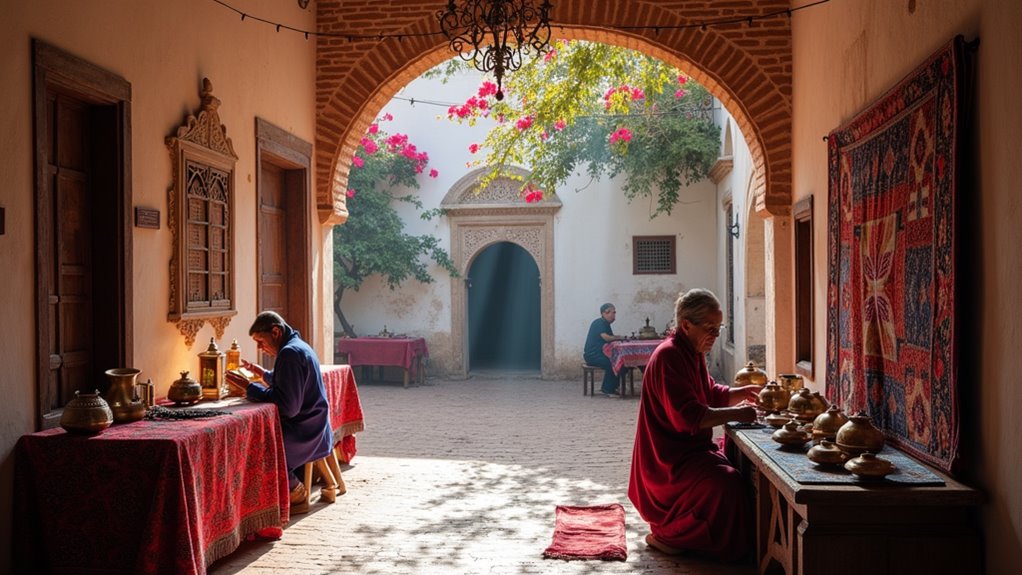
While most visitors flock to Fez for traditional crafts, Rabat’s Kasbah of the Udayas offers an equally authentic shopping experience without the overwhelming crowds or aggressive sales tactics. You’ll find handmade ceramics, copperwork teapots, and intricate leather goods in narrow alleyways where artisans actually work and live.
The blue-and-white kasbah houses about 2,000 residents, creating a genuine community atmosphere rather than a tourist trap.
Browse traditional textiles like djellabas and kaftans, plus woven carpets featuring centuries-old patterns. Don’t miss the aromatic spice stalls and local pastries for budget-friendly souvenirs.
The 17th-century Museum of Oudayas showcases historical crafts, while the nearby Andalusian Gardens provide a peaceful break between shopping. Look for the stunning zellige tilework that adorns fountains and architectural details throughout the kasbah, telling stories through its intricate color patterns and geometric symmetry.
You’ll experience authentic Moroccan culture while supporting local artisans directly.
The Sum Up
You’ll find Morocco delivers incredible value for your travel budget. Whether you’re haggling in medinas, camping under Sahara stars, or hiking mountain trails, most experiences won’t break the bank. Local buses and shared taxis keep transport costs low, while street food and tagines offer delicious meals for just a few dollars. Pack comfortable walking shoes, bring a good camera, and prepare for an adventure that’ll give you amazing memories without emptying your wallet.