
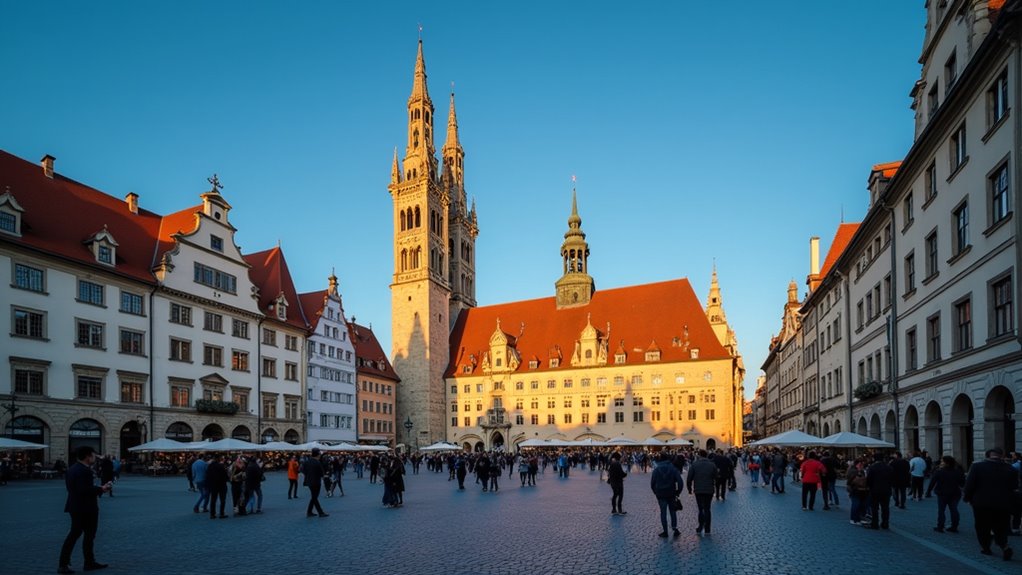
You’ve probably heard Munich’s just about beer gardens and Oktoberfest, but that’s barely scratching the surface. This Bavarian capital hides centuries-old secrets in plain sight, from royal palaces where kings once walked to underground bunkers that shaped history. While most travelers stick to the obvious attractions, there’s a whole layer of experiences that locals don’t readily share—and knowing where to look makes all the difference in your visit.
- Watch the Glockenspiel Performance at Marienplatz
- Climb St. Peter’s Church Tower for the Best City Views
- Explore the English Garden and Watch River Surfing at Eisbachwelle
- Tour Nymphenburg Palace and Its Royal Gardens
- Discover Science and Innovation at the Deutsches Museum
- Browse Fresh Bavarian Specialties at Viktualienmarkt
- Experience Traditional Beer Culture at Hofbräuhaus
- Marvel at European Masterpieces in the Alte Pinakothek
- Step Inside the Opulent Munich Residenz
- Take a Day Trip to Neuschwanstein Castle
- Visit the Dachau Memorial Site
- Enjoy Olympic Park’s Modern Architecture and Activities
- Stroll Through the Gothic Beauty of Frauenkirche
- The Sum Up
Watch the Glockenspiel Performance at Marienplatz
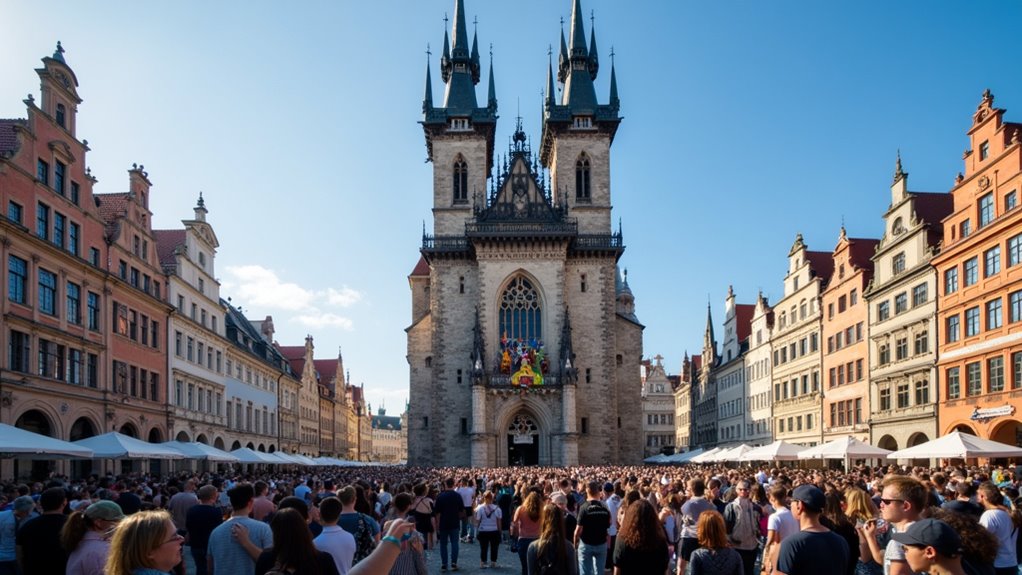
Why settle for just another tourist attraction when you can witness Germany’s largest carillon clock bring Munich’s medieval history to life? The Glockenspiel at Marienplatz delivers a mesmerizing 8-15 minute show featuring 32 life-sized figurines reenacting Duke William V’s 1568 wedding tournament and the traditional Schäfflertanz coopers’ dance.
You’ll catch performances daily at 11:00 AM and 12:00 PM, with an additional 5:00 PM show from March to October. Don’t miss the unique 9:00 PM performance featuring the night watchman and Münchner Kindl set to Brahms’ lullaby.
Arrive 15-20 minutes early to secure prime viewing spots in the free public square. If crowds overwhelm you, grab comfort at Cafe Glockenspiel across the plaza. This remarkable timepiece operates using solar-powered mechanism, making it both historically significant and environmentally conscious.
Climb St. Peter’s Church Tower for the Best City Views
While countless travelers settle for ground-level photos, you’ll discover Munich’s most rewarding panoramic experience by conquering the 306 steps up St. Peter’s Church tower. This 91-meter structure offers unmatched 360-degree views from its 56-meter viewing platform, showcasing Marienplatz, the Frauenkirche’s twin towers, and on clear days, the Alps stretching 100 kilometers away.
The climb isn’t for everyone—there’s no elevator, and the narrow passages require decent fitness. But at just 1.50 Euro, it’s Munich’s best viewing bargain. The square tower design means straight staircases rather than dizzying spirals, and metal safety caging helps those with height concerns.
You’ll find the entrance at Rindermarkt 1, steps from Marienplatz, where a small wooden ticket booth marks your starting point. Known locally as Alter Peter, this church holds the distinction of being Munich’s oldest, with its roots stretching back to the 12th century when it was first built around 1180.
Explore the English Garden and Watch River Surfing at Eisbachwelle
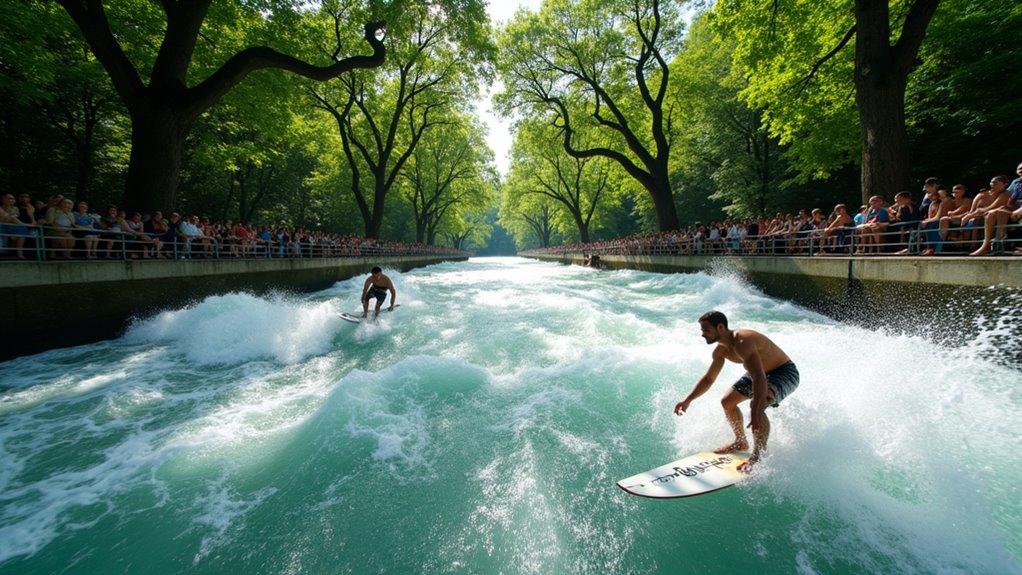
Just a 15-minute walk northeast from Marienplatz, you’ll discover Munich’s most surprising urban spectacle—year-round river surfers carving through a standing wave in the heart of the English Garden.
The Eisbachwelle attracts experienced surfers who tackle this technically challenging stationary wave created by the Eisbach River’s flow.
You’ll find excellent viewing spots near the Monopteros hill and Chinese Tower.
Beyond the surfing spectacle, explore this massive 3.7-square-kilometer park—larger than Central Park—with 78 kilometers of trails perfect for cycling or walking.
Don’t miss the 25-meter Chinese Tower surrounded by Munich’s second-largest beer garden, seating 7,000 guests.
The park’s naturalistic English landscape design creates perfect spots for picnicking and relaxation throughout your visit. For the most authentic experience, visit on weekend afternoons when the atmosphere is most vibrant and ideal for people-watching.
Tour Nymphenburg Palace and Its Royal Gardens
When you venture 6 kilometers northwest of Munich’s city center, you’ll encounter Nymphenburg Palace—a baroque masterpiece that stretches an impressive 632 meters across, making it larger than Versailles. Built in 1664 to celebrate the birth of future Elector Maximilian II Emanuel, this three-winged complex showcases centuries of architectural evolution from Italian baroque to French rococo.
Don’t miss the Stone Hall with its stunning frescoes and rococo stuccoes, or the Great Hall’s magnificent ceiling painting depicting Olympian heaven. The palace’s royal apartments display original baroque, rococo, and neoclassical decorations that reflect the Bavarian ruling family’s evolving tastes.
Outside, you’ll find equally impressive gardens that transformed from formal French-style parterres into English landscape gardens complete with natural lakes, streams, and picturesque pavilions. The expansive park covers 180 hectares and provides habitat for diverse wildlife including deer, beavers, kingfishers, and owls.
Discover Science and Innovation at the Deutsches Museum
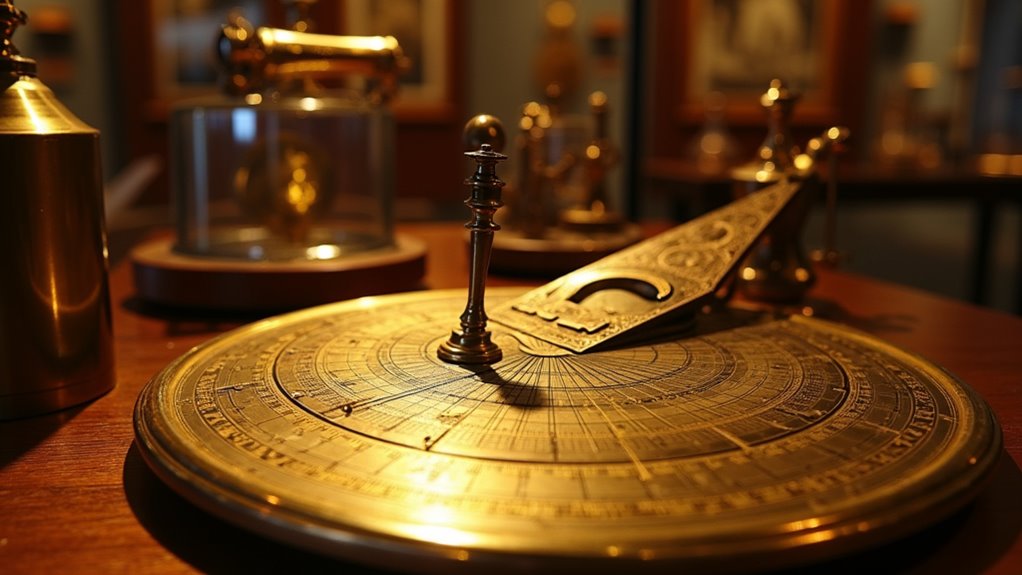
Located on Museum Island in the Isar River, the Deutsches Museum stands as the world’s largest science and technology museum and represents over a century of German innovation in public education.
You’ll find interactive demonstrations and experiment stations that make complex scientific principles accessible—this isn’t your typical look-but-don’t-touch museum.
The exhibits span natural sciences, technology, and industrial history, with artifacts sourced globally.
Don’t miss the hands-on approach that founder Oskar von Miller envisioned in 1903 for “popular education and popular amusement.” The museum gained early prominence through Prince Ludwig’s patronage as protector, alongside support from prominent figures including Prince Regent Luitpold and Count Zeppelin.
The building itself showcases early reinforced concrete innovation, requiring 1,500 concrete piles for river island stability.
Plan several hours here—the museum’s educational programs and extensive collections demand time to fully appreciate the technological progress displayed throughout multiple floors.
Browse Fresh Bavarian Specialties at Viktualienmarkt
Since 1807, Viktualienmarkt has served as Munich’s beating heart for fresh food and Bavarian culture, where you’ll discover authentic specialties that locals have cherished for over two centuries.
You’ll find over 140 vendors spread across seven sections surrounding a central beer garden, selling everything from Weisswurst and Obatzda to exotic produce and seasonal game.
Head straight to the fixed stalls for Bavarian sausages, pretzels, and Leberkäse—these aren’t tourist traps but genuine local favorites.
Don’t miss the cheese vendors and smoked fish stands, where quality rivals Munich’s best restaurants. The market also features six memorial fountains honoring Munich’s beloved folk singers and actors, adding cultural depth to your culinary exploration.
Grab a beer in the beer garden beneath the traditional Maibaum, cash in hand since many vendors still prefer it.
You’re experiencing Munich’s daily market culture exactly as residents do.
Experience Traditional Beer Culture at Hofbräuhaus
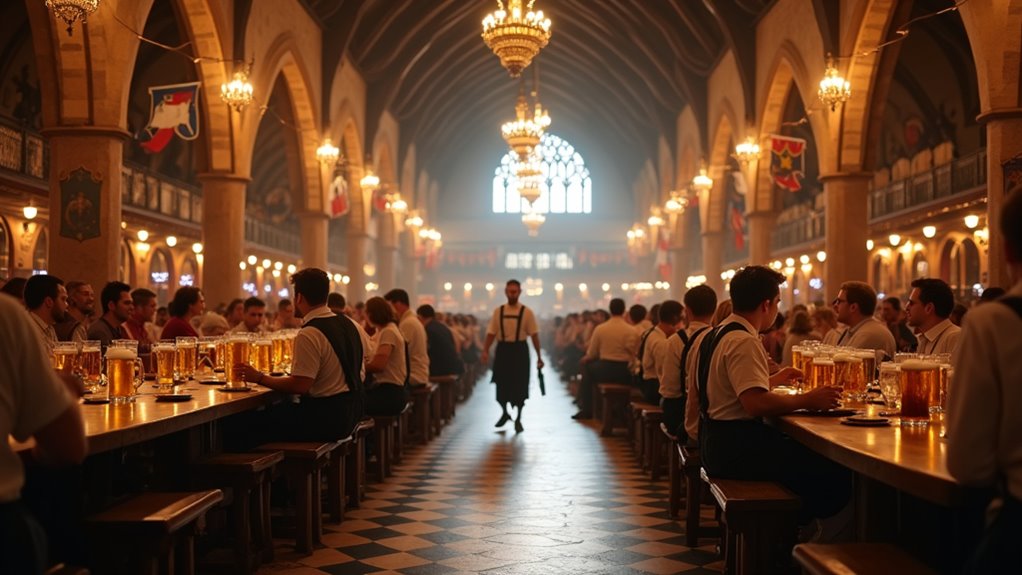
While countless beer halls claim authenticity, Hofbräuhaus am Platzl delivers the genuine article—this isn’t just Munich’s most famous brewery, it’s been perfecting Bavarian beer culture since Duke Wilhelm V founded it in 1589 to supply his royal household.
You’ll experience over 400 years of brewing tradition in the iconic hall that’s been rebuilt twice, most recently after WWII destruction.
Order the famous Bockbier or traditional wheat beer, both brewed following the strict 1516 Bavarian Beer Purity Law.
The atmosphere’s boisterous and communal—expect shared tables, live Bavarian music, and locals alongside travelers. The hall’s cultural significance extends far beyond Munich, inspiring the beloved Bavarian drinking song “oans, zwoa, gsuffa” that echoes through beer halls worldwide.
Don’t miss the authentic regional specialties that pair perfectly with their HB-branded brews.
This isn’t a tourist trap; it’s where Bavarian beer culture genuinely lives and breathes daily.
Marvel at European Masterpieces in the Alte Pinakothek
Where else can you stand before Leonardo da Vinci’s only painting in Germany while surrounded by the world’s most extensive collection of German Old Masters? The Alte Pinakothek delivers this exact experience in Munich’s art district.
You’ll find yourself face-to-face with Dürer’s haunting self-portrait, Rubens’ towering six-meter “Great Last Judgment,” and Altdorfer’s epic “Battle of Alexander at Issus.”
The neoclassical galleries house over 700 paintings spanning the 14th to 18th centuries across 19 halls. While the Neue Pinakothek undergoes renovation, you can view selected masterpieces from Goya to Manet right here alongside the Old Masters.
Don’t miss the exhaustive German collection featuring Cranach and Holbein, plus Italian masters like Botticelli and Raphael.
Take the U-Bahn to Pinakotheken station—it’s closed Mondays but offers guided tours and audio guides to maximize your visit.
Step Inside the Opulent Munich Residenz
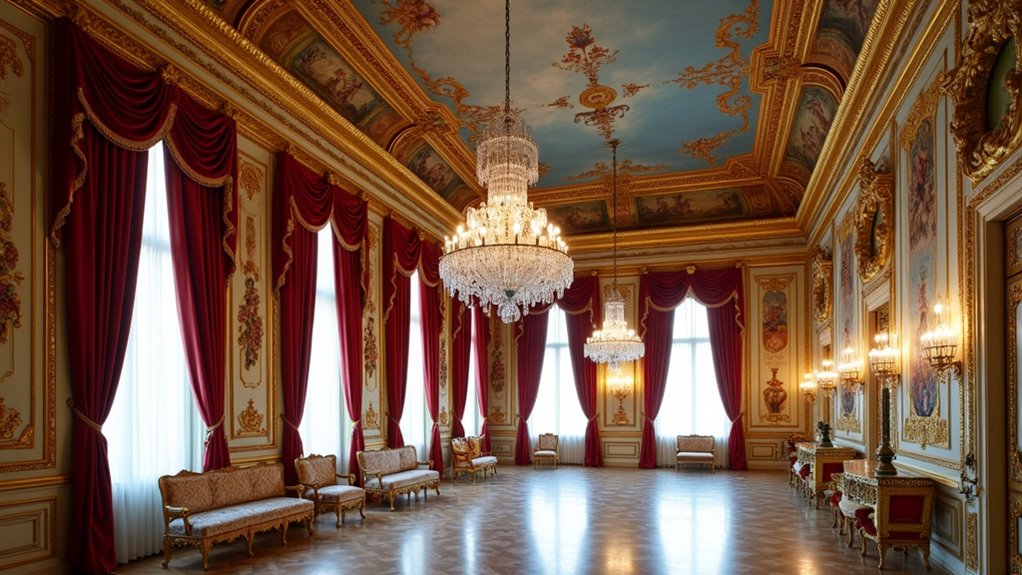
Beyond the museum walls of the Alte Pinakothek, Germany’s largest inner-city palace awaits your exploration just minutes away on foot. The Munich Residenz housed Bavarian rulers for over 400 years, and today you’ll wander through 130 authentic rooms showcasing original furnishings from the 16th-19th centuries.
Don’t miss the Antiquarium—Europe’s oldest museum hall north of the Alps, adorned with 102 town views and antique busts. You’ll traverse ten courtyards and three main sections, each reflecting different architectural eras from Renaissance to Neoclassical. The Treasury and Allerheiligen-Hofkirche are essential stops.
Choose between shorter or longer signposted routes depending on your schedule. The palace also features the magnificent Cuvilliés Theater, a stunning example of Baroque and Rococo architecture that serves as one of the venue’s premier cultural attractions. Located between Odeonsplatz and Max-Joseph-Platz, you can easily walk here from Marienplatz for an insider’s glimpse into royal Wittelsbach life.
Take a Day Trip to Neuschwanstein Castle
Two hours south of Munich by train, Neuschwanstein Castle perches dramatically on a Bavarian mountainside like something straight from a fairy tale—which makes sense, since Walt Disney used it as inspiration for Sleeping Beauty’s castle.
You’ll need advance tickets through the official online shop—same-day availability is rare. The 30-minute guided tours reveal only 14 of 200 rooms, including the recently restored throne room with its four-meter gilded chandelier. Expect to climb 350 stairs and walk extensively throughout your visit.
Photography’s banned inside, but you’ll find incredible exterior shots from Marienbrücke bridge spanning Pöllat Gorge or Mount Tegelberg’s viewpoints.
The 40-minute uphill walk from Hohenschwangau town to the castle entrance is steep—consider alternative transportation if mobility’s a concern. The castle was commissioned by King Ludwig II, who funded the ambitious project through personal wealth and foreign loans until overwhelming debt contributed to his downfall.
Visit the Dachau Memorial Site
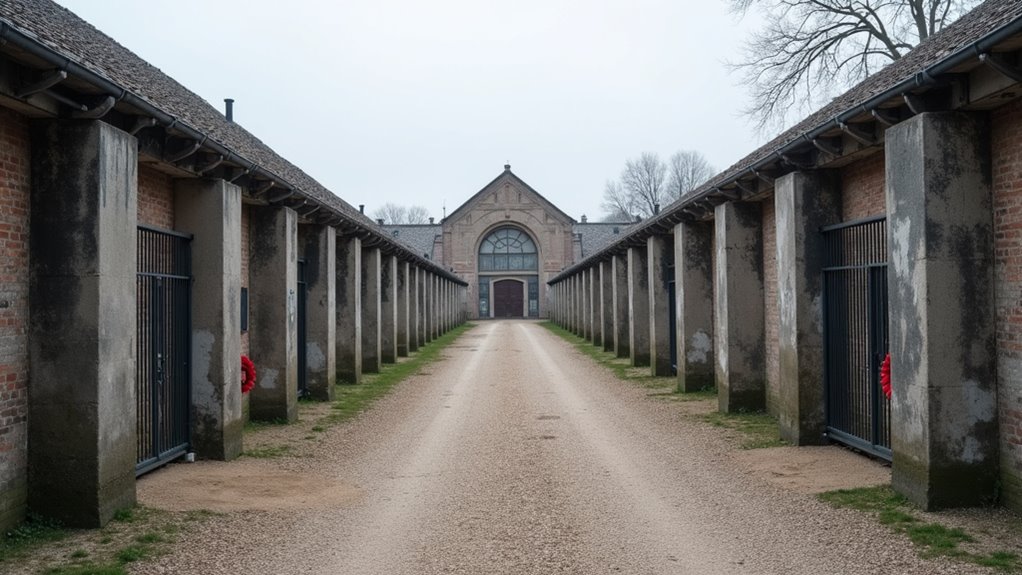
While fairy tale castles showcase Bavaria’s romantic past, the Dachau Memorial Site confronts you with one of history’s darkest chapters. Located just 10 miles northwest of Munich, this former concentration camp opened in 1933 as the Nazi regime’s first and served as the prototype for all others.
You’ll walk through reconstructed barracks and see the crematorium while learning about the 200,000+ prisoners from over 40 nations who suffered here. At least 41,500 people died from murder, starvation, disease, and horrific conditions.
The memorial site, which opened in 1965, features an extensive documentary exhibition. The site also serves as a center for political and civic education, highlighting often forgotten victim groups including Sinti, Roma, Jehovah’s Witnesses, and homosexuals. Plan for 2-3 hours to properly absorb this sobering but essential historical experience.
It’s easily accessible by public transport from Munich’s central station.
Enjoy Olympic Park’s Modern Architecture and Activities
After experiencing Munich’s weighty historical sites, you’ll find Olympic Park offers an invigorating shift toward architectural innovation and recreational energy.
The iconic tensile roof, designed by Frei Otto and Günther Behnisch, creates a stunning “Zeltdach” (tent roof) using 436 kilometers of steel cable and 8,000 Plexiglass panels spanning 75,000 square meters.
You can’t miss the 290-meter Olympic Tower‘s revolving restaurant, which completes rotations every thirty minutes while seating 216 guests. The observation deck at 190 meters provides spectacular park views.
For ground-level exploration, climb Olympiaberg’s 50-meter hill built from wartime rubble, or stroll the artificial lake’s pathways. The park was thoughtfully designed by landscape architect Günter Grimzek with undulating features that create natural vantage points throughout the grounds.
Take architecture-focused guided tours to appreciate the mathematical precision behind this Pritzker Prize-winning design, then enjoy swimming facilities, ice skating, or simply explore the undulating landscape.
Stroll Through the Gothic Beauty of Frauenkirche
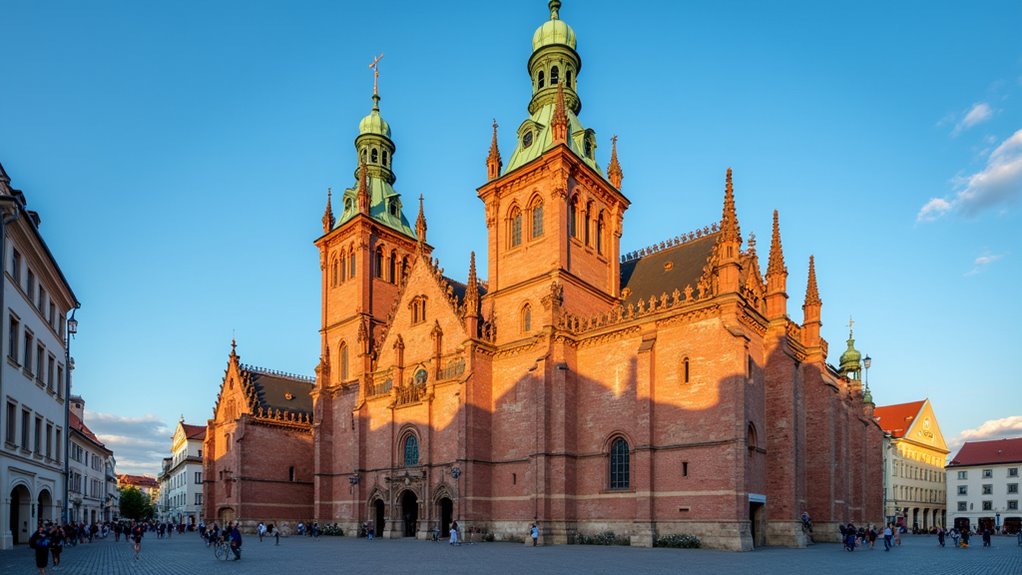
From Olympic Park’s cutting-edge design, Munich’s architectural story reaches back five centuries at Frauenkirche, where those distinctive green onion domes have dominated the city skyline since 1525.
You’ll find this massive Gothic cathedral surprisingly bright inside, with soaring white pillars and light vault ribs creating an airy atmosphere that can accommodate 20,000 people.
Don’t miss climbing the south tower for panoramic city views from 99 meters up. Inside, look for the “Devil’s Footstep” – a mysterious footprint on the floor with local legend attached.
The Wittelsbach royal tombs in the crypt tell Bavaria’s ruling history from 1180 to 1918. The cathedral was built using red brick due to the lack of nearby stone quarries and cost considerations.
Visit outside service times to fully appreciate this red brick masterpiece that’s protected Munich’s skyline for centuries.
The Sum Up
You’ve got an incredible mix of experiences waiting in Munich—from medieval towers to modern Olympic venues, royal palaces to sobering memorials. Don’t try cramming everything into one trip; instead, pick what speaks to you most. Whether you’re climbing church towers for killer views or day-tripping to fairy-tale castles, Munich delivers authentically Bavarian experiences you won’t find anywhere else. Book accommodations early, especially during Oktoberfest season—you’ll thank yourself later.