
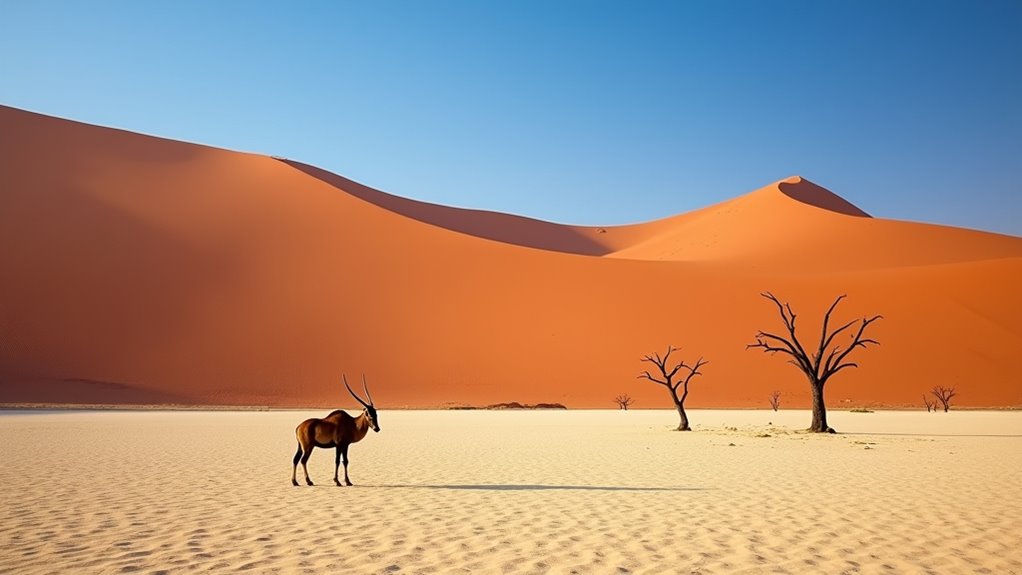
You’ll find Namibia offers some of Africa’s most striking landscapes without the crowds or hefty price tags of other safari destinations. From climbing ancient red dunes to spotting desert elephants, this country delivers unforgettable experiences that won’t break your budget. Whether you’re planning a self-drive adventure or joining guided tours, these eleven essential activities will help you make the most of your time in this remarkable desert nation.
- Climb the Ancient Sand Dunes at Sossusvlei
- Drive Yourself Through Etosha National Park
- Stand in the Otherworldly Clay Pan of Deadvlei
- Hike the Rim of Fish River Canyon
- Explore the Sand-Filled Rooms of Kolmanskop Ghost Town
- Kayak With Seals and Flamingos in Walvis Bay
- See 6,000-Year-Old Rock Art at Twyfelfontein
- Go Sandboarding in the Dunes Near Swakopmund
- Watch 100,000 Seals at Cape Cross Reserve
- Discover Desert Wildlife on a Living Desert Tour
- Drive the Granite Peaks of Spitzkoppe
- The Sum Up
Climb the Ancient Sand Dunes at Sossusvlei
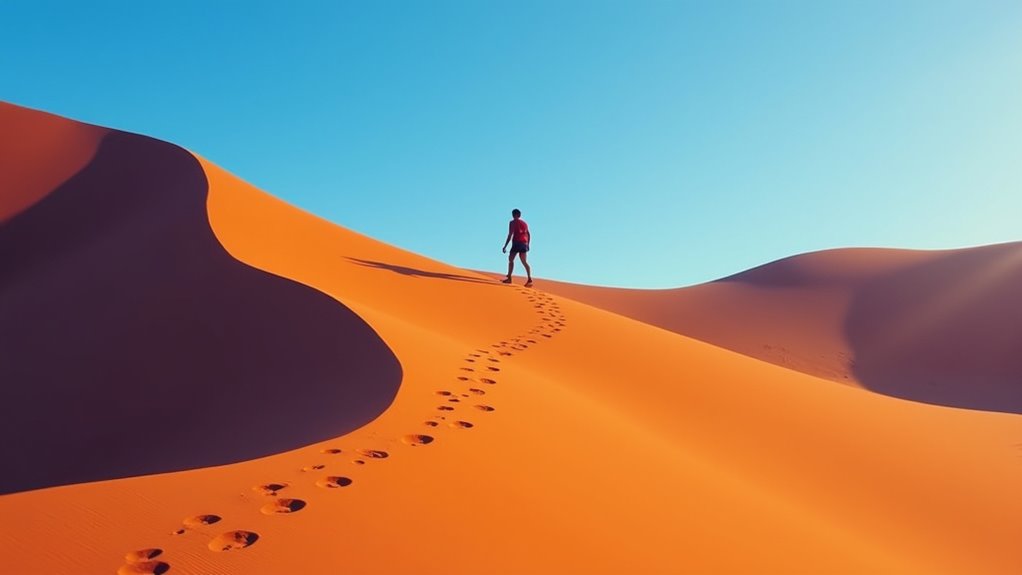
One of Namibia’s most breathtaking experiences awaits you at Sossusvlei, where ancient sand dunes tower up to 325 meters high in the world’s oldest desert. You’ll find yourself climbing through iron oxide-coated sand that’s traveled thousands of miles, creating those stunning orange-red colors. Start early morning or late afternoon to avoid scorching heat and catch the best light for photos.
Dune 45 offers a manageable 80-meter climb, while Big Daddy challenges serious hikers at 325 meters. The loose sand makes climbing tough, so pace yourself and bring plenty of water. Some dunes are shaped like star dunes with radiating arms formed by multi-directional winds.
Don’t miss Deadvlei’s white clay pan with its blackened dead trees – it’s perfect for dramatic photos. Access through Sesriem gate, and consider balloon flights for spectacular aerial views.
Drive Yourself Through Etosha National Park
After experiencing the desert’s towering dunes, you’ll want to head north to Etosha National Park for some of Africa’s best self-drive safari action.
The park’s just a 3-5 hour drive from Windhoek on excellent paved roads, making it perfect for independent travelers.
You’ll need a rental car with high clearance since most park roads are gravel. A 4×4 isn’t required but helps with comfort on bumpy tracks.
Stick to the 40 km/h speed limit – it’s safer and better for spotting wildlife.
Plan your drives for early morning and late afternoon when animals are most active. The dry season from September to October provides the best wildlife viewing as animals congregate around waterholes.
The main loop connects three camps with clear signage, and waterholes like Okaukuejo offer incredible viewing opportunities.
Just remember: stay in your vehicle except at designated rest areas.
Stand in the Otherworldly Clay Pan of Deadvlei
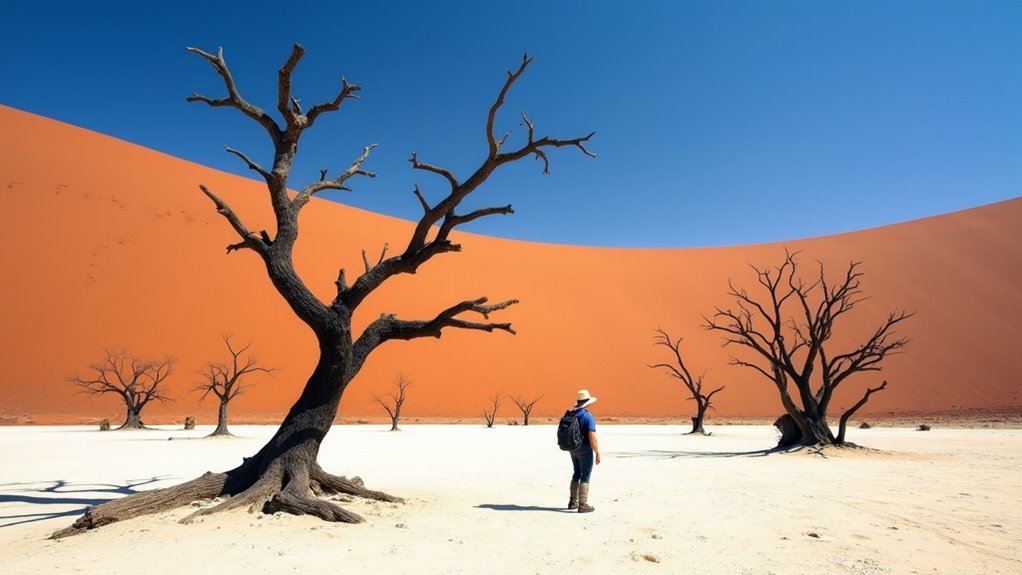
While Etosha delivers incredible wildlife encounters, Deadvlei offers something completely different – a surreal moonscape that’ll leave you questioning if you’re still on Earth. This white clay pan showcases 900-year-old petrified camel thorn trees, preserved as blackened skeletons against towering red dunes and azure skies.
You’ll walk 15 minutes through soft sand from the car park, so pack plenty of water and sun protection. The clay floor becomes scorching hot, making proper footwear essential.
For the best shots, climb “Big Daddy” dune for panoramic views or position yourself at the pan’s edge during sunrise or sunset when dramatic shadows emerge. The surrounding dunes reach up to 400m, ranking among the highest sand dunes in the world.
Located within Namib-Naukluft National Park, this ancient landscape offers stark silence and otherworldly beauty that’s unlike anywhere else in Namibia.
Hike the Rim of Fish River Canyon
Standing at the edge of Fish River Canyon, you’ll witness Africa’s largest canyon unfold before you – a massive gorge stretching 160 kilometers long, 27 kilometers wide, and plunging 550 meters deep into the earth.
The rim trails offer spectacular panoramic views without requiring permits or advanced booking, making them perfect for budget travelers.
Access the main viewpoint via Hobas campsite, then drive 10 kilometers on roads suitable for 2WD vehicles.
Multiple viewpoints line the eastern rim road, each providing unique perspectives. The canyon walls glow dramatically during sunrise and sunset, creating the most magical viewing experiences while helping you avoid the harsh midday heat.
Pack 2-3 liters of water per person, sturdy shoes, and sun protection – there’s zero shade or facilities on the trails.
Visit between April and September for milder temperatures, and hike early morning or late afternoon for the best photography lighting.
Explore the Sand-Filled Rooms of Kolmanskop Ghost Town
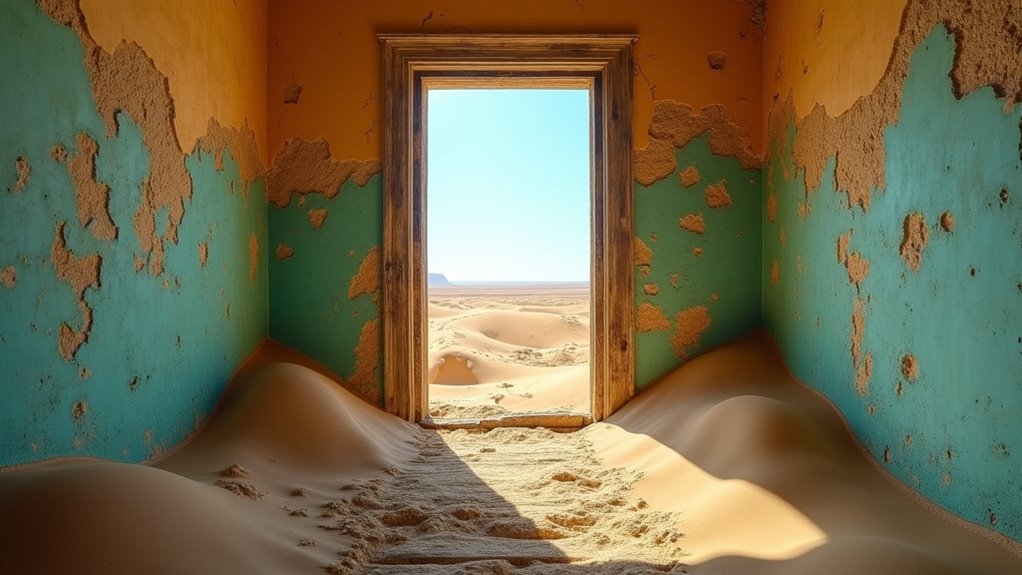
Moving inland from the canyon’s dramatic landscapes, you’ll discover one of Namibia’s most haunting attractions: Kolmanskop Ghost Town, where the Namib Desert has literally moved indoors.
This abandoned diamond mining town, once home to 350 German residents in the 1920s, now offers a surreal experience as you walk through sand-filled mansions and empty theaters. The town was originally named after Johnny Coleman, a transport driver who abandoned his ox wagon here during a sandstorm.
You’ll explore rooms where desert sand reaches your waist, creating otherworldly scenes perfect for photography. The town’s former luxury—complete with Africa’s first X-ray machine and electric power—contrasts starkly with nature’s takeover.
Entry requires joining a guided tour from nearby Lüderitz, which costs around 120 NAD. Don’t miss the old hospital and recreation center, where sand dunes have replaced floors.
Kayak With Seals and Flamingos in Walvis Bay
From the desert’s haunting silence, you’ll shift to Walvis Bay’s vibrant coastal waters, where Cape fur seals and flamingos create one of Namibia’s most interactive wildlife experiences.
Your half-day adventure starts with a 4×4 drive through salt pans and wetlands to Pelican Point, where 50,000 seals await.
You’ll paddle among playful seals in calm, protected waters while spotting flamingos, pelicans, and pied avocets overhead. Lucky visitors might encounter dolphins or migrating humpback whales. The personalized kayak experiences allow you to act as your own skipper, choosing your pace and route through the lagoon’s rich biodiversity.
Tours accommodate all skill levels and include equipment, waterproof gear, and transportation.
Most operators offer post-kayaking refreshments like fresh oysters and sparkling wine on the beach.
Morning departures around 08:00 ensure ideal wildlife activity and return you by midday, leaving afternoons free for other Walvis Bay attractions.
See 6,000-Year-Old Rock Art at Twyfelfontein
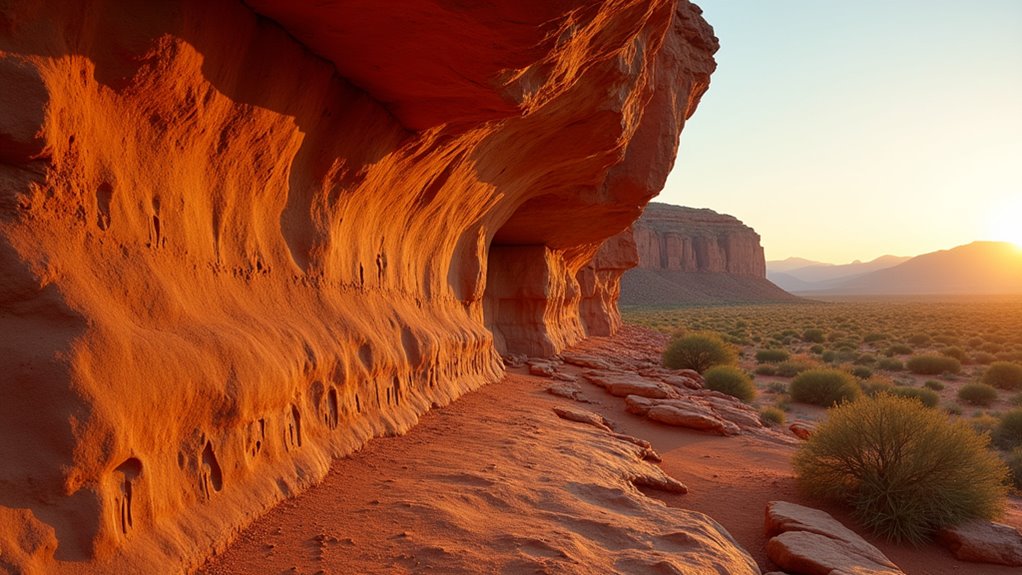
Over 2,000 ancient engravings await you at Twyfelfontein, Namibia’s only UNESCO World Heritage cultural site and Africa’s largest concentration of rock art. You’ll discover petroglyphs carved by San hunter-gatherers between 6,000 and 1,000 years ago, depicting rhinoceros, elephants, giraffes, and human figures across sandstone boulders.
The well-designed visitor center provides essential context before you explore guided walking trails. You’ll see how shamans created these engravings during spiritual rituals, often superimposing newer art over older pieces. Look for the famous “dancing kudu” image, which is highly polished and may relate to ancient female initiation practices.
The site’s location near a permanent spring made it sacred to ancient communities.
Plan for a half-day visit to fully appreciate this remarkable cultural treasure. Entry fees are reasonable, making Twyfelfontein an accessible window into southern Africa’s oldest artistic traditions.
Go Sandboarding in the Dunes Near Swakopmund
While Namibia’s ancient rock art offers a window into the past, the towering dunes near Swakopmund deliver pure adrenaline in the present.
You’ll sandboard in the eco-sensitive Namib-Naukluft National Park, where guided tours are mandatory for designated areas.
Choose between two styles: stand-up boarding (like snowboarding) or lie-down boarding (head-first). Beginners should try lie-down—it’s easier and reaches thrilling speeds up to 80 km/h on steeper dunes like Dizzy.
Stand-up costs around N$700, while lie-down runs N$600.
Expect a physically demanding workout hiking up soft sand between runs. Don’t underestimate the skill required—even experienced boarders face wobbling and frequent tumbles on the hard-packed sand.
Pack sun protection, closed shoes, and prepare for sand everywhere—between your teeth, in your hair, clothing.
Tours include equipment, lunch, and transport from Swakopmund accommodations.
Watch 100,000 Seals at Cape Cross Reserve
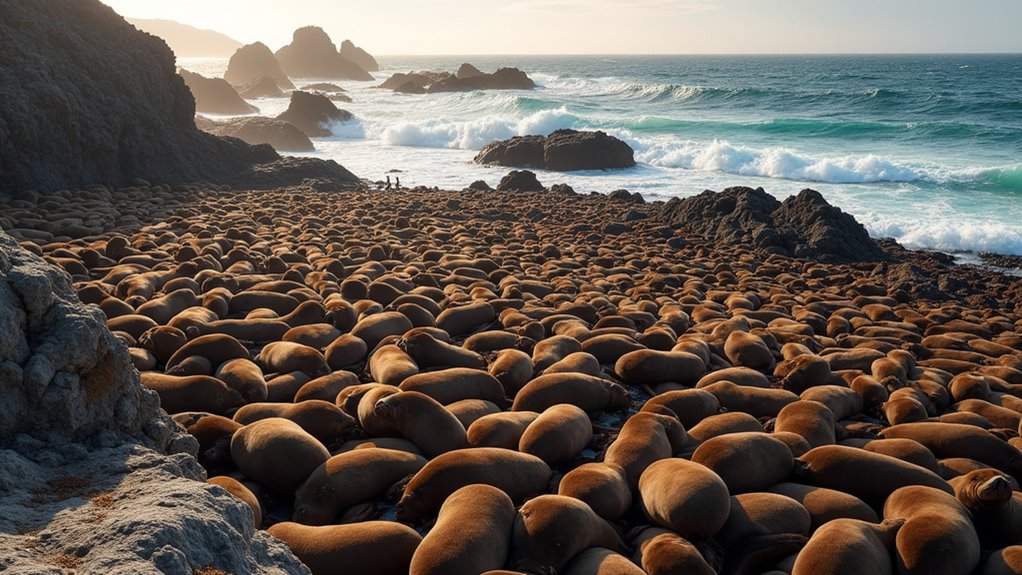
Just two hours north of Swakopmund lies one of Africa’s most extraordinary wildlife spectacles—Cape Cross Seal Reserve, where up to 210,000 Cape fur seals gather during peak breeding season. You’ll witness the world’s largest breeding colony of Cape fur seals along Namibia’s dramatic Skeleton Coast.
Visit during November and December for peak numbers when females give birth and massive bull seals defend their harems. The cacophony of barking seals and sight of thousands of black, fluffy pups is unforgettable. Well-maintained walkways and viewing platforms let you observe safely without disturbing the colony.
The reserve sits 120km north of Henties Bay via the C34 gravel road. Entry fees are minimal, making this an affordable wildlife experience that rivals any African safari. The site holds deep historical significance, as Portuguese explorer Diogo Cão erected a cross here in 1486 during his quest for new trade routes to the East.
Discover Desert Wildlife on a Living Desert Tour
Beyond the massive seal colonies lies another remarkable wildlife experience that costs a fraction of a traditional safari—the Living Desert Tour. You’ll spend 3-4 hours exploring the Namib Desert’s dune belt between Swakopmund and Walvis Bay, discovering small creatures with extraordinary survival skills.
Your guide will show you sand-diving lizards racing across scorching dunes, color-changing chameleons, and fog-basking beetles that harvest water by standing on their heads. You’ll learn to read animal tracks in the sand and understand how coastal fog sustains life in this hyper-arid environment. This experience is also known as the Little 5 tour, highlighting the area’s endemic species that have adapted to survive in the harsh desert conditions.
Most operators offer hotel pickup and transport via 4×4 vehicle. Book ahead during peak season, and expect to pay considerably less than traditional game drives while gaining insight into one of Earth’s most specialized ecosystems.
Drive the Granite Peaks of Spitzkoppe
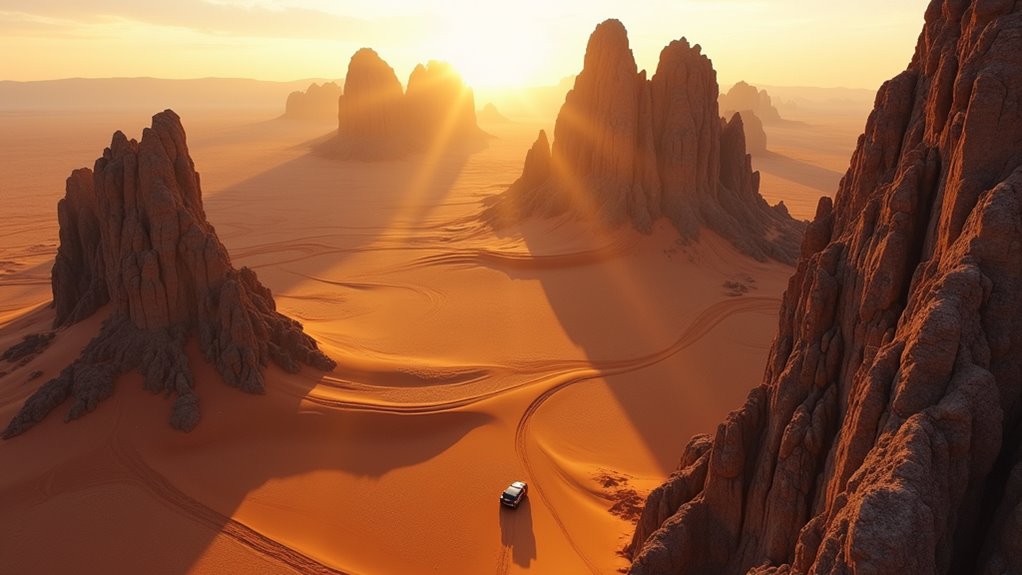
After exploring Namibia’s coastal wildlife, head inland to witness one of the country’s most photographed landmarks—the dramatic granite peaks of Spitzkoppe. Known as the “Matterhorn of Namibia,” this 700-million-year-old granite massif rises 700 meters above the desert floor, creating spectacular photo opportunities.
You’ll find excellent camping facilities at the base, which saves money while letting you catch sunrise and sunset light shows on the red granite. Don’t miss the ancient Bushmen rock paintings scattered throughout the area—guided walks cost extra but reveal fascinating cultural history.
The site’s 180km from Swakopmund, making it perfect for self-drive itineraries. Your journey passes Namibia’s largest uranium mine en route to this geological wonder. Pack overnight gear since gates close at night, and you’ll want time to photograph the famous natural arch and experience the incredible star-filled skies.
The Sum Up
You’ll find Namibia offers incredible value for adventurous travelers willing to self-drive and camp. Don’t miss the free experiences like hiking Fish River Canyon or watching seals at Cape Cross. Budget-friendly accommodations and cooking your own meals will stretch your money further. Pack plenty of water, sunscreen, and a good camera – you’ll want to capture every moment of this desert paradise. Start planning your Namibian adventure today and prepare for unforgettable memories.