
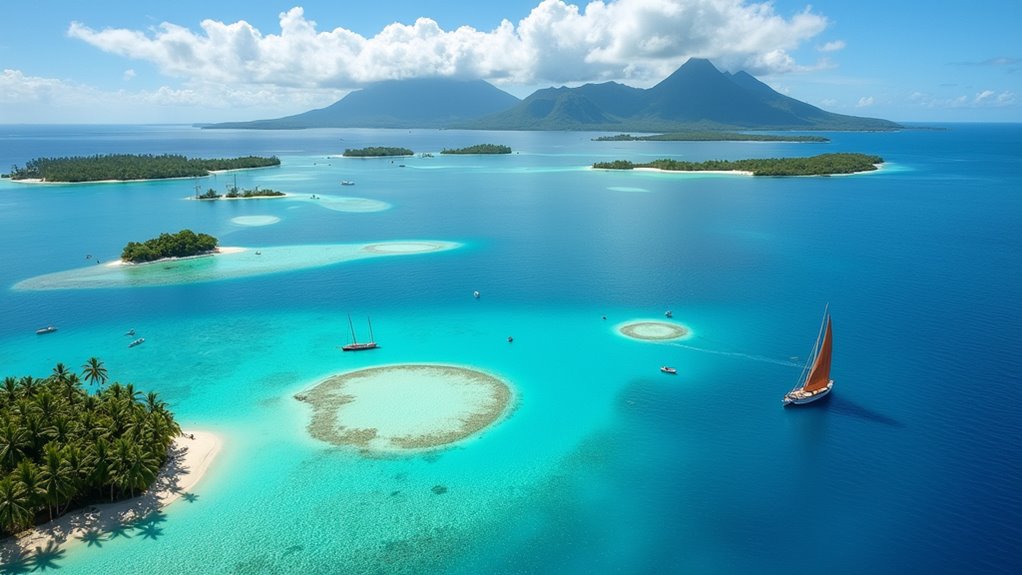
You’ll find Oceania and the Pacific offer some of the planet’s most extraordinary experiences, from floating through glowworm-lit caves in New Zealand to swimming alongside humpback whales in Tonga’s pristine waters. This vast region combines ancient cultures, untouched wilderness, and unique geological wonders that exist nowhere else on Earth. Whether you’re seeking adventure, culture, or natural beauty, these destinations deliver experiences that’ll fundamentally change how you view the world’s most remote corner.
- Stand Before Uluru at Sunrise and Sunset
- Stargaze at Lake Tekapo’s Dark Sky Reserve
- Float Through Waitomo’s Glowworm Caves by Boat
- Snorkel Fiji’s Rainbow Reef in Kadavu
- Swim With Humpback Whales in Tonga’s Waters
- Explore Sydney Harbour by Ferry From Circular Quay
- Drive Glass-Bottom Kayaks Through Tahiti’s Lagoons
- Hike Te Mata Peak for Hawke’s Bay Views
- Experience a Traditional Kava Ceremony in Fiji
- Dive With Thousands of Jellyfish in Palau’s Marine Lakes
- Stay in an Overwater Bungalow in Bora Bora
- Trek Through Tahiti’s Papenoo Valley Waterfalls
- Swim at Bondi Baths During Sydney’s Summer
- Visit Robert Louis Stevenson’s Final Home in Samoa
- Snorkel Samoa’s Palolo Deep Marine Reserve
- Take the Cairns Esplanade Lagoon Walk at Sunset
- Explore Melbourne’s Laneways and Coffee Culture
- Island-hop Through Fiji’s Yasawa Islands
- Cool Off at Samoa’s Piula Cave Pool
- Four-Wheel Drive Around Bora Bora’s Mount Otemanu
- The Sum Up
Stand Before Uluru at Sunrise and Sunset
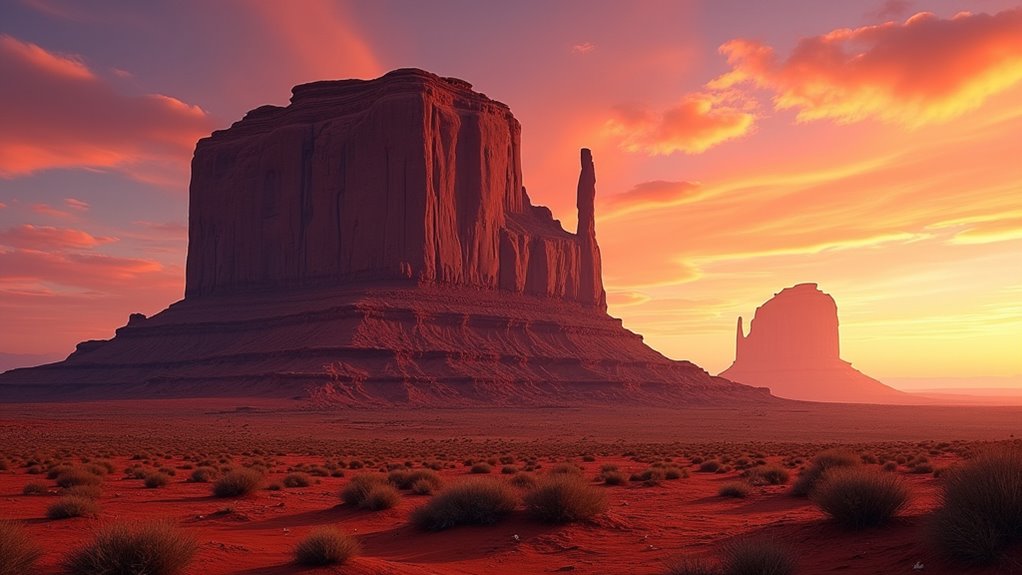
Standing before Uluru as the sun rises or sets transforms this sacred monolith into a canvas of breathtaking color that shifts from deep orange to blood red within minutes.
You’ll experience ideal viewing during December when sunrise occurs around 6:01 am and sunset at 6:58 pm, providing nearly 13 hours of daylight.
For sunrise, head to Talinguru Nyakunytjaku for panoramic views, though you’ll encounter fewer crowds than at sunset.
The dedicated sunset viewing area outside Yulara offers unobstructed photography opportunities but draws hundreds daily.
Arrive 60-90 minutes early to secure prime spots and parking.
Clear atmospheric conditions enhance the rapid color transformations during golden hour.
Pack layers for temperature variations—winter mornings are particularly cool while summer days become scorching hot. Entry requires a 3-day pass costing $38 per adult, with children under 18 admitted free.
Stargaze at Lake Tekapo’s Dark Sky Reserve
Lake Tekapo’s pristine night skies offer a dramatic shift from terrestrial wonders to celestial spectacles within the world’s largest gold-tier dark sky reserve. You’ll experience exceptionally dark skies rated level 2 on the Bortle Scale, protected by lighting restrictions since 1981.
The Mount John University Observatory provides guided tours and stargazing experiences at 1,029 meters elevation, offering telescope viewing and astrophotography sessions.
You can stargaze year-round, though winter delivers the clearest conditions.
Unique experiences include stargazing from hot thermal pools with night-vision-optimized lighting.
Self-guided viewing works well near the lakefront or Church of the Good Shepherd, where minimal ambient light won’t interfere with your celestial observations. The Dark Sky Project operates locally with two decades of experience providing professional stargazing and astrophotography experiences to visitors.
Float Through Waitomo’s Glowworm Caves by Boat
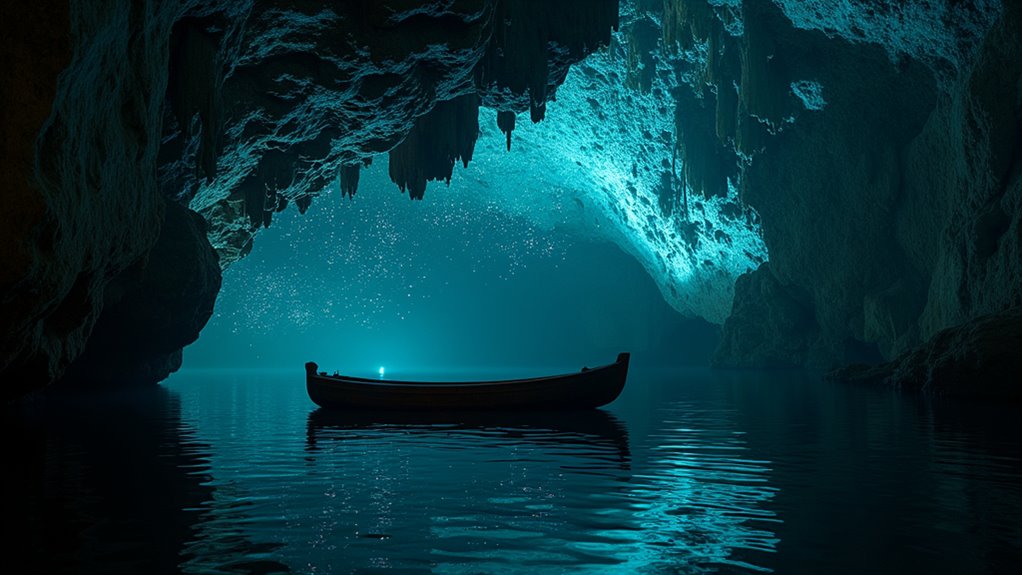
Your 45-minute tour begins at the visitor center, leading through limestone chambers including the Cathedral before reaching the Glowworm Grotto.
Photography’s restricted to protect the delicate ecosystem.
Book ahead for daily tours running 8:30 AM to 5:00 PM (NZD $61 adults, $28 children).
Late arrivals forfeit tickets.
This historic attraction, opened in 1889, combines Maori cultural heritage with geological wonder, creating an ethereal experience beneath New Zealand’s rural landscape. The cave features 1,300m of interconnected passages across two main levels formed over 30 million years.
Snorkel Fiji’s Rainbow Reef in Kadavu
From New Zealand’s subterranean marvels, Fiji’s underwater realm beckons with equally mesmerizing natural displays. You’ll find Rainbow Reef in the Somosomo Strait between Taveuni and Vanua Levu, where nutrient-rich currents create extraordinary marine ecosystems.
The reef’s famous Great White Wall showcases spectacular purple and pink Dendronephthya soft corals forming dramatic vertical walls.
You’ll encounter manta rays, sea turtles, giant trevally, and vibrant reef fish in crystal-clear waters. Strong but predictable currents require expert local guides for ideal timing and safety.
Kadavu’s nearby Great Astrolabe Reef offers gentler alternatives with 500-year-old coral colonies and protected breeding grounds. The reef extends in a northeast arc from Kadavu’s southern shores, reaching beyond Ono Island to Buliya Island where manta ray encounters are common.
Plan your visit through eco-resorts that support community-led conservation efforts. Marine Protected Areas ensure these underwater treasures remain pristine for future generations while providing unforgettable snorkeling experiences.
Swim With Humpback Whales in Tonga’s Waters
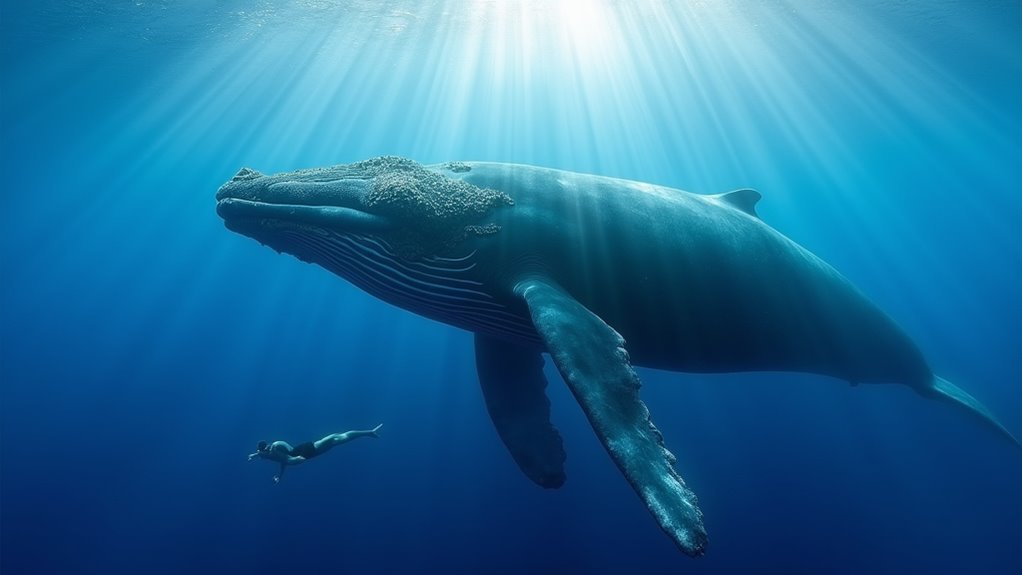
While most marine encounters offer glimpses of wildlife from a distance, Tonga provides the extraordinary opportunity to swim alongside humpback whales in their natural habitat. You’ll witness these magnificent creatures during their migration from Antarctic feeding grounds between late June and early November, with peak season varying by island group.
Vava’u serves as the primary hub, offering calm, clear waters with visibility exceeding 30 meters and warm temperatures around 24-25°C.
You’ll experience different behaviors throughout the season—witness competitive “heat runs” in July and August, then observe tender mother-calf interactions in September and October.
Tours last 5-8 days using snorkeling equipment only. No group has experienced a failed encounter in 15 years, demonstrating the remarkable reliability of whale sightings throughout the season. Strict regulations guarantee respectful encounters while small group sizes maintain low-impact interactions with these remarkable marine giants.
Explore Sydney Harbour by Ferry From Circular Quay
Moving from Tonga’s marine adventures to Australia’s most iconic harbor, Sydney’s ferry network transforms simple transportation into spectacular sightseeing. You’ll find Circular Quay serving as your central hub, connecting nine distinct ferry routes across Sydney Harbour.
The iconic Manly ferry (F1) offers regular departures past Sydney Harbour Bridge and Opera House, while the Taronga Zoo ferry (F2) delivers you directly to Australia’s premier wildlife park.
From the water, you’ll capture unparalleled views of the city skyline, hidden beaches, and native bushland lining the foreshore. Use your Opal card for seamless payment and check Transport NSW for current timetables.
Whether you’re heading to Watsons Bay’s fishing spots, Cockatoo Island’s cultural sites, or Darling Harbour’s entertainment precincts, ferry travel provides wheelchair accessibility and integrated connections with Sydney’s broader transport network. After arriving at Circular Quay, explore The Rocks historic precinct, home to the original 1788 British colony.
Drive Glass-Bottom Kayaks Through Tahiti’s Lagoons
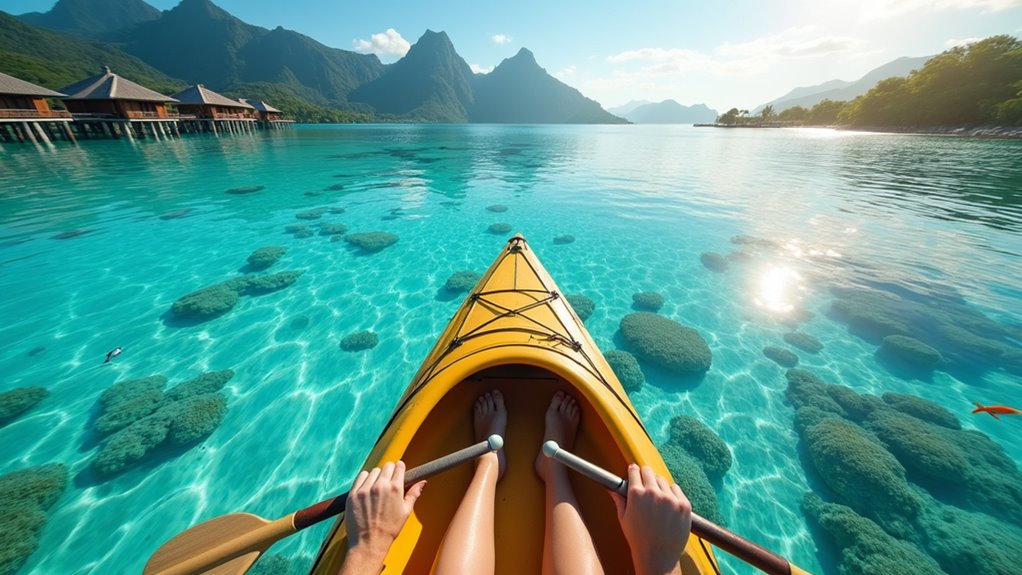
When you slip into a transparent polycarbonate kayak in Tahiti’s crystalline lagoons, you’ll discover an underwater world without ever getting wet. These two-seater vessels provide direct views of vibrant coral gardens, tropical fish, and marine life including sea turtles, stingrays, and blacktip reef sharks beneath your feet.
Professional guides lead 2-3 hour tours for groups of around 10 people, starting from Moorea’s Intercontinental Hotel or former Club Med site. You’ll paddle through diverse coral reefs, take snorkeling breaks at prime spots, and enjoy sunset cocktail stops on sandbanks. The tours typically begin at 4:00 PM, perfectly timed to capture the golden hour lighting over the lagoon.
Tours include double paddles, life jackets, snorkeling gear, and refreshments. Suitable for ages 2-65 with weight limits up to 210 pounds, these eco-friendly excursions cost $50-90 per person. Book in advance for this unique Polynesian lagoon experience.
Hike Te Mata Peak for Hawke’s Bay Views
Rising nearly 400 meters above Hawke’s Bay’s Heretaunga Plains, Te Mata Peak delivers some of New Zealand’s most spectacular 360-degree views through five distinct hiking trails suited for various fitness levels.
You’ll tackle the Rongokako (Blue) trail to reach the 399-meter summit in 1.5 to 2 hours, traversing narrow paths with steep, rocky sections and sheer drops requiring careful footing.
Your trek passes through native forest regeneration areas and towering redwood groves planted in 1927. You may encounter curious sheep that sometimes block the path or follow alongside hikers during the journey.
From the summit, you’ll spot the Ruahine, Kaweka, and Maungaharuru Ranges, plus Cape Kidnappers.
On clear days, visibility extends to Mount Ruapehu and Mahia Peninsula.
Gates open at 5am for early morning adventures, though you can alternatively drive to the summit.
Experience a Traditional Kava Ceremony in Fiji
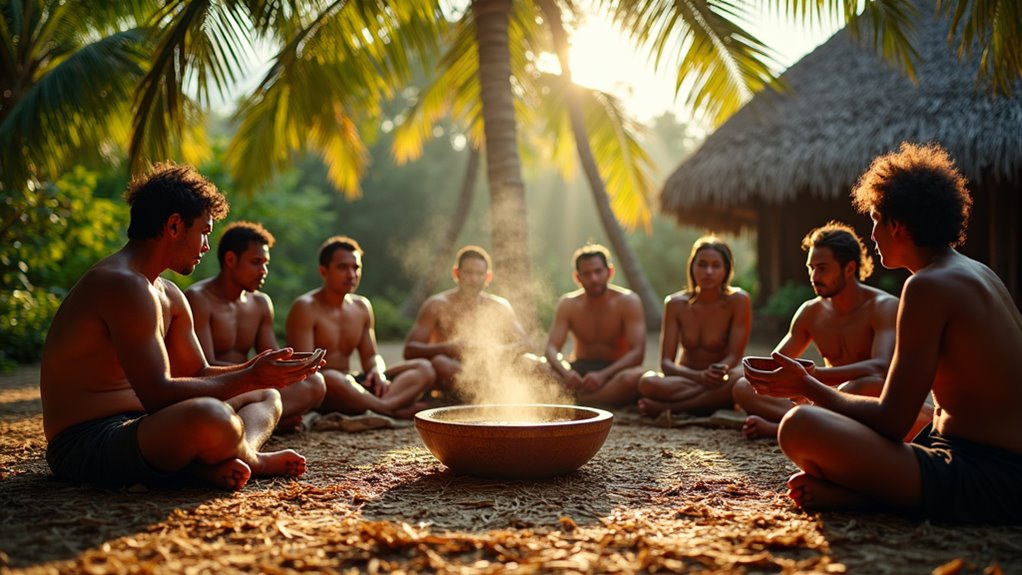
Follow strict protocol—the chief drinks first, then others by rank. You’ll greet with “Bula” and witness the ceremonial Sau string with cowrie shells marking the ceremony’s beginning and end. Participants gather in a circle around the large wooden bowl called a tanoa that holds the kava for the community ceremony.
Dive With Thousands of Jellyfish in Palau’s Marine Lakes
From Fiji’s cultural traditions, we move to Palau’s extraordinary underwater world where you’ll snorkel among millions of harmless jellyfish in one of nature’s most surreal experiences.
Jellyfish Lake on Eil Malk Island hosts golden jellyfish that’ve evolved without natural predators, losing their sting over millennia of isolation. These bright orange creatures follow the sun across the saltwater lake daily, driven by symbiotic algae requiring photosynthesis. The lake is home to Mastigias papua etpisoni, a unique subspecies found nowhere else on Earth.
You’ll need a $100 permit valid for ten days, typically arranged through tour operators. Scuba diving’s strictly prohibited to protect the lake’s delicate two-layer ecosystem—the toxic hydrogen sulfide bottom layer remains undisturbed.
Snorkel carefully in the warm, emerald waters, avoiding contact with jellyfish. Visit mornings when dense jellyfish clouds create supreme viewing conditions in this unique meromictic marine environment.
Stay in an Overwater Bungalow in Bora Bora
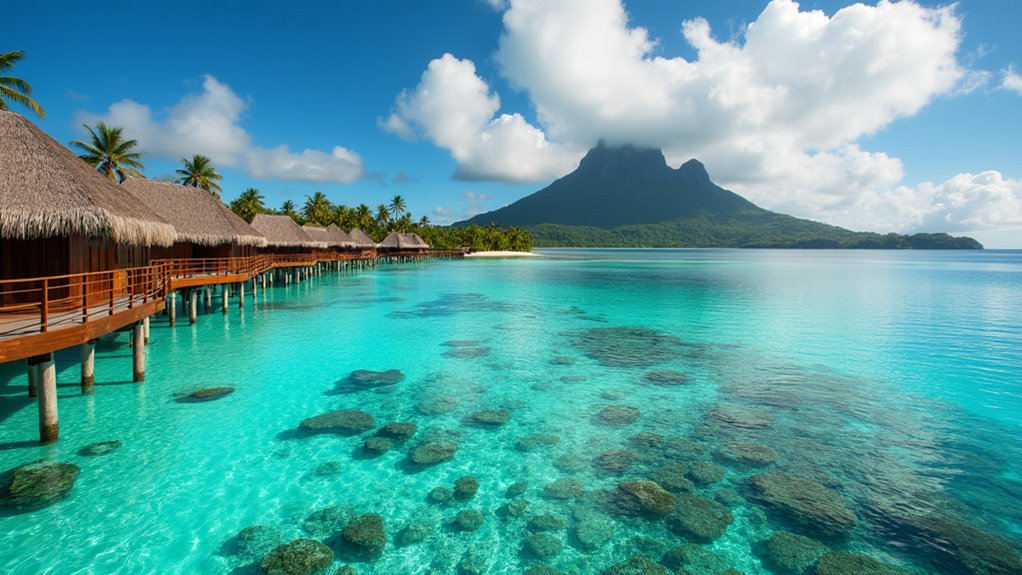
Where else can you wake up to panoramic views of turquoise lagoons while literally floating above tropical marine life? Bora Bora’s overwater bungalows deliver this dream with 850-square-foot accommodations featuring thatched roofs, teak furnishings, and glass-bottom tables for underwater viewing.
You’ll enjoy direct lagoon access from your private deck, perfect for snorkeling with colorful fish and reef sharks.
Expect to pay $650-$1,500+ per night depending on your resort choice. Luxury options like The St. Regis and Four Seasons start around $1,400 nightly, while Maitai Polynesia offers more affordable rates at $650.
December through February provides slightly lower costs. Most bungalows accommodate three adults and include modern amenities like infinity pools and panoramic windows.
You’ll have immediate access to paddleboarding, kayaking, and complimentary water sports equipment. The newest addition, Westin Bora Bora, opened in late 2024 and features the largest glass floor panels in the area for exceptional underwater viewing.
Trek Through Tahiti’s Papenoo Valley Waterfalls
Trading overwater luxury for rugged adventure, Tahiti’s Papenoo Valley delivers some of French Polynesia’s most spectacular waterfall treks through the island’s largest rainforest valley.
You’ll discover three main cascades: towering Topatari (262 feet), Vaiharuru (164 feet), and Puraha (98 feet), each surrounded by dense tropical vegetation and natural swimming pools.
Access requires a 4WD vehicle due to steep, muddy terrain unsuitable for rental cars.
Book a guided tour lasting 4-7 hours, starting from Papenoo River’s mouth and venturing inland past volcanic landmarks and ancient Polynesian marae temples. This remarkable landscape was formed from the collapse of the Tahiti Nui volcano crater.
The moderate hiking trails wind through ecosystems rich with orchids, silver ferns, and endemic bird species.
During rainy season, ephemeral “Princess’ Hair” waterfalls cascade alongside the route, creating an even more dramatic landscape experience.
Swim at Bondi Baths During Sydney’s Summer
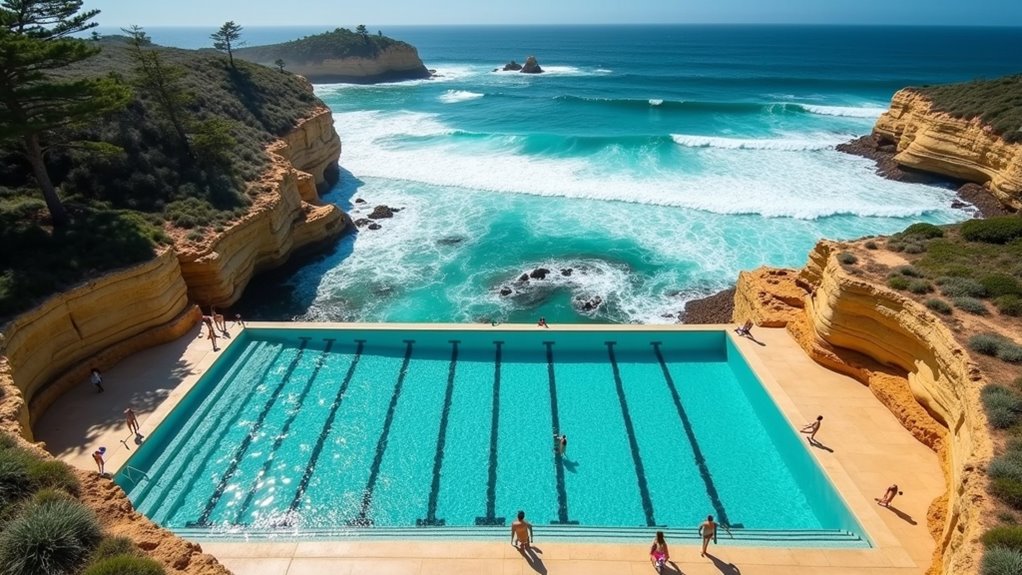
While Sydney’s beaches draw millions of visitors, the iconic Bondi Icebergs Pool offers a unique swimming experience that combines ocean immersion with pool convenience at Bondi Beach’s southern end. You’ll find this 100-year-old landmark featuring a 50-metre seawater lap pool with unheated ocean water that’s invigorating yet revitalizing.
Summer’s warmer temperatures make this the ideal season to experience authentic ocean pool swimming.
The facility operates daily except Thursdays, with entry costing around $9 for adults. You’ll enjoy double-width lanes perfect for comfortable lap swimming, plus access to hot showers and a complimentary 15-minute sauna session. Qualified lifeguards patrol the pools during all operating hours to ensure swimmer safety.
Advanced swimmers can access the ocean directly through the pool’s gate. Visit early morning to avoid crowds and maximize your swimming experience.
Visit Robert Louis Stevenson’s Final Home in Samoa
From Sydney’s coastal attractions to Samoa’s literary landmarks, the Pacific offers diverse cultural experiences that connect visitors to remarkable historical figures. You’ll discover Robert Louis Stevenson’s final home at Villa Vailima, just three kilometers south of Apia on Upolu Island.
The Scottish author lived here from 1890 until his death in 1894, earning the Samoan nickname “Tusitala” (Teller of Tales). The colonial-era design features wide verandas and tall ceilings specifically adapted for the Pacific climate.
The museum preserves Stevenson’s 19th-century residence with original furnishings, including Samoa’s first fireplace, a Rodin sculpture, and Queen Victoria’s tablecloth. You can explore the great hall, library, and Tapa Room showcasing European-Samoan cultural blend.
Don’t miss hiking Mount Vaea’s steep trail to reach Stevenson’s tomb, offering panoramic views. Visit during cooler mornings and bring sturdy shoes and water.
Snorkel Samoa’s Palolo Deep Marine Reserve
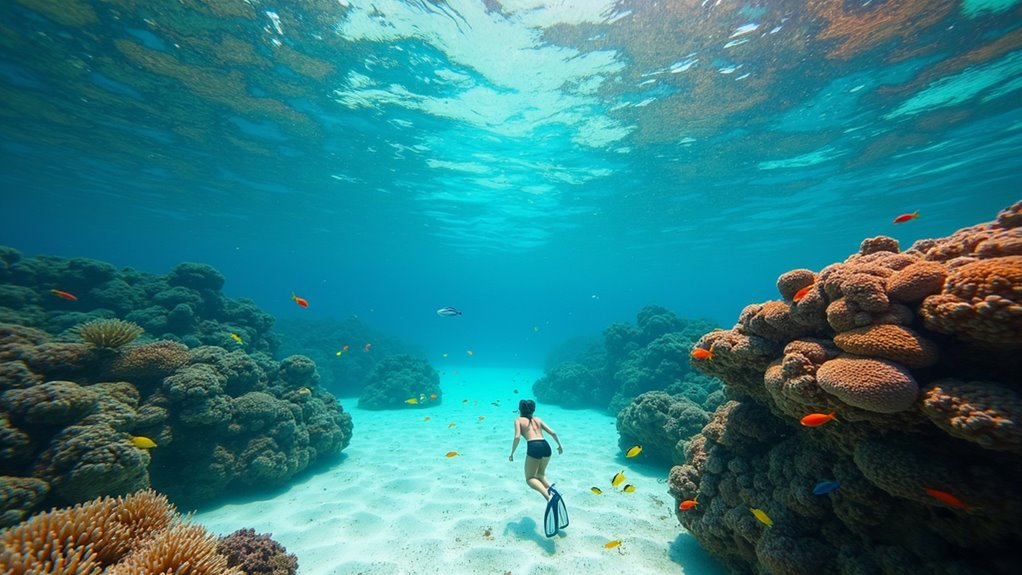
Where else can you swim through a 30-meter deep coral trench just minutes from a Pacific capital? Palolo Deep Marine Reserve, located 30-45 minutes from Apia on Upolu’s north coast, offers this rare experience. Established in 1974, this 137.5-hectare reserve features vibrant coral gardens teeming with butterfly fish, batfish, sea turtles, and giant clams.
You’ll find the best snorkeling around high tide when visibility peaks. Swim 100-150 meters to the white buoy marking the deep marine area for ideal coral encounters. The site provides snorkel gear rentals, changing rooms, and fresh water showers for 5-10 Samoan tala.
Bring water shoes for the rocky shoreline and fins for efficient movement. Since no food facilities are available on-site, pack snacks and drinks for your visit. Local caretaker families manage the reserve, emphasizing conservation while guiding visitors through this underwater paradise.
Take the Cairns Esplanade Lagoon Walk at Sunset
As evening approaches, Cairns’ Esplanade Lagoon transforms into one of Australia’s most scenic waterfront destinations. You’ll discover a 4,800-square-meter saltwater swimming lagoon surrounded by a 2.5-kilometer boardwalk stretching along Trinity Harbour’s foreshore.
Take a revitalizing swim in the lagoon’s crystal-clear waters, which range from 32 inches to 5 feet deep, while professional lifeguards maintain supervision until 9 PM. The water is pumped from Trinity Inlet and maintained through an advanced filtration system for optimal swimming conditions.
The timber boardwalk offers perfect vantage points for sunset viewing over Trinity Harbour and surrounding mountains. You can combine swimming with walking the full 5-kilometer return trail, or relax on adjacent grassy areas.
The facility accommodates up to 1,000 visitors simultaneously and features disability access, outdoor exercise equipment, and nearby attractions like Cairns Night Markets for extended evening exploration.
Explore Melbourne’s Laneways and Coffee Culture

Moving from Queensland’s coastal charms to Victoria’s urban sophistication, Melbourne’s labyrinthine laneways offer you an entirely different Australian adventure centered around world-class street art and exceptional coffee culture.
You’ll discover thousands of murals and stencils transforming cobblestone passages into urban canvases, with Hosier Lane alone attracting over one million visitors annually. Melbourne ranks third globally for street art, boasting 2,317 murals that contribute AUD 62 million to the local economy.
Between exploring iconic locations like AC/DC Lane and Blender Lane, you’ll find specialty cafés serving world-renowned flat whites and artisanal espresso drinks. These industrial-aesthetic coffee houses blend seamlessly with the street art environment, creating social hubs where you can experience Melbourne’s dual reputation as both a street art capital and global coffee destination.
Island-hop Through Fiji’s Yasawa Islands
While Melbourne’s urban artistry captivates city explorers, Fiji’s Yasawa Islands beckon you toward an entirely different adventure across 20 volcanic islands stretching 80 kilometers northwest of the main island.
You’ll discover pristine beaches, coral reefs, and volcanic peaks reaching 600 meters high across this 135-square-kilometer archipelago.
Island-hopping here means snorkeling through crystal-clear waters, kayaking between secluded coves, and hiking trails that reward you with panoramic views.
Don’t miss Nanuya Lailai’s famous Blue Lagoon, where azure waters create perfect photo opportunities.
Choose from 30 resorts across 12 islands, ranging from budget-friendly to upscale options.
Visit during shoulder seasons (May-June or August-October) for ideal weather conditions, fewer crowds, and lower accommodation prices while avoiding the wet season’s heavy rainfall.
Cool Off at Samoa’s Piula Cave Pool
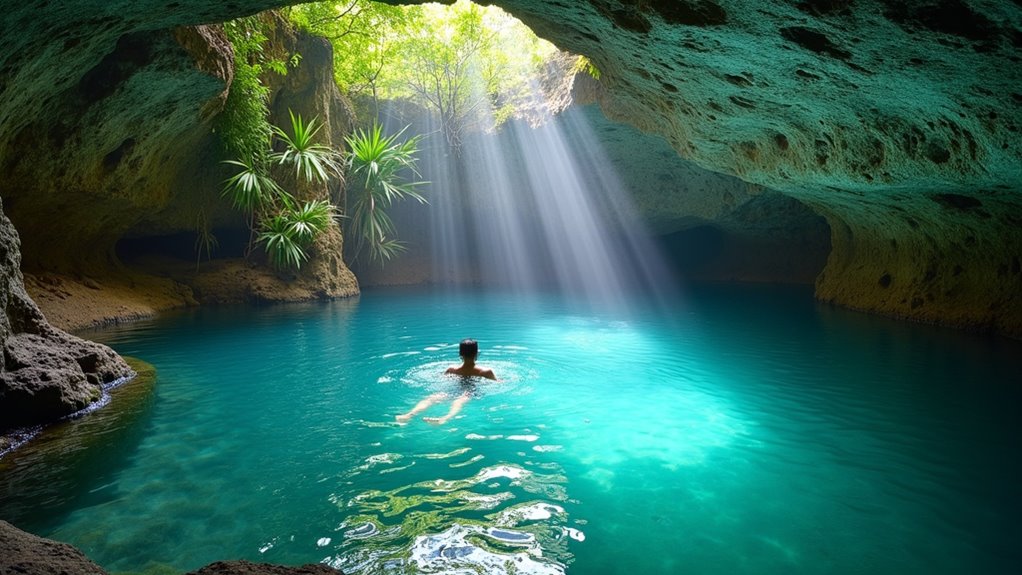
Twenty-six kilometers east of Samoa’s capital Apia, you’ll find one of the Pacific’s most unique swimming experiences at Piula Cave Pool, where crystal-clear freshwater springs flow through interconnected volcanic caves before emptying into the sea.
Located within Piula Theological College grounds, this natural freshwater pool formed in a collapsed lava tube offers cool relief at 25°C from tropical heat.
You can swim through an underwater tunnel connecting two cave chambers—recommended only for confident swimmers.
The site operates Monday through Saturday, 8am to 4pm, with a small entry fee.
Facilities include changing rooms and traditional fales for resting.
The pool’s religious heritage dates to 1868, when Methodist missionaries established the theological college, making this a culturally significant destination requiring respectful behavior.
Four-Wheel Drive Around Bora Bora’s Mount Otemanu
Four-wheel drive tours around Bora Bora’s Mount Otemanu reveal the island’s rugged interior, where dense jungle and volcanic terrain remain inaccessible by conventional vehicles. You’ll navigate 20 miles of mixed paved roads and dirt tracks, ascending hills and ridges for panoramic lagoon views.
Key stops include Amanahune plateau’s turquoise vistas, Rock of Anau’s dramatic profiles, and Canon of Faanui’s WWII gun emplacements. Tours incorporate cultural experiences like visiting Marae Aehautai temple sites and sampling tropical fruits on private family lands.
Expect red clay paths through hibiscus-dotted jungle and volcanic soil. Tours start around $299 per person, often combined with snorkeling or jet skiing. Pack water, sunscreen, and insect repellent for these early-morning adventures through Bora Bora’s challenging terrain.
The Sum Up
You’ll find Oceania and the Pacific offer unmatched diversity—from Australia’s sacred monoliths to New Zealand’s dramatic peaks, Fiji’s pristine reefs to Tonga’s whale encounters. Whether you’re seeking culture through Maori traditions and kava ceremonies, adventure via island-hopping and cave exploration, or luxury in overwater bungalows, this region delivers. Plan multiple trips to fully experience these destinations. Each island nation and territory presents distinct landscapes, cultures, and activities that’ll create lasting memories.