
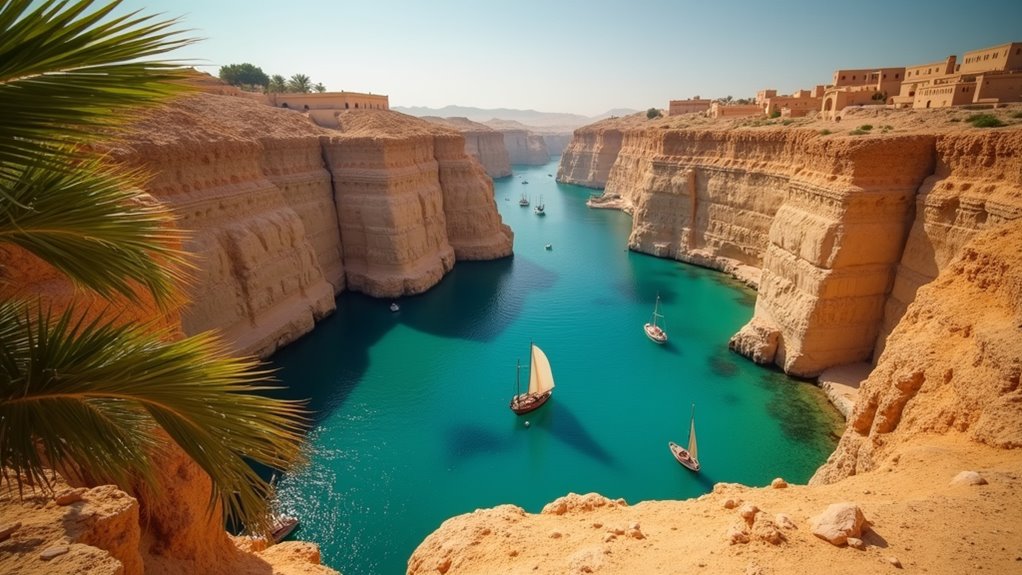
You’ll find Oman offers remarkable experiences without breaking your budget, from exploring ancient forts that cost just a few rials to swimming in free natural pools carved by centuries of flowing water. The country’s authentic culture remains invigoratingly uncommercialized—you can still watch traditional dhow builders work using centuries-old techniques and bargain for genuine frankincense in bustling souks. But knowing which experiences deliver the most value and cultural insight requires some insider knowledge about timing, costs, and local customs.
- Marvel at Sultan Qaboos Grand Mosque’s Magnificent Craftsmanship
- Wander Through Old Muscat’s Royal Quarter
- Climb Nizwa Fort’s Massive Tower for Panoramic Views
- Explore Jabreen Castle’s Ornate Rooms and Hidden Passages
- Swim Through Wadi Shab’s Turquoise Pools to a Hidden Cave
- Take a Refreshing Dip in Wadi Bani Khalid’s Year-Round Pools
- Hike the Balcony Walk Along Jebel Shams’ Dramatic Canyon Edge
- Drive Up to Jebel Akhdar’s Cool Mountain Villages and Rose Gardens
- Camp Under the Stars in Wahiba Sands Desert
- Cruise Through Musandam’s Fjord-Like Coastline by Traditional Dhow
- Haggle for Frankincense and Silver in Muttrah Souk’s Narrow Alleys
- Watch Dhow Builders at Work in Sur’s Traditional Shipyards
- The Sum Up
Marvel at Sultan Qaboos Grand Mosque’s Magnificent Craftsmanship
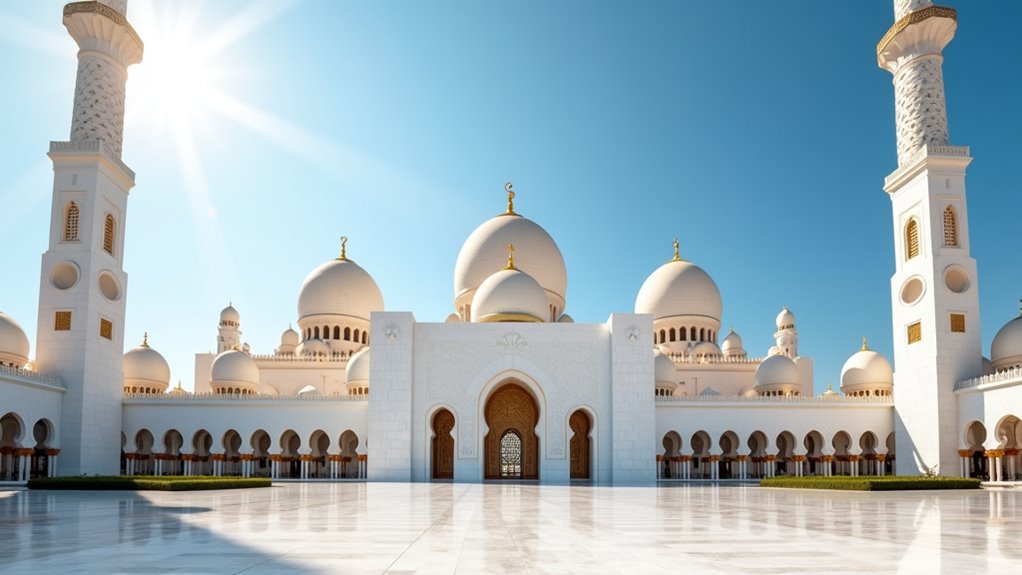
Where else can you witness Islamic architecture that rivals the world’s greatest monuments without paying a single rial? Sultan Qaboos Grand Mosque delivers breathtaking craftsmanship that’ll leave you speechless.
You’ll walk across the world’s second-largest single-piece Persian carpet—1.7 billion hand-tied knots spanning 4,343 square meters. Look up to admire one of the world’s largest Swarovski crystal chandeliers illuminating the 50-meter-high dome.
The mosque’s five minarets symbolize Islam’s five pillars, while 300,000 tons of Indian sandstone create walls that shift from white to honey-colored throughout the day. The intricate Arabic motifs and geometric patterns decorating every surface convey deeper meanings tied to Islamic art and culture.
Visit during morning hours when natural light transforms the polished marble surfaces.
Women should bring headscarves; modest dress is required for all visitors.
Wander Through Old Muscat’s Royal Quarter
After experiencing Oman’s spiritual grandeur, you’ll discover the country’s royal heritage unfolds just minutes away in Old Muscat’s Royal Quarter. Walk through 500-year-old city walls connecting Al Mirani and Al Jalali forts, where Portuguese cannons once defended the harbor against Imam forces in the 17th century.
You’ll view Al Alam Palace‘s striking blue and gold façade from outside—it’s not fully open but worth photographing.
Enhance your visit by exploring nearby Bait Al Zubair Museum for traditional Omani artifacts and village models that provide cultural context. Don’t miss adjacent Mutrah Souk for affordable spices, silver, and handicrafts. This historic market represents one of the oldest Arabian markets globally, preserving traditional trading practices that have operated for centuries.
The colorful maze of streets offers free immersion into centuries-old Arabian urban fabric, making this historic quarter budget-friendly while delivering authentic Omani royal and maritime heritage.
Climb Nizwa Fort’s Massive Tower for Panoramic Views
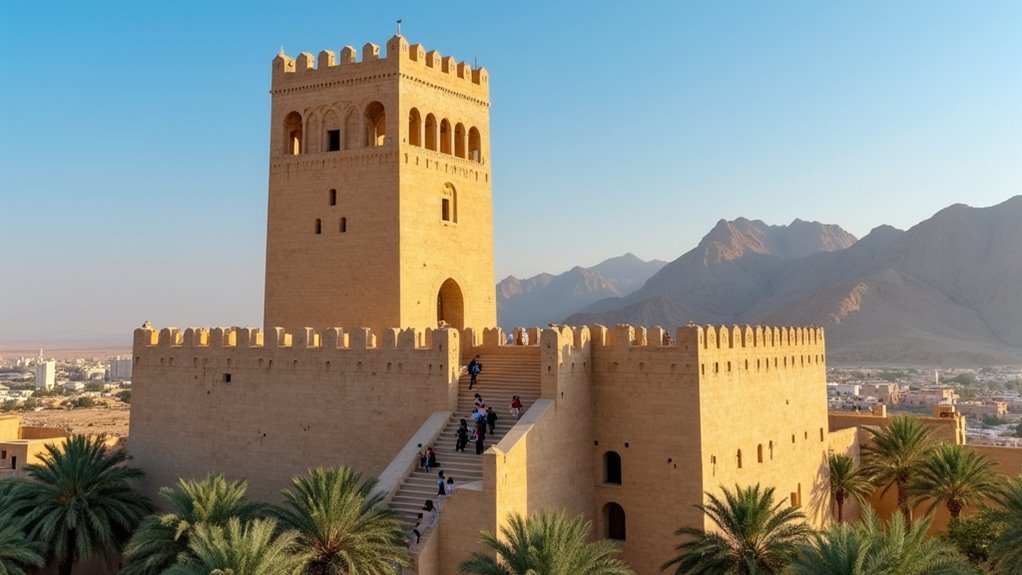
Since Nizwa Fort’s 17th-century tower rises 30 meters above Oman’s ancient capital, you’ll gain the country’s most commanding views for just 5 rials admission. You’ll climb narrow, winding staircases designed to confuse invaders, passing 480 gun-ports and hidden traps that once defended against Portuguese forces.
The defensive maze includes underground cellars now converted into museums showcasing Omani heritage—perfect for understanding local culture without additional costs. The fort’s foundations extend 30 meters underground, creating an impressive engineering feat that contributes to the structure’s remarkable stability.
At the summit, you’ll enjoy 360-degree panoramic views spanning Nizwa’s old town, surrounding palm groves, and distant mountain ranges. The thick mud-brick walls and strategic gun positions reveal advanced Ya’rubi military architecture.
Visit early morning for cooler temperatures and ideal photography lighting while exploring this UNESCO-worthy fortress that served as the administrative seat for Omani Imams.
Explore Jabreen Castle’s Ornate Rooms and Hidden Passages
While Nizwa Fort impresses with its military might, Jabreen Castle dazzles you with artistic sophistication and educational heritage for the same 5-rial entrance fee.
Built in 1670 as both palace and madrasa, this five-story marvel houses 55 intricately decorated rooms just 175km from Muscat.
You’ll discover stunning Arabic calligraphy, original frescoes, and wooden balconies showcasing authentic Omani craftsmanship.
Don’t miss the sun and moon room with its 14 strategically placed windows or the unique madbasa where dates were pressed into syrup.
Navigate maze-like corridors designed to confuse intruders while exploring hidden passages and secret bodyguard hideouts.
The castle’s educational rooms once taught jurisprudence, astronomy, and medicine. A Falaj irrigation channel flows directly through the middle of the castle, integrating traditional water management with the architectural design.
Take your time wandering through this architectural masterpiece—it’s one of Oman’s best-preserved examples of medieval Islamic art and design.
Swim Through Wadi Shab’s Turquoise Pools to a Hidden Cave
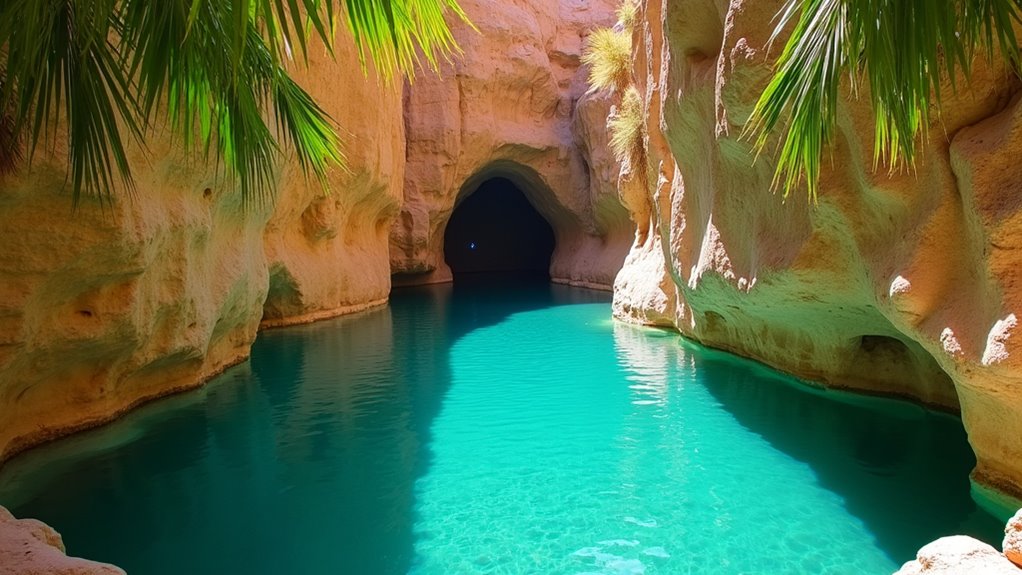
Just 90 minutes south of Muscat, Wadi Shab offers Oman’s most thrilling aquatic adventure—a journey through emerald pools that culminates in a hidden waterfall cave. Start with a quick 2-OMR boat ride, then hike 45 minutes through stunning canyon terrain to reach the first swimming pool.
You’ll swim through three turquoise pools over 650 meters, combining swimming with shallow walking for about 40 minutes. The adventure peaks at a hidden cave where you’ll squeeze through narrow passages to reach a magical waterfall pool surrounded by copper cliffs.
Bring water shoes and a life jacket—rentals aren’t available. Pack modest swimwear and waterproof bags for your belongings. This highly-rated experience has earned 4.6 stars from over 931 reviews, with visitors praising its adventure and natural beauty. Visit early morning to avoid crowds and heat while experiencing this breathtaking natural wonder safely.
Take a Refreshing Dip in Wadi Bani Khalid’s Year-Round Pools
For a more relaxed aquatic experience, head three hours east to Wadi Bani Khalid, where emerald pools await year-round swimmers without the athletic demands of Wadi Shab. You’ll find the largest pool just a 10-minute walk from the car park—no 4WD required.
The naturally heated pools maintain warm temperatures even in winter, making them perfect for budget travelers seeking consistent swimming conditions.
While weekends draw crowds of Omani families, you’ll enjoy quieter weekdays for peaceful dips. Pack sturdy shoes for exploring upstream pools, where you’ll discover intimate swimming spots among white cliffs and waterfalls. Beyond the pools, the Muqal cave offers a simple exploration opportunity for those with a flashlight, though it’s inhabited by bats and lacks special features.
The on-site restaurant and facilities eliminate the need for extensive packing, though bringing snacks saves money and lets you picnic under palm trees.
Hike the Balcony Walk Along Jebel Shams’ Dramatic Canyon Edge
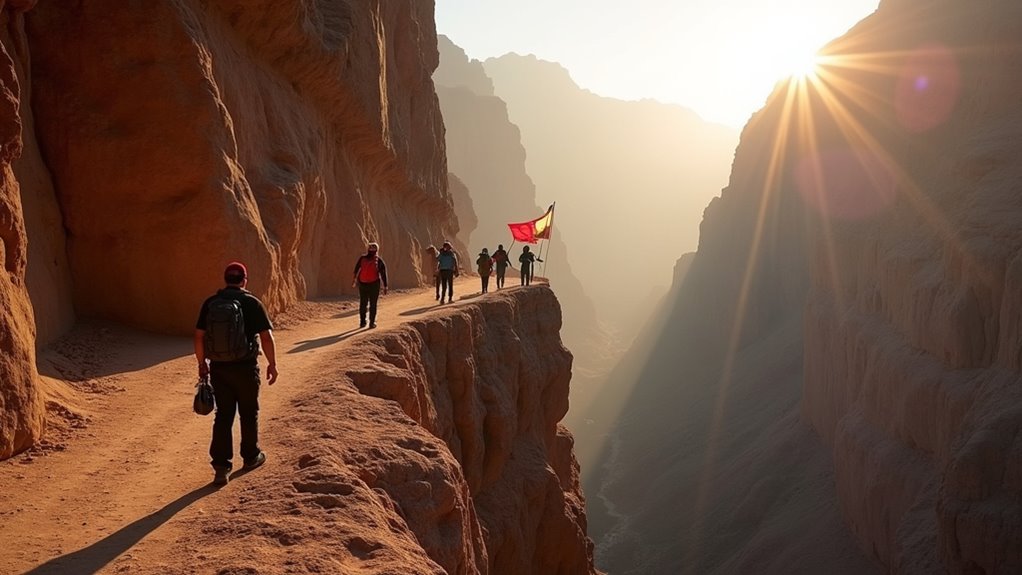
Three and a half hours from Muscat, Oman’s highest peak delivers the country’s most spectacular canyon hike without requiring technical climbing skills or expensive guide fees.
The 8km round-trip Balcony Walk traces Wadi Ghul’s rim—Oman’s Grand Canyon—offering breathtaking views down 1,500 meters into limestone gorges.
You’ll start at Al Khitaym hamlet around 1,900m elevation, following well-marked trails with painted Omani flags.
The path descends 200m through rocky terrain, ending near abandoned villages and a small waterfall.
While a 4×4 traditionally reaches the trailhead, some non-4×4 vehicles manage during dry conditions.
Start early morning to catch sunrise on “Sun Mountain”—the first place in Oman to see dawn—and avoid midday heat.
Pack plenty of water since shade’s limited along the 3-4 hour journey. For comfortable exploration of the rocky terrain, bring hiking shoes suitable for navigating the challenging path conditions.
Drive Up to Jebel Akhdar’s Cool Mountain Villages and Rose Gardens
About 150 kilometers southwest of Muscat, Jebel Akhdar’s winding mountain roads lead you into Oman’s agricultural heartland where traditional falaj irrigation systems—some over 1,500 years old—still water terraced rose gardens and pomegranate orchards.
You’ll escape the desert heat at 2,000 meters elevation, where cooler temperatures create perfect growing conditions for Damask roses, apricots, and walnuts.
Drive from Nizwa or Birkat Al Mouz to reach approximately 58 mountain villages scattered along canyon edges. Visit villages like As Sab and Wadi Bani Habib to see traditional mud-brick houses and functioning terraces. Access requires 4WD vehicles due to police checkpoints enforcing vehicle restrictions on the steep mountain roads.
During spring blooms, you can tour rose-water distilleries and buy locally-made products. The dramatic cliffs and terraced farms offer authentic glimpses into pre-oil Omani rural life without expensive tour guides.
Camp Under the Stars in Wahiba Sands Desert
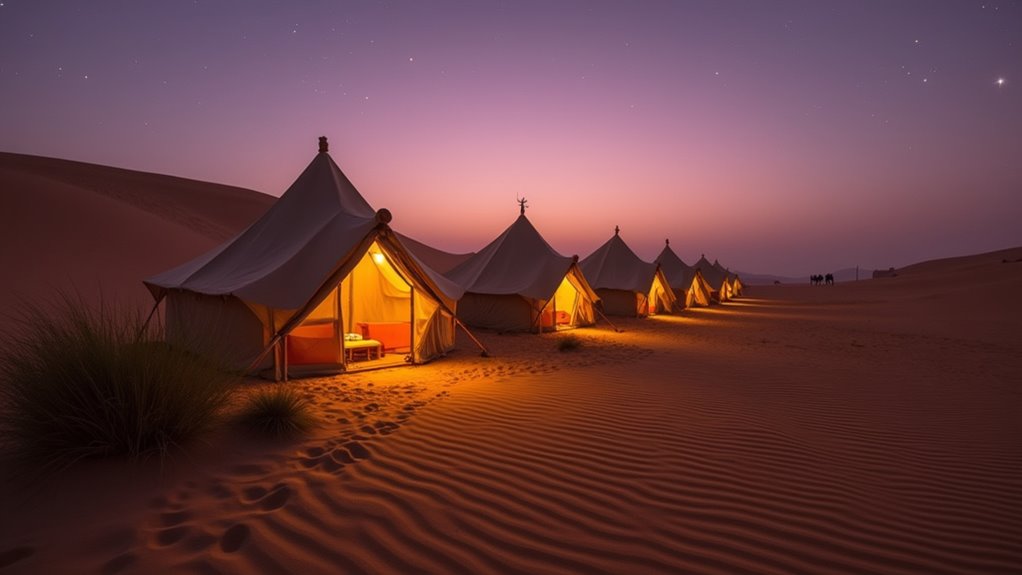
While Wahiba Sands stretches across 12,500 square kilometers of golden dunes, you’ll find the best stargazing and authentic Bedouin experiences at desert camps nestled in valleys about 10 kilometers from Bidiyah village.
Choose from budget-friendly Safari Dunes Camp or splurge on luxurious options like Desert Nights Resort with air conditioning and private bathrooms. Most camps offer pickup services, eliminating the need for your own 4WD vehicle.
You’ll enjoy camel rides, dune bashing, and sunset walks before gathering around campfires for traditional Bedouin meals and storytelling. Premium camps feature spacious tents with private bathrooms, real mattresses, and even outdoor seating areas for ultimate comfort in the desert.
Pack layers since temperatures swing dramatically—scorching days give way to surprisingly cold, windy nights. Many camps provide solar-powered lighting and USB charging, but bring extra water and flashlights for complete comfort under those brilliant desert stars.
Cruise Through Musandam’s Fjord-Like Coastline by Traditional Dhow
Stepping aboard a traditional wooden dhow at Khasab port, you’ll set out on a six-hour journey through Musandam’s dramatic fjords where towering mountains plunge into crystal-clear waters. Your dhow features comfortable carpets and cushions while serving traditional Omani meals including fried rice, chicken, and Arabic bread with unlimited refreshments.
You’ll visit remote fishing villages like Nadafi and Sham, accessible only by boat, where fewer than 60 residents maintain traditional lifestyles.
Telegraph Island offers snorkeling opportunities among coral reefs and historical significance as the site of Britain’s first 1864 telegraph cable. At night, luminous plankton create a magical glow as they illuminate the surrounding waters.
Dolphins frequently swim alongside your dhow, providing memorable wildlife encounters. The crew provides snorkeling equipment, life jackets, and towels, making this cultural experience both accessible and budget-friendly.
Haggle for Frankincense and Silver in Muttrah Souk’s Narrow Alleys
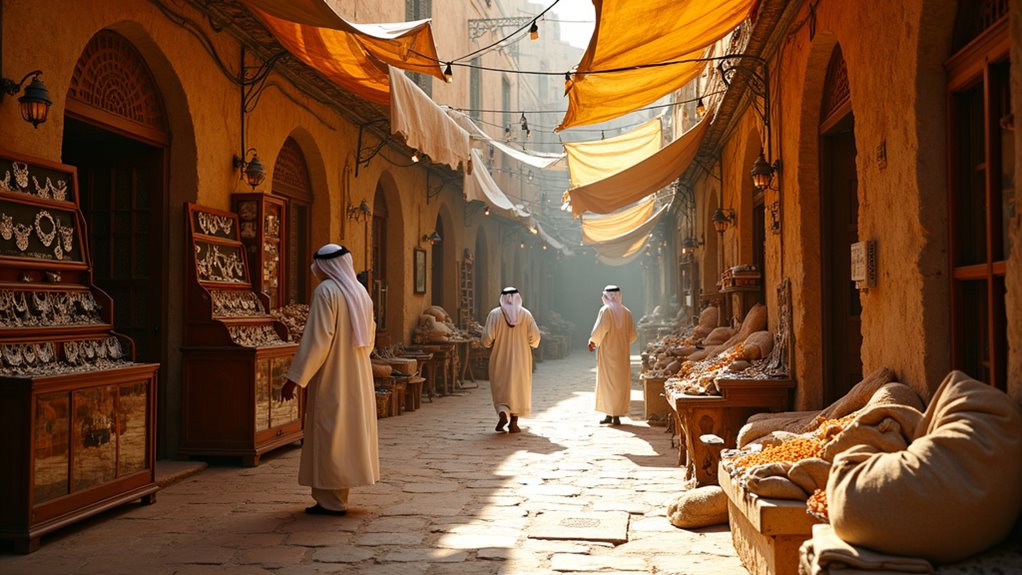
Beyond the main domed gateway on Muttrah’s Corniche, you’ll enter one of Arabia’s oldest functioning markets where centuries-old trading traditions continue unchanged.
Navigate the narrow, winding alleys where frankincense—traded here for over 5,000 years—fills the air with its distinctive aroma. You’ll find genuine Omani frankincense in various forms, from raw resin to processed incense for religious ceremonies.
Family-owned silver shops showcase intricate traditional jewelry featuring symbolic Omani motifs. These multi-generational craftsmen maintain authentic techniques passed down through centuries. Bargaining is expected, though discounts remain modest—respect the process as part of culture.
The Al-Lawati merchant community‘s influence since the 18th century guarantees quality goods. The market’s distinctive Y-shaped structure, designed by Sultan Said bin Sultan in the 1820s, remains architecturally visible today.
Visit early morning for cooler temperatures and fewer crowds, allowing genuine interaction with local traders maintaining this historic commercial hub.
Watch Dhow Builders at Work in Sur’s Traditional Shipyards
From Muttrah’s ancient trading traditions, travel three hours southeast to Sur, where you’ll witness another cornerstone of Oman’s maritime heritage still alive today. Visit Sur’s last remaining traditional dhow shipyard, where master craftsmen hand-build these iconic wooden vessels using centuries-old techniques passed down through generations.
You’ll watch artisans shape teak and local ghaff wood using traditional bow drills and manual tools, often working without blueprints.
The builders still employ ancient sewing methods with coconut fiber ropes, sealing seams with oil-soaked cotton. Each dhow requires nine months and five truckloads of timber to complete.
Entry is typically free, making this an accessible cultural experience. Visit during morning hours when craftsmen are most active.
These skilled shipbuilders represent Sur’s 16th-18th century golden age as the Gulf’s premier dhow-building hub. The traditional vessels feature a distinctive curved hull design constructed without a keel, a characteristic that has remained unchanged for centuries.
The Sum Up
You’ll find Oman offers incredible value compared to other Gulf destinations. Budget around $50-80 daily for mid-range travel, including accommodation and meals. Don’t miss free experiences like watching dhow builders or exploring Mutrah Souk’s alleys. Book desert camps and fjord cruises in advance for better rates. Learn basic Arabic greetings—locals appreciate the effort and you’ll get better prices. Pack modest clothing for mosque visits and comfortable shoes for fort climbing.