
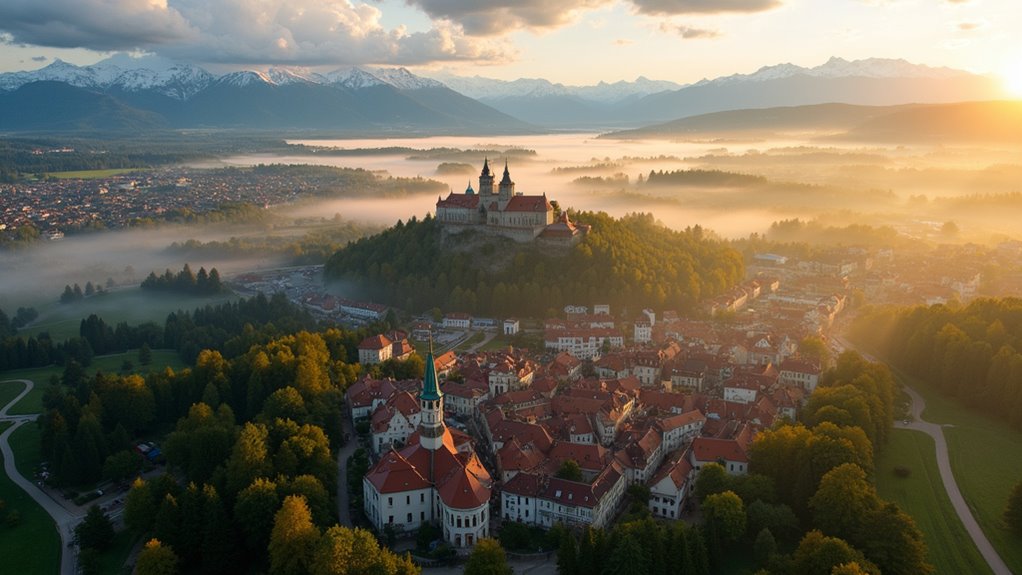
You’ll find Poland offers an unexpected blend of medieval charm and sobering history that most travelers overlook. From underground salt mines that’ll leave you speechless to charming dwarf statues hiding throughout ancient cities, this Eastern European gem delivers experiences you won’t find anywhere else. Whether you’re drawn to mountain adventures, reconstructed Old Towns with fascinating stories, or castles that’ve witnessed centuries of drama, Poland’s diverse attractions will challenge everything you thought you knew about this remarkable country.
- Explore Kraków’s Medieval Heart and Wawel Castle
- Walk Through Warsaw’s Rebuilt Old Town
- Experience the Sobering History at Auschwitz-Birkenau
- Descend Into Wieliczka Salt Mine’s Underground Chambers
- Hike the Tatra Mountains From Zakopane Base
- Sail the Thousand Lakes of Masuria
- Step Back in Time at Malbork Castle
- Track European Bison in Białowieża Forest
- Wander Gdańsk’s Reconstructed Maritime Quarter
- Hunt for Wrocław’s Hidden Dwarf Statues
- Raft the Dunajec River Through Pieniny Gorge
- Discover Lublin’s Castle and Jewish Quarter
- Stroll Royal Łazienki Park in Warsaw
- The Sum Up
Explore Kraków’s Medieval Heart and Wawel Castle
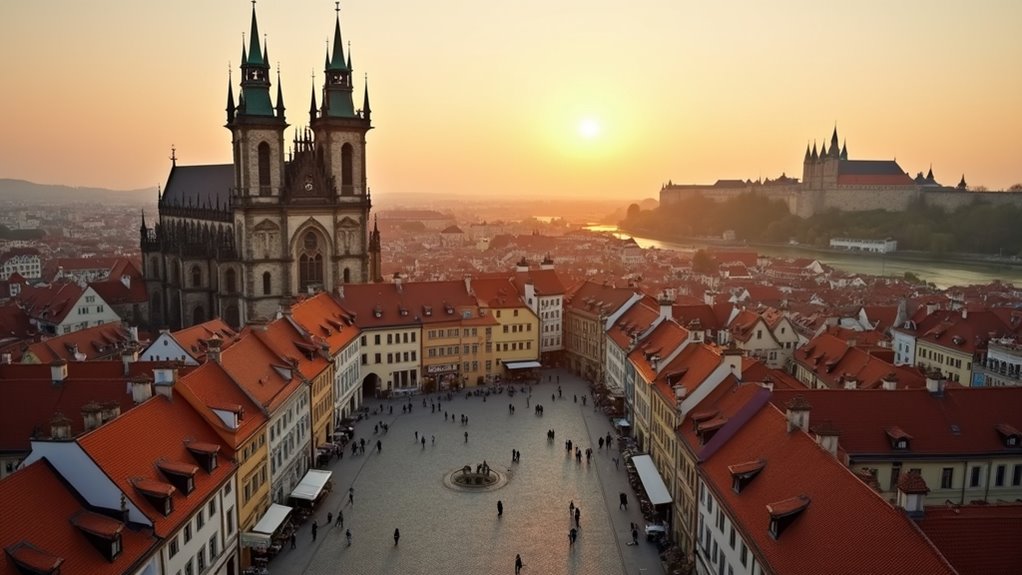
When you step into Kraków’s Old Town, you’re walking through one of Europe’s best-preserved medieval city centers, where cobblestone streets lead you directly to the crown jewel of Polish heritage: Wawel Castle. This limestone hilltop fortress spans nearly 1,000 years of history, from its 10th-century wooden origins to its Renaissance transformation under King Sigismund I.
You’ll discover architectural layers that tell Poland’s story—Romanesque foundations, Gothic expansions, and Italy-inspired Renaissance courtyards. Don’t miss the arcaded courtyard, Northern Europe’s first of its kind. Inside Wawel Cathedral, you’ll find royal tombs and the stunning golden-domed Sigismund Chapel.
The defensive towers and fortified walls remind you this wasn’t just a palace—it was Poland’s political powerhouse for six centuries. The strategic hilltop location, surrounded by flooded meadows from the Vistula and Rudawa rivers, provided natural protection that made this site ideal for fortification since ancient times.
Walk Through Warsaw’s Rebuilt Old Town
As you wander through Warsaw’s Old Town, you’re experiencing one of history’s most remarkable acts of defiance—an entire medieval district rebuilt brick by brick from total devastation.
After WWII’s destruction, volunteers formed “brick chains” to salvage authentic materials from rubble, meticulously reconstructing this UNESCO World Heritage site using historical paintings and photographs as blueprints.
You’ll walk along the original medieval street network, past colorful townhouses featuring restored sgraffito decorations and the grand Market Square.
Don’t miss the Royal Castle’s Canaletto Room with its recreated 18th-century Venetian paintings.
The Warsaw Reconstruction Office led this extraordinary project from 1945-1951, using surviving structures and detailed historical records to restore the city’s late 18th-century appearance.
This isn’t just a tourist attraction—it’s a living testament to Polish resilience, where residents still call home a neighborhood that refused to be erased from history.
Experience the Sobering History at Auschwitz-Birkenau
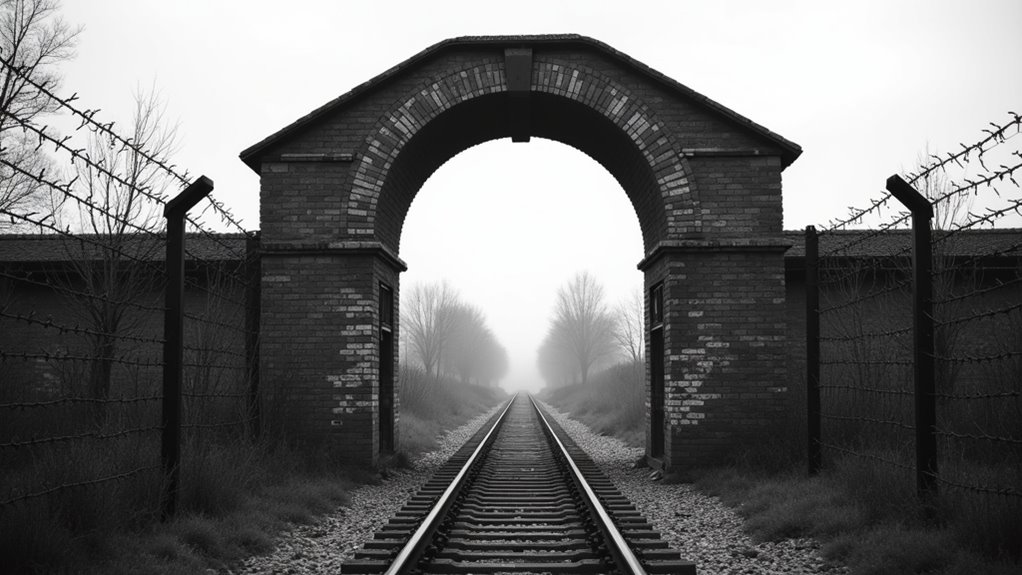
Standing at the gates of Auschwitz-Birkenau, you’ll confront one of humanity’s darkest chapters—a place where over 1.1 million people were systematically murdered between 1940 and 1945. This UNESCO World Heritage site preserves the largest Nazi extermination camp, where 960,000 Jews, along with Poles, Roma, and Soviet POWs, lost their lives.
You’ll walk through original barracks, see ruins of gas chambers and crematoria, and witness personal belongings of victims. The museum’s exhibits include photographs, documents, and survivor testimonies that provide essential historical context.
Guided tours offer detailed explanations while maintaining the site’s solemn atmosphere. The camp’s fortified walls and barbed wire demonstrate the systematic nature of the genocide that took place here.
This isn’t typical sightseeing—it’s an essential educational experience that demands reflection on human rights, tolerance, and the devastating consequences of hatred and indifference.
Descend Into Wieliczka Salt Mine’s Underground Chambers
Beneath the bustling streets near Kraków lies one of the world’s most extraordinary underground wonders—Wieliczka Salt Mine, where you’ll descend 327 meters into a subterranean kingdom that miners carved from rock salt over seven centuries.
You’ll explore 2,500 chambers connected by 245 kilometers of galleries, marveling at intricate salt sculptures and four chapels that showcase miners’ artistic traditions. The underground lakes and illuminated sculptures create an otherworldly atmosphere as you walk through labyrinthine passages once filled with medieval workers.
Your guided tour reveals centuries of mining evolution, from horse-powered machinery to modern equipment. Since tourism began in the 15th century, visitors have documented their awe in guest books dating to 1774. The mine has welcomed notable visitors including Copernicus, Goethe, Chopin, and Pope John Paul II throughout its distinguished history.
This UNESCO World Heritage Site transforms Poland’s industrial heritage into an unforgettable subterranean adventure.
Hike the Tatra Mountains From Zakopane Base
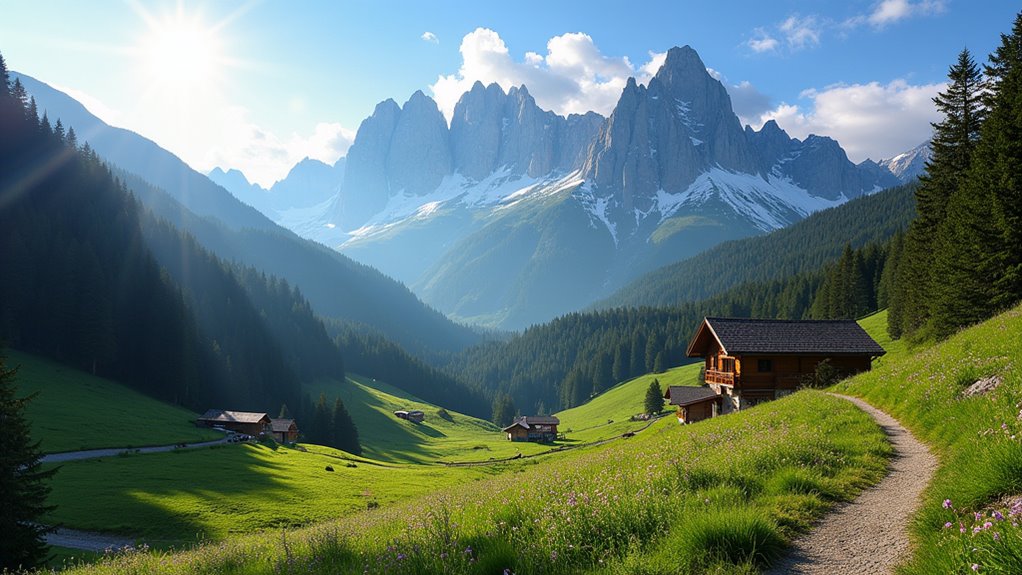
From underground marvels to mountain peaks, Poland’s natural wonders continue above ground in the spectacular Tatra Mountains, where Zakopane serves as your gateway to over 270 kilometers of hiking trails. You’ll find options ranging from easy forest walks to technical climbs requiring chains and ladders.
Start most hikes from Kuźnice, just 15 minutes by bus from Zakopane center. Popular routes include the moderate 8.8-kilometer trek to Sarnia Rock via Strążyska Valley, or challenge yourself with the strenuous 13.5-kilometer roundtrip to Czarny Staw Gąsienicowy, gaining 880 meters in elevation.
For spectacular views, hike three hours to Kasprowy Wierch peak at 1,987 meters, then descend by cable car. The area features crystalline lakes, picturesque valleys, and flower-filled meadows that make the Tatras among Europe’s most beautiful mountain ranges. Remember that camping isn’t allowed—you’ll stay in mountain huts or return to Zakopane’s accommodations.
Sail the Thousand Lakes of Masuria
While the Tatra Mountains offer vertical adventures, Poland’s Masuria region spreads horizontally across over 3,000 interconnected lakes, creating one of Europe’s most extensive sailing playgrounds.
You’ll navigate the Great Masurian Lakes route through Śniardwy, Niegocin, and connected waterways via rivers and canals. Plan two to three days to cross the entire region by boat.
July and August offer peak sailing conditions, though you’ll encounter crowds. Consider late May, early June, or September for better prices and fewer travelers.
You’ll need a sailing license for larger yachts, but can operate boats under 7.5 meters without one. Yacht rental prices range from under 200 PLN to over 1,000 PLN per day depending on the vessel size and season.
Base yourself at Sztynort’s marina for excellent facilities and explore Lake Śniardwy’s islands. Watch for unmarked underwater hazards, especially on the larger lakes.
Step Back in Time at Malbork Castle
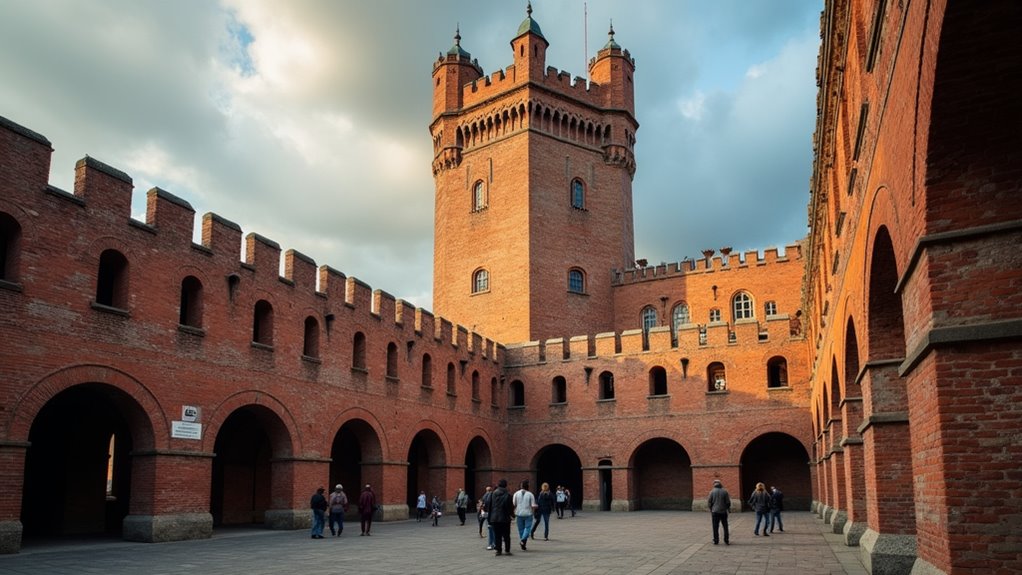
After exploring Poland’s natural wonders on water, you’ll discover the country’s most impressive man-made marvel rising from the banks of the Nogat River. Malbork Castle stands as the world’s largest brick fortress, showcasing magnificent Gothic architecture that’s transported visitors back to medieval times since 1274.
You’ll explore three distinct sections—High, Middle, and Lower Castles—each revealing different aspects of Teutonic Knight life. Walk through massive defensive walls, cross ancient moats, and climb fortified towers where knights once stood guard.
The castle served as headquarters for the powerful Teutonic Order and later housed Polish royalty. The fortress covers an impressive 21 hectares, making it four times larger than Windsor Castle and demonstrating the immense scale of this medieval stronghold.
Today’s museum exhibitions bring centuries of crusading history to life. You’ll witness architectural details that survived wars and careful restoration efforts, making this UNESCO World Heritage Site Poland’s premier historical attraction.
Track European Bison in Białowieża Forest
Deep within Europe’s last primeval forest, you’ll encounter the continent’s heaviest land mammal roaming freely through ancient woodlands. Białowieża Forest hosts Poland’s largest European bison population, with around 892 free-living individuals creating an unforgettable wildlife experience.
You can observe these magnificent creatures at Białowieża National Park’s Show Reserve or venture into their natural habitat for authentic encounters. Winter offers excellent tracking opportunities when herds are most visible against snowy landscapes.
The forest contains both breeding reserves and free-roaming populations, giving you multiple viewing options. Recent counts show natural herd migration between Białowieża and nearby Knyszyńska Forest, demonstrating the success of conservation efforts that allow free movement across northeastern Poland’s interconnected forest ecosystems.
Conservation efforts have expanded bison habitat by 32% through ecological corridors, increasing your chances of sightings. Mixed herds have grown from seven to twelve recently, meaning you’re likely to spot these impressive animals during your forest exploration.
Wander Gdańsk’s Reconstructed Maritime Quarter
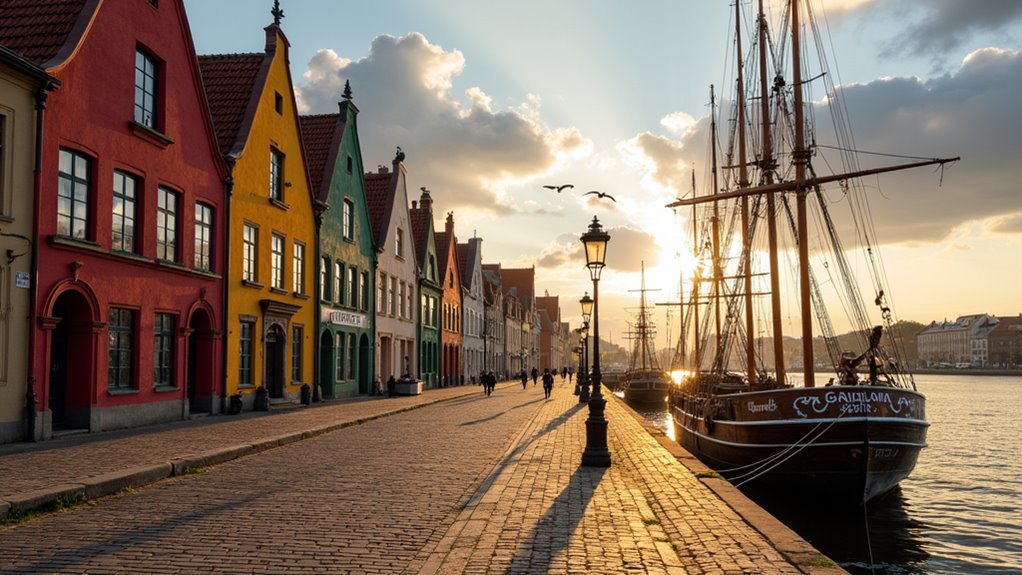
Gdańsk’s reconstructed maritime quarter offers you a fascinating glimpse into how modern urban planning can breathe new life into war-torn waterfront districts. You’ll walk through streets rebuilt after WWII’s devastation, where Polish architects restored historic boundaries while modernizing interiors.
The area tells two stories: post-war reconstruction that reduced building heights for better light, and recent redevelopment led by Danish firm Henning Larsen.
You can explore repurposed shipyard buildings where Solidarity protesters once sparked Poland’s path to freedom. The massive cranes and production halls now house cultural spaces and commercial facilities. The shipyard’s legacy includes its consideration for the UNESCO World Heritage designation, recognizing its historical significance.
As you wander the revitalized waterfront, you’ll see how abandoned industrial zones reconnect with the city through new plazas and streets, creating a harmonious blend of reconstructed heritage and contemporary design.
Hunt for Wrocław’s Hidden Dwarf Statues
Why search for ordinary tourist attractions when you can set out on one of Europe’s most whimsical treasure hunts? Wrocław’s streets hide over 600 bronze dwarf statues, each no taller than your knee and packed with personality. These aren’t just cute decorations—they commemorate the Orange Alternative, an anti-communist movement that used surrealist art as peaceful protest during Poland’s martial law.
You’ll find dwarfs everywhere: perched on windowsills, hiding by lampposts, and themed around local businesses. The dwarfs have become so beloved that they inspire their own annual festival each September. Grab a map from the Tourist Information Centre for 12 PLN, though mobile apps offer more current locations since new dwarfs appear regularly. Wear comfortable shoes for the cobblestone streets and keep your eyes peeled—some dwarfs are cleverly concealed high on building walls.
Raft the Dunajec River Through Pieniny Gorge
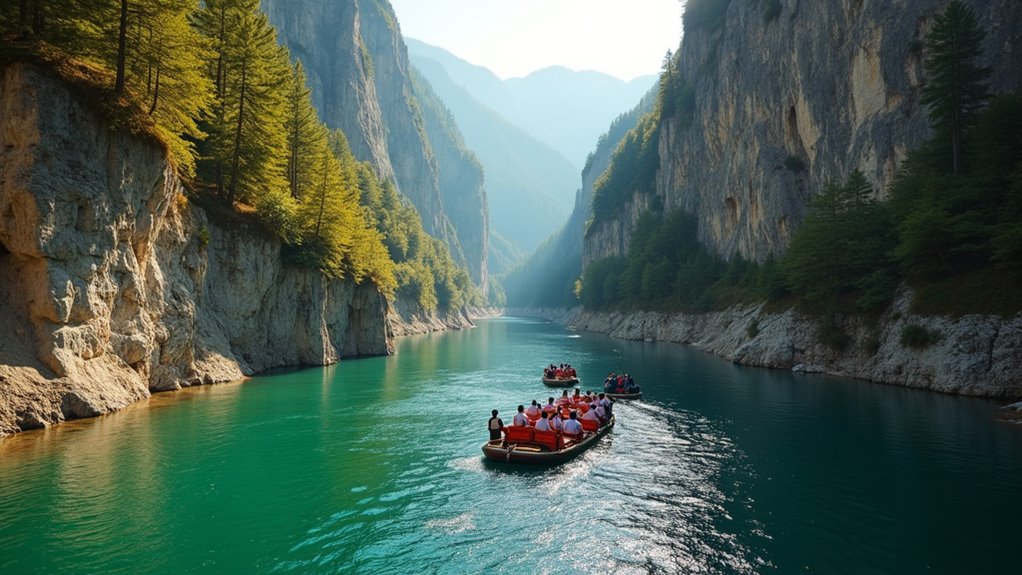
Forty-six kilometers of the Dunajec River wind through one of Europe’s most stunning gorges, where towering limestone cliffs rise 300 meters above the water on both sides.
You’ll glide down this tranquil river on traditional wooden rafts, experiencing breathtaking views that change with Poland’s left bank and Slovakia’s right bank.
The gentle WW1-rated current makes this perfect for families—even three-year-olds can join.
Two experienced guides navigate each 12-15 person raft through the 11-15 kilometer journey, which takes 2-3 hours depending on conditions.
You won’t need swimming skills, as capsizing’s extremely rare.
Season runs April through October, offering lush summer greenery or vibrant autumn colors.
Bring weather-appropriate clothing, water-friendly shoes, and a cushion for comfort.
Book online and enjoy free parking at Szczawnica marina. Many operators like OtoTatry offer convenient day trips with transportation from Zakopane to the starting point in Niedzica.
Discover Lublin’s Castle and Jewish Quarter
Perched on a hill overlooking the Bystrzyca River, Lublin Castle commands attention with its distinctive cylindrical keep—the oldest structure in the entire city. You’ll explore a Romanesque tower dating to the early 13th century, featuring vaulted chambers and narrow slit windows that once served both military and residential purposes.
Don’t miss the Gothic Chapel of the Holy Trinity, where stunning Rutheno-Byzantine frescoes from 1418 blend Western architecture with Eastern painting techniques. This castle witnessed the signing of the 1569 Union of Lublin, establishing the Polish-Lithuanian Commonwealth.
After exploring the castle, wander through Lublin’s historic Jewish Quarter. You’ll discover remnants of a vibrant medieval community, including surviving synagogues and cultural sites that tell the story of centuries-old Jewish heritage. The castle complex now houses the Lublin Province Museum, where you can delve deeper into the region’s rich cultural and historical legacy.
Stroll Royal Łazienki Park in Warsaw
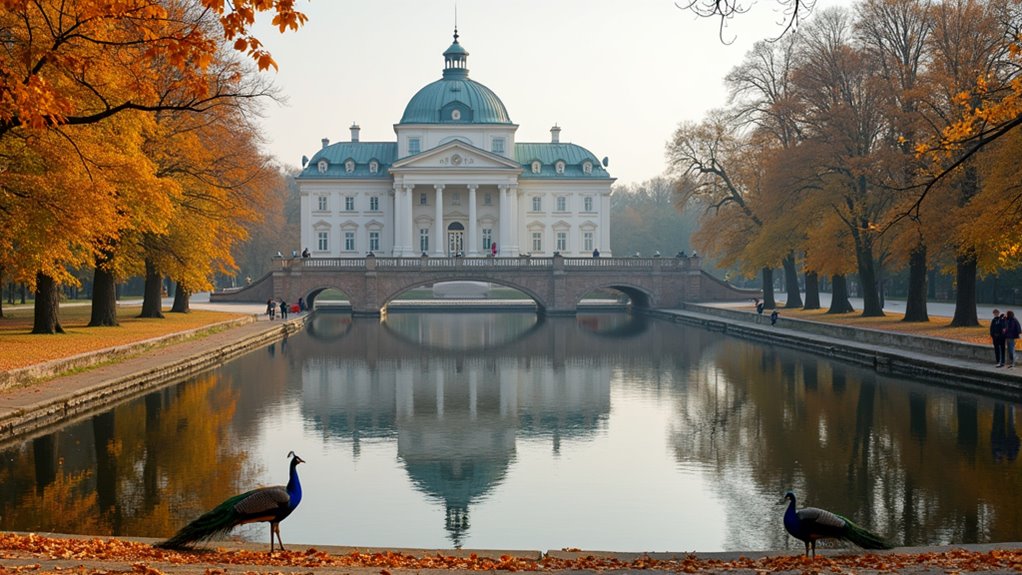
From Lublin’s medieval towers, Warsaw’s Royal Łazienki Park offers a completely different yet equally enthralling glimpse into Poland’s royal heritage. You’ll discover 76 hectares of stunning gardens where King Stanisław August Poniatowski once strolled through his 18th-century summer retreat.
The Palace on the Isle serves as the park’s crown jewel – a neoclassical masterpiece surrounded by tranquil waters. You can’t miss the iconic Chopin Monument, where free summer concerts bring the composer’s music to life every Sunday from May through September.
Wander through three distinct garden styles, from formal Italian layouts to romantic English landscapes. The park’s origins trace back to 1624 when Ujazdowski Castle was constructed by Sigismund III Vasa, which now houses a contemporary art museum. With over 40 historic buildings, peacocks roaming freely, and 10,000 trees creating natural canopies, you’ll understand why locals consider this Warsaw’s most beautiful escape.
The Sum Up
You’ve got enough adventures here to fill multiple trips to Poland. Whether you’re drawn to medieval castles, sobering historical sites, or outdoor thrills, this country delivers experiences you won’t find anywhere else. Don’t try to cram everything into one visit—pick a few regions and explore them properly. You’ll leave with incredible memories and probably start planning your return before you’ve even left Polish soil.