
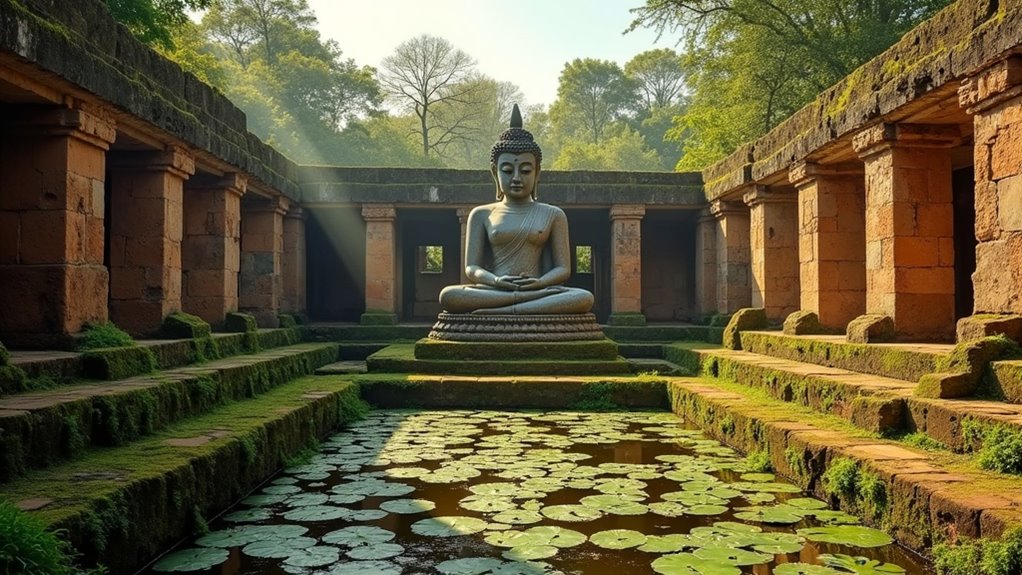
Travelers seeking affordable historical adventures often overlook Sri Lanka’s ancient capital, but Polonnaruwa delivers remarkable experiences without breaking the bank. This UNESCO World Heritage site houses centuries-old Buddha statues, intricate stone carvings, and engineering marvels that rival more expensive destinations. Smart visitors can explore royal palaces, sacred temples, and wildlife habitats in a single day trip. However, there’s a strategic approach to maximizing time and minimizing costs that most travelers never discover.
- Marvel at the Gal Vihara Buddha Statues
- Explore the Sacred Quadrangle and Ancient Relics
- Discover the Ruins of Vijayantha Prasada Royal Palace
- Visit the Magnificent Temple Complexes of Lankatilaka and Tivanka
- Experience the Engineering Wonder of Parakrama Samudra Reservoir
- Walk Through the Archaeological Museum and Historical Exhibits
- Observe Wildlife Among the Ancient Ruins
- Tour the Vatadage Circular Relic House and Stone Carvings
Marvel at the Gal Vihara Buddha Statues
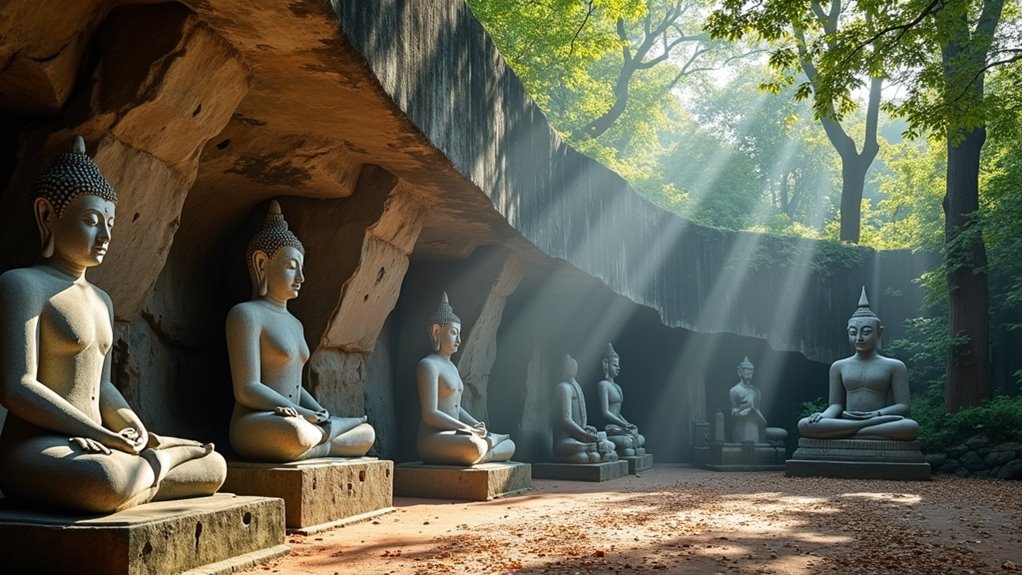
When visitors step into Polonnaruwa’s ancient grounds, they’ll find no sight more breathtaking than the Gal Vihara Buddha statues carved from a single granite cliff face. These 12th-century masterpieces showcase four distinct Buddha images that tell the complete story of enlightenment – from meditation to teaching to final transcendence.
The massive seated Buddha represents deep contemplation, while the standing figure embodies the Buddha as teacher and protector. The reclining statue symbolizes Parinirvana, the peaceful passing beyond suffering. Each sculpture displays remarkable craftsmanship with delicate facial expressions and flowing robes that reflect ancient Sinhalese artistry.
Visitors can explore this UNESCO World Heritage site year-round, though early morning visits offer cooler temperatures and better photography lighting. The complex remains an active pilgrimage destination where travelers witness ongoing religious ceremonies. Like the dramatic limestone cliffs found throughout Southeast Asia, these granite formations create a stunning backdrop for the sacred sculptures. King Parakramabahu I established this site as an educational center where monks gathered to reform the Buddhist order and study religious teachings.
Explore the Sacred Quadrangle and Ancient Relics
The Sacred Quadrangle stands as Polonnaruwa’s most concentrated treasure trove of ancient architecture, where visitors can explore multiple royal and religious monuments within a compact area that’s perfect for budget travelers with limited time.
Start with the circular Vatadage, where intricate moonstones and guardstones showcase masterful stone carving. You’ll find four Buddha statues positioned at cardinal entrances, creating stunning photo opportunities.
Don’t miss the Atadage, the oldest shrine built by King Vijayabahu I as the first Tooth Relic temple.
The unique seven-tiered Satmahal Prasada resembles a stepped pyramid and reflects Southeast Asian influences. This distinctive structure demonstrates the engineering prowess that ancient Sri Lankan architects possessed during the Polonnaruwa period.
Check out the massive Gal Potha stone inscription before exploring remaining columns and ruins scattered throughout this archaeological goldmine. Consider visiting during the early morning hours when the ancient stones are beautifully illuminated by soft sunlight, creating an almost mystical atmosphere perfect for photography.
Discover the Ruins of Vijayantha Prasada Royal Palace
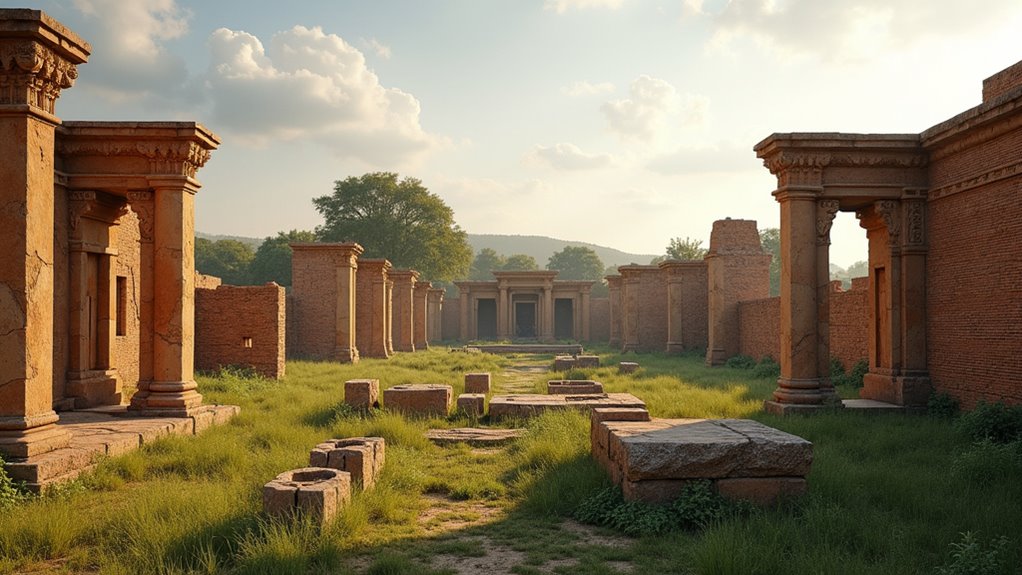
Just steps away from the Sacred Quadrangle, visitors can explore the impressive ruins of Vijayantha Prasada, King Parakramabahu the Great‘s magnificent seven-story royal palace that once housed around 1,000 rooms.
Today, three stories of thick brick walls and stone staircases remain standing, showcasing the advanced engineering of this 12th-century marvel.
You’ll spot intricate carvings of lions and elephants on the stonework, plus massive stone pillars that hint at the palace’s original grandeur. The site demonstrates the remarkable hydraulic engineering capabilities of ancient Sri Lankan architects through its sophisticated water management systems.
The ruins are easily accessible and don’t require additional fees beyond your main site ticket. Like many visitors exploring Tohoku adventure destinations, you’ll want to dedicate ample time to fully appreciate the historical significance of this ancient complex.
Take time to walk through the nearby royal baths and audience halls – they’re part of the same complex and help you visualize ancient royal life.
Visit the Magnificent Temple Complexes of Lankatilaka and Tivanka
While exploring Polonnaruwa’s ancient wonders, visitors shouldn’t miss the remarkable temple complexes of Lankatilaka and Tivanka, both showcasing the island’s fascinating blend of Buddhist and Hindu architectural traditions.
Lankatilaka’s towering 14-meter headless Buddha statue dominates the cruciform-shaped image house, built on natural rock during the 14th century. The temple’s walls feature intricate bas-reliefs and Kandyan murals, while mythical beast balustrades guard the entrance. Don’t overlook the moonstone and Dragon Arch details.
Tivanka offers equally impressive stonework and Buddha statues, reflecting similar Sinhalese-South Indian architectural fusion. Both sites are easily walkable and complement each other perfectly for a morning or afternoon visit. Like Chennai’s famous temple complexes, these sacred sites represent centuries of devotional artistry and cultural significance.
The temples demonstrate Sri Lanka’s unique religious syncretism, making them essential stops for understanding the island’s cultural heritage. The architectural influence can also be seen in nearby Gadaladeniya temple, which features a distinctive Dravidian style design created by South Indian architect Ganesvarachari.
Experience the Engineering Wonder of Parakrama Samudra Reservoir
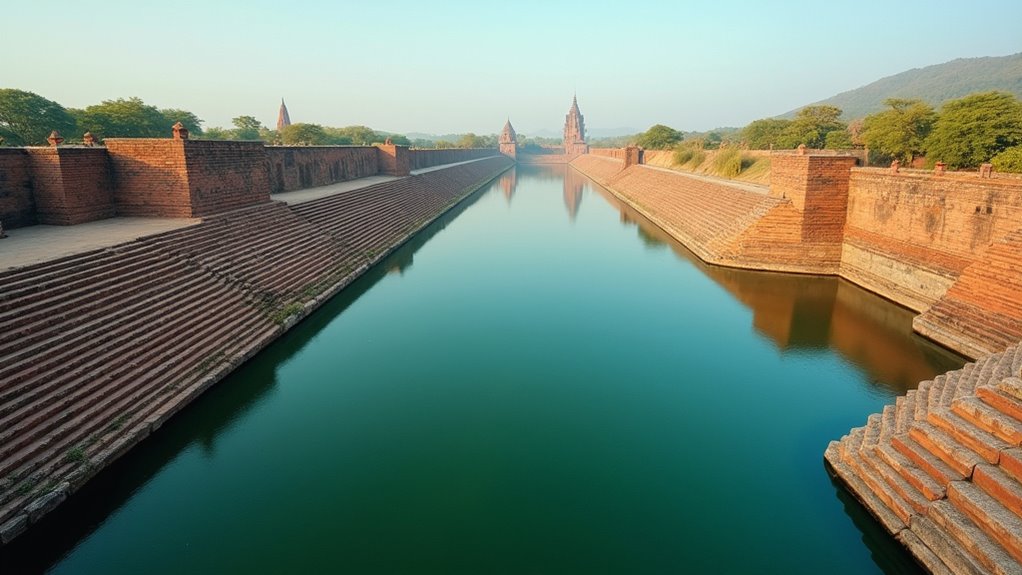
Beyond Polonnaruwa’s spiritual monuments lies one of ancient Sri Lanka’s most impressive feats of hydraulic engineering. Parakrama Samudra, built by King Parakramabahu I in the 12th century, stretches 14 kilometers and demonstrates remarkable ancient technology. This “Sea of Parakrama” originally combined five interconnected reservoirs designed under the philosophy that no rainwater should reach the sea unused.
Visitors can walk along the massive bund, standing 40 feet high, while appreciating how this system once irrigated 25,000 acres of paddy fields. Don’t miss the carved statue of King Parakramabahu facing the reservoir—it’s free to photograph and perfectly captures the monarch’s vision.
The best time for photography is during golden hour when the water reflects beautifully. The reservoir’s impressive 25-foot average depth creates stunning visual perspectives from various viewpoints along the embankment. Like many of Japan’s hidden gems, this remarkable site often goes unnoticed by mainstream tourism despite its extraordinary historical significance. Pack water and wear comfortable shoes for exploring this engineering marvel.
Walk Through the Archaeological Museum and Historical Exhibits
Before exploring Polonnaruwa’s ancient ruins, visitors should start at the Archaeological Museum to gain essential context that’ll transform their site experience from confusing stone fragments into meaningful historical narratives. The museum serves as the ticketing point for the archaeological site, making it a natural first stop.
Inside, travelers discover bronze statues of Hindu deities, ancient medical tools, and detailed scale models showing the original city layout. These exhibits explain how Buddhism and Hinduism coexisted under three great kings who shaped the medieval capital.
The thematic displays cover governance, education, and religious practices. The museum highlights include a series of Chola bronzes that showcase the artistic heritage of the period. Like many destinations that offer experiences beyond their most famous attractions, Polonnaruwa provides unique experiences that reward visitors who look deeper into the city’s layered history.
Plan about an hour for the visit, though note the interior can get quite warm. Photography isn’t allowed, but the all-encompassing artifacts and models provide invaluable preparation for understanding the ruins ahead.
Observe Wildlife Among the Ancient Ruins
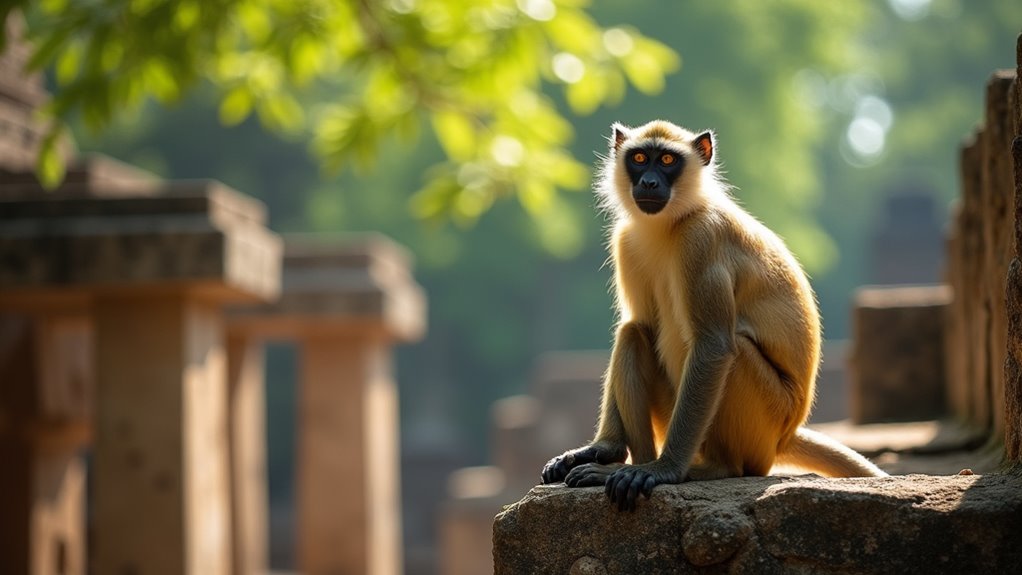
As visitors explore Polonnaruwa’s ancient structures, they’ll discover an unexpected bonus: the ruins teem with wildlife that’s made these archaeological treasures their home for centuries. Toque macaques steal the spotlight, particularly near the Royal Palace and Audience Hall, where troops perform social behaviors among stone pillars. These famous primates have starred in BBC documentaries and represent the world’s longest-running primate study since 1968.
Gray langurs congregate around Kiri Vihara stupa, while purple-faced langurs occupy tree canopies throughout the complex. Monitor lizards swim through ancient canal systems, and spotted deer herds wander pathways between structures. Visitors might also spot giant squirrels at nearby guesthouses, adding to the diverse wildlife experience beyond the main archaeological site.
Early morning visits offer the best wildlife viewing opportunities, and cycling through less-crowded sections increases animal encounters without additional costs. Beyond wildlife observation, visitors can combine their exploration with adventure sports that showcase the region’s natural beauty alongside its historical significance.
Tour the Vatadage Circular Relic House and Stone Carvings
While many visitors rush between Polonnaruwa’s scattered ruins, they shouldn’t miss the Vatadage – the archaeological park’s crown jewel that sits within the main quadrangle. This 12th-century circular Buddhist shrine represents the pinnacle of vatadage architecture, built to house sacred relics like Buddha’s tooth during Parakramabahu I’s reign.
Visitors can climb stone staircases to the upper platform where four Buddha statues face cardinal directions, protecting the central stupa. The real treasures lie beneath your feet – intricate moonstones at entrances showcase some of Polonnaruwa’s finest stone carving. These semi-circular stones represent samsara’s cycle, while guard stones display detailed elephant motifs.
Don’t walk carelessly on these ancient carvings; they’re irreplaceable cultural artifacts that’ve survived centuries of abandonment since the kingdom’s fall. The site remained buried and forgotten until excavation began in 1903, revealing the elaborate stone work we see today. When planning your itinerary, consider that these must-see attractions require at least half a day to properly appreciate their historical significance and architectural details.