

You don’t need to break the bank to experience Russia’s most breathtaking moments. From watching Red Square transform in the early morning light to riding the legendary Trans-Siberian Railway, Russia offers incredible experiences that’ll stay with you forever. Whether you’re drawn to Moscow’s palatial metro stations or the pristine wilderness of Lake Baikal, smart planning can make these once-in-a-lifetime adventures surprisingly affordable. Here’s how to maximize your rubles while discovering what makes Russia truly unforgettable.
- Stand in Red Square at Dawn Before the Crowds Arrive
- Take the Trans-Siberian Railway for at Least Three Days
- Explore Moscow’s Metro Stations Like Underground Palaces
- Visit the Hermitage Museum With a Skip-The-Line Guide
- Experience Lake Baikal by Train and Ferry in Summer
- Walk Through Catherine Palace’s Reconstructed Amber Room
- Catch the Northern Lights in Teriberka Village
- Ride the Cable Cars Above Sochi’s Olympic Venues
- Discover Veliky Novgorod’s Medieval Kremlin Walls
- Hike Multi-Day Trails in Prielbrusye National Park
- Marvel at Kizhi Island’s Wooden Churches by Boat
- Climb St. Isaac’s Cathedral Dome for City Views
- Follow the Golden Ring Circuit by Car or Bus
- Visit the Church of the Savior on Spilled Blood at Sunset
- The Sum Up
Stand in Red Square at Dawn Before the Crowds Arrive
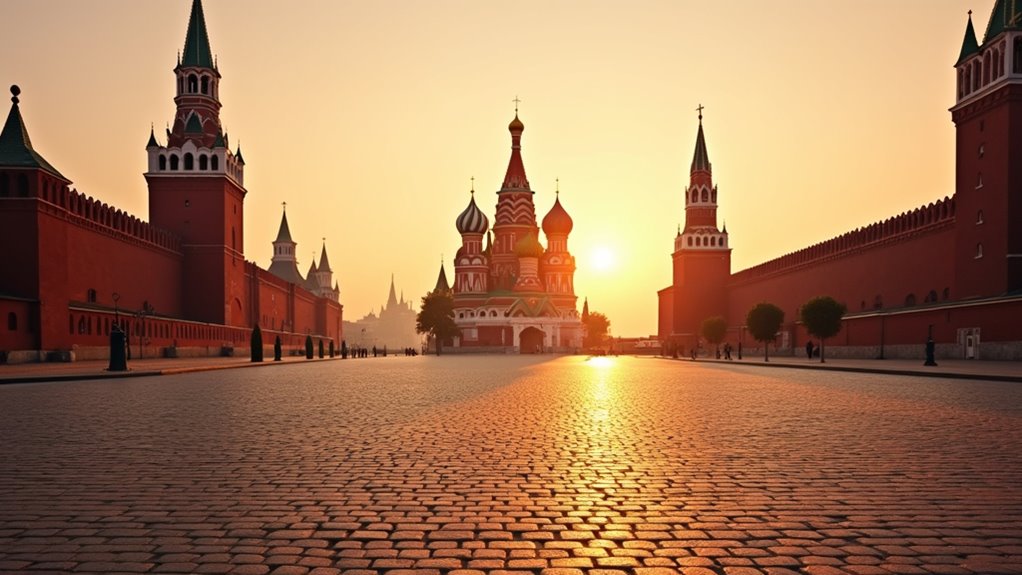
When Moscow’s winter sun finally breaks the horizon around 8:40 AM, you’ll witness Red Square transform from shadowy silence into golden grandeur—but only if you’re already there waiting. Arrive by 7:50 AM during civil twilight for the best experience.
You’ll have the vast cobblestone expanse practically to yourself, with Saint Basil’s Cathedral and the Kremlin walls creating dramatic silhouettes against the brightening sky.
December temperatures hover around -6°C to -10°C, so bundle up warmly. The low winter sun casts long shadows and bathes the historic facades in orange and pink hues—perfect for photography without crowds blocking your shots. Snow cover adds visual brightness and scenic appeal. With daylight lasting only 7 hours and 5 minutes on the winter solstice, every moment of this magical morning light becomes precious.
This free experience offers intimate appreciation of Russia’s most iconic landmark before tour groups arrive after 9:00 AM.
Take the Trans-Siberian Railway for at Least Three Days
After soaking up Moscow’s historic atmosphere, you’ll want to experience Russia’s vastness firsthand—and there’s no better way than boarding the legendary Trans-Siberian Railway.
Don’t rush the world’s longest passenger rail journey by staying aboard for the full week-long haul. Instead, book a three-day minimum trip with strategic stopovers to maximize your experience while keeping costs reasonable.
You’ll cross multiple time zones, witness incredible sunrises and sunsets, and watch Russia’s landscape transform from metropolitan areas to Siberian wilderness. This remarkable route spans eight time zones, connecting Moscow in the west to Vladivostok in the east over more than 9,000 kilometers.
The heated compartments keep you comfortable even when temperatures plummet to -25°C outside.
Choose the famous Rossiya train for reliable service, and you’ll cross major rivers, traverse 497 bridges, and experience an engineering marvel that’s operated since the early 1900s.
Explore Moscow’s Metro Stations Like Underground Palaces
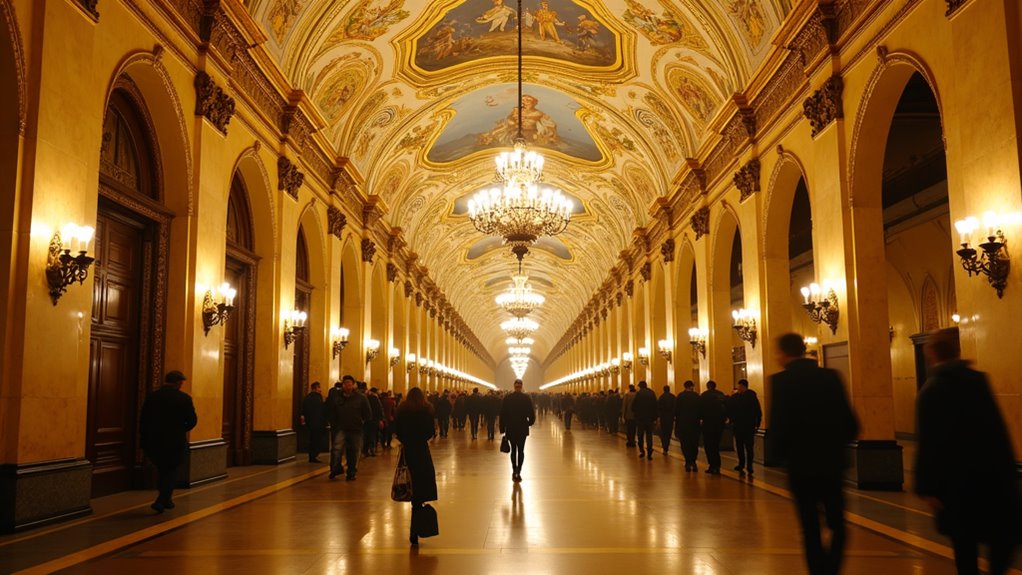
Where else can you step into palatial halls adorned with chandeliers, marble columns, and golden mosaics for the price of a single metro ticket? Moscow’s Metro transforms your daily commute into an art gallery experience. You’ll discover stations like underground ballrooms – Komsomolskaya’s golden ceilings rival royal palaces, while Mayakovskaya’s art deco design showcases futuristic aviation mosaics.
Don’t miss Ploshchad Revolyutsii’s bronze sculptures, where locals rub a dog’s nose for luck.
These “palaces for the people” were Stalin’s vision of Soviet grandeur, blending propaganda with genuine artistic mastery. At 84 meters deep, Park Pobedy offers military victory murals alongside impressive engineering. You’re experiencing living history – stations that doubled as bomb shelters while maintaining their cultural significance. With 300 stations spanning over 525 kilometers, this network ranks as the longest metro system in Europe outside China.
Visit the Hermitage Museum With a Skip-The-Line Guide
While Moscow’s metro stations offer palatial beauty at subway prices, St. Petersburg’s Hermitage Museum delivers world-class art that’d take eleven years to see completely. You’ll want to book skip-the-line tickets online with timed entry—trust me, those queues aren’t worth your vacation time. A guided tour maximizes your experience since traversing 3 million artifacts across six buildings can overwhelm even seasoned travelers.
Visit Wednesday or Friday mornings for lighter crowds, and avoid the White Nights season unless you enjoy shoulder-to-shoulder sightseeing. Winter offers the quietest experience with bonus savings on accommodation. The museum now welcomes 4.5 million visitors annually, reaching near-maximum capacity for its main complex.
Wear comfortable shoes—this place spans 719,480 square feet of palace corridors. The museum’s multimedia tools and QR codes help you explore independently, but guided tours provide deeper insights that transform overwhelming collections into unforgettable discoveries.
Experience Lake Baikal by Train and Ferry in Summer
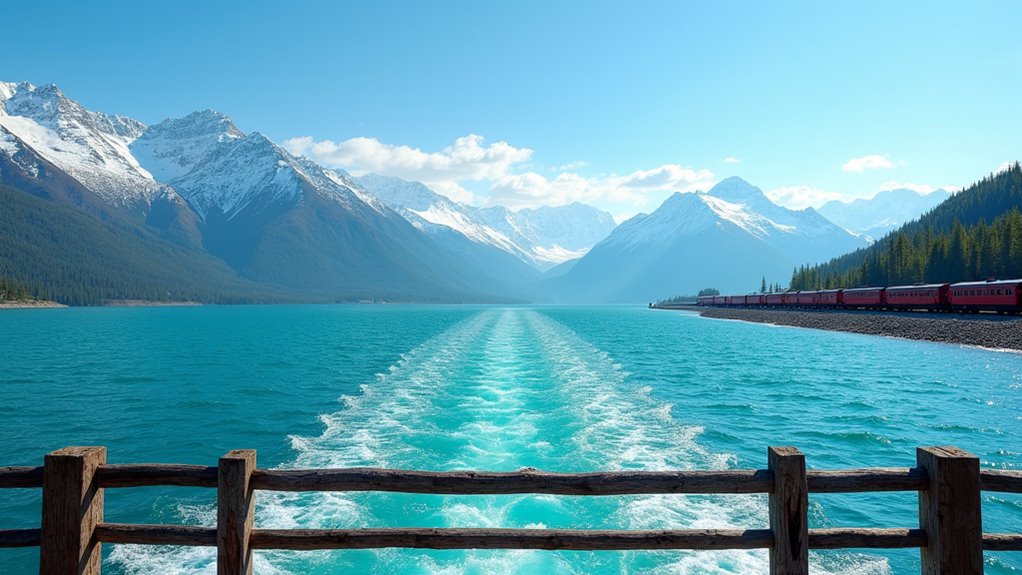
Lake Baikal’s pristine waters and surrounding taiga come alive during summer months, when the Circum-Baikal Railway offers one of Siberia’s most spectacular train journeys. You’ll travel at a leisurely 30 km/h from Slyudyanka to Port Baikal, allowing perfect photo opportunities of tunnels, bridges, and lakeshores.
The 11-hour excursion runs Wednesday through Sunday, combining train travel with a scenic 10-20 minute ferry crossing to Listvyanka.
Ferry tickets cost around 550 rubles one-way, connecting Irkutsk, Listvyanka, and other villages from 8 AM to 8 PM.
You can swim in Baikal’s cold waters at stops like Polovina station or hike Mount Chersky for panoramic views. The route showcases remarkable engineering achievements including 38 tunnels carved through the rocky shoreline during the railway’s construction in 1905.
Plan a full day starting from Irkutsk, with overnight accommodation in Listvyanka village.
Walk Through Catherine Palace’s Reconstructed Amber Room
The Amber Room at Catherine Palace stands as one of Russia’s most breathtaking reconstructions, where you’ll witness 24 years of painstaking craftsmanship that brought back the “Eighth Wonder of the World.” After Nazi forces looted the original room during WWII, master artisans spent from 1979 to 2003 recreating every amber panel using only black-and-white photographs and traditional 18th-century techniques they’d to rediscover.
Walking through this 96 square meter hall, you’ll see amber mosaics that required 74 specialists to complete. The room’s 450 kilograms of amber panels, mirror pilasters, and gilded decorations create an almost otherworldly glow. The golden panels are crafted from Baltic amber, fossilized resin from ancient Scandinavian trees that formed over 20 million years ago.
While palace admission isn’t cheap, experiencing this reconstructed masterpiece offers incredible value considering the extraordinary effort behind every translucent detail you’re seeing.
Catch the Northern Lights in Teriberka Village
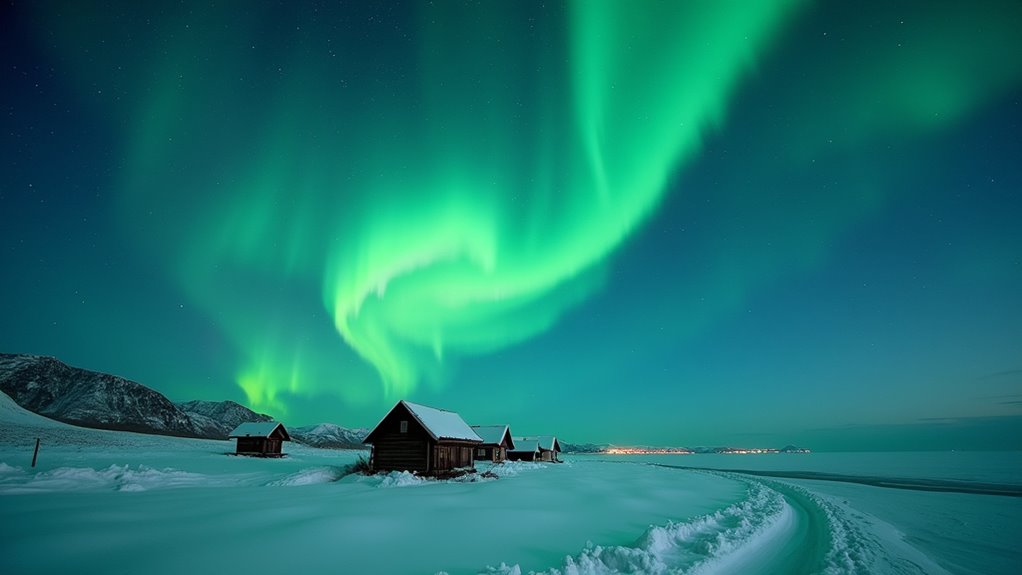
You’ll maximize your Aurora chances by visiting between mid-September and mid-April. Booking multiple nights is recommended since weather and solar activity can affect visibility.
Tours from Murmansk include transfers, meals featuring sea delicacies, and evening hunts for ideal viewing spots.
Pack warm clothes for temperatures 10-15°C below zero.
Local guides monitor forecasts and relocate groups using snowmobiles when needed, combining natural phenomena with cultural experiences at reindeer farms. Many visitors are drawn by the Chinese tradition that conceiving children under the Northern Lights brings good fortune.
Ride the Cable Cars Above Sochi’s Olympic Venues
When you’re exploring Sochi’s Olympic legacy, riding the cable cars offers one of the most spectacular and affordable ways to experience the venues that hosted the 2014 Winter Games. These tricable gondola lifts, manufactured by Doppelmayr, connect coastal Olympic Park with mountain venues in Krasnaya Polyana, cutting travel time to under 30 minutes.
You’ll ride in detachable cabins carrying 24-30 passengers, some featuring glass floors for breathtaking views. The system handles up to 6,000 passengers hourly, so you won’t wait long.
At 400 meters above ground with spans reaching 2,507 meters, you’ll get panoramic views of Olympic Park and surrounding mountains. What makes this system particularly unique is its capability to transport road vehicles alongside passengers, a special feature designed for the Olympic infrastructure.
The lifts are wheelchair accessible and continue operating year-round, making them perfect for budget-conscious travelers seeking unforgettable scenic transportation.
Discover Veliky Novgorod’s Medieval Kremlin Walls

Standing majestically on the banks of the Volkhov River, Veliky Novgorod’s medieval Kremlin walls offer one of Russia’s most accessible glimpses into authentic medieval architecture without the crowds you’ll find at Moscow’s Red Square.
You’ll walk along 1,487 meters of limestone walls dating back to 1044, with nine surviving towers that blend Italian Renaissance military design with traditional Russian techniques.
Don’t miss the Gothic Chamber of Facets from 1433 – Russia’s only civil Gothic building – and climb the distinctive Kokui Tower topped with its silver dome.
The 11th-century Cathedral of St. Sophia anchors this UNESCO World Heritage site perfectly. This cathedral stands as the oldest church building in Russia that remains fully preserved and still in use today.
Walking tours are budget-friendly and provide panoramic views while exploring walls ranging from 8-15 meters high, making this medieval fortress both affordable and unforgettable.
Hike Multi-Day Trails in Prielbrusye National Park
After exploring medieval walls, swap limestone ramparts for towering peaks in Prielbrusye National Park, where Europe’s highest mountain creates some of Russia’s most rewarding multi-day hiking adventures. You’ll find trails ranging from moderate 7.5-mile treks to challenging Mount Elbrus acclimatization routes that climb 1,200-1,650 feet through diverse terrain.
Start from villages like Terskol or Azau, where cable cars boost your initial elevation to 3,900 meters for just 50 roubles park admission. Popular multi-day routes include the scenic Mzi Lake trail and demanding Pastukhov Rocks ascent to 4,600 meters.
Plan week-long acclimatization between 2,500-4,500 meters to avoid altitude sickness. The park’s diverse ecosystem supports wildlife including bears and wolves that roam the pine and juniper forests below the tree line.
You’ll encounter glacial lakes, waterfalls like Devichy Kosy, and panoramic alpine views. Pack technical gear for icy sections and prepare for grade III climbing challenges on summit approaches.
Marvel at Kizhi Island’s Wooden Churches by Boat
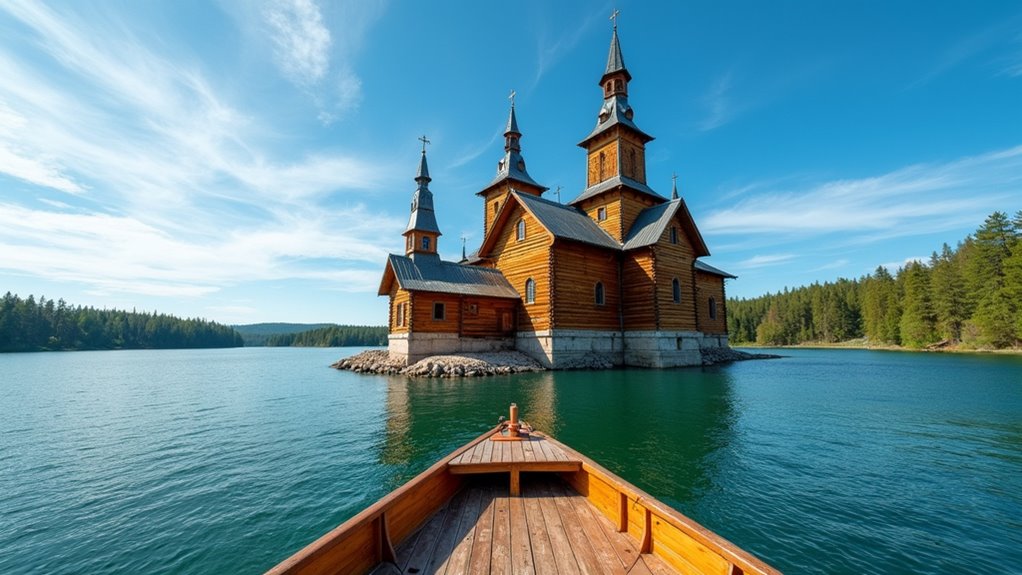
Why settle for ordinary church visits when you can approach Russia’s most extraordinary wooden masterpiece by boat across the shimmering waters of Lake Onega? You’ll witness the breathtaking Transfiguration Church rising 37 meters with its 22 domes, built entirely without nails using traditional Russian carpentry techniques.
The boat journey adds drama to your arrival at this UNESCO World Heritage site, where wooden churches appear silver under sunlight.
Visit during summer when weather conditions are ideal and heating isn’t needed in the churches. You’ll explore an open-air museum showcasing centuries-old wooden architecture, including the remarkable 14th-century Resurrection of Lazarus church. This island grew around the mid-16th century Spasskiy Church and served as a strategic defense post during turbulent times.
The boat trip offers guided insights into local craftsmanship and spiritual traditions, making this remote island accessible while preserving its fairy-tale atmosphere and historical significance.
Climb St. Isaac’s Cathedral Dome for City Views
Where else can you climb 200 worn stone steps and emerge to a breathtaking 360-degree view of St. Petersburg’s historic center? St. Isaac’s Cathedral’s colonnade delivers exactly that experience for just 300 rubles.
You’ll ascend two spiral staircases to reach the observation deck 43 meters above ground, positioned around the massive gilded dome. The cathedral’s impressive dome is coated with nearly 100 kg of gold, creating the brilliant golden surface that dominates St. Petersburg’s skyline.
The climb’s worth every step. From this vantage point, you’ll spot the Winter Palace, Palace Square, and the Neva River stretching toward Vasilievsky Island. You’re also getting an up-close look at the cathedral’s ornate architecture, including those impressive 14-meter granite columns weighing 67 tons each.
Wear comfortable shoes and enter through the separate colonnade entrance. It’s considered St. Petersburg’s best central viewing platform, making those stairs feel like a small price for such spectacular city panoramas.
Follow the Golden Ring Circuit by Car or Bus
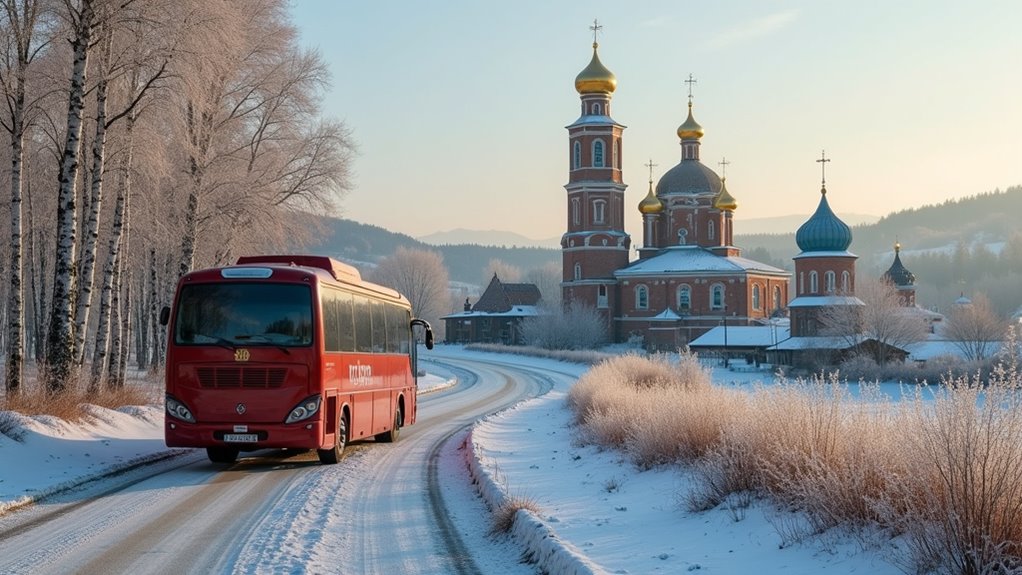
Since Moscow’s medieval neighbors hold Russia’s most treasured architectural gems, the Golden Ring circuit offers an unmatched journey through 700 kilometers of living history. You’ll visit stunning cities like Sergiev Posad, Suzdal, and Yaroslavl, each spaced 60-100 km apart for manageable day trips.
Renting a car gives you complete flexibility to explore hidden villages and stop for scenic Volga River photos, though rural roads can be rough.
Budget travelers should choose buses instead – they’re economical and connect major cities, plus you’ll interact with locals. However, bus schedules limit your freedom, and smaller towns require transfers.
Start with Sergiev Posad’s Trinity Lavra monastery, then cluster your visits: spend two days exploring UNESCO-protected Vladimir, Bogolyubovo, and Suzdal for maximum medieval architecture impact. This historic region was once called Zalesye, meaning “beyond the forest” from Kiev’s perspective.
Visit the Church of the Savior on Spilled Blood at Sunset
After exploring Russia’s medieval treasures along the Golden Ring, St. Petersburg’s Church of the Savior on Spilled Blood offers a completely different architectural experience. You’ll want to time your visit for sunset when the golden light illuminates the church’s colorful onion domes and red brick façade.
Built where Emperor Alexander II was assassinated in 1881, this memorial church stands out dramatically against St. Petersburg’s typical Baroque and Neoclassical buildings. Designed by Alfred Parland, the church deliberately embraces traditional Russian architecture in stark contrast to the Western influences that dominated the city.
Don’t miss the interior’s stunning mosaics covering 7,000 square meters—they’re among Europe’s largest collections. The exact assassination spot is marked by a special shrine with jasper columns.
Since it’s primarily a memorial rather than active parish church, you can focus on appreciating the intricate Russian Revival architecture and religious artwork without disrupting services.
The Sum Up
You’ll find Russia offers incredible value if you’re willing to venture beyond the typical tourist path. Book train tickets in advance, stay in hostels or guesthouses, and pack layers for unpredictable weather. Don’t miss free experiences like wandering metro stations or catching sunrise at Red Square. With some planning and flexibility, you’ll discover this vast country doesn’t have to break your budget while delivering memories that’ll last a lifetime.