
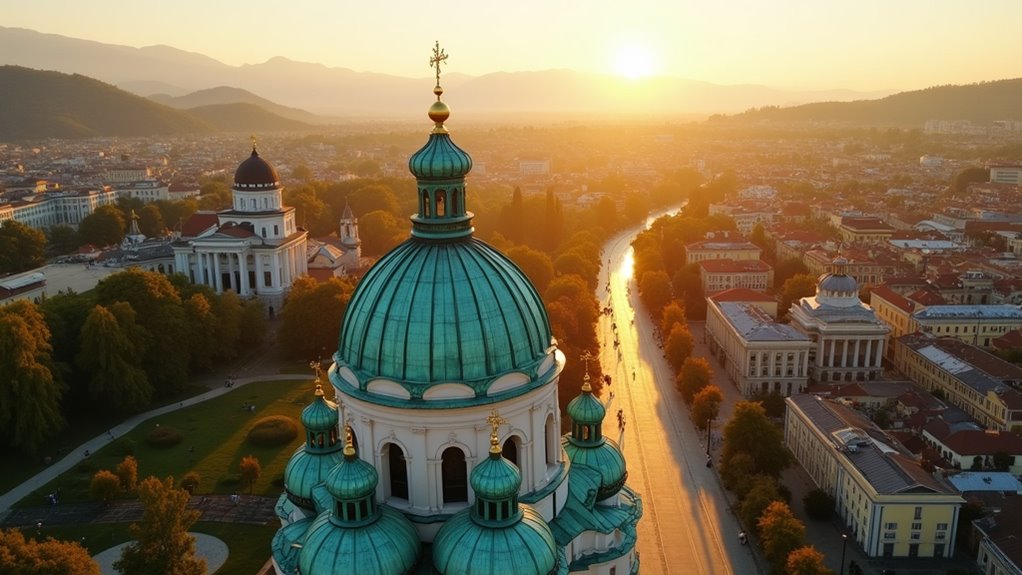
You’ll find Sofia surprisingly affordable compared to other European capitals, but knowing where to spend your time makes all the difference. While most visitors rush between the obvious tourist spots, they’re missing some of the city’s most rewarding experiences – from ancient Roman streets you can actually walk on to mountain trails that cost nothing but thirty minutes of your time. Here’s how to see Sofia like someone who’s done the research for you.
- Alexander Nevsky Cathedral – Bulgaria’s Golden-Domed Centerpiece
- Ancient Serdica Complex – Walking on Roman Streets Below Modern Sofia
- Boyana Church – UNESCO Frescoes Worth the Trip to the Suburbs
- Church of Saint George – Sofia’s Oldest Building Hidden in Plain Sight
- Vitosha Boulevard – Sofia’s Social Heart for Shopping and People-Watching
- Borisova Gradina – Where Locals Exercise, Relax, and Attend Concerts
- Ivan Vazov National Theatre – Evening Culture in Sofia’s Most Beautiful Building
- Lions’ Bridge and Central Market Hall – Historic Architecture Meets Local Food
- Vitosha Mountain – City Views and Fresh Air Just 30 Minutes Away
- Sofia’s Multi-Faith Triangle – Cathedral, Mosque, and Synagogue Within Walking Distance
- City Garden and the Chess Players – Sofia’s Living Room Near the Theater
- The Sum Up
Alexander Nevsky Cathedral – Bulgaria’s Golden-Domed Centerpiece
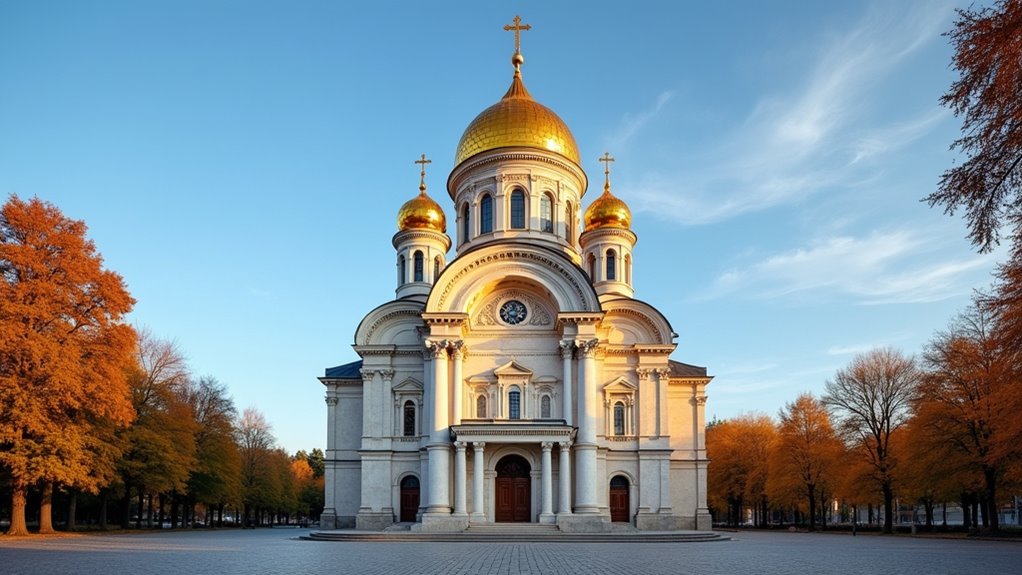
Where else can you find a cathedral that tells the story of an entire nation’s gratitude while showcasing some of Europe’s most stunning Byzantine architecture? Alexander Nevsky Cathedral stands as Bulgaria’s tribute to Russian soldiers who died liberating the country from Ottoman rule in 1877-1878.
You’ll be amazed by its massive scale—it’s the largest Eastern Orthodox cathedral on the Balkan Peninsula, stretching 72 meters long with a central dome reaching 50 meters high. The Neo-Byzantine style combines elaborate stonework with white stone and granite, creating an architectural masterpiece that took 30 years to complete.
Don’t miss the incredible interior frescoes by Bulgarian masters like Ivan Markvichka, plus Russian icons by Viktor Vasnetsov.
Head down to the crypt to see Bulgaria’s finest icon collection spanning five centuries.
The best part? Entry’s free, making this golden-domed masterpiece perfect for budget travelers seeking Sofia’s most iconic landmark.
Ancient Serdica Complex – Walking on Roman Streets Below Modern Sofia
Step beneath Sofia’s bustling streets and you’ll discover something extraordinary—ancient Roman roads where citizens of Serdica once walked nearly 2,000 years ago. The Ancient Serdica Complex spans two zones beneath Nezavisimost Square and Knyaginya Maria Luiza Boulevard, showcasing 6000 m² of remarkably preserved ruins.
You’ll walk along the original decumanus maximus, explore Roman baths, and admire stunning mosaics like the Felix mosaic from elite residences. The site includes early Christian basilicas and the Episcopal basilica where the Council of Serdica convened in 343 AD.
Access is free and convenient—enter directly from Serdika Metro Station. English signage helps you navigate eight Roman streets, residential quarters, and public spaces. The complex also hosts cultural events such as concerts, festivals, and exhibitions throughout the year. It’s an incredible way to experience Sofia’s 2,000-year history without leaving the city center.
Boyana Church – UNESCO Frescoes Worth the Trip to the Suburbs
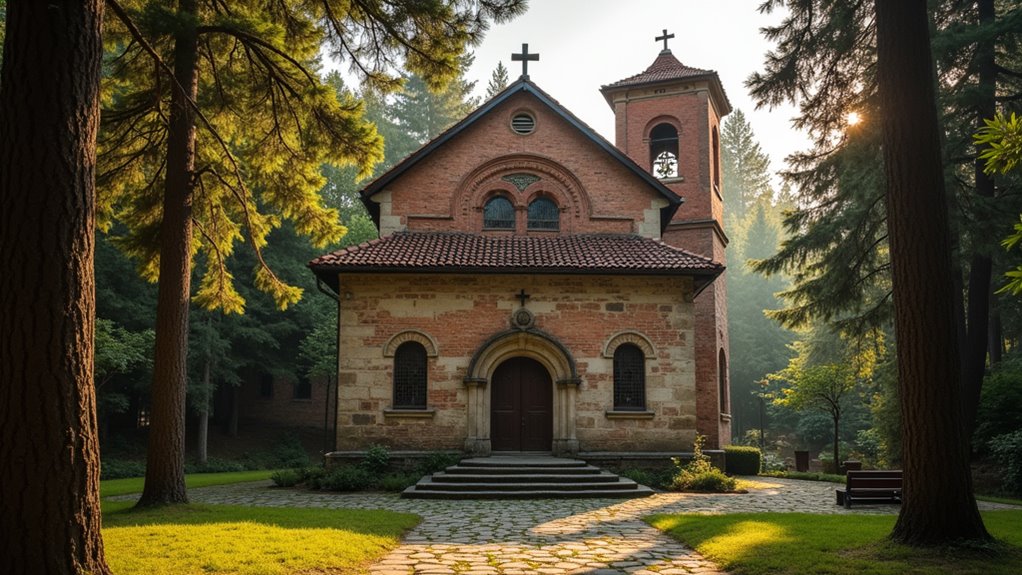
Although it requires a 20-minute trip to Sofia’s Boyana suburb, this small medieval church houses some of Europe’s most extraordinary frescoes—so remarkable they’ve earned UNESCO World Heritage status since 1979.
You’ll discover three connected buildings spanning different centuries, but the star attraction is the 1259 fresco cycle. These paintings showcase over 240 human figures across 89 scenes with unprecedented psychological depth and realism for medieval art. The emotional expressiveness predates Renaissance techniques by centuries.
Don’t miss the portraits of Bulgarian royalty, including Sebastokrator Kaloyan and Tsar Constantine Tikh, alongside religious scenes featuring Christ Pantocrator and the Holy Virgin. The artists Vasiliy and Dimitar created vivid compositions with advanced color techniques that remain remarkably preserved.
Plan for a brief but intense cultural experience, as visits are limited to 8 people at a time with just 10 minutes inside to protect the delicate artwork.
It’s worth the suburban detour.
Church of Saint George – Sofia’s Oldest Building Hidden in Plain Sight
Right in Sofia’s bustling city center, you’ll find the Church of Saint George tucked below street level between Hotel Balkan and the Presidency building—and you’d easily walk past Sofia’s oldest structure without noticing it.
This 4th-century red-brick rotunda started as Roman baths before becoming a Christian church. You’ll discover five layers of frescoes spanning centuries, including 22 towering prophets crowning the 13.7-meter dome and medieval Bulgarian angels.
The Ottomans converted it into a mosque, painting over Christian imagery with Islamic designs. Today’s restoration reveals the original artwork beneath.
Entry’s free, making this ancient gem perfect for budget travelers wanting to experience Sofia’s layered history without spending money. The church once housed relics of John of Rila, Bulgaria’s patron saint, believed to have miraculous healing powers.
Vitosha Boulevard – Sofia’s Social Heart for Shopping and People-Watching
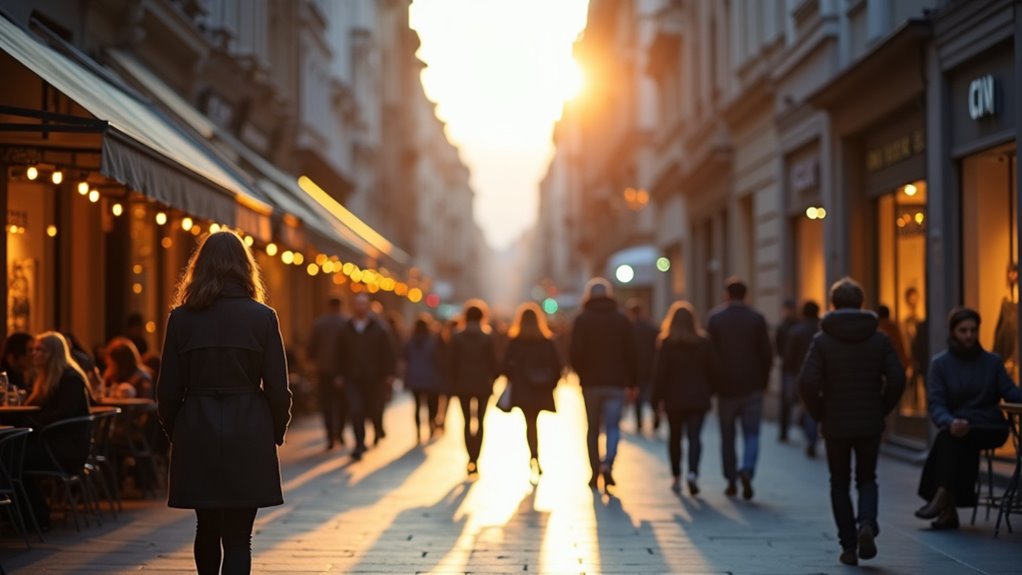
Just a five-minute walk from the Church of Saint George, you’ll hit Vitosha Boulevard—Sofia’s bustling pedestrian strip that doubles as the city’s social headquarters and shopping paradise. This car-free zone stretches from the National Palace of Culture to the Sheraton Hotel, packed with nearly 200 shops ranging from international brands like H&M and Zara to local boutiques.
You’ll find genuine retail stores rather than tourist traps, though it’s ranked as the world’s 59th most expensive shopping street. Grab coffee at outdoor cafes perfect for people-watching, or explore the diverse restaurants serving everything from Bulgarian specialties to international cuisine. Many shops stay open late, and free Wi-Fi keeps you connected.
The street’s distinctive colorful cobblestones make the pedestrian zone instantly recognizable as you stroll through Sofia’s premier shopping district.
The mountain views on clear days are a bonus.
Borisova Gradina – Where Locals Exercise, Relax, and Attend Concerts
When you need a break from Sofia’s shopping scene, head to Borisova Gradina—the city’s green lung where locals jog, families picnic, and summer concerts draw crowds under the stars. This 350-hectare park offers everything from quick 0.3-mile walks to longer 1.9-mile circuits, plus football fields, tennis courts, and cycling tracks.
You’ll find plenty of free entertainment here, especially during summer festivals and open-air performances. The tree-lined paths lead to a peaceful lake with turtles, scattered benches, and affordable cafes.
Don’t miss landmarks like the 106-meter TV tower and Soviet Monument. Whether you’re seeking exercise, relaxation, or cultural events, this centrally located park delivers authentic Sofia experiences without spending much money. Future plans include exciting additions like a botanical garden and educational center that will further enhance the park’s appeal for visitors.
Ivan Vazov National Theatre – Evening Culture in Sofia’s Most Beautiful Building
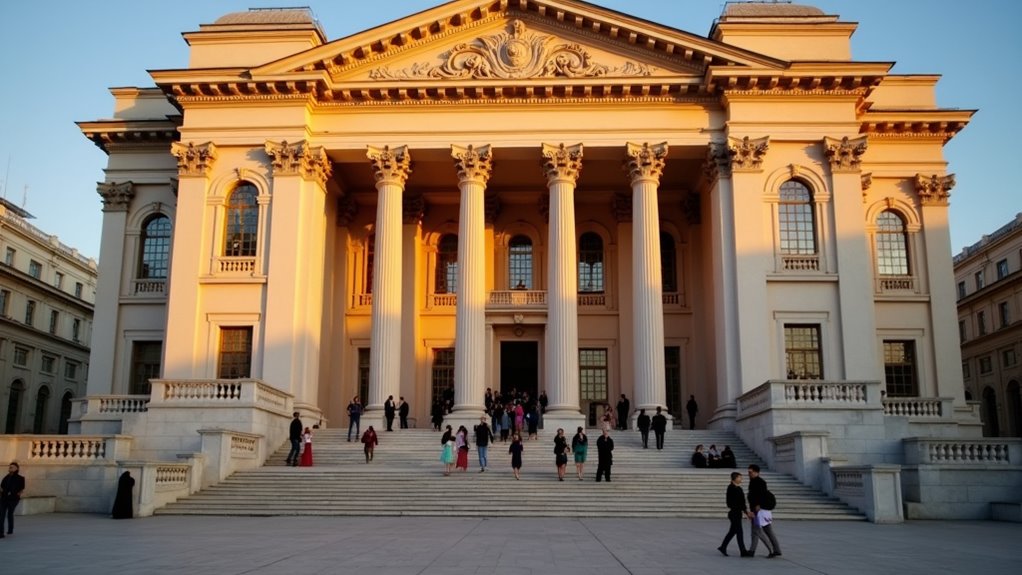
After the sun sets over Sofia, the Ivan Vazov National Theatre transforms into the city’s most enchanting cultural destination. You’ll find Bulgaria’s oldest and most prestigious theatre facing City Garden, where neoclassical architecture and baroque details create a majestic evening backdrop. The building’s mythological sculptures and grandiose columns look spectacular under nighttime illumination.
Inside, you’ll experience original silk wallpaper, marble lobbies, and gilded stage surrounds in the 750-seat main auditorium. Designed by renowned Viennese architects Fellner and Helmer, this 1907 masterpiece has survived fires, bombings, and reconstructions while maintaining its historic grandeur. The theatre opened with Dobri Christov’s Festive Ouverture alongside works by prominent Bulgarian writers.
Evening performances feature both Bulgarian classics and international works. The theatre’s central location makes it perfect for combining with a City Garden stroll, offering an affordable cultural experience that defines Sofia’s intellectual heritage.
Lions’ Bridge and Central Market Hall – Historic Architecture Meets Local Food
From the refined cultural atmosphere of the National Theatre, you’ll discover Sofia‘s more authentic side at Lions’ Bridge, where four majestic bronze lions have guarded this historic crossing since 1891. Designed by Czech architect Václav Prošek, this Neo-Renaissance bridge spans the Vladayska River and connects you directly to Sofia’s bustling food scene.
The nearby Central Market Hall offers budget-friendly local produce, fresh meats, cheeses, and traditional Bulgarian specialties. You’ll find the area’s outdoor market, operating since 1878, surrounded by Turkish bakeries and kebab shops that reflect Sofia’s Ottoman heritage. Walking beneath the bridge, you can explore the excavated Roman bridge remains that date back to the 2nd century, when this site was part of the ancient Via Diagonalis route linking Constantinople with Central Europe.
The Lions’ Bridge Metro Station makes access easy, and you can explore on foot through the pedestrian zone while soaking up early 20th-century architecture and authentic market atmosphere.
Vitosha Mountain – City Views and Fresh Air Just 30 Minutes Away
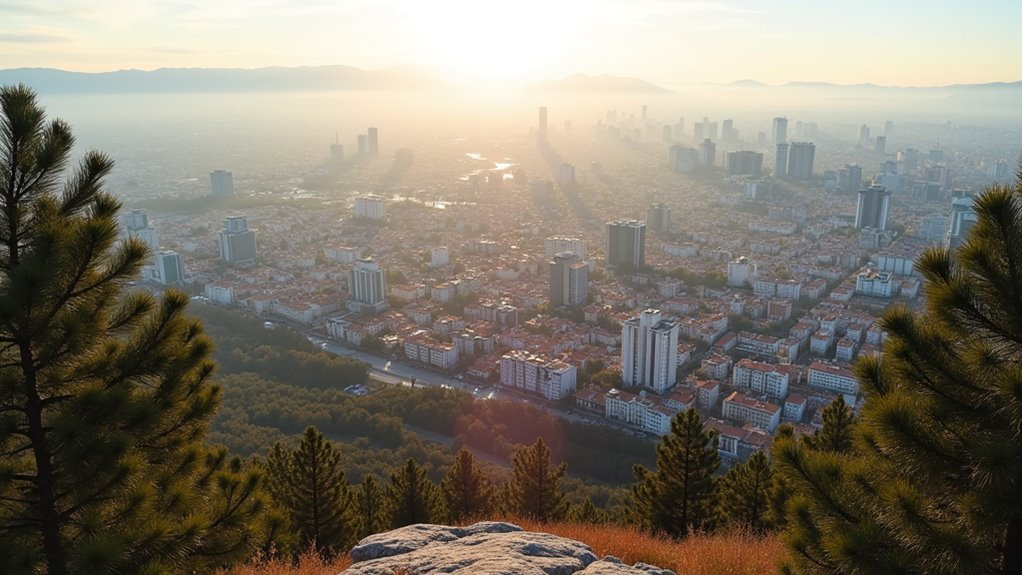
While Sofia’s historic center captivates with its architecture and markets, you’ll find an entirely different perspective of the Bulgarian capital awaits just 30 minutes away on Vitosha Mountain.
Catch bus line 61 from behind the National Palace of Culture – it runs every 10 minutes to Golden Bridges trailhead. Weekend summer buses from LIDL offer free rides with early morning departures.
The mountain’s well-marked trails suit various fitness levels. You can hike to Cherni Vrah Peak (2290m) in 1.5 hours from Aleko Hut for panoramic city views, or tackle the easier Aleko Loop through forests and grasslands. Don’t miss the Golden Bridges, the largest stone river formation along Vladaya River valley.
Over 20 mountain huts serve affordable meals like soups and grilled meats. Winter snowshoeing’s popular too, though trails get slippery when wet.
Sofia’s Multi-Faith Triangle – Cathedral, Mosque, and Synagogue Within Walking Distance
Back in Sofia’s historic center, you’ll discover one of Europe’s most remarkable displays of religious tolerance packed into just a few city blocks. The Multi-Faith Triangle near Serdika metro station brings together three distinct religious communities within easy walking distance.
Start at the 15th-century Sveta Petka Church, partially underground from Ottoman times. Then visit Banya Bashi Mosque, built in 1576 and Sofia’s only active mosque since Ottoman rule. Its honey-colored stone and terracotta brick create stunning architecture. The mosque’s calming atmosphere and simple interior design provide a peaceful respite from the bustling city streets.
Finally, explore Sofia Synagogue, one of Europe’s largest, built in 1908 with its distinctive black dome. The synagogue doubles as a museum chronicling Bulgarian Jewish history, including WWII rescue stories.
You’ll easily cover all three sites on foot in under two hours, experiencing centuries of peaceful coexistence.
City Garden and the Chess Players – Sofia’s Living Room Near the Theater
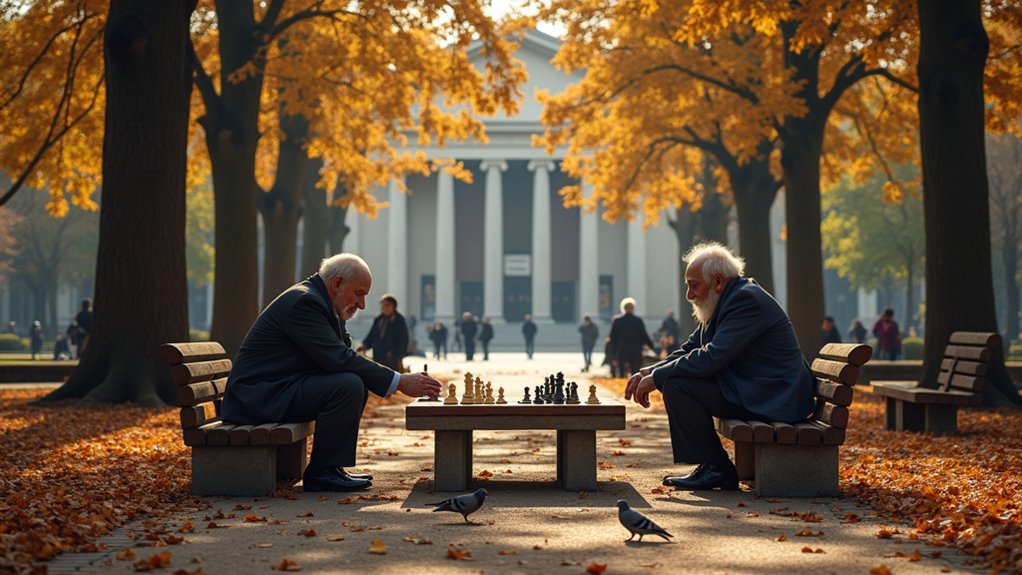
Just steps from the National Theatre, you’ll find Sofia’s beloved “living room” – the City Garden, where locals have gathered since 1878. This central green space sits perfectly between major cultural landmarks like the National Gallery and Bulgaria Hall, making it your ideal rest stop while exploring downtown.
The garden’s real charm lies with its year-round chess players who’ve claimed tables near the theatre. You’ll spot both amateurs and skilled players deep in strategic battles, creating an atmosphere that blends leisure with intellectual energy.
Don’t miss the iconic fountain with its bronze ballerina statue – it’s a popular summer gathering spot. Look for the charming Art Nouveau kiosk that sells foreign newspapers and magazines, a distinctive morning feature that adds to the garden’s European café culture atmosphere.
Grab coffee from surrounding cafes and settle in for some people-watching in Sofia’s most accessible urban retreat.
The Sum Up
You don’t need deep pockets to fall in love with Sofia. Most of these spots won’t cost you anything beyond metro fare, and you’ll cover serious ground on foot. Pack comfortable shoes, grab a day pass for public transport, and you’re set. Whether you’ve got two days or two weeks, this mix of history, culture, and mountain air delivers way more than you’d expect from one of Europe’s most affordable capitals.