
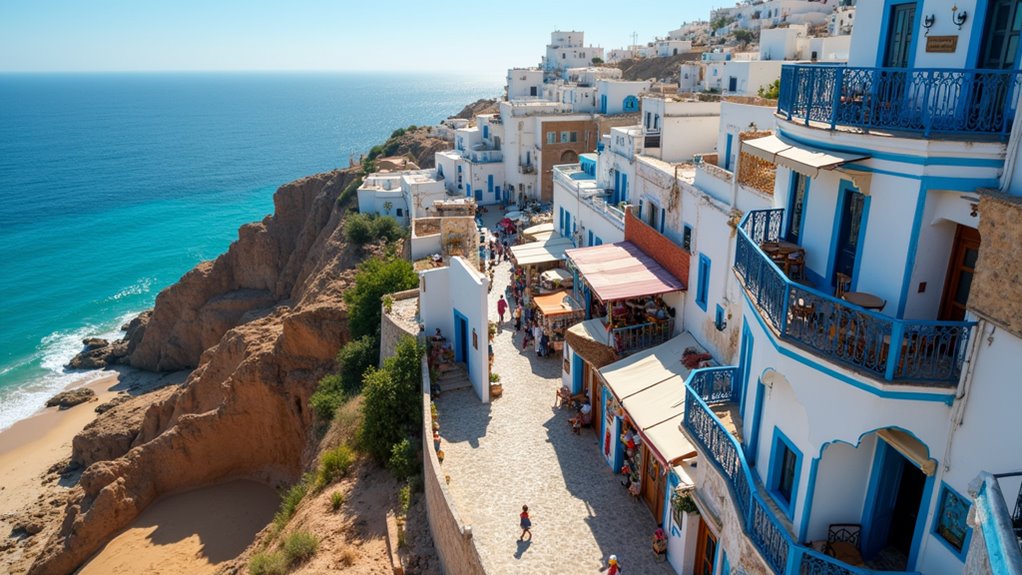
You’ll find Tunis offers incredible experiences without breaking your budget. From wandering ancient medina streets where locals still haggle over spices to exploring world-class Roman mosaics for just a few dinars, Tunisia’s capital delivers authentic adventures at fraction of European costs. Whether you’re drawn to crumbling Carthaginian ruins overlooking the Mediterranean or hidden Ottoman palaces tucked away in narrow alleys, this North African gem rewards curious travelers who know where to look.
- Wander Through the Ancient Medina’s Maze of Souks and Mosques
- Marvel at the World’s Best Roman Mosaics at Bardo Museum
- Stroll Down Avenue Habib Bourguiba for Coffee and Colonial Architecture
- Hunt for Treasures in the Souq Des Chechias
- Explore the Ruins of Ancient Carthage by the Sea
- Sip Mint Tea in Picture-Perfect Sidi Bou Said
- Visit the Zaytouna Mosque and Its Towering Minaret
- Browse Fresh Spices and Produce at the Central Market
- Discover Ottoman Palaces Hidden in the Kasbah
- Climb Byrsa Hill for Panoramic Views of the Mediterranean
- The Sum Up
Wander Through the Ancient Medina’s Maze of Souks and Mosques
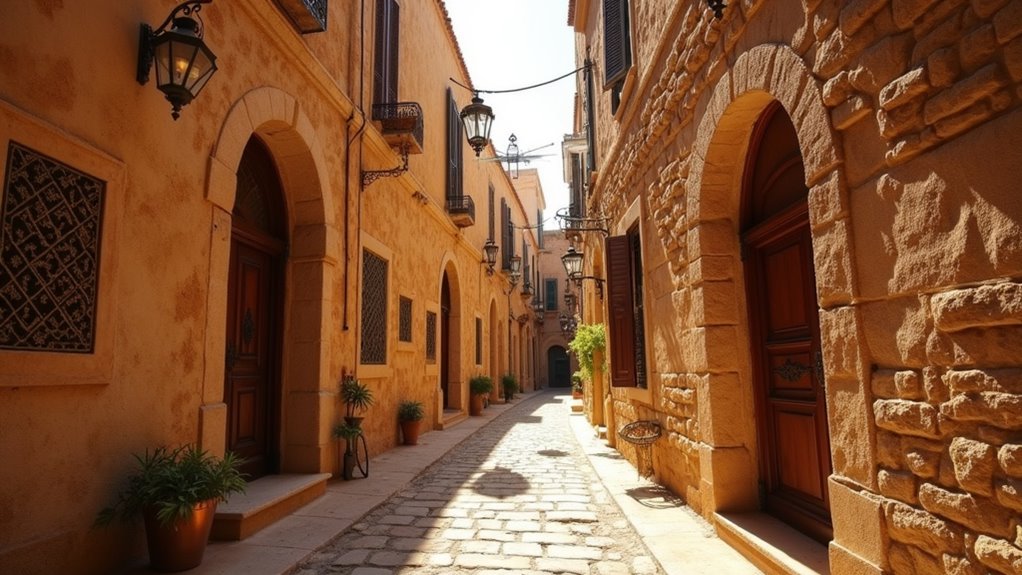
When you step into Tunis’s ancient Medina, you’ll find yourself steering one of North Africa’s oldest Arab-Muslim cities, where narrow winding streets have buzzed with life since 698 AD. You’ll discover over 700 monuments as you navigate the labyrinthine alleys that form this UNESCO World Heritage site.
Start at the Ez-Zitouna Mosque, the Medina’s spiritual heart, then explore the surrounding souks organized by craft. You’ll find textiles, pottery, leather goods, and spices in bustling markets where artisans still use centuries-old techniques.
Don’t miss the metalwork and traditional workshops tucked into the maze. The architecture cleverly adapts to local conditions, with narrow streets that stay cool during scorching summers and retain warmth through chilly winters.
The narrow lanes connect residential quarters with commercial areas, creating an authentic living marketplace. Budget-friendly shopping awaits as you hunt for handcrafted goods while experiencing genuine cultural continuity in this remarkable urban treasure.
Marvel at the World’s Best Roman Mosaics at Bardo Museum
After exploring the bustling souks and historic mosques, you’ll want to discover Tunisia’s incredible Roman heritage at the Bardo Museum. It is home to the world’s finest collection of ancient mosaics.
You’ll marvel at floor-to-ceiling masterpieces dating from the 2nd century BC to 7th century AD, excavated from legendary sites like Carthage and Dougga.
Don’t miss the stunning Virgil Mosaic depicting the poet with muses, or the massive Triumph of Neptune spanning over 100 square meters. These intricate artworks showcase mythological scenes, daily Roman life, and early Christian motifs using materials ranging from marble to gold leaf.
The museum’s 19th-century palace setting adds atmospheric charm while you explore Tunisia’s Roman past through these remarkably preserved treasures. Enhance your visit with the museum’s digital guide, available in English, French, and Arabic on a free smartphone you can borrow at the entrance.
Stroll Down Avenue Habib Bourguiba for Coffee and Colonial Architecture
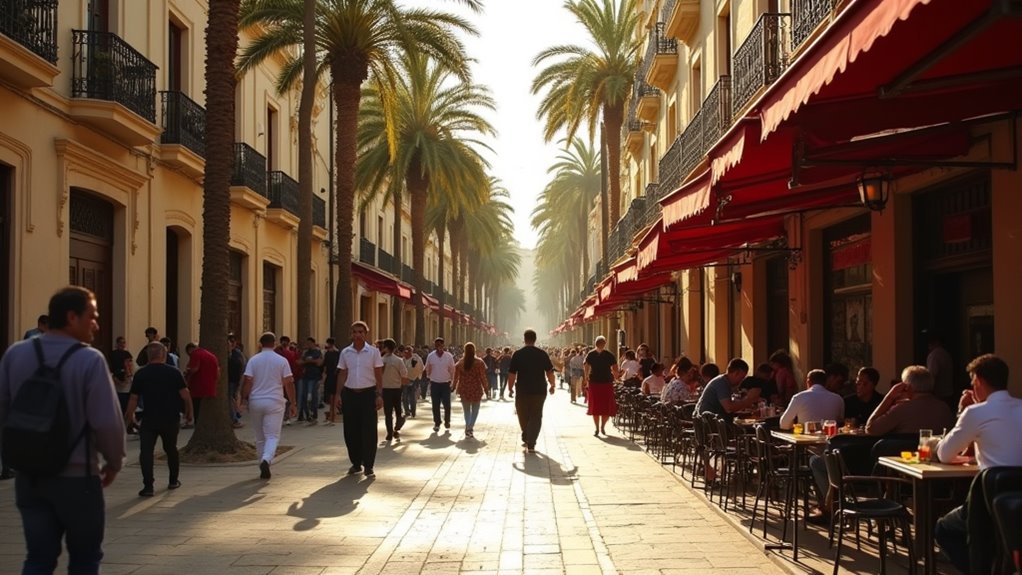
Once you’ve soaked up ancient Roman artistry, head to Avenue Habib Bourguiba—Tunis’s answer to the Champs-Élysées—where you can sip affordable coffee while admiring French colonial architecture.
This tree-lined boulevard connects the old medina with the modern city center, making it perfect for exploration on foot. The avenue spans an impressive 60 meters wide, creating a grand promenade that enhances the leisurely walking experience.
You’ll find sidewalk cafés lining both sides of the street, serving inexpensive mint tea and coffee—ideal for people-watching and soaking up the atmosphere.
The colonial-era buildings showcase beautiful Art Nouveau and eclectic architectural styles that tell Tunisia’s complex history.
Don’t miss the stunning Cathedral of St. Vincent de Paul and the ornate Théâtre municipal de Tunis with its sculpted façade.
The central roundabout at Place de l’Indépendance offers the best vantage point for taking in the boulevard’s grandeur.
Hunt for Treasures in the Souq Des Chechias
From the colonial elegance of Avenue Habib Bourguiba, make your way into the heart of the UNESCO-listed Medina to explore Souq des Chechias, where you’ll discover one of Tunisia’s most unique shopping experiences.
This historic souq specializes in chechias—the iconic red felt hats that’ve been crafted here since the 17th century. You’ll find these traditional wool caps ranging from 10 to 50 TND, depending on quality and craftsmanship.
Navigate the narrow, vaulted passageways near Zitouna Mosque, where artisans still practice this ancient craft. The souq forms part of the diverse architectural heritage that reflects influences from Andalusia, Oriental, Roman, and Byzantine traditions. Don’t hesitate to bargain for the best prices.
Visit during weekday mornings for fewer crowds, wear comfortable shoes for the cobblestones, and bring small denominations for easy transactions.
Explore the Ruins of Ancient Carthage by the Sea
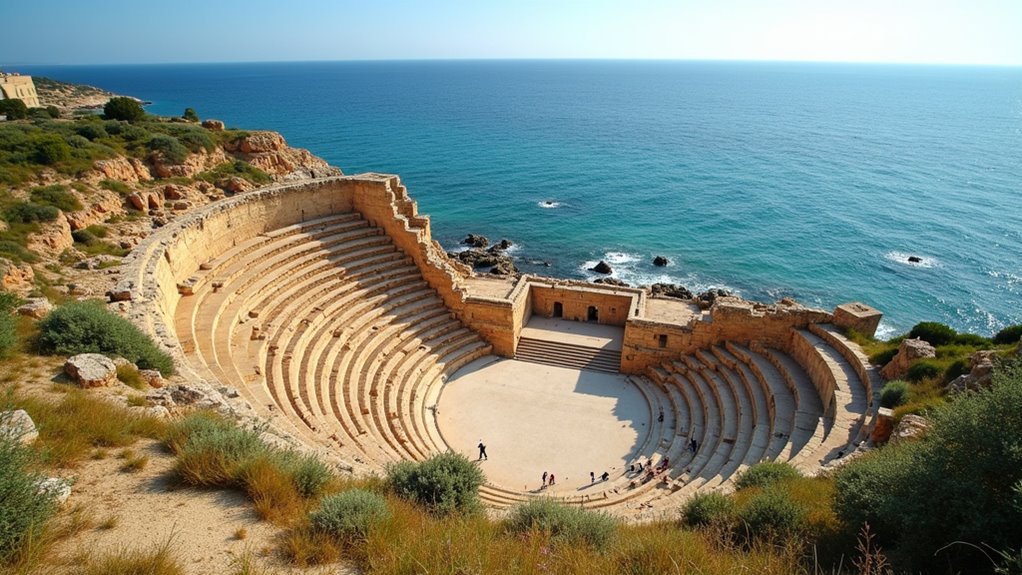
Just 20 kilometers northeast of Tunis, you’ll discover one of the Mediterranean’s most legendary archaeological sites where ancient Carthage once dominated trade routes and challenged Rome’s empire. You can explore massive Roman ruins including the Antonine Baths—the largest outside Rome—plus remnants of gladiatorial amphitheaters and ancient Punic ports that showcase the city’s naval power.
Don’t miss climbing Byrsa Hill where temples to Roman gods once stood, offering panoramic sea views. The UNESCO World Heritage site lets you walk among aqueduct remains and examine over 20,000 burial urns in the ancient necropolis. The site also features the reconstructed Roman Theatre that once seated 5,000 spectators and continues to host annual festivals today.
With affordable public transport connections from Tunis, you’ll experience layers of Punic, Roman, and Byzantine history while enjoying stunning Mediterranean coastline views.
Sip Mint Tea in Picture-Perfect Sidi Bou Said
After exploring ancient ruins, you’ll want to unwind in one of Tunisia’s most photogenic villages. Sidi Bou Said’s blue-and-white buildings perch dramatically on cliffs overlooking the Mediterranean, creating Instagram-worthy backdrops for your mint tea experience.
Take the TGM light rail from Tunis (budget-friendly at under 2 TND) to reach this hilltop gem.
Head straight to Café des Nattes or smaller terraced cafés along Rue Sidi Bou Said for authentic mint tea served in traditional glasses. Expect to pay 5-15 TND depending on your view quality.
Time your visit for late afternoon to catch golden hour over the sea. The strong, sweet tea paired with panoramic Mediterranean views creates the perfect respite from sightseeing. Don’t miss the village’s historic lighthouse built in 1840, which stands as Tunisia’s first lighthouse and adds to the landscape’s charm from its hilltop position.
Choose upper terrace seating for unobstructed vistas of Tunisia’s coastline.
Visit the Zaytouna Mosque and Its Towering Minaret
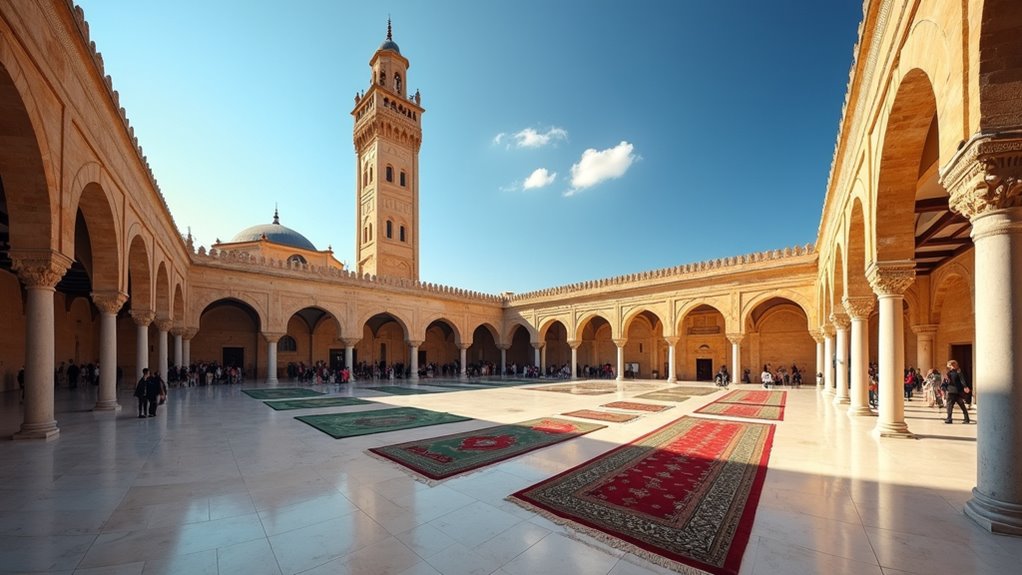
While many travelers rush past without a second glance, the Zaytouna Mosque deserves a spot at the top of your Tunis itinerary. Built in 732 CE, this isn’t just any mosque—it’s where Tunis itself was born and one of Africa’s oldest Islamic sites.
You’ll be amazed by the massive prayer hall spanning 5,000 square meters, supported by 160 ancient Roman and Byzantine columns salvaged from Carthage ruins.
The 43-meter minaret, rebuilt in 1894, offers stunning views of the medina’s winding streets.
Don’t miss the intricate Qubbat al-Bahu dome with its ten arched windows and detailed stucco inscriptions.
The spacious courtyard features nine entrances and an old sundial that once helped determine prayer times. The mosque also housed one of the world’s earliest Islamic universities, educating scholars for over a millennium and producing notable figures who shaped Islamic scholarship across North Africa.
Best of all? Entry won’t break your budget.
Browse Fresh Spices and Produce at the Central Market
Where can you find the most authentic taste of Tunis without spending a fortune? Head to Central Market on Rue de Allemagne, where you’ll discover a sensory wonderland of fresh spices, produce, and local specialties. This 19th-century covered market blends Art Deco and Arab architecture beautifully.
Visit weekday mornings for the freshest selection and fewer crowds. You’ll find fruits and vegetables around the perimeter, while meat, seafood, and fish occupy the central halls. The market operates daily from 08:00 AM to 04:00 PM, excluding public holidays. Don’t miss the spice stalls – vendors often share stories about their products and local food culture.
Bring cash and small bills for easy transactions. Most items cost $1-3 per kilo, making it budget-friendly. Wear comfortable shoes and carry a light bag for browsing the bustling aisles.
Discover Ottoman Palaces Hidden in the Kasbah
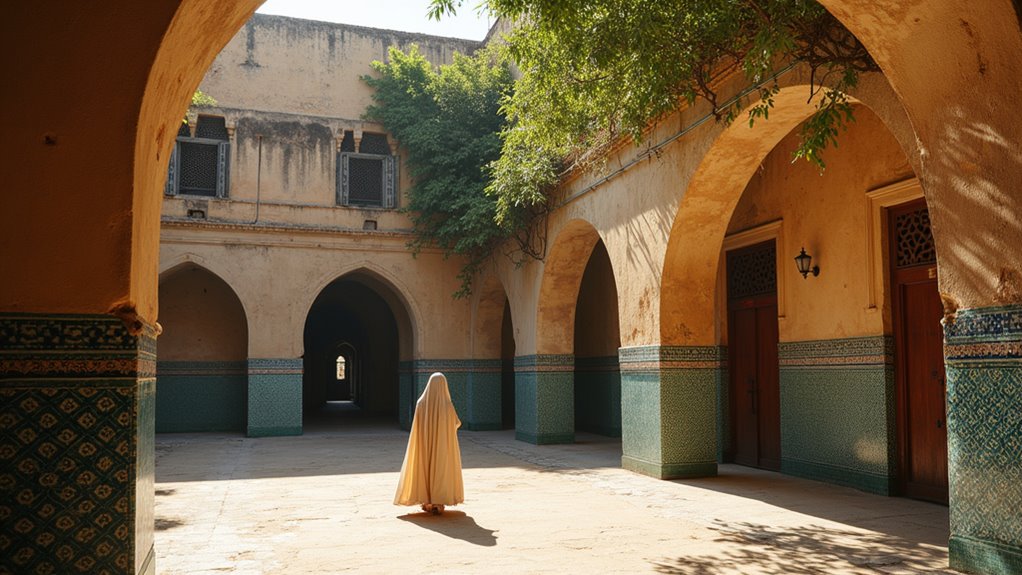
Beyond the bustling souks lies the Kasbah district, where Ottoman palaces and fortifications reveal Tunisia’s imperial past without the hefty entrance fees of major tourist sites.
You’ll find Dar Hussein Palace, originally called Bani Khurasan Palace, which now houses the National Institute of Arts and Heritage. Don’t miss the Kasbah Mosque with its distinctive rounded minaret—a stark contrast to typical North African square towers.
The mosque’s rectangular prayer hall features a stunning muqarnas dome over the mihrab, while its stone minbar replaced the original wooden version in 1584. For those seeking adventure beyond the capital, consider the journey to Kef’s Ottoman fortress, perched at 735 meters on Deyr Mountain near the Algerian border, where golden-hued masonry and centuries-old cannons guard panoramic views. These sites offer panoramic views and showcase the unique architectural blend of Turkish and local Maghrebi influences that defined Ottoman rule from 1574 until the late nineteenth century.
Climb Byrsa Hill for Panoramic Views of the Mediterranean
As you leave the Kasbah’s winding streets behind, a short journey north brings you to Byrsa Hill—ancient Carthage’s commanding citadel that rises 55 meters above the Gulf of Tunis.
You’ll discover sweeping Mediterranean views that stretch across the coastline and modern Tunis below. This UNESCO World Heritage site offers more than just panoramic vistas; you can explore ruins spanning Punic, Roman, and Arab periods for free around the grounds.
The Carthage National Museum houses fascinating artifacts, while the former St. Louis Cathedral (now Acropolium) showcases striking Byzantine-Moorish architecture. The site includes well-preserved residential street grids that reveal how ancient Carthaginians organized their daily lives.
Don’t miss the ancient fortified walls that once protected Queen Dido’s legendary stronghold. It’s perfect for budget-friendly sightseeing and photography.
The Sum Up
You’ll find Tunis offers incredible value for budget travelers. Most historic sites cost just a few dinars, and you can easily explore the Medina and souks for free. Don’t miss haggling at local markets – you’ll score amazing deals on spices, crafts, and textiles. Pack comfortable walking shoes since you’ll cover lots of ground on foot. With affordable street food and budget-friendly attractions, Tunis delivers an authentic North African experience without breaking the bank.