
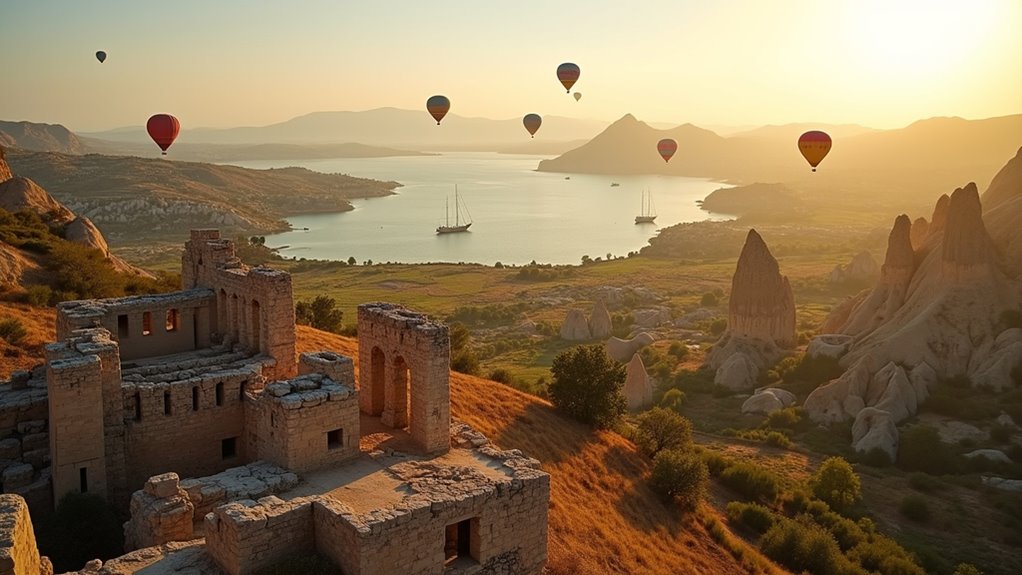
You’re probably wondering if Turkey’s worth your travel budget – and the answer’s a resounding yes. This country bridges Europe and Asia, offering everything from ancient ruins to surreal landscapes without breaking the bank. Whether you’re drawn to Istanbul’s Byzantine treasures, Cappadocia’s otherworldly terrain, or Mediterranean beaches, Turkey delivers experiences that cost a fraction of what you’d pay elsewhere. Here’s how to make the most of your Turkish adventure with fourteen unforgettable activities.
- Explore Istanbul’s Historic Triangle: Hagia Sophia, Blue Mosque, and Topkapi Palace
- Float Over Cappadocia in a Hot Air Balloon at Sunrise
- Sleep in a Cave Hotel in Göreme
- Walk Through Ancient Ephesus and Its Roman Ruins
- Soak in Pamukkale’s Thermal Pools and White Terraces
- Haggle Through Istanbul’s Grand Bazaar and Spice Bazaar
- Experience a Traditional Turkish Bath (Hammam)
- Discover Göbekli Tepe: The World’s Oldest Temple
- Explore Cappadocia’s Underground Cities
- Relax on Antalya’s Mediterranean Beaches and Explore Kaleiçi
- Visit Mount Nemrut for Sunrise Among Ancient Stone Heads
- Taste Authentic Turkish Cuisine in Gaziantep
- Hike the Lycian Way Along Turkey’s Turquoise Coast
- Explore the Fairy-Tale Village of Safranbolu
- The Sum Up
Explore Istanbul’s Historic Triangle: Hagia Sophia, Blue Mosque, and Topkapi Palace
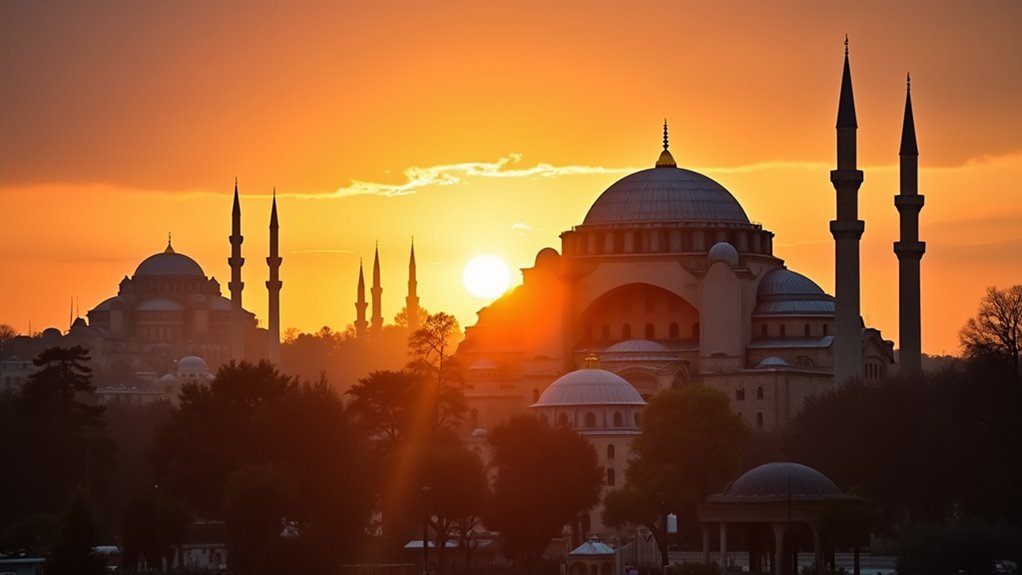
When you step into Istanbul’s historic heart, you’ll find yourself surrounded by three architectural masterpieces that’ve shaped the city’s skyline for centuries. Start with Hagia Sophia, where you’ll witness the stunning 107-foot dome that seems to float above you. This former cathedral-turned-mosque showcases incredible Byzantine mosaics alongside Islamic calligraphy. As Turkey’s most popular tourist destination, it continues to draw millions of visitors who come to experience its remarkable thousand-year history.
Next, visit the Blue Mosque with its six distinctive minarets and over 20,000 hand-painted Iznik tiles creating mesmerizing blue patterns. Remember to dress modestly and check prayer times before entering.
End at Topkapi Palace, the former Ottoman imperial residence offering breathtaking Bosphorus views. You’ll explore multiple courtyards, see imperial treasures, and discover 400 years of Ottoman history.
Budget a full day for all three sites—they’re walking distance apart.
Float Over Cappadocia in a Hot Air Balloon at Sunrise
As dawn breaks over Cappadocia’s otherworldly landscape, you’ll find yourself floating 1,000 feet above fairy chimneys and ancient cave dwellings in what’s perhaps Turkey’s most magical experience.
Standard balloon flights cost $80-140 per adult for a 60-minute journey, including hotel transfers and light breakfast.
You’ll wake up early—pickup’s around 4:30-5:30 am—but watching dozens of colorful balloons rise with the sunrise makes it worthwhile.
If you’re budget-conscious or afraid of heights, ground-watching tours offer spectacular photo opportunities for about $80. These tours include visits to scenic viewpoints like Love Valley, Göreme Hill, and Esentepe for panoramic views of the balloons in flight.
Book ahead since slots fill quickly, especially during peak season.
Weather cancellations happen, but most operators offer full refunds or rescheduling.
Don’t forget warm clothes—pre-dawn temperatures can be chilly, even if afternoons are warm.
Sleep in a Cave Hotel in Göreme
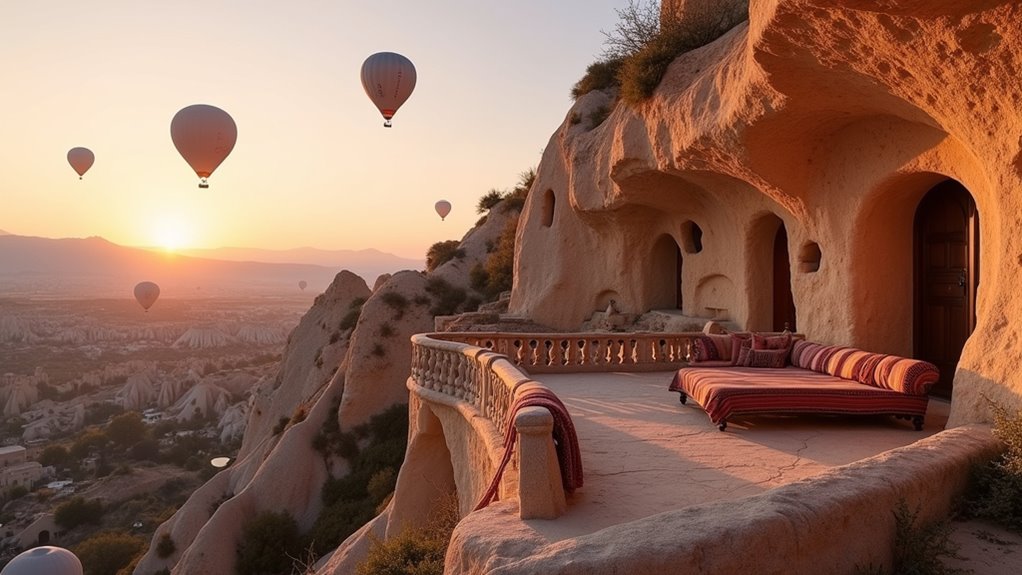
After floating above Cappadocia’s fairy chimneys, you can sleep inside them at one of Göreme’s 30+ cave hotels carved directly into ancient volcanic rock formations. These unique accommodations blend original cave walls with modern amenities like heating, Wi-Fi, and climate control.
You’ll find options ranging from budget-friendly classic rooms to luxury suites with fireplaces and spas. Book a room with a rooftop terrace for prime balloon-watching at sunrise—hotels like Sultan Cave Suites offer exceptional views.
The hillside locations provide panoramic vistas over Pigeon Valley and Uchisar Castle while keeping you close to Göreme’s restaurants and shops. Most visitors spend around 3 nights in Cappadocia to adequately explore the region’s attractions and accommodate potential weather delays for balloon flights. Beyond the novelty, you’re preserving centuries-old architecture and experiencing how ancient inhabitants adapted to this extraordinary geological landscape.
Walk Through Ancient Ephesus and Its Roman Ruins
While most ancient cities exist only in history books, you can actually walk the marble streets where Romans conducted business 2,000 years ago at Ephesus. You’ll explore ruins that once housed 400,000 people in the Roman Empire’s second most important city.
Don’t miss the Library of Celsus‘s impressive façade, which originally held over 12,000 scrolls. The Temple of Hadrian showcases stunning Corinthian columns and detailed friezes.
You can also visit public latrines, the Fountain of Trajan, and luxurious Terrace Houses with intricate mosaics. The massive Great Theatre was carved into Panayir Hill and could seat 25,000 spectators for gladiatorial combats and performances.
Located near Selçuk in Izmir province, Ephesus costs around 100 Turkish lira for entry. Plan three hours to see the main sites.
The ruins represent 8,000 years of continuous settlement across multiple civilizations.
Soak in Pamukkale’s Thermal Pools and White Terraces
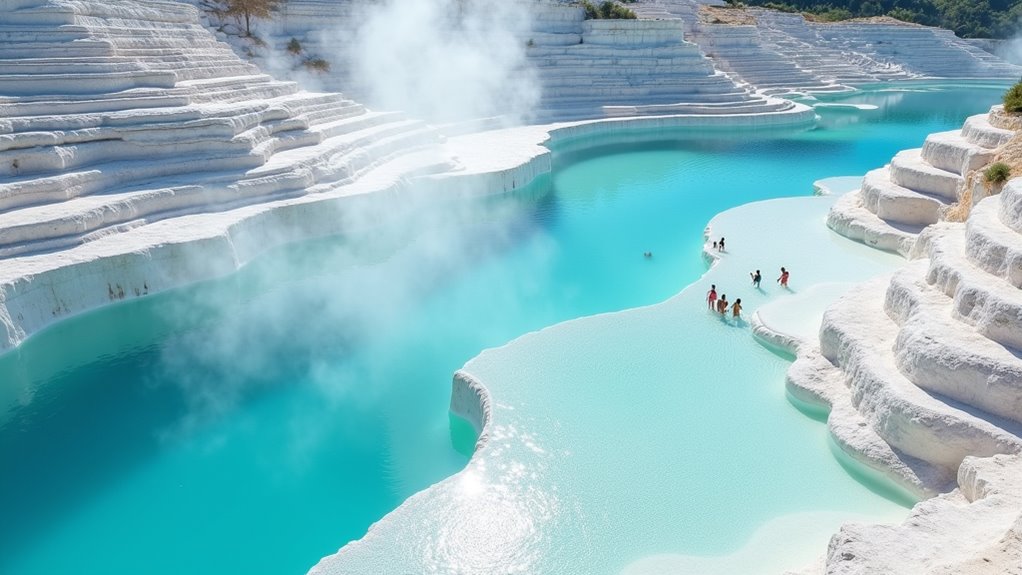
Since nature took thousands of years to craft Pamukkale’s dazzling white terraces, you’ll witness one of Turkey’s most surreal landscapes where mineral-rich thermal waters have created what locals call “Cotton Castle.” These travertine formations cascade down the hillside like frozen waterfalls, formed as calcium carbonate deposits crystallized over millennia from 17 hot springs with temperatures reaching up to 100°C (212°F).
You’ll need to remove your shoes before walking on the delicate terraces, feeling warm water flow beneath your feet. While swimming isn’t allowed in most natural pools to protect the formations, you can bathe in Cleopatra’s Pool among submerged ancient marble columns. The site combines relaxation with history—you’re soaking where Romans once sought healing waters at ancient Hierapolis, making this UNESCO World Heritage Site an affordable wellness experience. Above the terraces, you can explore the impressive Roman Theatre that once seated 12,000 spectators in this ancient spa town.
Haggle Through Istanbul’s Grand Bazaar and Spice Bazaar
From ancient thermal pools to bustling marketplaces, Turkey’s treasures span both natural wonders and vibrant commerce. You’ll find Istanbul’s Grand Bazaar and Spice Bazaar perfect for practicing your haggling skills while hunting for bargains.
The Grand Bazaar, established in 1455, sprawls across 4,000 shops under historic domes. Navigate its labyrinthine streets organized by trade type—carpets, jewelry, textiles, and ceramics await your negotiation prowess. This architectural landmark reflects the distinctive regional Ottoman style that has made it an enduring symbol of Turkish cultural identity.
Meanwhile, the atmospheric Spice Bazaar offers Turkish delights, spices, nuts, and dried fruits in its L-shaped layout of 85 shops.
Research approximate prices beforehand, then learn about friendly bargaining. Make counteroffers, stay polite, and don’t hesitate to walk away—it’s all part of the game.
Both bazaars employ thousands and welcome your haggling efforts as authentic cultural exchange.
Experience a Traditional Turkish Bath (Hammam)
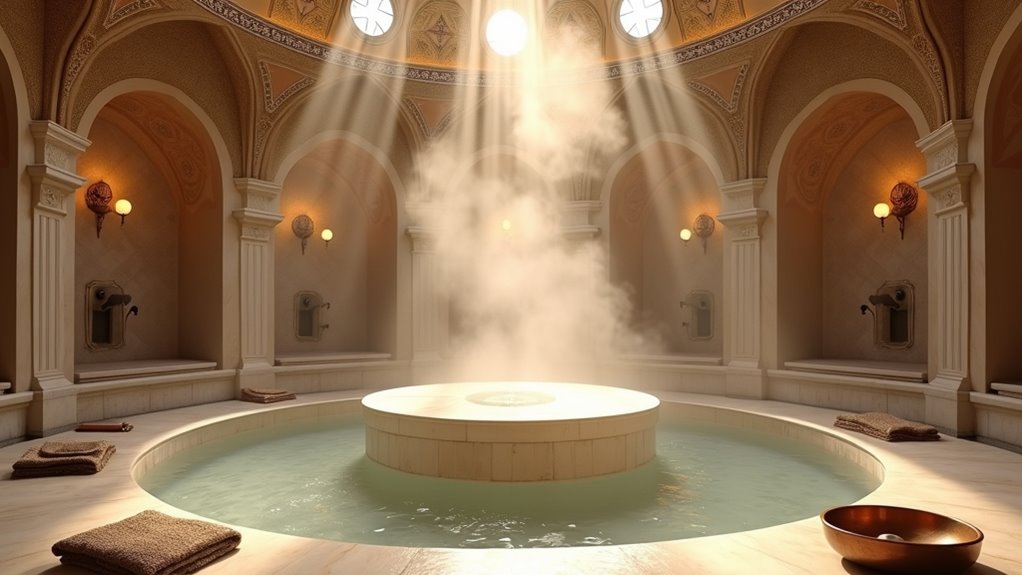
After exploring Istanbul’s bustling bazaars, you’ll want to unwind with one of Turkey’s most cherished traditions—the hammam. These traditional Turkish baths trace their roots to Central Asian culture and became integral to Ottoman society as social centers and places of ritual cleansing.
You’ll start in a warm room where dry heat opens your pores, then progress to the hot steam room for washing. An attendant will scrub you with an exfoliating glove called “kese,” removing dead skin, followed by a relaxing massage.
Finally, you’ll retreat to the cooling room for tea and socializing. The steam and warmth provide numerous health benefits, including improved circulation, stress reduction, and toxin removal from your body.
Visit historic hammams like Cağaloğlu (built in 1741) or Hürrem Sultan for an authentic experience. Expect to spend 30-60 Turkish lira for a basic session.
Discover Göbekli Tepe: The World’s Oldest Temple
You’ll find yourself standing before humanity’s most groundbreaking archaeological discovery in southeastern Turkey—Göbekli Tepe, a temple complex that’s rewriting history books worldwide. At 11,500 years old, these massive T-shaped limestone pillars predate Stonehenge by 6,000 years, proving sophisticated religious structures existed before agriculture.
You’ll marvel at pillars weighing 50 tons each, carved with wild animals like lions, foxes, and scorpions. The site’s hunter-gatherer builders coordinated massive construction projects across 1,500 years before deliberately burying their work around 8000 BCE. These monumental structures were built in the Germuş mountains and likely served ritual purposes, possibly even funerary functions.
Plan your visit from nearby Şanlıurfa, where budget accommodations and local transport make this UNESCO World Heritage site accessible. You’re witnessing where civilization’s spiritual journey began—an experience that’ll fundamentally change how you understand human history.
Explore Cappadocia’s Underground Cities
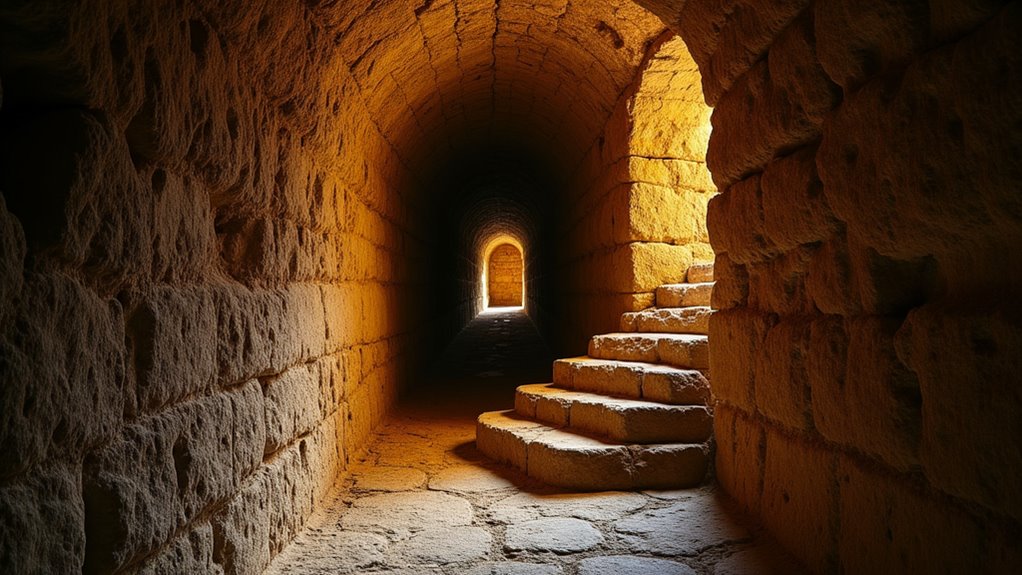
While Göbekli Tepe showcases humanity’s earliest spiritual achievements above ground, Cappadocia’s underground cities reveal an equally impressive feat of engineering hidden beneath the earth’s surface.
You’ll discover massive subterranean complexes like Derinkuyu, which descends 85 meters deep and once sheltered 20,000 people during invasions.
These cities aren’t just empty tunnels—you’ll explore chapels, kitchens, stables, and wine cellars connected by intricate passages.
The Phrygians built them in the 8th century BCE, but early Christians expanded them into self-sufficient refuges complete with ventilation systems and rolling stone doors. The underground complexes remained hidden until 1963 when a local resident discovered a hidden room behind his wall, leading to the rediscovery of this ancient marvel.
Visit Derinkuyu and Kaymakli, both converted into affordable museums.
You’ll crawl through narrow passages and marvel at ancient engineering that protected entire communities for over two millennia.
Relax on Antalya’s Mediterranean Beaches and Explore Kaleiçi
When you need a break from Turkey’s ancient wonders, Antalya’s Mediterranean coastline offers the perfect blend of relaxation and exploration. You’ll find world-class beaches here – Antalya leads globally with 206 Blue Flag certified beaches, ensuring pristine water quality and safety standards.
Head to Konyaaltı Beach for family-friendly pebble shores with mountain views, or choose Lara Beach’s golden sands if you prefer luxury resort vibes. For budget travelers, Mermerli Beach near the old town offers affordable seafood with scenic cliff views.
Don’t miss wandering through Kaleiçi’s cobblestone streets, where Ottoman architecture meets ancient Roman walls. You can explore Hadrian’s Gate, browse local craft shops, and enjoy marina views without spending much. These beaches maintain their Blue Flag status through rigorous bi-weekly seawater quality testing and comprehensive environmental safety protocols.
The Mediterranean climate provides 300 sunny days yearly, making any season perfect for visiting.
Visit Mount Nemrut for Sunrise Among Ancient Stone Heads
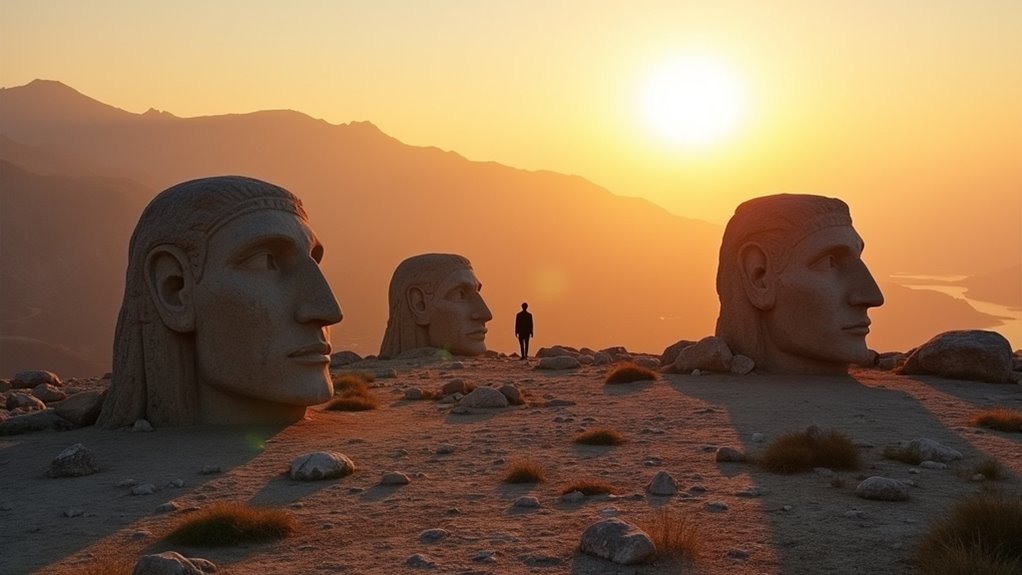
From Turkey’s sun-soaked Mediterranean coast, head inland to one of the country’s most extraordinary archaeological sites where ancient stone heads await the dawn. Mount Nemrut’s 2,134-meter summit houses colossal limestone heads from the 1st century BCE, originally part of 8-10 meter statues representing gods like Zeus and Apollo alongside King Antiochus I.
You’ll need to start your ascent in pre-dawn darkness to catch sunrise from the eastern terrace, where five massive heads face east as if greeting the morning light. The tumulus glows red at dawn, creating an unforgettable spectacle. Pack warm clothes—it’s cold and windy at this elevation.
Located 40km north of Kahta near Adıyaman, this UNESCO World Heritage site requires a jeep ride or hike to reach the summit. The site represents King Antiochus I’s vision of East-West unity, blending Persian and Hellenistic cultural influences in this remarkable mountain sanctuary.
Taste Authentic Turkish Cuisine in Gaziantep
As you leave behind the ancient wonders of Mount Nemrut, Turkey’s culinary capital of Gaziantep beckons with flavors that’ll transform your understanding of Turkish cuisine.
You’ll discover legendary dishes like Ali Nazik Kebab—smoky roasted eggplant topped with spiced lamb—and Beyran Çorbası, a spicy breakfast soup that locals swear by.
Don’t miss the city’s famous baklava, made with local pistachios and crafted by generations-old family recipes.
Try Gaziantep katmer for breakfast, a flaky pastry filled with clotted cream and pistachios.
Budget-friendly options include çiğ köfte and lahmacun from street vendors.
Visit traditional restaurants for küşleme kebab or sample unique dishes like şiveydiz lamb stew. Gaziantep earned UNESCO recognition for its rich gastronomy in 2015, cementing its status as a world-class culinary destination.
End meals with pistachio coffee—a distinctive local beverage that perfectly caps any Gaziantep food adventure.
Hike the Lycian Way Along Turkey’s Turquoise Coast
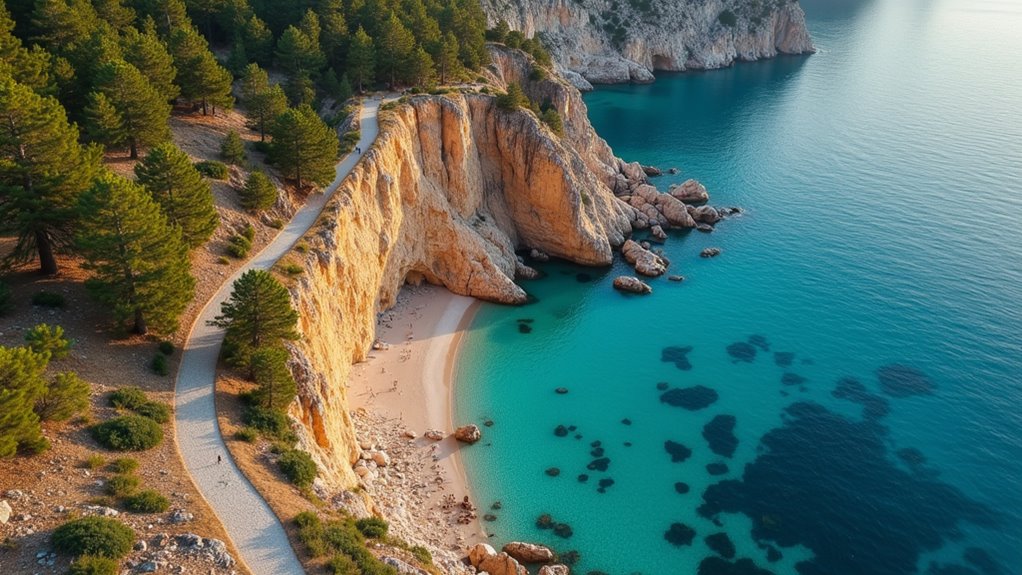
While most travelers stick to Turkey’s resort towns, you’ll discover the country’s most spectacular coastline by lacing up your hiking boots and tackling the legendary Lycian Way. This 520-kilometer trail stretches from Ölüdeniz to Antalya, winding through ancient ruins, pine forests, and dramatic cliffs overlooking turquoise bays.
You don’t need to hike the entire 25-30 day route. Pick shorter 10-25 kilometer sections that match your fitness level and schedule.
The trail’s well-connected to towns where you’ll find cheap eats, budget accommodations, and supply stops, so you won’t need to carry heavy packs. Created by Kate Clow in 1999, the route was designed specifically to promote sustainable tourism while showcasing the region’s natural and cultural heritage.
Download the TrekRight app for navigation, as the route can be tricky.
Spring and fall offer the best weather conditions, avoiding summer’s intense heat and winter storms.
Explore the Fairy-Tale Village of Safranbolu
Step into Safranbolu and you’ll feel like you’ve wandered into a living Ottoman museum where fairy-tale architecture meets budget-friendly exploration. This UNESCO World Heritage Site showcases over 2,000 traditional timber-framed houses with red-tiled roofs that won’t cost you entrance fees to admire from the streets.
You’ll discover three distinct districts: Çukur’s bustling bazaar area, Kıranköy’s stone houses, and Bağlar’s garden-surrounded summer residences. Don’t miss the 17th-century Cinci Inn, operational Ottoman baths, and the Governor’s House with its intricate woodwork. Many houses function as affordable museums or guesthouses where you can experience authentic Ottoman living.
Explore 25 mosques, Turkish baths, and the Byzantine İncekaya Aqueduct. The winter and summer house system shows how locals adapted to seasons—knowledge that’ll help you plan your own budget-conscious visit. For a dramatic natural experience, venture to nearby Tokatli Canyon, where cliffs reach 1,200 meters and a wooden walkway allows you to safely explore one of Turkey’s deepest gorges.
The Sum Up
Turkey’s incredible diversity won’t break your budget. You’ll find affordable guesthouses in Cappadocia, cheap street food that’s absolutely delicious, and many historic sites with reasonable entrance fees. Don’t miss the free experiences like wandering Istanbul’s neighborhoods, hiking coastal trails, or watching sunsets over fairy chimneys. Pack comfortable walking shoes and bring your appetite – you’re about to discover why Turkey’s one of the world’s best travel bargains.