
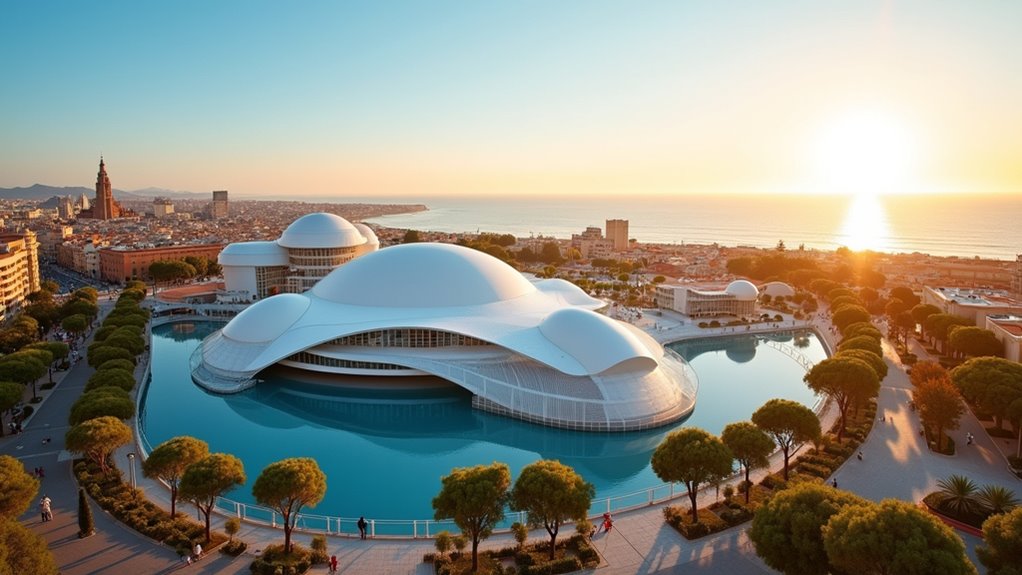
You’ll find Valencia strikes that rare balance between authentic Spanish culture and modern innovation that most cities can’t pull off. Whether you’re drawn to cutting-edge architecture, medieval streets that whisper centuries-old stories, or simply want to taste paella where it was born, this Mediterranean gem delivers without the overwhelming crowds of Barcelona or Madrid. But knowing where to start in a city this rich with possibilities? That’s where things get interesting.
- Explore the City of Arts and Sciences Complex
- Climb the Miguelete Tower at Valencia Cathedral
- Wander Through the Medieval Old Town
- Experience the Vibrant Ruzafa Neighborhood
- Relax at Malvarrosa Beach and the Marina
- Discover La Lonja De La Seda and Its Gothic Splendor
- Bike or Stroll Through the Turia Gardens
- Sample Authentic Paella and Local Flavors
- Take a Day Trip to Albufera Natural Park
- Browse the Historic Mercado Central
- Admire the Frescoes at Iglesia De San Nicolás
- Enjoy Horchata and Fartons Like a Local
- The Sum Up
Explore the City of Arts and Sciences Complex
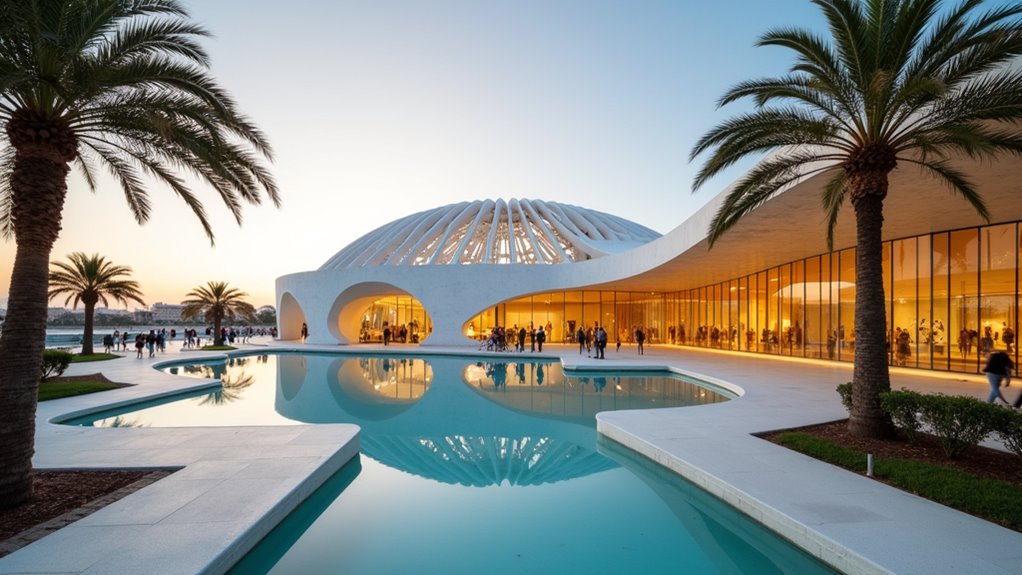
When you’re exploring Valencia’s most iconic attraction, the City of Arts and Sciences Complex will captivate you with its stunning blend of futuristic architecture and interactive experiences. You’ll discover six main buildings designed by Santiago Calatrava spanning two kilometers along the former Turia Riverbed.
Start at L’Oceanogràfic, Europe’s largest aquarium, where you’ll encounter over 20,000 marine creatures including beluga whales and penguins.
Next, visit the Museo de las Ciencias for hands-on experiments perfect for families.
Don’t miss L’Umbracle‘s sculpture walkway featuring works by contemporary artists like Yoko Ono.
If you’re interested in performing arts, catch a show at Palau de les Arts.
The Ágora hosts exhibitions and houses CaixaForum Valencia.
The striking Pont de l’Assut de l’Or bridge completes this architectural masterpiece. Plan to dedicate at least one full day to fully explore this magnificent complex and its diverse attractions.
Climb the Miguelete Tower at Valencia Cathedral
After exploring Valencia’s modern architectural marvels, you’ll want to experience the city’s medieval heritage by ascending the iconic Miguelete Tower. This 63-meter Gothic bell tower, completed in 1429, requires climbing 207 spiral steps through Valencia Cathedral’s entrance.
You’ll pass through historically significant levels including former prison quarters and the bell-ringer’s residence before reaching the terrace.
The physically demanding climb rewards you with spectacular 360-degree views of Valencia’s historic center, Turia Gardens, and the Mediterranean Sea on clear days.
You’ll appreciate the tower’s octagonal Gothic architecture up close while ascending the narrowing staircase. The cathedral houses three sets of bells located in different areas including the bell tower, dome deck, and bell room. The vantage point connects you directly to centuries of Valencian history, as this tower once monitored city gates and coordinated public announcements through its famous bell, “El Micalet.”
Wander Through the Medieval Old Town
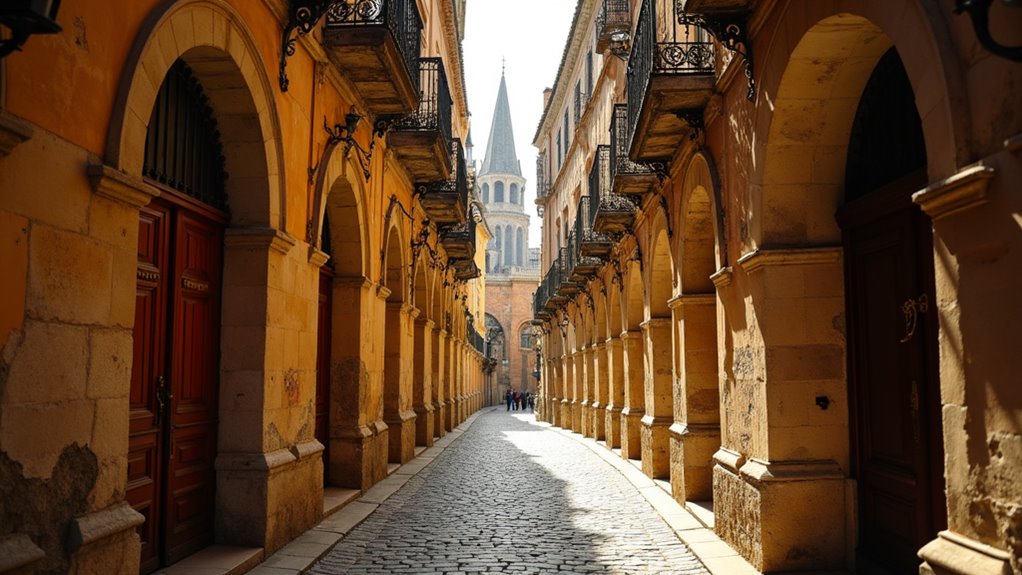
As you descend from the Miguelete Tower, Valencia’s medieval Old Town spreads before you like a living history book waiting to be explored. Start at Plaza de la Virgen, where Roman ruins lie beneath Gothic and Renaissance buildings. The Neptune fountain marks this ancient gathering place that’s buzzing with café culture.
Head toward the Torres de Serranos and Torres de Quart – the only surviving gates from Valencia’s original twelve medieval entrances. These 14th and 15th-century towers still bear battle scars from the Napoleonic Wars, offering tangible connections to the city’s turbulent past. The towers stand proudly in the historic El Carmen neighborhood, preserving the city’s medieval defensive architecture.
Don’t miss La Lonja de la Seda, the UNESCO-listed Silk Exchange. This Gothic masterpiece showcases Valencia’s medieval commercial power through its twisted columns and elaborate gargoyles, representing the golden age of silk trading.
Experience the Vibrant Ruzafa Neighborhood
Just south of Valencia’s historic center, Ruzafa pulses with creative energy that’ll captivate you from the moment you step off the metro. This former working-class neighborhood has transformed into Valencia’s hipster enclave, where colorful art nouveau buildings house trendy cafés, galleries, and design studios.
Start your exploration at San Blas Market, inaugurated in 1957, where you’ll find fresh Mediterranean ingredients and authentic local life. Browse surrounding vintage shops and artisan boutiques before grabbing coffee at Fran Cafe or Five O’ Coffee.
For dining, savor traditional patatas bravas at La Tavernaire (cash only) or experience avant-garde cuisine at Michelin-starred restaurants. The neighborhood’s outdoor seating areas encourage socializing, while frequent cultural events and exhibitions during spring and summer showcase Ruzafa’s dynamic artistic spirit. The area’s vibrant street art adds to its creative atmosphere, with colorful murals and artistic expressions decorating building walls throughout the district.
Relax at Malvarrosa Beach and the Marina
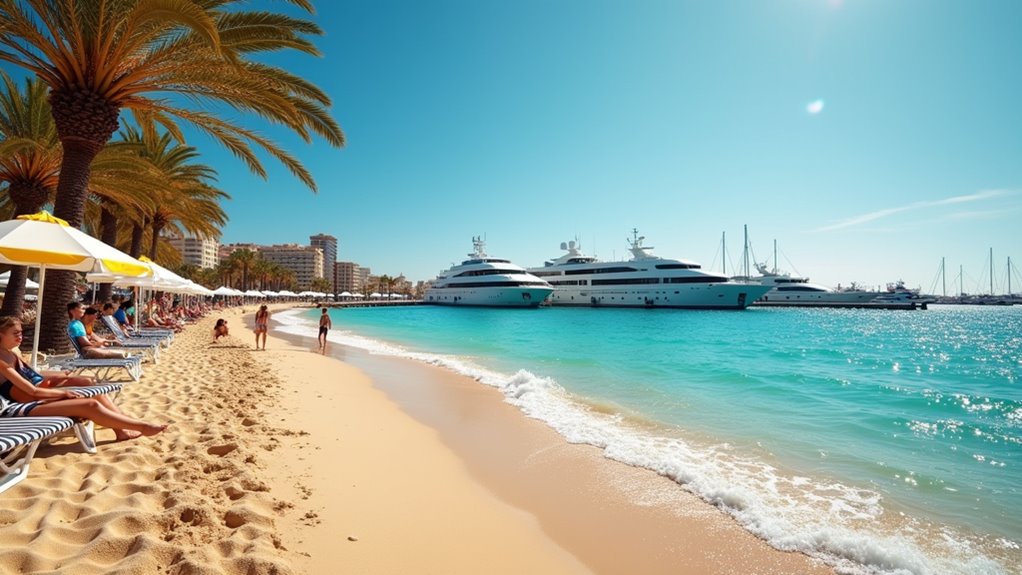
Where better to unwind after exploring Valencia’s bustling neighborhoods than at Malvarrosa Beach, the city’s premier stretch of golden sand just a short tram ride from the center? You’ll find 1.6 kilometers of Blue Flag-certified coastline perfect for swimming in calm Mediterranean waters or lounging under the Spanish sun.
The adjacent Marina transforms Valencia’s former port into a stunning waterfront destination. You can stroll past historic maritime buildings like the Clock Building, then grab drinks at modern spots like Malabar bar.
If you’re feeling active, try paddleboarding, windsurfing, or beach volleyball. The marina’s favorable climate enables sailing, diving, and rowing activities throughout the year, with over 800 private vessel berths available for those wanting to explore the coastline by boat. The palm-lined promenades are ideal for cycling or rollerblading.
Don’t miss the excellent seafood restaurants—both beachside chiringuitos serving traditional paella and upscale marina establishments offer unforgettable dining experiences with sea views.
Discover La Lonja De La Seda and Its Gothic Splendor
Step into one of Europe’s most stunning examples of Gothic civil architecture at La Lonja de la Seda, Valencia’s magnificent 15th-century Silk Exchange that stands as a proof to the city’s Golden Age prosperity. You’ll explore three distinct sections: the breathtaking Contract Hall with its twisted palm-tree columns supporting soaring domed ceilings, the imposing Tower housing a historic chapel, and the Renaissance-influenced Consulate of the Sea building.
Marvel at the fortress-like stone walls, ornate Gothic windows, and intricate gargoyles adorning the exterior. This UNESCO World Heritage Site once bustled with silk merchants conducting international trade, and housed Spain’s first maritime tribunal. The construction of this architectural masterpiece spanned 66 years, beginning in 1482 and completing in 1548 under the vision of architect Pere Compte.
Don’t miss wandering through the peaceful Orange Garden courtyard connecting these architectural masterpieces.
Bike or Stroll Through the Turia Gardens
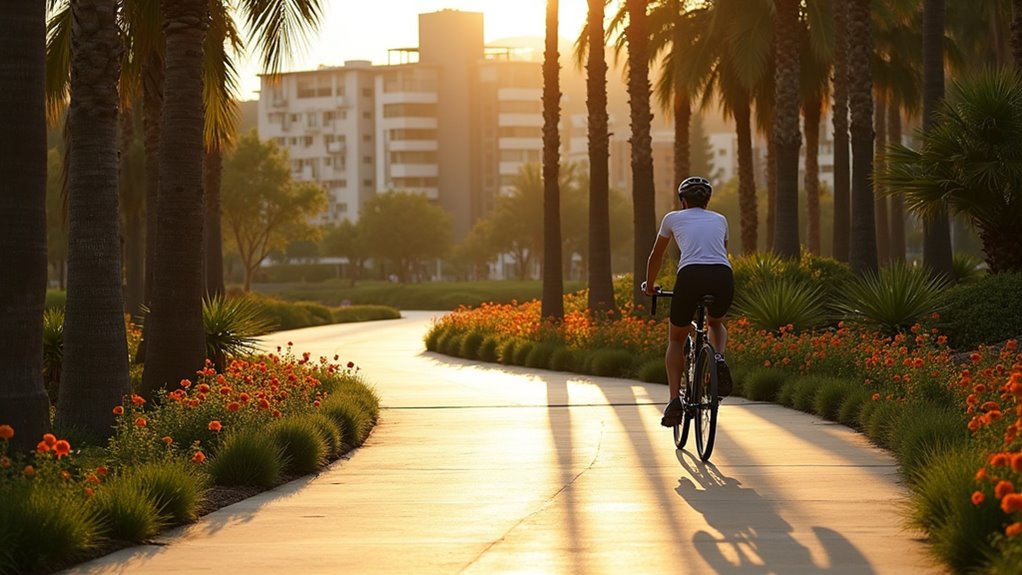
After Valencia’s devastating 1957 flood prompted the rerouting of the Turia River, the city transformed the abandoned riverbed into one of Spain’s most spectacular urban parks—a 9-kilometer green corridor that now serves as your gateway to exploring Valencia on foot or by bike.
You’ll cycle or walk through diverse landscapes featuring orange groves, pine woods, rose gardens, and tranquil ponds. The flat, wide paths make it perfect for leisurely rides or long-distance cycling tours.
Start your journey from multiple metro stops like Turia or Alameda, then follow the route from Cabecera Park westward to the futuristic City of Arts and Sciences near the Mediterranean. The park features bike rental locations at three convenient spots: near the cathedral, in the Ruzafa neighborhood, and at Paseo de la Pechina.
Along the way, you’ll pass under 18 historic bridges, including the 15th-century Trinidad Bridge, while enjoying this “green lung” that connects Valencia’s districts.
Sample Authentic Paella and Local Flavors
Working up an appetite from your bike ride or stroll through the Turia Gardens sets you up perfectly for Valencia’s most celebrated culinary experience—savoring authentic paella in its birthplace.
You’ll find legendary spots like Casa Carmela, where slow-cooked paella develops over wood fire since the 1920s, or La Pepica by Malvarrosa beach, Hemingway’s favorite since 1898. At Casa Carmela, reservations required at least 2 hours in advance as they limit production to just 6 paellas daily for their authentic home-cooked experience.
For the ultimate authentic experience, head to La Albufera, 11km south—paella’s actual birthplace. Restaurants like Bon Aire and El Palmar offer traditional recipes using local bomba rice amid scenic rice fields.
Look for the telltale socarrat (toasted crust) and complement your meal with esgarraet or titaina for a complete Valencian flavor journey.
Take a Day Trip to Albufera Natural Park

Just 11 kilometers south of Valencia’s city center, L’Albufera Natural Park beckons with Spain’s largest freshwater lagoon and an ecosystem so remarkable it’s earned Ramsar Wetland status.
You’ll discover over 2,800 hectares of marshes, dunes, and pine forests that host 300+ bird species, including flamingos, herons, and endangered Valencia toothcarp.
Board traditional albuferenc boats for 40-minute rides across the lagoon—sunset tours offer spectacular views for around €5. Combine cruising with visits to thatched barracas cottages for cultural insights.
Six walking trails let you explore diverse habitats, while cycling tours reach coastal villages like El Palmar. This region is renowned as the birthplace of paella, where the iconic dish originated among the rice paddies.
The park’s interpretation center provides educational resources, and designated hides ensure ideal birdwatching without disturbing wildlife.
Browse the Historic Mercado Central
When Valencia’s bustling heart calls for sensory immersion, you’ll find yourself drawn to the magnificent Mercado Central—a cathedral to the senses that’s captivated locals and visitors since 1928. This Art Nouveau masterpiece spans over 8,000 square meters, housing 959 stalls beneath soaring 30-meter domes that bathe the space in natural light.
You’ll navigate straight alleys lined with vibrant displays of Valencia’s agricultural bounty—fresh citrus from nearby orchards, Mediterranean seafood, and aromatic spices.
The market’s iron columns echo Eiffel Tower aesthetics while ceramic tiles and mosaics create stunning visual backdrops. The building incorporates an innovative underground parking space specifically designed for food logistics, demonstrating how this century-old structure seamlessly blends historical architecture with modern functionality.
Don’t miss the central bar for authentic tapas alongside locals, or explore the dedicated fishmonger section. This working market maintains century-old traditions while offering an authentic taste of Valencian culture and cuisine.
Admire the Frescoes at Iglesia De San Nicolás
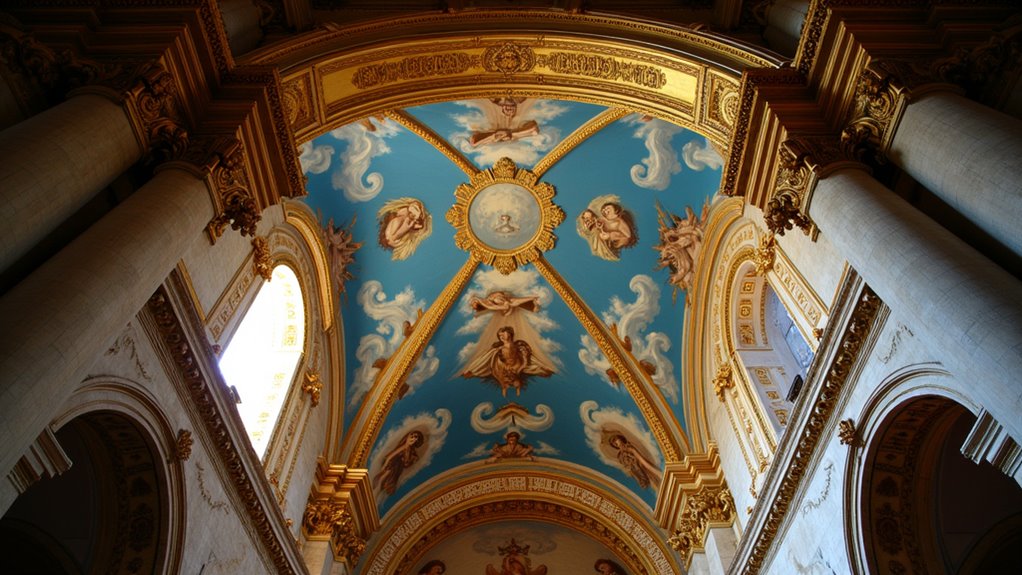
After experiencing Valencia’s culinary treasures, you’ll discover artistic magnificence at the Iglesia de San Nicolás, where 2,000 square meters of breathtaking Baroque frescoes transform Gothic stone into a heavenly canvas. You’ll understand why it’s called “The Valencian Sistine Chapel” when you see Antonio Palomino‘s masterful designs brought to life by Dionís Vidal between 1690 and 1700.
The frescoes narrate the lives of San Nicolás de Bari and San Pedro Mártir across six main sections, blending vivid colors with intricate details that recent restoration has brilliantly revived. You’ll notice how Baroque decorative elements harmoniously adapt to the 15th-century Gothic vaulted ceilings, creating an extraordinary fusion of architectural styles.
Look closely—you’ll even spot the artists’ self-portraits within these sacred scenes. The church holds special significance as one of the first twelve Christian parishes established in Valencia, founded shortly after Jaume I’s reconquest in 1238.
Enjoy Horchata and Fartons Like a Local
Seven centuries of Valencian tradition come alive in every sip of horchata, the region’s beloved tigernut drink that’s been invigorating locals since Moorish times. You’ll find the best authentic experience at Horchatería Daniel in Alboraya, where celebrity patrons like Salvador Dalí savored this naturally dairy-free beverage made from Valencia’s protected chufas.
Order your horchata cold and pair it with warm fartons—elongated pastries glazed with sugar syrup that you’ll dip into the creamy drink. The combination offers perfect refreshment during hot summers while delivering iron, potassium, and antioxidants.
For atmosphere, visit Horchatería Santa Catalina in Valencia’s historic center, where traditional Valencian ceramics create the perfect backdrop for this uniquely local ritual. This beloved drink holds PDO status, officially recognizing its importance to Valencia’s culinary heritage and ensuring authentic quality standards.
The Sum Up
You’ll discover Valencia’s magic lies in its perfect balance—from futuristic architecture to medieval streets, bustling markets to tranquil beaches. Don’t rush through the highlights; instead, take time to savor authentic paella, chat with locals over horchata, and explore hidden corners in Ruzafa. Whether you’re climbing ancient towers or cycling through modern parks, Valencia rewards curious travelers who embrace both its rich history and vibrant contemporary culture.