
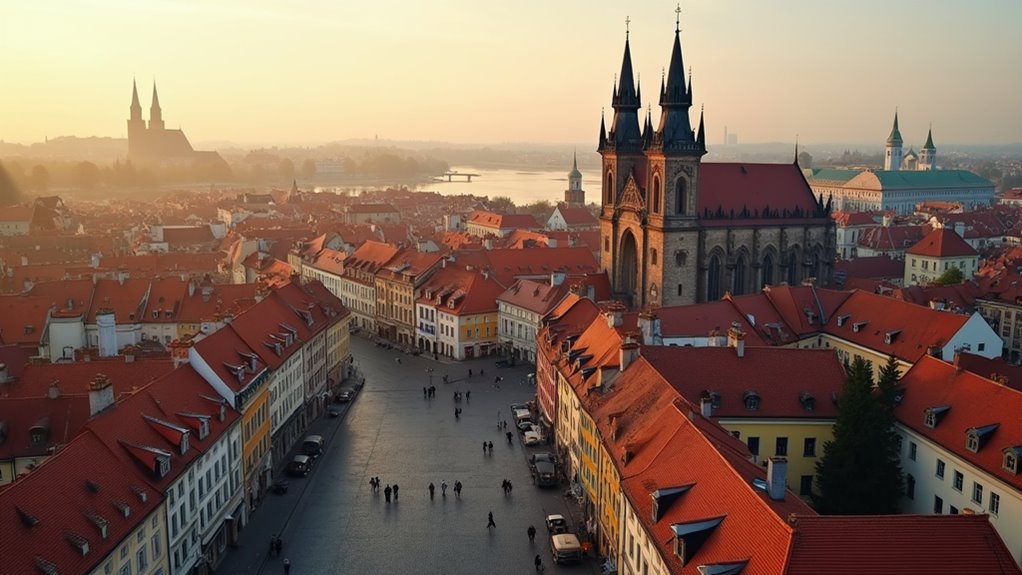
You’ll find Wrocław isn’t your typical Polish destination—it’s a city where medieval charm meets modern innovation without breaking your budget. From hunting for hundreds of bronze gnomes scattered across cobblestone streets to exploring underground WWII tunnels, there’s something here that doesn’t exist anywhere else. Whether you’re traveling solo or with family, you can easily spend days discovering hidden corners and unexpected experiences. But knowing where to start can make the difference between a good trip and an unforgettable one.
- Wander Market Square and Hunt for Gnomes Along the Way
- Cross the Bridge of Penitents on Cathedral Island
- Tour the Baroque Halls of Wrocław University
- Experience the Panorama of Racławice Battle Painting
- Take a Day Trip to Ksiaz Castle’s Pink Towers and WWII Tunnels
- Explore the Trendy Street Art Scene in Nadodrze District
- Visit Afrykarium for Africa’s Wildlife Without Leaving Europe
- Climb Sky Tower or the University’s Mathematical Tower for City Views
- Stroll Through the Botanical Garden’s Hidden Corners
- Watch the Multimedia Fountain Show After Dark
- Discover Kolejkowo’s Miniature World of Polish History
- The Sum Up
Wander Market Square and Hunt for Gnomes Along the Way
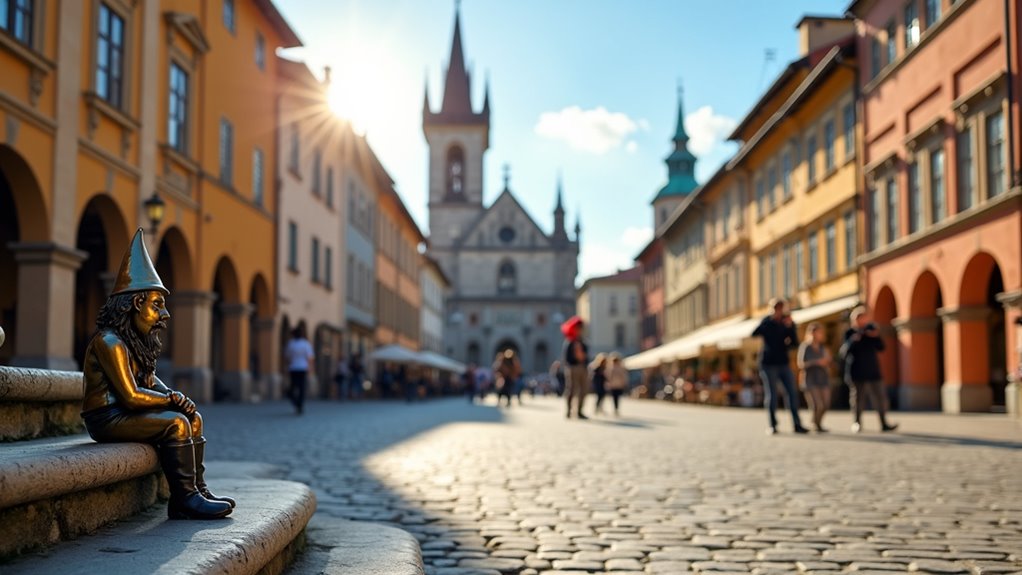
When you step into Wrocław’s Old Market Square, you’ll find yourself in one of Europe’s largest medieval squares – a massive 3.8-hectare space that’s been the city’s beating heart for centuries.
The Gothic-Renaissance Town Hall dominates the center with its impressive 66-meter tower, while 60 colorful historic tenements frame the square’s perimeter.
But here’s where your visit gets playful: over 600 bronze gnome statues are scattered throughout the Old Town, turning your exploration into a free treasure hunt.
These quirky sculptures appear everywhere – tucked into corners, perched on benches, hiding near doorways.
Download a gnome map app to track your finds, or simply wander and discover them naturally.
It’s an entertaining way to explore both the square’s medieval architecture and surrounding historic streets without spending extra money. As you wander, notice how the street names like Szewska (Shoemakers) and Białoskórnicza (Leatherworkers) reflect the medieval trades that once thrived around this bustling marketplace.
Cross the Bridge of Penitents on Cathedral Island
After exploring the Market Square’s gnomes, head to Cathedral Island (Ostrów Tumski) to experience one of Wrocław’s most dramatic attractions – the Bridge of Penitents. This narrow passageway connects the twin towers of St Mary Magdalene Cathedral, positioned 45 meters above ground.
You’ll discover dark legends behind its ominous nicknames – “Bridge of Penitents” and “Witches’ Bridge.” Historical tales describe accused women forced to walk across the bridge’s railing as trials of innocence. Those who fell were considered innocent but died; those who succeeded were deemed witches and executed.
Built in 1459, the bridge offers stunning views of Cathedral Island and the Oder River. Don’t miss the 12th-century Romanesque portal from a nearby Benedictine Abbey while exploring this atmospheric Gothic cathedral complex. The cathedral also houses the famous Bell of the Poor Sinner, once the largest church bell in Lower Silesia, which rang for over 550 years until the tower’s destruction.
Tour the Baroque Halls of Wrocław University
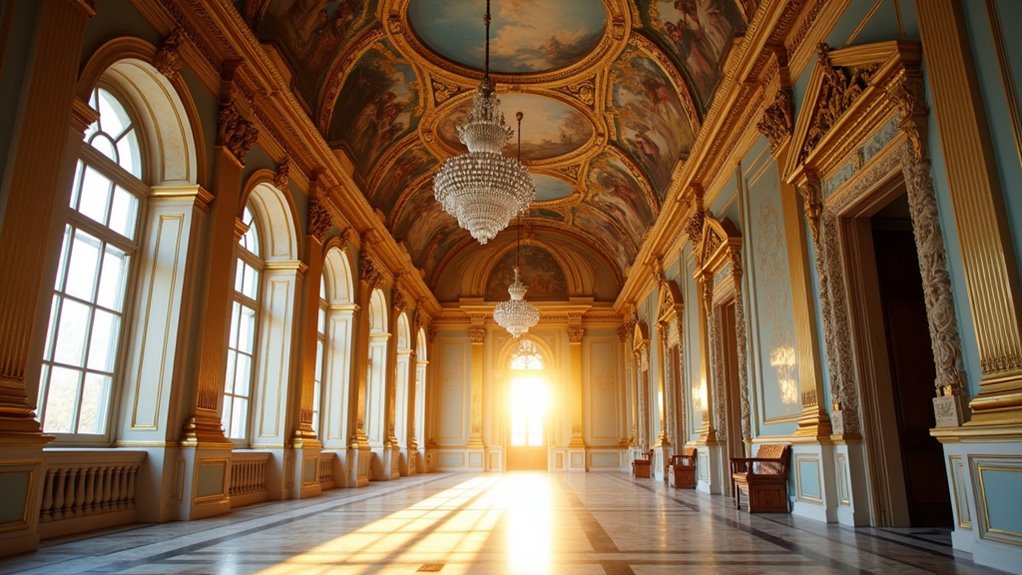
Since you’re already exploring Wrocław’s historic treasures, make your way to the University of Wrocław to discover some of Europe’s most stunning Baroque interiors. You’ll be amazed by Aula Leopoldina, the crown jewel built between 1728-1732. This ceremonial hall showcases breathtaking illusionist frescoes and intricate stucco work that’ll leave you speechless.
Don’t miss Oratorium Marianum, a former chapel turned concert hall with equally impressive Baroque splendor. Both halls represent incredible value since admission is affordable compared to similar European attractions.
Cap off your visit by climbing the Mathematics Tower for panoramic city views from 42 meters high. The tower’s whimsical architecture appeals to history buffs and Harry Potter fans alike. Originally designed in 1791, this structure once served as an Astronomical Observatory before becoming the viewing platform you can enjoy today. You’ll experience centuries of scholarly grandeur without breaking your travel budget.
Experience the Panorama of Racławice Battle Painting
Your journey through Wrocław’s remarkable cultural heritage continues with one of Poland’s most extraordinary artistic treasures – the Panorama of Racławice Battle Painting. This massive 15-by-114-meter canvas depicts the 1794 Battle of Racławice, commemorating Polish freedom fighters during the Kościuszko Uprising.
You’ll experience an immersive 360-degree battle scene featuring scythe-wielding peasants and General Kościuszko himself. Created by Jan Styka and Wojciech Kossak between 1893-1894, it’s Poland’s only surviving 19th-century panoramic painting.
The specially-designed rotunda enhances the dramatic effect with integrated sculptures and terrain.
This isn’t just art – it’s living Polish history that survived WWII and communist censorship. The artwork was painted using 750 kg of paint for priming alone, demonstrating the massive scale and technical complexity of this extraordinary work. The admission fee’s reasonable considering you’re witnessing one of Europe’s largest panoramic works and a powerful symbol of Polish resilience.
Take a Day Trip to Ksiaz Castle’s Pink Towers and WWII Tunnels
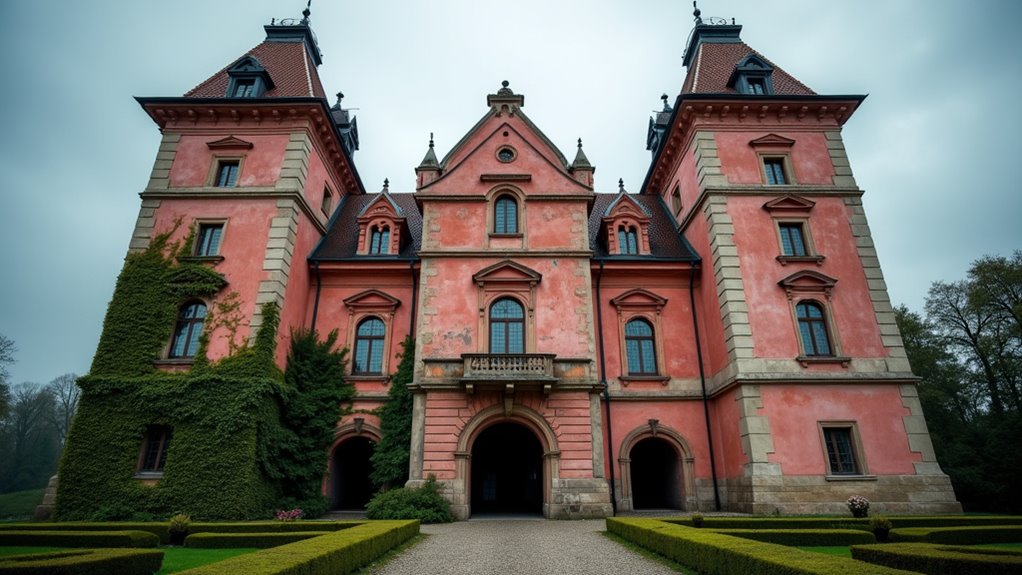
When you’re ready to venture beyond Wrocław’s city limits, Książ Castle offers one of Poland’s most compelling day trips – combining fairy-tale architecture with sobering WWII history. Located just an hour away near Wałbrzych, this third-largest Polish castle captivates visitors with its distinctive pink sandstone towers and lavish interiors spanning 800 years of architectural evolution.
Your ticket typically includes both the Renaissance-Baroque castle rooms and the haunting underground tunnels. During WWII, Nazis forced 13,000 Jewish prisoners to construct these 1.5-kilometer passages 50 meters underground as part of the mysterious Project Riese complex.
Tours run at 11 a.m. and 2 p.m., with audio guides available for tunnel sections. Visit April through September for full garden access, and consider combo tickets including nearby attractions for better value. The castle now features 400 rooms available for public tours, showcasing its impressive scale and grandeur.
Explore the Trendy Street Art Scene in Nadodrze District
Back in the city, Nadodrze district offers a completely different but equally mesmerizing experience – one where art transforms entire neighborhoods from the ground up. Since 2013, this former post-industrial area has evolved into Wrocław’s creative heartland, thanks to artist Mariusz Mikołajek’s community mural project.
Head to Roosevelt Street, particularly around addresses 5a and 8, where you’ll discover 1,200m² of vibrant murals covering apartment courtyards. You’ll spot everything from Van Gogh reproductions to local portraits, plus an impressive 400-tile mosaic on Rydygiera 43. The neighborhood also features cozy cafes and shops where you can engage with local artists and witness the community spirit that drives this artistic transformation.
The best part? It’s completely free to explore.
Visit during golden hour for stunning photos, and don’t miss the street bazaar on Pomorska/Ptasia Street. This grassroots art scene proves that community creativity can revitalize entire neighborhoods.
Visit Afrykarium for Africa’s Wildlife Without Leaving Europe

While Nadodrze’s murals showcase human creativity, Afrykarium lets you learn about Africa’s incredible aquatic worlds without booking a flight to another continent. This massive oceanarium houses around 100 African species across 19 tanks, from colorful coral reef fish to crocodiles and penguins. You’ll explore ecosystems representing the Red Sea, Congo River, and lakes Tanganyika and Malawi.
The facility’s impressive—nearly 9,000 m² of indoor space holding 15,000 tons of water. One highlight’s the million-liter coral reef tank with over 60 vibrant fish species. The Afrykarium also features Europe’s deepest pool at 4.5 meters, adding to its impressive aquatic displays. Since opening in 2014, it’s drawn over 16 million visitors, making Wrocław Zoo one of Europe’s top five most visited.
Pro tip: Visit on weekdays to avoid crowds and enjoy a more relaxed experience exploring Africa’s wildlife.
Climb Sky Tower or the University’s Mathematical Tower for City Views
After exploring Africa’s underwater worlds, you’ll want to see Wrocław from above—and you’ve got two excellent options depending on your budget and preferences.
Sky Tower’s 49th-floor observation deck offers Poland’s highest panoramic views from nearly 200 meters up. You’ll see Wrocław’s sprawling cityscape and, on clear days, distant mountains. Tickets cost 49 PLN (35 PLN reduced), with timed entry every 30 minutes. Book online to skip queues, and don’t be late—tickets are non-refundable. The tower itself stands 212 meters tall and replaced the former Poltegor Centre, which was once the city’s tallest building.
For budget travelers, try the University’s Mathematical Tower instead. It’s free, historic, and provides lovely Old Town views from a lower height. Access usually requires joining guided observatory tours or attending special events, but you’ll get authentic academic atmosphere without spending a zloty.
Stroll Through the Botanical Garden’s Hidden Corners
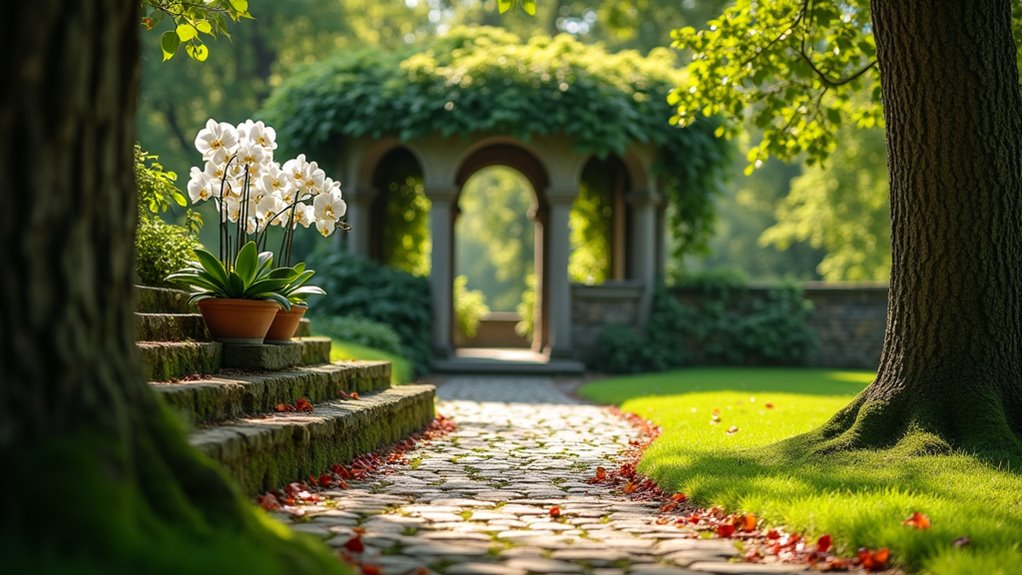
Once you’ve had your fill of city panoramas, escape to the University of Wrocław’s Botanical Garden—a 7.5-hectare sanctuary that’ll give you more bang for your buck than most tourist attractions.
At just 30 PLN (around £6), you’ll access over 11,500 plant species from multiple continents.
Head straight to the tranquil ornamental lake, formed from a former River Odra branch. The elegant fountains and small waterfall create perfect photo ops without the crowds.
Don’t miss the famous Cactus House near the north entrance—it’s packed with impressive succulents.
Europe’s largest daylily collection boasts 3,000+ varieties, while quiet seating areas scattered throughout let you rest without spending extra cash. For an added educational experience, take time to read the informational plaques about various plant species as you wander through the collections.
The garden’s peaceful corners offer genuine respite from Wrocław’s bustling streets.
Watch the Multimedia Fountain Show After Dark
When evening falls over Wrocław’s Exhibition Grounds, you’ll discover one of Poland’s most spectacular free attractions—the multimedia fountain show at the Pergola near Centennial Hall.
You’ll watch 300 synchronized water jets dance to music while 800 lighting fixtures create stunning visual effects. The most elaborate shows start around 9:00 or 10:00 p.m., featuring water screens that project animations and films celebrating Polish culture and history.
Arrive early to secure good viewing spots on the terraces, or bring a blanket for comfort during the 12-15 minute performances. Weekend shows offer enhanced multimedia projections with fire jets adding dramatic flair. The fountain covers 1 hectare, making it one of the largest multimedia fountains in Europe.
The synchronized experience combines classical, pop, and electronic music with high-definition visuals, making it an unforgettable sensory experience that won’t cost you anything.
Discover Kolejkowo’s Miniature World of Polish History
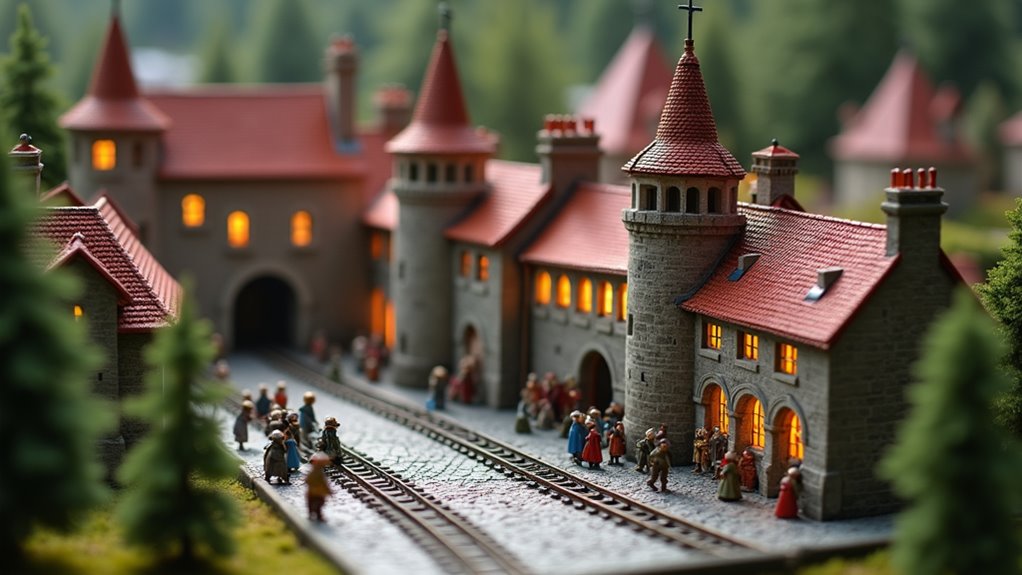
Inside Wrocław’s Sky Tower, you’ll find Kolejkowo—Poland’s largest railroad mock-up that brings Lower Silesia’s history and culture to life in miniature form. Spanning 900 square meters on a 1:25 scale, this detailed exhibition showcases everything from Wrocław’s Market Square to the Karkonosze Mountains.
You’ll watch trains, trams, and cars move through realistic landscapes while day-night cycles create dramatic lighting changes every 13 minutes. Kids love operating interactive elements like cranes, while adults appreciate the humor in miniature daily life scenes. The display includes historical elements from medieval towns to Wild West scenarios.
Plan 1.5-2 hours for your visit. The attraction is open 365 days a year, ensuring you can experience this magical miniature world regardless of holidays or special occasions. Reduced tickets are available for children, students, and pensioners, making this family-friendly attraction budget-conscious entertainment.
The Sum Up
You’ve got plenty to explore in Wrocław without breaking the bank. Most attractions are walkable from the city center, so you’ll save on transport costs. Pack a lunch for the Botanical Garden, bring your camera for those gnome photos, and time your visit to catch the free fountain show after sunset. With affordable entry fees and free walking areas, you can experience this charming Polish city on any budget.