
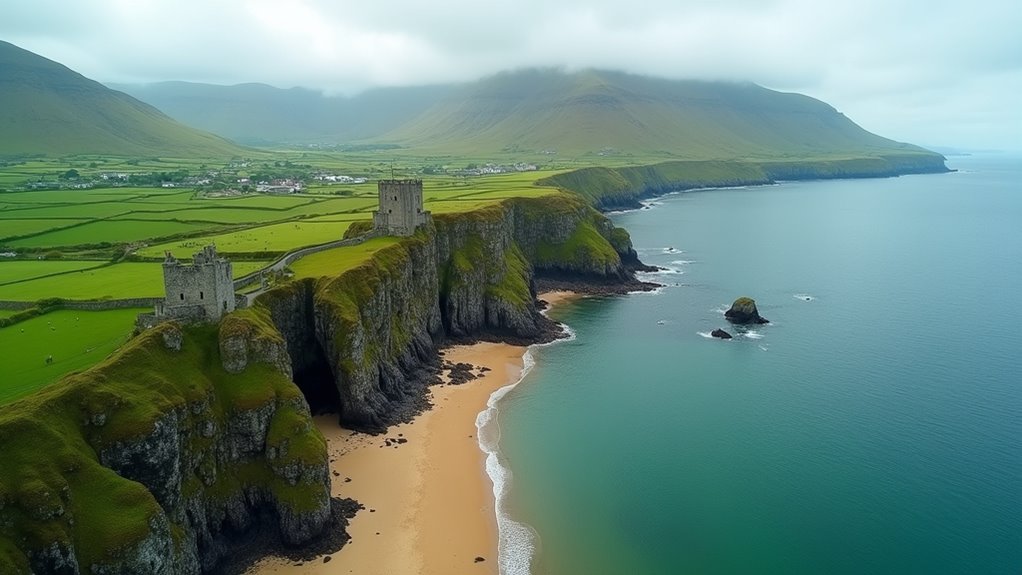
You’ll find Wales packs more drama per square mile than almost anywhere else in Britain. From scaling mist-shrouded peaks at dawn to swimming in crystal-clear mountain pools, this compact country delivers experiences that’ll stick with you long after you’ve returned home. Whether you’re drawn to medieval castles perched on clifftops or charming seaside towns with colorful harbors, Wales offers adventures that most travelers never expect to discover.
- Climb Snowdon Early (Before the Crowds and Steam Train Arrive)
- Explore Edward I’s “Iron Ring” of Medieval Fortresses
- Walk the Pembrokeshire Coast Path for Dramatic Clifftop Views
- Experience Cardiff’s Compact City Center and Waterfront
- Discover Portmeirion’s Whimsical Italian-Style Village
- Take a Deep Dive Into Welsh Culture at St Fagans
- Surf and Hike the Gower Peninsula’s Pristine Beaches
- Cross the World’s Highest Canal Aqueduct at Pontcysyllte
- Wander Through Tintern Abbey’s Gothic Ruins
- Try Wild Swimming in Hidden Mountain Pools
- Base Yourself in Seaside Towns Like Tenby and Llandudno
- The Sum Up
Climb Snowdon Early (Before the Crowds and Steam Train Arrive)
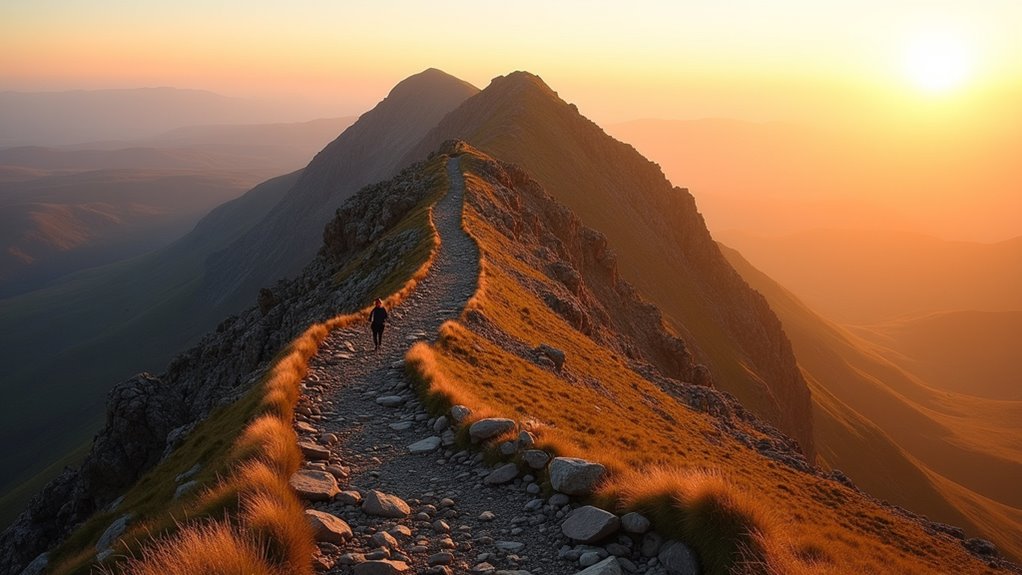
Starting your Snowdon climb before 7:00 AM transforms what’s typically a crowded tourist experience into something magical and deeply personal. You’ll avoid the steam train arrivals that flood the summit with travelers mid-morning, plus escape the heat and congestion that plague afternoon hikers.
The cooler morning temperatures make your ascent more comfortable, while pristine sunrise views reward your early effort with dramatic photographic opportunities. Choose the Pyg Track for moderate challenge or the Llanberis Path if you prefer easier gradients—both benefit enormously from early starts.
Pack layers for chilly summit conditions, bring a reliable headlamp for pre-dawn navigation, and inform someone of your plans since mobile signals can be patchy. For the ultimate early morning challenge, experienced hikers can tackle the Snowdon Horseshoe circular ridgeline that includes scrambling sections along the dramatic ridges. You’ll experience Snowdon’s true majesty before the crowds arrive.
Explore Edward I’s “Iron Ring” of Medieval Fortresses
After conquering Wales’s highest peak, you’ll discover that Edward I left an even more imposing mark across the landscape—a formidable chain of medieval fortresses that still dominates the Welsh countryside today.
You’ll find ten principal castles forming this “Iron Ring,” designed to crush Welsh resistance after Edward’s conquest. Master James of St George’s brilliant architecture features concentric “walls within walls” that’ll leave you amazed at medieval engineering.
Start with UNESCO World Heritage sites like Caernarfon Castle, where Edward spent over £25,000 creating his administrative seat. The castle holds special significance as the birthplace of Edward II, the future king who was born there in 1284.
Conwy’s dramatic coastal position and Harlech’s rocky promontory offer breathtaking views alongside military history. Beaumaris represents the pinnacle of castle design, though left unfinished at Edward’s death.
These aren’t just ruins—they’re perfectly preserved symbols of medieval power that’ll transport you back 700 years.
Walk the Pembrokeshire Coast Path for Dramatic Clifftop Views
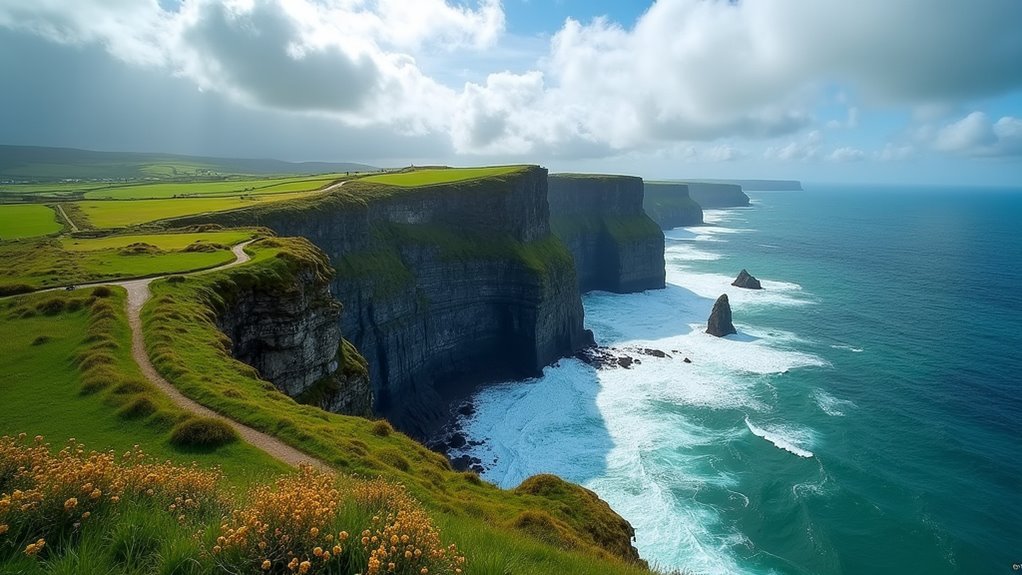
While Edward’s castles showcase medieval power from above, you’ll experience Wales’s raw natural drama by walking the Pembrokeshire Coast Path—a spectacular 186-mile trail that hugs some of Britain’s most breathtaking clifftops.
You’ll traverse diverse landscapes from red sandstone bays to volcanic headlands, with stunning coastal views in nearly every direction. The path offers 35,000 feet of ascent and descent, making it moderately challenging but incredibly rewarding.
You can tackle gentle 9-10 mile sections or push yourself with 15-20 mile stretches. Watch for seals lounging in remote coves and seabirds nesting on dramatic cliffs. Along the way, you’ll encounter fascinating historical landmarks including Neolithic burial chambers, Iron Age forts, and historic lighthouses.
The well-marked trail runs from St Dogmaels to Amroth through Pembrokeshire Coast National Park, where you’ll discover some of Britain’s oldest rock formations dating from the Precambrian period.
Experience Cardiff’s Compact City Center and Waterfront
Though Cardiff earned city status only in 1905, you’ll find Wales’s vibrant capital packs remarkable diversity into its compact center, where Roman foundations meet cutting-edge architecture within easy walking distance.
Start at Cardiff Castle, where Roman origins blend with Gothic Victorian interiors. Then explore the free National Museum Cardiff for 500 years of art history.
Browse Cardiff Market‘s Victorian glass-roofed halls for local treasures before strolling through Bute Park‘s green spaces.
Head to Cardiff Bay, Europe’s largest waterfront redevelopment, where you’ll discover the copper-clad Wales Millennium Centre hosting world-class performances. The area was historically vital for coal transport before its transformation into today’s waterfront destination.
The modern Senedd building showcases Welsh Parliament’s sustainable design, while water activities include scenic waterbus rides connecting bay to city center.
Everything’s walkable, making Cardiff perfect for car-free exploration.
Discover Portmeirion’s Whimsical Italian-Style Village
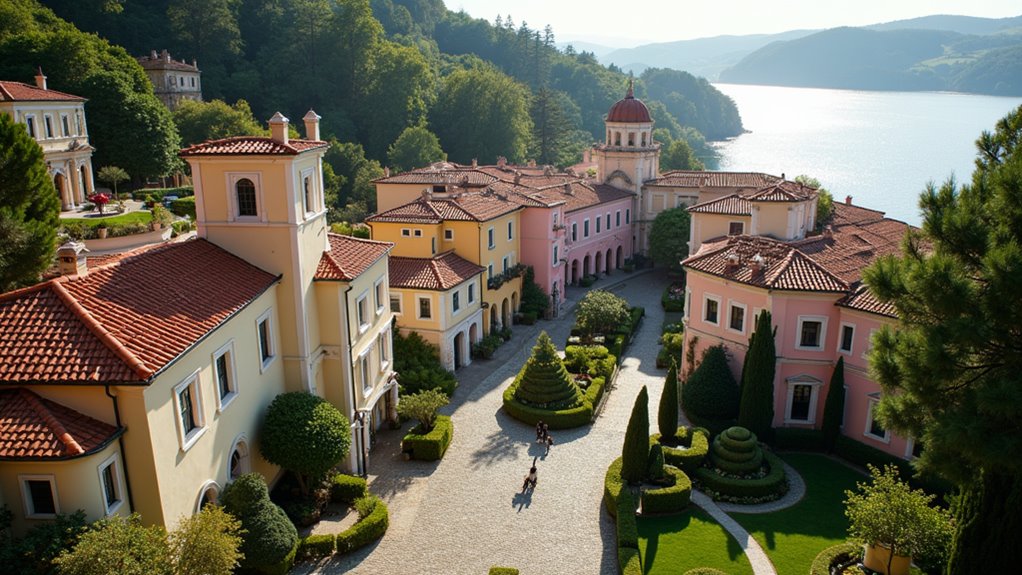
Nestled on the shores of the River Dwyryd estuary in North Wales, Portmeirion presents one of Britain’s most extraordinary architectural experiments—a whimsical Italian-inspired village that feels like stepping into a Mediterranean dream.
You’ll marvel at Sir Clough Williams-Ellis’s playful creation, built between 1925 and 1975 using salvaged materials from demolished buildings. The village cleverly uses scale and perspective to create illusions of grandeur, featuring everything from a striking Campanile bell tower to colorful cottages with trompe-l’oeil facades.
You can stay overnight in the hotel, explore the Grade II* listed gardens, or simply wander through Battery Square. The sheltered location creates a unique Mediterranean-like microclimate that allows subtropical plants like rhododendrons and giant tree ferns to flourish.
If you’re a TV buff, you’ll recognize it as the filming location for the cult series The Prisoner, adding extra intrigue to your visit.
Take a Deep Dive Into Welsh Culture at St Fagans
Just seven miles west of Cardiff, St Fagans National Museum of History offers you an immersive journey through centuries of Welsh life that you simply can’t experience anywhere else. You’ll explore over 40 authentic buildings relocated from across Wales, including Tudor merchant houses, medieval churches, and ironworkers’ cottages, all preserved exactly as they were.
Watch blacksmiths forge iron, try traditional weaving, and observe millers grinding flour at working water mills. The craftsmen often speak Welsh, adding genuine cultural depth to your visit.
You’ll witness how ordinary Welsh people lived, worked, and celebrated from the 12th century onward. The museum’s 100-acre parkland provides ample space to wander between historic structures and soak in the atmosphere of bygone eras.
Best of all? Entry’s completely free at Wales’s most-visited heritage attraction, making this extraordinary cultural dive accessible to everyone.
Surf and Hike the Gower Peninsula’s Pristine Beaches
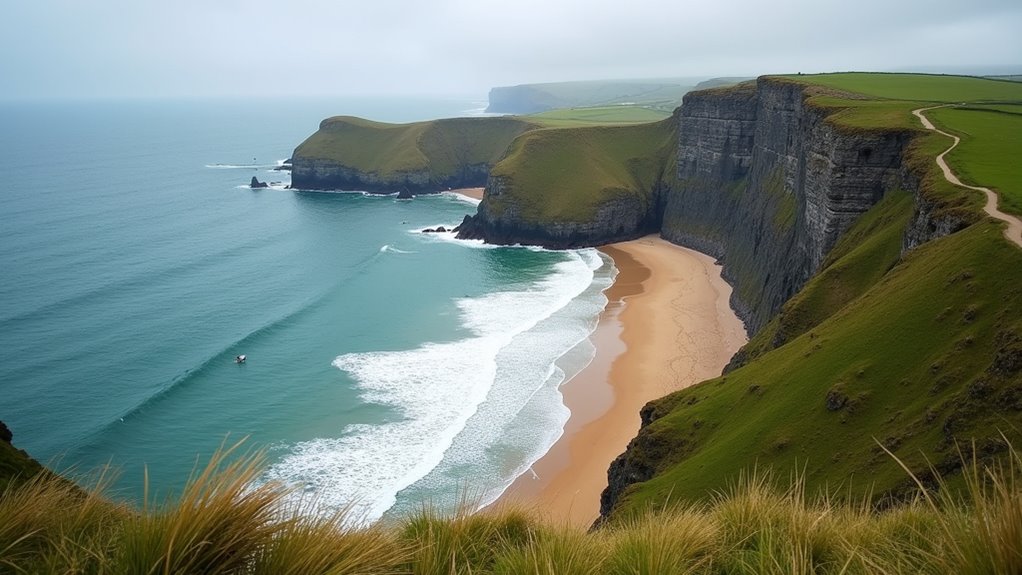
While St Fagans reveals Wales’s cultural heritage through centuries past, the Gower Peninsula showcases the country’s wild, untamed coastline where Atlantic swells crash against some of Britain’s most spectacular beaches.
You’ll find world-class surf spots like Llangennith Bay, where professionals train alongside enthusiasts riding challenging waves. Rhossili Bay’s 3-5 km stretch offers consistent breaks perfect for all skill levels, with surf schools and equipment hire readily available.
For family-friendly learning, head to lifeguarded Caswell Bay.
Between surf sessions, explore dramatic hiking trails. Walk the serpentine Worm’s Head peninsula at low tide, or tackle cliff-top paths to Three Cliffs Bay for stunning limestone formations. At low tide, you can spot the wreck remains of an old Norwegian barque from 1887 scattered across Rhossili’s golden sands.
The 40-year-old surf culture here creates an authentic atmosphere where you’ll experience Wales’s adventurous spirit firsthand.
Cross the World’s Highest Canal Aqueduct at Pontcysyllte
Soaring 126 feet above the River Dee, Pontcysyllte Aqueduct offers you the chance to walk across the world’s highest navigable canal bridge while taking in sweeping views of the Welsh countryside.
You’ll marvel at this UNESCO World Heritage Site‘s remarkable engineering—18 cast iron spans stretching over 1,000 feet, built by Thomas Telford between 1795-1805.
The towpath lets you stroll alongside the working canal while narrowboats glide past, creating an unforgettable experience that combines industrial heritage with natural beauty. Originally designed to transport goods between villages and connect to commercial waterways, this masterpiece of civil engineering transformed regional transportation during the Industrial Revolution.
Don’t miss the visitor center at Trevor Basin for fascinating exhibits about the aqueduct’s construction techniques, including the innovative use of cast iron and stone piers strengthened with ox blood mortar.
It’s pure engineering genius you can actually walk across.
Wander Through Tintern Abbey’s Gothic Ruins
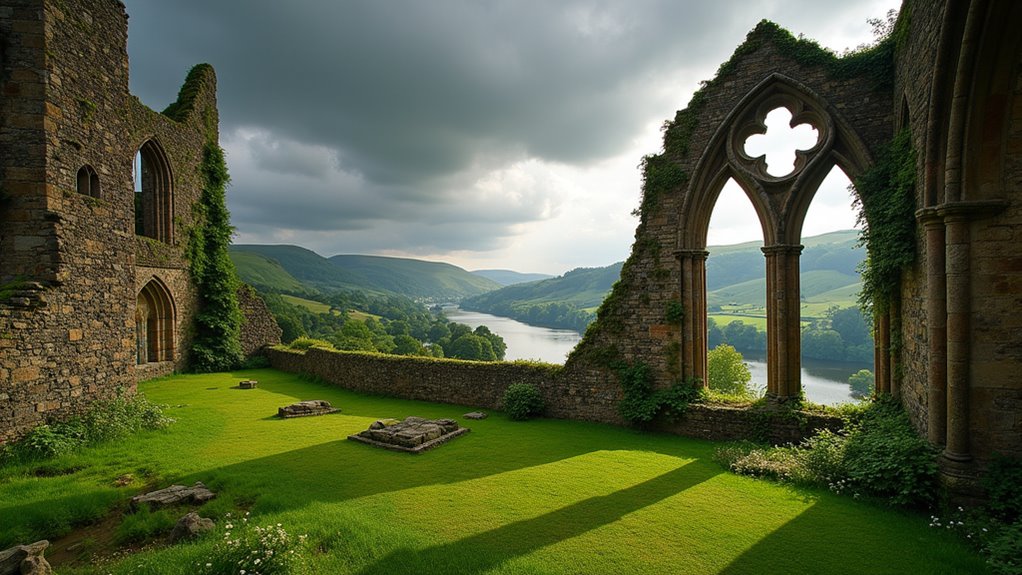
From industrial marvels to spiritual sanctuaries, Wales offers history at every turn. You’ll discover this perfectly at Tintern Abbey, where magnificent Gothic ruins rise from the Wye Valley floor. Founded in 1131 as Wales’ first Cistercian abbey, these weathered sandstone walls showcase stunning 13th-century Decorated Gothic architecture.
You can explore the soaring nave stretching 228 feet, marvel at the seven-light west window, and walk through pointed arches that’ve stood for centuries. The roofless structure creates dramatic silhouettes against the sky, while foundational remains reveal where monks once lived, studied, and worshipped. The abbey’s strategic location meant it was concealed from view by the steep, wooded slopes of the Wye River Valley, making the buildings invisible from a distance.
Managed by Cadw, the abbey welcomes around 17,000 visitors annually. You’ll find detailed tracery, ribbed vaulting, and Gothic details that make this medieval masterpiece unforgettable.
Try Wild Swimming in Hidden Mountain Pools
Beyond the weathered stones of ancient abbeys, Wales’ hidden mountain pools offer you an entirely different way to connect with the landscape’s raw beauty. You’ll discover secluded gems like Llynnau Cerrig-y-Myllt, accessible via a short uphill walk, or venture to Llyn Cau beneath Cader Idris’s 400-meter cliffs for alpine swimming.
Snowdonia’s glacial pools provide dramatic backdrops – try Llyn Bochlwyd‘s rugged hanging valley or the accessible Llyn Padarn near Llanberis. For family-friendly options, head to Cynfal Waterfall’s shallow pools or the River Monnow’s swimming hole near Skenfrith Castle, complete with rope swing.
Pack a wetsuit for comfort in cold mountain waters, plan your routes carefully for remote locations, and respect private land signage to preserve these wild swimming treasures. Along the coast, Llanddwyn Island becomes cut off during high tide, so check tide times before visiting for safe access to its peaceful bays.
Base Yourself in Seaside Towns Like Tenby and Llandudno
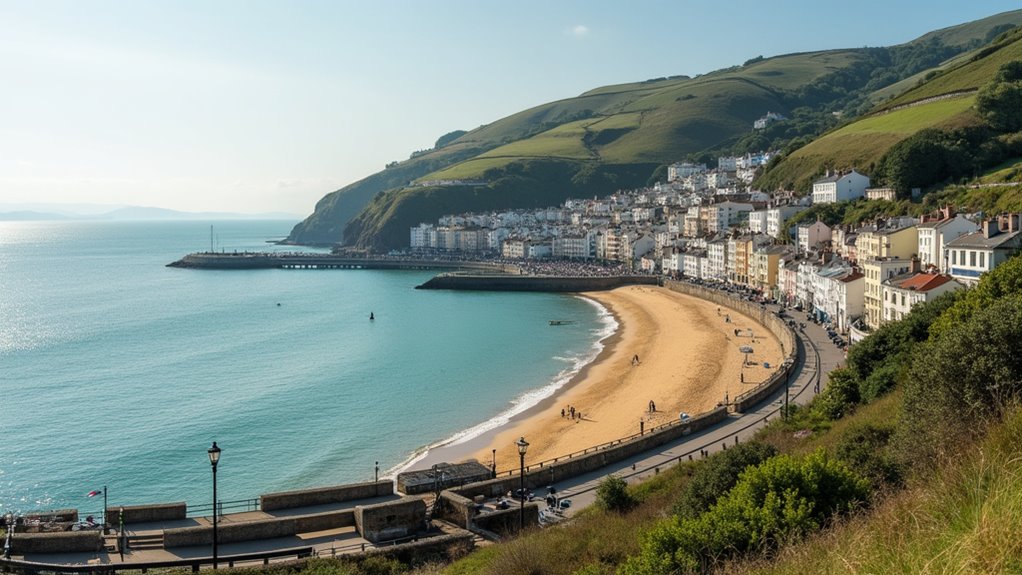
Wales’ charming seaside towns make perfect home bases for exploring the country’s coastal treasures, offering everything from medieval walls to Victorian promenades. You’ll find Tenby particularly mesmerizing with its 372 listed buildings, three blue-flag beaches, and position within Britain’s only coastal national park.
The town’s medieval stone walls create a stunning backdrop while you explore craft shops, art galleries, and waterfront restaurants.
From Tenby, you can easily reach Pembroke Castle where Henry VII was born, or venture to nearby attractions like Manor Wildlife Park and The Dinosaur Park. A short boat ride away, Caldey Island operates as a peaceful retreat run by Cistercian monks, featuring a historic abbey and monastery shops selling handmade chocolates.
The pedestrianized summer streets buzz with outdoor dining, and the harbor offers boat trips along the famous Pembrokeshire Coastal Path.
These seaside bases provide comfort, history, and endless coastal adventures within easy reach.
The Sum Up
You’ll fall head over heels for Wales’ incredible diversity – from conquering Snowdon’s peaks to discovering hidden swimming spots tucked away in the mountains. Whether you’re exploring medieval castles, walking dramatic coastlines, or soaking up Cardiff’s buzzing atmosphere, every corner offers something magical. Don’t rush through – give yourself time to truly experience each destination. Wales isn’t just a place you’ll visit; it’s a country that’ll capture your heart and keep calling you back.