
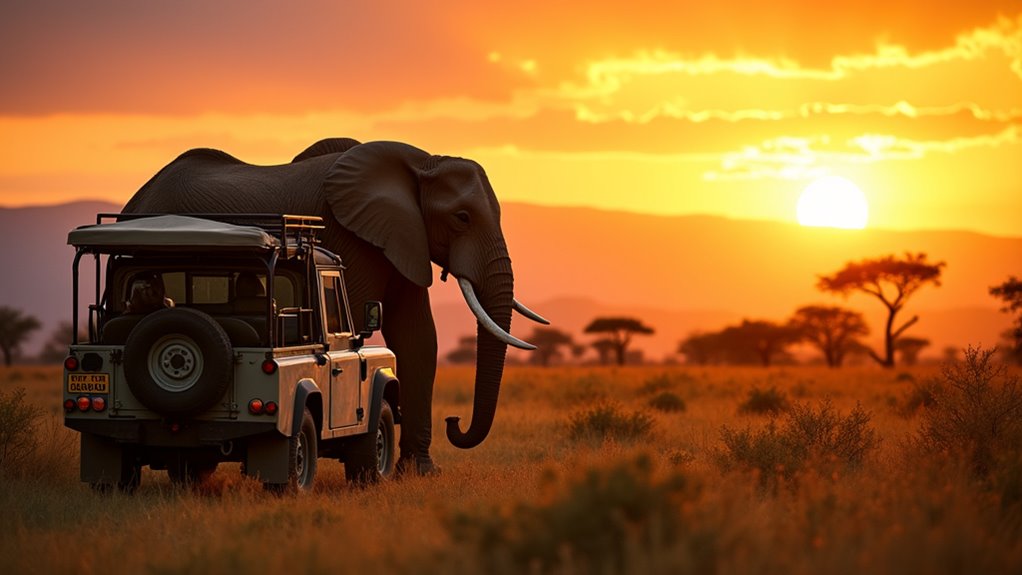
You’ve probably dreamed of an African adventure, but choosing where to go can feel overwhelming when you’re working with a real budget. From tracking gorillas in Rwanda’s misty mountains to catching Tanzania’s epic wildebeest migration, Africa offers experiences that’ll stick with you forever—without requiring a trust fund. The key isn’t visiting every country, but picking the right moments and places that give you maximum impact for your money. Here’s how to make it happen.
- Witness the Great Wildebeest Migration in Tanzania’s Serengeti
- Trek to Mountain Gorillas in Rwanda’s Volcanoes National Park
- Explore Egypt’s Ancient Pyramids and Temples at Dawn
- Safari Through South Africa’s Malaria-Free Game Reserves
- Stand at Victoria Falls During High Water Season
- Walk Among 40,000 Elephants in Zimbabwe’s Hwange National Park
- Navigate Botswana’s Okavango Delta by Traditional Mokoro
- Climb Mount Kilimanjaro via the Machame Route
- Discover Morocco’s Historic Medinas and Atlas Mountain Villages
- Experience Ghana’s Slave Castles and Cape Coast Heritage Sites
- Stargaze in Namibia’s Dark Sky Desert Reserves
- Surf the Atlantic Swells in Morocco’s Imsouane Village
- Track Tree-Climbing Lions at Tanzania’s Lake Manyara
- Island-hop Through Seychelles’ Pristine Beaches and Coral Reefs
- The Sum Up
Witness the Great Wildebeest Migration in Tanzania’s Serengeti
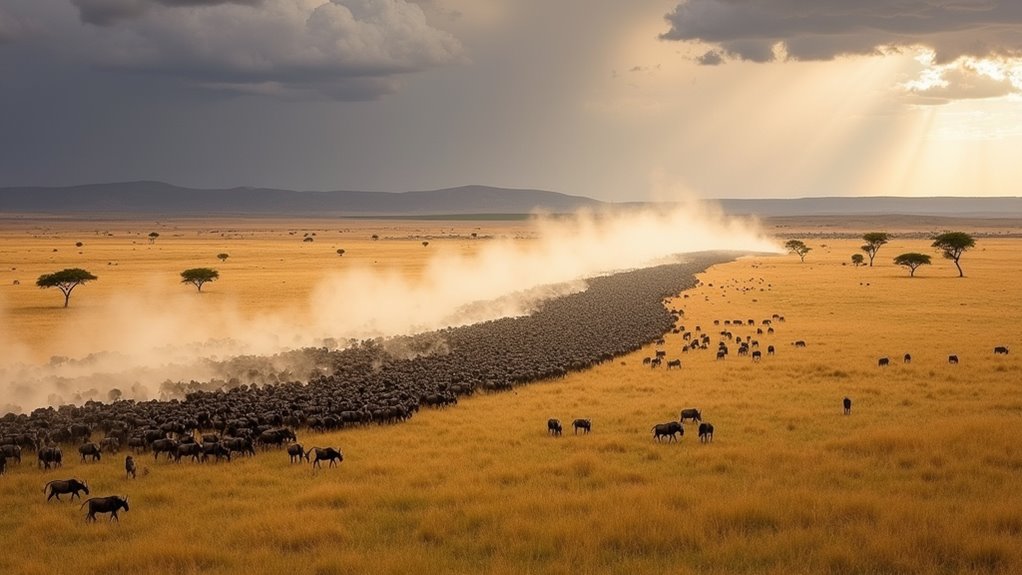
When you witness over two million wildebeest thundering across Tanzania’s Serengeti in the world’s largest animal migration, you’ll understand why this spectacle tops every safari bucket list.
The best action happens during river crossings from May through September, when desperate herds plunge into crocodile-infested waters at Grumeti and Mara rivers.
You’ll save money by visiting Tanzania’s northern Serengeti near Kogatende instead of Kenya’s crowded Masai Mara. Here, you’ll watch thousands of animals cross simultaneously while avoiding tourist buses.
Plan your trip between July and September for peak crossing season, or visit during calving season from January to March when 8,000 babies are born daily. The herds follow seasonal rains in their relentless search for fresh, nutritious grass throughout the ecosystem.
The migration’s 800-kilometer clockwise circuit means you can catch the action year-round somewhere in this unfenced ecosystem.
Trek to Mountain Gorillas in Rwanda’s Volcanoes National Park
At $1,500 per permit, gorilla trekking in Rwanda’s Volcanoes National Park isn’t cheap, but you’ll get an unmatched wildlife encounter that justifies every dollar. You’ll spend one precious hour observing mountain gorillas—among only 1,063 remaining worldwide—in their natural habitat just meters away.
The trek involves hiking through dense bamboo forests and undergrowth, sometimes requiring you to crawl. It’s physically demanding but absolutely worth it. These magnificent creatures live in family groups led by a dominant silverback who protects and guides the troop.
Located two hours and 45 minutes from Kigali, the park houses 12 gorilla families accessible to travelers.
Book your permit well in advance since availability is extremely limited. You’ll also explore Dian Fossey‘s legacy, the renowned conservationist who dedicated her life to protecting these magnificent creatures until 1985.
Explore Egypt’s Ancient Pyramids and Temples at Dawn
From the misty mountains of Rwanda, we shift to the timeless sands of Egypt, where another bucket-list experience awaits at a fraction of gorilla trekking’s cost.
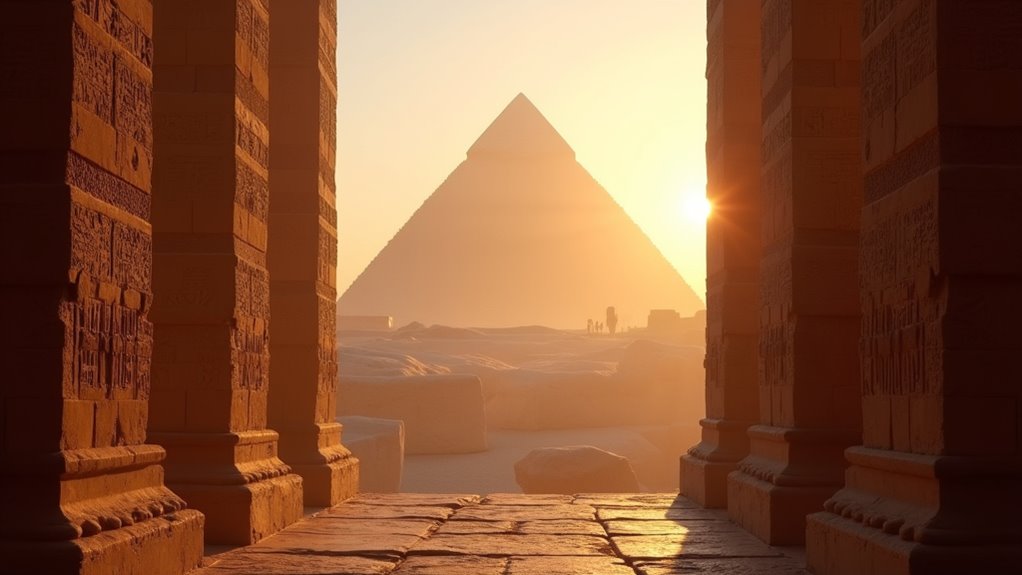
You’ll want to arrive at the Pyramids of Giza before dawn to witness them transform into golden monuments in the soft morning light. Early tours start around 5 AM, helping you escape Egypt’s brutal midday heat and tourist crowds. March through May offers the sweet spot—moderate temperatures with fewer visitors than peak winter months.
Most sunrise packages include camel rides through the desert and traditional Egyptian breakfast, lasting 4-6 hours total. You’ll explore the Great Pyramid, Sphinx, and surrounding complex while temperatures remain comfortable. Standing before these ancient structures, you’ll witness shadows stretching over 1.2 miles at dawn, creating an almost surreal landscape across the desert floor.
Book weekdays for the quietest experience, and consider extending your visit to nearby Saqqara’s Step Pyramid for an even more authentic adventure.
Safari Through South Africa’s Malaria-Free Game Reserves
While Egypt’s ancient wonders captivate with their historical grandeur, South Africa’s malaria-free game reserves offer an entirely different thrill—getting up close with the Big Five without worrying about prophylaxis or health risks.
You’ll find excellent options like Madikwe Game Reserve, spanning 185,329 acres with consistent Big Five sightings and over 340 bird species. The Waterberg region sits just 2.5-3 hours from Johannesburg, making it perfect for shorter trips.
Eastern Cape’s Kwandwe and Shamwari reserves offer diverse landscapes and wildlife viewing near urban centers. Shamwari spans an impressive 61,776 acres across five distinct South African biomes, showcasing remarkable diversity of wildlife and flora.
These destinations are particularly family-friendly since you won’t need malaria medication. Tswalu Kalahari provides exclusive experiences with only 30 guests at a time, showcasing desert-adapted species like black-maned lions and meerkats—perfect for budget-conscious travelers seeking quality over quantity.
Stand at Victoria Falls During High Water Season
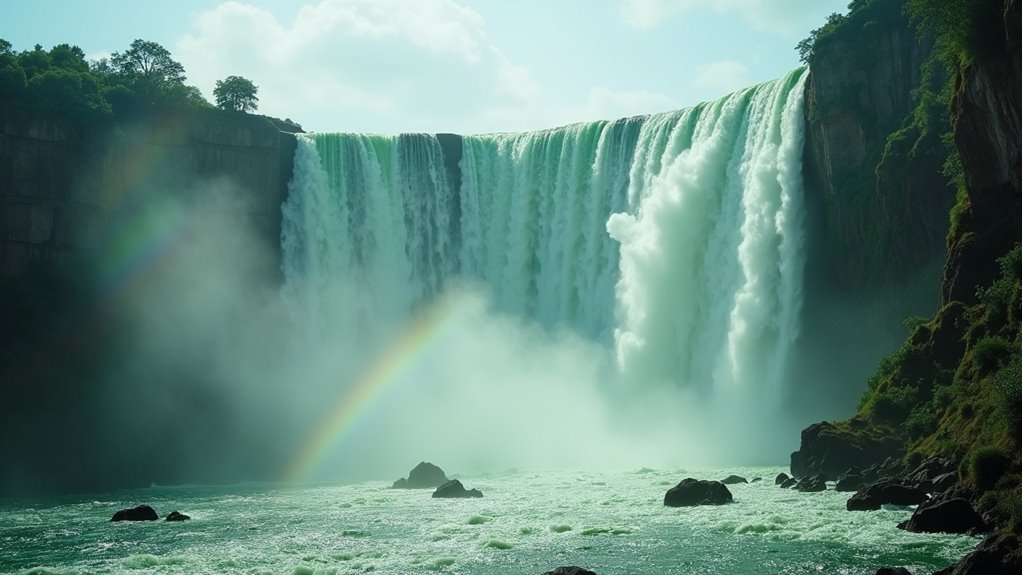
When you time your visit to Victoria Falls between March and May, you’ll witness one of nature’s most powerful spectacles as the Zambezi River releases up to 5,500 cubic meters of water per second over the cliff’s edge.
You’ll experience the iconic “smoke that thunders” as spray plumes rise over 400 meters, visible from 50 kilometers away.
Pack waterproof gear since intense mist will soak you within minutes of approaching viewpoints. The thunderous roar literally vibrates the ground beneath your feet.
While thick spray might obscure close-up views, you’ll gain something more valuable – witnessing raw natural power that floods entire areas. This dramatic display contrasts sharply with November’s low water when sections of the falls dry up completely, making the high water season even more spectacular.
Plan accordingly: some walking paths become treacherous due to slippery surfaces, but the dramatic spectacle you’ll experience during peak flow season creates memories that last forever.
Walk Among 40,000 Elephants in Zimbabwe’s Hwange National Park
Deep in Zimbabwe’s Hwange National Park, you’ll find yourself walking among the largest concentration of elephants in the country—up to 45,000 giants roaming across 14,000 square kilometers of African wilderness.
Plan your visit during the dry season (June–October) when elephants gather around limited water sources, guaranteeing spectacular sightings. You’ll witness these ecosystem engineers in action as they dig waterholes with their tusks and reshape the landscape around them.
The park’s anti-poaching efforts and conservation programs have successfully stabilized these massive herds, creating one of Africa’s most reliable elephant experiences. However, the growing population has led to increased human-wildlife conflicts as elephants venture beyond park boundaries in search of resources.
With roughly 2-3 elephants per square kilometer, encounters are virtually guaranteed. These African savanna elephants—distinguished by their enormous ears and impressive front legs—offer an unforgettable wildlife experience that’s both accessible and affordable.
Navigate Botswana’s Okavango Delta by Traditional Mokoro
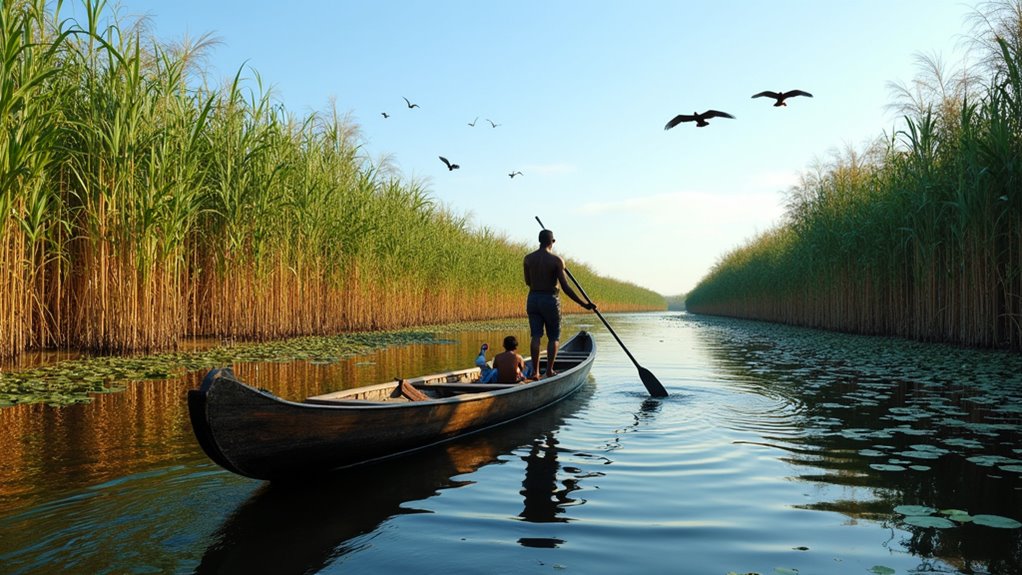
How do you explore one of Africa’s most pristine wetlands without disturbing its delicate ecosystem? You’ll glide silently through Botswana’s Okavango Delta aboard a mokoro, a traditional dugout canoe that’s been the locals’ transportation for centuries.
Your expert poler stands at the stern, using a long pole called ngashi to navigate papyrus-fringed channels where vehicles can’t reach. You’ll spot kingfishers, herons, and red lechwe from this intimate vantage point, observing wildlife behavior that’s impossible to see on typical game drives.
Plan your visit between May and September when flood levels are perfect for mokoro travel. These twenty-foot vessels are carved from Jackalberry or Sausage Tree trunks, selected specifically for their superior buoyancy.
Today’s fiberglass versions protect the environment while maintaining traditional design. These budget-friendly safaris support local communities while offering you an authentic, peaceful way to experience Africa’s only inland delta.
Climb Mount Kilimanjaro via the Machame Route
While Botswana’s waterways offer serene wildlife encounters, Tanzania’s Mount Kilimanjaro presents Africa’s ultimate vertical adventure. You’ll want to choose the Machame Route—known as the “Whiskey Route”—for its stunning scenery and high success rates.
This 62-kilometer trek takes you through rainforest, moorland, and alpine desert zones over 7-8 days.
Budget-wise, the longer itinerary pays off with 85-95% summit success rates versus 73% for rushed 6-day climbs. You’ll camp in tents throughout, following the smart “climb high, sleep low” principle for acclimatization.
Expect challenging terrain like the famous Barranco Wall scramble, but don’t worry—it’s non-technical climbing that rewards good fitness over specialized skills. Summit Day involves up to 15 hours of effort, including both the ascent to Uhuru Peak and descent back to base camp. Pack trekking poles for those slippery rainforest sections.
Discover Morocco’s Historic Medinas and Atlas Mountain Villages
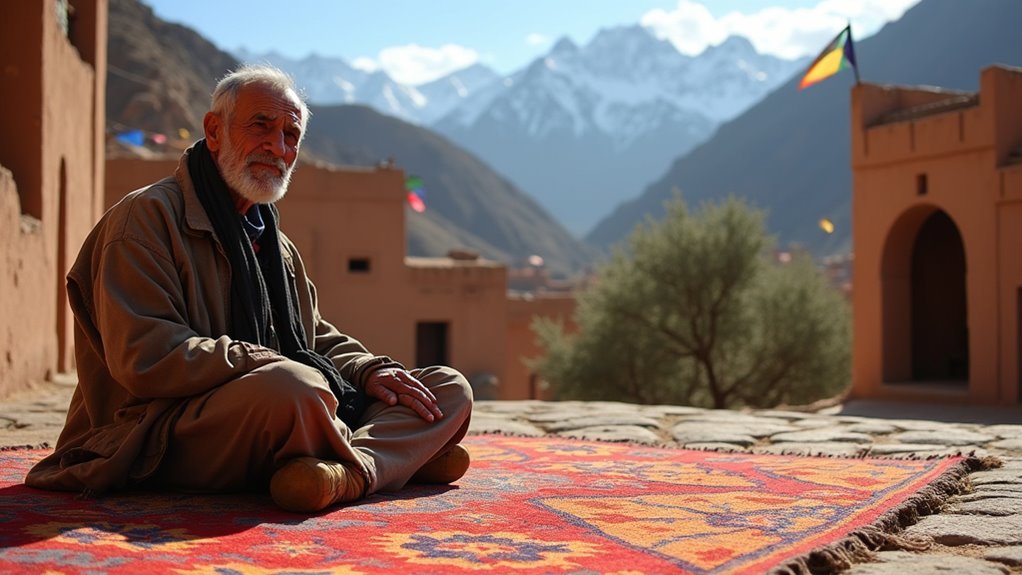
After conquering Kilimanjaro’s heights, you’ll find Morocco’s ancient medinas offer an equally mesmerizing ground-level adventure at a fraction of the cost. Start in Marrakech’s medina, where you’ll navigate bustling souks and witness snake charmers at Jemaa el-Fna square. The Koutoubia Mosque and Bahia Palace showcase stunning Islamic architecture without expensive entrance fees.
Fez’s 9th-century medina houses the world’s oldest operating university and 144 districts filled with artisan workshops. You’ll discover leather goods at Souk Jeld and traditional slippers at Serrajine markets. The medina reached its golden age during the 13th-14th centuries under Marinid rule, when it served as the kingdom’s capital and developed its distinctive architectural character.
Venture into Atlas Mountain villages to experience authentic Berber culture in mud-brick homes. These remote settlements offer budget-friendly hiking opportunities and local crafts like weaving and pottery. Each destination provides incredible culture while keeping your wallet happy.
Experience Ghana’s Slave Castles and Cape Coast Heritage Sites
Ghana’s Cape Coast Castle stands as one of Africa’s most powerful historical destinations, where you’ll confront the brutal realities of the Atlantic slave trade without breaking your budget. This UNESCO World Heritage Site offers an affordable yet profound educational experience as you walk through the notorious dungeons that once held up to 1,500 enslaved Africans.
You’ll explore the cramped underground chambers where captives were segregated by gender, examining the small ventilation shafts that doubled as food drops. The castle’s chapel built directly above the dungeons creates a haunting juxtaposition you won’t forget. Your visit will culminate at the infamous Gate of No Return, marking the final departure point for countless enslaved Africans beginning their journey across the Atlantic.
Entry fees remain modest, making this essential historical site accessible to budget travelers. You’ll gain invaluable insight into this dark chapter while supporting local preservation efforts in Cape Coast.
Stargaze in Namibia’s Dark Sky Desert Reserves
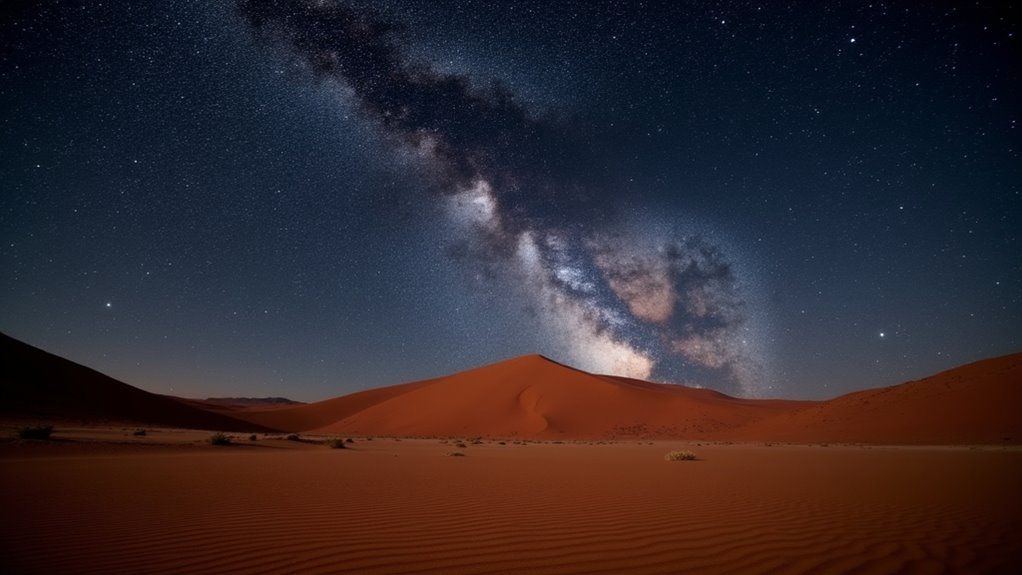
Sixty miles from the nearest community, Namibia’s NamibRand Nature Reserve offers you one of the world’s darkest measured skies without the premium price tag of many astronomical destinations. This Gold Tier International Dark Sky Reserve spans 730 square miles of protected Namib Desert, where you’ll see thousands of stars invisible in light-polluted areas.
You can stay at the budget-friendly NaDEET Centre with open-air sleeping units for immersive stargazing, or splurge on lodges like &Beyond Sossusvlei Desert Lodge featuring computerized telescopes and astronomer-guided sessions. The centre focuses on environmental education about both Earth and sky, welcoming Namibian schoolgroups and international visitors alike.
The reserve’s strict lighting policies maintain exceptional darkness above iconic red dunes and fairy circles. Book during new moon phases for ideal viewing, and pack warm layers since desert temperatures drop markedly at night.
Surf the Atlantic Swells in Morocco’s Imsouane Village
While Morocco’s coastline stretches for over 1,200 miles, you’ll find some of the Atlantic’s most consistent and beginner-friendly waves in the laid-back fishing village of Imsouane.
You’ll want to visit between October and April when swells are most reliable and water temperatures hover around 18-22°C—pack a 3/2mm wetsuit.
The Bay offers perfect beginner conditions with mellow right-hand point breaks lasting nearly two minutes, best surfed at low to mid tide.
More experienced surfers should tackle The Cathedral‘s challenging left-hand reef break or The Reef’s powerful waves during high tide. The region enjoys a dry climate year-round with rain being exceptionally rare.
You’ll save money staying in this authentic fishing village while enjoying Morocco’s most accessible surf spot.
Morning sessions offer the cleanest conditions with offshore winds keeping waves well-shaped.
Track Tree-Climbing Lions at Tanzania’s Lake Manyara
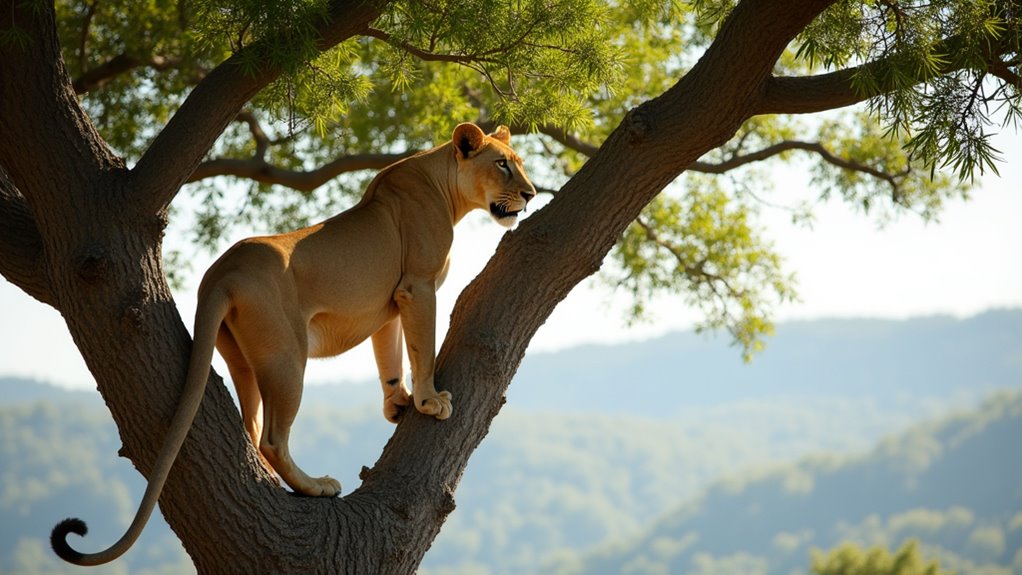
Although lions are typically ground-dwelling predators, you’ll witness one of Africa’s most extraordinary sights at Tanzania’s Lake Manyara National Park—massive cats lounging lazily in acacia and fig trees with their limbs dangling from branches. This rare behavior occurs nowhere else in Africa regularly, making your safari truly unique.
Visit during the dry season (June-October) for ideal sightings when vegetation’s thinner and lions climb to escape ground insects or heat. While sightings aren’t guaranteed, experienced guides know territories and timing patterns.
The compact park offers excellent value beyond tree-climbing lions—you’ll spot elephants, hippos, and over 400 bird species including flamingos. The diverse landscape provides stunning photography opportunities against Rift Valley escarpments, challenging your preconceptions about Africa’s apex predators. Lake Manyara pairs perfectly with other Northern Circuit destinations like the Ngorongoro Crater for Big Five encounters and Serengeti for witnessing the Great Migration.
Island-hop Through Seychelles’ Pristine Beaches and Coral Reefs
Beyond Tanzania’s wildlife spectacles, the Seychelles archipelago offers you a completely different African adventure where turquoise waters and granite boulders create some of the world’s most photographed beaches.
You’ll find affordable ferry services connecting Mahé, Praslin, and La Digue, making island-hopping budget-friendly over one to two weeks.
Start at Anse Source d’Argent on La Digue, where you can snorkel directly off the pink sand beach and spot turtles grazing on sea grass. Rent a bicycle to explore hidden coves affordably. Watch for giant tortoises creating traffic jams during mating season as you cycle around the island.
On Praslin, visit Anse Lazio early morning for the best snorkeling behind the watersports shop.
Don’t miss St. Anne Marine National Park near Mahé for vibrant coral reefs. Take boat taxis to remote beaches or hike thirty minutes to pristine Anse Cocos for untouched beauty.
The Sum Up
You’ve got incredible adventures waiting across Africa, from budget-friendly camping safaris in Tanzania to affordable guesthouse stays near Rwanda’s gorilla parks. Don’t let cost concerns stop you—many experiences offer tremendous value. Book accommodations early, travel during shoulder seasons, and consider group tours to stretch your budget. Pack light, bring versatile gear, and you’ll discover that Africa’s most unforgettable moments often come free—stunning sunsets, wildlife encounters, and connections with welcoming local communities.