
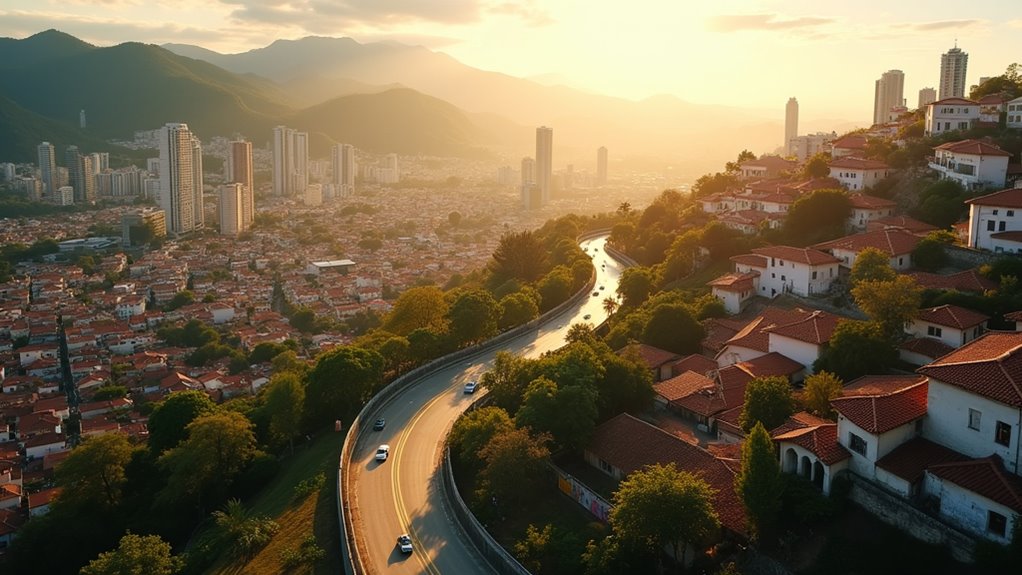
Your first time in Caracas should start at Plaza Bolívar, where Venezuela’s independence movement began in 1567. You’ll want to ride the Teleférico up El Ávila mountain for stunning panoramic views, then explore Simón Bolívar’s actual birthplace just one block from the plaza. Don’t miss the 82-hectare Parque del Este for green space, the National Pantheon where heroes rest, and contemporary art at the Museum of Contemporary Art. For the complete experience including mountain escapes and Caribbean day trips, there’s much more to discover.
- Stand in Plaza Bolívar Where Venezuela’s Independence Began
- Ride the Cable Car Up El Ávila for Mountain Views and Cool Air
- Explore Simón Bolívar’s Actual Birthplace and Childhood Home
- Walk Through East Park’s 700 Hectares of Green Space
- Visit the National Pantheon Where Heroes Rest
- Experience Contemporary Art at Museum of Contemporary Art of Caracas
- Take in City Views From Plaza Francia’s Obelisk Area
- Catch a Performance at Teresa Carreño Cultural Complex
- Plan a Day Trip to Los Roques for Caribbean Beaches
- The Sum Up
Stand in Plaza Bolívar Where Venezuela’s Independence Began
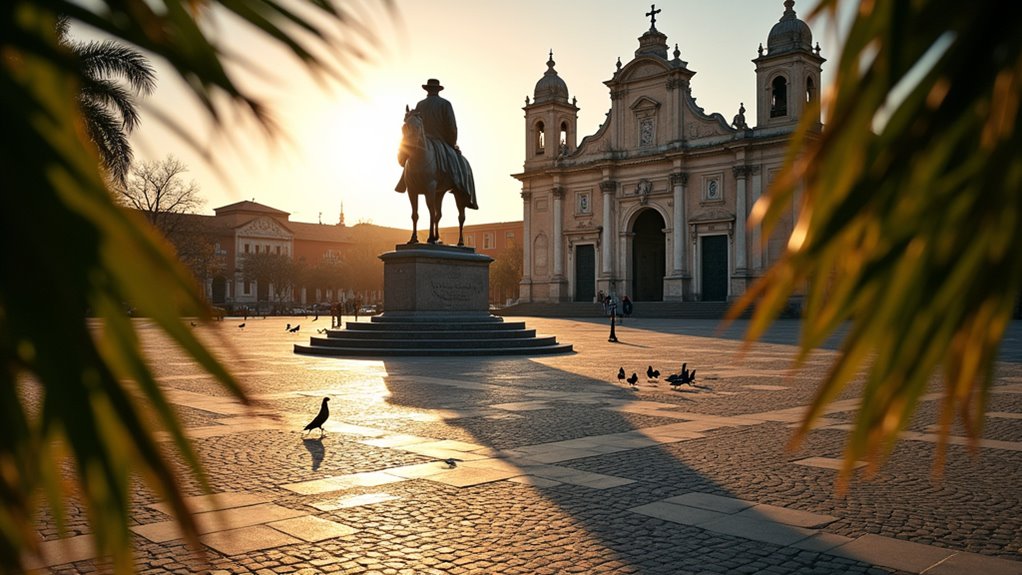
When you step into Plaza Bolívar, you’re standing where Venezuela’s fight for independence ignited on April 19, 1810, as passionate rebels gathered in this very square to challenge Spanish colonial rule.
Originally established as Plaza Mayor in 1567, this historic heart of Caracas has witnessed centuries of pivotal moments, including public executions and revolutionary uprisings.
You’ll find the magnificent bronze equestrian statue of Simón Bolívar dominating the center—a 4-meter masterpiece by Italian sculptor Adamo Tadolini.
The square’s French-style design features paths arranged in a double cross pattern, surrounded by centennial trees and colonial architecture.
Visit on weekday mornings for smaller crowds and pleasant weather. Evening strolls are also highly recommended for a peaceful experience with good security and opportunities to enjoy illuminated surroundings during festivities.
The surrounding National Capitol, Cathedral of Caracas, and Museo Bolivariano offer deeper historical exploration within walking distance.
Ride the Cable Car Up El Ávila for Mountain Views and Cool Air
As you escape Caracas’s urban heat and noise, the Teleférico de Warairarepano whisks you 3.5 kilometers up El Ávila’s slopes in just 15 minutes, climbing over 1,000 meters from the Maripérez station to the cool mountain ridge at 2,100 meters elevation.
You’ll join other riders in one of 70+ gondola cabins for what locals consider a half-day adventure.
At the summit, you can stroll the wide ridgeline walkway for panoramic views of Caracas sprawling below and glimpses of the Caribbean coast on clear days.
Grab hot chocolate and traditional mountain snacks from food kiosks while browsing handicraft stands. The recently restored Humboldt Hotel adds a striking Bauhaus architectural element to the mountaintop experience after reopening in 2018.
The temperature drops noticeably here, so bring a light jacket.
Cloud cover often rolls across the ridge, creating dramatic atmospheric shifts that make timing your visit worthwhile.
Explore Simón Bolívar’s Actual Birthplace and Childhood Home
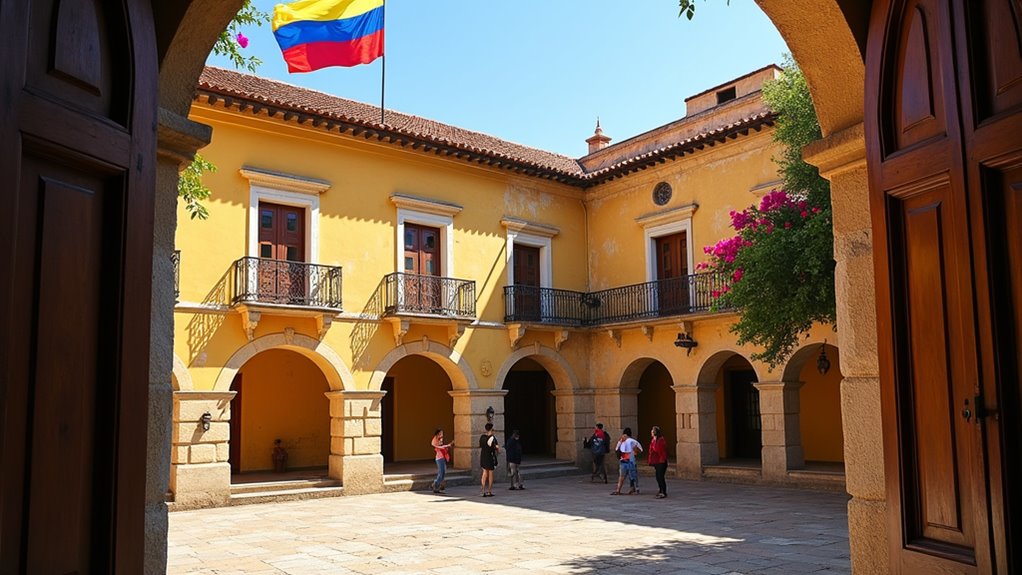
While modern Caracas has transformed dramatically since colonial times, you can step directly into Venezuelan history at the Casa Natal del Libertador Simón Bolívar. This is the authentic 17th-century house where South America’s great liberator was born on July 24, 1783.
Located between San Jacinto and Traposos corners, this preserved colonial residence showcases period furniture, original courtyards, and Bolívar’s actual birth bedroom where he lived until age nine. The building itself represents classic Spanish Colonial architecture with its central courtyard design and red-tiled roofs that have been carefully maintained since its completion in 1643.
The museum displays exceptional paintings by Venezuelan masters Tito Salas and Arturo Michelena depicting independence scenes, plus Bolívar’s original baptismal font from Caracas Cathedral.
Entry’s free with Spanish-language tours available. You’ll find it one block east of Plaza Bolívar, making it perfect for combining with cathedral visits and historic center walking tours.
Walk Through East Park’s 700 Hectares of Green Space
After exploring Caracas’s colonial heritage, you’ll find the city’s modern soul at Parque Generalísimo Francisco de Miranda, better known locally as Parque del Este. This 82-hectare green lung offers immediate relief from the city’s concrete sprawl, accessible directly from Miranda metro station.
Roberto Burle Marx’s 1961 landscape design creates three distinct zones: rolling lawns perfect for picnics, dense tropical forest trails, and formal gardens with stunning murals. You’ll discover locals jogging the dedicated tartan track, families enjoying pedal boats on the artificial lake, and couples strolling shaded pathways lined with búcaro trees and coffee plants from the original hacienda.
Don’t miss the Humboldt Planetarium for astronomy shows or the small zoo. The park’s microclimate provides cooler temperatures and cleaner air—essential respite in tropical Caracas. Originally designed to accommodate 6,000 visitors monthly when it opened in 1961, the park now welcomes far more people seeking urban sanctuary.
Visit the National Pantheon Where Heroes Rest
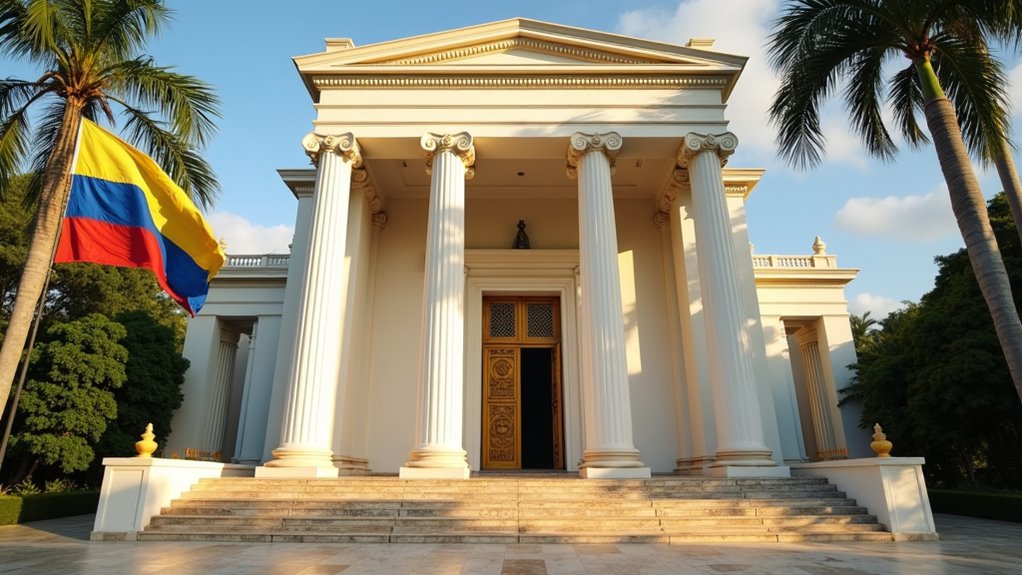
Once you’ve enjoyed the tranquil greenery of Parque del Este, head to Venezuela’s most sacred civic space at the National Pantheon, where the nation’s greatest heroes rest beneath soaring neo-baroque domes. You’ll find Simón Bolívar’s bronze sarcophagus commanding the central nave, replacing what was once the church altar.
The 1930s ceiling paintings by Tito Salas depict pivotal moments from Bolívar’s campaigns, while a massive crystal chandelier illuminates the ornate interior.
Located near Plaza Bolívar in the historic Altagracia parish, this former colonial church transforms Venezuela’s independence story into visual splendor. The building’s impressive central tower rises 49 meters high, making it a prominent landmark visible throughout Caracas. Audio guides provide essential context about the presidents, generals, and notable figures entombed here.
You’ll appreciate the building’s evolution from 1744 church to national monument, representing Venezuela’s journey from colony to republic.
Experience Contemporary Art at Museum of Contemporary Art of Caracas
From Venezuela’s historical foundation, shift your cultural exploration to the cutting-edge Museo de Arte Contemporáneo de Caracas Armando Reverón, where you’ll discover one of Latin America’s most significant contemporary art collections.
Located within Parque Central‘s cultural district, this five-level museum houses approximately 5,000 works spanning post-WWII Venezuelan and international art. The museum offers free entry to both its permanent collections and rotating temporary exhibitions.
Navigate through eleven exhibition halls featuring pieces attributed to masters like Picasso, Monet, and Warhol, alongside prominent Venezuelan kinetic artist Jesús Soto.
The museum’s architectural design creates a fluid viewing experience, connecting interior galleries with sculpture gardens through sequential routes.
Visit Tuesday through Friday from 9:00-17:00, or weekends 10:00-17:00.
Access the museum via Plaza Contemporánea or the outdoor Sculpture Garden, both seamlessly integrated into Parque Central’s pedestrian network.
Take in City Views From Plaza Francia’s Obelisk Area
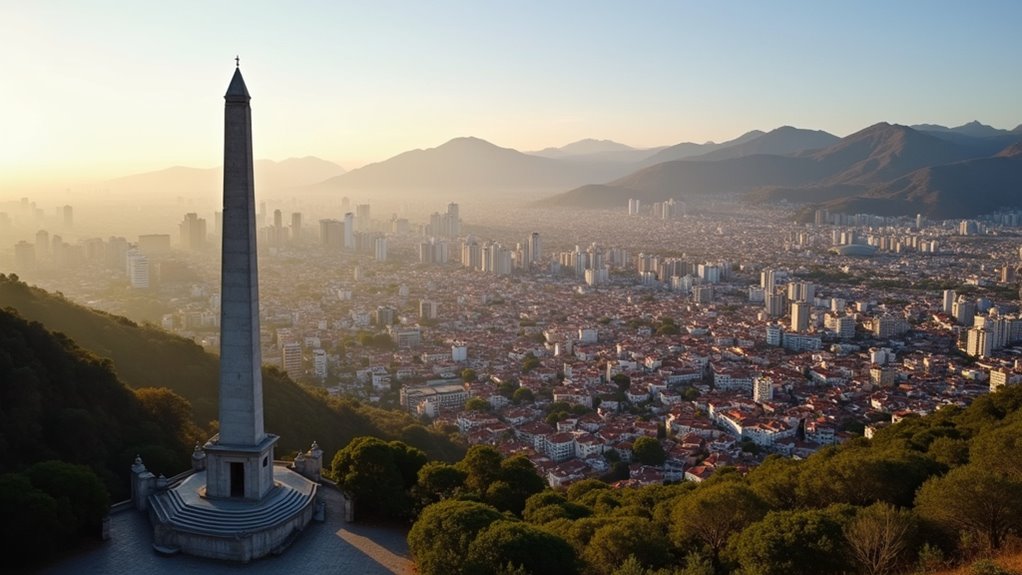
While contemporary art provides an indoor cultural experience, Plaza Francia’s elevated obelisk area delivers Caracas’ most accessible panoramic viewpoint. It combines iconic urban architecture with sweeping mountain vistas.
You’ll find this landmark square in upscale Altamira, directly above the metro station for easy access from anywhere in the city.
The towering obelisk creates dramatic photo opportunities against El Ávila National Park’s ridgeline. The surrounding modernist buildings frame Caracas’ eastern skyline perfectly.
Visit during golden hour for the best lighting, when the obelisk’s illumination begins highlighting the mountain backdrop.
The multi-level plaza features cascading fountains and water mirrors that add visual interest to your shots. This historic square was originally named Plaza Altamira before being renamed to mirror Venezuela Square in Paris.
After capturing city views, explore Altamira’s excellent restaurants and cafés within walking distance.
Catch a Performance at Teresa Carreño Cultural Complex
As Venezuela’s premier performing arts venue, Teresa Carreño Cultural Complex transforms any Caracas visit into a world-class cultural experience, hosting everything from the renowned Orquesta Sinfónica Simón Bolívar to international ballet productions in its brutalist architectural masterpiece.
You’ll find two distinct performance spaces: the grand Sala Ríos Reyna with 2,300+ seats for symphonic concerts and opera, and the intimate 440-seat Sala José Félix Ribas for chamber music. Book tickets early for popular productions like “The Nutcracker” or “Swan Lake.”
Don’t miss the striking kinetic art installations by Jesús Rafael Soto throughout the foyers and the warm wood-paneled interiors that contrast beautifully with the building’s bold concrete exterior. The complex was named after Venezuelan pianist Teresa Carreño, honoring her musical legacy and celebrating the nation’s rich cultural heritage.
Arrive early to explore the café areas and soak in the pre-performance atmosphere.
Plan a Day Trip to Los Roques for Caribbean Beaches
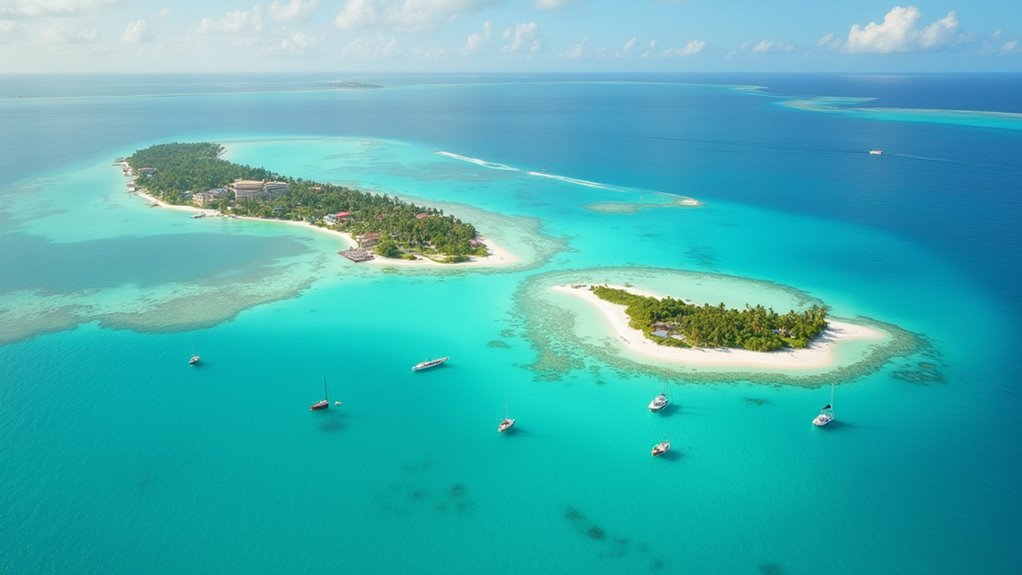
Just thirty minutes from Caracas by small aircraft, Los Roques National Park delivers some of the Caribbean’s most pristine beaches and crystal-clear waters, making it the perfect escape from the capital’s urban intensity.
Day tours typically depart between 6-8am from Maiquetía, including round-trip flights, boat transfers to stunning cays like Francisqui or Madrisqui, beach equipment, and lunch.
You’ll pay a mandatory park entry fee upon arrival at Gran Roque, then transfer to boats visiting nearby islands within the 36-kilometer coral reef barrier. The luggage allowance is 10 kg, with extra weight costing US$1 per kg.
Snorkeling gear’s usually provided, revealing vibrant marine life and sea turtles.
Book through operators like Aerotuy well in advance—aircraft seats are limited.
Expect to pay around $300-350 for flights plus tour packages, returning to Caracas by late afternoon.
The Sum Up
You’ve got enough here to fill several days exploring Venezuela’s capital. Start with the historic center around Plaza Bolívar, then work your way to the mountain views. Don’t skip the cultural sites—they’ll give you real insight into Venezuelan identity. Save Los Roques for when you’ve got a full day free. Caracas rewards visitors who dig deeper than surface impressions, so take your time with each experience.