
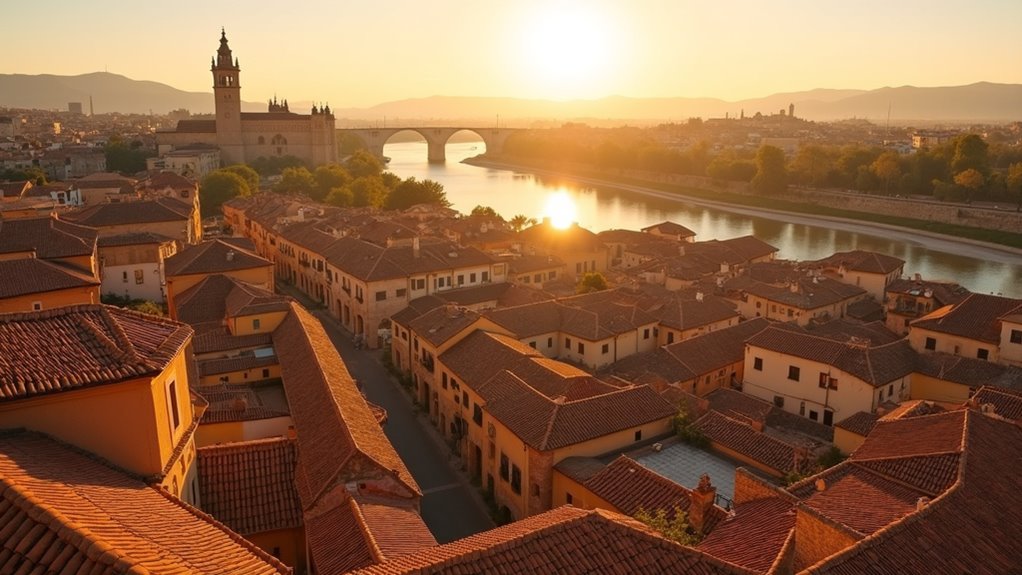
You’ve probably heard about Córdoba’s famous mosque-cathedral, but there’s so much more to this Andalusian gem than its most iconic landmark. From ancient Roman ruins to hidden patios bursting with flowers, this city layers 2,000 years of history into walkable neighborhoods that won’t break your budget. Whether you’re drawn to Moorish architecture or authentic tapas bars, you’ll find that Córdoba rewards visitors who know exactly where to look for its best-kept secrets.
- Marvel at the Mezquita-Cathedral’s Architectural Wonder
- Stroll Across the Ancient Roman Bridge at Sunset
- Explore the Alcázar of the Christian Monarchs and Its Gardens
- Wander the Narrow Streets of the Jewish Quarter
- Hunt for the Perfect Patio During Spring Festival Season
- Climb the Bell Tower for Panoramic City Views
- Step Back in Time at Medina Azahara Ruins
- Experience Local Life at Plaza De La Corredera
- Discover Aristocratic Elegance at Palacio De Viana
- Sample Córdoba’s Flavors at Mercado Victoria
- The Sum Up
Marvel at the Mezquita-Cathedral’s Architectural Wonder
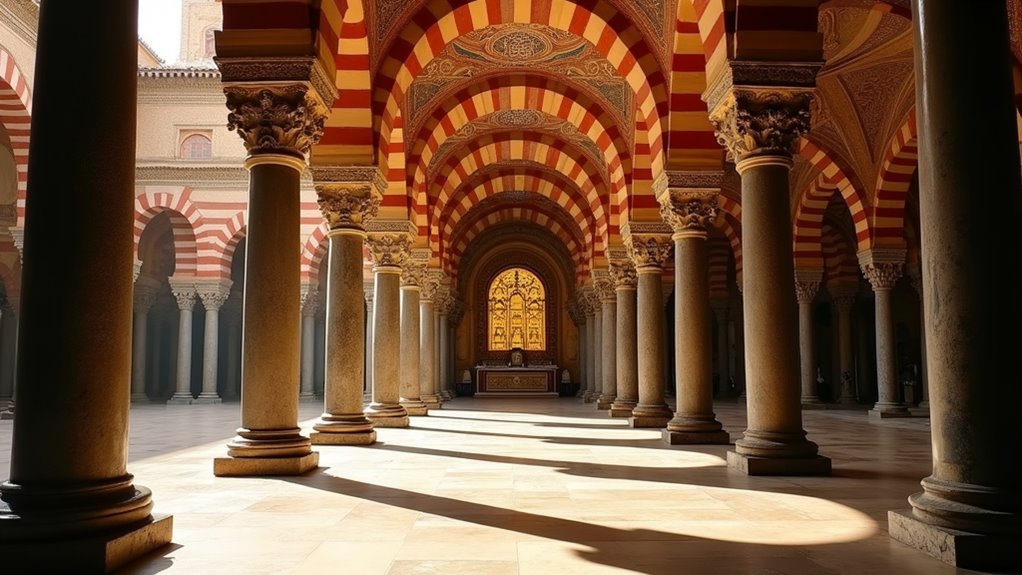
When you step into Córdoba’s Mezquita-Cathedral, you’ll witness one of the world’s most extraordinary architectural achievements—a building that’s evolved continuously for over 1,200 years.
You’ll find yourself surrounded by a “forest” of 856 columns creating mesmerizing double-tiered arches in alternating red brick and stone. These columns were cleverly recycled from Roman and Visigothic structures, making your visit a journey through multiple civilizations.
Don’t miss the stunning polylobed arches and intricate dome structures from the 10th-century expansion.
The building’s most striking feature is the dramatic contrast between the Islamic hypostyle hall’s horizontal flow and the Renaissance cathedral nave that pierces through its center. The narrow clerestory windows create a mystical ambiance by filtering sunlight throughout the interior space.
This architectural fusion creates an unforgettable experience that perfectly captures Córdoba’s multicultural heritage.
Stroll Across the Ancient Roman Bridge at Sunset
After exploring Córdoba’s architectural masterpiece, head to the ancient Roman bridge for one of the city’s most rewarding free experiences. This 2,000-year-old bridge stretches 247 meters across the Guadalquivir River, connecting you to centuries of history without spending a euro.
Time your visit for sunset when the bridge’s 16 arches glow against the water’s reflective surface. You’ll walk the same path that pilgrims, merchants, and armies have traveled for millennia.
Stop at the midpoint statue of St. Raphael, Córdoba’s patron saint, then continue to the Calahorra Tower for panoramic views. The bridge likely formed part of the ancient Via Augusta, the Roman road that connected Rome to Cádiz, making it a crucial link in the empire’s transportation network.
The recent restoration preserved original Roman stones while adding smooth granite paving that’s comfortable for evening strolls. Don’t miss this UNESCO World Heritage site’s magical transformation as daylight fades.
Explore the Alcázar of the Christian Monarchs and Its Gardens
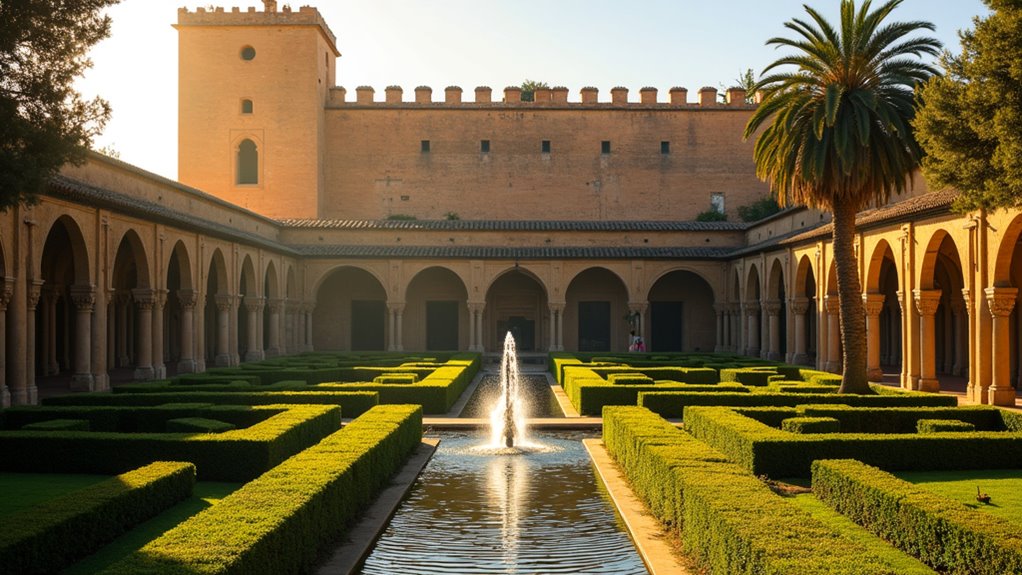
Just a short walk from the Roman bridge, you’ll discover one of Córdoba’s most layered historical sites at the Alcázar of the Christian Monarchs. This fortress showcases 2,000 years of history, from Roman origins through Visigothic and Moorish periods to Christian rule.
You’ll explore where Columbus first met Ferdinand and Isabella in 1486, planning his historic voyage.
The real highlight? The stunning Moorish gardens with geometric designs, reflecting pools, and manicured cypress trees. Don’t miss the Roman mosaics from the 2nd-3rd centuries and the preserved Moorish baths inside. The fortress covers approximately 4,000 square meters, reflecting the grandeur and well-distributed nature of this historic structure.
The Mudéjar architecture blends Christian and Islamic styles beautifully.
Entry fees are reasonable, making this UNESCO World Heritage site perfect for budget travelers seeking authentic Spanish history without breaking the bank.
Wander the Narrow Streets of the Jewish Quarter
From the Alcázar’s gardens, head northeast into Córdoba’s atmospheric Jewish Quarter, where centuries-old cobblestone streets wind through one of Europe’s best-preserved medieval neighborhoods.
You’ll navigate narrow alleys and dead-end passages called adarves, following the original Islamic urban design that’s remained unchanged for centuries.
Enter through the 14th-century Almodóvar Gate and explore Calle Judíos, the quarter’s main artery.
Don’t miss the small synagogue from 1315—one of Spain’s few surviving medieval Jewish temples, featuring Hebrew inscriptions and Sephardic architectural details.
Look for street plaques commemorating figures like Maimonides throughout your walk.
The labyrinthine layout means you’ll get wonderfully lost among whitewashed walls and hidden courtyards. As you wander, you’ll notice the distinctive Mudejar-style houses with their white facades, blue and green details, patios, and decorative horseshoe arches.
Since it’s a UNESCO World Heritage Site, admission to most streets is free—just pay for specific monuments.
Hunt for the Perfect Patio During Spring Festival Season
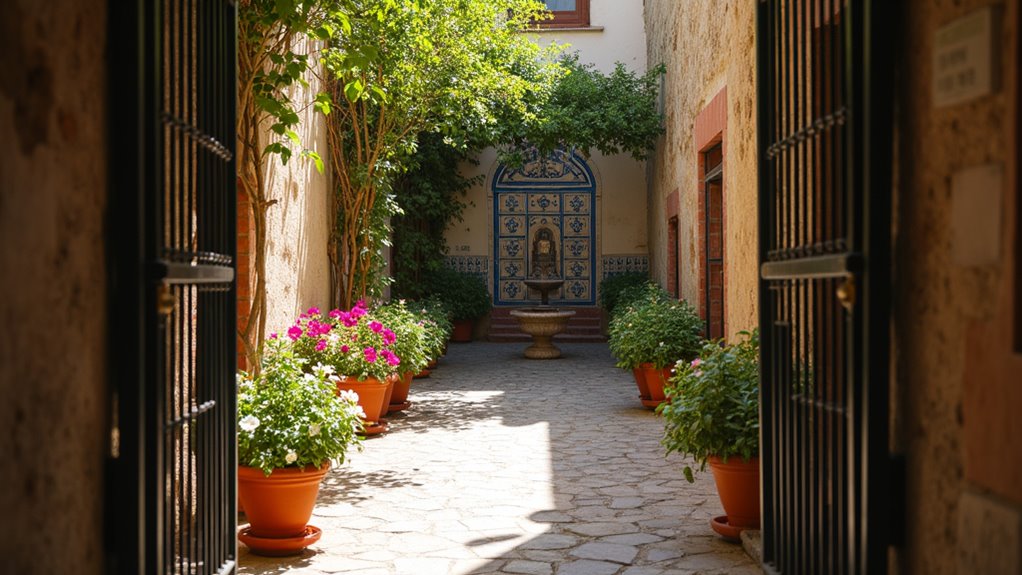
When spring arrives in Córdoba, the city transforms into a floral wonderland during the annual Patio Festival, typically held the first two weeks of May. You’ll discover private courtyards opening their doors to showcase vibrant floral displays, climbing plants, and traditional Andalusian décor.
Visit during the standard hours (11:00–14:00 and 18:00–22:00) for the best experience.
Entry’s completely free, though donations help maintain these beautiful spaces. Skip the weekend crowds by visiting on weekdays for a more peaceful atmosphere. You’ll still catch most patios in full bloom.
Grab a festival map to navigate the various neighborhoods efficiently, and use public transportation to avoid parking headaches. Music lovers can also enjoy the classical music performances at historic venues like the Mosque-Cathedral’s Naranjos patio during this cultural season. Book accommodation early since hundreds of thousands flock here during this UNESCO-recognized celebration.
Climb the Bell Tower for Panoramic City Views
After exploring Córdoba’s enchanting patios, you’ll want to see the city from above by climbing the Bell Tower of the Mezquita-Cathedral. This 54-meter tower offers Córdoba’s best panoramic views for just €3 (kids 7-9 enter free).
You’ll climb nearly 200 winding steps through historic architectural layers, so wear comfortable shoes and confirm you’re reasonably fit. There’s a lower terrace partway up where you can rest and take photos before continuing to the summit.
Book your 30-minute timed slot online, especially during peak season, with visits running 9:30 AM to 6:30 PM. Groups are limited to 10-20 people to prevent crowding.
From the top, you’ll capture stunning 360-degree views of the Mezquita complex, Guadalquivir River, and whitewashed old town.
Visit around 9:30 AM for ideal photography lighting and combine it with your cathedral tour.
Step Back in Time at Medina Azahara Ruins
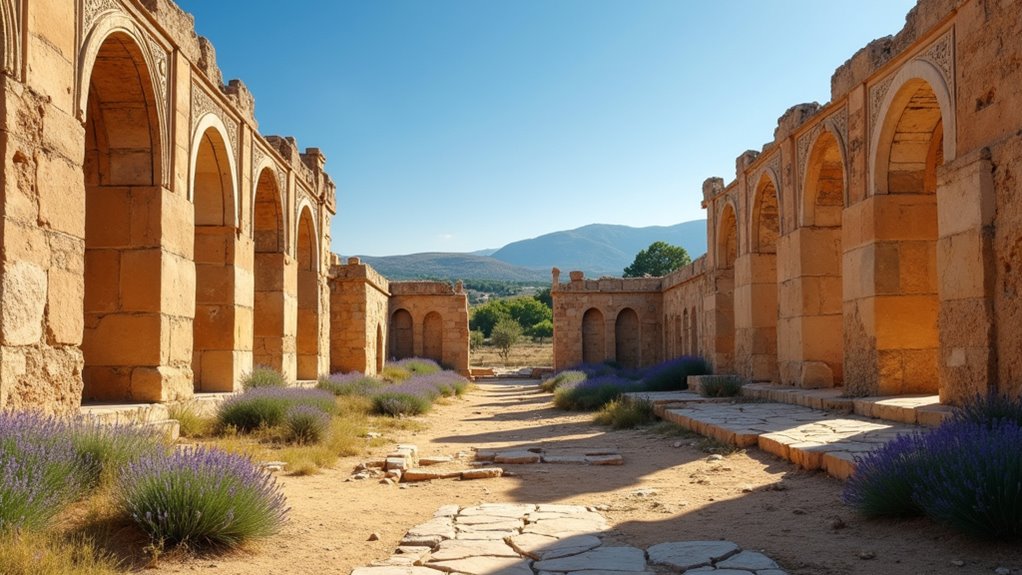
Just 5 miles west of Córdoba lies one of Spain’s most spectacular archaeological treasures: the ruins of Medina Azahara, a 10th-century Islamic palace-city that’ll transport you back to the height of the Umayyad Caliphate. Founded in 936 by Caliph Abd ar-Rahman III, this magnificent complex once housed over 10,000 workers who built sprawling terraced levels into the Sierra Morena foothills.
You’ll explore the reconstructed Salón Rico ceremonial hall, marvel at intricate stonework and mosaics, and walk through what remains of the royal quarters. Though only 10% has been excavated, the site offers incredible insights into medieval Islamic architecture and courtly life.
The museum’s exhibits help you visualize the city’s former grandeur before Berber troops destroyed it in 1013. The palace-city was constructed with luxurious materials including marble from Carthage that showcased the caliph’s wealth and power.
Experience Local Life at Plaza De La Corredera
While Medina Azahara showcases Córdoba’s medieval Islamic heritage, you’ll find the city’s beating heart at Plaza de la Corredera, where locals have gathered for centuries to shop, eat, and socialize. This massive rectangular square stands out with its unique Castilian baroque architecture—rare in Andalusia.
Dating back to the 14th century, it’s served as everything from a Roman forum to a bullring accommodating 10,000 spectators.
Enter through the Arco Alto or Arco Bajo to experience authentic local life. You’ll discover affordable tapas bars, traditional taverns, and shops tucked under elegant four-story arcades.
The plaza hosts free cultural events like Flamenco Night and Carnival festivities. Grab a budget-friendly meal at one of the outdoor terraces and watch daily life unfold around you.
Beneath your feet lie Roman mosaics discovered during construction, remnants of the ancient circus that once occupied this very spot.
Discover Aristocratic Elegance at Palacio De Viana
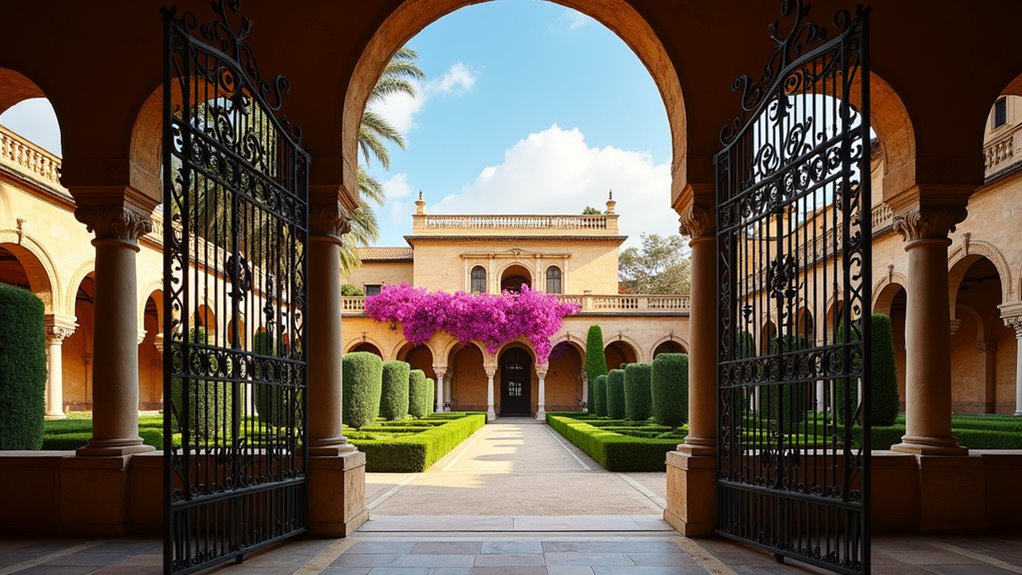
Though Plaza de la Corredera pulses with everyday energy, you’ll discover a different side of Córdoba’s soul at Palacio de la Viana, where centuries of aristocratic life unfold across Spain’s most impressive collection of courtyards.
This 14th-century palace earned its nickname “Museum of the Patios” for good reason—you’ll explore 12 distinct courtyards showcasing Roman and Arab influences. Each patio tells its own story through wrought iron details, Tuscan columns, and seasonal blooms across 1,200 square meters of gardens.
Inside, you’ll find Renaissance art, historic tapestries, and ceramic tiles that reveal how Córdoba’s nobility lived. The palace’s irregular layout reflects centuries of expansions, creating an authentic maze of aristocratic life. The Hall of Tobías features stunning Biblical frescoes that depict the life of this important religious figure.
Don’t miss the Patio de la Madama with its enchanting water nymph motifs.
Sample Córdoba’s Flavors at Mercado Victoria
After exploring aristocratic courtyards, you’ll want to plunge into Córdoba’s modern food scene at Mercado Victoria, Andalusia’s first gastronomic market that’s become the city’s hottest dining destination since opening in 2013. Located in the converted 19th-century Círculo de la Amistad building near the historic center, this food hall houses 30 stalls serving everything from local specialties like salmorejo and flamenquines to international dishes including sushi and pizza.
You’ll order at various kiosks using a self-service system, then grab communal seating when your beeper buzzes. It’s budget-friendly compared to traditional restaurants, and you can sample multiple cuisines without commitment. The market features outdoor seating options perfect for enjoying your meal in Córdoba’s pleasant weather.
Open daily from 4 PM to 3 AM (4 AM weekends), it’s perfect for dinner or late-night snacks.
The Sum Up
You’ve got an incredible mix of history, culture, and flavors waiting in Córdoba. Don’t try to rush through everything—pick a few spots that genuinely interest you and take your time exploring. Many of these attractions are free or budget-friendly, so you can experience the city’s magic without breaking the bank. Pack comfortable shoes, bring a water bottle, and let Córdoba’s ancient streets tell their stories at your own pace.