
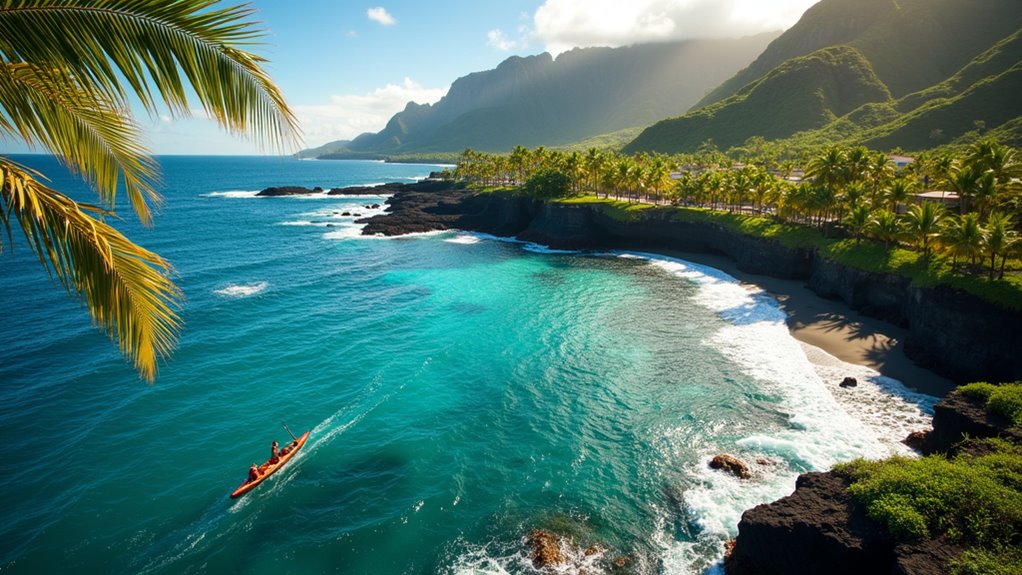
Your first Hawaii trip should include Pearl Harbor’s historic USS Arizona Memorial, hiking Diamond Head at sunrise for stunning Waikiki views, and learning to surf where the sport originated. Don’t miss snorkeling at Hanauma Bay’s protected reefs, driving the North Shore to watch massive winter waves at Pipeline, and exploring Bishop Museum’s world-class Polynesian artifacts. Add the scenic Lanikai Pillbox Trail and authentic food tours through Honolulu’s vibrant Chinatown to discover why these thirteen experiences capture Hawaii’s true essence.
- Visit Pearl Harbor and the USS Arizona Memorial
- Hike Diamond Head for Sunrise Views Over Waikiki
- Learn to Surf at Waikiki Beach
- Snorkel at Hanauma Bay Nature Preserve
- Drive the North Shore and Watch Winter Surf at Pipeline
- Explore Downtown Honolulu and Iolani Palace
- Take a Movie Tour at Kualoa Ranch
- Swim and Kayak in Kailua’s Calm Waters
- Experience Hawaiian Culture at the Polynesian Cultural Center
- Discover Pacific History at Bishop Museum
- Hike the Lanikai Pillbox Trail for Instagram-Worthy Views
- Browse Chinatown Markets and Local Food Stalls
- Plan Your Next Island Adventure From Honolulu Airport
- The Sum Up
Visit Pearl Harbor and the USS Arizona Memorial
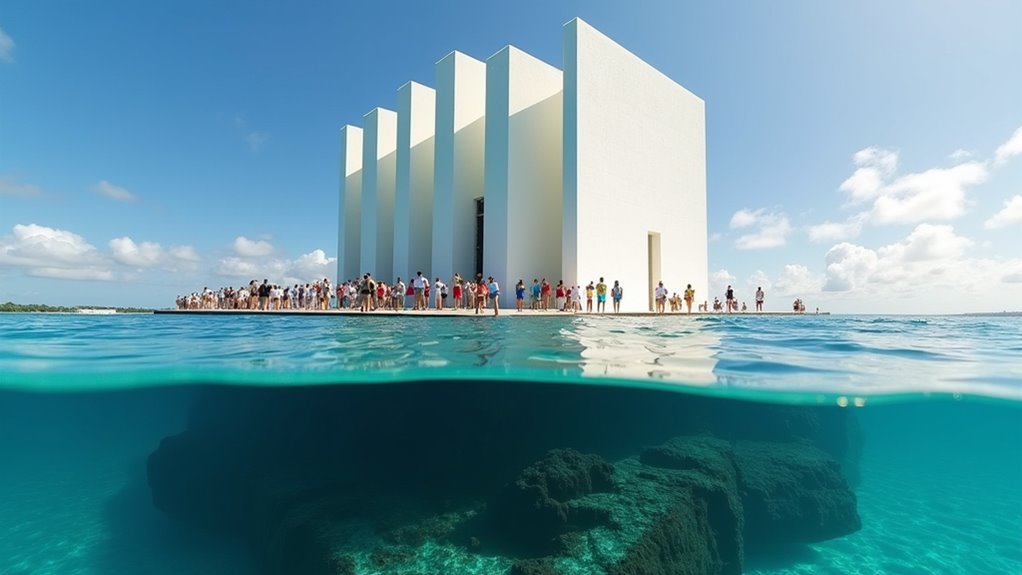
One of Hawaii’s most powerful and historically significant experiences awaits you at Pearl Harbor and the USS Arizona Memorial. This National Historic Landmark commemorates the December 7, 1941 attack that launched America into World War II, where 1,177 crew members lost their lives aboard the USS Arizona.
You’ll start with an interpretive film about the attack, then take a shuttle boat to the memorial itself. The 184-foot white structure spans the sunken battleship without touching it, symbolizing both defeat and ultimate victory. The memorial was designed by Honolulu architect Alfred Preis, who was ironically a former enemy alien detained during the war.
Inside, you’ll find the shrine room displaying all 1,177 names of those killed.
Since the site receives over one million visitors annually, you’ll need timed reservations. The memorial’s accessible only by boat from the Pearl Harbor visitor center, making advance planning essential for this moving tribute.
Hike Diamond Head for Sunrise Views Over Waikiki
Rising before dawn might sound intimidating, but Diamond Head’s sunrise hike delivers one of Hawaii’s most rewarding experiences without breaking your budget. This 1.6-mile round-trip trail gains 560 feet through switchbacks, stairs, and a historic tunnel before reaching panoramic views over Waikiki and Honolulu’s skyline.
You’ll need advance reservations for the 6 a.m. opening and sturdy shoes for uneven terrain. The moderate difficulty comes from steep sections and 200+ steps, not distance. Plan 40-60 minutes to reach the summit, so you’ll catch sunrise from the rim.
Pack water, sunscreen, and a hat—there’s minimal shade on the exposed slopes. With over one million annual visitors, expect crowds even at dawn, but those 360-degree views make every step worthwhile. Note that the park is closed on December 25th and January 1st, so plan your visit accordingly.
Learn to Surf at Waikiki Beach
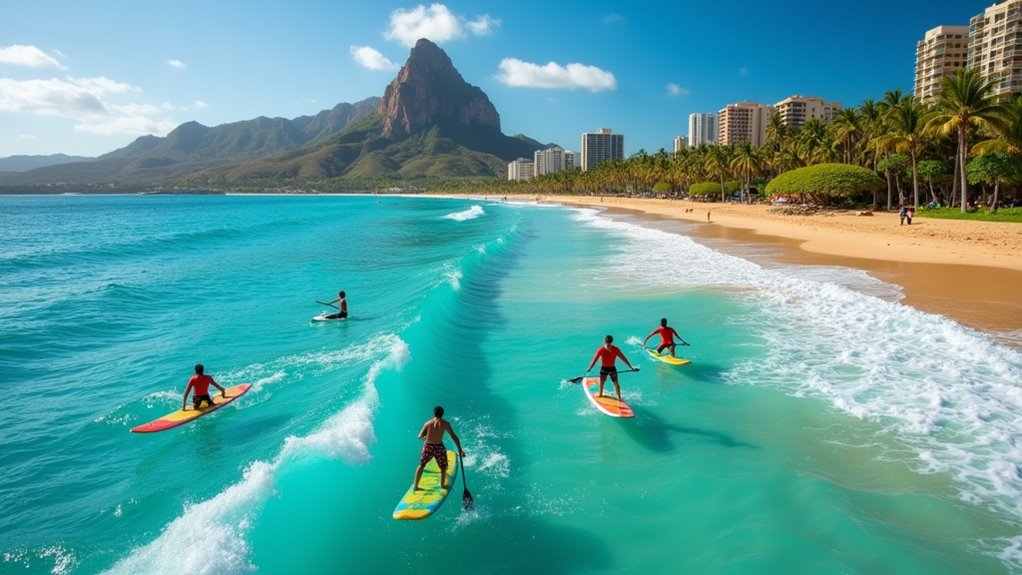
Why not trade hiking boots for a surfboard and learn Hawaii’s most iconic water sport? Waikiki’s gentle, rolling waves and sandy breaks make it perfect for beginners, with consistent surf year-round and short paddles to the lineup.
Most surf lessons cost $95-$115 for groups or $140-$199 for private instruction. You’ll spend 15-30 minutes on land learning safety, paddling, and pop-up techniques, then 60-90 minutes in the water with instructor-assisted wave entry.
Schools provide soft-top longboards, leashes, and rashguards—just bring your swimsuit and reef-safe sunscreen. Waikiki is the birthplace of modern surfing, offering not only perfect learning conditions but also a rich cultural connection to the sport’s heritage.
Book early morning sessions for smaller crowds and cleaner conditions. With small group ratios and experienced instructors, most schools report 90-95% first-lesson success rates. You’ll likely catch your first wave and experience the pure joy of surfing.
Snorkel at Hanauma Bay Nature Preserve
Where can you snorkel among 400+ fish species in crystal-clear waters just 20 minutes from Waikiki? Hanauma Bay Nature Preserve offers Hawaii’s premier snorkeling experience in a protected volcanic crater.
You’ll spot colorful surgeonfish, butterflyfish, parrotfish, and Hawaiian green sea turtles in shallow, beginner-friendly waters.
The preserve is open Wednesday through Sunday, 6:45 a.m. to 1:30 p.m., limiting visitors to 1,000-1,400 daily for conservation. You’ll watch a mandatory educational video before entering.
Entry fees help maintain this Marine Life Conservation District, designated since 1967.
Remember: don’t touch coral, chase marine life, or remove anything. The calm lagoon’s perfect for first-time snorkelers, and reduced visitor numbers since 2020 have helped reefs recover dramatically.
Book online in advance—this popular spot fills up quickly. However, climate change threatens this beloved destination, with projections showing most of the sandy beach could be underwater by 2030.
Drive the North Shore and Watch Winter Surf at Pipeline
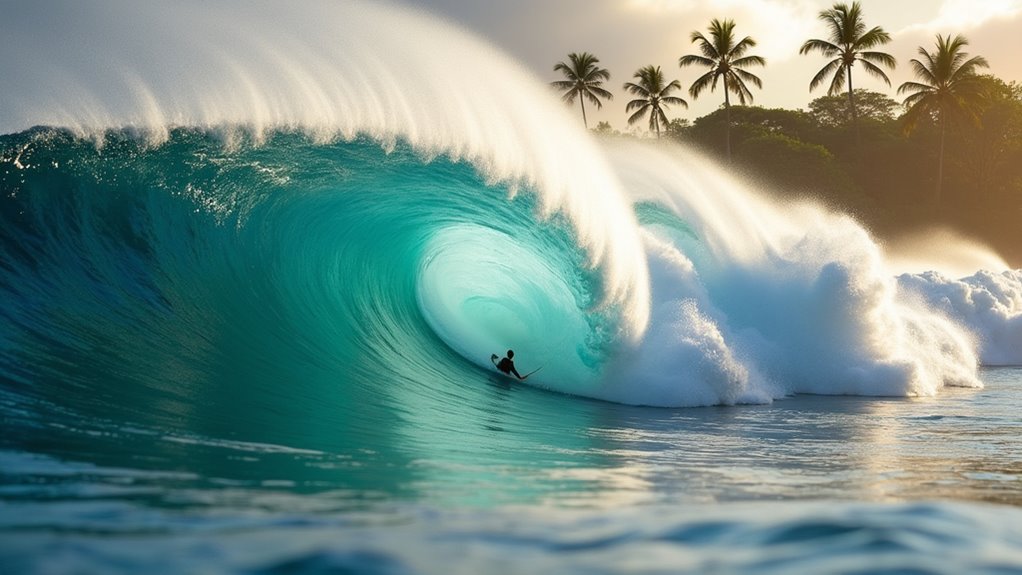
Just 30 miles from Waikīkī, the legendary Banzai Pipeline delivers some of the world’s most thrilling surf spectacles during winter months. You’ll drive about an hour along Kamehameha Highway to reach this North Shore icon at ʻEhukai Beach Park in Pupukea.
Winter swells create 20-foot waves that barrel over shallow coral reef, producing Pipeline’s famous hollow tubes. Visit October through March when North Pacific swells are strongest, and check surf forecasts beforehand to time your visit perfectly.
The park offers free parking, restrooms, and picnic tables. Stay well back from the waterline during big surf—these powerful waves over sharp reef are extremely dangerous for swimming. The golden sand and clear blue water create a stunning backdrop for watching the surf action.
Combine your visit with nearby Sunset Beach, Waimea Bay, and Haleʻiwa for a complete North Shore circle tour experience.
Explore Downtown Honolulu and Iolani Palace
While the North Shore showcases Hawaii’s natural power, downtown Honolulu reveals the islands’ rich political and cultural heritage at ʻIolani Palace—the only official royal palace in the United States. You’ll explore ornate state rooms featuring koa wood staircases, the historic throne room, and royal apartments filled with period furnishings and gifts from foreign dignitaries.
The palace pioneered modern conveniences like electric lighting and flush toilets when completed in 1882.
Don’t miss the Coronation Pavilion on the grounds, built for King Kalākaua’s ceremony. The palace functions as a powerful symbol of Hawaiian sovereignty and Native Hawaiian identity. Tours showcase royal regalia and portraits while basement galleries provide deeper historical context. The palace served multiple governments after the monarchy ended, housing the territorial legislature in its former royal chambers.
Combine your visit with nearby historic civic buildings for a complete downtown walking experience.
Take a Movie Tour at Kualoa Ranch
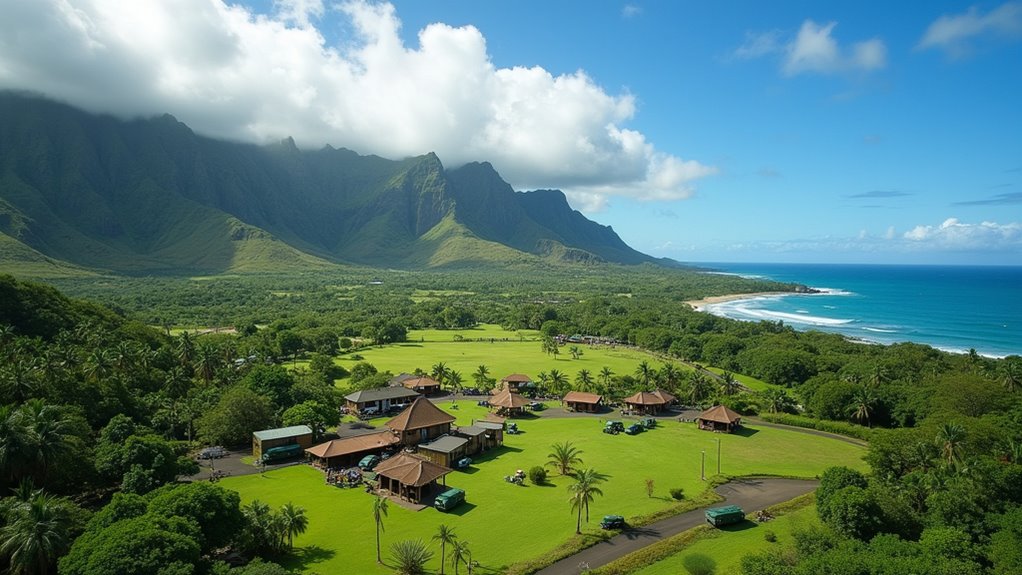
From Honolulu’s royal history, you can head to Oahu’s windward side for a different kind of cultural experience at Kualoa Ranch, where Hollywood meets Hawaiian heritage. The 90-minute Movie Sites & Ranch Tour takes you through scenic Kaʻaʻawa Valley in a vintage school bus, visiting locations from over 250 films and TV shows.
You’ll recognize spots from Jurassic Park, Lost, 50 First Dates, and Hawaii Five-0. The tour’s perfect for families since it requires minimal walking and operates at a relaxed pace. Your guide shares behind-the-scenes stories while explaining the ranch’s cultural significance to Native Hawaiians.
At 4,000 acres, this working cattle ranch serves as Hollywood’s “Hawaii Backlot” while preserving important Hawaiian land. The experience includes stops at notable landmarks like Godzilla’s footprint and a WWII army bunker filled with wartime memorabilia.
Swim and Kayak in Kailua’s Calm Waters
After exploring Oahu’s movie magic, you’ll find some of the island’s most inviting waters at Kailua Bay, where protected reefs create consistently calm, turquoise conditions perfect for swimming and kayaking.
Paddle to Flat Island, just 0.3-0.5 miles offshore—a manageable 20-minute trip for beginners. You can also explore the ultra-calm Kaʻelepulu Stream or paddle between Kailua Beach Park and gorgeous Lanikai Beach.
Kailua’s full-service kayak shops rent everything you’ll need: kayaks, paddles, life jackets, and often snorkel gear and beach chairs. Staff provide safety briefings and route maps before you launch. Since rental shops are located 1.5 blocks from the beach, you’ll use provided dollies to easily transport your kayak to the water.
The onshore winds mean you’ll work harder paddling out but drift easily back. Watch for Hawaiian green sea turtles and tropical fish while you’re exploring these consistently swimmable waters.
Experience Hawaiian Culture at the Polynesian Cultural Center
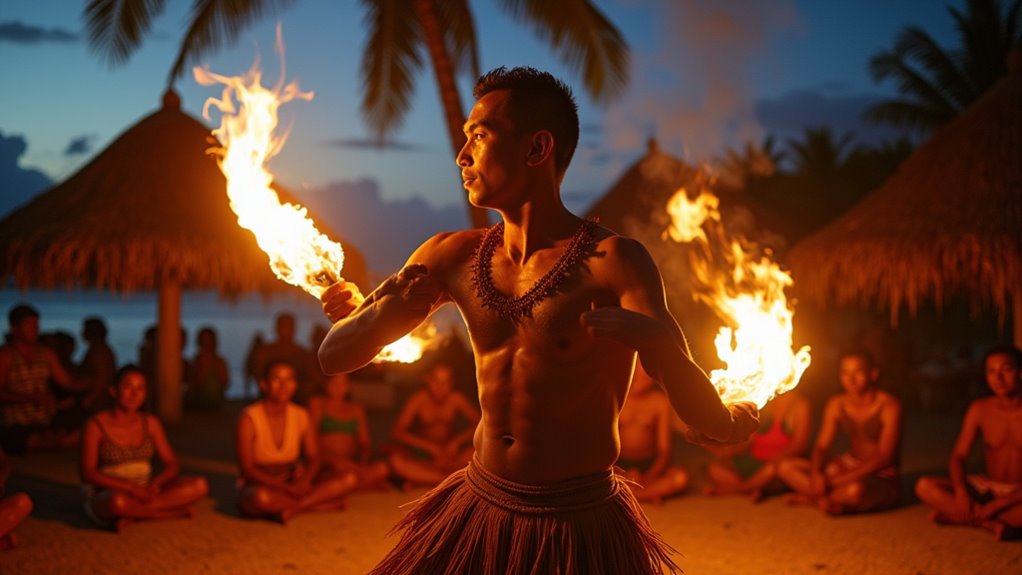
Beyond Oahu’s pristine beaches, you’ll discover one of Hawaii’s most thorough cultural experiences at the Polynesian Cultural Center in Lāʻie. This 42-acre living museum showcases eight Pacific island cultures through authentic villages representing Hawaii, Samoa, Tonga, Tahiti, Fiji, New Zealand, Marquesas, and Easter Island.
You’ll participate in hands-on activities like Samoan fire knife demonstrations, Māori haka, and traditional crafts. Take canoe tours connecting the villages while learning about migration stories and customs from cultural experts.
The experience culminates with an evening lūʻau featuring kālua-style food and a Broadway-caliber show with elaborate costumes and choreography. Since opening in 1963, the center has welcomed over 32 million visitors from around the world.
Operating from 12:30 p.m. to 9:30 p.m., it’s a full-day commitment that’s worth the investment for comprehensive culture.
Discover Pacific History at Bishop Museum
While the Polynesian Cultural Center offers interactive cultural experiences, you’ll find Hawaii’s most extensive historical archive at the Bishop Museum in Honolulu’s Kalihi district. This state museum houses over 25 million Pacific artifacts, making it the world’s largest Polynesian collection.
You’ll explore Hawaiian Hall’s pre-contact displays featuring gods, legends, and daily life, plus a massive sperm whale skeleton overhead. Don’t miss the traditional heiau temple model and koa wood cases made from prized native hardwood.
Pacific Hall reveals how early voyagers used stellar navigation to reach Hawaii, with canoe models demonstrating ancient wayfinding techniques. The museum’s planetarium demonstrates these ancient star-guided navigation methods through immersive presentations.
The Kahili Room showcases royal feather standards and tells stories of Hawaiian monarchy, including Queen Liliuokalani‘s forced abdication and ongoing sovereignty movements.
Hike the Lanikai Pillbox Trail for Instagram-Worthy Views
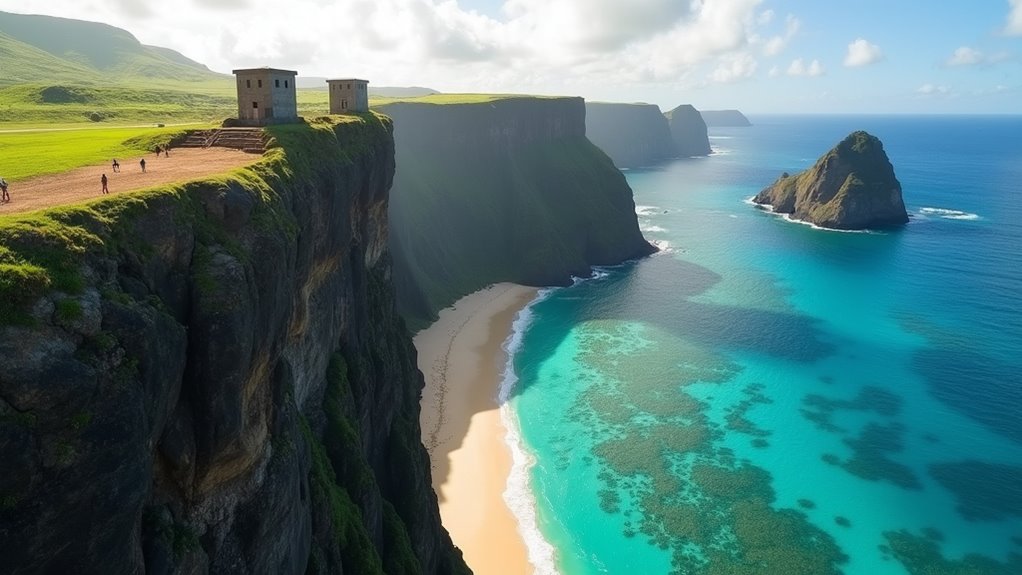
Though it requires traversing crowded residential streets and steep, potentially slippery terrain, the Lanikai Pillbox Trail delivers some of O’ahu’s most spectacular coastal views without charging admission fees.
You’ll climb about 450-650 feet over 1-1.8 miles to reach World War II concrete bunkers overlooking turquoise Lanikai Beach and the offshore Mokulua Islands.
Pack water and wear hiking shoes—the loose dirt and rocky sections become treacherous when wet.
Start early for cooler temperatures and dramatic sunrise lighting that photographers love. The trail is ideal for sunrise hikes when parking is less crowded and the morning glow creates stunning views of the Mokulua Islands.
The trail’s popularity means you’ll encounter crowds, especially on weekends when up to 1,000 hikers visit.
Plan 45-90 minutes round trip, plus extra time for photos at the graffiti-covered pillboxes.
Parking requires a 10-15 minute walk from public beach access areas.
Browse Chinatown Markets and Local Food Stalls
If you’re craving authentic Asian flavors without tourist prices, Honolulu’s historic Chinatown delivers fresh produce markets, street food stalls, and casual eateries that locals have relied on for generations.
Head to Oahu Market, Maunakea Market Place, or Chinatown Hawaiian Market by 6 am for peak activity and freshest selections. You’ll find bunches of bok choy and herbs for around a dollar, plus tropical fruits like lychee and longan. The Chinatown Hawaiian Market stands out for its imported goods from Hawaii and Asia that you won’t find elsewhere.
Grab dim sum, Vietnamese pho, or BBQ roast duck from casual spots along Maunakea and King Streets. The takeout counters near markets offer plate lunches perfect for budget-conscious travelers.
This area between North Beretania and Nuʻuanu Streets represents one of America’s oldest Chinatowns, where authentic flavors meet affordable prices.
Plan Your Next Island Adventure From Honolulu Airport
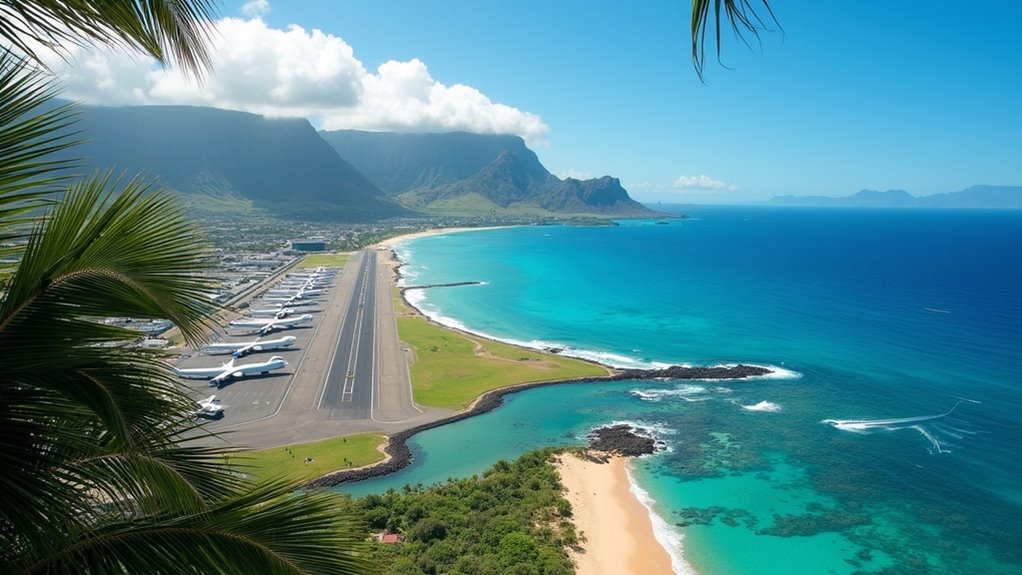
Whether you’re catching an inter-island flight to Maui’s beaches or connecting to the Big Island’s volcanoes, Honolulu Airport (HNL) serves as Hawaii’s central hub where smart planning saves both time and money. Use the Wiki Wiki Shuttle between terminals and concourses from 6 a.m.–10 p.m. to make tight connections without exhausting walks.
For budget-friendly ground transport, grab a HOLO card at Lelepaua Station and take Skyline rail plus the W Line bus to reach Waikīkī—trains run every 10 minutes during peak hours.
If you’re carrying surfboards or need late-night transport after 10:30 p.m., consider holoholo rideshare starting around $35, or catch Route 42‘s single daily trip to Waikīkī for affordable late-night travel. The service operates with flat-rate pricing regardless of traffic conditions, ensuring predictable costs for your airport transfer.
The Sum Up
You’ve got plenty to explore on your first Hawaiian adventure without breaking the bank. Start with free activities like hiking Diamond Head or browsing Chinatown’s markets, then splurge on must-dos like Pearl Harbor and snorkeling at Hanauma Bay. Don’t forget to catch a sunset at Waikiki Beach – it’s completely free and absolutely magical. Pack sunscreen, bring a reusable water bottle, and you’re set for an unforgettable island experience.