
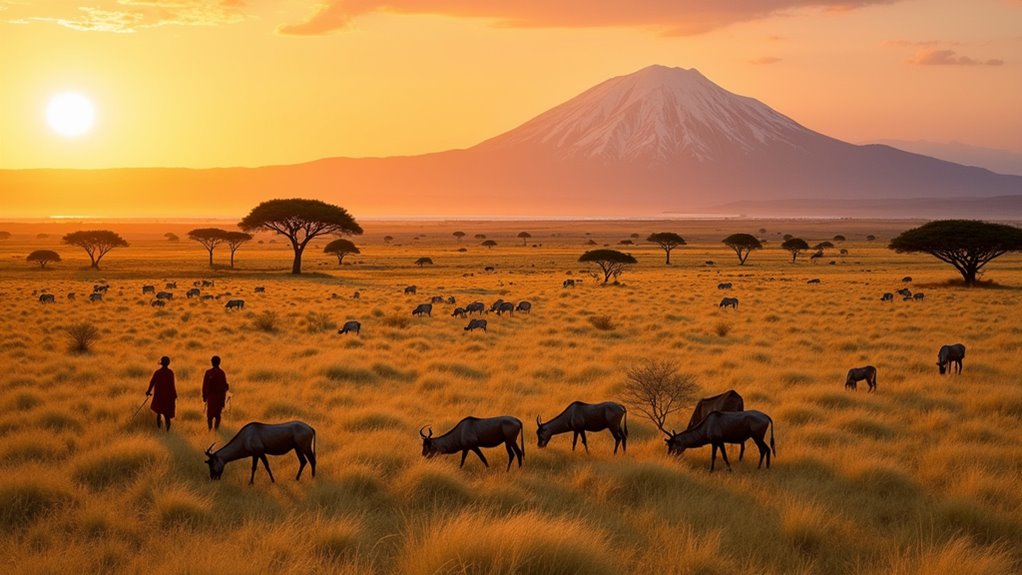
You’re probably thinking Kenya means expensive safari tours and luxury lodges, but that’s not the whole story. This East African gem offers incredible experiences that won’t drain your bank account if you know where to look. From witnessing millions of wildebeest thunder across the Mara to climbing Africa’s second-highest peak, Kenya delivers adventure without the premium price tag. The trick lies in knowing which experiences offer the biggest bang for your buck.
- Witness the Great Migration in Maasai Mara
- Get up Close With Elephants at Amboseli National Park
- Watch Thousands of Flamingos at Lake Nakuru
- Climb Mount Kenya’s Challenging Peaks
- Explore Nairobi’s Urban Wildlife Scene
- Relax on Diani Beach’s White Sands
- Dive the Marine Parks at Watamu
- Bike Through Hell’s Gate National Park
- Discover Mombasa’s Portuguese History at Fort Jesus
- Experience Traditional Maasai Village Life
- Take a Hot Air Balloon Over the Mara
- Island-Hop Through the Lamu Archipelago
- The Sum Up
Witness the Great Migration in Maasai Mara
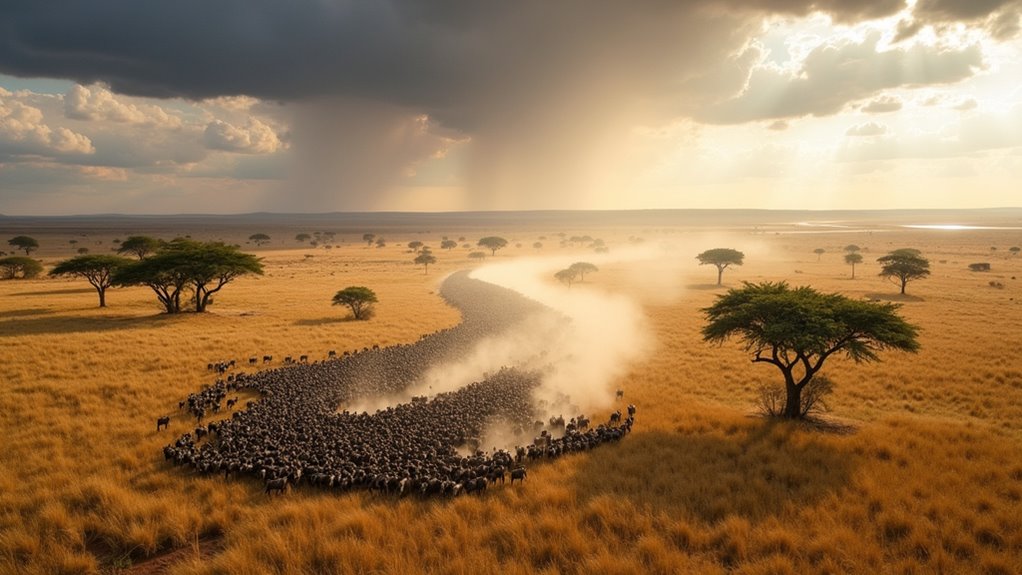
When over 1.5 million wildebeest thunder across the Maasai Mara plains alongside 200,000 zebras and countless gazelles, you’re witnessing nature’s most spectacular show without the hefty price tag of multiple safari destinations.
This 800-kilometer circular migration offers incredible value since you’ll catch dramatic Mara River crossings from July through October in one location.
You’ll see crocodiles lurking as desperate herds plunge into treacherous currents, creating heart-stopping moments that photographers dream about.
Time your visit between August and September when wildebeest spread across northern Mara plains – predator activity peaks, giving you front-row seats to nature’s brutal ballet. The ecosystem you’re exploring is the oldest on the planet, remaining virtually unchanged for over a million years.
Book accommodations near Governors’ Camp area for prime viewing access without breaking your budget.
Get up Close With Elephants at Amboseli National Park
Over 1,600 elephants roam freely through Amboseli National Park, giving you unmatched opportunities to observe these gentle giants against Mount Kilimanjaro’s snow-capped backdrop without the crowds you’ll find at pricier destinations.
You’ll spot up to fifty herds during a single safari, watching authentic behavior patterns as families move naturally between swampy areas and acacia woodlands.
The park’s research legacy means you’re witnessing one of Africa’s most undisturbed elephant populations. GPS tracking data from decades of study has identified the best observation points for photography and close encounters. The Enkong Narok swamps, fed by natural springs from Mount Kilimanjaro, serve as vital watering holes where elephants congregate throughout the day.
Beyond elephants, you’ll discover over 400 bird species and diverse wildlife thriving in varied terrain zones, making this budget-friendly destination perfect for exhaustive wildlife viewing.
Watch Thousands of Flamingos at Lake Nakuru
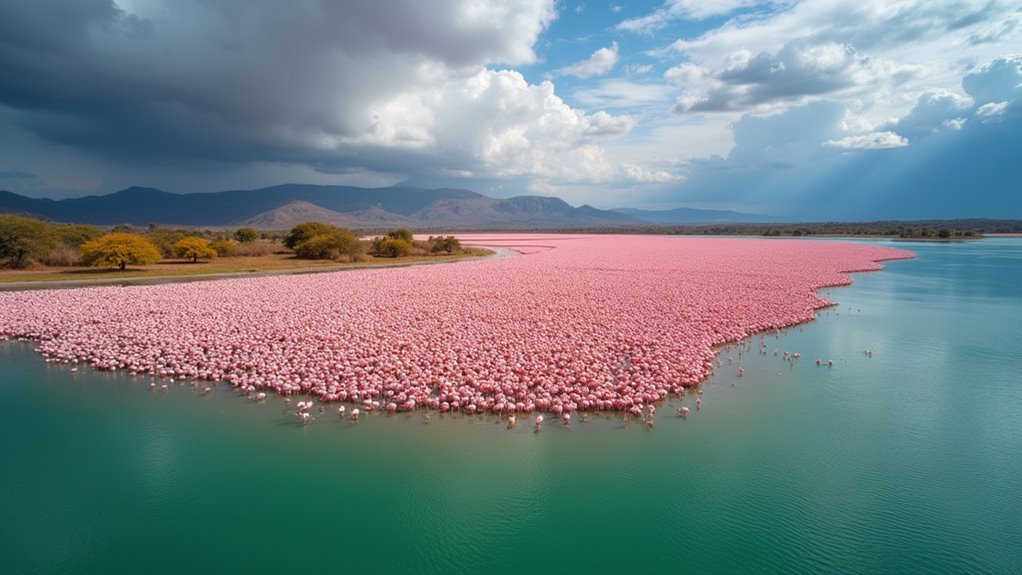
Lake Nakuru’s pink-tinged shoreline creates one of Africa’s most spectacular wildlife displays, where millions of flamingos once gathered to feed on algae-rich waters just 164 kilometers north of Nairobi.
Though numbers have declined from peak populations of 2 million to around 6,000 today due to rising water levels and pollution, you’ll still witness an incredible sight when lesser and greater flamingos congregate along the shore.
Visit during dry seasons when receding waters concentrate algae, making flamingos easier to spot.
Head to Baboon Cliff for panoramic views and bring your camera for early morning or late afternoon shots.
The 188-square-kilometer park also features rhinos and giraffes, giving you excellent wildlife value for your entry fee. Lake Nakuru was designated a UNESCO World Heritage Site in 2011 as part of the Kenya Lake System of the Great Rift Valley.
Climb Mount Kenya’s Challenging Peaks
Why settle for ordinary hiking when you can tackle Africa’s second-highest peak? Mount Kenya offers three main summits: technical Batian (5,199m) and Nelion (5,188m) requiring rock climbing skills, plus trekking-friendly Point Lenana (4,985m) that’s accessible without technical experience.
Choose your route wisely. The Naro Moru Route is the fastest but steepest, taking about 3-4 days. Meanwhile, Sirimon’s gentler slopes allow better acclimatization and typically take 4-5 days. For scenery lovers, the Chogoria Route showcases waterfalls and diverse landscapes over 5-6 days.
Budget at least five days for safe altitude adjustment—rushing leads to altitude sickness. Point Lenana needs only standard hiking gear, but technical peaks require ropes, crampons, and climbing experience. Exceptional climbers have achieved remarkable record speeds, with the fastest ascent and descent completed in just 2 hours 19 minutes.
Hire experienced guides to maximize safety and success rates while charting this challenging alpine adventure.
Explore Nairobi’s Urban Wildlife Scene
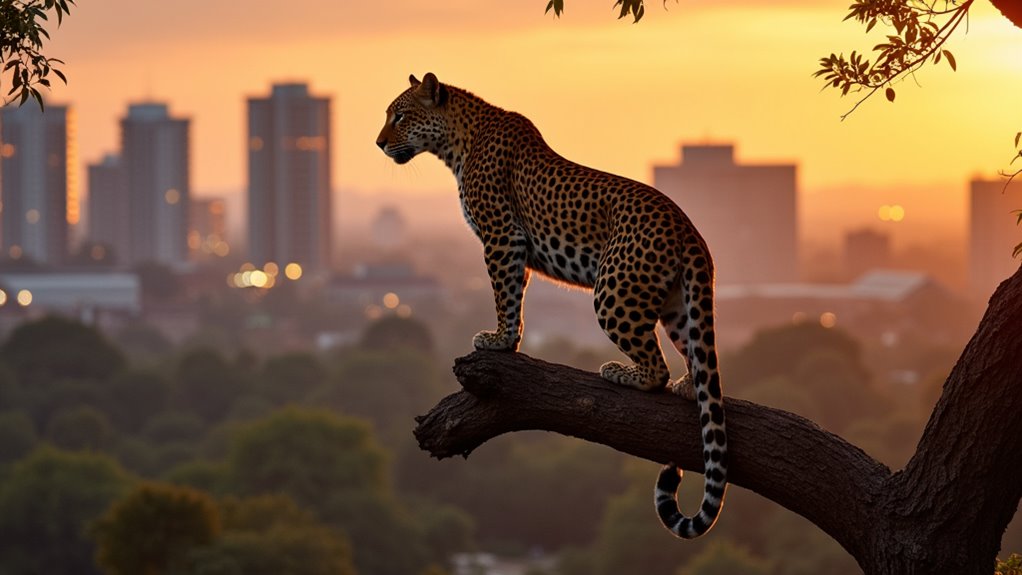
Just seven kilometers from downtown Nairobi’s bustling streets, you’ll find yourself face-to-face with lions, rhinos, and giraffes roaming freely in Africa’s first national park.
Nairobi National Park offers an incredible urban safari experience where you can spot over 400 bird species and Kenya’s Big Five without leaving the city.
Book guided game drives through Kenya Wildlife Service for the best wildlife viewing opportunities.
Stay inside your vehicle at all times, especially around predators.
The park’s southern boundary remains unfenced, allowing animals to migrate naturally between urban and wild spaces. However, ongoing urban development is reducing these critical migratory corridors that wildlife depends on for survival.
Visit during early morning or late afternoon when animals are most active.
This unique destination proves you don’t need to venture far from civilization to witness Africa’s incredible wildlife in their natural habitat.
Relax on Diani Beach’s White Sands
When you’re ready to trade Nairobi’s wildlife encounters for ocean breezes, Diani Beach delivers Kenya’s most breathtaking coastal escape just 30 kilometers south of Mombasa.
You’ll find 17 kilometers of powdery white sand meeting crystal-clear turquoise waters, protected by coral reefs that create perfect swimming conditions for families.
Visit between December and March for ideal weather, though July through September offers cooler comfort.
February’s dry conditions provide the best underwater visibility for snorkeling the nearby coral reefs.
You can try kite surfing, jet skiing, or explore natural tide pools during low tide. The area also offers exceptional deep-sea fishing opportunities for marlin, tuna, and sailfish.
Accommodation ranges from luxury resorts to budget-friendly options, all easily accessible via daily flights from Nairobi or road trips from Mombasa.
The protective reef system makes this Kenya’s safest beach destination.
Dive the Marine Parks at Watamu
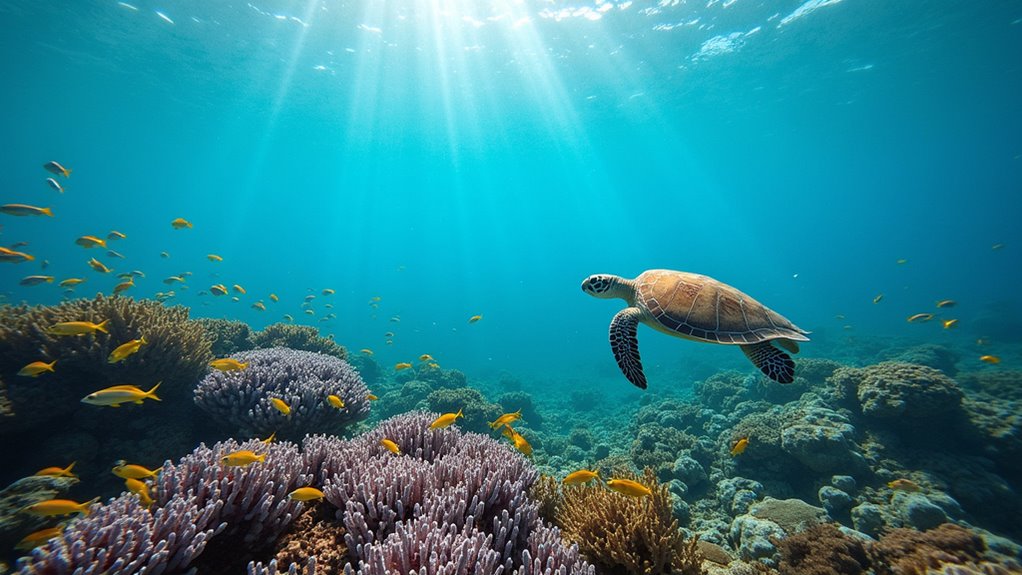
While Diani Beach offers perfect relaxation above the waves, Watamu Marine National Park takes you beneath the surface to explore one of Africa’s most pristine underwater worlds.
Established in 1968, this protected area spans 10 square kilometers of thriving coral reefs with water temperatures between 25-30°C year-round.
You’ll find over a dozen dive sites ranging from 5 to 45 meters deep, including Vuma Caves with massive groupers and Shark Alley where you’ll spot reef sharks.
The park’s 150+ coral species host turtles, dolphins, manta rays, and occasionally whale sharks. Notable sites include The Canyon with its dramatic landscape featuring coral walls and deep swim-throughs for intermediate to advanced divers.
Professional dive centers offer equipment rental and PADI courses at reasonable rates.
Visit between November and March for ideal conditions, though inner reefs remain accessible year-round with excellent visibility exceeding 20 meters.
Bike Through Hell’s Gate National Park
Unlike most Kenyan parks where you’re confined to a vehicle, Hell’s Gate National Park lets you pedal directly through the wilderness alongside grazing zebras and towering buffalo. You’ll rent mountain bikes at Elsa Gate for around $14, avoiding the rough access roads.
Choose the shorter 9km Twiga Circuit if you’re less experienced, or tackle the challenging 14km Buffalo Circuit for prime wildlife viewing.
The sandy, dusty trails include steep sections where you’ll push your bike, so bring hiking boots and moderate fitness. You’ll cycle past dramatic cliffs, volcanic formations, and hot springs in the Great Rift Valley. The park sits at 2000m elevation, approximately 100km from Nairobi, making it an accessible escape from the capital.
Park entry costs $26 for non-residents, plus a small bike fee. This eco-friendly adventure offers incredible wildlife encounters and geological wonders at budget-friendly prices.
Discover Mombasa’s Portuguese History at Fort Jesus
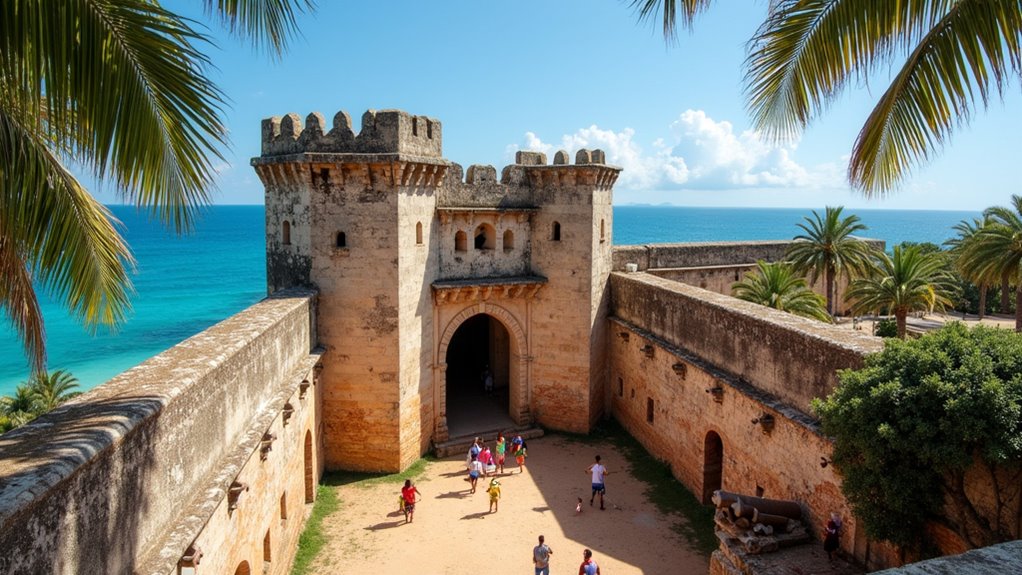
From Kenya’s natural wonders to its rich cultural heritage, Fort Jesus in Mombasa offers you a fascinating glimpse into 400 years of coastal history for just $5 entry fee. You’ll explore this 16th-century Portuguese fortress designed by Italian architect Giovanni Battista Cairati, featuring massive coral stone walls up to 2.5 meters thick and five strategic bastions.
Walk through chambers that witnessed epic battles between Portuguese colonizers, Omani Arabs, and British forces. You’ll discover Arabic inscriptions, Portuguese architectural details, and British-era prison cells that tell stories of shifting power along the Swahili Coast.
The museum displays artifacts from archaeological excavations, including pottery, coins, and weaponry. Built on a coral rock spur covering 2.36 hectares, the fortress demonstrates the Renaissance ideals of geometric harmony and strategic military design.
Allow 2-3 hours to fully appreciate this UNESCO World Heritage Site that controlled Indian Ocean trade routes for centuries.
Experience Traditional Maasai Village Life
Step into an authentic Maasai boma and you’ll discover a way of life that’s remained virtually unchanged for centuries. You’ll observe women constructing circular enkaji houses using mud, cow dung, and branches—a process that’s both practical and portable for their semi-nomadic lifestyle.
The village’s defensive circular layout protects cattle in the central emboo, while thorny enkang fencing keeps predators at bay.
You can participate in daily activities like firewood collection, watch intricate beadwork creation in vibrant reds and blues, and learn traditional fire-making techniques using cedar wood and elephant dung. Experience the community’s rich vocal music traditions featuring harmonious chorus singing and call-and-response patterns, as all Maasai music relies solely on voices rather than instruments.
Don’t miss sampling the ritual drink of mixed blood and milk. Many villages welcome visitors for modest fees, offering affordable culture that directly supports local communities while preserving authentic traditions.
Take a Hot Air Balloon Over the Mara
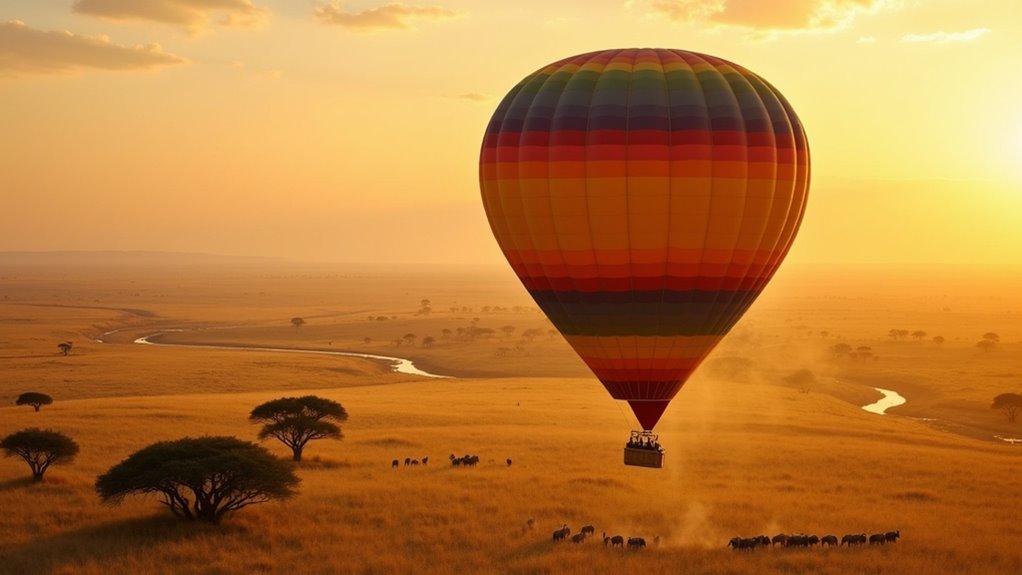
After exploring Kenya’s rich cultural heritage on the ground, you’ll want to experience the Masai Mara from an entirely different perspective—floating silently above the savannah in a hot air balloon.
You’ll wake early for a 5:30 AM pickup, reaching the launch site as the balloon inflates at dawn.
During your hour-long flight, you’ll drift over grasslands and rivers, spotting elephants, lions, giraffes, and zebras from above.
If you’re visiting during migration season (July-October), you’ll witness massive wildebeest herds crossing rivers—an unforgettable spectacle.
The experience includes a champagne bush breakfast after landing. Your flight will be operated by experienced pilots using high-quality equipment, with many balloons manufactured by Cameron in Great Britain.
Expect to pay $450-570 per person, with higher prices during peak migration months.
Book well ahead since balloons carry maximum 16 passengers and fill quickly.
Island-Hop Through the Lamu Archipelago
Seven hundred years of Swahili culture await you in the Lamu Archipelago, where time moves at the pace of dhow sails and donkey hooves. You’ll explore UNESCO-protected Lamu Old Town‘s coral stone buildings and winding streets on foot, then hop between Manda and Pate islands by traditional dhow to discover ancient ruins like Takwa and Shanga. The islands showcase stunning mosque architecture from the 18th and 19th centuries, featuring distinctive trilobal arches and intricate stucco decorations that reflect influences from India, Oman, and Yemen.
Between November and March, you’ll find the best snorkeling conditions around vibrant coral reefs near Kiwayu Island. The archipelago stays invigoratingly vehicle-free, so you’ll rely on boats and donkeys for transport.
Fly into Manda Airport, then catch a boat transfer to your island base. Whether you’re diving with dolphins, kayaking through mangroves, or relaxing on Shela’s remote beaches, this archipelago offers authentic culture without the crowds.
The Sum Up
You’ve got endless options in Kenya, from budget-friendly camping safaris to free cultural experiences in local villages. Don’t feel pressured to do everything – pick what excites you most and fits your wallet. Consider visiting during shoulder seasons for better deals, and remember that many natural attractions like beaches and hiking trails won’t cost you a dime. Kenya’s magic isn’t about spending big; it’s about embracing the adventure that speaks to you.