
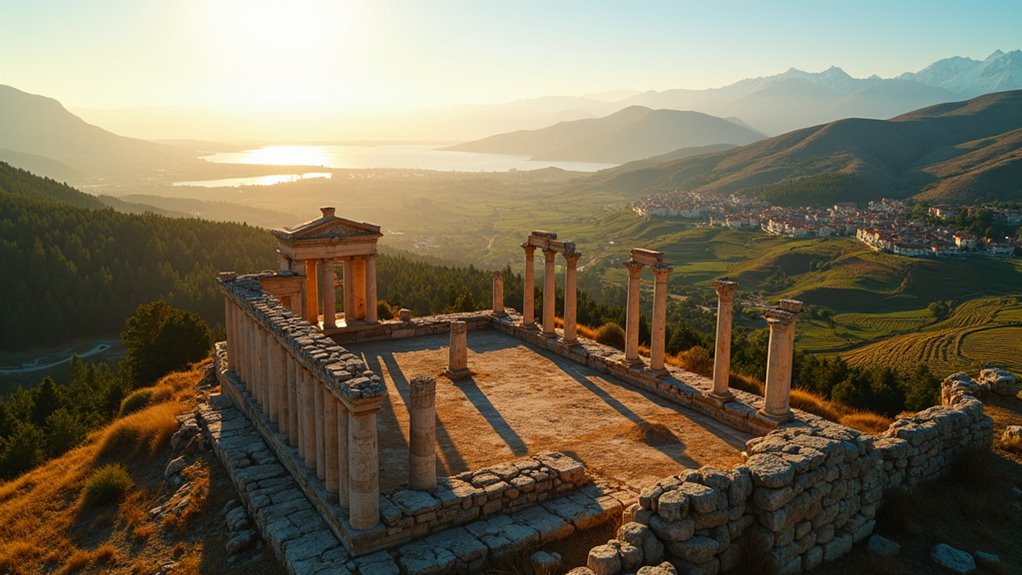
You’ve probably heard Lebanon’s caught between ancient history and modern chaos, but here’s what travel guides won’t tell you: this small Mediterranean country packs more authentic experiences per square mile than anywhere else in the region. Whether you’re working with backpacker budgets or comfortable spending, Lebanon’s mix of Roman ruins, underground caves, mountain trails, and legendary food scene offers something genuine that most touristy destinations have lost.
- Explore Baalbek’s Mind-Blowing Roman Temples
- Wander Through Ancient Byblos, One of the World’s Oldest Cities
- Marvel at Jeita Grotto’s Underground Cathedral
- Hike the Sacred Qadisha Valley and Its Hidden Monasteries
- Experience Beirut’s Layered History in the City Center
- Stand Among the Last Cedar Giants at Cedars of God
- Take the Cable Car to Our Lady of Harissa for Panoramic Views
- Taste Your Way Through Lebanon’s Legendary Food Scene
- Discover Phoenician Ruins in Coastal Tyre and Sidon
- Tour Beqaa Valley Wineries Where Ancient Meets Modern
- Ski the Slopes at Mzaar Kfardebian in the Lebanese Mountains
- The Sum Up
Explore Baalbek’s Mind-Blowing Roman Temples
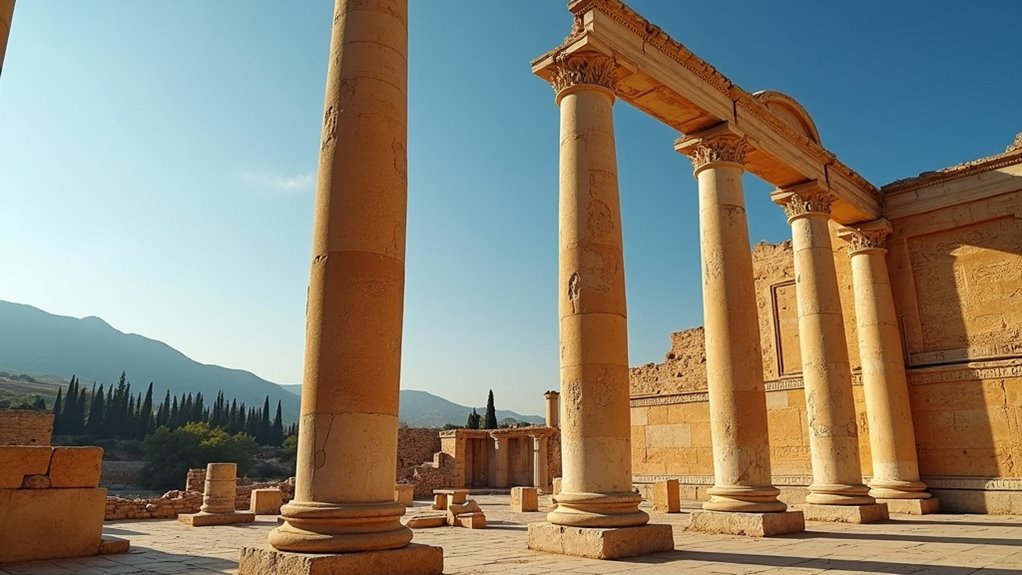
Where else can you witness some of the largest stone blocks ever used in ancient construction while exploring temples that rival Rome’s greatest monuments? Baalbek’s UNESCO World Heritage temples will blow your mind without breaking your budget.
You’ll stand beneath six towering 20-meter Corinthian columns—all that remains of the massive Temple of Jupiter’s original 54. Don’t miss the Temple of Bacchus, one of the world’s best-preserved Roman temples, featuring intricate carvings and an ornate coffered ceiling that predates Baroque architecture by 1500 years.
Walk through the ancient ritual pathway from the entrance through the Hexagonal Court to the Great Court, experiencing the same sacred progression that worshippers followed nearly 2000 years ago. Marvel at the colossal foundation built with enormous monolithic stones, including the famous Trilithon—three massive blocks that continue to puzzle engineers today.
Wander Through Ancient Byblos, One of the World’s Oldest Cities
While other ancient cities crumble into tourist traps, Byblos remains authentically alive—you’ll walk cobblestone streets where locals still live and work among ruins that span 10,000 years of continuous habitation. You’ll discover layers of history from Neolithic dwellings to Crusader fortifications, all accessible with affordable entrance fees. Don’t miss the Phoenician temples, Roman colonnade, and medieval citadel overlooking the Mediterranean.
Start at the archaeological site where you can see the famous Ahiram sarcophagus inscriptions that helped develop our modern alphabet. The vibrant souk offers local crafts without tourist markup, and you’ll find budget-friendly seafood restaurants serving fresh catches.
Combine history with modern Lebanese culture as you explore this UNESCO World Heritage site that’s genuinely lived-in, not preserved in amber. Visit the temple dedicated to Baalat “The Mistress”, the chief goddess whose worship dominated this ancient trading center.
Marvel at Jeita Grotto’s Underground Cathedral
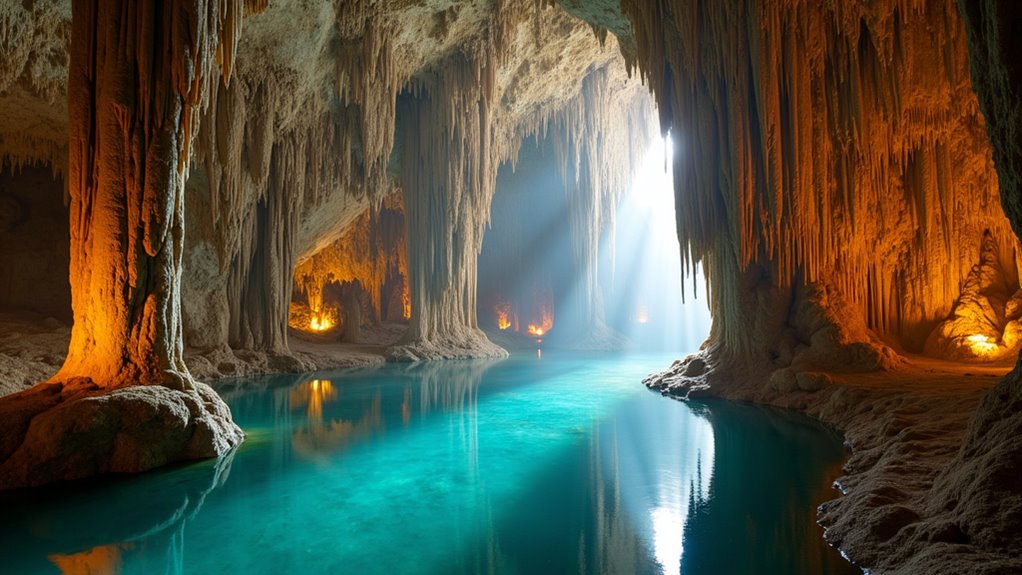
Just 18 kilometers north of Beirut, you’ll descend into the Middle East’s longest cave system—a 9-kilometer underground wonderland that feels like stepping into nature’s own cathedral. The Upper Cave showcases the world’s longest stalactite at 8.2 meters, with chambers soaring 120 meters high. You’ll walk through illuminated tunnels past stunning rock formations including natural columns and curtains formed over millions of years.
The Lower Cave offers a completely different experience—you’ll glide by electric boat through an underground river that supplies drinking water to over one million people. Don’t miss the mysterious “Dark Lake” if you’re visiting outside winter months when water levels rise.
This geological masterpiece combines natural beauty with practical accessibility, making it Lebanon’s most iconic attraction. Archaeological evidence reveals an ancient foundry once operated within the cave system, where skilled craftsmen forged swords in this underground workshop.
Hike the Sacred Qadisha Valley and Its Hidden Monasteries
From underground marvels to mountain peaks, Lebanon’s natural wonders span from cave systems to sacred valleys carved into cliffsides. You’ll find Qadisha Valley, a UNESCO World Heritage Site, offering one of Lebanon’s most rewarding hikes through 1,600 years of Christian monastic history.
The 13.2km Lebanon Mountain Trail section takes 5-8 hours, leading you past ancient monasteries like Saydet Qannoubin carved directly into cliff faces. You’ll follow steep paths alongside the Qadisha River, discovering hermitages where monks have sought refuge since the 4th century. The valley offers three main trails with different starting points and landmarks to suit various hiking preferences.
Start from villages like Bcharre or Dimen, but consider hiring a local guide to navigate the complex trail network. Bring small donations for active monasteries you’ll visit. Stay overnight in village guesthouses to support local communities while experiencing authentic Lebanese mountain hospitality.
Experience Beirut’s Layered History in the City Center
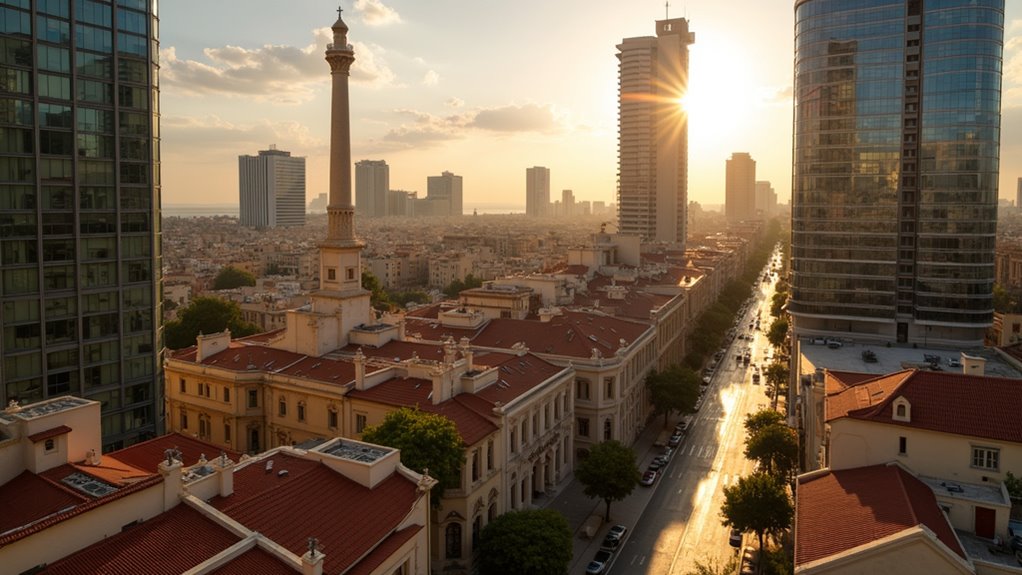
Walking through Beirut’s reconstructed city center feels like flipping through pages of a living history book, where Roman ruins peek through modern sidewalks and ancient souk names still mark today’s shopping streets. You’ll discover Rafael Moneo’s redesigned Beirut Souks, which cleverly preserve historic street layouts while housing modern shops under elegant arcades.
Don’t miss the striking Mohammed Al Amine Mosque standing beside Saint George Maronite Cathedral – this religious harmony defines Beirut’s inclusive spirit.
Start at Martyrs’ Square to see the symbolic statue commemorating the 1915 rebellion, then explore the preserved Roman baths integrated into downtown’s urban fabric. The mosque’s distinctive blue-tiled dome rises prominently above the cityscape, supported by a high central dome and semi-domes that flood the elevated interior with natural light.
The National Museum offers extensive archaeological collections spanning prehistoric to medieval periods, while Saifi Village blends restored architecture with contemporary galleries and cafes.
Stand Among the Last Cedar Giants at Cedars of God
High on Mount Makmel’s windswept slopes, you’ll find yourself standing among some of the planet’s most ancient living witnesses – the Cedars of God.
Individual trees have weathered thousands of years and countless empires. Located east of Bcharré village at over 1,900 meters elevation, this UNESCO World Heritage Site protects Lebanon’s last surviving cedar giants – the same trees mentioned 103 times in the Bible and used for Solomon’s Temple.
You’ll walk among these majestic cedars within a protective stone wall built in the 19th century. The small forest offers minimal facilities, keeping costs low while preserving the natural environment. The site maintains a family-friendly environment that welcomes visitors of all ages to experience this natural wonder.
Combine your visit with nearby Qadisha Valley for a full day exploring Lebanon’s spiritual heritage without breaking the budget.
Take the Cable Car to Our Lady of Harissa for Panoramic Views
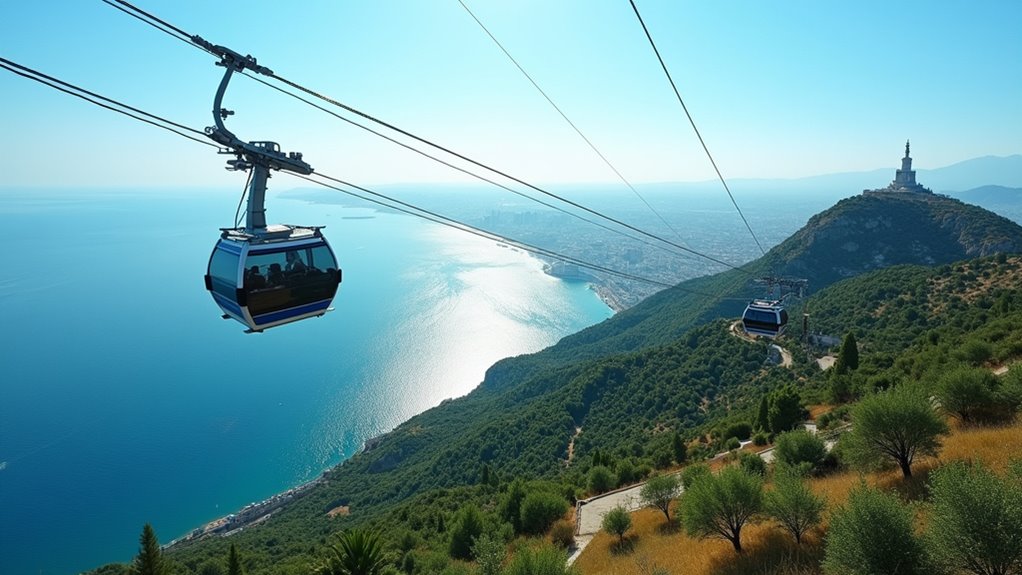
After exploring Lebanon’s ancient cedar forests, you’ll want to experience the country’s dramatic coastal-to-mountain geography from above. The Harissa cable car offers exactly that – a thrilling 9-minute ride from Jounieh’s coastline to the mountaintop Our Lady of Lebanon shrine.
You’ll ascend 650 meters over 1.5 kilometers, enjoying breathtaking views of Jounieh Bay and the Mediterranean. The intimate gondolas hold just four passengers, ensuring unobstructed panoramic vistas.
At the summit, you’ll find the impressive 15-meter white statue of the Virgin Mary surrounded by cedar trees and scenic walkways. The shrine grounds feature beautiful architecture and offer a serene atmosphere for reflection and spiritual connection.
Operating since 1965, this reliable cable car system combines adventure tourism with spiritual pilgrimage. You can return via cable car or take the winding mountain road down for a different perspective.
Taste Your Way Through Lebanon’s Legendary Food Scene
While Lebanon’s landscapes will captivate your eyes, it’s the country’s legendary food scene that’ll truly steal your heart – and you don’t need deep pockets to experience it.
Start with mezze – these small plates showcase Lebanese diversity perfectly. You’ll find creamy hummus, smoky baba ganoush, and fresh tabbouleh bursting with parsley at nearly every restaurant.
Don’t miss kibbeh, Lebanon’s national dish of bulgur wheat and spiced meat, or grab shawarma from street vendors for an authentic, budget-friendly meal.
Lebanese cuisine emphasizes fresh vegetables, legumes, and olive oil, making it naturally healthy. The rich flavors trace back to the Fertile Crescent, where Lebanese culinary traditions first developed during ancient times.
End with knafeh, a sweet cheese dessert that balances the meal’s fresh, herbaceous flavors perfectly.
Discover Phoenician Ruins in Coastal Tyre and Sidon
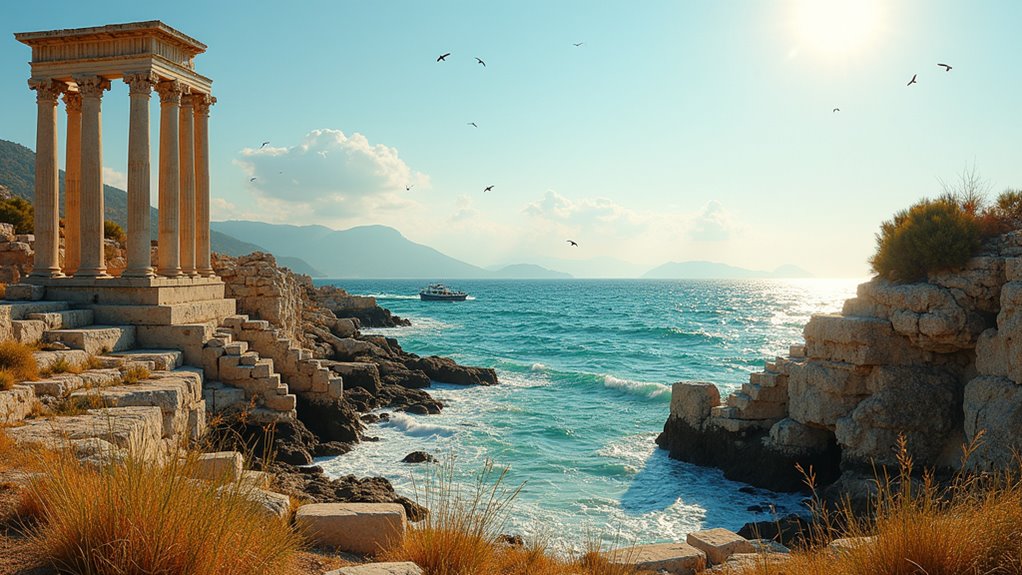
Two ancient Phoenician cities along Lebanon’s coast offer you an incredible journey through 4,000 years of history without breaking the bank.
In Tyre, you’ll explore the world’s best-preserved Roman hippodrome that once seated 20,000 spectators, plus extensive ruins spanning Phoenician to Crusader periods. Don’t miss the Al-Bass necropolis with its triumphal arch or the Al-Mina area’s Roman arena and colonnaded streets. Entry fees are modest, making this UNESCO site budget-friendly.
Head north to Sidon to climb the Castle of St. Louis atop ancient ruins and visit Murex Hill, where crushed shells reveal the famous purple dye industry.
Three Phoenician necropolises offer insights into ancient burial practices. Both cities provide affordable glimpses into the maritime civilization that established Carthage and shaped Mediterranean trade. You can also walk across the ancient Roman causeway that Alexander the Great built during his famous siege, permanently connecting Tyre’s island to the mainland.
Tour Beqaa Valley Wineries Where Ancient Meets Modern
Nestled between Lebanon’s towering mountain ranges, the Beqaa Valley offers wine enthusiasts an affordable journey through 4,000 years of winemaking tradition at nearly 1,000 meters above sea level.
You’ll find Lebanon’s wine powerhouse produces 90% of the country’s wine, with harvest season in mid-September being ideal for visits.
Start at Chateau Ksara, the oldest winery established by Jesuit monks in 1857, then explore globally renowned Chateau Musar or boutique operations like Domaine Wardy.
You can taste full-bodied reds featuring Cabernet Sauvignon and Syrah alongside indigenous Obeidi whites while enjoying panoramic valley views.
Most wineries offer reasonably priced tastings featuring multiple vintages.
The cool autumn temperatures and visible harvest activities make September through November perfect for budget-conscious travelers seeking authentic Lebanese wine experiences. The region’s dry summers with cool nights create the distinctive micro-climate that makes Beqaa Valley wines exceptional.
Ski the Slopes at Mzaar Kfardebian in the Lebanese Mountains
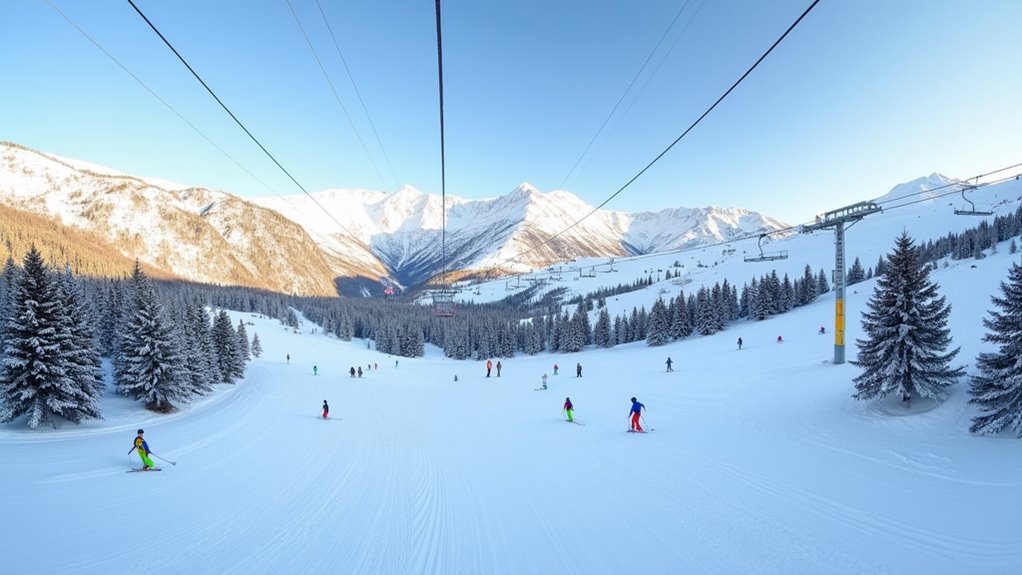
From sipping wine in the valleys, you can head up to Lebanon’s snow-capped peaks for an entirely different adventure.
Mzaar Kfardebian, the Middle East’s largest ski resort, sits just an hour from Beirut and offers 80 kilometers of slopes for every skill level.
You’ll find 29 runs ranging from gentle greens to challenging blacks, plus evening skiing on two slopes.
The season runs December through April, with January offering the best powder conditions.
At 1,850-2,465 meters elevation, temperatures stay comfortable around -4°C on sunny days.
Twenty lifts keep you moving across the mountain efficiently.
Visit on weekdays to avoid weekend crowds and save money.
The resort provides ski schools, rentals, and restaurants, though service quality varies. Current conditions show slush and rain affecting snow quality, so check weather forecasts before your visit.
It’s Lebanon’s premier winter destination that won’t disappoint.
The Sum Up
You’ve got incredible diversity waiting in Lebanon—from ancient ruins that won’t cost you much to explore, to free hikes through stunning valleys. Mix budget-friendly street food tours with affordable wine tastings, and you’ll experience the country’s soul without breaking the bank. Whether you’re skiing in winter or beach-hopping in summer, Lebanon delivers unforgettable experiences at every price point. Pack your appetite for adventure and history—you’ll leave with memories that’ll last forever.