
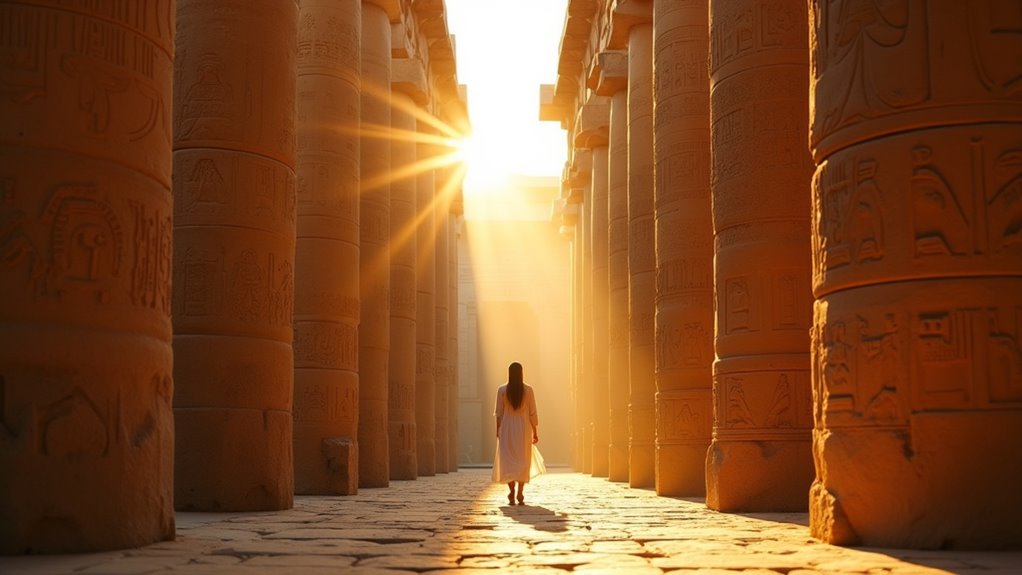
You’ll quickly discover that Luxor isn’t just another tourist destination—it’s an open-air museum where pharaohs once ruled and ancient civilizations left their mark on every corner. Whether you’re working with a tight budget or have money to spend, there’s a strategic way to experience this archaeological wonderland without missing the essential sites or falling into expensive tourist traps. Here’s how to make your first visit count.
- Take a Hot Air Balloon Ride at Sunrise Over the Valley of the Kings
- Explore Three Royal Tombs in the Valley of the Kings
- Marvel at the Massive Karnak Temple Complex and Its Hypostyle Hall
- Visit Queen Nefertari’s Tomb for Egypt’s Most Beautiful Wall Paintings
- Walk Through Luxor Temple in the Evening When It’s Illuminated
- Climb to Queen Hatshepsut’s Terraced Temple at Deir El-Bahari
- Stroll the Newly Restored Avenue of Sphinxes Between Temples
- Spend an Hour at Luxor Museum Before the Temple Light Show
- Take a Felucca Sailing Trip on the Nile at Sunset
- Explore the Mortuary Temple of Ramses III at Medinet Habu
- Stop by the Colossi of Memnon for Photos and Ancient Acoustics
- The Sum Up
Take a Hot Air Balloon Ride at Sunrise Over the Valley of the Kings
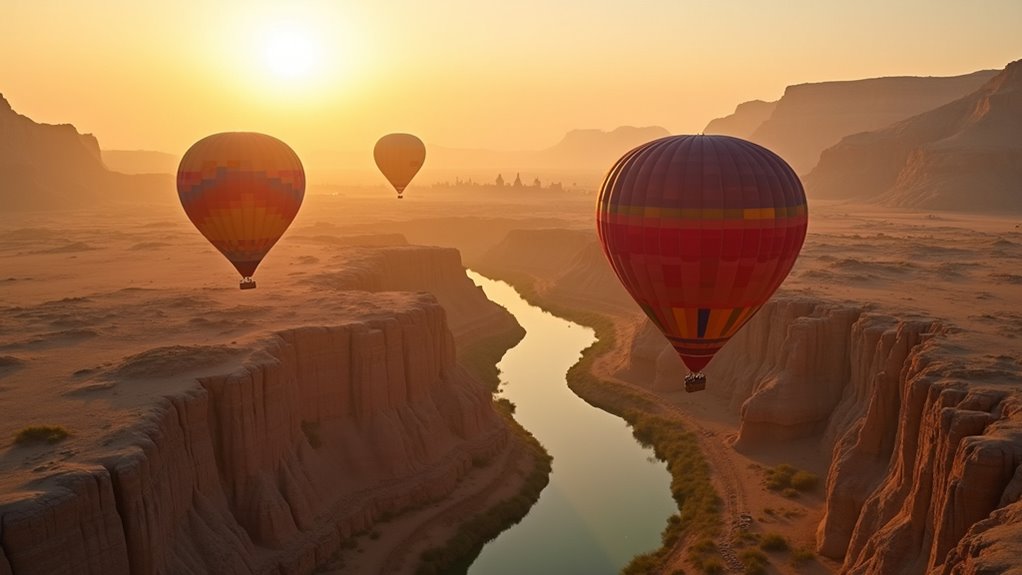
When you’re planning your first visit to Luxor, a hot air balloon ride over the Valley of the Kings offers an unmatched perspective of ancient Egypt’s most sacred burial grounds. You’ll soar 1,500 feet above temples and tombs during the 45-60 minute flight, catching sunrise over Queen Hatshepsut’s Temple and the Colossi of Memnon.
Book early since sunrise slots sell out quickly. Prices range from $45-160 per person, with free cancellation up to 24 hours before departure. You’ll need an early 4:30 AM pickup, but the spectacular dawn lighting makes it worthwhile. Upon landing, you’ll receive a personal flight certificate to commemorate your aerial adventure over these ancient monuments.
Note weight limits of 221 pounds maximum, and children under 6 aren’t permitted. Many tours include hotel transportation and refreshments, making this bucket-list experience hassle-free.
Explore Three Royal Tombs in the Valley of the Kings
After floating above the Valley in your balloon, you’ll want to explore three of its most spectacular royal tombs up close. Your standard Valley of the Kings ticket covers three tombs, so choose wisely.
KV17 (Seti I) offers the most impressive experience with its 137-meter length and masterful reliefs from the Book of Gates.
KV9 (Ramesses V and VI) provides massive scale and elaborate decorations showing the sun god’s underworld journey.
For your third choice, consider splurging on KV62 (Tutankhamun’s tomb) despite the separate ticket cost—it’s the only royal tomb found largely intact with over 5,000 artifacts recovered.
Each tomb features descending corridors, pillared halls, and burial chambers carved deep into limestone cliffs, decorated with ancient Egyptian funerary texts. This UNESCO World Heritage Site represents one of Egypt’s most significant archaeological and cultural heritage locations, recognized globally for its exceptional value to humanity.
Marvel at the Massive Karnak Temple Complex and Its Hypostyle Hall
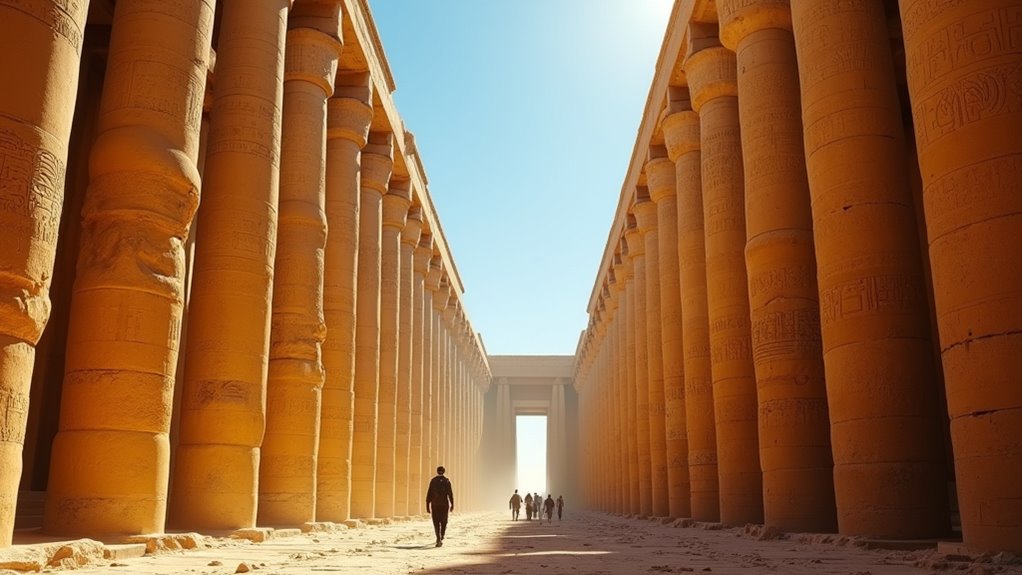
While the Valley of the Kings showcases royal burial artistry, Karnak Temple Complex demonstrates the sheer scale of ancient Egyptian religious devotion. You’ll explore the world’s largest religious building, constructed over 2,000 years by thirty pharaohs. The sprawling complex dedicated to Amun-Re covers massive grounds in ancient Thebes. The temple’s unique dual axes follow both the sun’s east-west path and the Nile’s north-south flow, making it distinct among Egyptian temples.
Don’t miss the Great Hypostyle Hall—the largest room in any religious building worldwide. You’ll walk among 134 towering sandstone columns, with the central twelve rising 69 feet high. Look up at the papyrus capitals and original painted colors still visible on upper surfaces.
Budget tip: Buy your ticket early morning to avoid crowds and heat. The Precinct of Amun-Re offers the most bang for your buck, as it’s the only section fully accessible to visitors.
Visit Queen Nefertari’s Tomb for Egypt’s Most Beautiful Wall Paintings
Cross over to Luxor’s west bank and you’ll discover Queen Nefertari’s tomb in the Valley of the Queens—home to Egypt’s most spectacular wall paintings.
Built around 1255 BCE for Ramses II’s beloved wife, this tomb showcases vibrant frescoes covering 5,200 square feet that depict Nefertari’s afterlife journey.
You’ll marvel at scenes showing the queen meeting gods like Osiris, painted with exceptional detail and color preservation.
The burial chamber features an astronomical ceiling supported by decorated pillars, earning the tomb its nickname “Sistine Chapel of Ancient Egypt.”
Plan ahead—you’ll need a special ticket due to conservation requirements.
The tomb occasionally closes for renovations, so check availability before visiting. The site has been closed since 2024 for extensive conservation work to preserve its delicate frescoes.
Though pricier than other sites, the unparalleled artistry makes this investment worthwhile for experiencing ancient Egypt’s finest royal tomb paintings.
Walk Through Luxor Temple in the Evening When It’s Illuminated
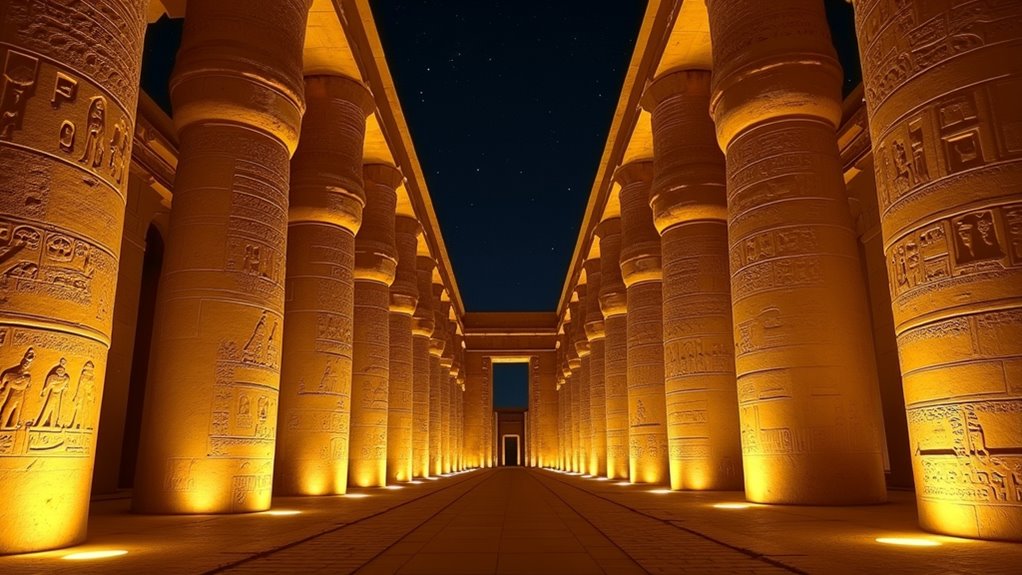
When the sun sets over Luxor, the temple transforms into one of Egypt’s most enchanting nighttime experiences. You’ll find the warm golden lighting dramatically highlights every column, statue, and hieroglyphic carving, creating a mystical atmosphere that’s completely different from daytime visits.
The temple stays open until 10:00 PM year-round, giving you several hours after sunset to explore. Visit shortly after dark for the best lighting effects and cooler temperatures.
You’ll see the massive Pylon, Ramses II‘s obelisks, and the Avenue of Sphinxes beautifully illuminated against the night sky. The site is dedicated to the Theban triad of Amon, Mut, and Khonsu, as well as the royal principle Ka.
Expect crowds between 7:00-9:00 PM, so arrive early for better photos. Remember you’ll need a separate evening ticket if you’ve already visited during the day.
Climb to Queen Hatshepsut’s Terraced Temple at Deir El-Bahari
After exploring Luxor’s east bank temples, you’ll want to cross the Nile to discover one of Egypt’s most architecturally stunning monuments. Queen Hatshepsut’s mortuary temple at Deir el-Bahari rises dramatically from the desert floor in three massive terraces carved into limestone cliffs.
You’ll climb connecting ramps between each level, experiencing how architect Senenmut brilliantly integrated the structure with the natural cliff face. The temple’s ancient name, Djeser-Djeseru, means “Holy of Holies,” and you’ll understand why as you explore well-preserved reliefs depicting Hatshepsut’s divine birth and the famous Punt expedition.
Each terrace serves different purposes—the lower for Amun, middle for Hatshepsut, and upper for Ra-Horakhty. The site’s design reflects architectural continuity in architecture with earlier temples, particularly echoing elements from the nearby temple of Mentuhotep II.
From the top sanctuary, you’ll enjoy panoramic views across the Theban necropolis.
Stroll the Newly Restored Avenue of Sphinxes Between Temples
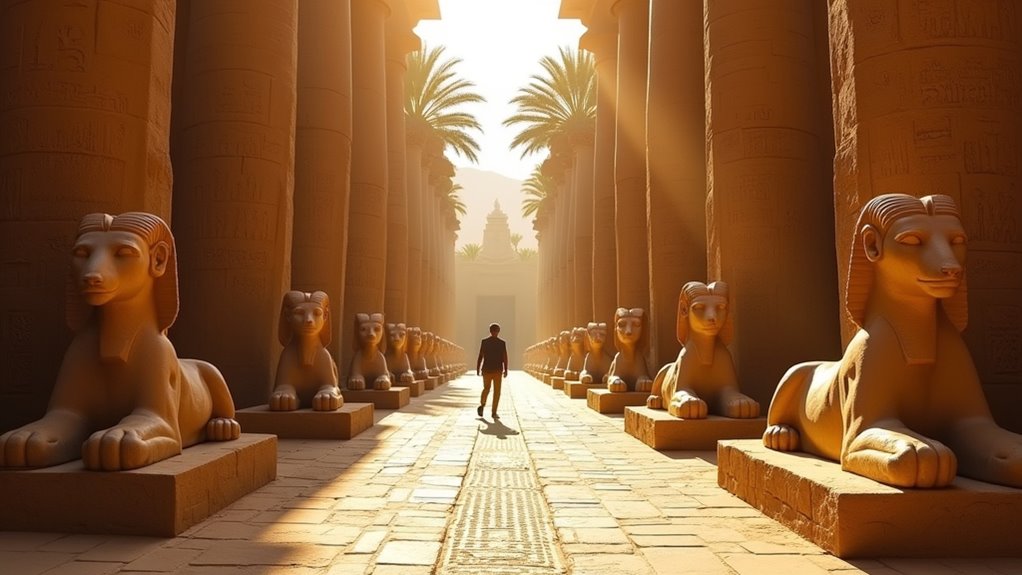
Following your temple explorations, you’ll walk along one of archaeology’s most ambitious restoration projects—the ancient Avenue of Sphinxes that once connected Karnak and Luxor temples. This 2,700-meter ceremonial route originally featured over 1,000 sphinx statues lining both sides, creating an impressive processional path for religious festivals.
Currently, you can explore about 37% of the restored avenue—350 meters from Luxor Temple and a 600-meter section near the airport road. The sphinxes include both ram-headed and human-headed varieties, representing different construction periods from the 18th Dynasty through the 30th Dynasty.
The avenue reopened in November 2021 after seven decades of restoration work. Excavations have uncovered artifacts including Roman wine factories, water cisterns, and reliefs bearing Queen Cleopatra VII’s cartouche. Evening lighting enhances the experience, though the uneven surfaces make it challenging for wheelchair users.
Spend an Hour at Luxor Museum Before the Temple Light Show
Before heading to the evening light show at Luxor Temple, you’ll want to spend an hour at Luxor Museum to see some of Egypt’s finest artifacts in a comfortable, air-conditioned setting. Located conveniently between Karnak and Luxor temples on the Corniche, it’s a perfect stop during your temple visits.
Visit during the evening session (5:00-8:00 PM) when it’s less crowded. Adult tickets cost around 400 EGP, students pay 200 EGP with valid ID. Make sure to arrive one hour before closing time to ensure you have enough time for a complete visit.
The compact, well-curated museum showcases treasures from Tutankhamun’s tomb, royal statues of Amenhotep III and Ramses II, plus a reconstructed wall from the Temple of Aten.
The chronological layout and excellent lighting make this one-hour visit highly worthwhile before experiencing the temple’s spectacular light show.
Take a Felucca Sailing Trip on the Nile at Sunset
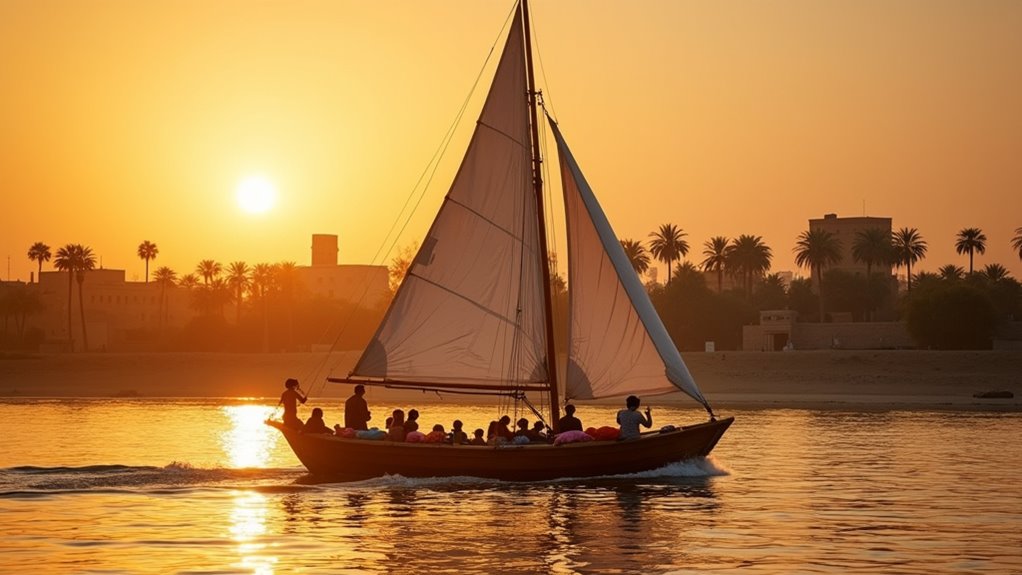
As evening approaches, you’ll find no better way to unwind from temple-hopping than aboard a traditional felucca sailboat on the Nile. These wooden sail-powered vessels offer authentic Egyptian river experiences starting around $17-21 per adult.
Your 2-hour sunset cruise provides stunning views of Luxor Temple on the East Bank and the Valley of the Kings mountains on the West Bank, all bathed in golden light.
Most tours include hotel pickup from East Bank accommodations and complimentary drinks like hibiscus tea or Egyptian coffee.
You’ll sail past lush islands including Banana Island, where you might spot local wildlife or enjoy optional Nile swimming. For an enhanced experience, you can add lunch or dinner service aboard the felucca to enjoy local Egyptian specialties while taking in the tranquil Nile scenery.
Private tours offer more tranquility than group options, and December through February provides the most comfortable weather for evening sailing.
Explore the Mortuary Temple of Ramses III at Medinet Habu
Why settle for crowded temple complexes when you can explore one of Egypt’s most impressive yet undervisited monuments? Medinet Habu offers an authentic experience without the tour bus crowds that plague Karnak.
Built by Ramses III around 1180-1150 BCE, this massive complex spans 66,000 square meters and features unique fortress-like walls reaching 20 meters high. You’ll discover vivid relief carvings depicting epic battles against the Sea Peoples and Libyans—some of Egypt’s best-preserved military artwork.
The temple’s defensive design includes battlements and a fortress gate inspired by Syrian architecture. You can explore multiple courtyards, sanctuaries, and administrative quarters that showcase how these complexes actually functioned. The site also features an ancient well and cistern system that supplied water for daily rituals and temple operations.
Entry costs considerably less than major sites, making it perfect for budget-conscious travelers seeking extraordinary history without crowds.
Stop by the Colossi of Memnon for Photos and Ancient Acoustics
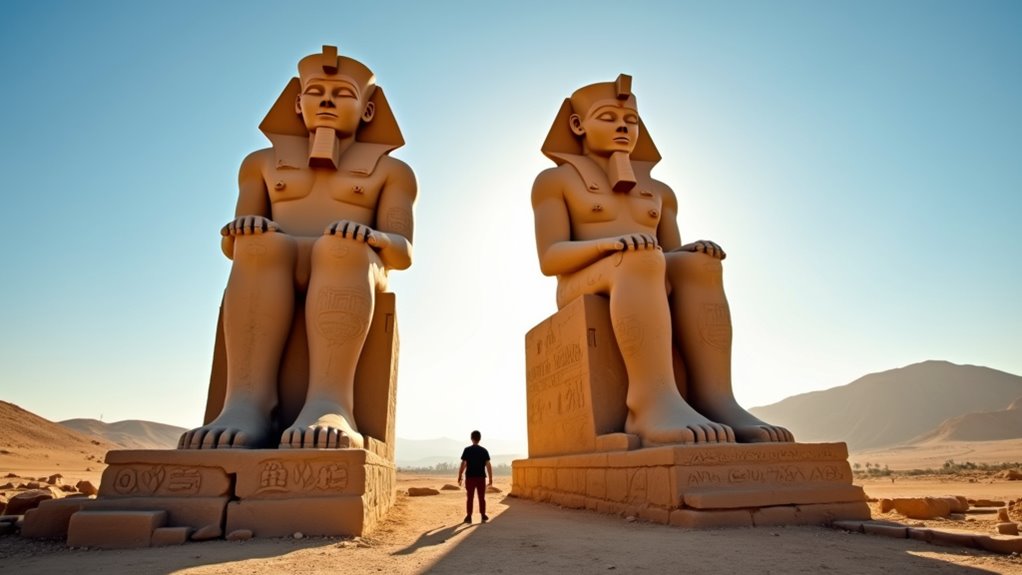
Just a short drive from Medinet Habu, you’ll encounter two towering stone giants that have watched over the Nile for over 3,400 years. The Colossi of Memnon stand 18 meters tall and represent Pharaoh Amenhotep III, who ruled during ancient Egypt’s golden age.
These massive quartzite statues once guarded the entrance to the largest mortuary temple complex ever built, covering 86 acres. The temple was destroyed by an earthquake around 1200 BC.
What makes them truly fascinating is their acoustic history—the northern statue was famous for “singing” at dawn, drawing ancient Greek and Roman travelers who believed they heard the voice of the mythological hero Memnon.
You’ll find excellent photo opportunities here, and since there’s no entrance fee, it’s perfect for budget travelers exploring Luxor’s west bank.
The Sum Up
You’ll find Luxor offers incredible value for your money with most sites accessible through affordable day passes. Don’t rush—you can easily see the highlights in 3-4 days without breaking your budget. Book hot air balloon rides directly with operators for better prices, and consider staying on the West Bank for cheaper accommodation. Pack water, wear comfortable shoes, and start early to beat both crowds and heat while maximizing your Egyptian adventure.