
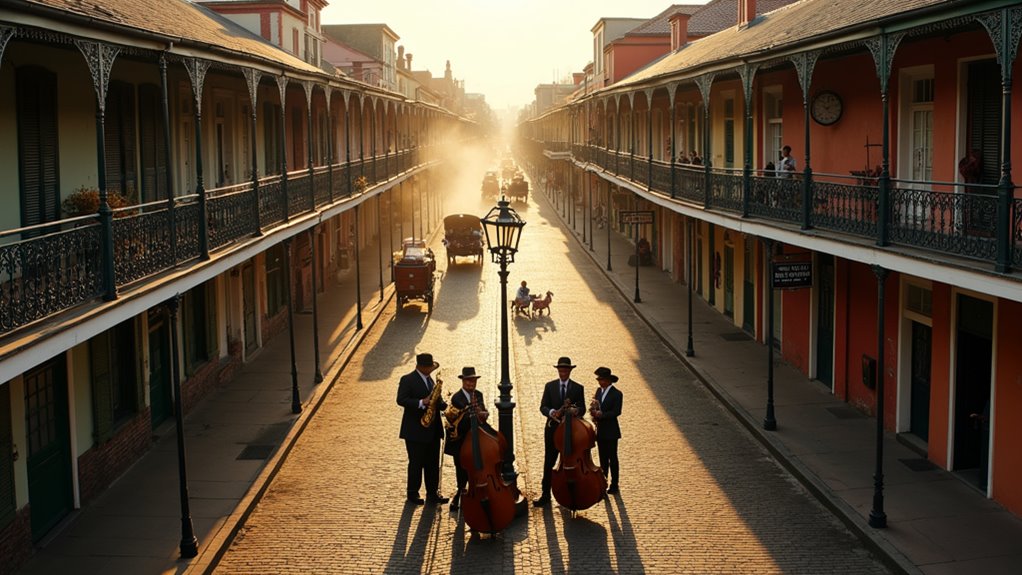
You’ll discover New Orleans offers incredible experiences on any budget, from wandering the French Quarter’s colonial streets and cast-iron balconies to catching live jazz at Preservation Hall for just $20-25. Explore world-class museums like the National WWII Museum, savor authentic Creole gumbo and jambalaya at local spots, and soak up the vibrant nightlife on Bourbon Street. Don’t miss the Garden District’s mansions, Bywater’s street art, and City Park’s free sculpture garden—there’s much more to uncover.
- Wander the French Quarter’s Historic Streets and Architecture
- Experience Live Jazz at Preservation Hall
- Explore the National WWII Museum
- Savor Creole and Cajun Cuisine Throughout the City
- Stroll Through the Garden District’s Mansion-Lined Streets
- Catch Street Performers and Brass Bands in the Marigny
- Walk the Mississippi Riverfront and Take a Riverboat Cruise
- Visit Jackson Square and St. Louis Cathedral
- Discover Local Art and Culture in the Bywater
- Enjoy the Nightlife Scene on Bourbon Street
- Explore City Park and the New Orleans Museum of Art
- Experience a Festival or Cultural Event
- The Sum Up
Wander the French Quarter’s Historic Streets and Architecture
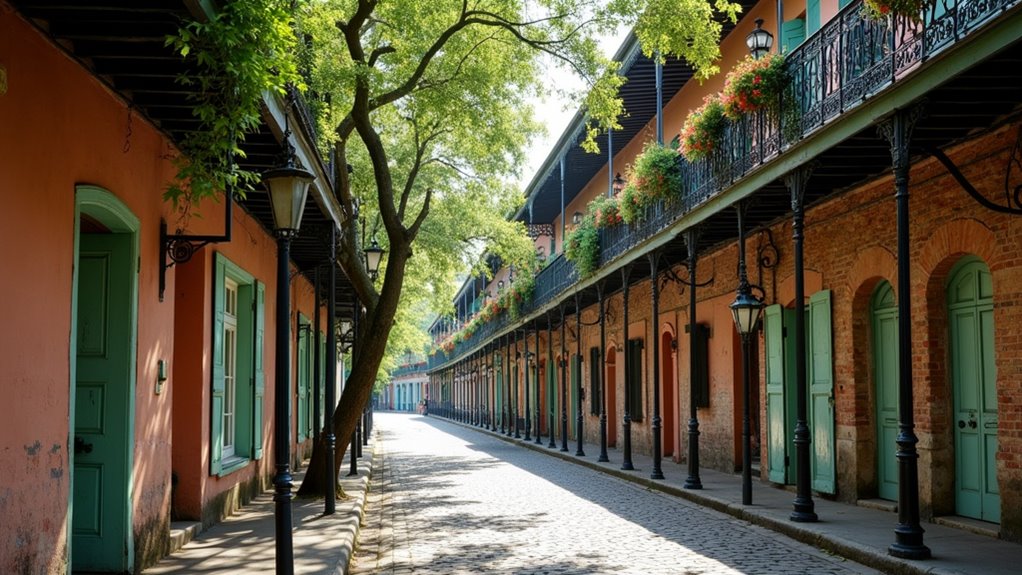
When you step into the French Quarter, you’re walking through America’s most intact colonial streetscape—a living museum where every block tells the story of New Orleans’ complex past. You’ll discover an enthralling mix of French, Spanish, Creole, and American architectural styles that survived fires, floods, and centuries of change.
Start your exploration on Royal Street, where ornate cast-iron balconies frame art galleries and antique shops. Don’t miss the LaBranche House—it’s one of the quarter’s most photographed façades.
Wander down Bourbon Street to find Lafitte’s Blacksmith Shop, one of the city’s oldest surviving buildings. The quarter’s elevated location helped it escape relatively unscathed from Hurricane Katrina, preserving these architectural treasures for future generations.
Look for hidden courtyards behind street façades, thick masonry walls in Spanish-era buildings, and distinctive entresol levels that reveal the quarter’s commercial heritage.
Experience Live Jazz at Preservation Hall
You’ll sit on simple wooden benches in an acoustic setting with no bar, food service, or modern distractions—just pure music. Shows run over 350 nights yearly, featuring rotating ensembles from 100+ local practitioners. Expect sell-outs and arrive early since space is limited.
The experience costs around $20-25, making it an affordable way to hear the same musicians who’ve performed at Carnegie Hall and around the world. The venue deliberately avoids amplification, maintaining the authentic acoustic atmosphere that has defined this historic jazz hall since the 1960s.
Explore the National WWII Museum
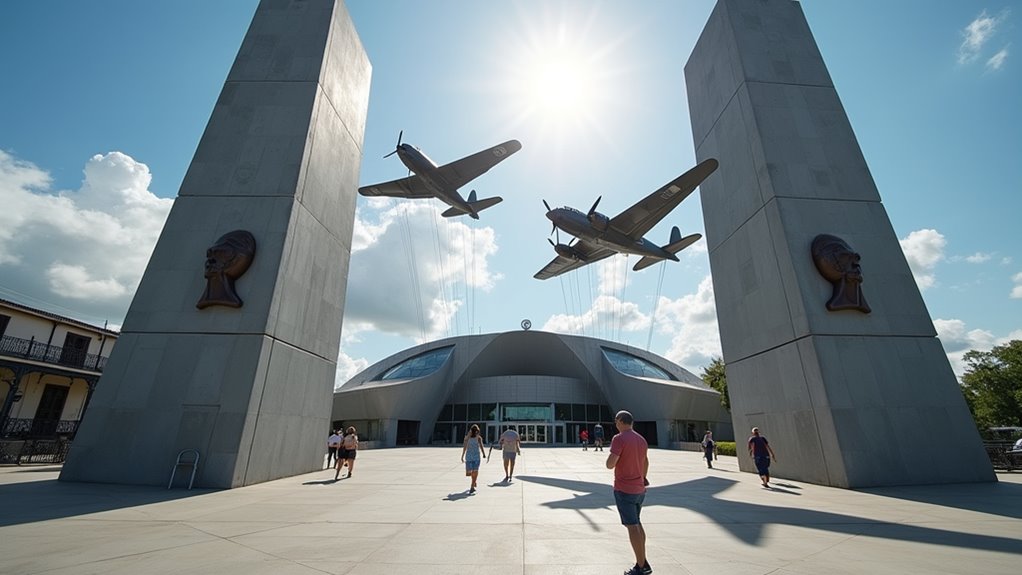
Why does New Orleans house America’s premier World War II museum? The answer lies in Higgins Industries, which produced over 20,000 landing craft that proved essential for Allied amphibious operations. This massive facility employs interactive experiences you won’t find elsewhere.
Start with the simulated troop train ride that recreates soldiers’ departure for war. Consider purchasing the optional dog tag system—it lets you follow an individual’s wartime journey through touchscreen stations. Don’t miss the Solomon Victory Theater’s *Beyond All Boundaries*, a 4-D film with effects like falling snow during the Battle of the Bulge.
The seven-pavilion campus covers 400,000+ square feet, showcasing artifacts from European, Pacific, and African theaters. You’ll see authentic aircraft including a Spitfire and C-47 Skytrain, plus behind-the-scenes conservation work through glass-walled restoration spaces. The museum has welcomed over 10 million visitors since opening and contributed significantly to the local economy.
Savor Creole and Cajun Cuisine Throughout the City
After exploring New Orleans’ wartime history, you’ll work up an appetite for the city’s legendary cuisine. The city offers distinct Creole and Cajun flavors throughout different neighborhoods. Try signature gumbo—Creole versions feature seafood with filé powder, while Cajun gumbo’s meatier with deeper roux.
Don’t miss jambalaya, where Creole includes tomatoes and Cajun goes “brown” without them. Cajun cuisine originated from French settlers who migrated south during Le Grand Derangement in the mid-1700s, bringing their distinctive culinary traditions.
Head to the Warehouse District for Cochon’s house-made charcuterie or Mulate’s live music dining. Mid-City’s Toups’ Meatery serves contemporary Cajun with craft cocktails.
In the French Quarter, splurge at Brennan’s for refined Creole or try Restaurant R’evolution’s famous “Death by Gumbo” with stuffed quail. For budget-friendly options, visit Zesty Creole on Canal Street for praised jambalaya and local value.
Stroll Through the Garden District’s Mansion-Lined Streets
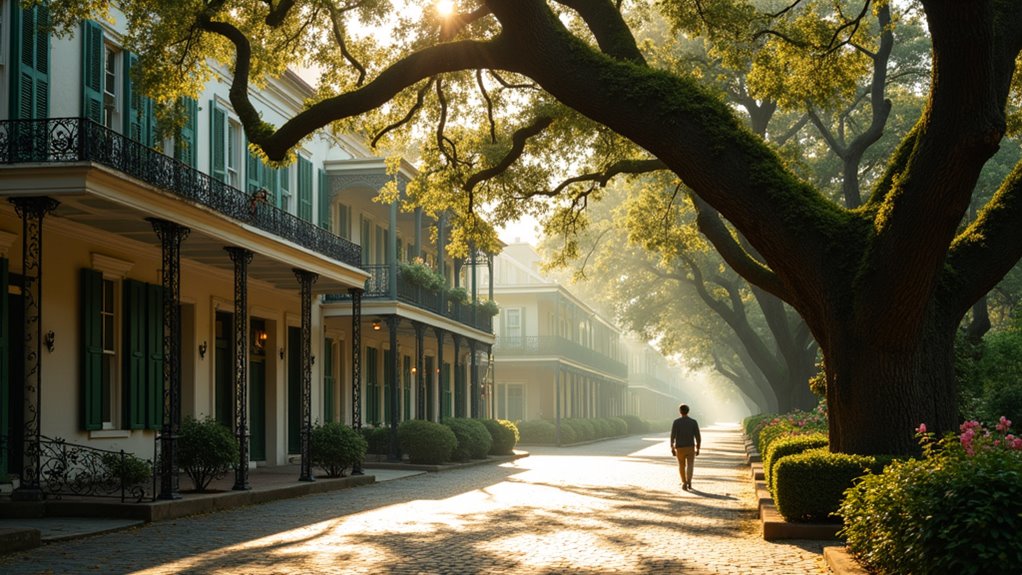
Once you’ve satisfied your culinary cravings, the Garden District beckons with America’s most pristine collection of antebellum mansions. This former plantation land showcases stunning Greek Revival, Italianate, and Victorian homes from the 1840s-1870s, complete with massive columns, ornate ironwork, and wraparound galleries.
You’ll walk tree-lined streets where towering live oaks and magnolias create natural canopies over sidewalks. The neighborhood’s original four-lot design means you’ll see exceptionally spacious grounds that feel more like English garden suburbs than typical city blocks.
Start your self-guided tour near St. Charles Avenue and Prytania Street, where deep porches and intricate plasterwork tell stories of 19th-century wealth. Don’t miss Lafayette Cemetery No. 1 nearby—it’s a fascinating cultural stop that costs nothing to explore. Take the historic St. Charles streetcar from the French Quarter for an authentic arrival experience that connects two of the city’s most iconic neighborhoods.
Catch Street Performers and Brass Bands in the Marigny
While Bourbon Street draws travelers with its party atmosphere, the Marigny offers something far more authentic—live brass bands and street performers who’ll give you the real New Orleans sound without the inflated prices.
Head to Frenchmen Street, where music spills from clubs like The Spotted Cat and Bamboula’s onto the sidewalks, creating an outdoor concert that’s completely free.
You’ll find the best action Thursday through Sunday evenings when brass ensembles set up on corners between venue sets. The music runs from 2 p.m. until 2 a.m., so you’ve got plenty of time to catch multiple acts.
Check out the side streets too—solo horn players and drummers often perform for smaller crowds, giving you an intimate taste of New Orleans’ legendary street music culture. For a more curated artistic experience, visit the New Marigny Theatre at 2301 Marais Street, which serves as a sacred space for diverse artistic expressions and community engagement.
Walk the Mississippi Riverfront and Take a Riverboat Cruise
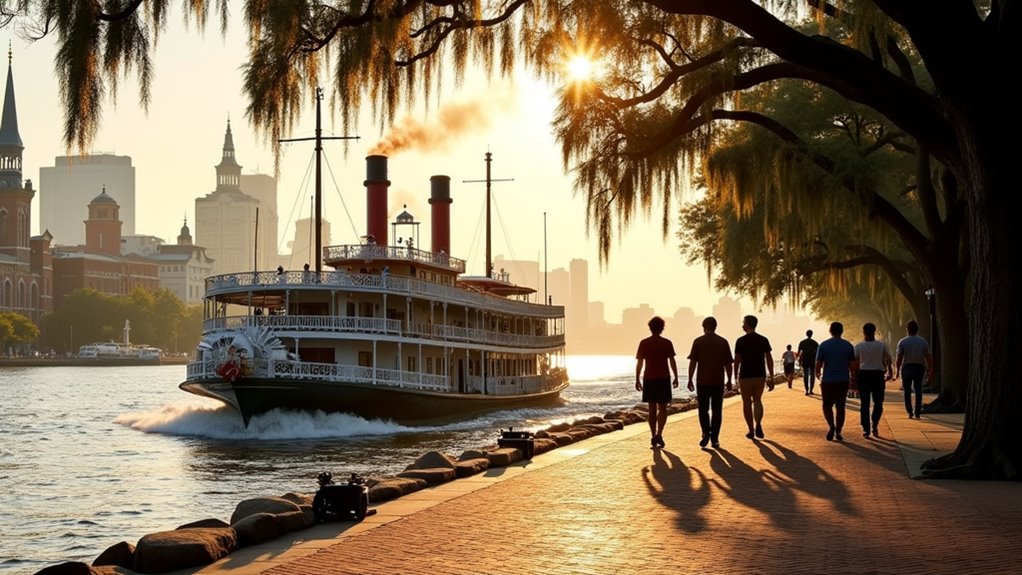
Two miles of free riverfront walkways give you front-row seats to America’s most famous river without spending a dime. Woldenberg Park offers landscaped paths, public art, and benches where you can watch container ships and steamboats navigate the Mississippi.
The Moonwalk provides direct river access, while the budget-friendly Algiers Point ferry ($2) doubles as a mini-cruise with spectacular downtown views.
For a splurge, board the Steamboat Natchez for two-hour cruises featuring live jazz and Creole cuisine. Evening sailings showcase the illuminated skyline, while daytime trips focus on port operations and river history. The Steamboat Natchez calliope signals the start of your authentic Mississippi River adventure.
The vintage Riverfront Streetcar connects major attractions affordably. Don’t miss Crescent Park‘s elevated overlooks highlighting New Orleans’ famous river bend—perfect for understanding why it’s called the Crescent City.
Visit Jackson Square and St. Louis Cathedral
Since its founding as Place d’Armes in 1721, Jackson Square has served as New Orleans’ beating heart—and you’ll understand why the moment you step into this 2.5-acre National Historic Landmark.
The iconic St. Louis Cathedral dominates the square’s backdrop with its triple spires, creating one of America’s most photographed urban scenes.
You’ll find the red-brick Pontalba Buildings housing ground-floor shops and restaurants—perfect for budget-friendly browsing.
Don’t miss Clark Mills’ 1856 equestrian statue of Andrew Jackson at the square’s center, surrounded by Four Seasons statues and Parisian-style landscaping. This masterpiece was the first American equestrian statue featuring a horse standing unsupported on its rear legs.
The pedestrian-friendly space offers free people-watching opportunities, while the flanking Cabildo and Presbytère museums provide affordable cultural experiences in this perfectly preserved 18th-19th century ensemble.
Discover Local Art and Culture in the Bywater
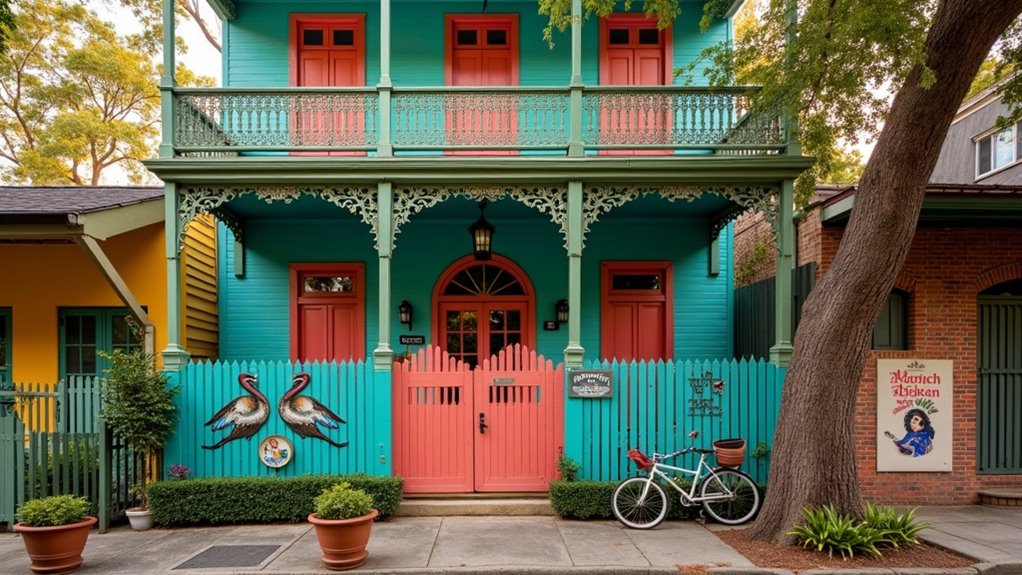
Just a short streetcar ride from the French Quarter, the Bywater neighborhood pulses with raw creative energy that’ll give you an authentic taste of New Orleans’ contemporary art scene without breaking the bank. Start at Studio BE, a massive warehouse gallery showcasing powerful murals about Black culture and social justice—guided tours provide essential context.
The New Orleans Art Center hosts rotating exhibitions featuring local artists, with Second Saturday art walks connecting multiple galleries for one immersive evening. Located in the heart of the St. Claude Arts District, this community-focused gallery also houses working artist studios upstairs where you can witness the creative process firsthand.
Wander the streets to discover an open-air gallery of colorful murals, Dr. Bob’s “Be Nice or Leave” folk art, and yard sculptures. Visit Dr. Bob’s working studio daily for affordable, handmade pieces.
Many galleries sell directly from artists at accessible prices, supporting the neighborhood’s dense creative community.
Enjoy the Nightlife Scene on Bourbon Street
While the Bywater offers intimate artistic discoveries, Bourbon Street delivers New Orleans’ most legendary nightlife experience across 13 blocks of neon-lit revelry. You’ll find the rowdiest action near Canal Street, where open-container laws let you carry drinks between venues in plastic go cups.
Start at iconic Pat O’Brien’s for their famous Hurricane cocktail, then explore Lafitte’s Blacksmith Shop Bar for a candlelit atmosphere. Many bars offer no-cover entry and drink specials, keeping costs manageable while you bar-hop.
You’ll hear live jazz, blues, and rock spilling from packed venues, while balconies above provide perfect people-watching spots. The street reflects a rich cultural tapestry shaped by French, Spanish, Creole, and American influences throughout its history.
The LGBTQ+ hub centers around Bourbon and St. Ann Streets, featuring clubs like Oz New Orleans. Expect dense crowds, loud music, and an all-night party atmosphere.
Explore City Park and the New Orleans Museum of Art
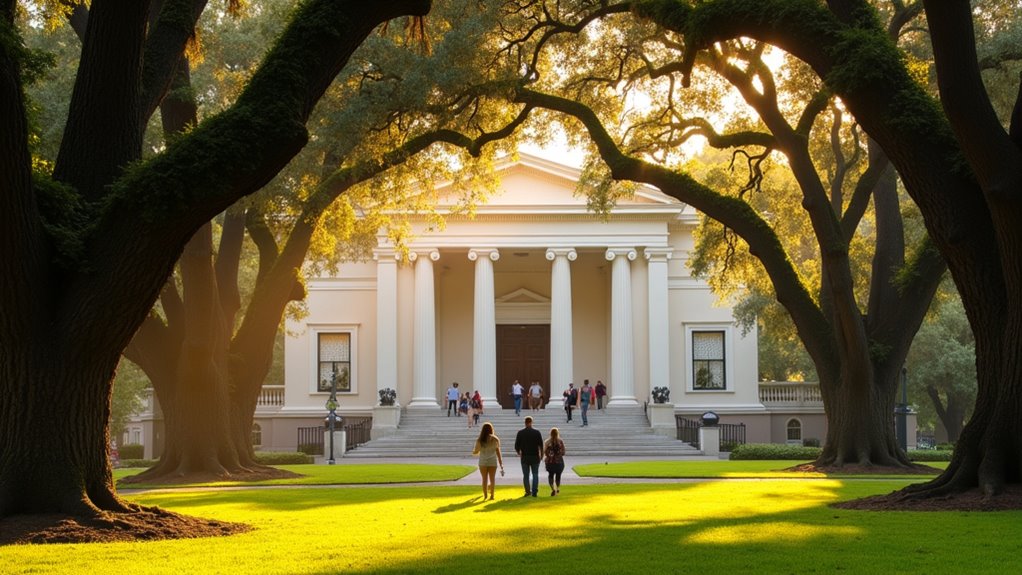
Where else can you find 1,300 acres of centuries-old live oaks, world-class art, and family fun all in one place? City Park delivers one of America’s largest urban green spaces without the hefty admission fees of typical tourist attractions.
Start at the New Orleans Museum of Art, where $15 gets you access to nearly 50,000 works spanning ancient to contemporary periods. Don’t miss Degas paintings created just blocks away during his 1870s New Orleans visit. The French collection includes Picasso, Braque, and Miró. The museum also features period rooms displaying 18th and 19th-century American furniture and decorative arts.
Next, stroll the free Besthoff Sculpture Garden‘s 90+ outdoor pieces among lagoons and mature oaks. Pack a picnic to enjoy under those famous centuries-old trees, or let kids explore Storyland. You’ll easily spend a full day here.
Experience a Festival or Cultural Event
Since New Orleans hosts over 130 festivals annually, you’ll likely stumble upon live music, street food, and cultural celebrations no matter when you visit.
Mardi Gras season from January 6 through Fat Tuesday offers weeks of free parades featuring major krewes like Zulu and Rex.
Spring brings Jazz Fest to the Fair Grounds with hundreds of performances across multiple genres, plus regional specialties like crawfish bread.
For budget-friendly options, check out French Quarter Festival‘s 20+ stages of free music and tastings from 60+ local restaurants.
Neighborhood events like Bayou Boogaloo and Gentilly Fest showcase local culture without hefty ticket prices.
Food-focused festivals celebrate everything from po-boys to beignets.
Many locals participate actively through costume creation and second-line traditions, making festivals community experiences rather than spectator events. The city’s 24/7 entertainment scene ensures that beyond scheduled festivals, you can discover impromptu performances and cultural happenings throughout the week.
The Sum Up
You’ll find New Orleans offers incredible experiences without breaking the bank. Street performances, free festivals, and wandering historic neighborhoods won’t cost you anything. Mix pricey activities like museum visits with budget-friendly options like exploring local markets or catching live music in parks. Don’t forget to sample affordable po’boys and beignets instead of only dining at upscale restaurants. With smart planning, you’ll experience the city’s magic while keeping your wallet happy.