
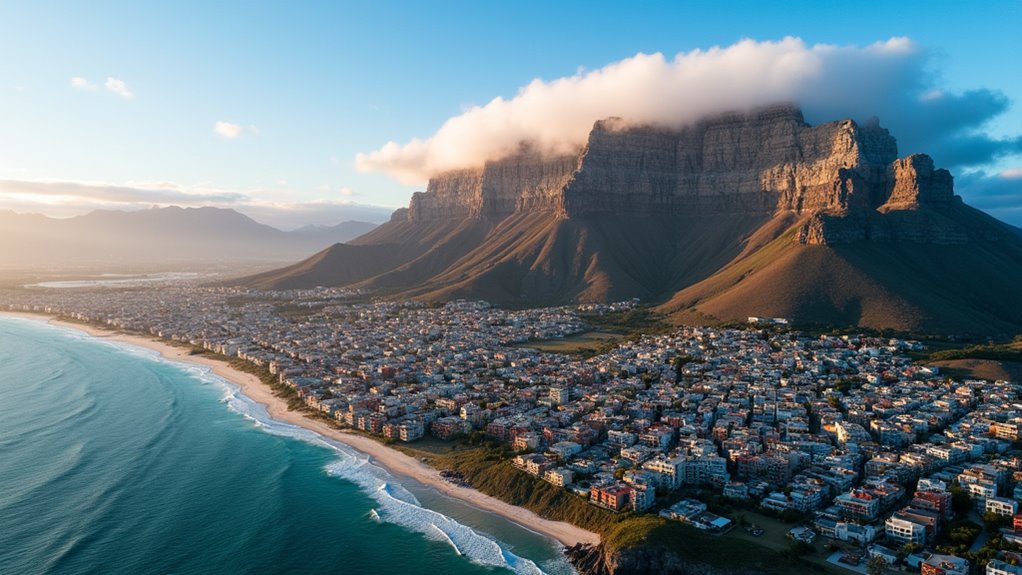
You’ll find South Africa offers more bang for your buck than most destinations, with world-class experiences that won’t drain your wallet. From free mountain hikes with million-dollar views to affordable safari options that rival expensive East African alternatives, this country delivers incredible diversity without the premium price tag. Whether you’re drawn to adrenaline-pumping adventures or cultural discoveries, there’s a strategic way to maximize your time and budget across these essential experiences.
- Climb Table Mountain for Cape Town’s Best Views
- Take the Ferry to Robben Island
- Safari in Kruger National Park
- Explore the Colorful Bo-Kaap Neighborhood
- Drive the Garden Route From Cape Town to Port Elizabeth
- Visit Boulders Beach to See African Penguins
- Go Wine Tasting in Stellenbosch and Franschhoek
- Hike the Drakensberg Mountains
- Stand at the Edge of Blyde River Canyon
- Experience Johannesburg’s Apartheid History
- Go Whale Watching From Hermanus
- Take a Walking Safari in a Private Game Reserve
- Bungee Jump From Bloukrans Bridge
- Discover the Wild Coast’s Untouched Beaches
- The Sum Up
Climb Table Mountain for Cape Town’s Best Views
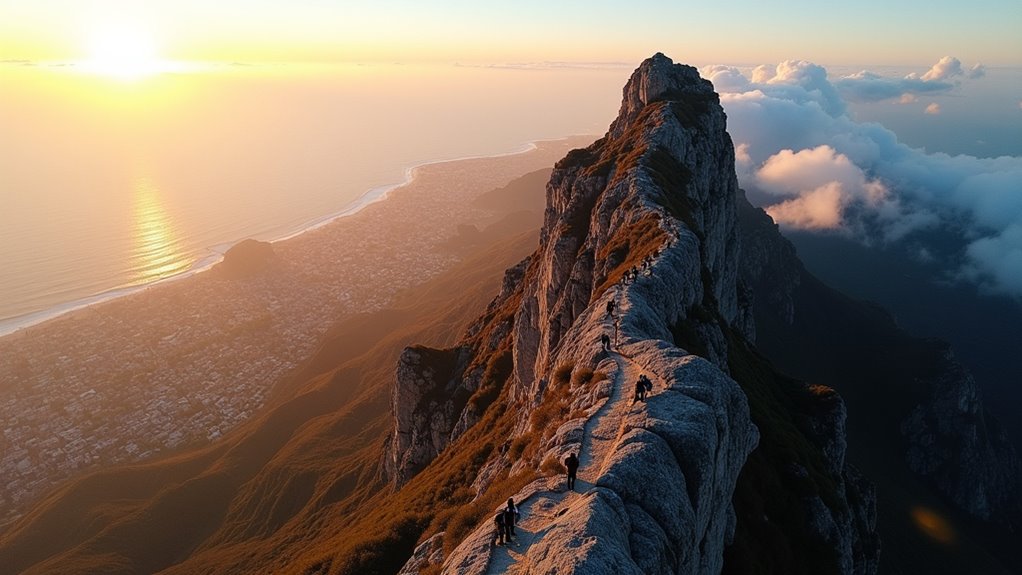
Whether you’re an experienced hiker or a casual adventurer, climbing Table Mountain offers Cape Town’s most spectacular panoramic views without breaking your budget. Choose from routes graded A to C+ based on technical difficulty—Kasteelspoort provides the easiest summit path with stunning scenery, while Smuts Track from Kirstenbosch Gardens offers a gradual ascent perfect for beginners.
More adventurous hikers can tackle Skeleton Gorge’s minor scrambling or India Venster’s challenging chains and staples if you’re comfortable with heights. Start early to avoid midday heat, pack plenty of water, and wear proper hiking boots. Check weather conditions before heading out, and don’t attempt scrambling routes if you have acrophobia. Wet weather makes rocks slippery and significantly increases the difficulty of any route.
Professional guides help match routes to your fitness level and experience.
Take the Ferry to Robben Island
Taking the ferry to Robben Island ranks among South Africa’s most powerful and vital experiences, offering you direct access to where Nelson Mandela spent 18 of his 27 years in prison. You’ll depart from Nelson Mandela Gateway at V&A Waterfront, with ferries running at 9:00 AM, 11:00 AM, 1:00 PM, and 3:00 PM.
Book online well in advance—tickets sell out frequently, especially during peak season. South African residents pay around R400, while international visitors pay R600.
The 30-45 minute ferry ride leads to a 3.5-4 hour experience including guided bus tours and prison walks led by former political prisoners. Robben Island Tours operates as the primary ferry service providing reliable transportation to this historic destination.
Arrive 30 minutes early and dress warmly—weather can be unpredictable and may cause cancellations.
This UNESCO World Heritage Site provides vital insight into South Africa’s apartheid history.
Safari in Kruger National Park
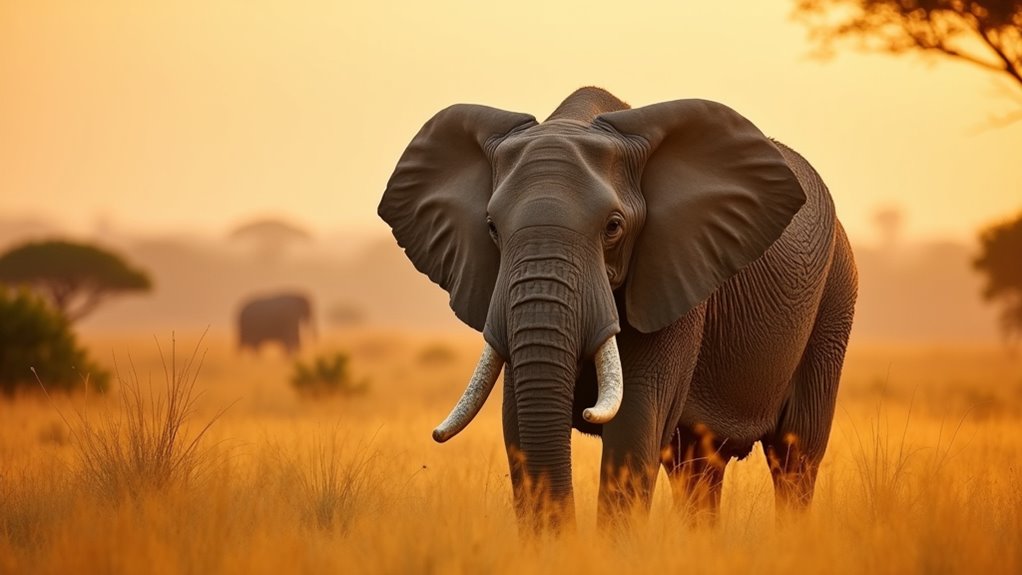
Where else can you witness 12,000 elephants roaming freely alongside lions, leopards, and rhinos in their natural habitat? Kruger National Park delivers Africa’s ultimate safari experience across nearly 20,000 square kilometers of diverse terrain.
You’ll find all Big Five animals here – 1,500 lions, 1,000 leopards, 3,600 rhinos, plus buffalo and those magnificent elephant herds. The park also houses 200 cheetahs, 300 wild dogs, and over 500 bird species.
Choose from 22 rest camps fitting various budgets, or splurge on 18 private lodges. Six walking safari trails offer intimate wildlife encounters with armed rangers ensuring your safety. The park connects with unfenced ecosystems like the Associated Private Nature Reserves, creating an even larger wildlife area of 344,000 hectares where animals move freely across boundaries.
Guided safaris increase your chances of spotting multiple Big Five animals in one day. With knowledgeable rangers sharing insights, you’ll gain deep appreciation for Africa’s incredible wildlife conservation efforts.
Explore the Colorful Bo-Kaap Neighborhood
Nestled against Signal Hill’s slopes, Bo-Kaap’s rainbow-colored houses create Cape Town’s most Instagram-worthy neighborhood – and there’s so much more beneath the surface than pretty photos. You’ll discover centuries of Cape Malay culture as you wander cobbled streets lined with historic homes dating back to the 1760s.
Start at the Bo-Kaap Museum on Wale Street to understand the area’s origins as housing for freed slaves from Southeast Asia.
Visit the 1794 Auwal Mosque, South Africa’s oldest.
Sample traditional Cape Malay curry at local restaurants, or browse craft markets for authentic souvenirs.
Time your visit during Tweede Nuwe Jaar celebrations for vibrant street parades. Listen carefully as you explore, and you might hear the melodic muezzin calls echoing through the neighborhood if you time your visit with prayer times.
The neighborhood’s compact size makes it perfect for walking tours that won’t strain your budget.
Drive the Garden Route From Cape Town to Port Elizabeth
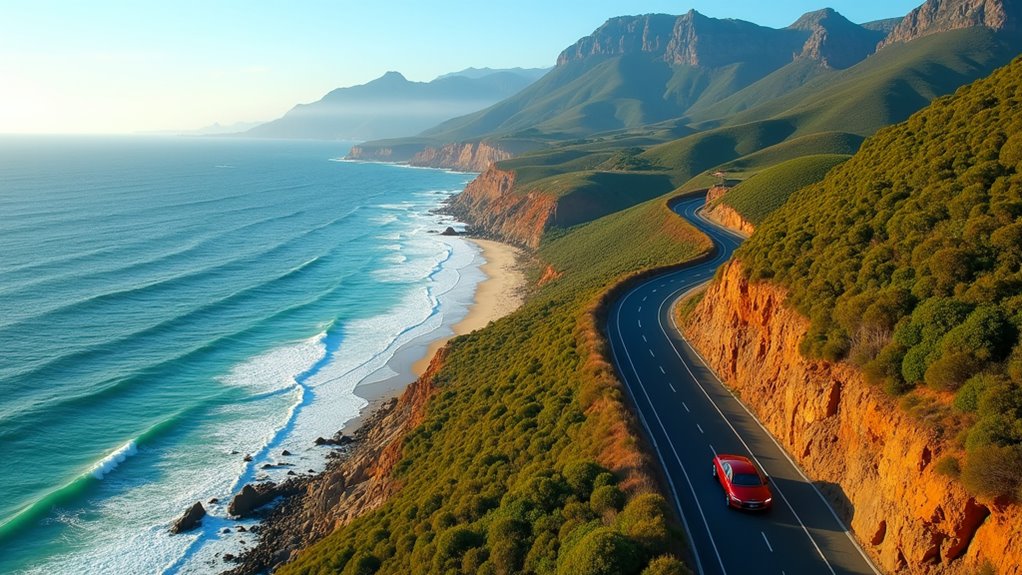
After soaking up Cape Town’s vibrant neighborhoods, you’ll want to experience South Africa’s most scenic drive – the legendary Garden Route stretching 740 kilometers to Port Elizabeth.
You can rush through in eight hours, but don’t. Instead, plan seven to ten days to properly explore charming coastal towns like Knysna, Plettenberg Bay, and George.
The well-maintained N2 highway accommodates any vehicle, though exhaustive insurance is smart for this long journey. For those preferring not to drive, guided tours are available including hop-on-hop-off options like BazBus.
Must-see stops include Oudtshoorn’s ostrich farms and Cango Caves (adding 160 kilometers), Bloukrans Bridge for bungee jumping, and countless beaches for whale watching.
Speed limits drop to 60-80 km/h through scenic stretches, so embrace the slower pace.
Book one-way flights into Cape Town and out of Port Elizabeth to maximize your adventure without backtracking.
Visit Boulders Beach to See African Penguins
Just 45 minutes from Cape Town’s city center, you’ll discover one of the world’s most accessible penguin colonies at Boulders Beach in Simon’s Town. This mainland colony houses 2,500-3,000 African penguins, making it perfect for budget-friendly wildlife viewing without expensive boat trips to offshore islands.
You’ll walk along elevated wooden boardwalks that bring you within one meter of these charming “jackass penguins,” nicknamed for their distinctive donkey-like braying calls. These remarkable birds use their wings as flippers to reach swimming speeds of 24 km/h underwater.
The granite boulders create natural windbreaks, while soft white sand provides ideal nesting spots. Visit during March-May breeding season to see chicks and nest-building activities.
Since African penguins are critically endangered with fewer than 10,000 breeding pairs remaining worldwide, this experience offers meaningful wildlife conservation awareness alongside unforgettable memories.
Go Wine Tasting in Stellenbosch and Franschhoek
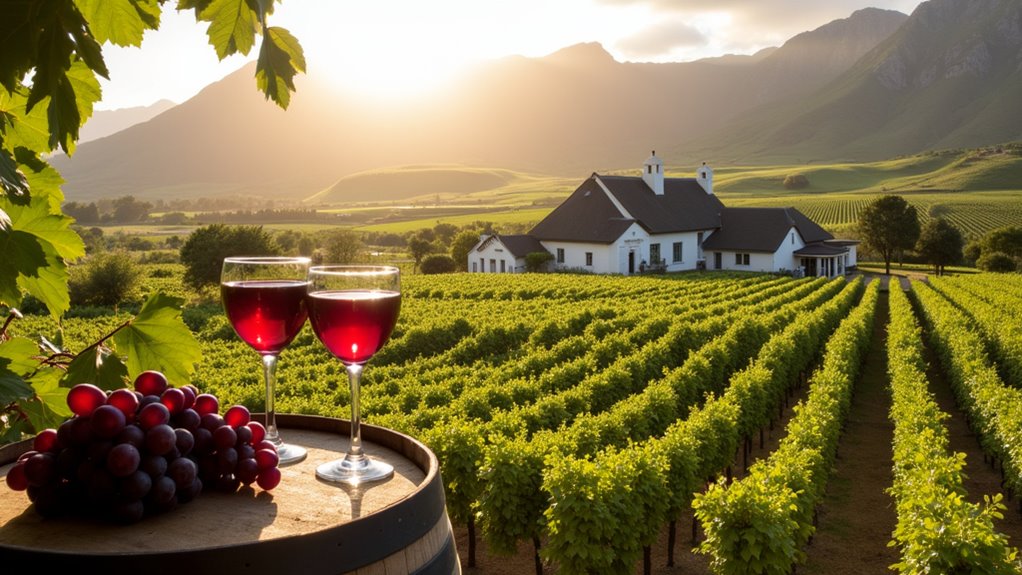
While Cape Town offers incredible urban experiences, you’ll find South Africa’s true liquid treasure just an hour’s drive inland in the renowned Stellenbosch and Franschhoek wine regions. You can explore these world-class vineyards through various budget-friendly options.
Book a private tour covering four wineries over eight hours, or save money with hop-on hop-off services like Vine Hopper that visit 5-6 estates. Self-guided Uber trips offer maximum flexibility and cost control.
Stellenbosch specializes in robust reds like Pinotage and Cabernet Sauvignon, while Franschhoek excels in elegant whites and Cap Classique sparkling wines. These tours operate 361 days per year, ensuring you can visit regardless of when you travel.
You’ll taste multiple wines per estate, with many offering food pairings. Book advance reservations for popular estates like Kanonkop and Simonsig, and pace yourself with morning and afternoon tasting sessions.
Hike the Drakensberg Mountains
Though you’ve enjoyed the vineyards of the Western Cape, South Africa’s most spectacular hiking awaits in the Drakensberg Mountains, where dramatic cliff faces and thundering waterfalls create some of Africa’s most rewarding trails.
Start with Rainbow Gorge Trail – it’s perfect for beginners with just 5.5 km and gorgeous scenery.
Ready for a challenge? Tackle Tugela Falls Trail‘s steep 5.6 km route featuring chains and ladders leading to one of the world’s tallest waterfalls.
The Mushroom Rock Loop offers excellent bang for your buck with panoramic views after an 8.5 km moderate hike.
Visit during April-May or September-October for ideal weather. The area also features the challenging Baboon Rock Hike, where encounters with baboons are common and require maintaining a safe distance.
Register at trailheads, carry maps, and consider joining group hikes for safety.
You’ll discover ancient San rock art alongside breathtaking mountain vistas.
Stand at the Edge of Blyde River Canyon
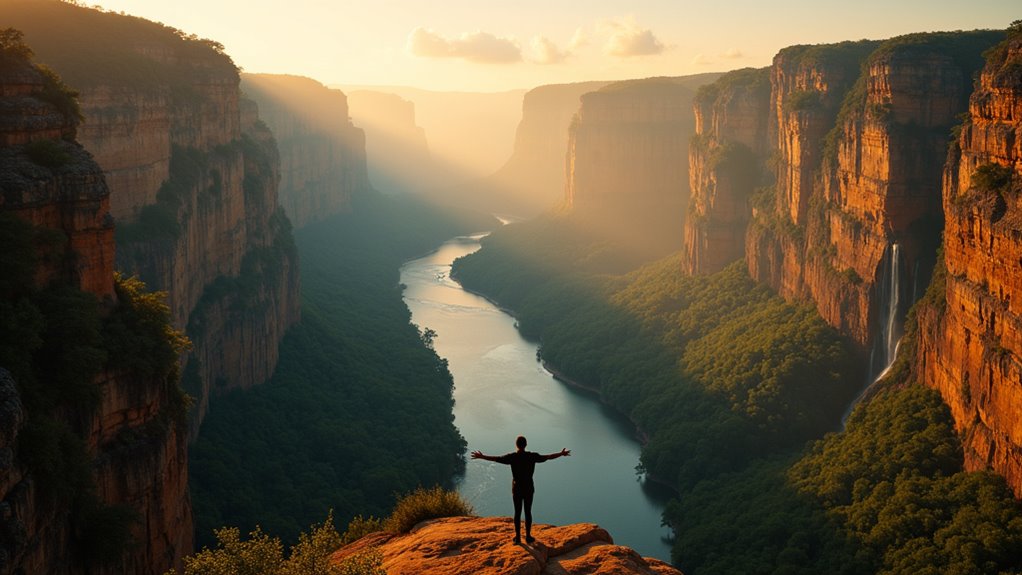
After experiencing the Drakensberg’s rugged trails, you’ll find a completely different kind of dramatic beauty at Blyde River Canyon – the world’s third largest canyon and one of South Africa’s most accessible natural wonders.
Standing at viewpoints like God’s Window, you’ll gaze across 1,600 meters of layered red sandstone stretching into the Lowveld below.
Don’t miss the Three Rondavels, three distinctive conical peaks that’ll make perfect photo opportunities.
Bourke’s Luck Potholes showcase fascinating rock formations carved by water erosion over millennia.
The canyon’s just a 5-6 hour drive from Johannesburg, making it budget-friendly for day trips. The reserve covers 29,000 hectares from the highlands down to the lowveld at Blyde Dam.
You can explore hiking trails, visit the educational Visitor Centre, or take boat tours on Blyde Dam to spot hippos and crocodiles.
Experience Johannesburg’s Apartheid History
South Africa’s natural wonders tell only part of the country’s story – to truly understand this nation, you’ll need to confront its complex apartheid history in Johannesburg.
Start at the Apartheid Museum, where you’ll receive a random racial classification card that simulates segregation’s harsh reality. Plan 2-3 hours to absorb the powerful exhibits featuring photographs, testimonies, and haunting installations like 131 nooses representing political executions. The museum’s fortress-like exterior with concrete walls and narrow windows deliberately evokes discomfort to reflect apartheid’s oppressive nature.
Next, visit Constitution Hill, where Nelson Mandela and other activists were imprisoned. You can tour the former prison complex and courthouse that’s now a human rights precinct.
Don’t miss Liliesleaf Farm, the secret ANC meeting place where key liberation leaders were arrested in 1963. These sites offer profound insight into apartheid’s brutal system and the courageous resistance that ultimately defeated it.
Go Whale Watching From Hermanus
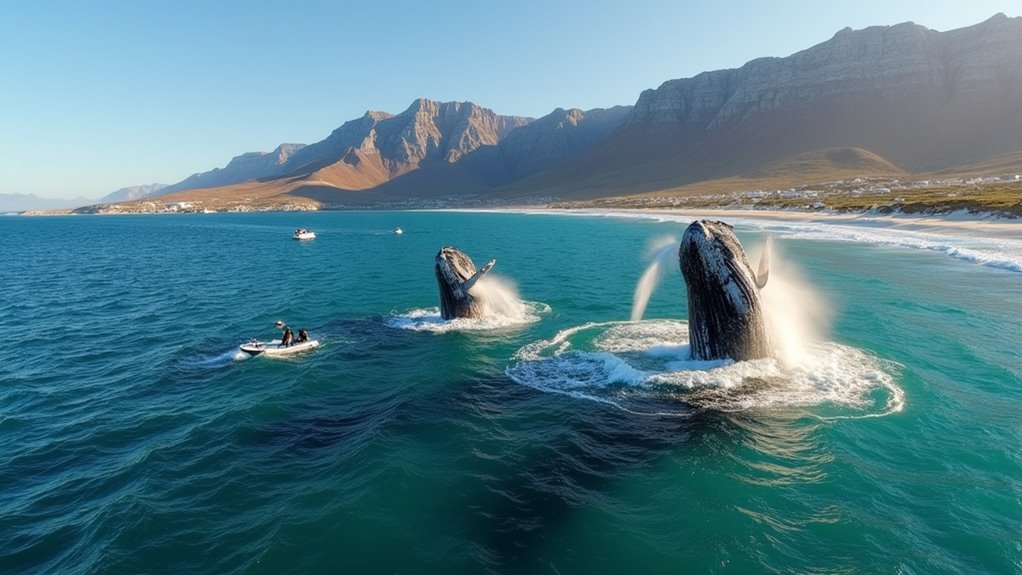
From June to December, you’ll witness one of nature’s most spectacular shows when Southern Right Whales migrate to Walker Bay’s sheltered waters around Hermanus. September offers peak viewing during the annual Hermanus Whale Festival, when these massive mammals breach and tail-slap close to shore.
You don’t need expensive boat tours – Hermanus provides some of the world’s best land-based whale watching from clifftop vantage points around town. Listen for the unique whale crier’s kelp horn announcing nearby sightings.
Humpback whales grace the waters from May to August, performing their famous acrobatic displays.
Visit the Whale House Museum for educational exhibits, or splurge on boat charters for closer encounters. Check regional policies before booking tours to ensure compliance with local marine protection regulations.
Time your visit during festival season for live music, local crafts, and marine conservation activities celebrating this incredible migration.
Take a Walking Safari in a Private Game Reserve
While vehicle-based game drives offer excellent wildlife viewing, walking safaris in South Africa’s private reserves deliver an entirely different sensory experience that’ll connect you more deeply with the African bush. You’ll hear every bird call, smell the earth after rain, and spot details you’d miss from a vehicle.
Expert guides lead small groups through diverse terrains, teaching you to read animal tracks and identify indigenous plants. Top reserves like Shamwari, Timbavati, and Klaserie offer these intimate encounters, often including Big Five sightings from safe distances.
Walking safaris access vehicle-restricted areas and provide learning opportunities about traditional plant uses. Most reserves offer malaria-free options and family-friendly accommodations, making this immersive experience accessible for various budgets and comfort levels. Some reserves like Shamwari’s Explorer Camp emphasize bush walks over traditional game drives for a more adventurous walking safari experience.
Bungee Jump From Bloukrans Bridge
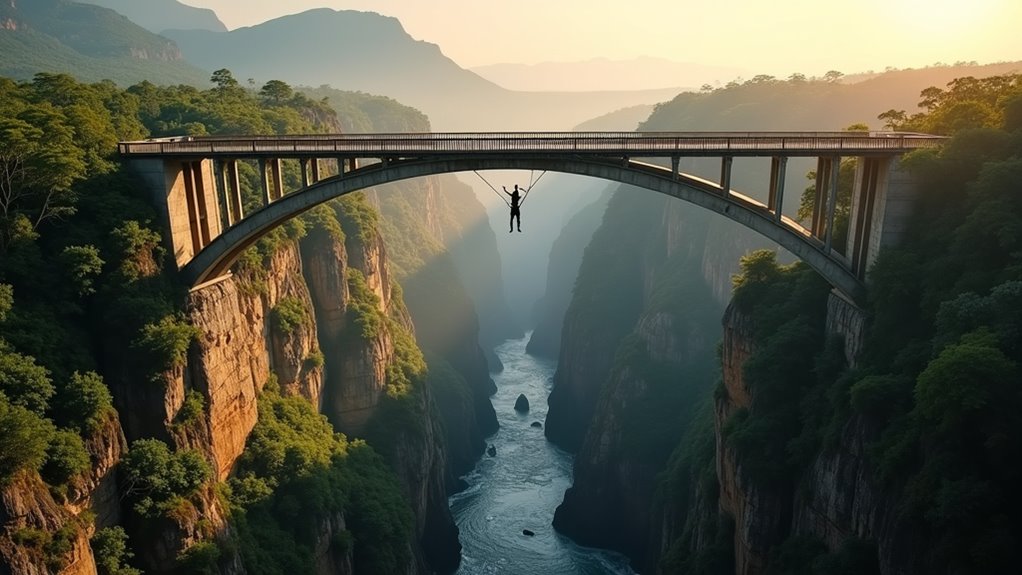
At 216 meters above the Bloukrans River, you’ll find the world’s highest commercial bungee jump that’ll send your heart racing before you even step off the platform. Located on the Garden Route between Eastern Cape and Western Cape, Bloukrans Bridge offers a complete adventure package that’s worth the trip.
You’ll experience more than just the 5-second free fall. The full experience includes a 200-meter zipline to the jump platform, the actual bungee jump, a winch ride back up, and a 216-meter skywalk to safety.
Face Adrenalin has maintained a perfect safety record since 1997, so you’re in experienced hands. This bridge made history as the first African bridge for bungee jumping in 1990.
At minimum age 14 and weight limits between 35-150kg, most people can participate. Arrive an hour early for mandatory safety briefings and wear comfortable clothes.
Discover the Wild Coast’s Untouched Beaches
Spanning 250 kilometers along the Eastern Cape’s Indian Ocean coastline, the Wild Coast delivers South Africa’s most pristine and undeveloped beaches you’ll find anywhere in the country. You’ll discover dramatic cliffs, rolling green hills, and numerous river estuaries creating breathtaking coastal scenery.
Coffee Bay offers excellent surfing and backpacker-friendly accommodation, while Cintsa Beach provides family-friendly sandy stretches perfect for beach games. For complete isolation, head to Poenskop Beach north of Port St Johns – it’s one of the region’s most remote spots with minimal development.
Stay in community-run homestays or eco-lodges like Bulungula Lodge to support local Xhosa communities while keeping costs down. You’ll experience authentic culture alongside spectacular beaches, making this South Africa’s best value coastal destination. The Eastern Cape also features 7 beaches that have earned Blue Flag certification for meeting high environmental and safety standards.
The Sum Up
You’ve got endless adventures waiting in South Africa, and you don’t need to break the bank to experience them. Mix free activities like hiking Table Mountain with budget-friendly options like ferry rides to Robben Island. Stay in hostels, use local transport, and book safaris during off-peak seasons for better deals. Whether you’re craving wildlife encounters, cultural experiences, or adrenaline rushes, you’ll find South Africa delivers incredible value for every rand spent.