
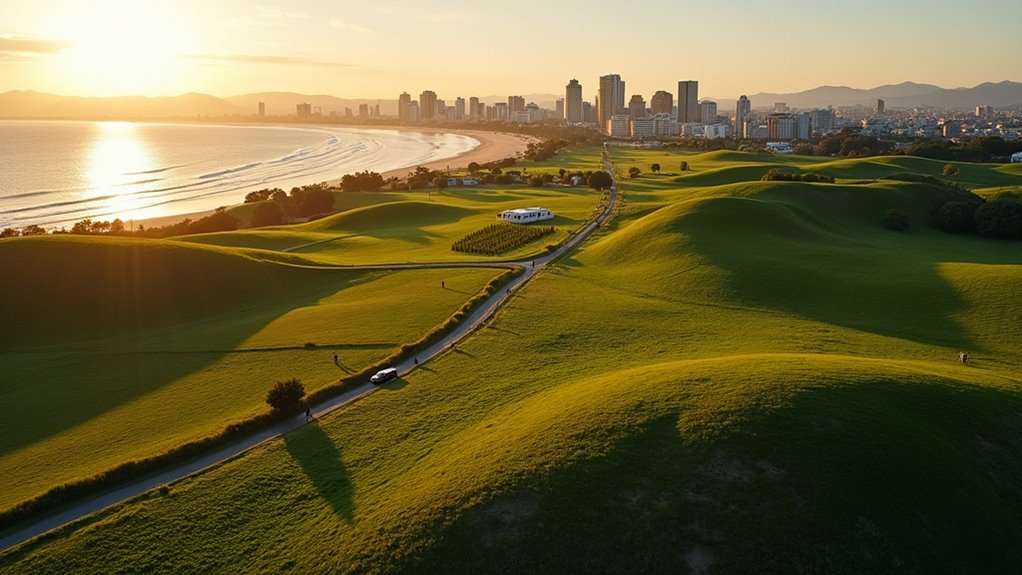
You can explore Uruguay’s UNESCO-listed Colonia del Sacramento with its 300-year-old cobblestone streets, stroll Montevideo’s 22-kilometer Rambla waterfront, and discover colonial architecture in Ciudad Vieja’s Plaza Independencia. Feast on grilled meats at Mercado del Puerto‘s Victorian-era market, catch performances at the historic Solís Theatre, and day-trip to Punta del Este’s beaches. Experience authentic gaucho culture in Tacuarembó, sample world-class Tannat wines in Canelones, and unwind at Salto’s therapeutic thermal springs for a complete culture.
- Wander the Cobblestone Streets of Colonia Del Sacramento’s UNESCO Quarter
- Stroll the 22-Kilometer Rambla Waterfront in Montevideo
- Explore Ciudad Vieja’s Colonial Architecture and Plaza Independencia
- Feast on Grilled Meat at Mercado Del Puerto
- Take a Day Trip to the Beaches of Punta Del Este
- Visit a Traditional Estancia in the Uruguayan Countryside
- Catch a Performance at Montevideo’s Historic Solís Theatre
- Sample World-Class Wines in the Canelones Region
- Experience Gaucho Culture in Tacuarembó
- Relax in the Thermal Springs of Salto
- The Sum Up
Wander the Cobblestone Streets of Colonia Del Sacramento’s UNESCO Quarter
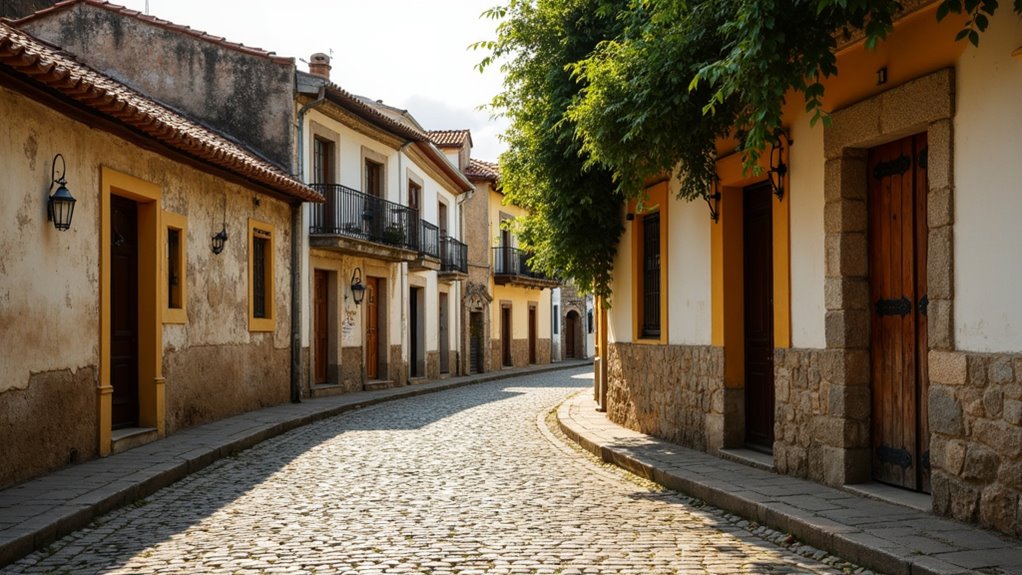
Step through Colonia del Sacramento’s cobblestone streets and you’ll traverse over three centuries of South American colonial history. This UNESCO World Heritage site, founded in 1680 as a Portuguese stronghold, showcases an exceptional fusion of Portuguese, Spanish, and post-colonial architectural influences across its 33-block historic quarter.
You’ll discover irregular, organic streets that contrast sharply with typical Spanish grid patterns, lined with white facades, wrought-iron balconies, and red-tiled roofs. Navigate narrow lanes connecting five intimate plazas while admiring the preserved one-to-two-story scale that maintains the quarter’s village atmosphere.
Don’t miss the emblematic Portón de Campo entrance, the towering lighthouse offering panoramic river views, and the twin-towered Basilica del Santísimo Sacramento. Beyond the historic quarter, the city is surrounded on three sides by water, creating a picturesque setting along the Rio de la Plata.
Archaeological ruins reveal Portuguese foundations and 18th-century defensive structures throughout this remarkably preserved colonial ensemble.
Stroll the 22-Kilometer Rambla Waterfront in Montevideo
Following Montevideo’s Rambla waterfront, you’ll traverse one of the world’s longest continuous urban promenades—a sweeping 22-kilometer coastal avenue that doubles as both the city’s primary east-west artery and its most beloved recreational corridor.
This 1920s modernist masterpiece stretches along the Río de la Plata, connecting diverse neighborhoods from the Old Town to Carrasco.
You’ll encounter prime beaches like Pocitos and Ramírez, the iconic Montevideo 3D sign, and the historic Carrasco Casino.
Locals gather here for mate-drinking sessions, jogging, and sunset watching—the latter considered one of the city’s finest free attractions.
The eastern sections offer the most scenic experiences, featuring parks, marinas, and fishing spots with expansive river views that create Uruguay’s most quintessential urban experience. The promenade features a functional design that strips away decorative elements, emphasizing the modernist principles of regularity and harmony that defined early 20th-century urban planning.
Explore Ciudad Vieja’s Colonial Architecture and Plaza Independencia
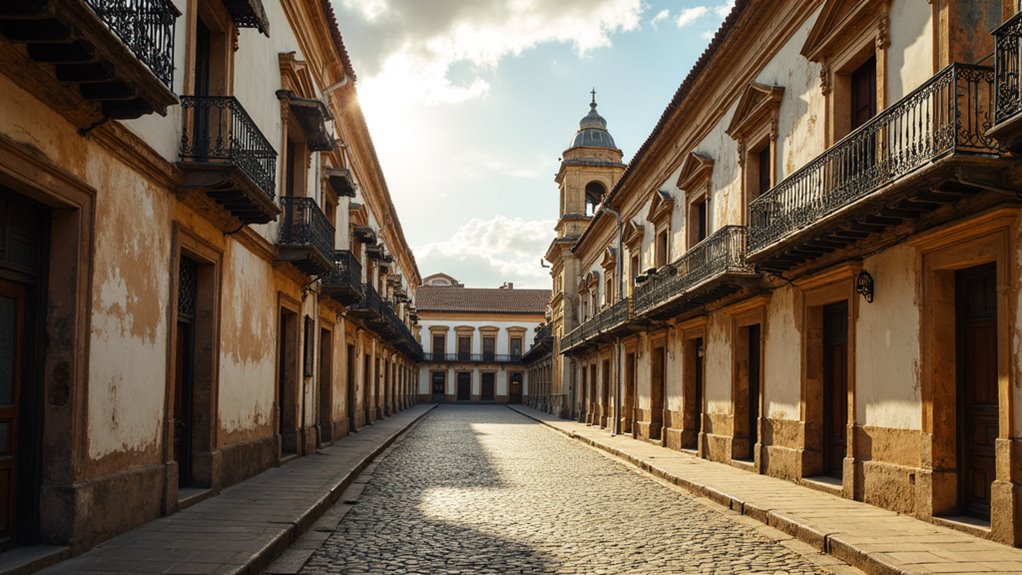
While modern Montevideo sprawls eastward along the coast, its historic heart remains concentrated in Ciudad Vieja—the original walled city that Spanish colonists established between 1724 and 1730 as both administrative center and strategic port.
You’ll navigate narrow cobblestone streets following the classic Spanish colonial checkerboard plan, discovering 18th-19th century houses with internal patios and wrought-iron balconies characteristic of Río de la Plata architecture.
Enter through Puerta de la Ciudadela, one of few remaining fragments of the colonial fortification system.
Plaza Independencia serves as the gateway between old and new Montevideo, dominated by José Artigas’s mausoleum and framed by contrasting architectural styles including the neoclassical Teatro Solís and eclectic Palacio Salvo. The neighborhood’s architectural diversity reflects waves of European immigrants, particularly Italians and Spaniards, who shaped the local culture and building styles throughout the 19th and early 20th centuries.
Feast on Grilled Meat at Mercado Del Puerto
Just blocks from Plaza Independencia, Mercado del Puerto stands as Uruguay’s temple to grilled meat, where dozens of parrillas operate under one spectacular cast-iron roof that’s fed carnivores since 1868.
You’ll smell the wood-fired grills before entering this Victorian-era market hall, where asado de tira, bife de chorizo, and pamplonas sizzle over open flames.
Order achuras like chorizo and morcilla for the full Uruguayan experience, paired with the country’s signature Tannat wine or traditional medio y medio.
Visit at lunchtime when crowds peak and street musicians fill the air with candombe rhythms.
This bustling gastronomic hub transforms eating into theater, where shared grills become social gathering points reflecting Uruguay’s deep-rooted parrilla culture. The market’s wrought-iron structure was originally fabricated in Liverpool and shipped across the Atlantic, giving this culinary destination its distinctive Victorian architectural charm.
Take a Day Trip to the Beaches of Punta Del Este
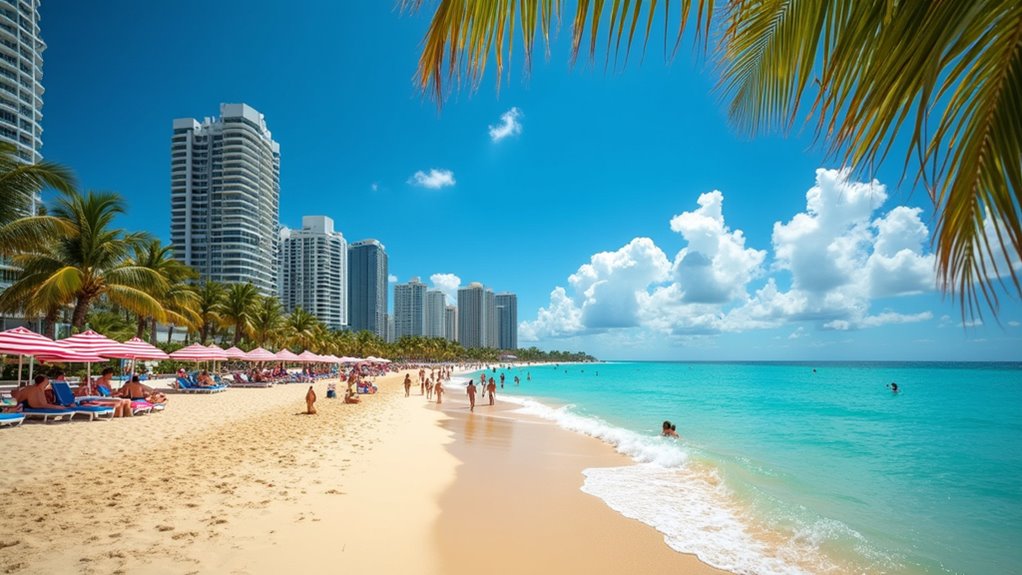
Two hours east of Montevideo, Punta del Este transforms from a sleepy fishing village into South America’s most glamorous beach resort, where you’ll discover dual coastlines offering dramatically different experiences on a single peninsula.
Choose Playa Mansa’s calm Río de la Plata waters for family swimming, or brave Playa Brava’s Atlantic surf for bodyboarding adventures. Regular buses drop you near the iconic La Mano sculpture, where bike rentals help you navigate between beaches efficiently.
Beyond sunbathing, explore the marina’s sea lion colonies and climb toward the historic lighthouse for panoramic views. Consider booking a boat tour to Isla de Lobos to witness large colonies of sea lions and seals in their natural habitat.
For quieter alternatives, venture to eastern stretches like Manantiales or Las Delicias. Time your visit during shoulder seasons to avoid summer’s intense crowds, and don’t miss sunset views from nearby Punta Ballena’s elevated headland.
Visit a Traditional Estancia in the Uruguayan Countryside
Beyond Uruguay’s coastal attractions lies a countryside where traditional estancias offer authentic glimpses into the nation’s agricultural soul. You’ll discover working cattle ranches across rolling pampas landscapes, where gauchos maintain centuries-old traditions of horsemanship and livestock management. Only six to seven establishments operate as genuine working estancias among Uruguay’s rural tourism offerings.
You can participate in daily ranch activities like cattle handling, learn traditional mate rituals, and experience communal meals featuring wood-fired asado. The preserved European architecture of historic mansion houses reflects Uruguay’s prosperous early 20th-century era.
Horseback riding across open fields connects you directly with the country’s equestrian heritage, while the low population density provides perfect conditions for stargazing and digital detox in this agricultural heartland. This peaceful environment contributes to Uruguay’s recognition as one of The Developing World’s top ethical destinations, where sustainable travel practices align with the country’s commitment to environmental and social responsibility.
Catch a Performance at Montevideo’s Historic Solís Theatre
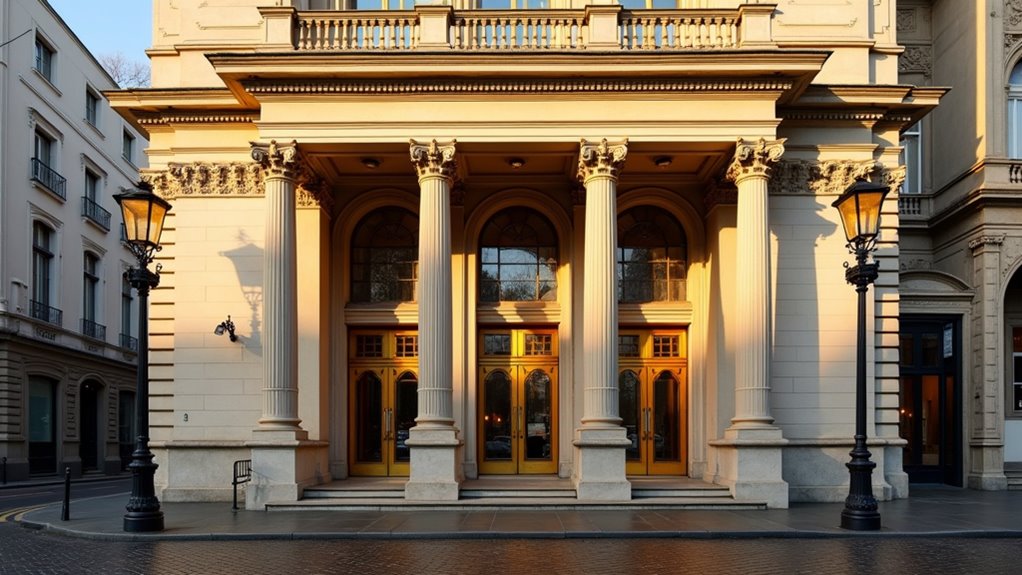
Since 1856, Teatro Solís has anchored Montevideo’s cultural landscape as Uruguay’s premier performing arts venue, where you’ll experience world-class opera, ballet, and classical music in one of South America’s most acoustically refined theaters.
Italian architect Carlo Zucchi’s neoclassical design creates an intimate 1,256-seat space with an elliptical interior inspired by Italian opera houses. The theater opened with Verdi’s opera Ernani following construction delays.
You can attend evening performances Tuesday through Sunday, featuring both national and international companies.
The theater’s 2004 restoration by French acoustics studio Avel Acoustique guarantees exceptional sound quality.
Located in Old Town adjacent to Plaza Independencia, it’s perfectly positioned for exploring Montevideo’s historic core.
Book guided tours during the day to access backstage areas and learn about the venue’s cultural significance in Uruguayan society.
Sample World-Class Wines in the Canelones Region
Just an hour’s drive from Montevideo’s cultural heart, the Canelones region beckons wine enthusiasts with world-class vintages that rival South America’s most celebrated wine destinations. You’ll discover Uruguay’s wine epicenter, where 60% of the country’s production unfolds across rolling vineyards dotted with family-owned wineries established by European immigrants in the 1870s.
Tannat reigns supreme here—more vines than anywhere globally, including France’s Madiran region. The maritime climate and clay-limestone soils create structured wines with fresh acidity and refined tannins. Visit benchmark producers like Pizzorno, Varela Zarranz, and H. Stagnari in subregions such as Las Violetas and Juanicó.
You’ll taste age-worthy Tannats alongside exceptional Albariño and Sauvignon Blanc, all enhanced by cooling Atlantic breezes that define this exceptional terroir. The region spans over 18,000 hectares of vineyards, making it the largest wine-producing area in the country.
Experience Gaucho Culture in Tacuarembó
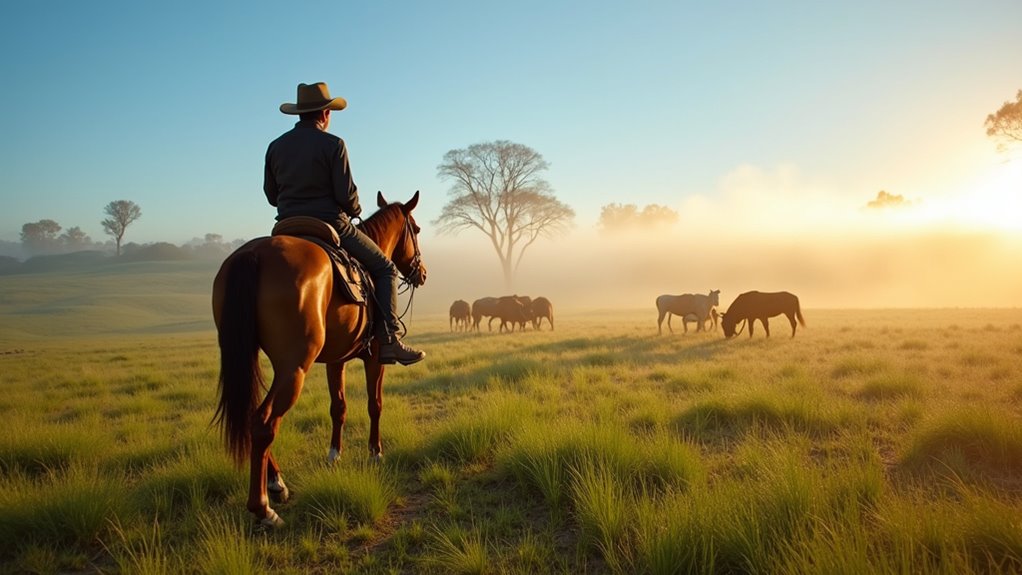
Where Uruguay’s vast interior plains stretch toward the Brazilian border, Tacuarembó stands as the beating heart of authentic gaucho culture—a living proof to the horsemen who shaped South America’s pastoral identity.
Visit during March’s Fiesta de la Patria Gaucha, where 3,000 mounted gauchos compete in rodeo events and demonstrate traditional cattle-handling skills. You’ll witness jineteadas, lasso competitions, and horse parades while savoring authentic asados in temporary gaucho villages.
Explore the Museum of the Gaucho and Indigenous Art to understand how mestizo cattle workers evolved into Uruguay’s iconic cowboys. Their traditional bombacha trousers, wide-brimmed hats, and facón knives tell stories of independence and horsemanship.
Stay at working estancias across Tacuarembó’s rolling plains, participating in herding and saddling activities that mirror centuries-old gaucho traditions. The city’s name itself reflects the region’s character, deriving from the Guaraní words meaning slowly flowing river.
Relax in the Thermal Springs of Salto
While Uruguay’s Atlantic coast draws beach lovers, the country’s most rejuvenating experiences bubble up from deep underground in Salto’s thermal spring region. Fed by the massive Guaraní Aquifer, three main destinations offer naturally heated mineral waters reaching 100-115°F.
Termas del Daymán, just six miles from Salto city, features seven pools plus children’s areas in a municipal park setting. Daily admission costs just $3.60 for adults, with the park open from 7 a.m. to 11 p.m.
For a resort experience, head to Termas del Arapey, 53 miles northeast, where landscaped grounds include tennis courts and horseback riding alongside thermal pools.
Near Salto Grande Dam, Termas de Salto Grande combines hot springs with lake views.
The mineral-rich waters, containing magnesium, iodine, and calcium, attract visitors seeking relief from stress and rheumatic conditions.
Winter months see peak visitation when hot soaks feel most therapeutic.
The Sum Up
You’ll discover Uruguay’s remarkable diversity through these experiences—from colonial cobblestones to pristine beaches, world-class wines to authentic gaucho traditions. Don’t miss the country’s café culture; Uruguayans take their coffee seriously, often accompanied by lengthy conversations. Pack layers since weather can shift quickly, especially along the coast. Uruguay’s relaxed pace isn’t inefficiency—it’s a cultural value called “tranquilo.” Embrace it, and you’ll understand why locals consistently rank among the world’s happiest people.