
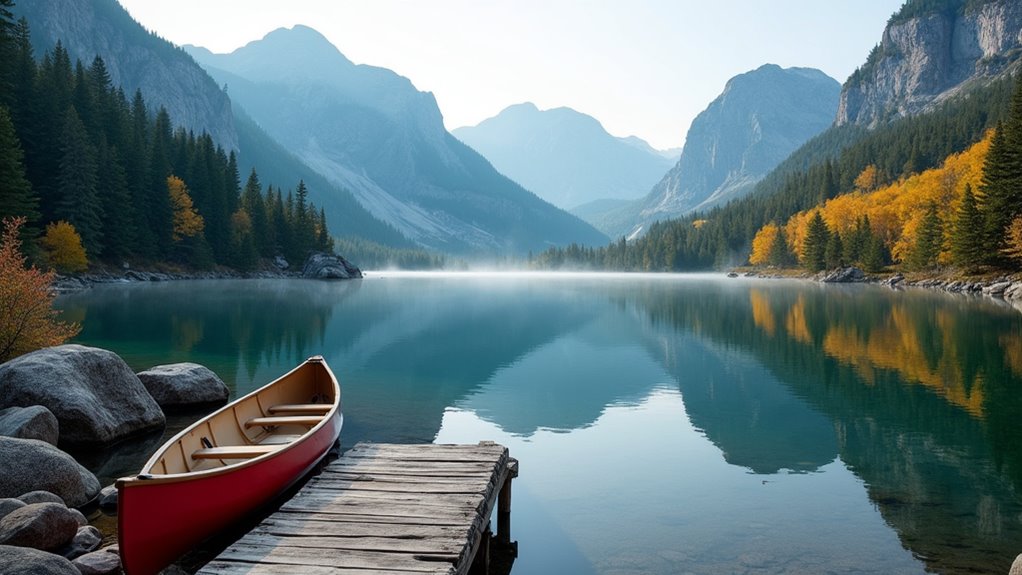
You’ll want to start with Cascade Mountain’s 4.8-mile hike for stunning 360-degree views, then drive up Whiteface Mountain’s scenic toll road to explore the summit castle. Don’t miss High Falls Gorge’s waterfall loop, paddling the historic Northern Forest Canoe Trail, and visiting Lake Placid’s Olympic ski jump complex. The Wild Center offers interactive exhibits while Great Camp Sagamore showcases Gilded Age history. Ausable Chasm provides thrilling rafting, and boreal habitats offer incredible wildlife viewing opportunities that’ll enhance your adventure.
- Hike Your First High Peak: Start With Cascade Mountain
- Drive Up Whiteface Mountain Veterans’ Memorial Highway
- Explore High Falls Gorge’s Four-Waterfall Loop
- Paddle the Northern Forest Canoe Trail
- Visit Lake Placid’s Olympic Jumping Complex
- Experience The Wild Center and Wild Walk in Tupper Lake
- Tour a Historic Great Camp Like Sagamore
- Navigate Ausable Chasm’s Gorge and Rapids
- Watch Wildlife in the Park’s Boreal Habitats
- The Sum Up
Hike Your First High Peak: Start With Cascade Mountain
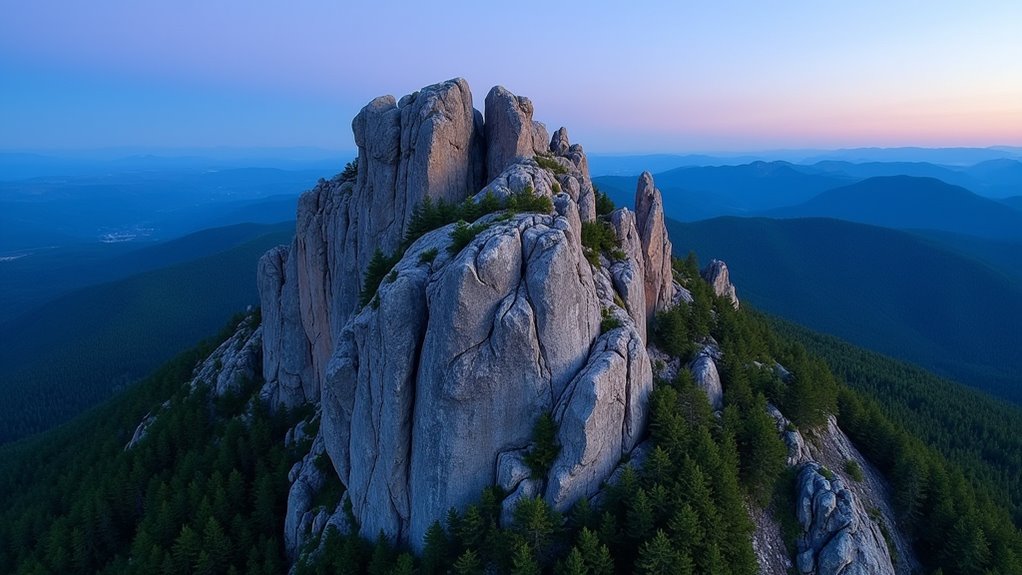
If you’re ready to tackle your first Adirondack High Peak, Cascade Mountain offers the perfect introduction to this challenging pursuit. At 4,098 feet, it’s the most accessible of the 46 High Peaks, featuring a straightforward 4.8-mile round-trip hike with 1,940 feet of elevation gain.
Start at the NY 73 trailhead near Lake Placid, where you’ll follow moderate but steady grades through rocky Adirondack terrain. The trail crosses streams and climbs over boulders before reaching scenic ledge lookouts around 1.8 miles. At 2.1 miles, the trail splits with the left path leading to Cascade’s summit and the right continuing toward Porter Mountain.
The final push involves easy scrambling over open rock slabs to reach the bare summit dome.
You’ll be rewarded with 360-degree views of Mount Marcy, Algonquin Peak, and the surrounding wilderness. Arrive early to secure parking and bring sturdy hiking boots for the rocky sections.
Drive Up Whiteface Mountain Veterans’ Memorial Highway
While hiking Cascade Mountain gives you a taste of earning your summit views, driving the Whiteface Mountain Veterans’ Memorial Highway lets you experience the Adirondacks’ fifth-highest peak without the sweat equity.
This 8-mile toll road climbs from 2,000 to 4,600 feet, offering multiple pull-offs with panoramic views of Lake Placid and the High Peaks.
You’ll pay a toll at the chalet-style tollhouse before winding up gentle grades averaging 8.5%.
The road ends at Whiteface Castle, where you’ll climb stone stairs or take an elevator through a tunnel to reach the true summit’s 360-degree views.
Open mid-May through mid-October, the highway requires cautious driving with posted speeds around 25 mph and hairpin turns demanding low-gear descents. The highway celebrated its 90th anniversary in 2025, marking nearly a century of providing visitors access to spectacular mountaintop vistas.
Explore High Falls Gorge’s Four-Waterfall Loop
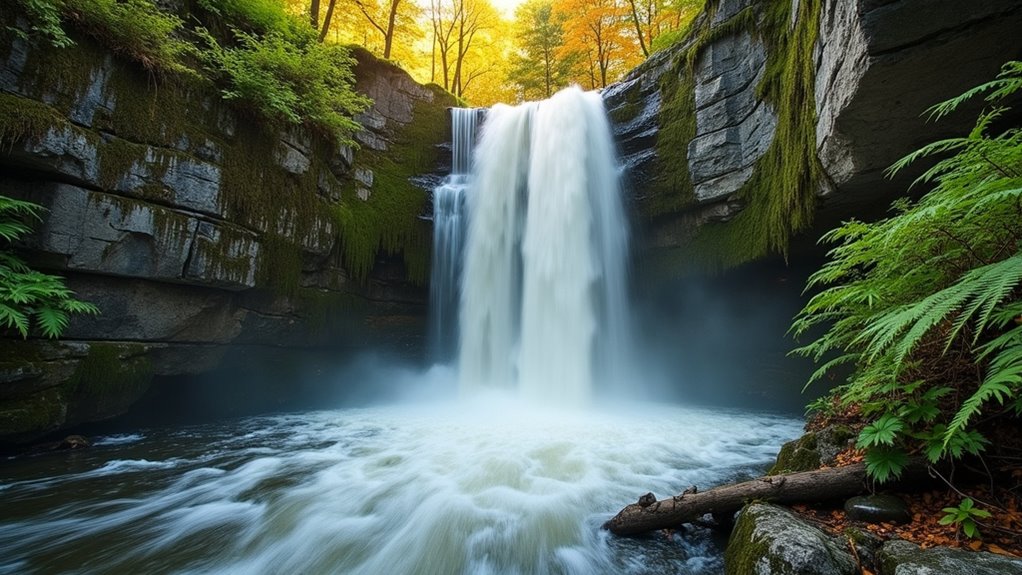
After taking in those summit views from Whiteface Mountain, you’ll find another spectacular natural showcase just minutes away at High Falls Gorge. This 22-acre nature park on Route 86 features four distinct waterfalls carved by the AuSable River through ancient granite formations.
You’ll complete the half-mile loop in 30-45 minutes, crossing sturdy steel bridges and following groomed paths to see 115-foot High Falls, Rainbow Falls, Climax Falls, and Mini Falls with its geological Master Pothole.
The wheelchair-accessible trails include handrails and seating areas for all visitors.
During summer, glass viewing platforms offer enhanced perspectives. Winter brings snowshoeing opportunities with guided tours. The park also offers rental equipment including ski, snowshoe, and snowboard accessories for winter activities.
The River View Café serves coffee and light fare year-round, though hours vary seasonally.
Paddle the Northern Forest Canoe Trail
Where else can you paddle 740 miles of interconnected waterways through some of America’s most pristine wilderness? The Northern Forest Canoe Trail starts right here in Old Forge and winds through 147 miles of classic Adirondack waters. You’ll navigate the Fulton Chain of Lakes, Long Lake, and the scenic Raquette River beneath towering High Peaks.
Don’t feel pressured to tackle the entire route—most visitors choose shorter sections or weekend trips that fit their budget and schedule. The 53-mile stretch from Old Forge to Saranac Lake Village offers an excellent introduction, mixing flatwater paddling with manageable portages.
You’ll follow the same water corridors Native Americans used for centuries, accessing remote wilderness areas impossible to reach by car. Unlike traditional hiking trails with guaranteed public access, paddlers must obtain landowner permission for many campsites and portages along the route. Plan your trip between late spring and early fall for ideal conditions.
Visit Lake Placid’s Olympic Jumping Complex
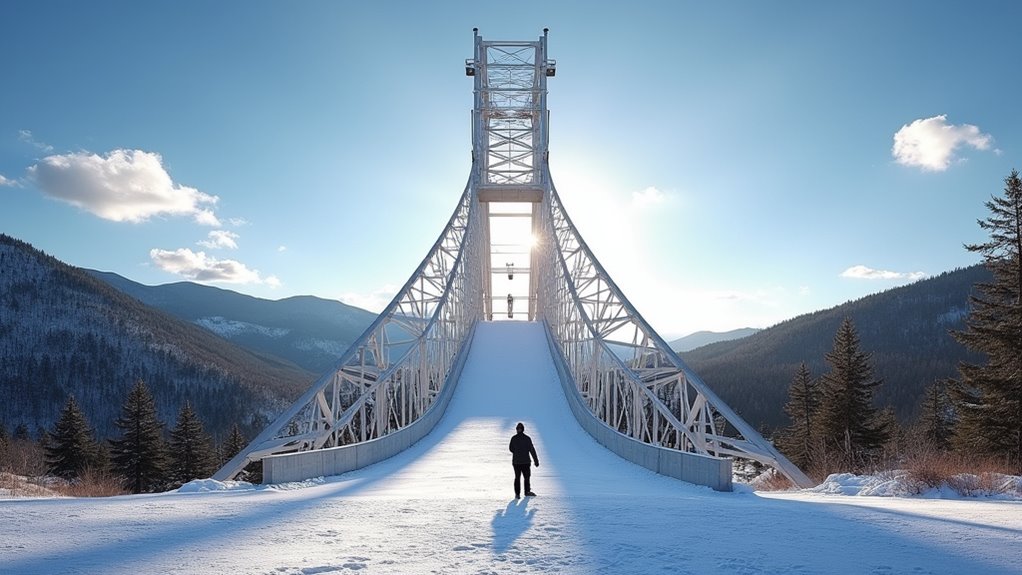
Standing atop the 128-meter ski jump tower at Lake Placid’s Olympic Complex, you’ll get the same heart-stopping view that Olympic athletes see before launching into their death-defying flights.
The glass-enclosed elevator and pulse gondola offer scenic rides to observation decks overlooking the Adirondack High Peaks and John Brown Farm.
This venue hosted both the 1932 and 1980 Winter Olympics, making it a must-see piece of American sports history. The complex also hosted the 1950 World Championships, cementing its place as one of the world’s premier ski jumping venues.
You can watch year-round training sessions on the only North American jumps certified for summer and winter competitions.
The adjacent zipline park simulates an Olympic jump’s speed and sensation at a fraction of the cost.
Visit during competitions for the full spectacle, or explore the base lodge area for budget-friendly views of these towering structures.
Experience The Wild Center and Wild Walk in Tupper Lake
Fifty-four thousand square feet of interactive exhibits await you at The Wild Center in Tupper Lake, where you’ll discover why USA Today readers ranked it the #1 science museum in America.
You’ll encounter live otters, ravens, and birds of prey while exploring Adirondack ecology through hands-on displays and multimedia shows.
Don’t miss the Wild Walk—elevated treetop bridges that take you into the forest canopy. You’ll climb through a four-story twig treehouse and reach an oversized eagle’s nest at the highest point.
The boardwalk-style paths work for strollers and wheelchairs.
Plan 3-4 hours to cover indoor exhibits, Wild Walk, and woodland trails. The museum also features a comprehensive Climate Solutions exhibition spanning 3,000 square feet with interactive displays addressing environmental challenges. The 81-acre campus includes riverside paths and guided canoe trips for deeper exploration.
Tour a Historic Great Camp Like Sagamore
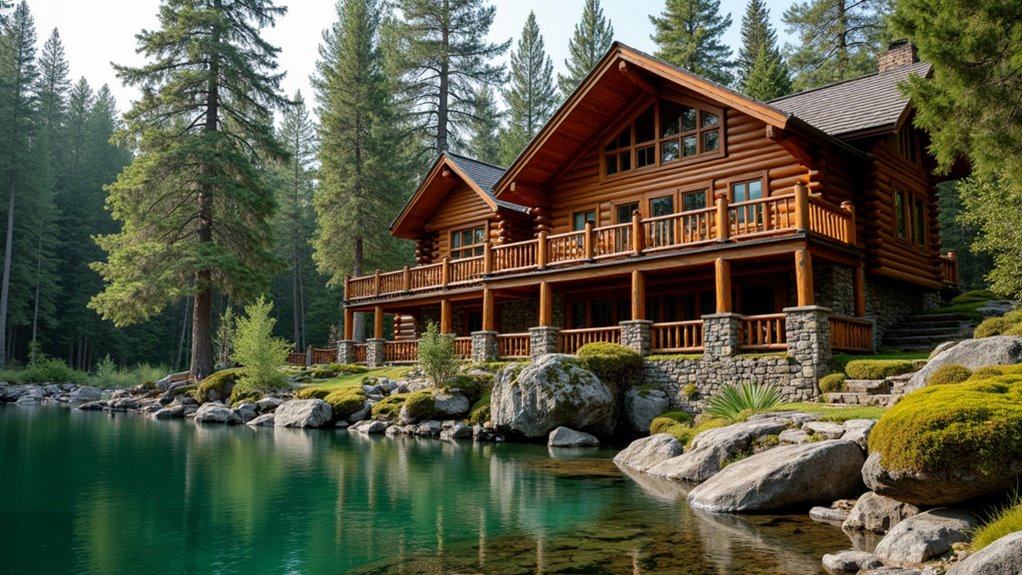
While many visitors focus on the Adirondacks’ natural beauty, you’ll discover an equally fascinating chapter of American history at Great Camp Sagamore. This 1897 masterpiece showcases the rustic luxury that defined America’s Gilded Age, when the Vanderbilt family entertained guests like Howard Hughes and Gary Cooper.
You’ll tour authentic log and stone buildings spread across two distinct complexes on Sagamore Lake’s shores. The guided tours reveal how the wealthy lived during summer retreats, from the grand main lodge to service buildings that housed staff.
Operating May through October, Sagamore offers an affordable glimpse into both architectural innovation and social history. Located deep in the woods, you’ll travel 4 miles down a dirt road to reach this remote wilderness retreat.
The camp’s preservation story is equally compelling—it was nearly demolished before becoming New York’s first major historic preservation victory.
Navigate Ausable Chasm’s Gorge and Rapids
From the elegant accommodations of Great Camp Sagamore, you’ll find a completely different but equally thrilling experience at Ausable Chasm, where rushing water has carved one of the Northeast’s most dramatic gorges through ancient sandstone.
Start with the Inner Sanctum Trail, a scenic one-mile walk along stone paths and bridges that brings you down to river level beside waterfalls and towering walls.
For adventure, combine hiking with a guided raft trip through Class I-II rapids, steering through features like Grand Flume and Whirlpool Basin.
The Rim Walk offers elevated views of Rainbow Falls and Elephant’s Head formations.
With five miles of trails and rafting options from May through October, you can customize your gorge exploration. Known as the “Grand Canyon of the Adirondacks”, this natural attraction has been welcoming visitors since 1870, making it one of the oldest such destinations in the United States.
Watch Wildlife in the Park’s Boreal Habitats

Because the Adirondack Park sits at the southern edge of North America’s boreal forest, you’ll discover wildlife here that’s rare or absent elsewhere in the Northeast. Head to boreal hotspots like Sabattis Bog, Ferd’s Bog, or Cranberry Lake to spot specialized birds including Boreal Chickadees, Black-backed Woodpeckers, and Canada Jays.
You’ll also hear the haunting calls of Common Loons on cold, clear lakes.
Time your visit between late April and June when birds are most vocal during nesting season. These cooler, acidic wetlands and conifer swamps support over 200 bird species total, though only a subset are true boreal specialists. The Common Loon’s distinctive black and white plumage and red eyes make it a true symbol of Adirondack wilderness.
Even on a tight budget, wildlife watching costs nothing but requires patience and early morning visits for best results.
The Sum Up
You’ll discover the Adirondacks don’t require breaking the bank to create lasting memories. Pack your own snacks, camp instead of staying in hotels, and take advantage of free activities like hiking and wildlife watching. Start with one or two activities that match your interests and fitness level. Don’t try cramming everything into a single trip—you’ll want to return anyway. The mountains aren’t going anywhere, so take your time exploring this incredible wilderness playground.