
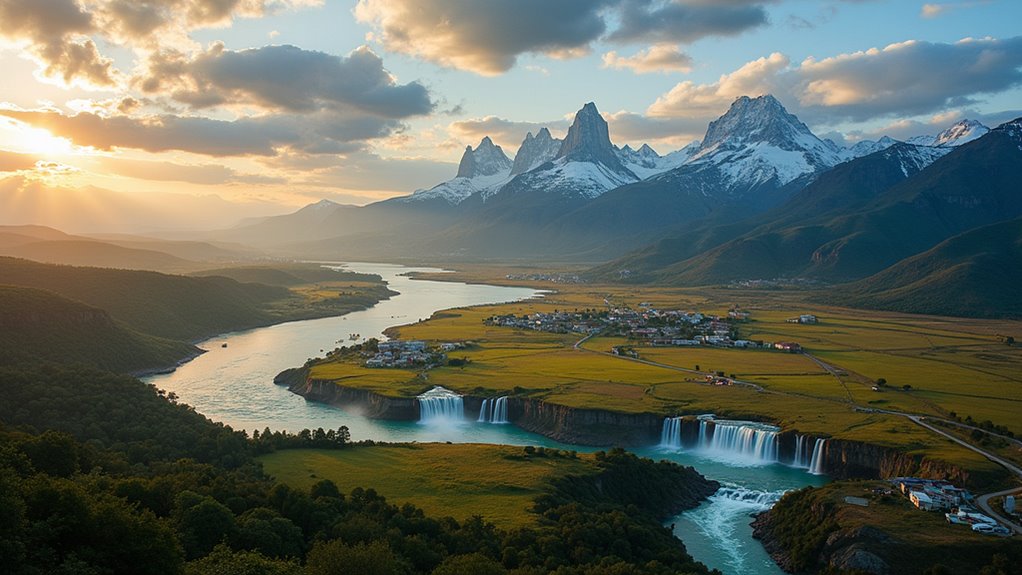
You’ll witness the thunderous collapse of Perito Moreno Glacier‘s 74-meter ice wall, get drenched by Iguazú Falls‘ Devil’s Throat, and dance authentic tango on San Telmo‘s cobblestone streets. Taste world-class Malbec in Mendoza’s high-altitude vineyards, spot southern right whales from Península Valdés cliffs, and hunt antiques at Buenos Aires‘ Sunday markets. Experience football passion at La Bombonera, cruise Ushuaia’s Beagle Channel, and walk across surreal Salinas Grandes salt flats for unforgettable adventures that showcase Argentina’s incredible diversity.
- Watch Ice Crash Into Lake Argentino at Perito Moreno Glacier
- Get Soaked by the Devil’s Throat at Iguazú Falls
- Dance Tango in San Telmo’s Cobblestone Streets
- Taste Malbec in Mendoza’s High-Altitude Vineyards
- Spot Whales From the Cliffs of Península Valdés
- Explore the Colorful Mountains of Quebrada De Humahuaca
- Experience Gaucho Life on a Working Estancia
- Take the Train to the Clouds Through Salta’s Desert
- Ski the Andes at Cerro Catedral in Bariloche
- Hunt for Antiques in Buenos Aires’ Sunday Markets
- Catch a Football Match at La Bombonera Stadium
- Cruise the Beagle Channel From Ushuaia
- Walk Across the Blindingly White Salinas Grandes
- The Sum Up
Watch Ice Crash Into Lake Argentino at Perito Moreno Glacier
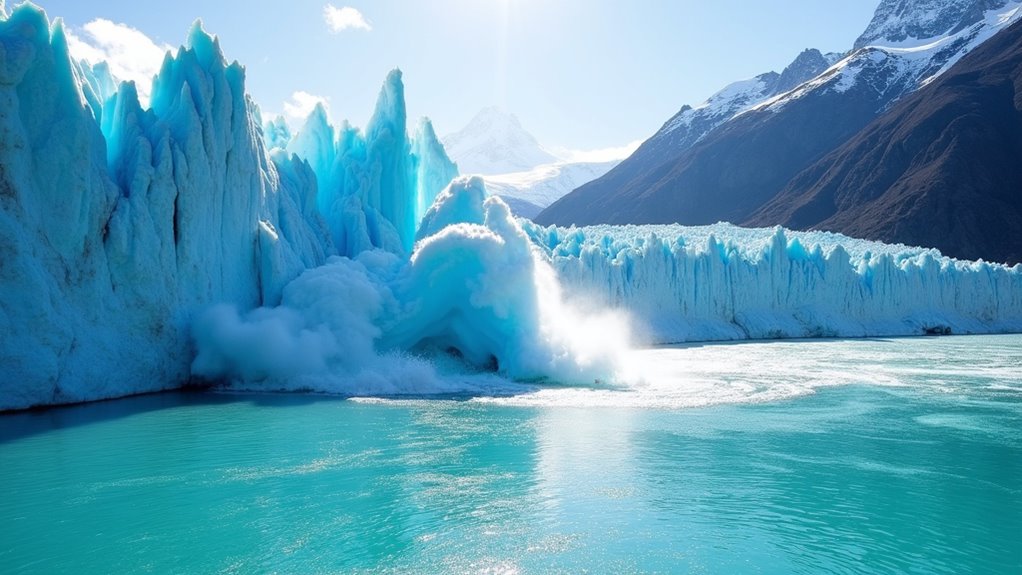
When you witness the thunderous crash of house-sized ice chunks plunging into Lake Argentino’s turquoise waters, you’ll experience one of nature’s most spectacular displays at Perito Moreno Glacier. This 74-meter-high ice wall continuously advances two meters daily, creating unstable conditions that trigger massive ruptures every two to four years.
Plan your visit during mid-March when major collapses typically occur, though timing remains unpredictable. The glacier’s terminus spans five kilometers, offering multiple viewing angles from designated platforms.
Water pressure builds behind the glacier’s dam-like structure, raising lake levels up to 30 meters before catastrophic release. These dramatic ruptures can produce flows reaching up to 8,000 cubic meters per second, creating a spectacle that draws thousands of visitors from around the world.
Located 78 kilometers from El Calafate, recent ruptures in 2018 and 2019 suggest another major event could happen soon. Bring warm clothing and patience—nature operates on its own schedule.
Get Soaked by the Devil’s Throat at Iguazú Falls
Where else can you stand at the edge of a thunderous 269-foot waterfall and get completely drenched while witnessing nature’s raw power? Devil’s Throat at Iguazú Falls delivers exactly that experience. This U-shaped chasm receives half the Iguazú River’s flow, creating a constant mist plume rising 490 feet that’ll saturate your clothes within minutes.
Take Argentina’s Rainforest Ecological Train to access the metal walkway leading directly over the falls’ lip. You’ll get the closest possible perspective, but expect zero visibility from dense spray and deafening roar. Wear non-slip shoes—surfaces become treacherous from constant moisture.
Keep your eyes peeled for 400 bird species including toucans, parrots, and hummingbirds that thrive in the surrounding rainforest ecosystem. For panoramic views, visit Brazil’s side with its glass elevator and wider viewpoints. Time your visit during rainy season for maximum intensity, but check walkway closures due to flood damage.
Dance Tango in San Telmo’s Cobblestone Streets

Although tango originated in Buenos Aires’ rougher port neighborhoods, San Telmo remains its most authentic heartbeat—where cobblestone streets echo with bandoneón melodies and couples embrace in spontaneous dance.
You’ll find the neighborhood’s compact 1.2 square kilometers packed with tango parlors, cafés, and milongas where legends like Carlos Gardel once performed.
Visit on Sundays when Defensa Street transforms into a pedestrian-only antiques fair from 9 a.m. to 6 p.m. Plaza Dorrego becomes your front-row seat to impromptu performances as vendors hawk collectibles around dancing couples. The market draws approximately 20,000 visitors weekly, creating an energetic atmosphere where tango and commerce blend seamlessly.
Evening hours bring the most authentic atmosphere—restaurants spill outdoor seating into cobblestone plazas while street artists demonstrate Argentina’s most passionate art form.
Don’t miss Bar Sur for intimate indoor performances.
Taste Malbec in Mendoza’s High-Altitude Vineyards
Argentina’s wine country delivers an entirely different sensory experience from Buenos Aires’ urban rhythms—Mendoza’s Malbec vineyards stretch across dramatic Andean foothills where altitude transforms everything.
You’ll discover the magic around 3,000 feet, where cooler nights preserve acidity while intense sun develops complex flavors.
Focus your tasting on Luján de Cuyo’s gravelly soils at 900-1,100 meters, producing structured Malbecs with black fruit and spice.
Then venture to Uco Valley’s 1,000-1,500 meter vineyards for more elegant expressions with floral aromas and minerality.
Target subzones like Paraje Altamira and Gualtallary for cutting-edge high-altitude bottlings. Don’t miss the chance to taste wines from Altura Máxima, the world’s highest vineyard at over 10,000 feet, where granite soils produce Malbecs with distinctive floral and mineral characteristics.
Book tastings at estates emphasizing minimum 3,000-foot elevations.
You’ll taste how diurnal temperature swings and extended hang time create Malbec’s signature freshness and complexity that lower-altitude sites simply can’t achieve.
Spot Whales From the Cliffs of Península Valdés
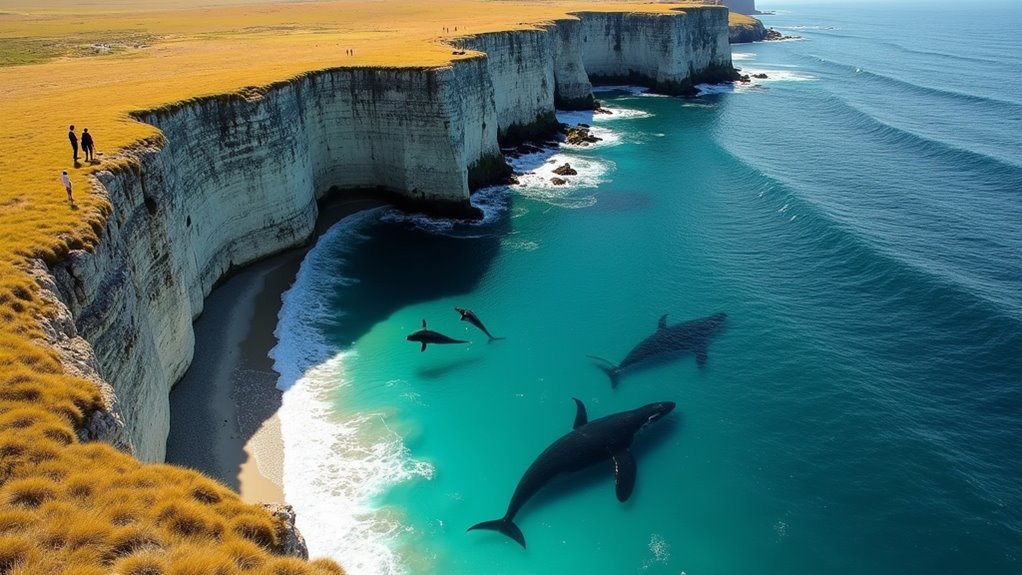
When southern right whales arrive at Península Valdés each June, you’ll witness one of the world’s most accessible land-based whale watching experiences from dramatic 100-meter coastal cliffs. This UNESCO World Heritage Site‘s sheltered gulfs create perfect breeding grounds where mothers and calves approach remarkably close to shore.
Time your visit between August and October for almost guaranteed sightings, with peak activity during morning and sunset hours. Head to El Doradillo Beach near Puerto Madryn from June through mid-September, where whales pass just meters offshore. After mid-September, concentrate around Puerto Pirámides as whales shift locations.
Pack quality binoculars for scanning Golfo Nuevo and Golfo San José from elevated viewpoints at Punta Flecha, Caleta Valdés, and Punta Delgada. You might even spot hunting orcas at Punta Norte. Beyond marine life, the peninsula’s interior supports diverse wildlife including maras, guanacos, and over 180 bird species.
Explore the Colorful Mountains of Quebrada De Humahuaca
From Argentina’s coastal wildlife encounters, head inland to northwest Jujuy Province where the Quebrada de Humahuaca unfolds as a 155-kilometer valley painted in nature’s most vibrant palette. You’ll witness sedimentary rock layers displaying reds, oranges, purples, yellows, and greens created by varying mineral content and oxidation states.
Base yourself in Purmamarca to explore Cerro de los Siete Colores, where seven distinct color bands shift dramatically with changing light throughout the day. Don’t miss the Serranía de Hornocal viewpoint—accessible via track from Humahuaca—showcasing fourteen colors in steeply zigzagging strata formations.
Follow Ruta Nacional 9 through colonial villages like Tilcara and Humahuaca, where you’ll discover this UNESCO World Heritage Site combines stunning geological formations with 10,000 years of Andean cultural heritage and traditional crafts markets. The valley follows the ancient route of the Main Andean Road, which once connected Colombia to Chile and facilitated cultural exchange throughout the region.
Experience Gaucho Life on a Working Estancia
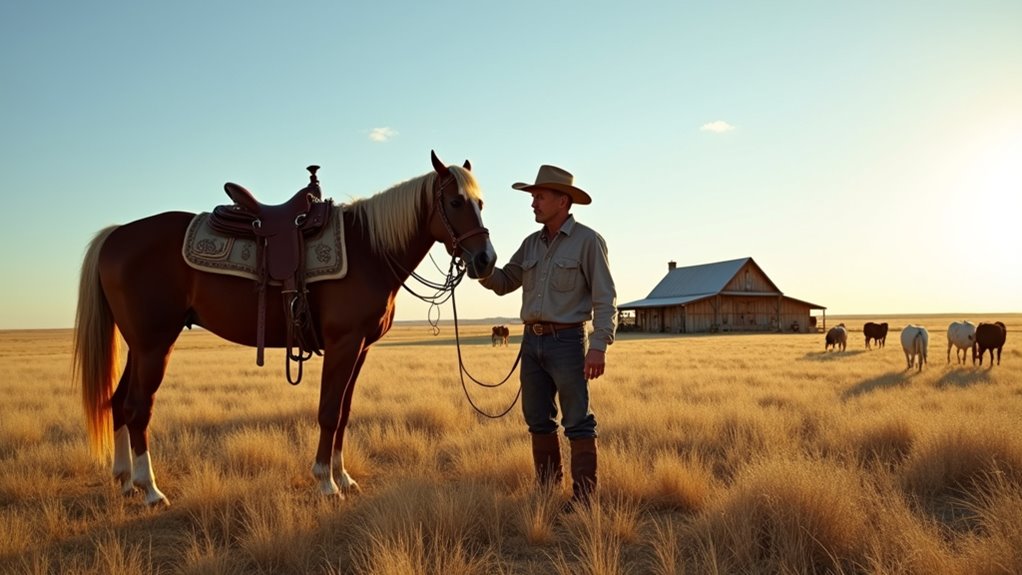
Step into Argentina’s heartland where century-old estancias across the Pampas offer you authentic immersion into gaucho culture on working cattle ranches. You’ll find the best experiences around San Antonio de Areco, just 110 kilometers northwest of Buenos Aires.
Choose full-day tours departing at 9 AM with door-to-door transfers. You’ll participate in real ranch operations—herding cattle, horseback riding on criollo horses, and observing daily livestock management.
Traditional asado lunches feature grass-fed beef paired with Malbec wine, while gauchos demonstrate masterful horsemanship skills. These experiences emphasize cultural preservation through genuine interactions with locals who maintain old-fashioned practices in their daily operations.
Visit working estancias like El Ombú de Areco or Pampa Grande for genuine experiences over tourist-focused alternatives.
Plan your trip during Argentine summer (October–March) for most favorable weather and outdoor activities.
Expect rustic accommodations that prioritize authenticity.
Take the Train to the Clouds Through Salta’s Desert
While the Pampas showcase Argentina’s ranch culture, the country’s northwest region offers an entirely different adventure aboard the Train to the Clouds (Tren a las Nubes). You’ll ascend to 4,220 meters through the Andes, making this the world’s fifth-highest railway.
The journey features dramatic engineering with zigzags, loops, and 60+ tunnels as you traverse colorful desert landscapes.
The highlight’s La Polvorilla Viaduct—a curved, 64-meter-tall bridge offering spectacular photo opportunities. During the brief stop, local vendors sell alpaca goods and the Argentine flag is raised with the national anthem, creating a memorable cultural moment.
Full-day tours depart Salta at 6 AM, reaching San Antonio de los Cobres by noon for the three-hour train portion. You’ll explore historic mining sites before returning around 7 PM.
Book ahead since the train operates limited schedules, and prepare for extreme altitude changes throughout this unforgettable high-desert experience.
Ski the Andes at Cerro Catedral in Bariloche
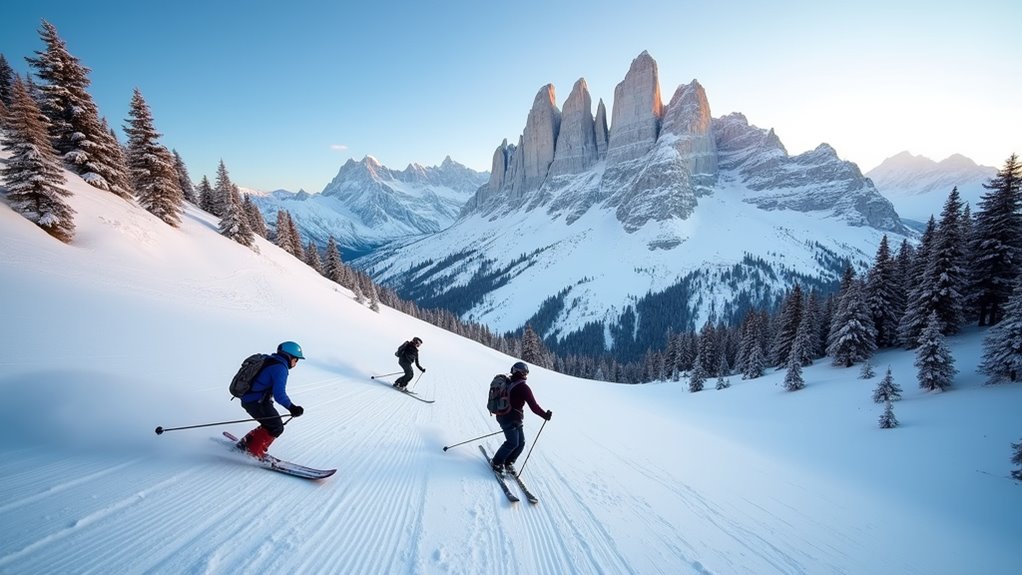
When you’re ready to swap northern hemisphere summer for world-class skiing, Cerro Catedral in Bariloche delivers South America’s most extensive alpine experience.
Located 22km from Bariloche in Argentina’s Patagonia region, this massive resort spans 1,200 hectares with 120km of marked runs across 50+ pistes.
You’ll find terrain perfectly distributed—31% beginner, 44% intermediate, 25% advanced—serviced by 23-26 modern lifts including gondolas and six-person chairlifts.
The 1,150-meter vertical drop offers runs up to 9km long, while snowmaking systems guarantee reliable conditions from June to October.
Plan your visit for July when snow quality peaks. The resort’s elevation reaches up to 7,800 feet, providing diverse slopes and breathtaking panoramic views of the surrounding Andes mountains.
Beyond skiing, you’ll enjoy snowshoeing, helicopter tours, and Bariloche’s famous chocolate shops for après-ski indulgence.
Hunt for Antiques in Buenos Aires’ Sunday Markets
From Patagonia’s snow-capped peaks to Buenos Aires’ cobblestone streets, Argentina offers treasures both natural and man-made. You’ll find the city’s best antique hunting at Feria de San Telmo, where Sunday’s 13-block market along Defensa Street draws over 20,000 visitors.
Focus your search around Plaza Dorrego for genuine vintage silverware, crystal lamps, and historical memorabilia from Argentina’s belle époque period. The market’s cobblestone streets and colonial-style buildings create an authentic historic atmosphere for treasure hunting.
Arrive early Sunday morning to browse quality pieces before afternoon crowds surge. The indoor Mercado de San Telmo operates daily with permanent antique dealers, while Plaza Dorrego’s flea market runs Tuesday through Sunday.
Bring cash in pesos—card acceptance remains spotty among smaller vendors. Expect fair prices rather than bargain-basement deals for authentic antiques.
Catch a Football Match at La Bombonera Stadium
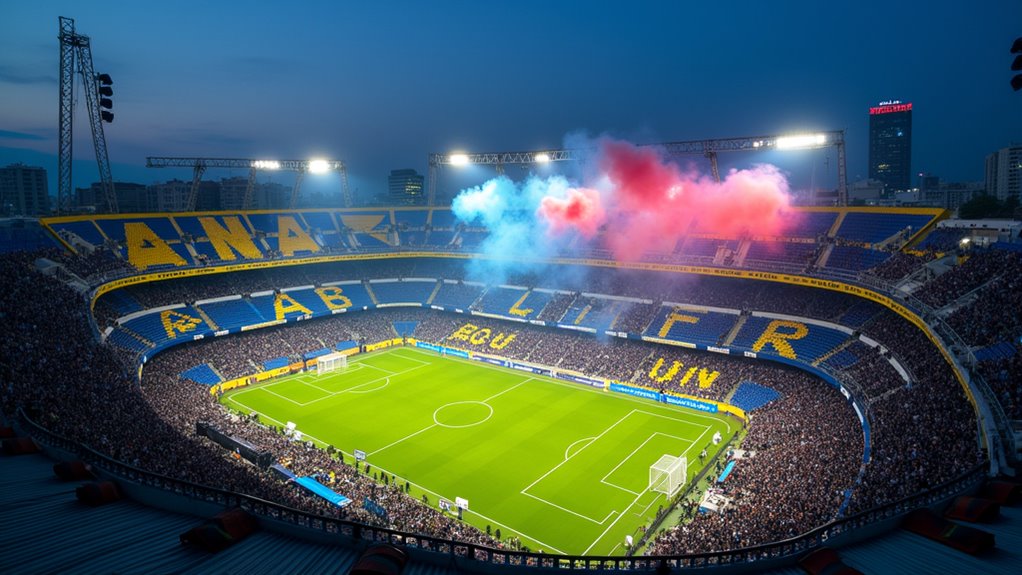
Experience football fanaticism at its most intense by securing tickets to La Bombonera, where Boca Juniors‘ legendary supporters create South America’s most deafening stadium atmosphere. The stadium’s chocolate box design features three impossibly steep stands that trap sound and create psychological pressure on visiting teams.
Tickets are notoriously scarce due to Boca’s massive membership base, especially for Copa Libertadores matches and the legendary Superclásico against River Plate. Your best bet is booking through official tour operators or the club’s website well in advance.
If match tickets aren’t available, take the guided stadium tour to experience the pitch-side views and visit the club museum. The vertical terraces and enclosed design make this one of football’s most intimidating venues. Located in the colorful La Boca neighborhood, the stadium sits at the intersection of Brandsen and Del Valle Iberlucea streets, about 2 km southeast of Plaza Constitución train station.
Cruise the Beagle Channel From Ushuaia
As one of the world’s most remote waterways, the Beagle Channel offers extraordinary wildlife encounters and dramatic scenery that you can’t experience anywhere else on Earth.
You’ll depart from Ushuaia’s Tourist Port, where 3-4 hour standard cruises cost $70-$130 USD, while full-day penguin tours run $150-$400 USD.
Your journey includes the iconic Les Eclaireurs Lighthouse, Bird Island’s black-browed albatross colonies, and Sea Lion Island’s breeding grounds.
Choose catamarans for comfort, yachts for intimacy, or zodiacs for adventure.
During penguin season (October-April), you can walk among Magellanic and Gentoo penguin colonies on Martillo Island. December through February offers the best viewing when penguin chicks are visible and most active.
Arrive 20-45 minutes early for boarding, dress in windproof layers, and book ahead during peak season for guaranteed spots.
Walk Across the Blindingly White Salinas Grandes
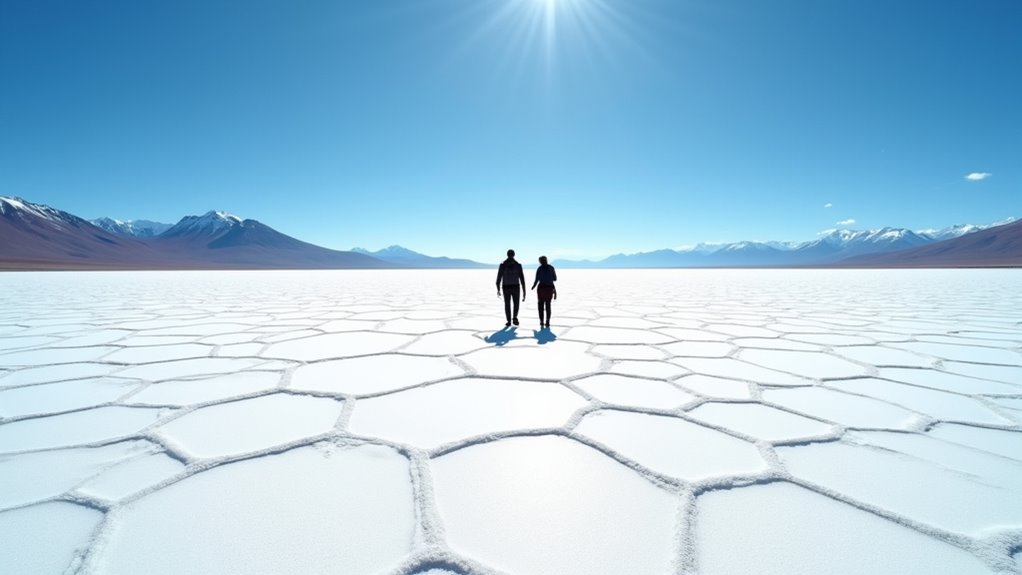
Walking across Argentina’s Salinas Grandes feels like stepping onto another planet, where blindingly white salt crystals stretch endlessly beneath an impossibly deep blue sky.
Located 3,450 meters above sea level in Jujuy and Salta provinces, these ancient salt flats cover 212 square kilometers of hexagonal crystalline patterns.
You’ll reach the flats via a scenic 66-kilometer drive from Purmamarca along Ruta Nacional 52, crossing the challenging Cuesta de Lipán at 4,170 meters.
After summer rains, thin water sheets create stunning mirror effects and optical illusions that’ll mess with your depth perception.
Pack sunglasses, sunscreen, and warm layers—the UV reflection is intense and temperatures drop quickly. The region’s high-altitude desert climate produces extreme temperature swings from below freezing at night to over 25°C during the day.
Move slowly to avoid altitude sickness, and plan 1-2 days to fully experience this surreal landscape’s white silence.
The Sum Up
You’ll want to time glacier visits during shoulder seasons for fewer crowds and better photography light. Book tango shows early—authentic milongas in San Telmo fill quickly. Pack layers for Patagonia’s unpredictable weather, and don’t miss the ice bar at Perito Moreno’s visitor center. Always carry cash; many attractions don’t accept cards. Consider purchasing the Buenos Aires City Pass for museum discounts. Start whale watching trips early morning when animals are most active.