
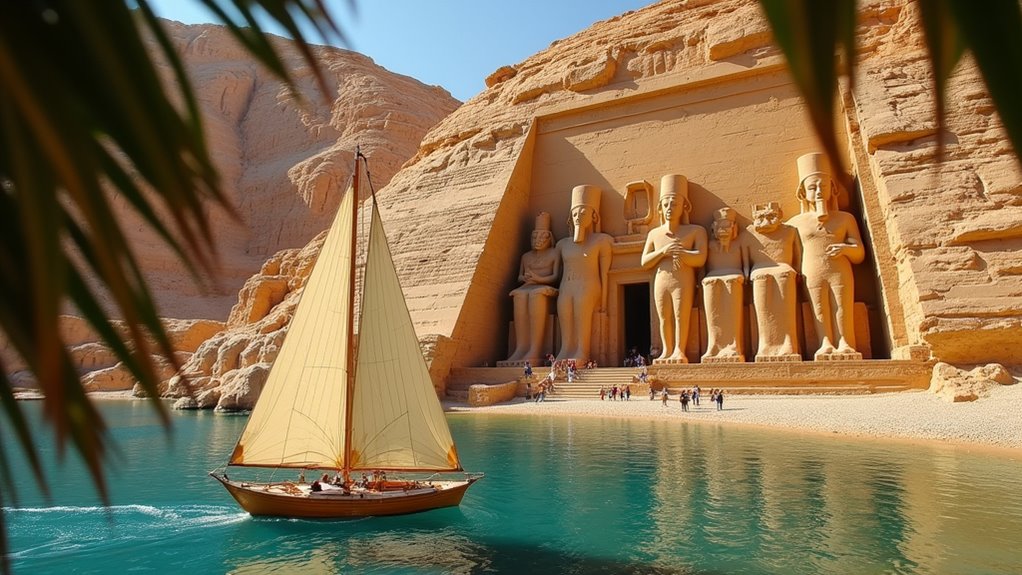
You’re planning a trip to Aswan, but you’re probably wondering what’s worth your time and money in this historic Egyptian city. While most travelers rush through on their way to other destinations, you’d be missing out on some incredible experiences that won’t break the bank. From ancient temples that’ll leave you speechless to authentic cultural encounters you can’t find anywhere else, there’s more to discover here than you might expect.
- Marvel at Abu Simbel’s Colossal Temples
- Sail the Nile on a Traditional Felucca
- Explore the Relocated Philae Temple on Agilika Island
- Discover Nubian Culture in Colorful Villages
- Visit the Unfinished Obelisk at the Ancient Quarries
- Learn Nubian History at the UNESCO-Designed Museum
- Wander Through Elephantine Island’s Ancient Ruins and Gardens
- Experience the Engineering Marvel of Aswan High Dam
- Take a Day Trip to Kom Ombo’s Double Temple
- Browse Local Crafts and Spices in Aswan’s Bustling Markets
- The Sum Up
Marvel at Abu Simbel’s Colossal Temples
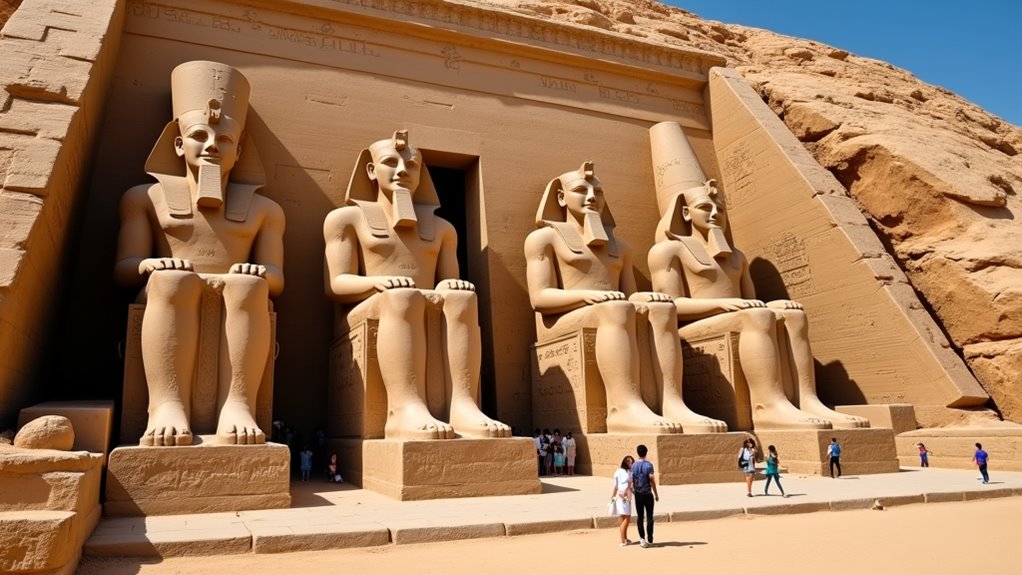
While Abu Simbel sits about 280 kilometers south of Aswan, you can’t visit this region without witnessing what’s arguably Egypt’s most jaw-dropping archaeological site. These 3,000-year-old temples, carved directly from a sandstone cliff by Pharaoh Ramses II, feature four colossal 65-foot-tall seated statues that’ll leave you speechless.
You’ll marvel at the engineering precision—twice yearly, sunlight penetrates the Great Temple’s sanctuary to illuminate interior statues.
The smaller temple honors Queen Nefertari, while intricate reliefs depict ancient battles and religious scenes. The temples served as a political declaration of Egyptian supremacy over Nubia, demonstrating Ramses II’s power to neighboring territories.
Book a day trip from Aswan (budget around $50-80) or catch an early morning bus for a cheaper option. The UNESCO-relocated temples, saved from flooding in the 1960s, represent ancient Egypt’s artistic peak and Ramses II’s incredible ambition.
Sail the Nile on a Traditional Felucca
After exploring ancient monuments, you’ll want to experience the Nile from the water itself—and there’s no better way than aboard a traditional felucca. These engineless wooden boats have sailed Egypt’s waters for thousands of years, operated by skilled Nubian captains who know every current and breeze.
You’ll glide past palm-topped islands like Elephantine and Kitchener’s Botanical Gardens while enjoying Aswan’s stunning scenery. Choose from short 1-2 hour rides or full-day excursions—sunset cruises are particularly magical as the sky erupts in oranges and crimsons.
Most feluccas carry 6-8 passengers, creating an intimate atmosphere. You can book through various platforms with English-speaking operators. The peaceful pace contrasts beautifully with bustling city life, offering genuine culture. For a more extended adventure, consider overnight or two-day felucca journeys that can take you from Aswan to Luxor with stops at major archaeological sites.
Explore the Relocated Philae Temple on Agilika Island
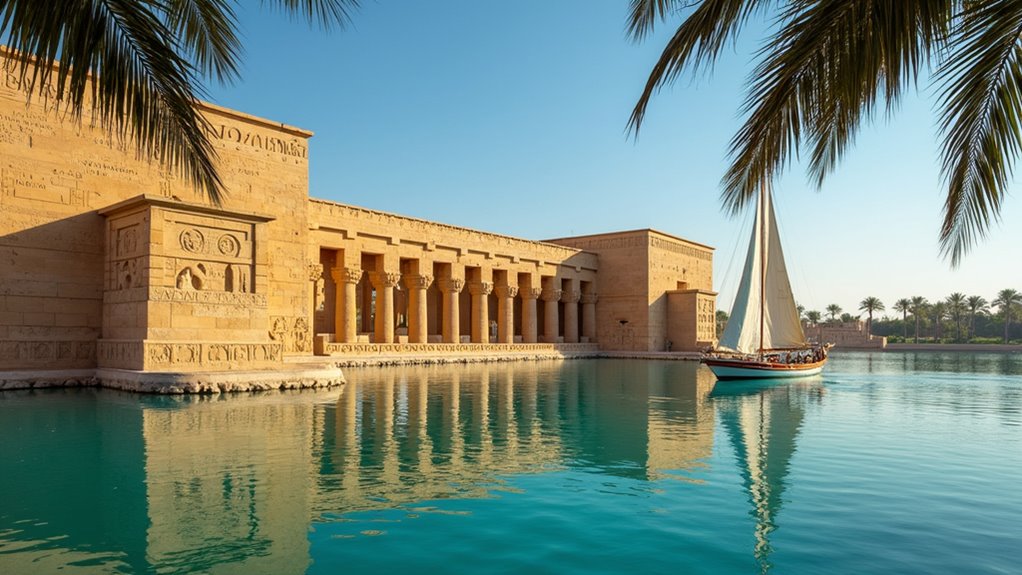
Once you’ve experienced the Nile from a felucca, you’ll want to visit one of Egypt’s most remarkable preservation success stories—the Philae Temple on Agilkia Island. This 2,700-year-old temple dedicated to goddess Isis was painstakingly relocated here in the 1970s when the Aswan High Dam threatened to submerge it permanently.
You’ll reach the temple by motorboat, then explore the stunning complex that UNESCO carefully reconstructed using over 40,000 numbered stone blocks. The temple’s original grandeur remains intact, featuring beautiful reliefs depicting Isis and Osiris mythology, towering pylons, and the elegant Roman-era Kiosk of Trajan.
The site demonstrates incredible international cooperation in heritage preservation while offering you an authentic glimpse into ancient Egyptian spirituality and architectural mastery. Originally built during the Ptolemaic dynasty in 690 BC, the temple served as a major pilgrimage center for worshippers seeking the divine blessings of Isis.
Discover Nubian Culture in Colorful Villages
Beyond Aswan’s ancient monuments, you’ll find some of Egypt’s most vibrant living culture in the nearby Nubian villages. Take a 20-45 minute boat ride across the Nile to reach colorful settlements like Gharb Soheil, where brightly painted houses showcase 8,000 years of Nubian heritage.
You’ll wander through narrow streets lined with geometric patterns and vivid artwork that tells cultural stories. Local families welcome visitors into their domed-roof homes, designed to stay cool in the desert heat.
Browse handmade crafts and jewelry in small markets, then enjoy authentic Nubian cuisine during lunch. During your visit, you’ll encounter the distinct cultures of the three Nubian tribes – Al-Fadiga, Al-Orayqat, and Al-Konoz – each with their own traditions and customs.
Book a guided tour for the best experience – you’ll get transportation, cultural explanations, and opportunities to hear traditional music while supporting communities preserving their threatened traditions.
Visit the Unfinished Obelisk at the Ancient Quarries
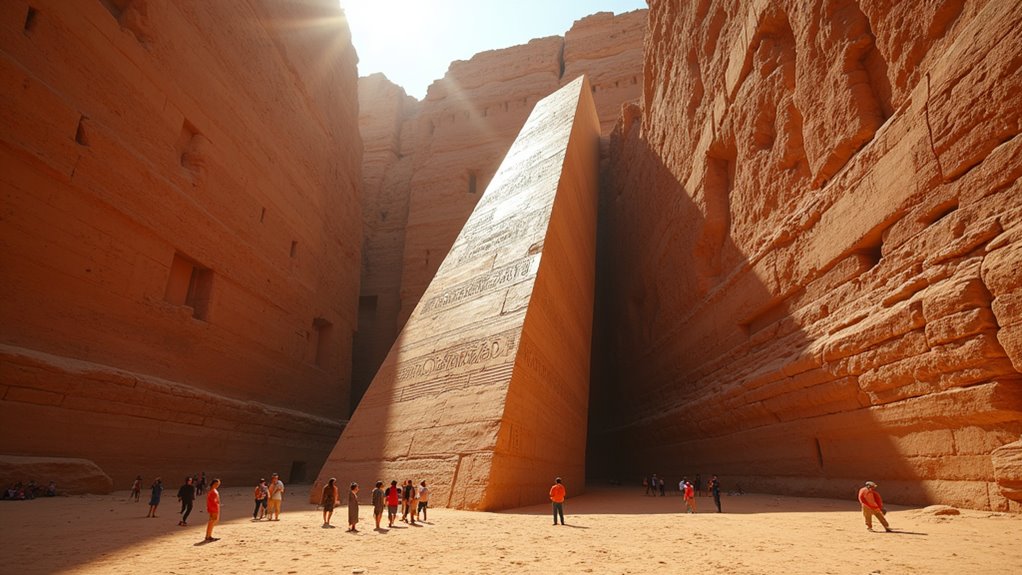
While Aswan’s monuments showcase finished Egyptian grandeur, the Unfinished Obelisk reveals the raw ambition and challenges behind these ancient achievements. You’ll find this massive 42-meter granite monument still attached to the bedrock where Queen Hatshepsut’s workers abandoned it 3,000 years ago.
Located just 2 kilometers south of Aswan’s center, this open-air archaeological site lets you examine ancient quarrying techniques up close. You’ll see tool marks from dolerite hammers and the precise cup-shaped indentations workers used to extract stone.
The visible cracks that forced abandonment tell a compelling story about the risks ancient craftsmen faced. The site functions as an open-air textbook where you can study ancient engineering methods and craftsmanship techniques firsthand.
At 1,200 tons, it would’ve been Egypt’s largest obelisk. The site offers excellent value as an educational experience, showing you engineering methods rarely visible elsewhere.
Learn Nubian History at the UNESCO-Designed Museum
After exploring ancient quarrying techniques, you’ll want to understand the broader cultural story at the Nubian Museum, where UNESCO’s preservation efforts created one of Egypt’s most significant cultural institutions. This architectural gem houses over 3,000 artifacts spanning 6,500 years of Nubian civilization, from 20,000-year-old skeletal remains to Islamic-era treasures.
You’ll discover how the Aswan High Dam’s construction threatened an entire heritage, prompting UNESCO’s massive salvage campaign between 1960-1980. The museum showcases rescued artifacts from submerged sites, including statues, pottery, and jewelry that would’ve been lost forever.
Don’t miss the reconstructed Nubian house and life-sized cultural displays that bring ancient customs to life. The museum’s impressive scale spans 50,000 square meters, with thoughtfully designed exhibition spaces complemented by beautiful botanical gardens. At roughly E£75 for admission, you’re experiencing world-class preservation work recognized with the prestigious Aga Khan Architecture Award.
Wander Through Elephantine Island’s Ancient Ruins and Gardens
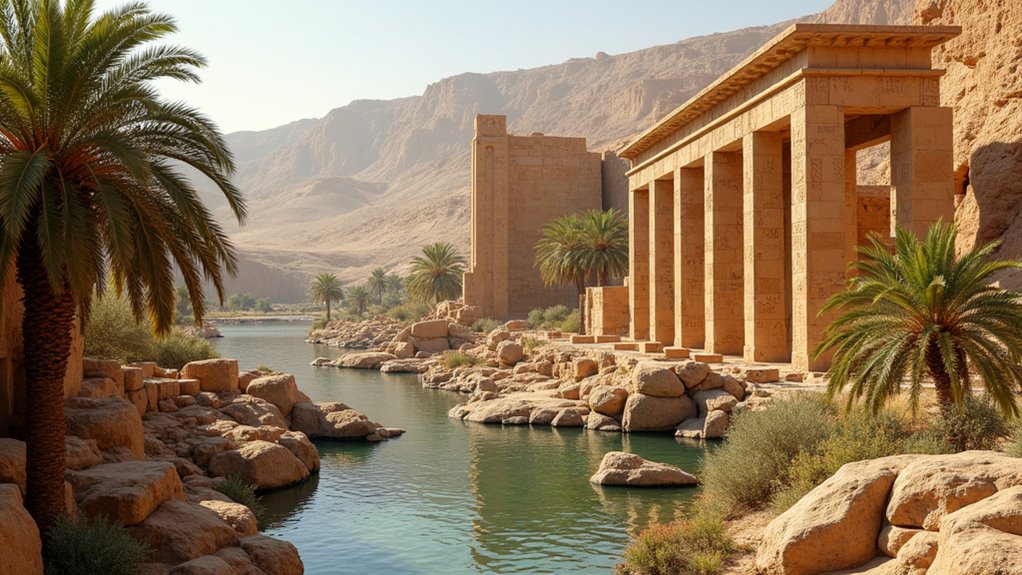
Just a short felucca ride from Aswan’s corniche, Elephantine Island offers you 5,000 years of continuous history scattered across peaceful gardens and crumbling stone foundations.
You’ll discover granite ruins from ancient temples dedicated to Khnum and Satet, plus Egypt’s oldest functioning nilometer that measured Nile floods for nearly two millennia.
The German Archaeological Institute’s ongoing excavations reveal fascinating artifacts, including mummified rams and bronze-working evidence.
You can explore remains of the Jewish community’s temple, destroyed in 410 BCE, and read about their daily lives through Aramaic papyri discoveries.
Don’t miss the Third Dynasty step pyramid ruins and Middle Kingdom administrative buildings.
The island’s shaded pathways between archaeological sites provide welcome relief from Aswan’s heat, making this an ideal afternoon exploration. The island’s strategic position at the First Cataract made it a crucial border checkpoint between ancient Egypt and Nubia for millennia.
Experience the Engineering Marvel of Aswan High Dam
From Elephantine Island’s ancient engineering, you can witness modern Egypt’s most ambitious construction project at the Aswan High Dam, located just 13 kilometers south of the city. This massive rock-fill structure stretches 3.8 kilometers across the Nile and stands 111 meters tall, creating Lake Nasser’s impressive 132-cubic-kilometer reservoir.
You’ll appreciate the dam’s dual purpose during your visit – it generates 2,100MW of electricity through twelve Francis turbines while controlling the Nile’s floods that once devastated communities downstream.
The guided tours cost around 50 Egyptian pounds and offer stunning views of the lake extending 550 kilometers behind the dam.
Built with Soviet assistance between 1960-1968, this engineering marvel transformed Egypt’s agriculture by enabling year-round irrigation across 33,600 square kilometers of farmland. The project replaced the earlier Aswan Low Dam, which had been constructed between 1898-1902 but proved insufficient for Egypt’s growing needs.
Take a Day Trip to Kom Ombo’s Double Temple
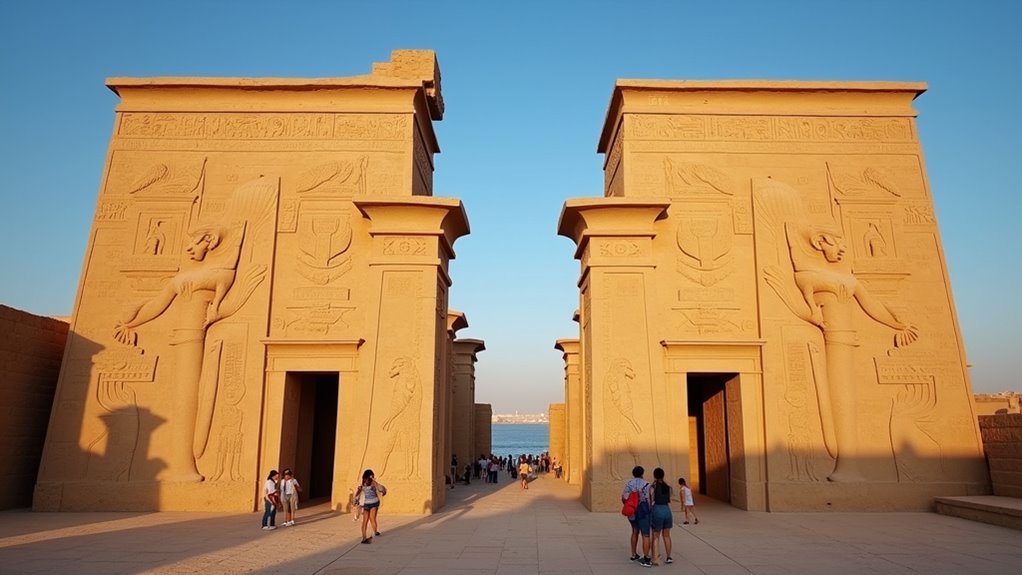
While the Aswan High Dam showcases modern engineering, a 45-minute journey north reveals ancient architectural genius at Kom Ombo Temple. Here, you’ll discover Egypt’s only double temple dedicated to two competing deities.
This unique Ptolemaic structure honors both Sobek, the crocodile god of fertility, and Horus the Elder, falcon-headed god of kingship. You’ll notice everything’s duplicated – twin entrances, sanctuaries, and halls serving separate priesthoods under one roof. Construction began around 186 BCE and continued for over a century.
Don’t miss the fascinating medical reliefs displaying ancient surgical instruments and the detailed religious calendars. The temple’s strategic Nile location controlled ancient trade routes. The site also features an ancient nilometer that priests used to predict Nile flooding, which was crucial for Egypt’s agricultural planning.
Most Aswan day tours include Kom Ombo, making it an affordable addition to your itinerary.
Browse Local Crafts and Spices in Aswan’s Bustling Markets
After exploring ancient temples, you’ll want to experience Aswan’s vibrant marketplace culture where aromatic spices and handcrafted treasures await your discovery.
Follow the intense fragrances of cumin, turmeric, and saffron to locate spice stalls filled with colorful ingredients used in Egyptian and Nubian cooking. You’ll find dried hibiscus flowers (karkade) in reed baskets alongside natural perfumes and medicinal herbs.
Browse handwoven textiles, Nubian baskets, and traditional jewelry crafted using authentic methods. The market serves as a cultural gateway that promotes Nubian and African heritage to visitors from around the world. Don’t miss sampling ful medames, ta’ameya, or invigorating sugarcane juice at food stalls.
Remember that haggling’s expected and can slash prices by 20-75%. Visit during afternoon peak hours near the Nile Corniche, venture beyond main tourist stalls for better deals, and always ask permission before photographing vendors.
The Sum Up
Pack comfortable walking shoes and plenty of water—you’ll be doing lots of exploring under the Egyptian sun. Don’t forget to haggle in the markets; it’s expected and part of the fun. Consider staying in a Nubian guesthouse for an authentic, budget-friendly experience. Book your Abu Simbel trip early for better prices, and remember that felucca rides are cheapest when shared with other travelers. Aswan’s magic awaits your discovery.