
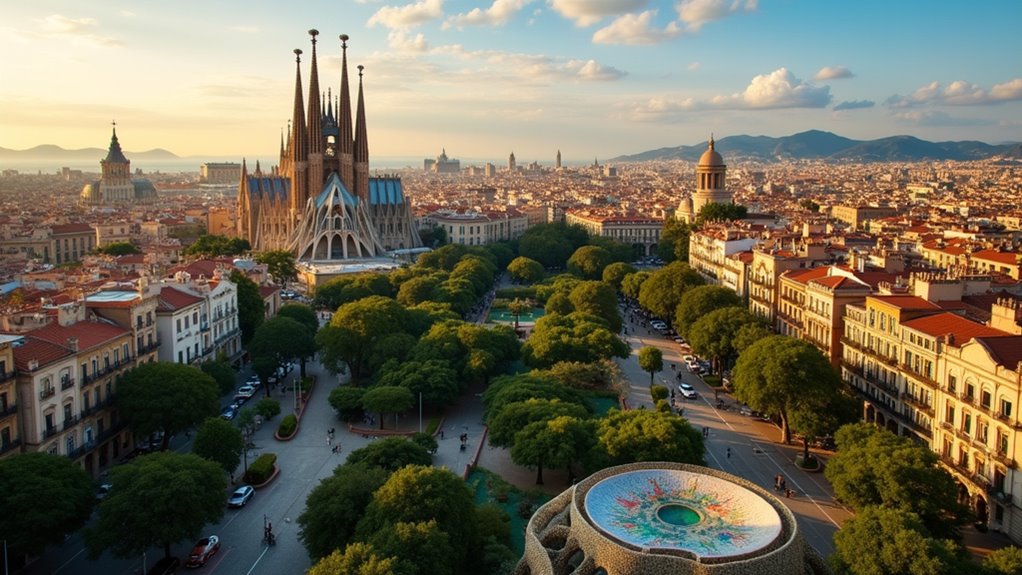
You’re probably wondering how to make the most of your Barcelona trip without breaking the bank. This vibrant Catalonian city offers an incredible mix of architectural wonders, historic neighborhoods, and cultural experiences that won’t drain your wallet. From Gaudí’s iconic masterpieces to hidden medieval streets, there’s something here for every type of traveler. But here’s what most visitors don’t realize about planning their Barcelona adventure—timing and prioritizing can save you both money and frustration.
- Marvel at Gaudí’s Unfinished Masterpiece, La Sagrada Família
- Wander Through the Colorful Mosaics of Park Güell
- Tour Casa Batlló’s Modernist Fantasy on Passeig De Gràcia
- Explore the Rooftop Chimneys at Casa Milà (La Pedrera)
- Get Lost in the Medieval Streets of the Gothic Quarter
- Sample Local Flavors at Mercat De La Boqueria
- Take the Cable Car Up Montjuïc Hill for Panoramic Views
- Relax on the Sandy Shores of Barceloneta Beach
- Discover Picasso’s Early Works at the Museu Picasso
- Experience a Live Flamenco Performance
- Tour Camp Nou Stadium and FC Barcelona Museum
- Stroll Through the Green Oasis of Ciutadella Park
- Admire the Stained Glass Ceiling at Palau De La Música Catalana
- Take a Day Trip to Montserrat’s Mountain Monastery
- The Sum Up
Marvel at Gaudí’s Unfinished Masterpiece, La Sagrada Família
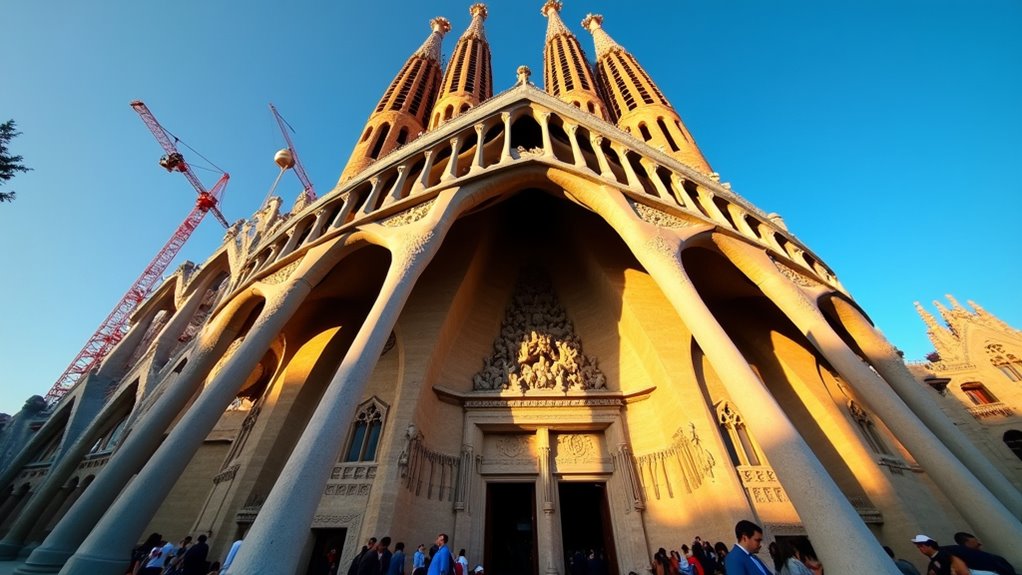
Where else can you witness over 140 years of architectural ambition still taking shape before your eyes? La Sagrada Família isn’t just Barcelona’s most famous landmark—it’s a living construction site where Gaudí’s revolutionary vision continues unfolding daily.
You’ll be amazed by the intricate Nativity façade, completed during Gaudí’s lifetime, and the stark contrast with the modern Passion façade.
Inside, tree-like columns soar 70 meters overhead, creating a forest canopy effect that’s pure architectural poetry. The basilica was officially consecrated in 2010 by Pope Benedict XVI, marking a major milestone in its long construction journey.
Book tickets online in advance to avoid crowds and save money. Early morning or late afternoon visits offer the best lighting through the stained glass windows.
Audio guides are worth the extra cost—you’ll understand Gaudí’s genius better with proper context about this incredible unfinished masterpiece.
Wander Through the Colorful Mosaics of Park Güell
While La Sagrada Família showcases Gaudí’s spiritual vision, Park Güell reveals his playful side through a kaleidoscope of broken ceramic mosaics called *trencadís*. You’ll discover this innovative technique throughout the park, where Gaudí transformed ceramic scraps into stunning art.
Don’t miss the colorful salamander at the main entrance—it’s Barcelona’s most photographed mosaic. The undulating serpent-shaped bench on the main terrace offers panoramic city views while showcasing intricate tile work.
Explore the Hypostyle Room’s 86 twisted columns supporting a mosaic ceiling that filters light beautifully. This space was originally designed as a marketplace for residents of the planned housing development.
Originally planned as a wealthy residential development in 1900, the project failed financially and became a public park in 1926. Today, this UNESCO World Heritage Site lets you experience Gaudí’s genius affordably while enjoying nature-inspired architecture.
Tour Casa Batlló’s Modernist Fantasy on Passeig De Gràcia
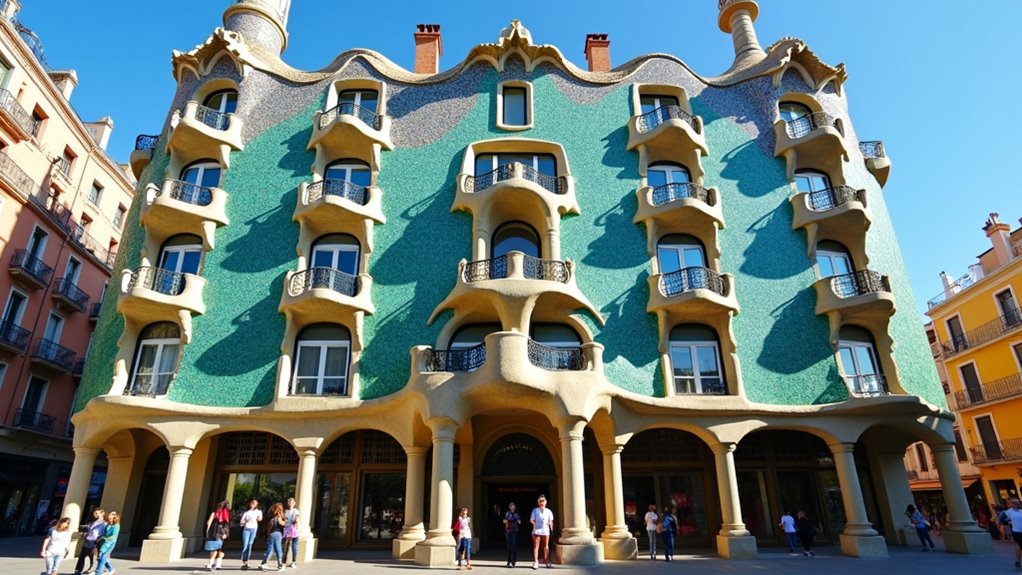
Though it began as a modest 1877 building, Casa Batlló transformed into Gaudí’s most whimsical masterpiece when textile magnate Josep Batlló commissioned its complete redesign in 1904.
You’ll immediately notice the dragon-inspired facade with its undulating mosaic tiles and bone-like columns along Passeig de Gràcia.
Inside, climb the sinuous “Dragon’s Back Staircase” and explore the enlarged light well tiled in gradient blues that maximize natural illumination.
Don’t miss the oval gallery’s eye-like windows or the sculptural chimney stacks on the roof.
Since 2019, you can also visit the basement redesigned by Japanese architect Kengo Kuma. The loft space features distinctive catenary arches that create a whale’s ribcage effect, originally serving practical purposes like laundry and storage.
Book timed entry tickets in advance—they’re essential for this UNESCO World Heritage site that showcases adaptive reuse at its finest.
Explore the Rooftop Chimneys at Casa Milà (La Pedrera)
After exploring Gaudí’s whimsical interiors, you’ll discover Casa Milà’s rooftop transforms into something far more spectacular—an otherworldly landscape that poet Pere Gimferrer dubbed “the garden of warriors.” Twenty-eight sculptural chimneys rise like medieval sentinels across the undulating terrace, their spiral forms and trencadís mosaic coverings creating an open-air museum unlike anywhere else in Barcelona.
These aren’t ordinary chimneys—they’re functional art pieces topped with champagne bottle fragments and covered in broken ceramic mosaics. You’ll spot designs resembling knights, carnival masks, and mysterious figures as you wander the serpentine pathways. The curved forms throughout the rooftop draw inspiration from ruled geometry, softening the visual impact of the six stairwell enclosures that punctuate the sculptural landscape.
Your standard entry ticket includes rooftop access from 9:00 AM to 6:30 PM, offering 360º views of the city, Sagrada Família, and Mediterranean Sea.
Get Lost in the Medieval Streets of the Gothic Quarter
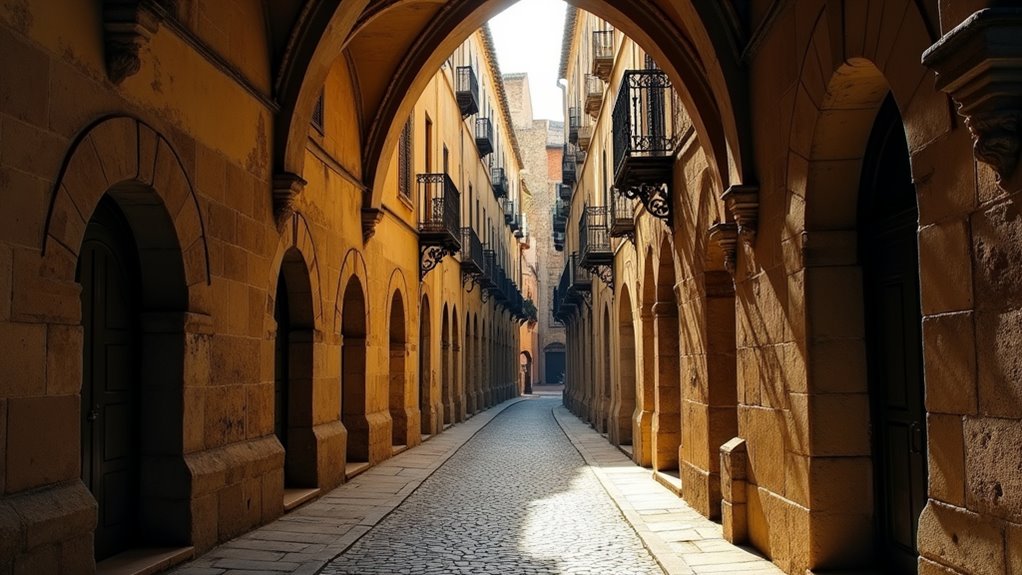
Once you’ve had your fill of Gaudí’s modernist marvels, Barcelona’s Gothic Quarter offers a completely different adventure—one where you’ll literally walk through 2,000 years of history beneath your feet. This maze of narrow medieval streets sits atop ancient Roman Barcino, and wandering here costs nothing but time.
Start at Plaça del Rei to see the medieval royal palace, then hunt for Roman wall fragments at Plaça Nova—you’ll spot the carved “Barcino” inscription. The cathedral’s Gothic spires dominate the skyline, while hidden courtyards and tiny plazas reward curious explorers.
Don’t miss the four Roman columns near Plaça de Sant Jaume, where city politics still unfold. The area also includes the historic Jewish Quarter, known as El Call, which features notable monuments including remnants of the Great Synagogue. Pack comfortable shoes and let yourself get wonderfully lost in these atmospheric alleyways.
Sample Local Flavors at Mercat De La Boqueria
While the Gothic Quarter feeds your soul with history, La Boqueria market will awaken your taste buds with Spain’s most vibrant food scene.
Located right on La Rambla, this 200-stall market draws more daily visitors than Sagrada Família—and for good reason.
You’ll find everything from fresh Iberian ham to local Catalan cheeses at budget-friendly prices.
Don’t miss the tapas counters inside, where you can sample bombas and patatas bravas made with ingredients from surrounding stalls.
Fresh fruit juices make perfect affordable snacks while you explore.
The market’s metallic and glass exterior gives way to an interior bursting with vibrant colors and enticing aromas from vendors worldwide.
Visit early morning or late afternoon to avoid crowds.
Take the L3 metro to Liceu station for easy access.
The market’s open daily except Sundays, so plan accordingly for your food adventure.
Take the Cable Car Up Montjuïc Hill for Panoramic Views
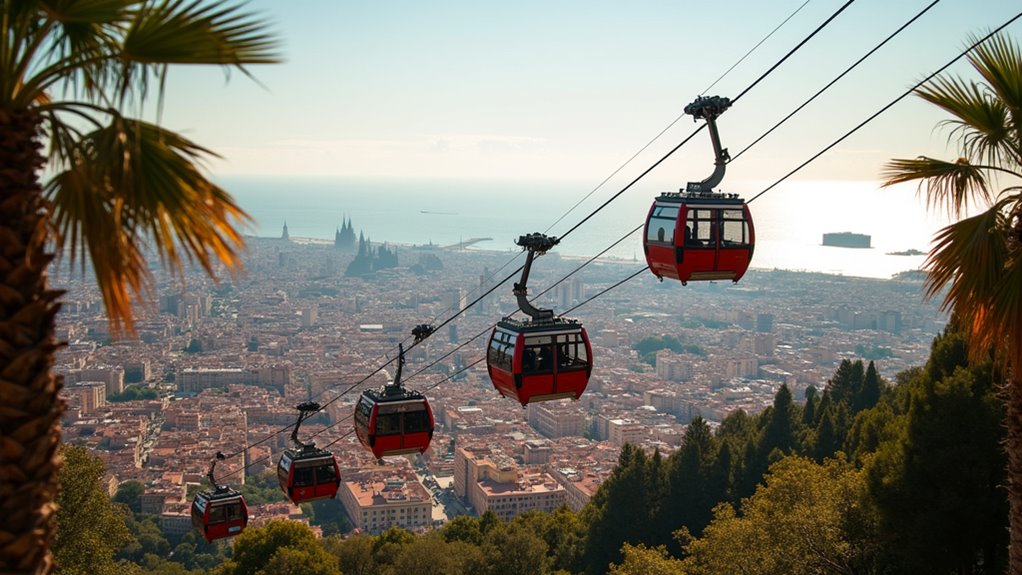
For the best panoramic views of Barcelona without breaking the bank, the Montjuïc Cable Car offers an unforgettable 10-minute ride that’ll give you breathtaking perspectives of the entire city. You’ll spot iconic landmarks like Sagrada Familia, Camp Nou, and the bustling port below as you ascend 84 meters to Montjuïc Castle.
At €11.25 per person, it’s surprisingly affordable for such spectacular views. You can catch the cable car from Avinguda Miramar after taking the funicular from Paral·lel metro station.
The route’s circular, so you’ll get different viewpoints going up and down – don’t miss the optional stop at Mirador de l’Alcalde for prime photo opportunities. The cable car features 55 glass-enclosed cabins that were installed during a major renovation to improve passenger comfort and capacity.
Pro tip: time your visit for sunset to watch Barcelona’s lights twinkle on.
Relax on the Sandy Shores of Barceloneta Beach
After soaking in those elevated city views, you’ll want to trade mountain peaks for ocean waves at Barceloneta Beach – Barcelona’s most iconic stretch of sand that’s just five minutes from the metro.
This 422-meter stretch combines historic fisherman’s quarter charm with modern beach culture, complete with free Wi-Fi and volleyball courts.
You’ll find excellent facilities including showers, lockers, and lifeguard towers during bathing season.
The beachfront’s Passeig Marítim promenade offers perfect sunset viewing spots lined with palm trees.
While beach vendors sell mojitos and snacks, you can save money by bringing your own refreshments. Don’t miss the nearby Barceloneta Market, established in 1884, where you can sample local foods like jamón, olives, and fresh anchovies.
Visit early morning or during golden hour to avoid summer crowds and experience the beach’s most magical atmosphere alongside the iconic sail-shaped W Barcelona Hotel.
Discover Picasso’s Early Works at the Museu Picasso
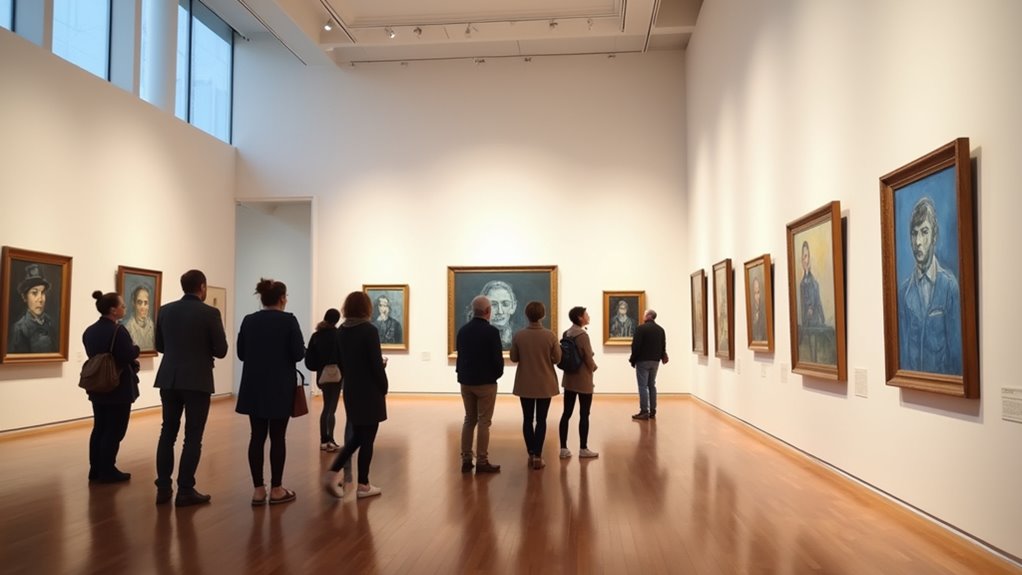
When you’re ready to learn about art history, head to the Museu Picasso in the Gothic Quarter – home to the world’s most extensive collection of Pablo Picasso’s early masterpieces. You’ll discover how this artistic genius developed his skills, starting with academic realism before revolutionizing art with cubism.
Don’t miss *First Communion* (1896), painted when Picasso was just 15, and *Science and Charity* (1897), showcasing his incredible teenage talent. The museum’s five interconnected Gothic palaces house around 5,000 works, focusing on his formative Barcelona years.
You can trace Picasso’s artistic evolution chronologically, from detailed family portraits to experimental phases. The museum features a remarkable room showcasing Picasso’s 44 different paintings based on Velázquez’s famous “Las Meninas,” demonstrating his reinterpretation of classic masterworks. The collection perfectly captures why Barcelona was vital to nurturing his early genius – making this museum essential for understanding one of history’s most influential artists.
Experience a Live Flamenco Performance
Why settle for watching flamenco on YouTube when you can witness the raw passion and artistry live in Barcelona? The city’s intimate tablaos let you feel every guitar strum and footstep without microphones drowning out the authenticity.
For budget-conscious travelers, City Hall Theatre offers shows from €15 with flexible evening timings. If you’re willing to splurge, Tablao Flamenco Cordobes on La Rambla has delivered world-class performances since 1970. Palau Dalmases adds romance by hosting shows in a 17th-century baroque palace near the Picasso Museum. The venue has hosted flamenco icons like Camarón de la Isla and Lola Flores throughout its rich history.
Book tickets in advance—these venues typically seat only 120 people and fill up fast. Most tablaos cluster around Old Town, making them easy to reach. Don’t worry about language barriers; flamenco’s expressive dance speaks universally.
Tour Camp Nou Stadium and FC Barcelona Museum
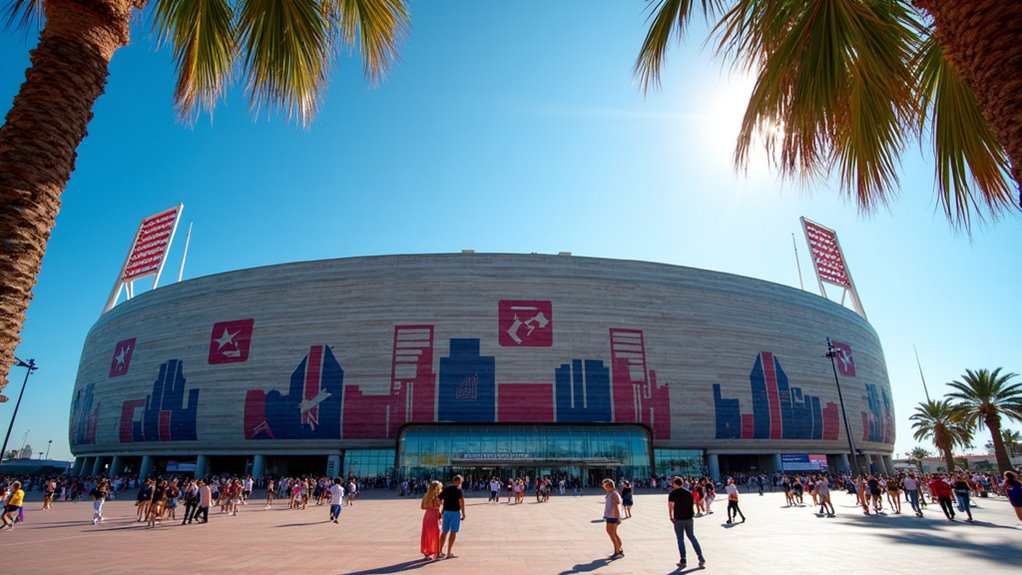
Barcelona’s cultural experiences extend beyond dance floors to the hallowed grounds where football becomes art. You’ll find Camp Nou at C/ Arístides Maillol s/n, accessible through two main entrances on Av. de Joan XXIII (Access 9) and Av. Arístides Maillol (Access 15).
Currently, the stadium’s closed for renovation, but you can still explore the FC Barcelona Museum through the Barça Immersive Tour. This hour-long experience features a 360-degree immersive show, interactive exhibits covering Barça’s history, trophies, and legendary players like Messi. Each ticket includes an environmental fee of €0.50 to help reduce the carbon footprint of visitors.
The museum opens 10 AM-6 PM Monday-Saturday with shorter Sunday hours. Book tickets with free cancellation options, and arrive 45 minutes before closing for last admission. Tours cost varies, but you’ll get specialized commentary in English or Spanish.
Stroll Through the Green Oasis of Ciutadella Park
After exploring Barcelona’s football heritage, you’ll discover a completely different side of the city at Ciutadella Park, where 31 hectares of green space offer a revitalizing escape from urban hustle. This free attraction transforms a former military fortress into Barcelona’s oldest public park, making it perfect for budget-conscious travelers.
You’ll find Antoni Gaudí’s early work at the stunning Cascada waterfall, complete with winged dragons guarding the fountain. Don’t miss the artificial lake where you can rent boats, or the impressive collection of sculptures scattered throughout.
The park houses over 100 plant species, including century-old trees that provide welcome shade. Among the diverse collection, you’ll spot magnificent lime trees with their broad leaves and fragrant flowers alongside other ornamental varieties. Whether you’re picnicking, people-watching, or simply unwinding after sightseeing, Ciutadella Park offers an ideal blend of nature, art, and history.
Admire the Stained Glass Ceiling at Palau De La Música Catalana
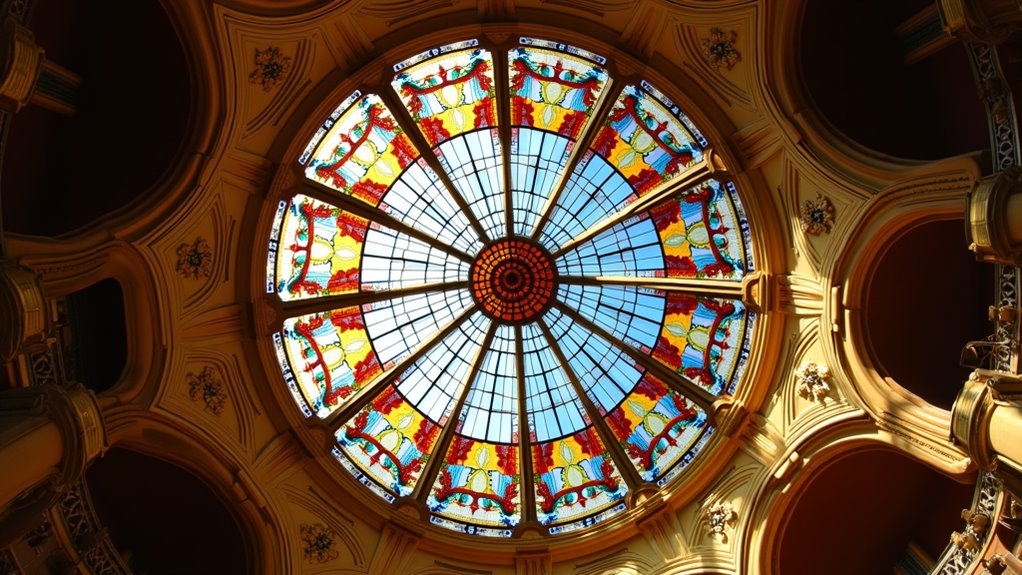
When you step into the Palau De La Música Catalana’s concert hall, you’ll immediately understand why this venue’s stained glass ceiling ranks among Europe’s most breathtaking architectural features. This massive inverted dome weighs one metric ton and showcases a golden sun surrounded by female angels in stunning gold, blue, and white hues.
Designed by Lluís Domènech i Montaner between 1905-1908, the ceiling creates Europe’s only concert hall illuminated primarily by natural daylight. You’ll watch colorful rays dance across the auditorium as light filters through Antoni Rigalt i Blanch’s masterpiece, changing with weather and time.
The surrounding walls feature additional stained glass, ceramic mosaics, and sculptures of 18 muses plus composer busts, creating an overwhelming sensory experience celebrating Catalan culture and music. This architectural masterpiece has been recognized as a UNESCO World Heritage site, cementing its status as one of the world’s most important examples of Catalan Modernisme.
Take a Day Trip to Montserrat’s Mountain Monastery
While Barcelona’s architectural wonders captivate visitors within the city, you’ll discover an entirely different kind of spiritual beauty just an hour away at Montserrat’s ancient mountain monastery.
Catch the FGC R5 train from Plaça Espanya for about €11.50, then take the scenic cogwheel train or cable car up the mountain.
You’ll explore the 11th-century Santa Maria de Montserrat Abbey and see the famous Black Madonna in the Basilica. Listen for the daily performances by the Boys Choir of La Escolania de Montserrat, one of Europe’s oldest music schools dating back to 1307.
Don’t miss the museum featuring Picasso and Dalí works.
For budget-conscious travelers, pack lunch and explore the hiking trails instead of dining on-site.
Visit in the morning to avoid crowds, and book timed tickets in advance for the most popular attractions.
The Sum Up
You’ve got an incredible mix of experiences waiting in Barcelona, from Gaudí’s stunning architecture to vibrant neighborhoods and cultural gems. Don’t try to cram everything into one trip—pick a few must-sees and really savor them. Many attractions offer combo tickets that’ll save you money, and remember that wandering the free areas like Gothic Quarter and beaches can be just as rewarding. Barcelona’s magic isn’t just in the famous sites—it’s everywhere.