
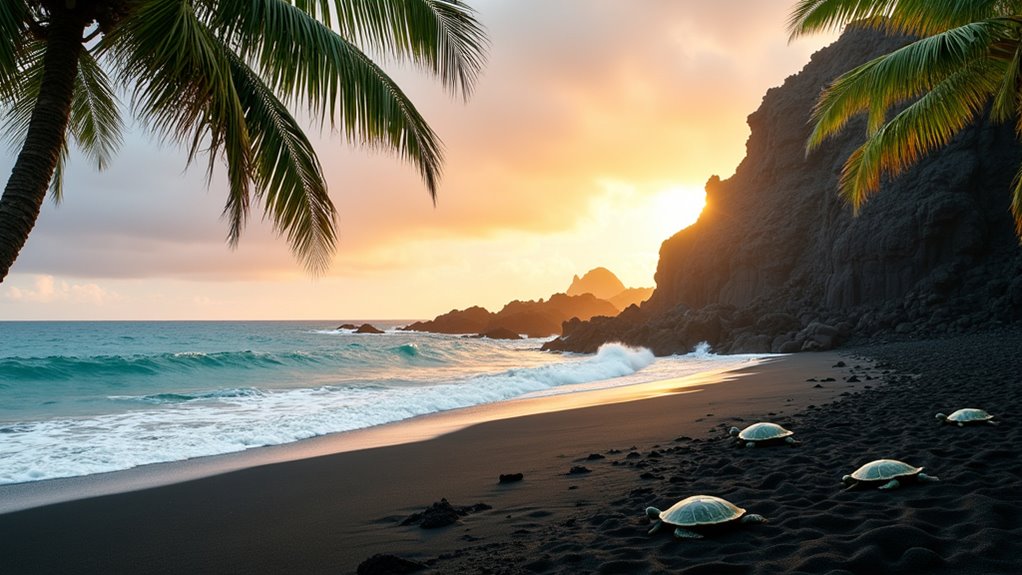
You’ll find Hawaii’s Big Island packed with unforgettable adventures, from watching spectacular lava fountains at Kīlauea volcano to snorkeling with massive manta rays off Kona’s coast after dark. Don’t miss stargazing from Mauna Kea’s summit, swimming with protected sea turtles at Kahaluʻu Bay, or hiking to rare green sand at Papakōlea Beach. Explore ancient Hawaiian culture at Puʻuhonua o Hōnaunau, snorkel crystal-clear Kealakekua Bay, and discover 23,000 petroglyphs at Puʻu Loa for the complete island experience.
- Watch Lava Flow at Hawaiʻi Volcanoes National Park
- Snorkel With Manta Rays off the Kona Coast at Night
- Stargaze From Mauna Kea Summit After Sunset
- Swim With Sea Turtles at KahaluʻU Bay and HōNaunau Bay
- Hike to the Rare Green Sand at Papakōlea Beach
- Drive the Scenic Hāmākua Coast to ʻAkaka Falls
- Explore Ancient Hawaiian Culture at PuʻUhonua O HōNaunau
- Snorkel the Crystal Waters of Kealakekua Bay
- Walk Through Nahuku-Thurston Lava Tube
- Discover 23,000 Petroglyphs at Puʻu Loa
- The Sum Up
Watch Lava Flow at Hawaiʻi Volcanoes National Park
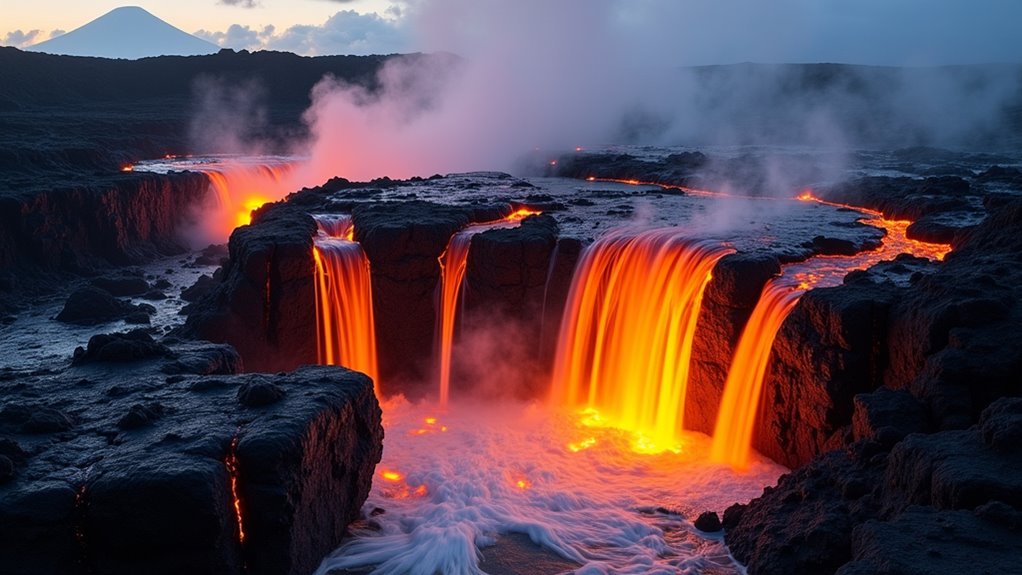
While Kīlauea’s eruptions can’t be predicted with certainty, you’re currently witnessing one of the most accessible volcanic displays on Earth. Recent episodes produced lava fountains reaching 1,200 feet high, covering most of Halemaʻumaʻu crater with fresh lava. USGS forecasts episode 38 between December 6-8.
Head to Uēkahuna overlook for elevated views into the crater, or try Volcano House’s public overlook for frontal caldera perspectives. Visit during twilight or nighttime for the most dramatic lava glow and fountain illumination. Stay on marked trails—caldera edges are unstable and dangerous.
Expect crowds during active episodes with limited parking. Volcanic gases can be hazardous, especially for those with respiratory conditions. Downwind areas may experience vog formation from sulfur dioxide emissions, which can cause additional breathing difficulties. Check current access restrictions before visiting, as viewpoints close without notice.
Snorkel With Manta Rays off the Kona Coast at Night
As darkness falls over the Kona Coast, you’ll witness one of Hawaii’s most magical underwater encounters—floating at the surface while massive manta rays glide beneath you, their 12-foot wingspans gracefully cutting through beams of underwater lights.
You don’t need advanced swimming skills for this beginner-friendly experience. Tours last 1.5–2 hours with 30–45 minutes in the water, where you’ll hold onto floating light boards that attract plankton—the mantas’ dinner.
With Kona’s resident population of 450+ rays and 80–90% sighting success rates, you’re almost guaranteed encounters year-round. The Big Island’s unique geography creates sheltered bays and deep offshore waters that form natural habitats ideal for these gentle giants.
Popular sites include Manta Village (shallower at 30–40 feet) and Manta Heaven (deeper).
Remember: never touch these gentle giants—you’ll damage their protective coating and stress them out.
Stargaze From Mauna Kea Summit After Sunset
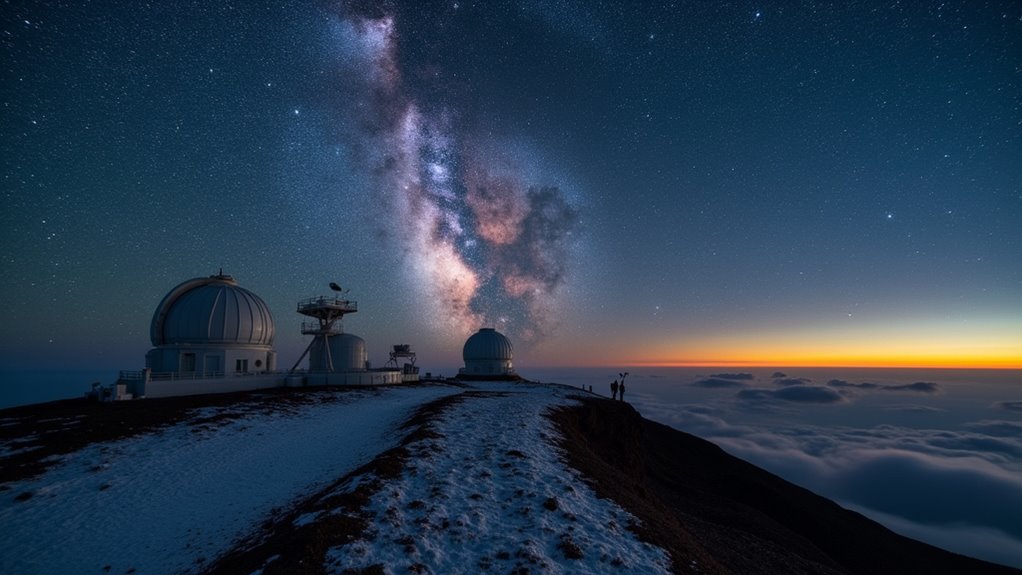
When sunset paints the summit of Mauna Kea in brilliant oranges and purples, you’ll find yourself standing 13,796 feet above sea level at one of Earth’s premier stargazing locations.
You’ll need a 4-wheel-drive vehicle to reach the summit, and weather cancellations happen 50-70 times yearly, so book flexibility matters.
Dress warmly—summit temperatures hover around 30°F with wind. Many tours provide arctic parkas, but you’ll need long pants and closed shoes.
April offers the most reliable weather, while March, October, and November provide excellent viewing conditions.
Plan visits during new moon periods for darker skies.
Commercial tours typically combine sunset viewing with stargazing at slightly lower elevations using computerized telescopes. These 7.5 to 8.5 hour experiences begin mid-afternoon with mountain drives and cultural education. You’ll see planets, nebulae, and galaxies while guides share astronomy knowledge and cultural star lore.
Swim With Sea Turtles at KahaluʻU Bay and HōNaunau Bay
Snorkeling alongside Hawaiian green sea turtles (honu) becomes an unforgettable reality at two of the Big Island’s most accessible spots. Kahaluʻu Bay, nicknamed “Snorkel Beach,” sits just south of Kailua-Kona and offers calm, shallow waters perfect for beginners. You’ll find turtles resting on lava rocks and feeding on algae year-round.
The beach park provides restrooms, showers, and gear rentals across the street.
For advanced snorkelers, Hōnaunau Bay (Two Step) delivers deeper, clearer water about 45 minutes south of Kona. Both locations require maintaining a 10-foot distance from turtles—they’re federally protected.
Visit early morning to avoid crowds and use reef-safe sunscreen. Water shoes help navigate sharp coral. These ancient creatures can live over 100 years and are considered sacred in Hawaiian culture. Check with lifeguards about conditions before entering.
Hike to the Rare Green Sand at Papakōlea Beach
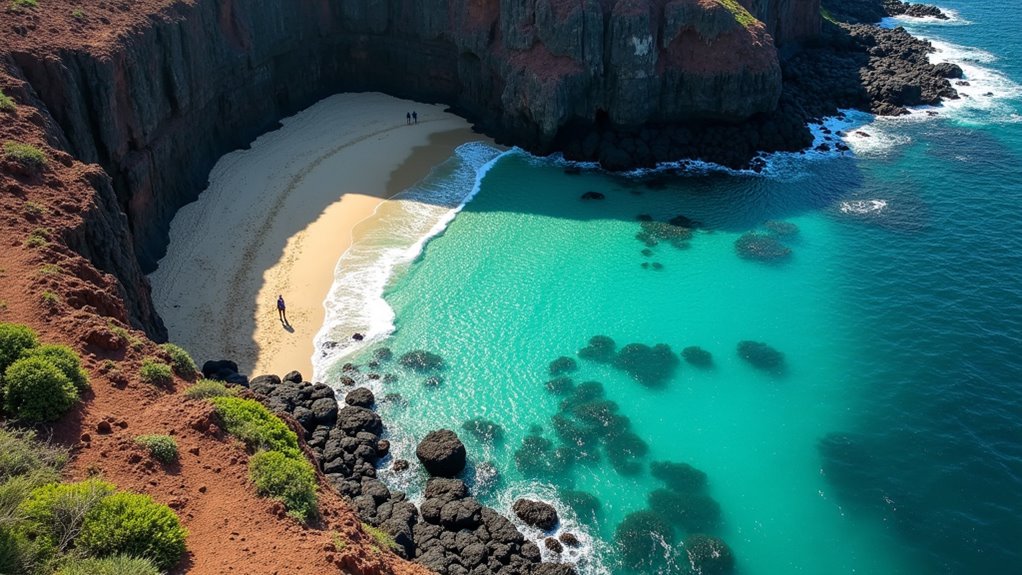
Few beaches on Earth showcase the stunning green sand that awaits you at Papakōlea Beach, where thousands of years of volcanic activity have created one of nature’s rarest coastal phenomena. You’ll find this gem near South Point in the Kaʻū district, accessible via Highway 11 and South Point Road.
The 4.5-mile round trip hike follows rough 4WD tracks along the coast, taking 3-5 hours total. While not technically challenging with only 250-300 feet of elevation gain, you’ll face hot, windy conditions with zero shade. Pack plenty of water and sun protection.
The green color comes from olivine crystals eroded from volcanic rock. The beach was originally a cinder cone that contained lava rich in olivine minerals. Swimming can be dangerous due to strong currents and no lifeguards, so exercise extreme caution near the water.
Drive the Scenic Hāmākua Coast to ʻAkaka Falls
After exploring the southern reaches of the Big Island, you’ll want to experience the lush northeastern coastline where the Hāmākua Heritage Corridor offers some of Hawaii’s most dramatic scenery. This 40-50 mile drive along Highway 19 between Hilo and Waipiʻo Valley showcases towering sea cliffs, dense rainforest, and cascading waterfalls at every turn.
Don’t miss the detour to ʻAkaka Falls State Park via Route 220 near Honomu—it’s just 30 minutes from Hilo. The park’s loop trail leads to viewpoints of the spectacular 442-foot ʻAkaka Falls and the smaller 100-foot Kahuna Falls.
You’ll drive through former plantation towns and tropical landscapes that’ll provide incredible photo opportunities. Along the way, stop at Tex Drive Inn for their famous malasadas, Portuguese donuts that are a local favorite. Combine this with other waterfall stops and Waipiʻo Valley Lookout for a perfect day trip.
Explore Ancient Hawaiian Culture at PuʻUhonua O HōNaunau
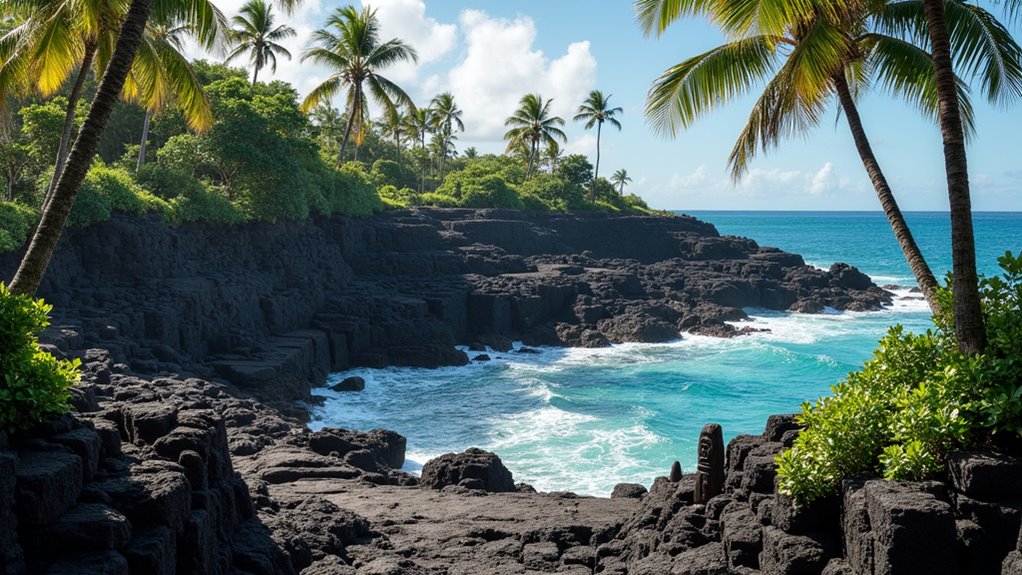
While the Big Island’s natural wonders capture most visitors’ attention, you’ll discover Hawaii’s most profound cultural treasures at Puʻuhonua o Hōnaunau National Historical Park on the Kona coast. This sacred place of refuge protected ancient Hawaiians who broke kapu (sacred laws) from death by offering sanctuary and spiritual cleansing.
You’ll walk among massive lava rock walls that’re 18 feet thick and explore reconstructed temples where 23 Hawaiian chiefs once rested. The carved wooden kiʻi (god images) guarding Hale o Keawe heiau create an unforgettable spiritual atmosphere.
Royal fishponds, canoe landings, and ceremonial grounds reveal how Hawaiian royalty lived centuries ago. The park spans 420 acres along the dramatic west coast, preserving both the cultural sites and the stunning coastal landscape that frames them.
Entry costs just $15 per vehicle for seven days, making this one of Hawaii’s most affordable yet meaningful cultural experiences.
Snorkel the Crystal Waters of Kealakekua Bay
From the spiritual depths of ancient Hawaiian culture, you’ll find equally profound beauty beneath the crystal waters of Kealakekua Bay, the Big Island’s premier snorkeling destination. This Marine Life Conservation District offers 100-foot visibility and technicolor coral reefs teeming with tropical fish and Hawaiian spinner dolphins.
You’ve got three access options: hike the challenging 1.9-mile Kaʻawaloa trail (1,300-foot descent), join boat tours from Keauhou Harbor, or book permitted kayak excursions.
Budget-conscious travelers should consider the free hiking option, though it’s strenuous and exposed. Tours cost more but include gear and refreshments.
Visit during morning hours for optimal conditions when the bay’s sheltered waters remain calm. Guided tours provide exclusive access to coveted sites within the bay, including the historic Captain Cook Monument. Remember, you can’t touch coral or disturb wildlife—this underwater state park demands respect for its protected marine ecosystem.
Walk Through Nahuku-Thurston Lava Tube
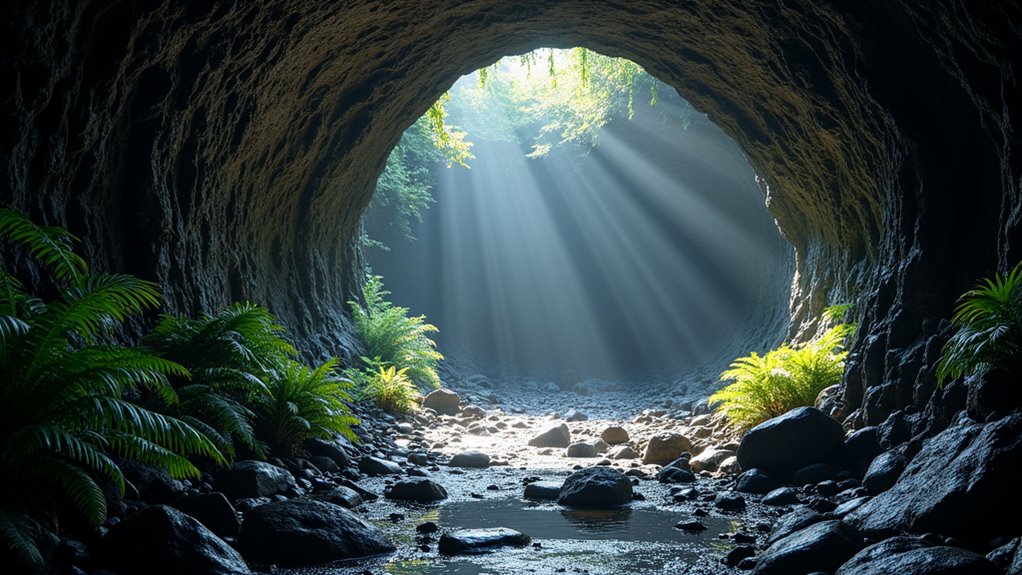
Where else can you walk through a 500-year-old volcanic tunnel without breaking your budget? Nāhuku-Thurston Lava Tube offers this incredible experience for just the cost of park admission. Located 1.5 miles east of Kīlauea Iki Overlook, you’ll access this geological wonder via a short, well-maintained trail through lush rainforest.
The 600-foot-long tunnel formed when Kīlauea’s outer lava cooled while molten rock continued flowing inside, creating this natural cave. You’ll walk comfortably through the lit interior, marveling at 20-foot-high ceilings, lava stalactites, and colorful basalt walls. The cool, humid interior provides welcome relief from Hawaii’s heat.
The entire 0.4-mile loop trail takes about 30 minutes, making it perfect for families. Listen for native birds like ʻApapane while crossing the small stream bridge leading to the entrance. For those seeking deeper exploration, you can continue into the unlit portion of the cave through a gated area with a strong flashlight for a more adventurous experience.
Discover 23,000 Petroglyphs at Puʻu Loa
Step into Hawaii’s largest petroglyph field at Puʻu Loa, where over 23,000 ancient carvings tell stories that stretch back 800 years. You’ll discover a sacred site where Native Hawaiians once placed newborn umbilical cords in cupule holes, blessing children with long life. These volcanic rock carvings—85% cupules plus circles, human figures, and canoe sails—create Polynesia’s most significant petroglyph collection.
The easy 1.5-mile round-trip hike crosses flat lava rock, leading to a protective boardwalk that circles the main concentration. You’ll find the trailhead along Chain of Craters Road in Hawaiʻi Volcanoes National Park. The site sits on a volcanic pressure dome formed during the Kāne Nui O Hamo eruption approximately 550 years ago.
Stay on designated paths and avoid touching the petroglyphs—these irreplaceable cultural treasures have survived centuries but remain vulnerable to damage.
The Sum Up
You’ll find the Big Island offers incredible experiences without breaking the bank. Most beaches are free, and you can explore lava tubes and petroglyphs at no cost. Pack your own snorkel gear to save on rentals, and bring a flashlight for evening adventures. Don’t miss the free stargazing opportunities at Mauna Kea. With careful planning, you’ll create unforgettable memories while keeping your wallet happy on Hawaii’s most diverse island.