
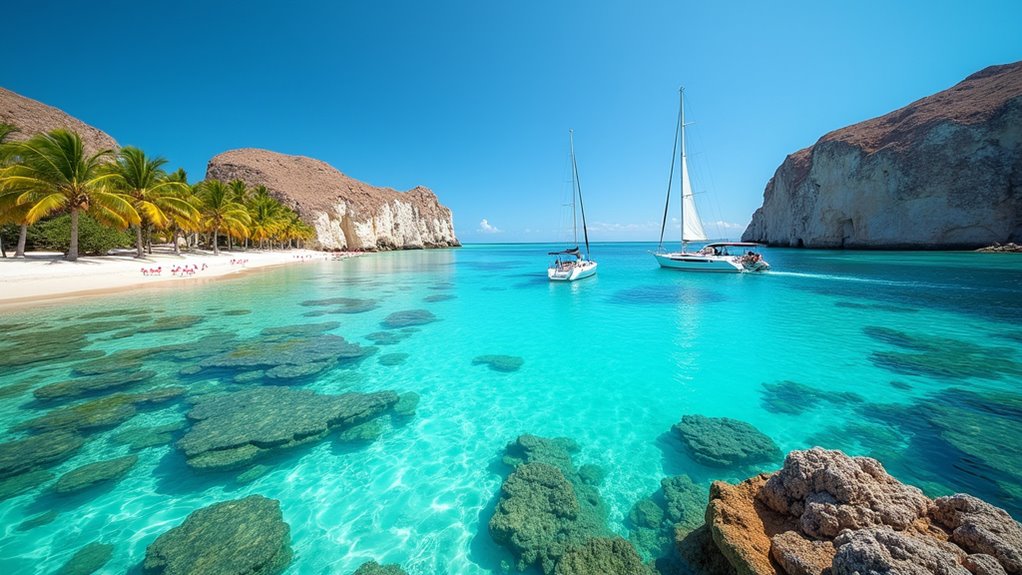
You’ll find Bonaire’s best experiences won’t break your budget—dive over 60 shore sites teeming with 350+ fish species, hike Mount Brandaris for panoramic Caribbean views, and windsurf at world-renowned Lac Bay. Explore underground caves, kayak through mangrove forests, and visit the famous flamingo sanctuary at Pekelmeer. Don’t miss the rescued donkeys at the island sanctuary, historic salt flats with preserved slave huts, and Kralendijk’s colorful Dutch-Caribbean waterfront. These adventures offer incredible value for your travel dollar.
- Dive the Shore Sites of Bonaire National Marine Park
- Hike Mount Brandaris in Washington-Slagbaai National Park
- Windsurf at Lac Bay’s Sorobon Beach
- Visit the Flamingo Sanctuary at Pekelmeer
- Explore Caves With Go Caving Bonaire
- Kayak Through the Mangrove Forests
- Meet the Donkeys at Bonaire’s Sanctuary
- Walk the Historic Salt Flats and Slave Huts
- Wander Kralendijk’s Colorful Waterfront
- The Sum Up
Dive the Shore Sites of Bonaire National Marine Park
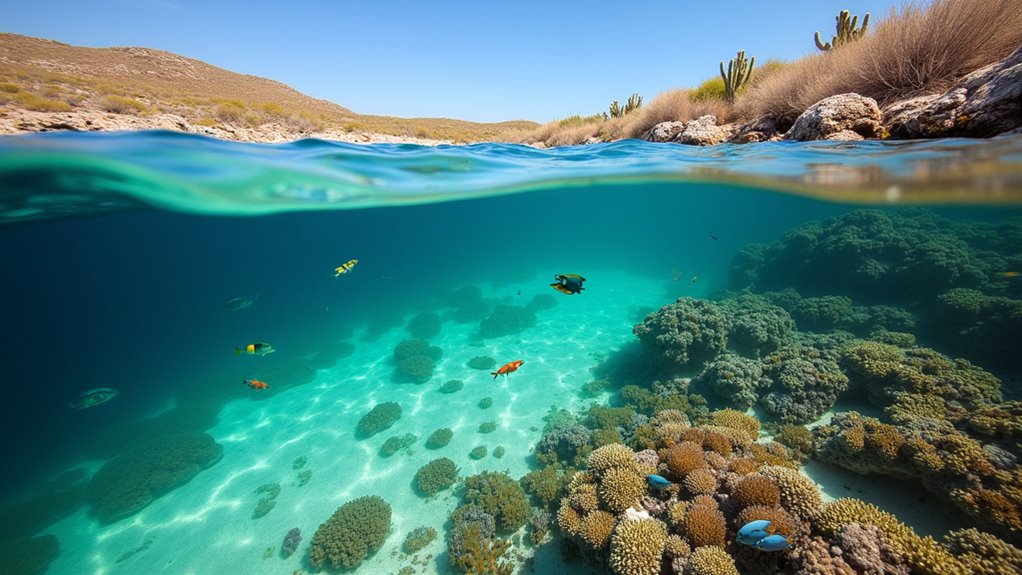
Bonaire earns its reputation as the “Shore Diving Capital of the World” for good reason—you can literally drive up to over 60 dive sites, gear up beside your rental truck, and walk straight into some of the Caribbean’s healthiest coral reefs.
The fringing reef starts just 30 feet from shore, giving you access to 57 coral species and 350+ fish species without expensive boat fees.
You’ll find sites marked by yellow-painted rocks along the coastal road, making navigation foolproof. Many sites feature submerged wayfinders to help guide your underwater exploration. Pay the STINAPA nature fee upfront, then explore classics like 1000 Steps for turtles, Salt Pier for tarpon, or the accessible Hilma Hooker wreck.
With 100-foot visibility and 80°F water year-round, you’ll maximize your diving budget while experiencing world-class underwater biodiversity.
Hike Mount Brandaris in Washington-Slagbaai National Park
While the underwater world showcases Bonaire’s natural treasures, the island’s highest peak offers equally spectacular views from above sea level. Mount Brandaris stands at 791 feet within Washington-Slagbaai National Park, accessible via the Subí Brandaris Trail. You’ll need a STINAPA nature tag and about two hours total for this medium-difficulty hike.
The trail starts easy but becomes steep and rocky in the final third, requiring scrambling over boulders. Wear sturdy hiking boots and bring at least one liter of water per person – there’s no shade and strong winds at the summit. Start early to avoid midday heat.
The 360-degree views reward your effort, showcasing Gotomeer, Boca Slagbaai, and the entire park spanning 20% of Bonaire’s landscape. From the summit, you can spot Curaçao and Venezuela on clear days, making the challenging climb even more worthwhile.
Windsurf at Lac Bay’s Sorobon Beach
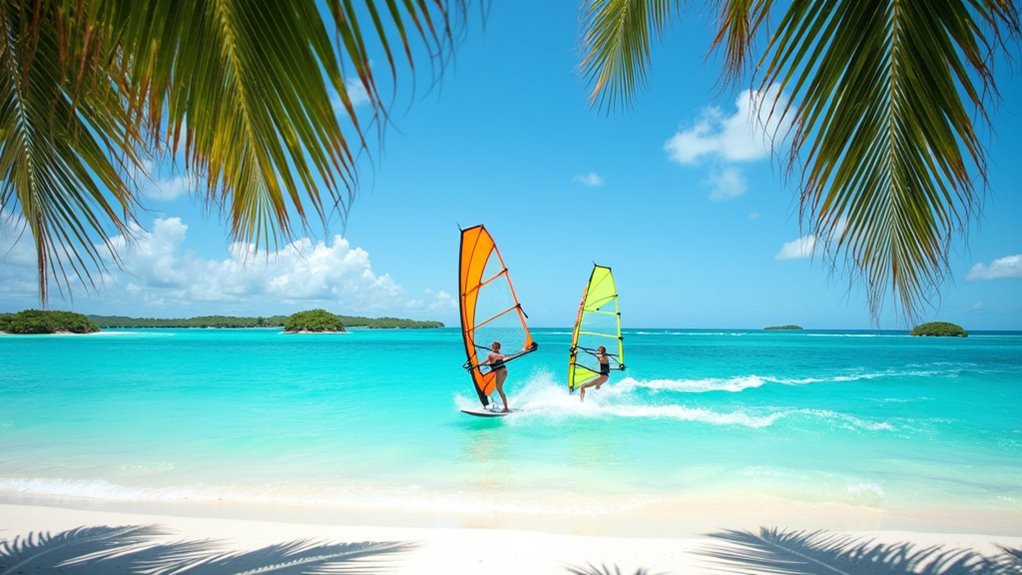
Few places in the Caribbean can match Lac Bay’s Sorobon Beach for windsurfing excellence. You’ll find yourself in a protected lagoon with shallow, turquoise waters perfect for all skill levels. The knee-deep sections near shore let beginners practice safely, while waist-deep areas help intermediates master planing and jibes. Advanced sailors can head toward the reef for stronger winds and chop.
You’ll catch reliable trade winds about 90% of the time, typically 15-25 knots during peak season from January through August. The warm 28°C water means you won’t need thick wetsuits. Multiple windsurf centers on the beach offer rentals and lessons, making it budget-friendly to get started.
World-class freestylers train here regularly—that’s how good the conditions are. The mangroves area provides perfectly flat water conditions that make it a freestyle paradise for those looking to perfect their moves.
Visit the Flamingo Sanctuary at Pekelmeer
Only four places on Earth serve as flamingo breeding grounds, and Bonaire’s Pekelmeer sanctuary ranks among the most spectacular. You’ll find over 10,000 American flamingos in these hypersaline lagoons during peak season, creating an unforgettable pink spectacle against turquoise Caribbean waters.
Drive the scenic southern loop road past Cargill’s salt works to reach designated viewpoints—the sanctuary interior’s off-limits to protect nesting birds. Bring binoculars and a telephoto lens since you’ll be viewing from a distance.
January kicks off breeding season when thousands form colonies and build distinctive mud-tower nests. The sanctuary also serves as an important stopover for migratory birds traveling through the Caribbean region.
Your visit typically takes under an hour, making it perfect for combining with nearby salt flats and historic slave huts. This Ramsar-listed wetland offers world-class birdwatching without breaking your budget.
Explore Caves With Go Caving Bonaire
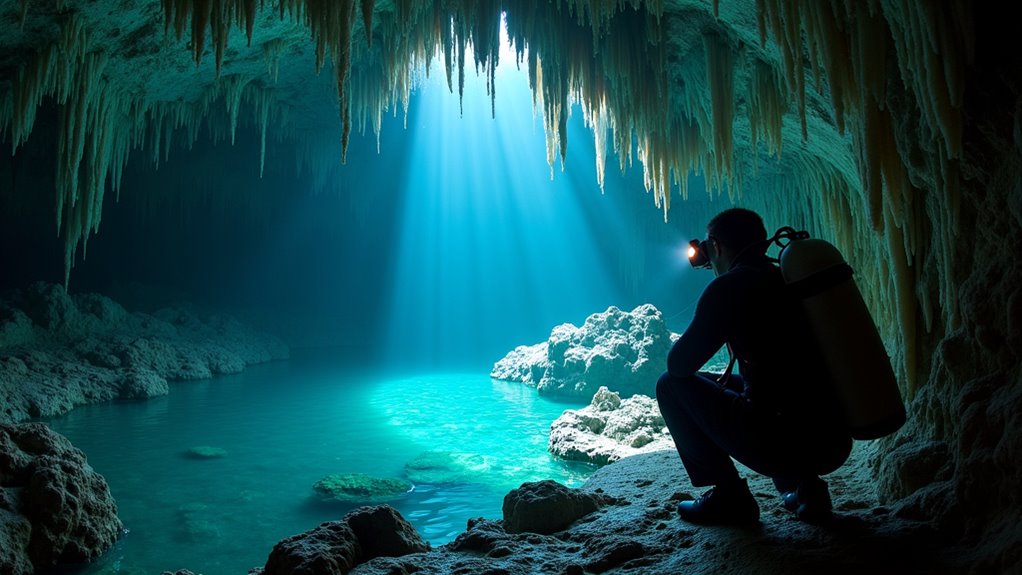
Since Bonaire sits atop ancient coral reefs, the island’s limestone foundation has created an intricate underground world that Go Caving Bonaire opens up through guided three-hour adventures.
You’ll explore two distinct caves—a dry coral cave with stalactites and stalagmites, plus a wet cave requiring snorkeling through underground pools.
These tours aren’t for everyone. You’ll climb 15-foot ladders, crawl through tight spaces, and scramble over slippery rocks.
The wet caves demand comfort in deep water for short underwater swims between chambers.
Certified guides keep groups small while teaching you about Bonaire’s geological history and cave ecosystems. Tours start at the Zhun Kong Supermarket parking lot, making it easy to locate your meeting point.
Operating Friday through Tuesday, these Travelers’ Choice adventures cost around $75 per person.
Bring sturdy shoes, swimwear, and decent fitness levels for this strenuous eco-adventure.
Kayak Through the Mangrove Forests
Forty-seven species of birds call Bonaire’s Lac Bay mangroves home, making kayak tours through these protected wetlands one of the island’s most rewarding eco-adventures. You’ll paddle through narrow tunnels formed by interlocking root systems while spotting juvenile fish, crabs, and sea turtles in crystal-clear shallow waters.
Standard one-hour tours cost around $35 and focus on main channels, while two-hour excursions ($55-65) include snorkeling segments beneath mangrove overhangs. Night tours offer bioluminescence viewing as your paddle creates glowing trails in the water.
Eco-friendly operators like the Mangrove Information Center use quiet kayaks and employ STINAPA-certified naturalist guides. Tour revenue supports local wildlife rehabilitation. The mangroves also serve as vital nursery habitats for queen conch shells, baby rays, lobsters, and seahorses.
You’ll need marine park tags ($45 annually) and reef-safe sunscreen to protect this RAMSAR-designated international wetland.
Meet the Donkeys at Bonaire’s Sanctuary
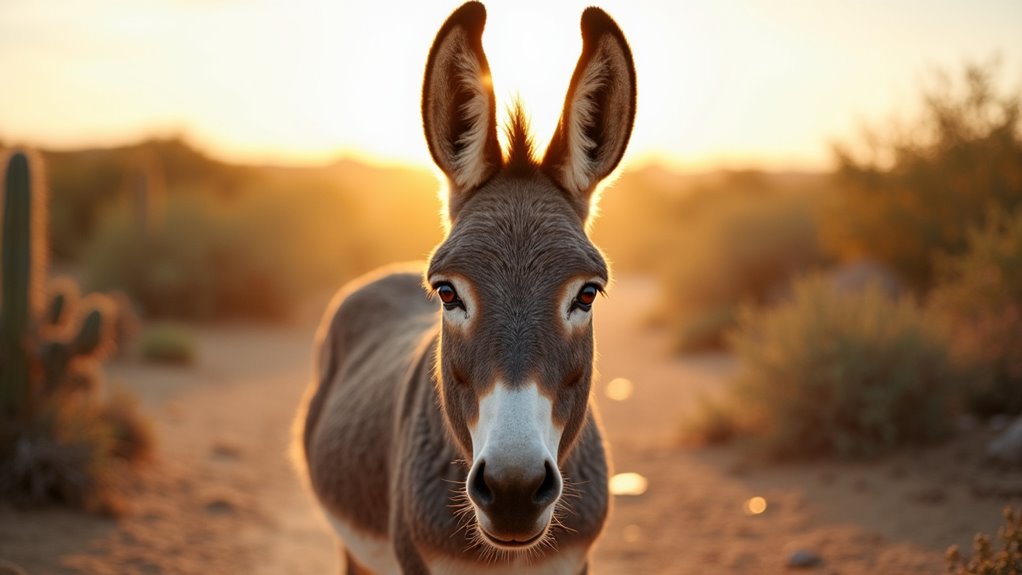
After exploring Bonaire’s natural waterways, you can discover another heartwarming side of the island at the Donkey Sanctuary Bonaire. Founded in 1993, this sanctuary provides a forever home for 700-800+ rescued donkeys just outside Kralendijk.
You’ll drive through the large park observing herds up close, with designated areas for seniors, mothers with foals, and special-needs animals. The visit typically takes 1-1.5 hours and costs around $9 per adult. You can purchase carrots on-site to feed the donkeys in designated zones. The donkeys often approach visitors and love to be petted, creating unforgettable interactions during your drive through the park.
The sanctuary operates 24/7 rescue services and relies on entrance fees and donations for funding. Plan your visit between 10:00-16:00, with last admission at 15:00. It’s an easy addition to any island tour.
Walk the Historic Salt Flats and Slave Huts
Eight preserved slave huts along Bonaire’s southern coast offer a sobering glimpse into the island’s salt production history from the 17th to 19th centuries. You’ll find these small coral stone structures near Pekelmeer and along EEG Boulevard, built in 1850 as overnight shelters for enslaved workers. Notice they’re less than five feet high with no windows—each housed up to six people during peak harvest seasons.
The color-coding tells a story: white huts mark the white salt pans, while ocher yellow ones indicate red salt areas. You can walk this historic site for free, following the coastal strip where 500 enslaved laborers once endured brutal conditions harvesting salt under intense sun. Workers lived with their families in Rincon and walked seven hours back to the salt pans on Fridays to spend weekends together.
The nearby obelisks served as navigation markers for salt-carrying ships.
Wander Kralendijk’s Colorful Waterfront
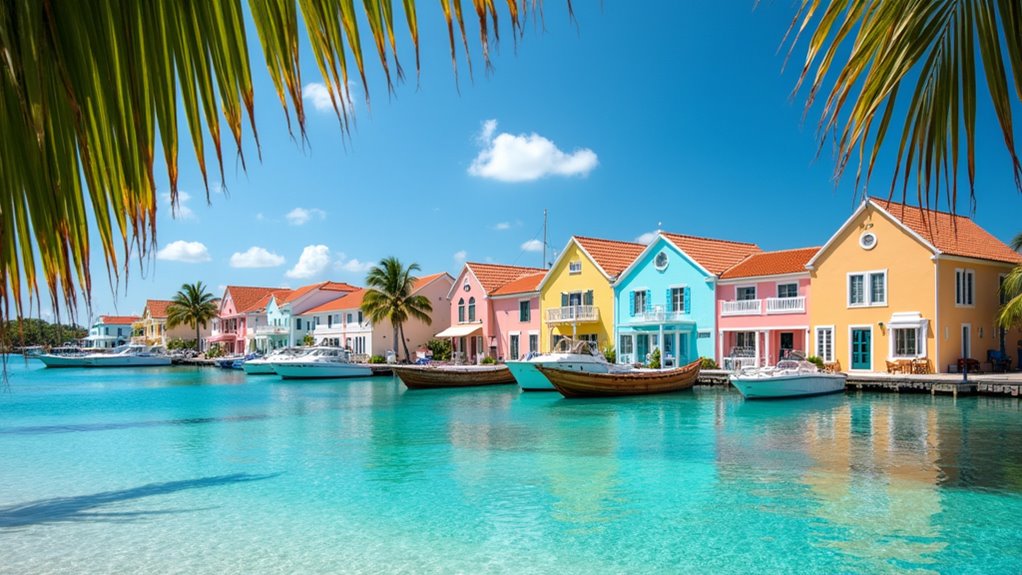
From Bonaire’s rural salt flats, head north to discover Kralendijk’s vibrant waterfront district, where pastel Dutch-Caribbean buildings create one of the Caribbean’s most photogenic town centers.
You’ll find bright yellows, pinks, blues, and greens lining Kaya Grandi and the seafront promenade, with Fort Oranje anchoring the compact harbor area.
The flat, walkable terrain makes wandering effortless as you explore street art, colonial architecture, and waterfront cafés.
Karel’s Beach Bar and similar venues offer affordable drinks with harbor views, while local shops along Kaya Grandi sell souvenirs and crafts.
Don’t miss sunset from the quay—the western orientation provides unobstructed views over the Caribbean Sea toward Klein Bonaire.
The relaxed atmosphere and cooling trade winds make this perfect for casual afternoon exploration. For a cultural stop, visit the Terramar Museum to learn about Bonaire’s indigenous and maritime heritage.
The Sum Up
You don’t need a huge budget to experience Bonaire’s best attractions. Most activities like hiking, walking the salt flats, and visiting the donkey sanctuary won’t cost you much. Pack your own snorkeling gear if you’ve got it, and consider renting a bike instead of a car to explore the island affordably. With its incredible natural beauty and diverse activities, you’ll easily fill several days without breaking the bank on this Caribbean gem.