
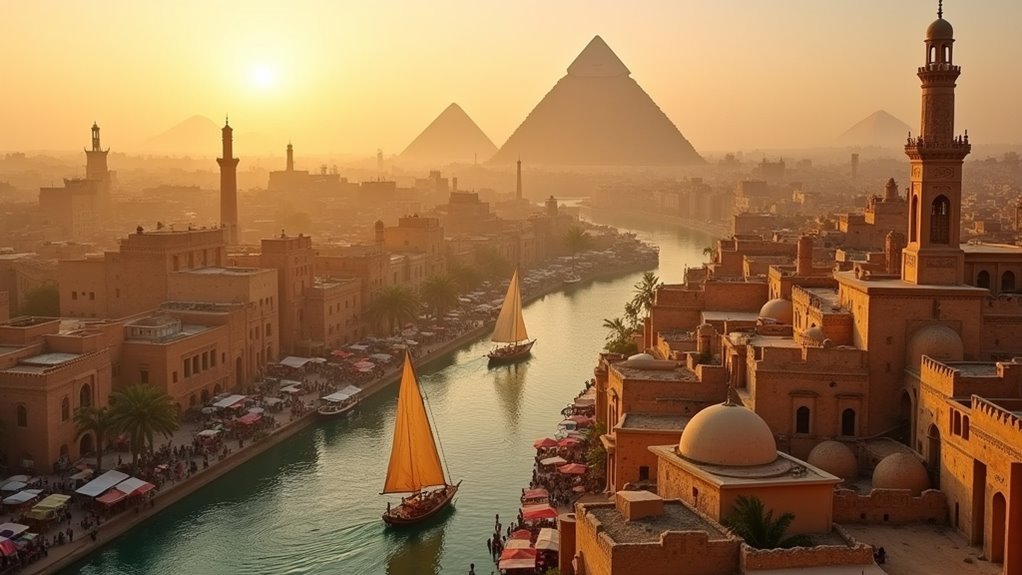
You’re standing at the crossroads of ancient and modern civilizations, where pharaohs once ruled and Islamic dynasties left their architectural masterpieces. Cairo isn’t just another tourist destination—it’s a living museum where you’ll witness humanity’s greatest achievements firsthand. From the last surviving Wonder of the Ancient World to hidden Christian treasures tucked away in winding streets, this city will challenge everything you thought you knew about Egypt’s legendary past.
- Stand Before the Great Pyramid of Khufu at Dawn
- Explore the Grand Egyptian Museum’s Tutankhamun Galleries
- Get up Close With the Great Sphinx
- Marvel at Ramses II’s Colossal Statue in GEM’s Great Hall
- Discover the Khufu Solar Boat at the Grand Egyptian Museum
- Visit the Royal Mummies Hall at the Egyptian Museum in Tahrir
- Watch Sunset From the Citadel of Saladin’s Main Terrace
- Step Inside the Alabaster Mosque of Muhammad Ali
- Bargain for Brass Lanterns in Khan El-Khalili Bazaar
- Walk the Historic Al-Muizz Street Open-Air Museum
- Climb to the Hanging Church in Coptic Cairo
- See Ancient Coptic Treasures at the Coptic Museum
- Explore Abu Serga Church Where the Holy Family Stayed
- The Sum Up
Stand Before the Great Pyramid of Khufu at Dawn
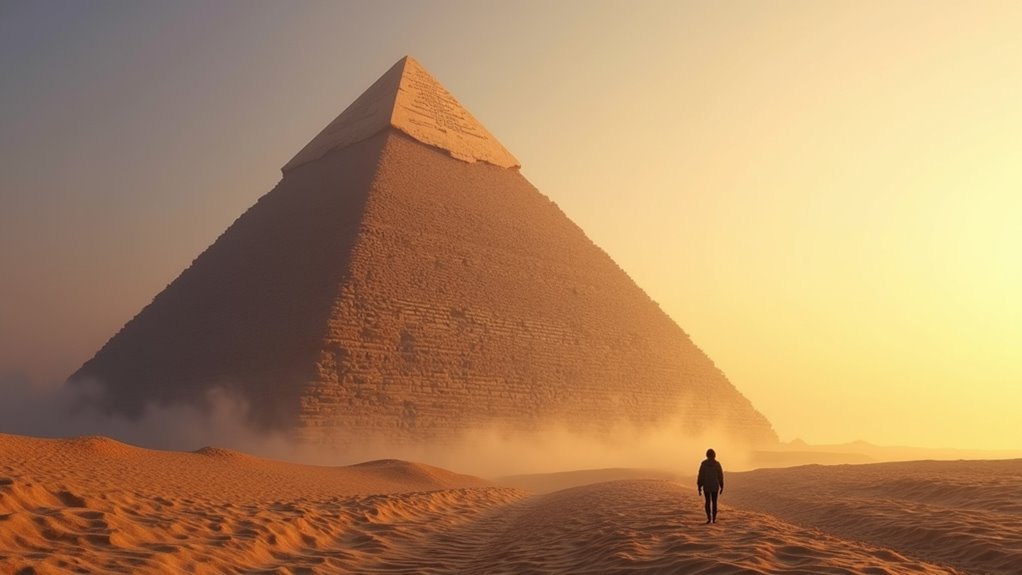
As dawn breaks over the Giza Plateau, you’ll witness one of humanity’s most extraordinary achievements emerge from the desert shadows. The Great Pyramid of Khufu towers 455 feet above you, its limestone blocks warming under golden sunrise hues.
You’ll appreciate the monument’s incredible precision—side lengths differ by mere inches, with slopes angled at exactly 51°50’40“.
Arrive early to avoid crowds and experience the pyramid’s contemplative atmosphere. The softer morning light reveals remnants of original casing stones, showcasing ancient construction techniques.
You’re standing before 2.3 million blocks, some weighing 50 tons, that held the record as humanity’s tallest structure for 4,000 years. This architectural marvel houses three distinct chambers, including the King’s Chamber with its granite sarcophagus that once held Khufu’s remains. Dawn here carries spiritual significance, symbolizing rebirth and the rising sun god Ra—making your visit profoundly meaningful.
Explore the Grand Egyptian Museum’s Tutankhamun Galleries
Where else can you witness the complete treasure of history’s most famous pharaoh displayed together for the first time? The Grand Egyptian Museum’s Tutankhamun Galleries showcase all 5,398 artifacts from the boy king’s tomb across 7,000 square meters of immersive exhibition space.
You’ll journey through Tutankhamun’s life, death, and afterlife as you ascend and descend between levels. Marvel at his golden funerary mask, nested shrines, gilded coffins, and ceremonial chariots—all meticulously conserved using cutting-edge technology. Digital projections and interactive storytelling bring ancient Egypt to life around you.
The galleries don’t just display artifacts; they tell layered stories of royal upbringing, kingship, and religious beliefs. You’ll discover domestic objects like toys and musical instruments that reveal daily palace life, creating an emotional connection to this legendary pharaoh. The museum overlooks the Giza Plateau and is set to become the world’s largest archaeological museum.
Get up Close With the Great Sphinx
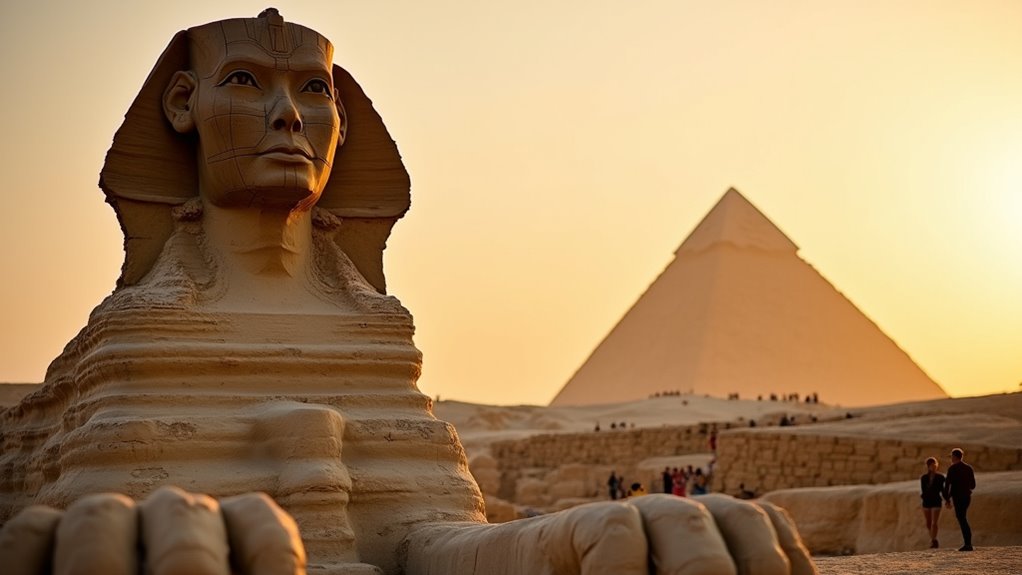
Just 8 kilometers west of downtown Cairo, you’ll find yourself face-to-face with ancient Egypt’s most enigmatic guardian. The Great Sphinx towers 66 feet above the Giza Plateau, its limestone form stretching 240 feet from paw to tail.
Dating back 4,500 years to King Khafre’s reign, this monolithic marvel was carved from a single limestone ridge and originally painted in vibrant colors. As a powerful symbol of divine kingship, it combines the lion’s body representing strength with the human head symbolizing intelligence, creating the perfect spiritual balance between wisdom and animal power.
You’ll be amazed by the craftsmanship—imagine 100 workers spending three years with simple stone hammers and copper chisels creating this masterpiece.
Don’t miss the 35-foot space between its paws, where an ancient altar once stood.
Book a guided tour from Cairo for easy access, and prepare to stand before one of humanity’s most mysterious monuments.
Marvel at Ramses II’s Colossal Statue in GEM’s Great Hall
When you step into the Grand Egyptian Museum’s Great Hall, you’ll come face-to-face with one of ancient Egypt’s most awe-inspiring treasures—a colossal 30-foot limestone statue of Pharaoh Ramses II that weighs an astounding 83 tons. This 3,200-year-old masterpiece sits majestically in a pool of water, creating dramatic lighting effects as sunrays illuminate the pharaoh’s features throughout the day.
You’ll witness royal symbolism carved in stone, representing one of Egypt’s most powerful rulers known for military conquests and monumental constructions. The statue’s journey to this spectacular setting involved its fourth relocation in millennia, transported here in 2018 with ceremonial fanfare.
This incredible centerpiece perfectly introduces you to the museum’s 100,000 artifacts, embodying the grandeur of Egypt’s pharaonic legacy. Similar monumental statues from Egypt’s Middle Kingdom period demonstrate the enduring tradition of colossal royal sculpture that spanned millennia of pharaonic rule.
Discover the Khufu Solar Boat at the Grand Egyptian Museum
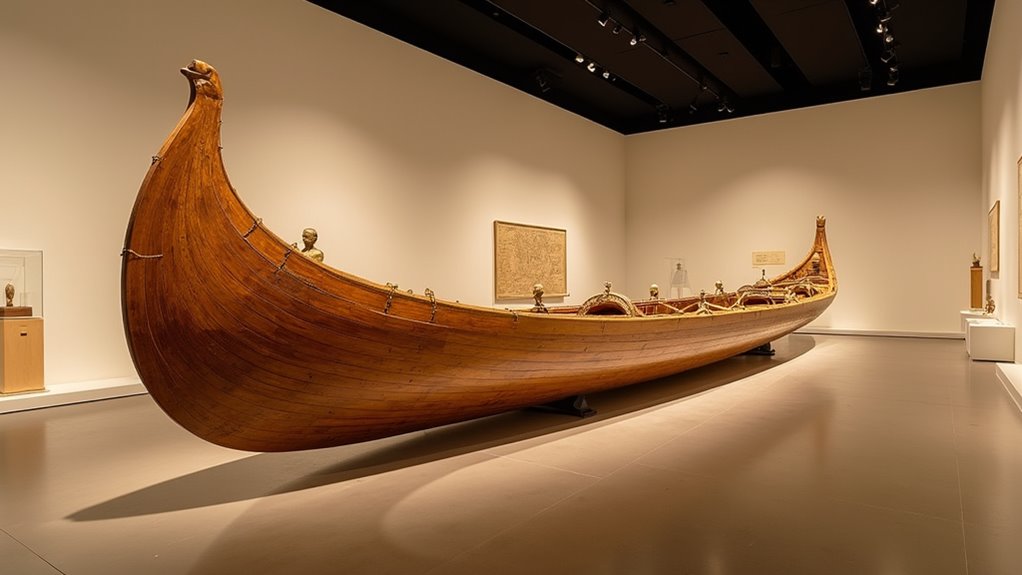
As you move deeper into the Grand Egyptian Museum, you’ll encounter one of archaeology’s most extraordinary discoveries—the 4,600-year-old Khufu Solar Boat, a magnificent 142-foot cedar vessel that once served as Pharaoh Khufu’s divine chariot to the afterlife.
This masterpiece of ancient woodcraft was discovered in 1954, buried in 1,224 pieces beneath massive limestone blocks near the Great Pyramid. What’s remarkable is its construction—built entirely without nails using precise joinery techniques that still astound engineers today.
The boat’s purpose wasn’t merely decorative. Ancient Egyptians believed it would carry Khufu alongside the sun god Ra across the heavens and through the underworld. The vessel’s journey to the museum was an engineering feat in itself, transported in a shock-absorbing container over ten hours to protect this irreplaceable artifact.
You’re viewing a vessel so perfectly preserved it could still float today, representing humanity’s oldest surviving example of sophisticated naval architecture and spiritual engineering combined.
Visit the Royal Mummies Hall at the Egyptian Museum in Tahrir
From the Grand Egyptian Museum’s modern marvels, you’ll want to experience something equally extraordinary at the National Museum of Egyptian Civilization in Old Cairo.
There, the Royal Mummies Hall houses the preserved remains of Egypt’s most legendary pharaohs. You’ll walk through an underground, dimly lit circular hall that recreates the Valley of the Kings experience.
The state-of-the-art climate-controlled environment protects 20 royal mummies, including Ramses II, Thutmose III, and Queen Hatshepsut. These mummies are displayed chronologically with their original artifacts.
The multimedia light show and pharaonic music create an atmospheric journey without damaging these 3,000-year-old treasures.
You’ll see detailed x-rays revealing ancient ailments alongside coffins, funerary furniture, and personal belongings that showcase how these rulers prepared for eternal life. Many of these royal mummies were originally discovered in Luxor cache sites during archaeological excavations in the late 19th century.
Watch Sunset From the Citadel of Saladin’s Main Terrace
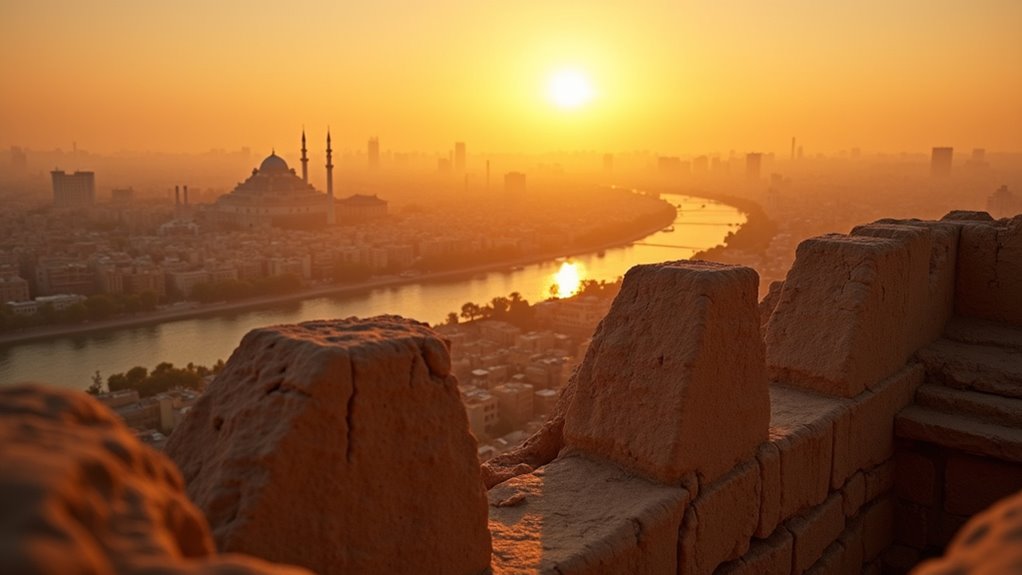
After exploring Cairo’s ancient treasures, you’ll want to catch one of the city’s most breathtaking views from the Citadel of Saladin’s main terrace.
Perched 70-80 meters above the city on Muqattam Hills, this medieval fortress offers unobstructed panoramic views of Cairo’s sprawling landscape.
You’ll witness the sun descending behind silhouettes of minarets and domes, with the iconic Muhammad Ali Mosque creating dramatic profiles against the sky.
The terrace showcases both old Cairo’s historic quarters and modern urban areas, highlighting the city’s fascinating contrasts. This historic fortress served as Egypt’s primary seat of power for over seven centuries.
Arrive at least 30 minutes before sunset (typically 5-7 PM depending on season) to secure prime viewing spots.
The elevated position reduces city noise, creating a surprisingly tranquil setting for photography and peaceful observation as daylight transforms into dusk.
Step Inside the Alabaster Mosque of Muhammad Ali
Towering above Cairo’s skyline within the Citadel walls, the Alabaster Mosque of Muhammad Ali commands attention with its massive central dome and twin 84-meter minarets—the tallest in Egypt. You’ll immediately notice why it’s called the Alabaster Mosque—gleaming Egyptian marble panels cover the interior walls up to 11 meters high and clad the courtyard’s lower levels.
Step inside to witness the largest marble pulpit in Egypt, adorned with gilt and crystal details. Look up through more than 136 stained glass windows that flood the space with colored light. The mosque serves as an active place of worship, particularly bustling with spiritual energy during Friday prayers and the holy month of Ramadan.
Don’t miss Muhammad Ali Pasha’s white marble tomb near the entrance. This Ottoman-style masterpiece, completed in 1848, represents Egypt’s bold departure from traditional Mamluk architecture and Muhammad Ali’s vision of a modern, autonomous Egypt.
Bargain for Brass Lanterns in Khan El-Khalili Bazaar
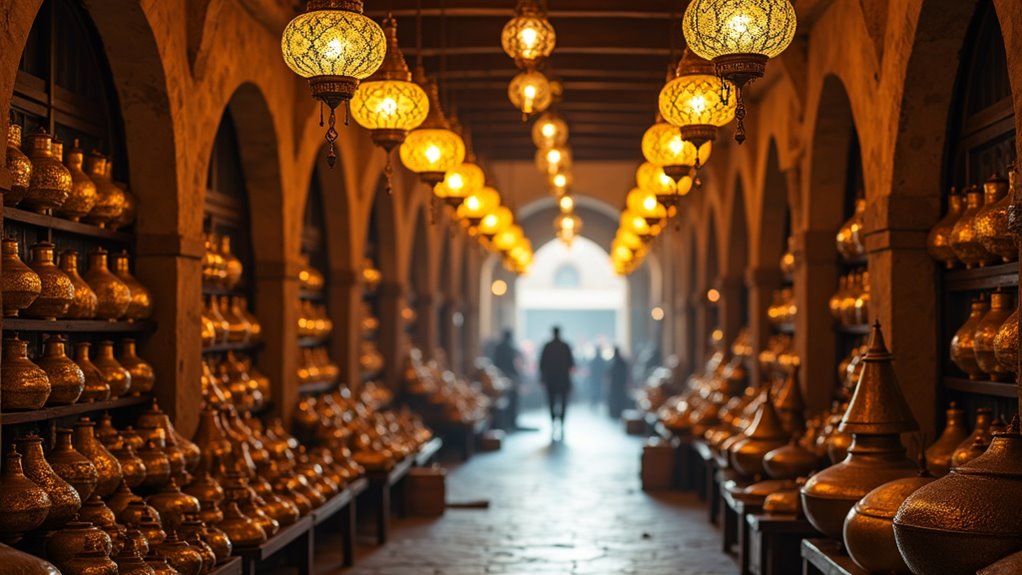
Head to the Bab al-Ghuri gate area for the best selection of quality lanterns.
Expect initial prices around 200-800 EGP, but don’t accept the first quote—vendors typically start much higher than locals pay. Polite bargaining can slash prices by 30-50%. Walk away if needed; sellers often call you back with better offers.
Check electrical compatibility before buying, and examine craftsmanship carefully since quality varies dramatically from tourist trinkets to heirloom pieces. Many lanterns are crafted by local artisans who preserve traditional metalworking techniques passed down through generations.
Walk the Historic Al-Muizz Street Open-Air Museum
While Khan El-Khalili buzzes with commerce, Al-Muizz Street transports you through a thousand years of Islamic architecture in what’s fundamentally the world’s largest open-air museum. You’ll walk the same route that served as medieval Cairo’s main artery since 970 CE, stretching from Bab al-Futuh to Bab Zuweila.
Don’t miss the Qalawun Complex and Al-Hakim Mosque, showcasing intricate Mamluk stonework and Fatimid grandeur. The pedestrian-friendly street lets you appreciate detailed woodwork and ornate façades without dodging traffic.
Visit Bayn al-Qasrayn, the historic plaza between former Fatimid palaces, where caliphs once ruled. The street comes alive at night when lighting enhancements beautifully illuminate the historic monuments.
Plan two to three hours to properly explore the monuments spanning Fatimid, Ayyubid, Mamluk, and Ottoman periods. You’re walking through UNESCO-protected Historic Cairo at its finest.
Climb to the Hanging Church in Coptic Cairo
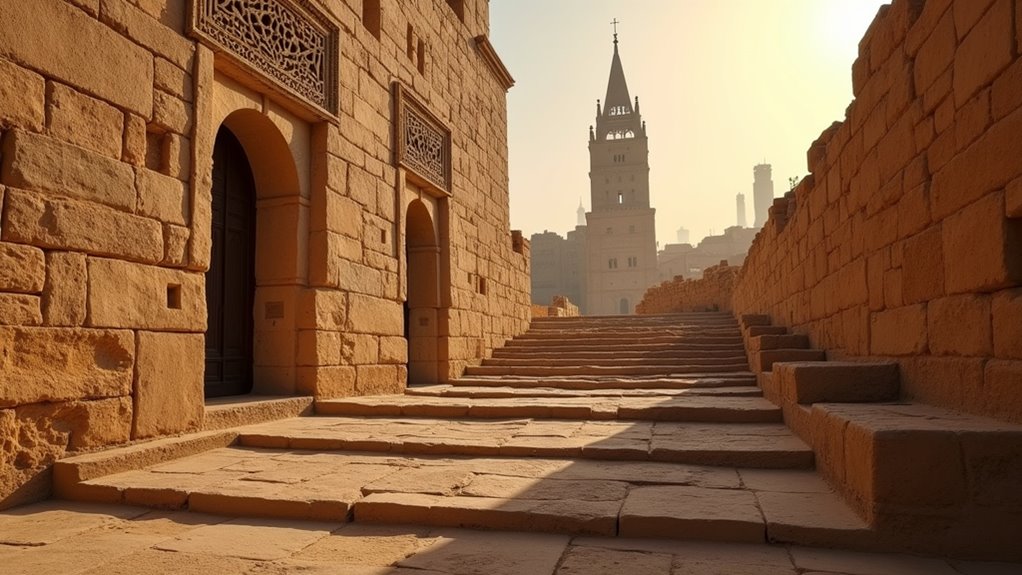
Stepping into Coptic Cairo feels like entering a different world entirely, where ancient Christian heritage predates the Islamic monuments by centuries. You’ll find the Hanging Church (Al-Muallaqa) perched atop the Roman Babylon Fortress, earning its name from being “suspended” over an ancient passage.
Climb the 29 steps to reach this architectural marvel that’s among Egypt’s oldest churches, dating back to the 3rd century.
Inside, you’ll discover intricate Coptic icons, carved ivory screens, and a distinctive ship-hull ceiling symbolizing Noah’s Ark. Don’t miss the glass floors revealing Roman fortress ruins below.
The marble pulpit sits on 15 Islamic columns, showcasing the cultural blend that defines Cairo. This former papal residence offers an essential glimpse into Egypt’s rich Christian history. The church houses 110 icons spanning centuries, including the famous 8th-century “Coptic Mona Lisa” alongside numerous religious artworks depicting saints and biblical scenes.
See Ancient Coptic Treasures at the Coptic Museum
After exploring the Hanging Church, you’ll want to explore more deeply into Egypt’s Christian heritage at the nearby Coptic Museum. The museum is the world’s largest collection dedicated exclusively to Coptic artifacts. You’ll discover approximately 16,000 treasures spanning from the 3rd to 19th centuries, with about 1,200 masterpieces on display.
Don’t miss the remarkable sanctuary screen from Saint Barbara Church and “Jeremiah’s Pulpit” from Saqqara Monastery. You’ll see stunning frescoes depicting biblical scenes, intricate woodwork, and over 6,000 ancient papyri including the famous Nag Hammadi codices.
The museum’s chronological layout helps you understand how Coptic art uniquely blends Egyptian, Greek, Roman, and Byzantine influences. The institution was established by Marcus Simaika Pasha, who played a key role in preserving Egypt’s Coptic heritage. Located within Babylon Fortress‘s ancient walls, you’re experiencing centuries of Egyptian Christian history in one extraordinary location.
Explore Abu Serga Church Where the Holy Family Stayed
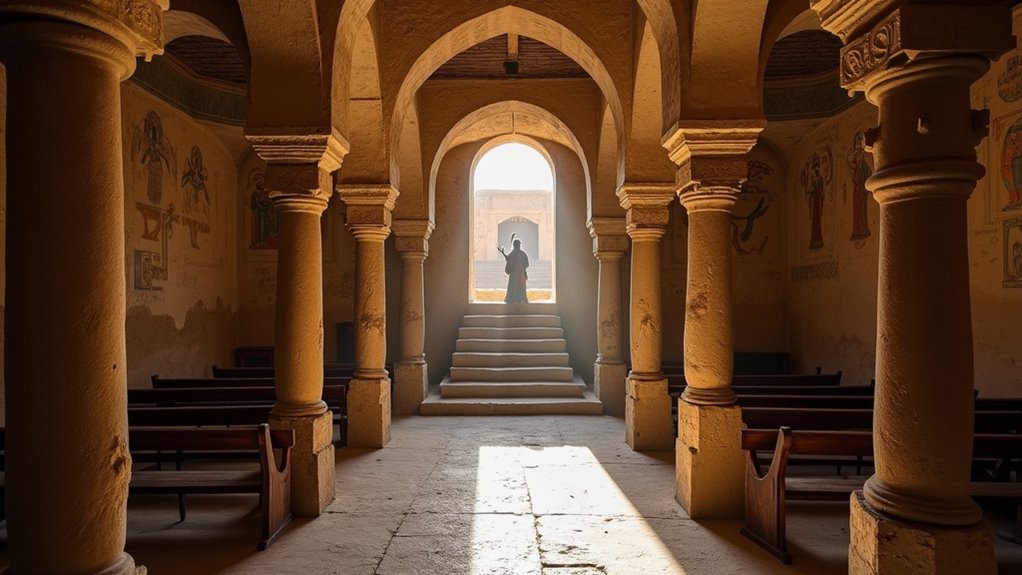
Where can you stand in the exact spot where the Holy Family once rested during their Flight into Egypt? You’ll find this sacred location at Abu Serga Church, one of Cairo’s oldest Coptic churches dating to the 4th century.
Descend into the crypt 10 meters below ground level, where Mary, Joseph, and infant Jesus reportedly stayed for three years in what was then a cave.
You’ll see the stone where Jesus is believed to have slept and the well the Holy Family used for water. This basilica-style church features stunning Corinthian columns and marble architecture that’s survived centuries of restoration. The church was named after Saints Sergius and Bacchus, Roman soldiers who were martyred under Emperor Maximian.
Don’t miss visiting on June 1st when Copts commemorate the Holy Family’s arrival. It’s an active pilgrimage site that connects you directly to Egypt’s profound Christian heritage.
The Sum Up
You’ve got an incredible journey ahead exploring Cairo’s timeless treasures. From standing in awe before ancient pyramids to wandering through bustling bazaars, each experience will leave you amazed. Don’t rush—take time to absorb the history surrounding you. Whether you’re marveling at Tutankhamun’s gold or getting lost in Islamic Cairo’s winding streets, you’ll create memories that’ll last forever. Pack comfortable shoes, bring your camera, and prepare to fall in love with this extraordinary city.