
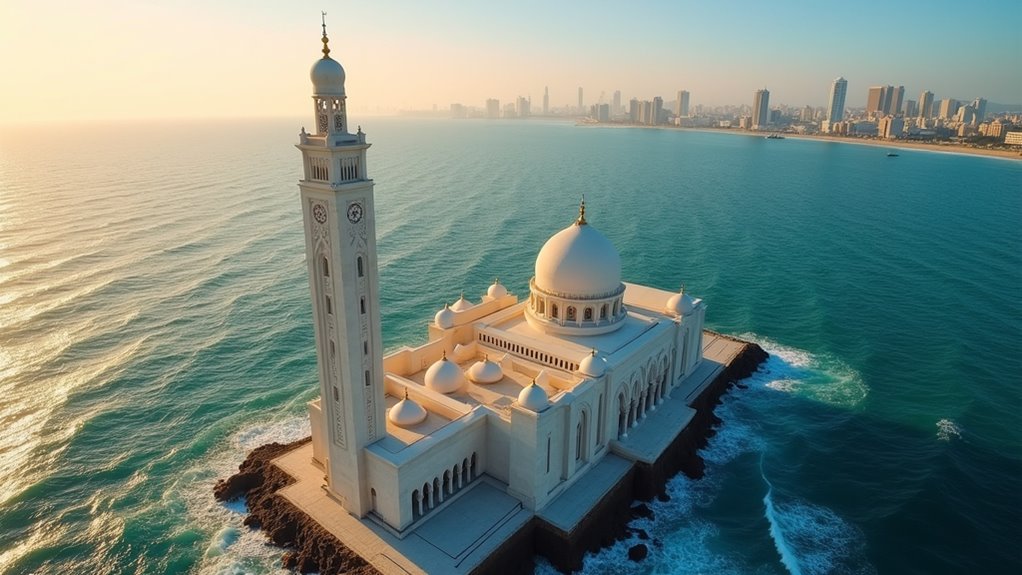
You’ll find Casablanca isn’t just Morocco’s economic powerhouse—it’s a coastal city where French colonial elegance meets authentic Moroccan culture without the tourist crowds of Marrakech. From exploring grand mosques that jut into the Atlantic to wandering through art deco squares and traditional quarters, you can experience Morocco’s modern heart while keeping costs reasonable. The question isn’t whether there’s enough to see, but how you’ll prioritize the unexpected gems waiting around every corner.
- Marvel at Hassan II Mosque’s Ocean-Side Architecture
- Stroll Through Mohammed V Square’s Art Deco Grandeur
- Walk La Corniche and Relax at Ain Diab Beach
- Admire the Royal Palace Gardens and Traditional Tilework
- Escape to Arab League Park’s Green Oasis
- Haggle in the Old Medina’s Traditional Souks
- Explore Habous Quarter’s Andalusian-Moroccan Blend
- Visit Sacred Heart Cathedral’s Cultural Center
- Discover Pasha’s Court’s Historic Administrative Halls
- Experience Casablanca’s Seaside Café Culture
- The Sum Up
Marvel at Hassan II Mosque’s Ocean-Side Architecture
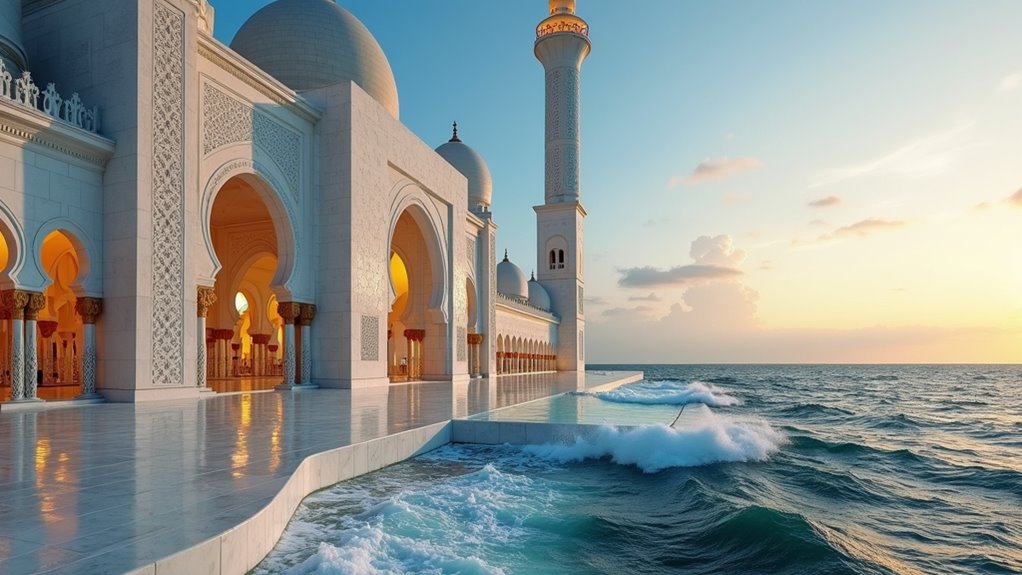
The 210-meter minaret dominates the skyline, shooting a 30-kilometer laser beam toward Mecca each evening. French architect Michel Pinseau’s design blends traditional Moroccan craftsmanship with modern engineering.
You’ll spot intricate zellige tilework, carved stucco, and the mosque’s signature sea green and blue color scheme.
As one of Morocco’s few mosques welcoming non-Muslim visitors, guided tours let you explore this architectural marvel without breaking your budget. The mosque features a remarkable movable roof that opens for ventilation, showcasing innovative engineering alongside its stunning traditional design.
Stroll Through Mohammed V Square’s Art Deco Grandeur
After admiring the Hassan II Mosque‘s stunning oceanfront location, head inland to Mohammed V Square for a completely different architectural experience.
You’ll discover Casablanca’s colonial heart, where French architects blended Art Deco with Moorish Revival styles in the 1920s.
Walk around the square’s perimeter to appreciate the intricate zellij tilework, horseshoe arches, and ornate stucco decorating buildings like the Prefecture and Central Bank of Morocco.
The symmetrical layout creates perfect photo opportunities, especially around the central fountain where pigeons gather—earning it the local nickname “Pigeons’ Square.”
Since it’s free to explore, you can spend hours examining architectural details. The square’s design was inspired by the Place Stanislas in Nancy, France, reflecting the French colonial influence on Casablanca’s urban planning.
The 2020 renovation improved walkability, and you’re perfectly positioned to continue exploring nearby colonial buildings along Mohammed V Boulevard.
Walk La Corniche and Relax at Ain Diab Beach
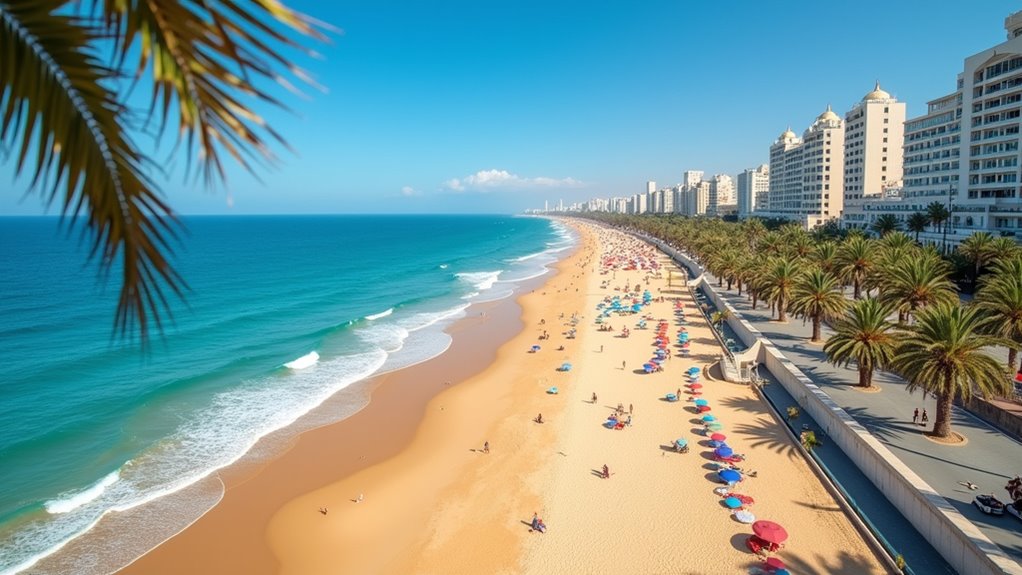
When you’re ready to trade architectural exploration for ocean breezes, head to La Corniche, Casablanca’s stunning 4.1-mile seaside promenade that stretches from the Hassan II Mosque to Ain Diab beach.
You’ll find dedicated walkways, rest areas, and scenic viewpoints along this refurbished coastal route lined with Art Deco buildings and beach clubs.
Take tram Line 2 to La Résidence station for budget-friendly access, then walk 10 minutes to the promenade.
The full walk takes 2-3 hours at a leisurely pace, offering panoramic Atlantic views and access to beachside cafes. The promenade’s design draws inspiration from classic Islamic gardens, creating tiered layers that gracefully connect the city to the seashore.
End at Ain Diab beach, where you can swim in protected seawater pools and sunbathe on the sand.
Visit during late afternoon for cooler temperatures and stunning sunsets.
Admire the Royal Palace Gardens and Traditional Tilework
From Casablanca’s oceanfront, venture inland to discover one of Morocco’s most impressive displays of traditional craftsmanship at the Royal Palace in the Anfa district. While you can’t enter the palace itself, the exterior views are spectacular and completely free.
Focus your attention on the magnificent main gateway with its three horseshoe arches and intricate gold geometric patterns. The elaborate zellij tilework showcases classic Moroccan blues, greens, and whites in mesmerizing symmetrical designs.
You’ll also spot beautiful carved stucco work and ornate woodwork that reflects centuries-old Andalusian and Islamic traditions. This architectural masterpiece was designed by the Pertuzio brothers, who also served as personal architects to King Mohammed V and played a significant role in shaping Casablanca’s urban development.
Visit during morning or late afternoon for the best lighting and photos. Combine your trip with exploring the nearby Habous neighborhood for an authentic cultural experience without spending extra money.
Escape to Arab League Park’s Green Oasis
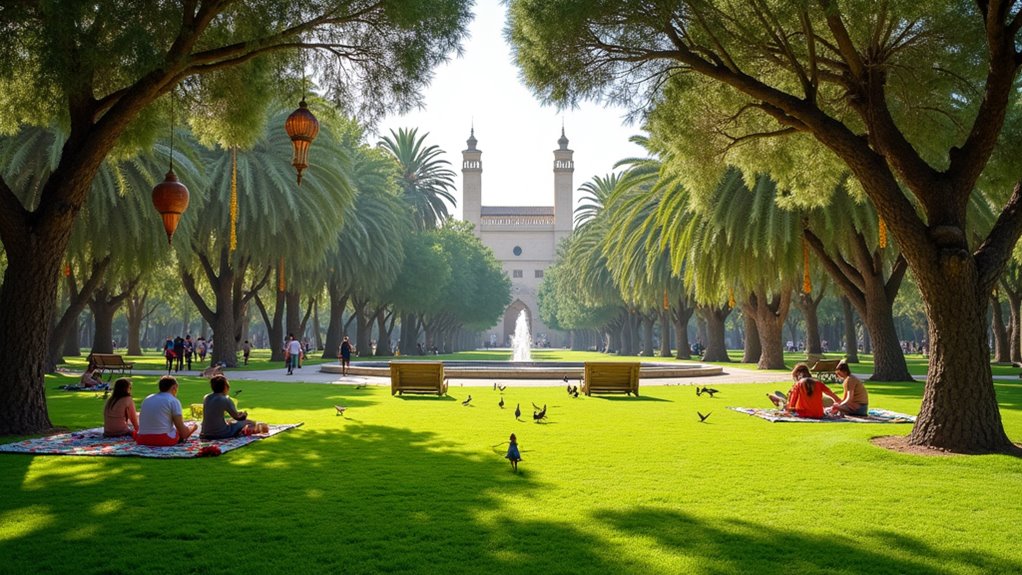
While Casablanca’s concrete sprawl can feel overwhelming, you’ll find respite at Arab League Park, the city’s beloved “green lung” that spans 30 acres in the heart of downtown. Originally designed by French architect Albert Laprade in 1913, this free oasis features palm-lined walkways, ornamental fountains with Arabic tilework, and diverse recreational facilities. The park showcases historic Portuguese prison arches that were relocated by Hubert Lyautey to serve as decorative pergola supports.
You can jog the running paths, play tennis, or simply relax under the shade of date palms.
The park’s central location between Hassan II Boulevard and Roudani Boulevard makes it easily accessible by foot or taxi. Visit on weekday mornings for a quieter experience and less dust.
Bring comfortable shoes for unpaved sections, and consider packing a picnic to enjoy on the terraced areas.
Haggle in the Old Medina’s Traditional Souks
After soaking up nature’s calm, you’ll discover Casablanca’s authentic heartbeat in the Old Medina’s traditional souks. These maze-like alleyways offer a raw, less touristy experience than Marrakech’s organized markets. You’ll find leather goods, spices, handmade ceramics, and fresh tagines at budget-friendly prices.
Haggling isn’t just expected—it’s essential. Start at half the asking price and negotiate respectfully. Merchants enjoy the social exchange, so don’t rush the process. A few Arabic or French phrases will boost your bargaining power.
Explore during daytime for safety and maximum activity. Bring cash for small purchases and sample street food for authentic flavors. The organic layout means you’ll stumble upon hidden artisan workshops producing intricate crafts. Unlike other Moroccan cities, vendors here are less aggressive, creating a more relaxed shopping atmosphere.
This 50-hectare medina preserves centuries-old trading traditions in Casablanca’s historical core.
Explore Habous Quarter’s Andalusian-Moroccan Blend
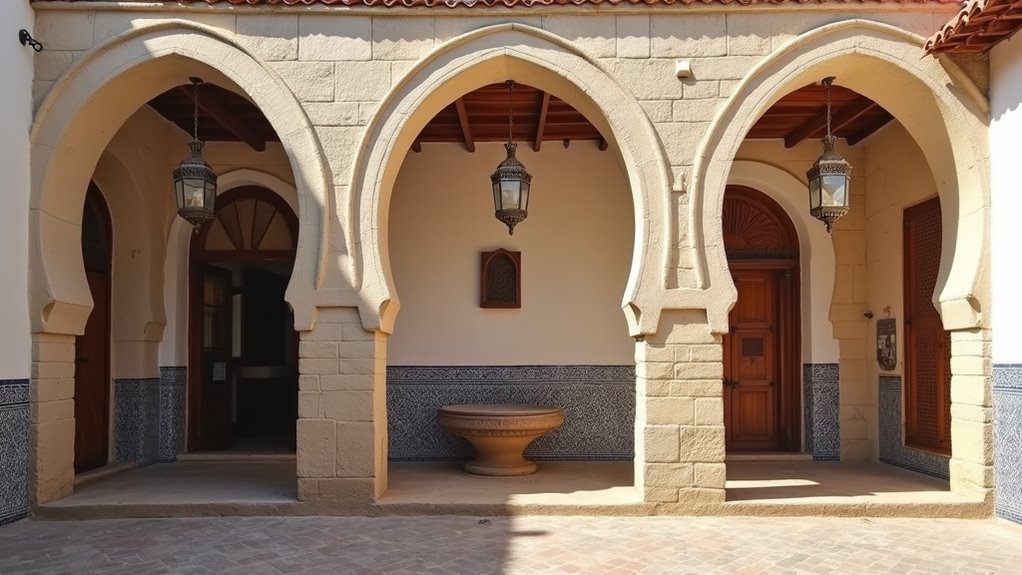
Just south of the bustling city center, you’ll discover the Habous Quarter—a stunning example of colonial-era urban planning that seamlessly blends Andalusian elegance with traditional Moroccan charm.
Built in the 1920s by French architects who studied Moroccan design, this neighborhood offers authentic souks without the aggressive haggling you’ll face in the Old Medina.
Wander the wide pedestrian streets and covered sidewalks to explore traditional riads, mosques, and hammams. Don’t miss the Mahkamat al-Pasha with its turquoise carved doorways and intricate stucco work.
The quarter’s bookstores house important Moroccan publishers, while the bazaars offer genuine souvenirs at reasonable prices. The markets also feature handwoven carpets from various Moroccan tribes alongside pottery from renowned artisan cities like Fez and Safi. It’s perfect for photographers seeking architectural details and history enthusiasts wanting to understand Casablanca’s colonial heritage.
Visit Sacred Heart Cathedral’s Cultural Center
One of Casablanca’s most striking architectural landmarks stands where faith once flourished—the Sacred Heart Cathedral, now transformed into a vibrant cultural center that won’t cost you much to explore. Built in 1930, this former church showcases Paul Tournon’s unique blend of Art Deco and Neo-Gothic styles through white concrete walls and twin towers.
You’ll find the real treasure inside: a stunning stained-glass altarpiece that bathes the nave in colorful light. The building hosts rotating art exhibitions, concerts, and cultural events, usually with free or low-cost entry. Check exhibition schedules before visiting, as access depends on programming.
For an even better perspective, climb up the towers for panoramic views of the sprawling city below. Located beside Arab League Park, it’s perfectly positioned for combining with a stroll through central Casablanca’s colonial district and Mohammed V Square.
Discover Pasha’s Court’s Historic Administrative Halls
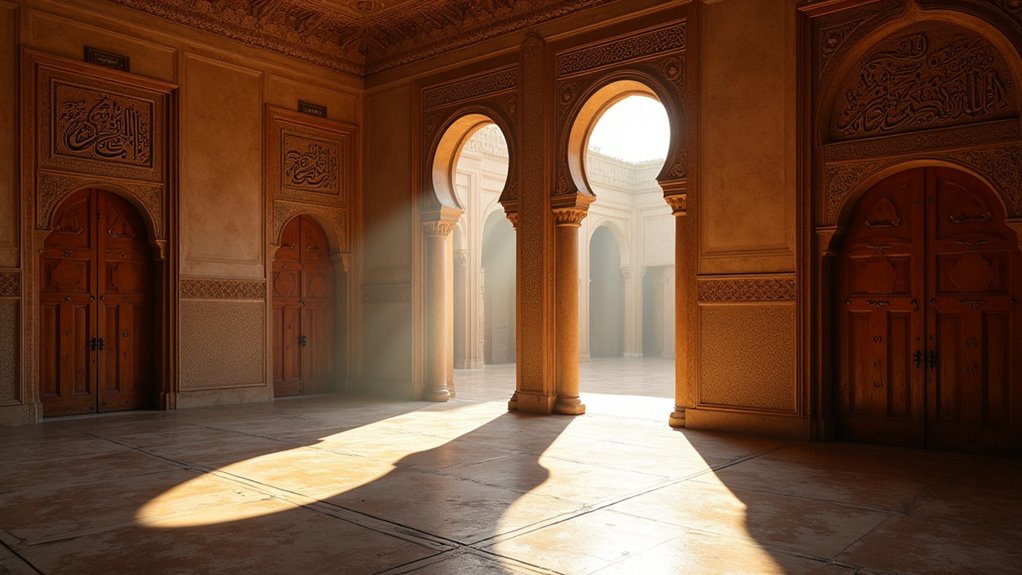
From the colonial grandeur of the cathedral, you can explore another architectural gem that showcases Morocco’s rich administrative heritage—the Mahkama du Pacha in the nearby Habous district. This stunning courthouse, built between 1941-1942, features classical Moorish architecture with intricate zellij tilework, carved cedar ceilings, and ornate courtyards spanning 6,000 square meters.
You’ll need to arrange guided tours or special visits since it’s an active courthouse with restricted access. When you do visit, you’ll discover helix staircases, interconnected archways, and ceremonial halls decorated with traditional Moroccan craftsmanship.
The building’s quiet atmosphere makes it perfect for photography. The complex was commissioned by Pasha At-Tayyib Al-Moqri in 1930, who envisioned a multifunctional administrative center that would serve as courthouse, residence, and parliamentary hall. Located on Boulevard Victor Hugo, it’s easily accessible from other Habous landmarks and offers an authentic glimpse into Morocco’s administrative history without tourist crowds.
Experience Casablanca’s Seaside Café Culture
After exploring Casablanca’s historic architecture, you’ll want to unwind at the city’s vibrant seaside cafés along the Corniche. This scenic coastal roadway offers perfect spots for people-watching while sipping strong Moroccan coffee or sweet mint tea overlooking the Atlantic Ocean.
Head to outdoor terraces where you can enjoy sea breezes and sample light meals like grilled fish, sandwiches, or Moroccan pastries. Le Cabestan stands out for its panoramic ocean views, while Café Maure offers authentic dishes in a historic fortress setting near the medina. Many of these establishments showcase Casablanca’s distinctive Art Deco architecture, reflecting the city’s construction during the French colonial period.
Visit during late afternoon for stunning sunset views, and bring cash since many cafés don’t accept cards. The relaxed atmosphere makes these spots ideal for unwinding after a day of sightseeing, especially on weekday visits when crowds are lighter.
The Sum Up
You’ll find Casablanca’s blend of modern and traditional experiences won’t break your budget. Most attractions like strolling La Corniche, exploring Habous Quarter, and wandering through parks are free. You can admire stunning architecture, soak up café culture, and enjoy ocean views without spending much. Pack comfortable walking shoes and bring your camera – this city’s authentic charm and accessible attractions make it perfect for budget-conscious travelers seeking genuine Moroccan experiences.