
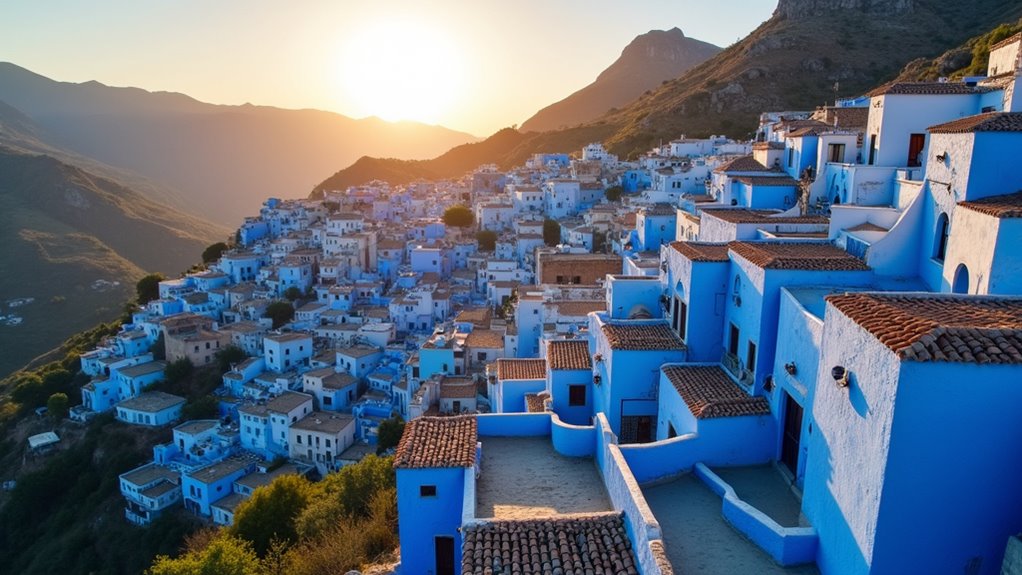
You’ll find Chefchaouen tucked into Morocco’s Rif Mountains, where every corner reveals another shade of blue and every alley holds centuries of Berber and Andalusian history. This isn’t your typical tourist trap—it’s a working mountain town where locals still wash clothes at ancient springs and artisans craft goods their grandparents would recognize. Whether you’re traveling on a shoestring budget or seeking authentic cultural experiences, these nine activities will transform your visit into something beyond the Instagram photos you’ve seen.
- Get Lost in the Blue-Painted Medina Streets
- Relax in Plaza Uta El-Hammam’s Social Hub
- Hike Up to the Spanish Mosque for Sunset Views
- Climb the Kasbah Watchtower for City Panoramas
- Follow the River Walk to Ras El Ma Waterfall
- Browse the Monday and Thursday Markets Outside Town
- Hunt for Hand-Woven Blankets in the Medina Shops
- Sample Goat Cheese and Local Honey at Rooftop Cafes
- Watch Daily Life at the Traditional Washing Stations
- The Sum Up
Get Lost in the Blue-Painted Medina Streets
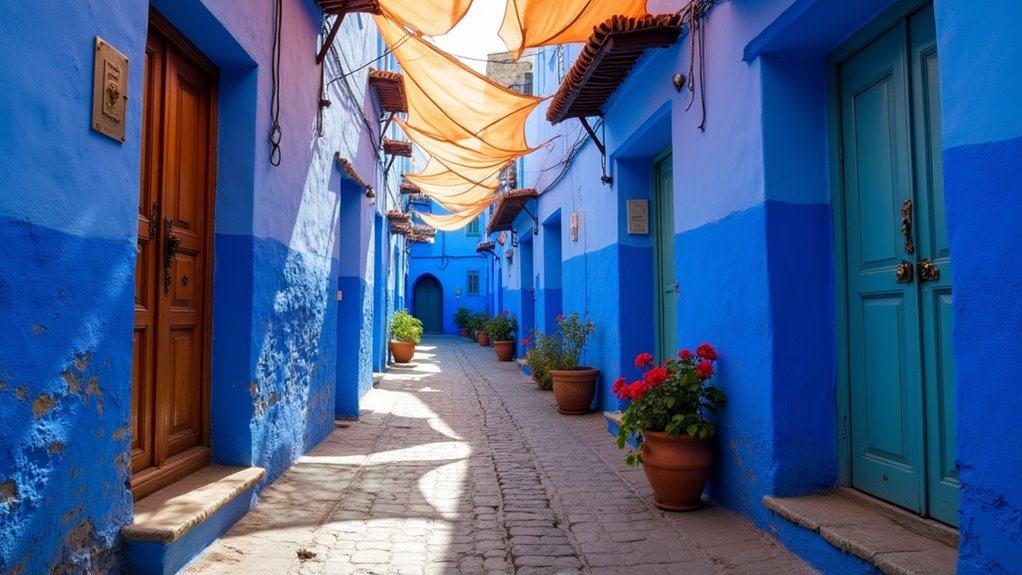
When you step into Chefchaouen’s medina, you’ll find yourself wandering through a mesmerizing labyrinth where every surface glows in shades of blue—from pale sky tones to deep cobalt hues. This tradition began with Jewish refugees in the 1930s, who painted walls blue as spiritual practice representing heaven and divine connection.
You’ll discover the medina’s narrow Andalusian-style lanes are less crowded than Fes or Marrakech, making exploration more relaxed and budget-friendly. Head to Callejón el Asri, the most photographed alley, where blue steps adorned with colorful plants create perfect photo opportunities.
Visit during morning hours for peaceful, nearly empty streets, or return in the afternoon when vendors transform quiet blue backdrops into vibrant marketplaces displaying carpets, spices, and handicrafts. The blue paint also provides practical benefits like repelling mosquitoes and keeping buildings cooler during the hot summer months.
Relax in Plaza Uta El-Hammam’s Social Hub
After wandering the blue-painted alleyways, you’ll naturally find yourself drawn to Plaza Uta El-Hammam, the beating heart of Chefchaouen’s medina. This cobbled square offers the perfect respite from exploring, surrounded by the Grand Mosque’s distinctive octagonal minaret and the historic Kasbah fortress.
Settle into one of the many pavement cafes for mint tea or a traditional tagine while people-watching unfolds around you. The central fountain and shading tree create natural gathering spots where locals and travelers mingle.
Evening hours provide the most atmospheric dining experience as the square comes alive with conversation. This historic space once served as a training ground for riders and martial artists, adding layers of cultural significance to your visit.
Budget tip: Most restaurants offer similar menus at comparable prices, so choose based on seating preference rather than extensive menu comparison. The square’s central location makes it an ideal starting point for exploring the nearby Kasbah Museum and souks.
Hike Up to the Spanish Mosque for Sunset Views
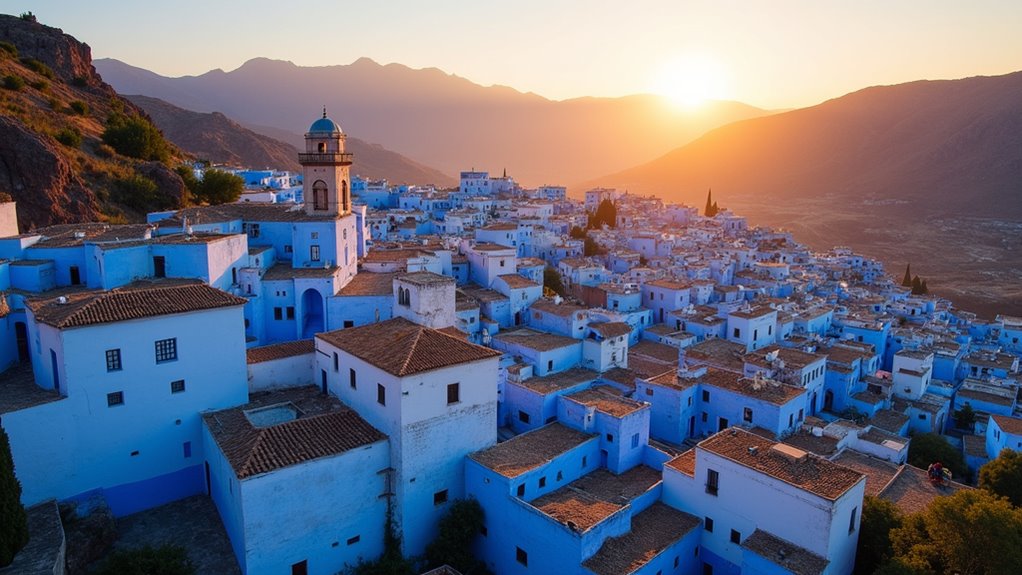
For one of Morocco’s most rewarding short hikes, you’ll want to lace up comfortable walking shoes and tackle the 1.5-kilometer trail to the Spanish Mosque perched above Chefchaouen.
This moderate 45-60 minute uphill trek starts from Plaza Uta el-Hammam, following blue paint marks through paved roads and rocky paths to reach panoramic views of the blue medina and Rif Mountains.
Built during Spanish colonial rule in the 1920s but largely abandoned, this renovated mosque now serves as Chefchaouen’s premier sunset viewing spot.
Pack water and arrive early to avoid crowds—local vendors along the trail offer refreshments while supporting the community. About twenty minutes into your hike, you’ll reach Ras El Ma Spring, a perfect shaded rest spot with cooling water and scenic city views.
The final fifteen minutes involve steep climbs, but the iconic “blue city” photos you’ll capture make every step worthwhile.
Climb the Kasbah Watchtower for City Panoramas
While the Spanish Mosque offers distant views of Chefchaouen’s blue medina, you’ll get an intimate bird’s-eye perspective by climbing the 15th-century Kasbah watchtower right in the heart of the old city.
The narrow spiral staircase requires careful footing as you ascend three stories, but the 360-degree panorama from the crenelated parapet is worth the moderate exertion.
You’ll pay 60-100 MAD for museum and tower access (Moroccan residents enter free). Visit early morning for soft lighting that captures the blue-washed buildings cascading down the mountainside, or arrive during golden hour for atmospheric effects.
The square tower provides exceptional photography opportunities of the iconic medina below, while the surrounding Rif Mountains create a stunning natural backdrop for your shots. The watchtower’s thick defensive walls showcase the fortress’s original military purpose and demonstrate the architectural fusion of Andalusian and Moroccan influences.
Follow the River Walk to Ras El Ma Waterfall
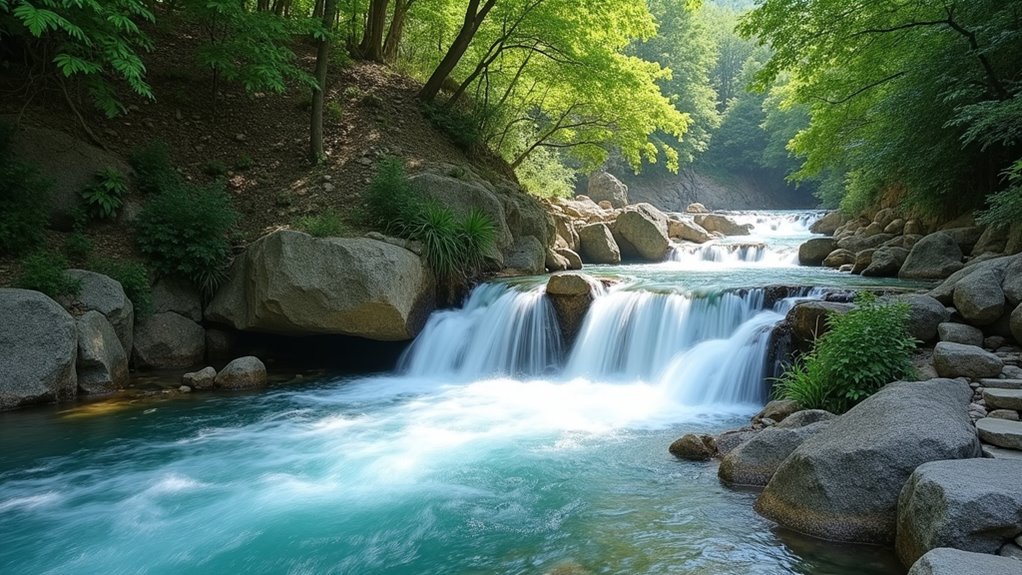
Beyond the medina’s blue walls, a short 10-15 minute walk east from Plaza Uta el Hammam leads you to Ras El Ma Waterfall, where mountain springs cascade freely over ancient stone terraces. The cobblestone path guides you toward the sound of flowing water, requiring no entrance fee to access this community gathering place.
You’ll witness local women washing clothes by hand in the cold mountain water—a centuries-old tradition that continues today. “Ras El Ma” means “Head of Water,” reflecting its role as Chefchaouen’s essential spring source. The area transforms into a social gathering spot where families and friends come together while children play in the shallow pools.
Visit during morning hours to observe daily washing activities and enjoy freshly squeezed orange juice from nearby stands. Wear comfortable shoes for potentially slippery surfaces, and photograph respectfully around locals maintaining their traditional practices.
Browse the Monday and Thursday Markets Outside Town
When Monday and Thursday arrive in Chefchaouen, farmers from the surrounding Rif Valley descend into town with their freshest harvest, transforming a patch of ground on Av Maghrab Arabe into the region’s most authentic shopping experience. You’ll find this market just outside the old medina, near the Berber Caravan Market entrance—any local can point you there.
Arrive early to watch vendors setting up, then browse once the market hits full swing around 11 AM. You’ll discover peak-ripeness fruits, vegetables, herbs, and local goat cheese at prices lower than Morocco’s bigger cities. Look for women farmers wearing elaborate traditional outfits with straw hats adorned with pom-poms and colorful silk scarves, who lead much of the farming activities in the region.
Cash works best, especially small bills. Beyond produce, vendors sell wool clothing and leather goods. The relaxed haggling atmosphere lets you experience genuine Rif Valley culture without tourist crowds.
Hunt for Hand-Woven Blankets in the Medina Shops
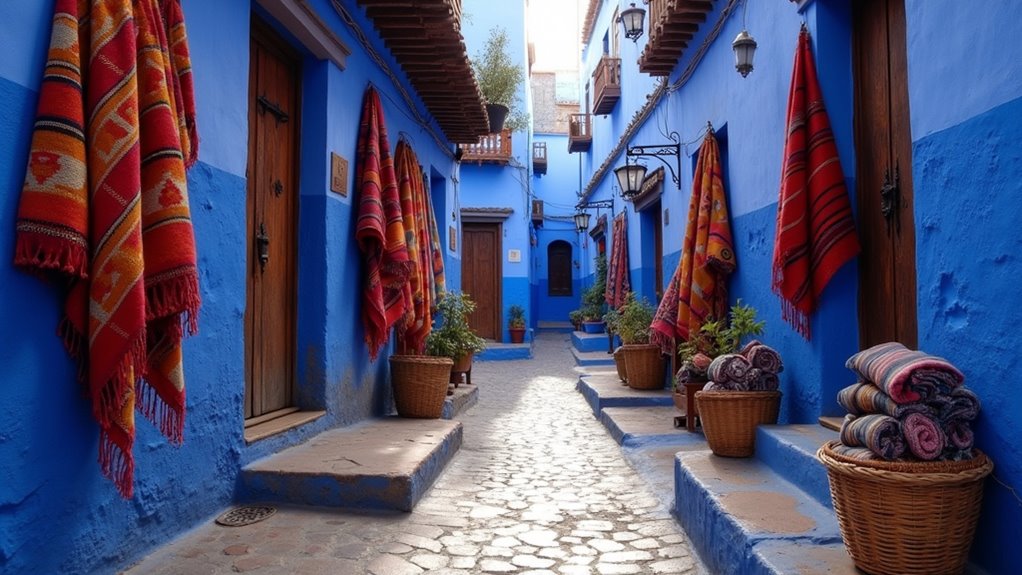
After exploring the authentic local markets, step into Chefchaouen’s medina to discover some of Morocco’s finest hand-woven blankets. You’ll find exceptional pieces at Weavers Cooperative Medina and Local Berbere Artisanal, where skilled Amazigh artisans craft traditional textiles using centuries-old techniques.
Watch daily loom demonstrations from 9am to 9pm in place el Makhzen’s eastern corner, where artisans weave wool and silk blankets.
Look for blue sky blankets with white and blue colors—the most popular traditional Rif style—or pom pom blankets featuring hand-woven wool construction.
Quality indicators include tight knots, vibrant natural dyes, and soft wool texture. Each blanket requires approximately two weeks to complete.
Remember to negotiate prices patiently in Moroccan Dirhams, and don’t hesitate to walk away if prices seem unreasonable. Most cooperatives offer worldwide shipping via DHL if you purchase larger items that would be difficult to transport home.
Sample Goat Cheese and Local Honey at Rooftop Cafes
While exploring Chefchaouen’s blue-washed streets, you’ll discover that the city’s rooftop cafes offer more than just stunning views—they’re the perfect venues to sample jben, a creamy goat cheese unique to this mountain region.
This soft, white cheese is made from unpasteurized goat milk and has a mild, slightly sweet flavor influenced by the goats’ diet of aromatic mountain plants.
Order the classic pairing of fresh bread with jben and local Rif Mountain honey for 10-15 MAD from street vendors, or try hot goat cheese tartlets with honey and walnuts at rooftop spots like Triana. These rooftops also offer glimpses of authentic daily life, where you can observe neighbors chatting and clothes drying on nearby terraces.
Visit during sunset for the best atmosphere, and pair your meal with mint tea infused with wild herbs.
Make reservations at popular terraces for guaranteed seating.
Watch Daily Life at the Traditional Washing Stations
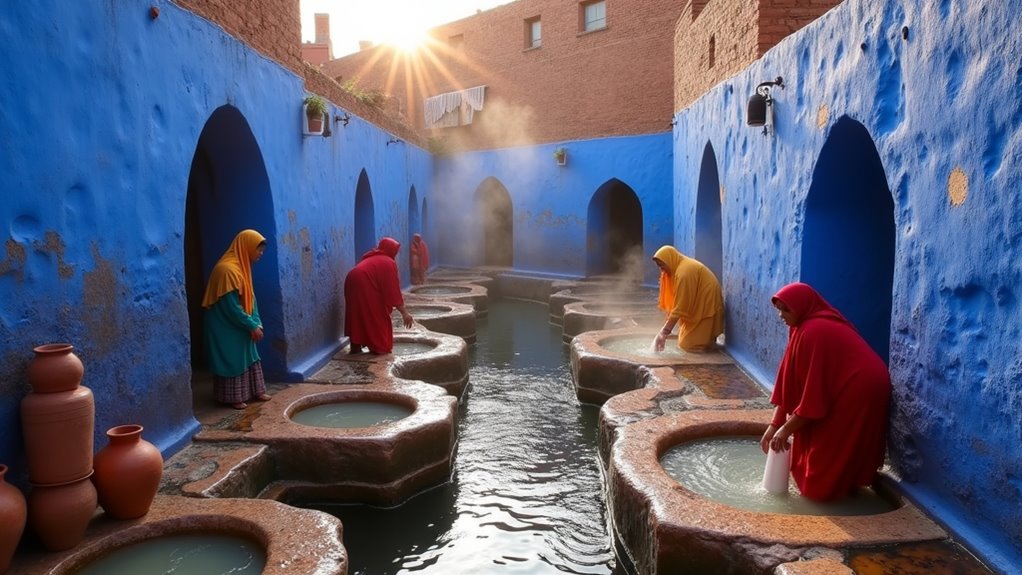
Where else can you witness centuries-old traditions still thriving in modern Morocco? Head to Ras El Ma, Chefchaouen’s main washing station at the medina’s northeastern edge. Here, local women gather daily along the mountain-fed river to hand-wash clothes on ancient stone washboards—a practice reflecting traditional Berber customs.
You’ll observe the physically demanding process of scrubbing laundry in cold mountain water, then watching clothes dry on rocks. Beyond washing, locals clean fresh produce while children splash in the water. This communal space strengthens social bonds through everyday conversation. The site serves as a natural spring that feeds the streams flowing around Chefchaouen, providing fresh mountain water essential for the community’s daily needs.
Visit mornings for peak activity, wear sturdy shoes for wet stones, and observe respectfully—this isn’t performance art but real daily life. Combine your visit with nearby orange juice stands and the Spanish Mosque hike for maximum value.
The Sum Up
You’ll find Chefchaouen rewards slow exploration over rushed sightseeing. Budget at least two days to fully absorb the medina’s magic and connect with locals who’ll share stories behind the blue walls. Visit during shoulder seasons for better prices and fewer crowds. Don’t forget comfortable walking shoes for the steep cobblestones, and always ask permission before photographing residents. Morocco’s blue pearl isn’t just a photo opportunity—it’s a living cultural experience.