
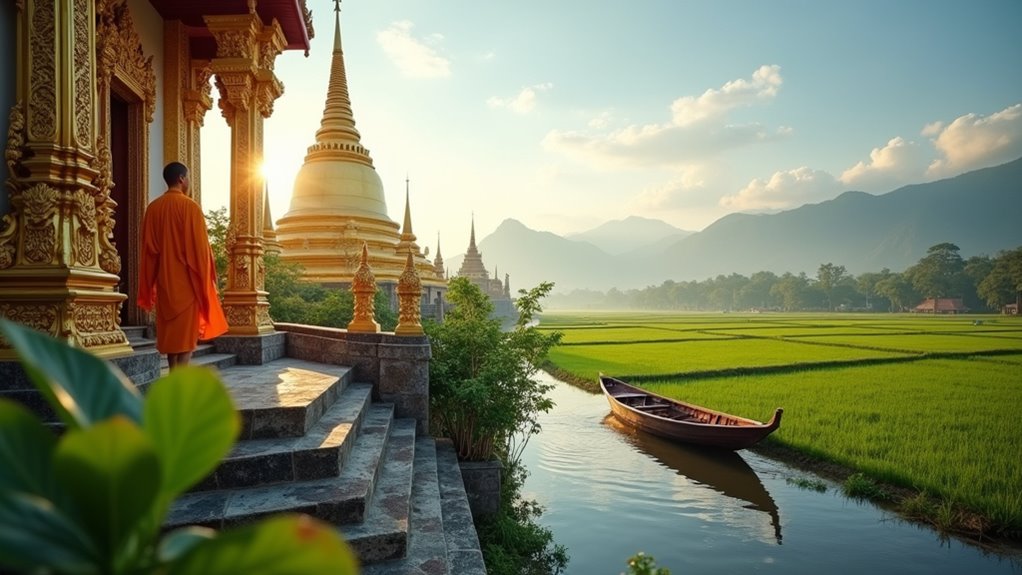
First-time visitors to Chiang Rai often get overwhelmed by the city’s unique blend of traditional temples and avant-garde art installations. This northern Thai destination doesn’t follow the typical tourist playbook—it’s got psychedelic Buddhist temples, a museum that’ll challenge comfort zones, and hill tribe villages that offer authentic cultural encounters. Smart travelers know there’s more to discover beyond the famous White Temple, and the best experiences won’t break the bank if they know where to look.
- Marvel at the White Temple’s Unconventional Art and Architecture
- Experience the Blue Temple’s Psychedelic Buddhist Art
- Catch the Clock Tower Light Show in the City Center
- Explore the Dark Side of Art at Baan Dam Museum
- Spend a Day at Singha Park’s 8,000-Acre Playground
- Climb Nine Stories at Wat Huay Pla Kang Temple
- Sample Northern Thai Cuisine at Chiang Rai’s Night Bazaar
- Take a Day Trip to the Golden Triangle Border Region
- Visit a Traditional Hill Tribe Village in the Mountains
- Relax at Mae Fah Luang Garden’s Royal Botanical Paradise
Marvel at the White Temple’s Unconventional Art and Architecture
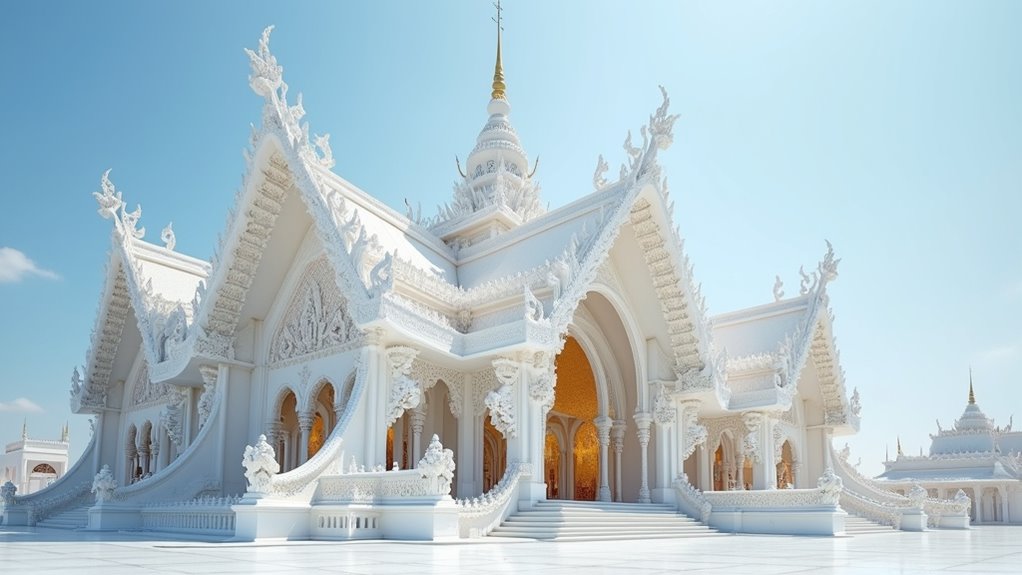
When travelers first glimpse the White Temple’s brilliant facade just outside Chiang Rai’s city center, they’re often struck by how dramatically it differs from traditional Thai temples. This strikingly white structure achieves its ethereal appearance through whitewash and mirrored chips that catch sunlight throughout the day.
Local artist Chalermchai Kositpipat spent years creating this unconventional masterpiece, which opens daily from 8am to 5pm.
Inside, visitors discover pop culture character images plastered on walls—a surprising departure from typical Buddhist art.
The temple suffered earthquake damage in 2014, but Kositpipat chose to repair rather than abandon his restoration work.
Budget-conscious travelers appreciate that admission remains free, making this artistic wonder accessible to everyone exploring Chiang Rai’s cultural attractions.
Experience the Blue Temple’s Psychedelic Buddhist Art
After exploring the White Temple’s unconventional artistry, visitors often head to Chiang Rai’s second-most-famous temple attraction—the brilliantly blue Wat Rong Suea Ten. This serene yet psychedelic temple offers a completely different visual experience from its white counterpart, though both share artistic DNA since local artist Phuttha Kabkaew studied under the White Temple’s designer.
The Blue Temple’s construction spanned eleven years from 2005 to 2016, resulting in stunning Buddhist art that’s both traditional and contemporary. The temple’s brilliant blue exterior and interior create an otherworldly atmosphere that’s perfect for photography and quiet contemplation.
Budget-conscious travelers will appreciate that admission remains free, and the temple’s convenient operating hours from 7am to 8pm allow for flexible visit scheduling around other Chiang Rai attractions.
Catch the Clock Tower Light Show in the City Center
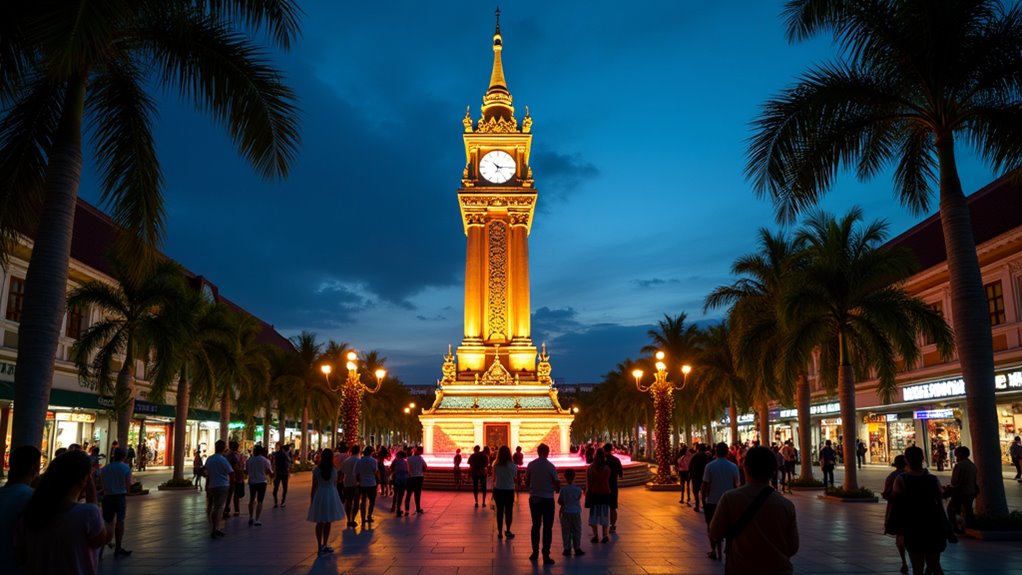
As evening approaches in Chiang Rai, travelers can witness one of the city’s most enchanting free attractions at the magnificent gold clock tower. Located at the bustling intersection of Suk Sathit Road, Jetyod Road, and Thanon Baanpa Pragarn Road, this cultural landmark offers nightly light shows at 7pm, 8pm, and 9pm.
Designed by Chalermchai Kositpipat—the same artist behind the famous White Temple—this 2005 creation transforms into a dazzling spectacle with synchronized lights and melodic music. The performances last several minutes, drawing crowds of locals and travelers who gather around the intersection.
Beyond entertainment, the clock tower serves as the city’s main reference point for navigation. Budget-conscious visitors will appreciate this completely free attraction that’s easily accessible on foot from most downtown accommodations and restaurants.
Explore the Dark Side of Art at Baan Dam Museum
For travelers seeking an unconventional cultural experience beyond Chiang Rai’s traditional temples, Baan Dam Museum offers a thought-provoking journey into contemporary art and dark aesthetics. Also known as the “Black House” or “Black Temple,” this museum presents a stark contrast to the area’s colorful religious sites.
The attraction features unique architectural design and artistic installations that challenge conventional expectations.
Visitors encounter unconventional aesthetics that explore darker themes through contemporary art, creating an alternative cultural experience that’s unlike anything else in the region.
Budget-conscious travelers will appreciate this distinctive attraction that provides a different perspective on local artistry.
The museum serves as an excellent counterbalance to temple-hopping, offering visitors a chance to explore Thailand’s modern artistic expression while experiencing something truly unique in northern Thailand’s cultural landscape.
Spend a Day at Singha Park’s 8,000-Acre Playground
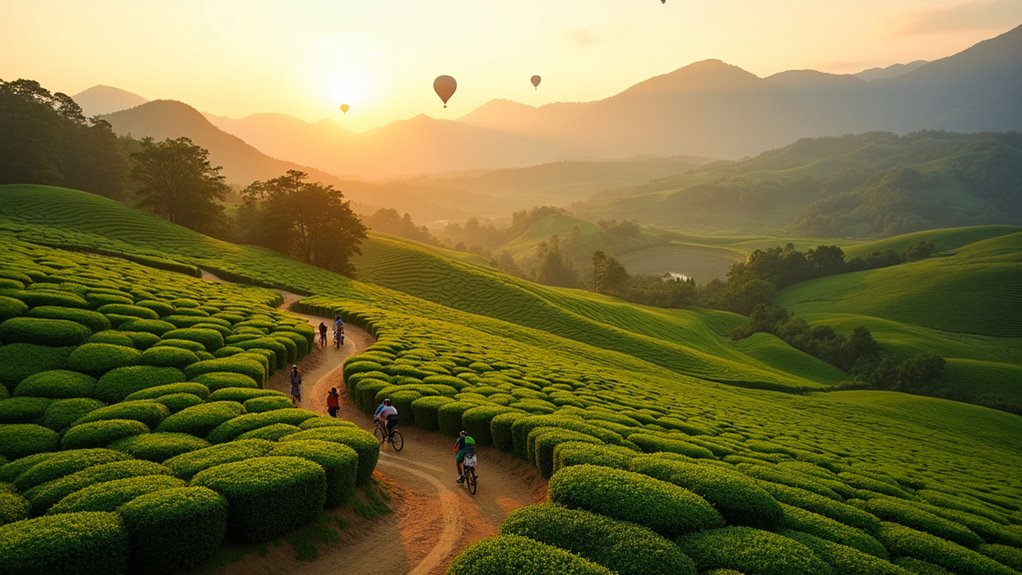
When travelers need a break from temple-hopping, Singha Park delivers an expansive 8,000-acre playground that combines adventure with natural beauty. This massive attraction offers something for all, from leisurely strolls through manicured gardens to more active pursuits like cycling and zip-lining.
The park’s crown jewel is its giant golden Singha lion statue, which provides Instagram-worthy photo opportunities against stunning mountain backdrops. Visitors can explore tea plantations, fruit orchards, and flower fields while enjoying the crisp northern Thai air.
What makes Singha Park particularly appealing is its accessibility for budget travelers. Many activities are free, and the scenic beauty alone justifies the visit. It’s the perfect day-trip destination where families and solo adventurers can unwind while still experiencing Chiang Rai’s natural splendor.
Climb Nine Stories at Wat Huay Pla Kang Temple
While most temples in Chiang Rai sprawl horizontally across their grounds, Wat Huay Pla Kang takes a bold vertical approach with its impressive nine-story structure that towers above the surrounding landscape. This colorful temple complex features striking green, gold, and red buildings that house a massive white Guan Yin statue—often mistaken for Buddha—visible from various parts of town.
Visitors can reach the top either by climbing stairs for free or taking the elevator for just 40 Thai Baht. The temple’s open from 7am to 8pm daily, making it perfect for catching sunrise or sunset views.
From the ninth floor, you’ll enjoy panoramic vistas of rolling green hills that stretch toward the horizon, creating memorable photo opportunities without breaking your travel budget.
Sample Northern Thai Cuisine at Chiang Rai’s Night Bazaar
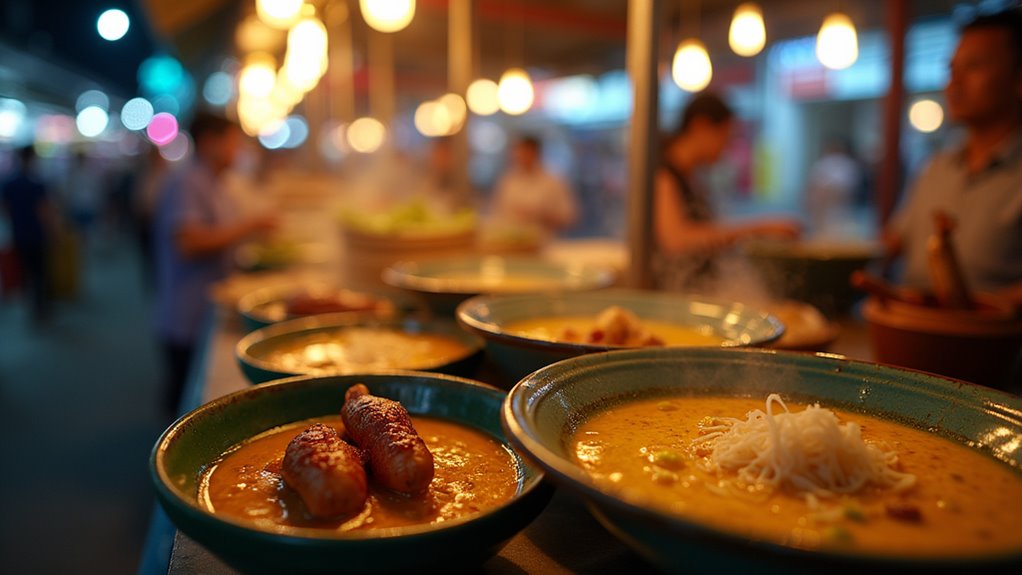
Nothing beats exploring authentic Northern Thai flavors at Chiang Rai’s bustling Night Bazaar, where budget-conscious travelers can sample regional specialties without emptying their wallets.
The market comes alive after sunset, offering an impressive array of street food stalls serving khao soi (coconut curry noodles), sai ua (northern Thai sausage), and sticky rice with mango at incredibly affordable prices.
Vendors display their colorful dishes openly, making it easy for first-timers to point and order without language barriers.
Most dishes cost between 30-80 baht, allowing visitors to try multiple specialties in one evening.
The bazaar’s central location makes it convenient for travelers staying downtown, and the authentic atmosphere provides genuine culture while satisfying hunger pangs after temple-hopping.
Take a Day Trip to the Golden Triangle Border Region
After satisfying those taste buds with Northern Thai delicacies, adventurous travelers can venture beyond Chiang Rai‘s city limits to explore the legendary Golden Triangle, where Thailand, Laos, and Myanmar converge along the mighty Mekong River.
This historically significant region offers fascinating insights into the area’s opium trade past through the Hall of Opium Museum. Visitors can snap photos at the iconic Golden Triangle marker while taking in panoramic views of three countries simultaneously.
Budget-friendly longtail boat rides along the Mekong provide unique perspectives of the borderlands and cost around 300-400 baht per person.
The journey takes roughly an hour from Chiang Rai city center, making it perfect for a half-day excursion. Many travelers combine this trip with nearby attractions like temples or hill tribe villages for maximum value.
Visit a Traditional Hill Tribe Village in the Mountains
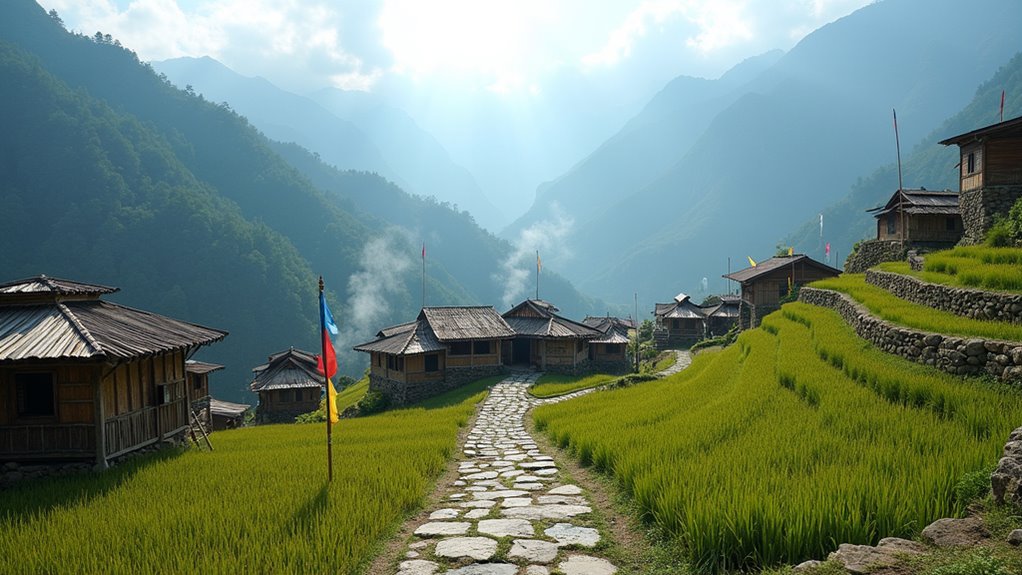
Beyond the bustling temples and urban attractions, Chiang Rai’s mountainous landscape shelters traditional hill tribe communities that have preserved their unique cultures for centuries. These villages offer authentic glimpses into the lives of ethnic groups like the Karen, Hmong, and Akha people.
Most day tours cost 800-1,200 baht and include transportation, lunch, and guided visits to 2-3 villages. Visitors can observe traditional weaving, silversmithing, and farming practices while learning about each tribe’s distinct customs and clothing styles.
When visiting, dress modestly and bring small bills for purchasing handmade crafts directly from artisans. Photography’s generally allowed, but always ask permission first.
These experiences provide meaningful cultural exchanges while supporting local communities through responsible tourism that respects their heritage.
Relax at Mae Fah Luang Garden’s Royal Botanical Paradise
While most travelers rush between Chiang Rai’s colorful temples, Mae Fah Luang Garden offers a peaceful escape where manicured landscapes meet mountain views. This royal botanical paradise showcases Thailand’s diverse flora across themed sections, from tropical plants to alpine flowers that thrive in the cooler northern climate.
Visitors can wander through carefully designed pathways that lead to scenic viewpoints overlooking the surrounding valleys. The garden’s entrance fee remains affordable, making it accessible for budget-conscious travelers seeking respite from temple-hopping.
Photography enthusiasts will appreciate the vibrant seasonal blooms and well-maintained grounds.
The best time to visit is during cooler morning hours when the air’s crisp and crowds haven’t arrived yet. Pack comfortable walking shoes since you’ll be exploring various elevation levels throughout the expansive grounds.