
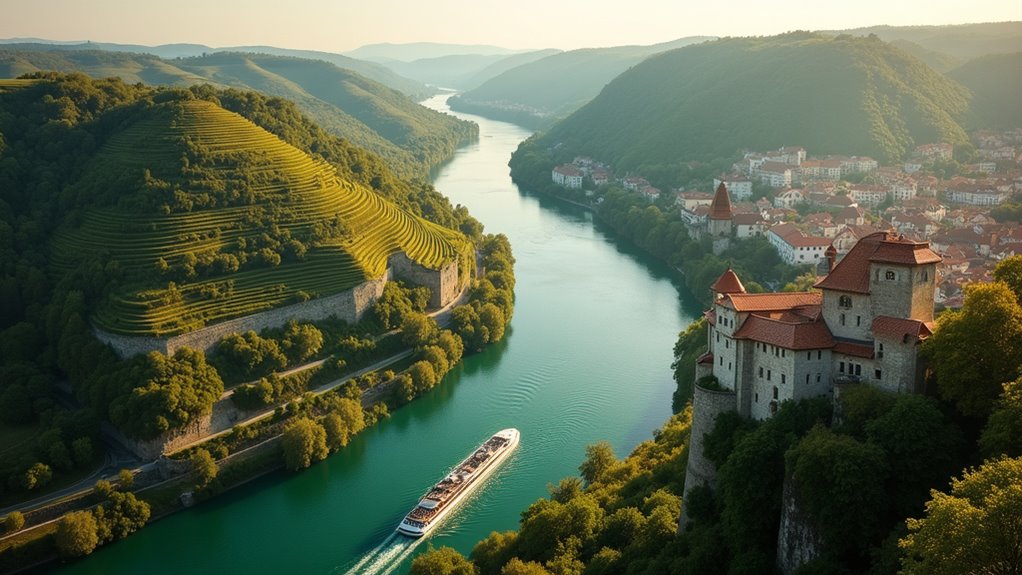
You’ve probably heard of the Danube’s famous cities like Vienna and Budapest, but this legendary river offers far more than postcard attractions. From medieval castles perched on dramatic cliffs to underground churches carved into rock faces, the Danube corridor hides some of Europe’s most compelling experiences. Whether you’re cruising on a shoestring budget or exploring historic towns by foot, there’s something unexpected waiting around every bend that’ll change how you think about river travel.
- Cruise Through the Iron Gates Gorge Between Serbia and Romania
- Explore Budapest’s Buda Castle District and Cross to the Pest Side for Ruin Bars
- Take a Danube Valley River Cruise From Krems to Melk Abbey
- Wander Bratislava’s Old Town and Climb Up to the Hilltop Castle
- Visit Nuremberg’s Imperial Castle and WWII Documentation Sites
- Tour Vienna’s Hofburg Palace and Catch a Performance at the Opera House
- Stop in Passau to Hear the World’s Largest Cathedral Organ
- Hike Among the Belogradchik Rocks Near Vidin, Bulgaria
- Explore the Medieval Rock-Hewn Churches of Ivanovo
- Walk Through Regensburg’s Colorful Stadtamhof District
- The Sum Up
Cruise Through the Iron Gates Gorge Between Serbia and Romania
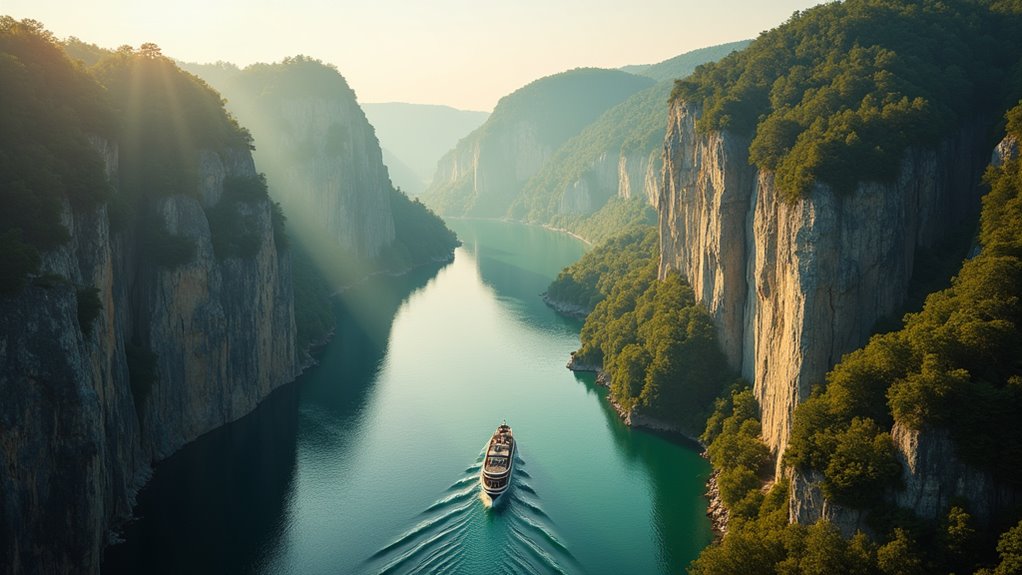
Since the Iron Gates Gorge stretches as Europe’s longest and deepest river canyon, you’ll want to experience this dramatic 83-mile stretch where the Danube carves between the Carpathian and Balkan Mountains.
You can catch cruises from Belgrade or book budget-friendly day trips starting around €30-50.
Watch for the massive Decebalus rock sculpture on Romania’s side and medieval Golubac Fortress guarding Serbia’s entrance.
Choose between speedboats for quick scenic runs or catamarans with onboard meals included.
The dam system transformed dangerous rapids into smooth sailing, so you’ll enjoy panoramic views of 130-foot cliffs without rough waters.
Book multi-day packages to explore Djerdap National Park, spot sea eagles, and visit nearby wine cellars. Expert guides provide multilingual commentary throughout the journey, enhancing your understanding of the region’s rich cultural and historical significance.
Most cruises include cultural stops at Roman ruins and archaeological sites.
Explore Budapest’s Buda Castle District and Cross to the Pest Side for Ruin Bars
Why settle for just one side of Budapest when you can experience both the royal grandeur of Buda Castle and Pest’s legendary nightlife in a single day? Start at the UNESCO World Heritage Buda Castle District, where you’ll find the Hungarian National Gallery and Budapest History Museum housed within the 13th-century Royal Palace complex.
Don’t miss Matthias Church‘s Gothic architecture and Fisherman’s Bastion‘s fairytale terraces – both offer stunning Danube views without admission fees. Time your visit to catch the changing of guards ceremony that occurs hourly in front of the Hungarian Presidential Palace, featuring synchronized movements and marching.
Cross the ornate Széchenyi Chain Bridge on foot for incredible photo opportunities and spectacular Parliament views.
Once in Pest, learn about the famous ruin bar scene. These unique pubs occupy abandoned buildings with eclectic décor, offering affordable drinks and Budapest’s most authentic nightlife experience in atmospheric, crumbling settings.
Take a Danube Valley River Cruise From Krems to Melk Abbey
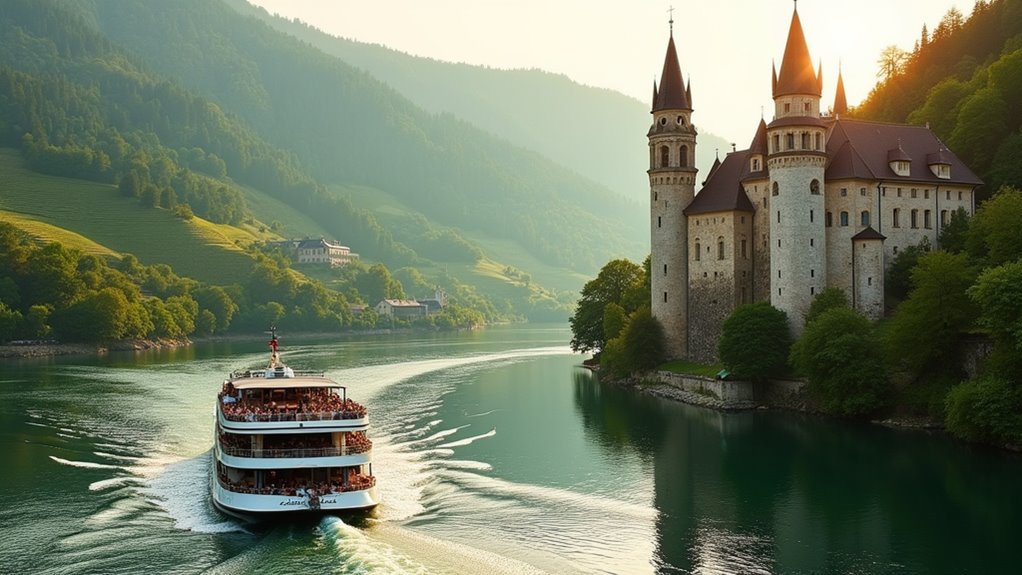
When you’re ready to experience Austria’s most scenic stretch of the Danube, book a river cruise between Krems and Melk to witness the breathtaking Wachau Valley from the water. DDSG Blue Danube operates multiple daily departures during peak season, with one-way tickets costing €25–€30 per adult.
The 36-kilometer journey takes 1.5–3 hours depending on direction and current.
You’ll cruise past magnificent Melk Abbey‘s golden Baroque towers, medieval castle ruins at Aggstein, and charming villages like Dürnstein with its distinctive ice-blue church tower. Rolling vineyards and orchards frame the riverbanks throughout your journey.
Consider combining your cruise with a Melk Abbey tour, then cycling back to Krems along scenic Danube trails. Don’t miss sampling the region’s famous Wachauer Marille apricots, which are transformed into delicious jams, brandies, and liqueurs. Book from May through September when boats run regularly and weather’s ideal for deck viewing.
Wander Bratislava’s Old Town and Climb Up to the Hilltop Castle
After your peaceful Danube cruise, Bratislava’s compact Old Town offers one of Europe’s most walkable historic centers—and you can easily explore its highlights in half a day without spending a fortune.
Start early morning at Hlavné námestie (Main Square) to avoid crowds and enjoy cheaper café prices. Wander the cobblestone streets to discover free attractions like quirky statues including Čumil, the sewer worker sculpture.
Visit St. Martin’s Cathedral, where Hungarian royalty was crowned, then climb through medieval Michael’s Gate for panoramic views—it’s worth the small entrance fee. Don’t miss the nearby Primacial Palace, a stunning neoclassical building perfect for those interested in art and history.
End at Bratislava Castle, reachable via a free uphill walk through charming streets like Kapitulská. The castle’s exterior and surrounding views are free, making this an ideal budget-friendly exploration.
Visit Nuremberg’s Imperial Castle and WWII Documentation Sites
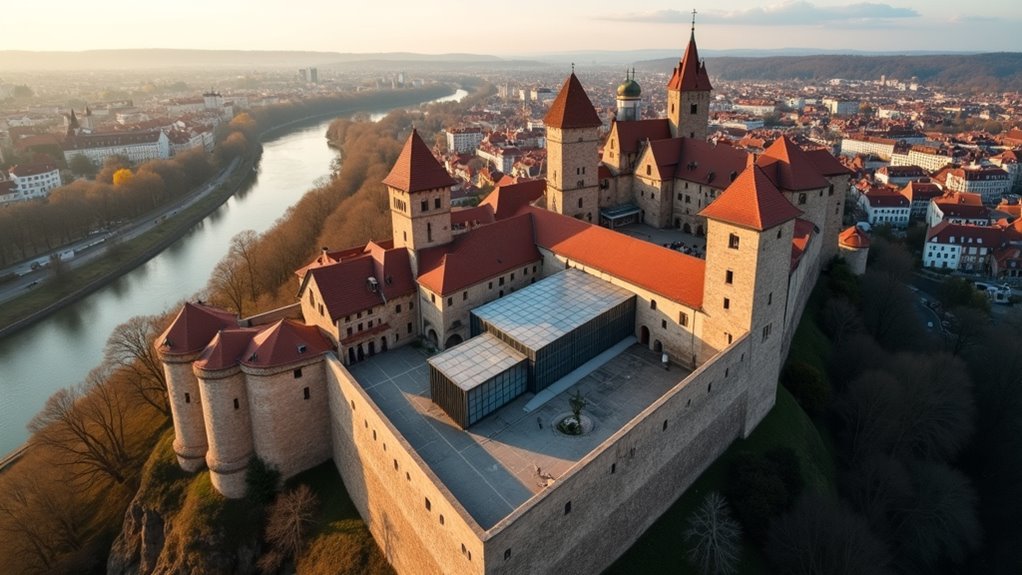
While Nuremberg’s Imperial Castle sits majestically on its sandstone ridge, you’ll discover that this thousand-year-old fortress offers incredible value for history buffs—entry to the castle complex costs just €7, and you can easily spend hours exploring the Sinwell Tower’s panoramic views, the unique double-level Imperial Chapel, and the medieval Deep Well.
Don’t miss the Palas main hall where German emperors once held court.
After exploring medieval history, head to Nuremberg’s WWII Documentation sites. The Documentation Center Nazi Party Rally Grounds provides sobering insights into Nazi propaganda and militarism, while the Palace of Justice showcases where the famous Nuremberg Trials established international war crimes law.
These sites offer essential context for understanding 20th-century European history through compelling exhibits and archival materials.
Tour Vienna’s Hofburg Palace and Catch a Performance at the Opera House
Vienna’s massive Hofburg Palace complex spans 700 years of imperial history across 18 wings and 2,600 rooms—but you don’t need to break the bank to experience Habsburg grandeur. Focus your visit on the imperial apartments and museums, which showcase Gothic through Baroque architecture at reasonable entry fees.
Don’t miss the Swiss Gate‘s elaborate 16th-century entrance or Joseph Square‘s stunning courtyards—both free to admire from outside.
For evening entertainment, catch a performance at the world-renowned Vienna State Opera House nearby. Standing room tickets cost just a few euros if you’re willing to queue early.
The Spanish Riding School within Hofburg offers classical equestrian shows, though morning training sessions provide cheaper alternatives to full performances while delivering authentic Viennese culture. This prestigious institution has been showcasing Lipizzan horses since 1565, making it one of Vienna’s most enduring cultural traditions.
Stop in Passau to Hear the World’s Largest Cathedral Organ
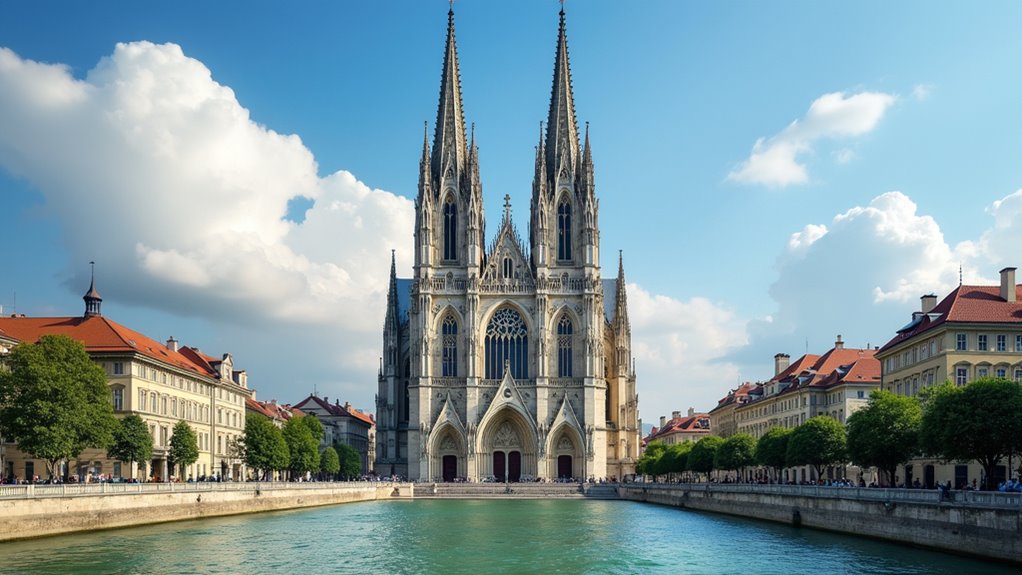
Though you might expect the world’s largest cathedral organ to come with hefty admission fees, Passau’s St. Stephen’s Cathedral welcomes visitors free of charge to experience its magnificent 17,974-pipe organ. You’ll hear incredible acoustics enhanced by the cathedral’s six-second reverberation time, making even simple melodies sound ethereal.
Plan your visit around daily organ concerts, typically held at noon, when you can witness all 233 registers in action through the five-manual console. The organ’s five distinct sections create everything from French solo sounds to North German-Baroque tones, offering remarkable variety. The cathedral itself showcases stunning Italian baroque design after being rebuilt following a devastating fire in 1662.
Don’t miss the carillon bells integrated into the system – they add unique mechanical chimes you won’t hear elsewhere. Since admission’s free and concerts are brief, it’s an easy budget-friendly stop that delivers world-class music along your Danube journey.
Hike Among the Belogradchik Rocks Near Vidin, Bulgaria
After enjoying musical masterpieces indoors, you’ll find Bulgaria’s Belogradchik Rocks offer an entirely different kind of wonder through outdoor adventure.
These dramatic sandstone formations rise up to 1,000 feet, creating a natural playground near the Danube town of Vidin.
You’ll discover multiple hiking trails ranging from easy walks to moderate climbs, covering 4-12 kilometers with varying elevation gains.
The highlight’s reaching Belogradchik Fortress, where Roman-era walls blend seamlessly with towering red rocks.
Expect 2-3 hours for main routes, with some sections requiring good footwear due to steep, potentially slippery conditions.
Parking’s limited to 20-30 cars, so arrive early.
The rock formations’ animal-like shapes and folklore connections make this UNESCO-listed site a budget-friendly alternative to pricier attractions along your Danube journey. For an unforgettable perspective, consider a hot air balloon ride that showcases these geological wonders from above as one of the New Seven Wonders of the World.
Explore the Medieval Rock-Hewn Churches of Ivanovo
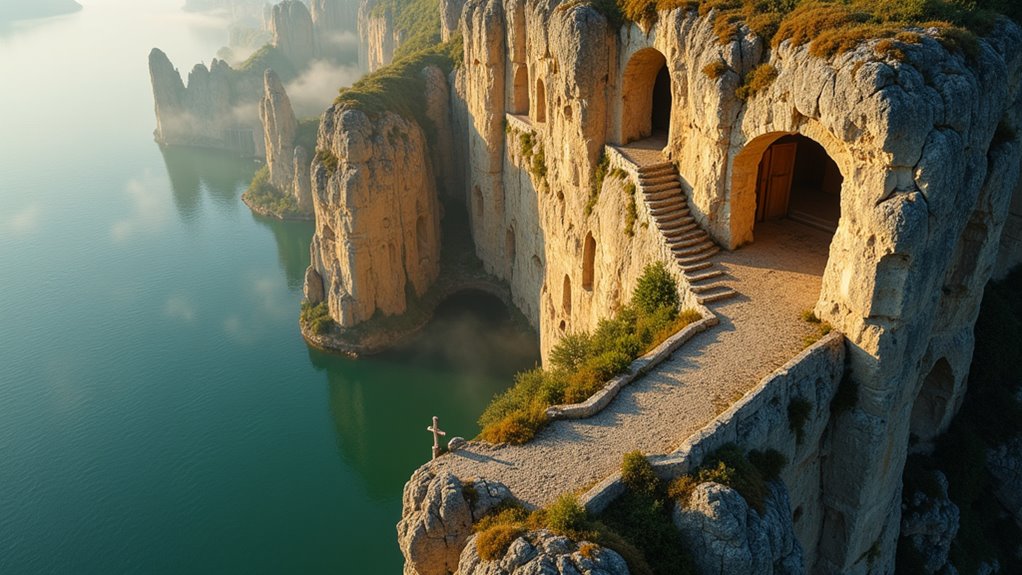
While most Danube travelers rush between major cities, you’ll find one of Bulgaria’s most extraordinary treasures hidden in the limestone cliffs near Ruse. The medieval rock-hewn churches of Ivanovo showcase 13th and 14th-century frescoes that’ll leave you speechless. These UNESCO World Heritage monasteries were carved directly into cliffsides by monks using hand tools.
You’ll climb steep stone stairs to reach the churches—it’s quite a workout, but worth every step. The Holy Virgin Church offers the best-preserved frescoes depicting religious scenes and medieval Bulgarian nobility. Originally housing 40 churches and 300 monastic cells, about 20 rooms remain accessible today. The monastery served as a center of hesychasm in Bulgaria during the 14th century, representing an important spiritual movement of contemplative prayer.
Pack water and wear sturdy shoes for the cliff ascent. Entry fees are modest, making this an affordable cultural highlight along your Danube journey.
Walk Through Regensburg’s Colorful Stadtamhof District
Crossing the medieval Stone Bridge from Regensburg’s main square, you’ll discover Stadtamhof—a district that feels like stepping into a living postcard. This former independent Bavarian town showcases colorful medieval buildings lining narrow cobblestone streets, creating an Instagram-worthy backdrop that won’t cost you a penny to explore.
Wander through lanes filled with Romanesque and Gothic architecture dating back to the 11th century. Don’t miss the rococo St. Mang church and the distinctive town hall displaying Stadtamhof’s coat of arms with three Petrus keys.
The riverside promenades offer perfect spots for budget-friendly picnics while soaking up Danube views. The city’s strategic location near the Danube River facilitated its development as a major trading post throughout medieval times.
As part of UNESCO’s World Heritage ensemble with over 1,500 listed buildings, Stadtamhof provides an authentic medieval experience that’s completely free to enjoy.
The Sum Up
You’ll find the Danube offers incredible value for budget travelers. Mix free activities like hiking Belogradchik Rocks and exploring Regensburg’s streets with affordable river cruises during shoulder season. Stay in hostels or guesthouses in smaller towns like Vidin rather than expensive capitals. Pack picnics for day trips and book accommodations early for better rates. Don’t skip the free organ concerts in Passau—they’re unforgettable experiences that won’t break your travel budget.