
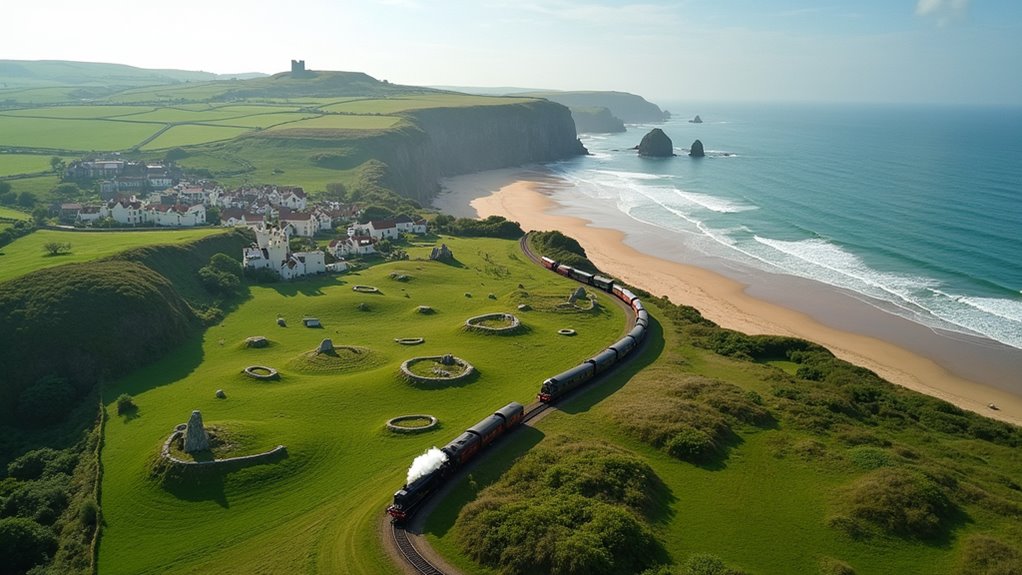
You’ll find Devon offers an extraordinary blend of rugged moorlands, dramatic coastlines, and charming seaside towns that’ll captivate any traveler. From ancient stone circles on windswept Dartmoor to hidden underground caverns carved by time itself, this southwestern county doesn’t disappoint. Whether you’re seeking family-friendly beaches, historic literary connections, or wildlife encounters along pristine coastal paths, Devon’s diverse attractions cater to every interest. Here’s how you can make the most of your visit to this remarkable corner of England.
- Explore Dartmoor’s Ancient Landscapes and Wild Ponies
- Take the Scenic Babbacombe Cliff Railway to Oddicombe Beach
- Discover Agatha Christie’s Greenway House and Gardens
- Walk the South West Coast Path From Lympstone to Dawlish Warren
- Visit the Underground Wonders of Kents Cavern
- Experience Powderham Castle’s 600 Years of Family History
- Ride the Seaton Tramway Through East Devon’s Wetlands
- Explore Torquay’s Three Distinct Sandy Beaches
- Take a Seal-Spotting Boat Tour From Dartmouth
- Wander Through Bicton Park’s Botanical Gardens and Mini Railway
- The Sum Up
Explore Dartmoor’s Ancient Landscapes and Wild Ponies
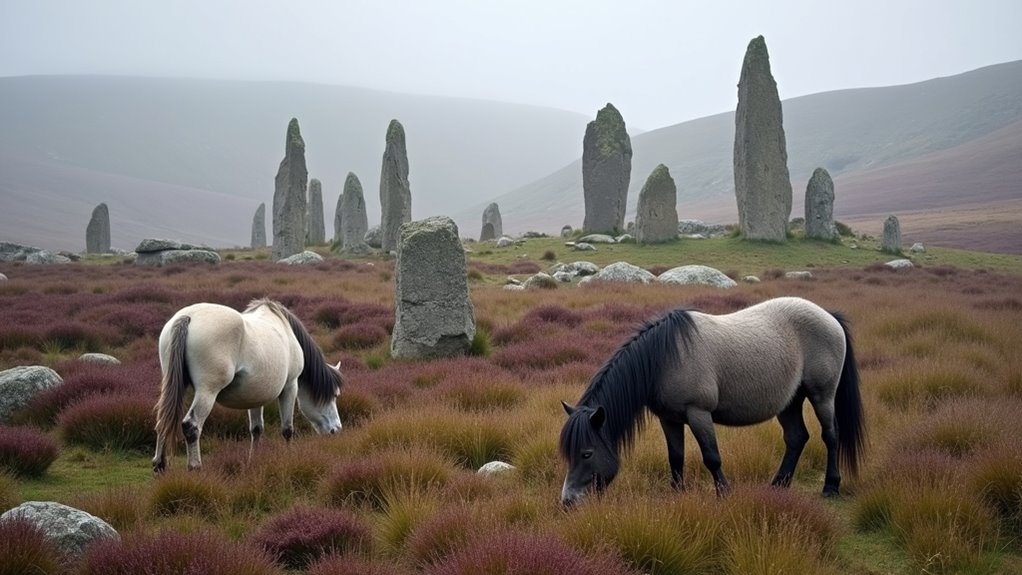
When you step onto Dartmoor’s windswept moorlands, you’re walking through one of Britain’s most mesmerizing ancient landscapes where wild ponies have grazed for centuries. You’ll discover granite tors formed 280 million years ago, creating dramatic rocky outcrops that rise from expansive peat bogs. The highest point, High Willhays, reaches 621 meters above sea level.
As you explore, you’ll encounter remarkable Bronze Age settlements like Grimspound, a 3,500-year-old village with stone enclosures and hut circles. Don’t miss the mysterious stone rows at Merrivale or the ancient reave systems – prehistoric field boundaries that stretch for kilometers across Holne Moor. You can also visit Hound Tor, a fascinating deserted medieval village that offers insights into later periods of Dartmoor’s human occupation.
What appears wild is actually a cultural landscape shaped by 6,000 years of human activity, from Mesolithic hunters to Bronze Age farmers who cleared these forests.
Take the Scenic Babbacombe Cliff Railway to Oddicombe Beach
While exploring Torquay’s stunning English Riviera coastline, you’ll discover one of Devon’s most charming vintage attractions – the Babbacombe Cliff Railway, a delightfully preserved funicular that’s been whisking visitors down dramatic cliffs since 1926.
This electrically driven railway covers 720 feet on a steep 1:2.83 gradient, connecting Babbacombe Downs with picturesque Oddicombe Beach below.
You’ll ride in traditional counterbalanced cars that hold 40 passengers each, enjoying panoramic coastal views during the brief but memorable descent.
The railway’s 5ft 8in gauge tracks and safety features confirm a smooth journey at 2.5 meters per second.
Originally conceived by Sir George Newnes in 1890, the railway faced numerous delays before finally opening to the public decades later. It’s particularly valuable for families and those with limited mobility who’d find the cliff paths challenging, providing easy access to the sandy beach and surrounding amenities year-round.
Discover Agatha Christie’s Greenway House and Gardens
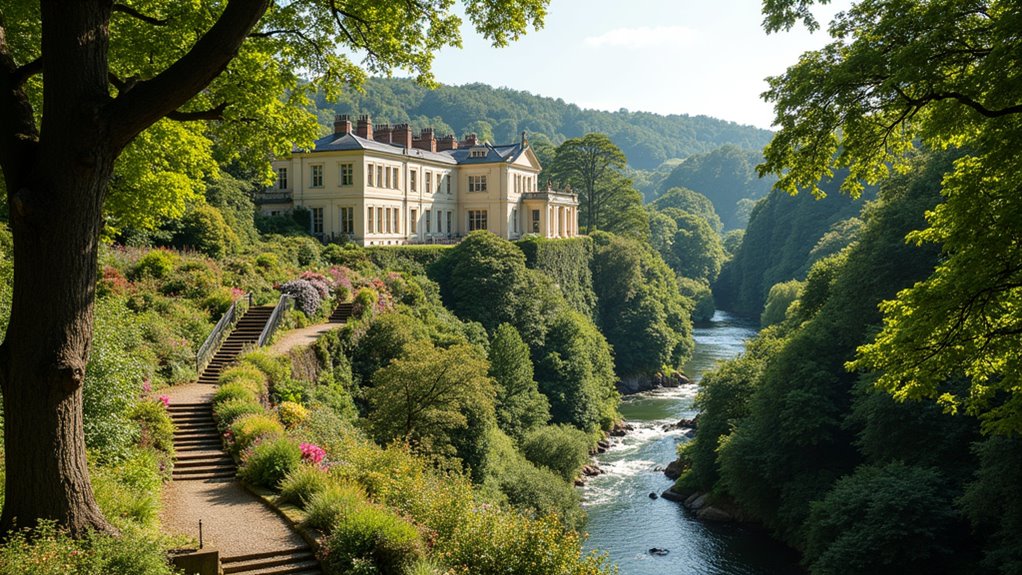
Nestled on the banks of the River Dart near Galmpton, Agatha Christie’s beloved Greenway House offers you an intimate glimpse into the private world of literature’s most celebrated mystery writer. This Georgian estate served as Christie’s holiday retreat from 1938, where she entertained friends and celebrated family occasions.
You’ll explore rooms preserved in their 1950s ambiance, featuring first editions of Christie’s novels, archaeological artifacts from her husband’s Middle Eastern expeditions, and wartime graffiti left by Coast Guard and U.S. Navy personnel.
The gardens showcase spectacular spring blooms including magnolias and bluebells, while woodland paths lead you down to the River Dart. The estate features a historic tennis court and a magnificent magnolia campbellii planted by Max Mallowan in 1938. Don’t miss the Victorian fernery and the charming pet cemetery tucked within the grounds.
Walk the South West Coast Path From Lympstone to Dawlish Warren
This spectacular 16-mile stretch of the South West Coast Path delivers you through some of Devon’s most diverse coastal scenery, from the charming estuary village of Lympstone to the sandy shores of Dawlish Warren.
You’ll tackle moderate ascents totaling 636 feet while enjoying cliff-top paths, estuary views, and coastal promenades. The route’s perfectly suited for walkers with reasonable fitness levels.
You’ll pass Lympstone’s historic village atmosphere and stunning lake views before reaching Dawlish Warren’s sandy beaches and nature reserves.
The Exe Estuary provides excellent birdwatching opportunities throughout your journey. Up to 25,000 birds gather in midwinter, including Siberian Brent geese and other migratory species from Northern Europe.
Clear acorn-marked signage keeps you on track, while multiple access points at Lympstone and Exmouth offer convenient public transport connections.
Dawlish Warren’s car parks and cafes make it an ideal finishing point.
Visit the Underground Wonders of Kents Cavern

After exploring Devon’s stunning coastline, you’ll discover that the county’s treasures extend deep beneath the surface at Kents Cavern in Torquay. This remarkable cave system spans 1.7 hectares and houses over 80,000 artifacts spanning multiple Ice Age cycles.
You’ll walk through vast underground chambers filled with spectacular stalactites, stalagmites, and delicate limestone formations while learning about 500,000 years of human history.
The cave’s archaeological significance is extraordinary—you’ll see evidence of Britain’s earliest inhabitants, including stone tools made by Homo erectus and a 44,000-year-old human jawbone. What makes Kents Cavern truly unique is that it contains evidence of three human species, making it the only site in the UK to showcase such remarkable human diversity.
Guided tours reveal how prehistoric humans shared this space with woolly mammoths, rhinoceros, and giant deer.
As part of the English Riviera Global Geopark, Kents Cavern offers an unforgettable journey through time beneath Devon’s landscape.
Experience Powderham Castle’s 600 Years of Family History
Six centuries of continuous family ownership make Powderham Castle one of England’s most remarkable aristocratic survivors, where you’ll walk through rooms that have witnessed everything from medieval power struggles to Civil War sieges.
Built between 1390 and 1420 by Sir Philip Courtenay, this fortified manor house has evolved dramatically while maintaining its original medieval character.
You’ll discover how the castle survived a brutal 1455 siege and later withstood Parliamentarian attacks during the Civil War before falling in 1646.
The Courtenay family’s architectural transformations are equally fascinating—Charles Fowler’s 1835 renovations created the striking medieval-style gatehouse you’ll see today. James Wyatt’s significant contributions in the 1790s added the elegant Music Room that showcases the castle’s blend of medieval origins and Georgian refinement.
This layered history makes Powderham one of England’s most architecturally complex private houses, where each room tells centuries of Devon’s aristocratic story.
Ride the Seaton Tramway Through East Devon’s Wetlands
While Devon’s aristocratic heritage captivates at Powderham Castle, the county’s natural wonders await discovery aboard the Seaton Tramway.
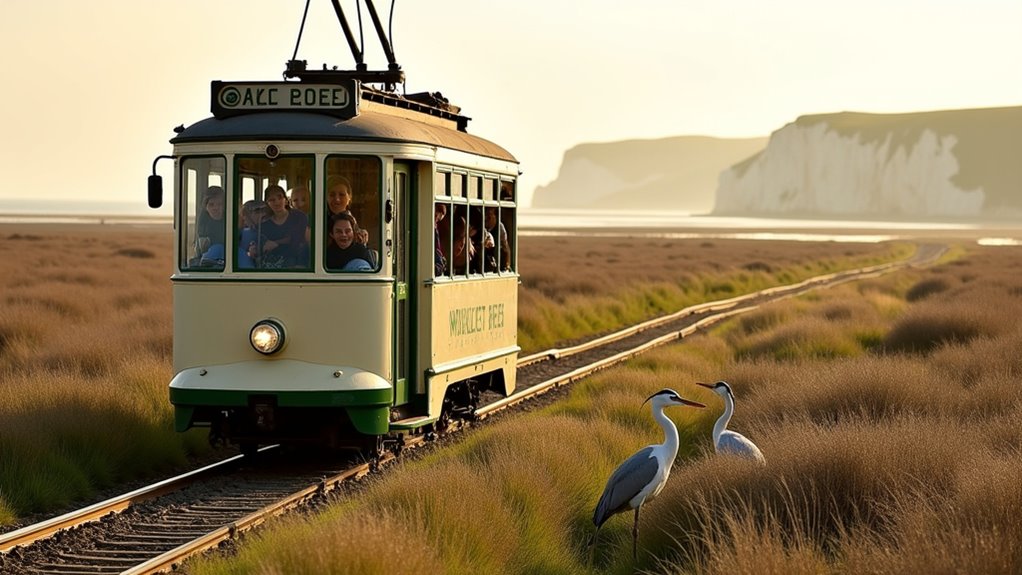
You’ll glide through East Devon’s pristine wetlands on a charming narrow gauge electric railway. This 3-mile journey between Seaton and Colyton takes 25-30 minutes each way, offering panoramic views of the River Axe estuary’s reedbeds, grazing marshes, and inter-tidal lagoons.
You’ll spot abundant wildlife including kingfishers, wading birds, dragonflies, and occasional otters from open-topped or enclosed trams.
The award-winning Seaton Wetlands Nature Reserve features five bird hides and 4km of accessible trails. The reserve is completely dog-free, making it ideal for wildlife observation without disturbance.
Purchase all-day Explorer Tickets to hop on and off at intermediate stops like Colyford and Seaton Wetlands, combining wildlife watching with this nostalgic tramway experience.
Explore Torquay’s Three Distinct Sandy Beaches
Beyond the scenic tramway experience through East Devon’s wetlands, Torquay beckons with its stunning collection of sandy beaches that’ll satisfy every coastal preference.
Torre Abbey Sands offers your classic family beach experience with its long stretch of safe swimming areas, lifeguard supervision, and easy access to parking and amenities.
For a more unique adventure, head to Babbacombe and Oddicombe beaches where you’ll discover England’s highest promenade and distinctive red sand respectively.
Oddicombe’s cliff railway provides thrilling access while Babbacombe delivers spectacular coastal walks.
If you’re seeking tranquility, Meadfoot Beach near town center offers excellent fishing and quieter surroundings. Nearby Goodrington Sands provides safe waters with comprehensive facilities including deck chair hire and beach shops for a complete seaside experience.
Each beach provides distinct character, from bustling family fun to peaceful seaside escapes.
Take a Seal-Spotting Boat Tour From Dartmouth

As you set out from Dartmouth’s historic harbor, you’ll commence one of Devon’s most enthralling wildlife experiences – seal-spotting boat tours that navigate the Dart estuary’s pristine waters where both grey and harbour seals make their home.
You’ll cruise past Britannia Royal Naval College and Greenway House while scanning for seals basking on pontoons or swimming alongside your vessel. Tours venture to Mewstone Rock, where seals haul out with breeding seabirds. These excursions often extend further offshore, increasing your chances of encountering larger dolphin pods and other marine mammals in deeper waters.
Choose from intimate RIB boats for close-up encounters or spacious leisure cruises with expert commentary. You might spot rare harbour seal pups or observe grey seals diving for fish.
Operators maintain respectful 25-meter distances, ensuring minimal disturbance while maximizing your wildlife viewing opportunities year-round.
Wander Through Bicton Park’s Botanical Gardens and Mini Railway
Nestled near Budleigh Salterton, Bicton Park Botanical Gardens beckons you into 64 acres of horticultural splendor that’s captivated visitors for nearly three centuries. You’ll discover formal Italian gardens designed around 1735, inspired by Versailles’ grandeur, alongside American, Mediterranean, and stream gardens showcasing rare and endangered plants from worldwide.
Don’t miss the historic Palm House from 1825—older than Kew’s—featuring over 18,000 glass panes sheltering tropical palms. The wheelchair-accessible Bicton Woodland Railway offers scenic rides past the Hermitage summerhouse and Great Lake, while champion trees like 45-meter Giant Redwoods dominate the arboretum.
Five distinct glasshouses create varied climates for diverse species, and family-friendly amenities include play areas, crazy golf, and a restaurant overlooking the Italian Garden. The estate’s fascinating history includes its Saxon origins as Beoccatun, meaning hamlet of Beocca, a Saxon chieftain who first settled in this ancient woodland over 1300 years ago. Dogs are welcome on leads.
The Sum Up
You’ll find Devon’s incredible diversity makes every visit memorable. Whether you’re hiking Dartmoor’s rugged terrain, relaxing on Torquay’s sandy shores, or exploring Christie’s literary legacy, there’s something for every traveler. Don’t rush through these experiences—take time to savor the coastal views, chat with locals, and embrace the slower pace. Pack comfortable walking shoes and waterproof layers, as Devon’s weather can change quickly. You’ll leave with unforgettable memories and plans to return.