
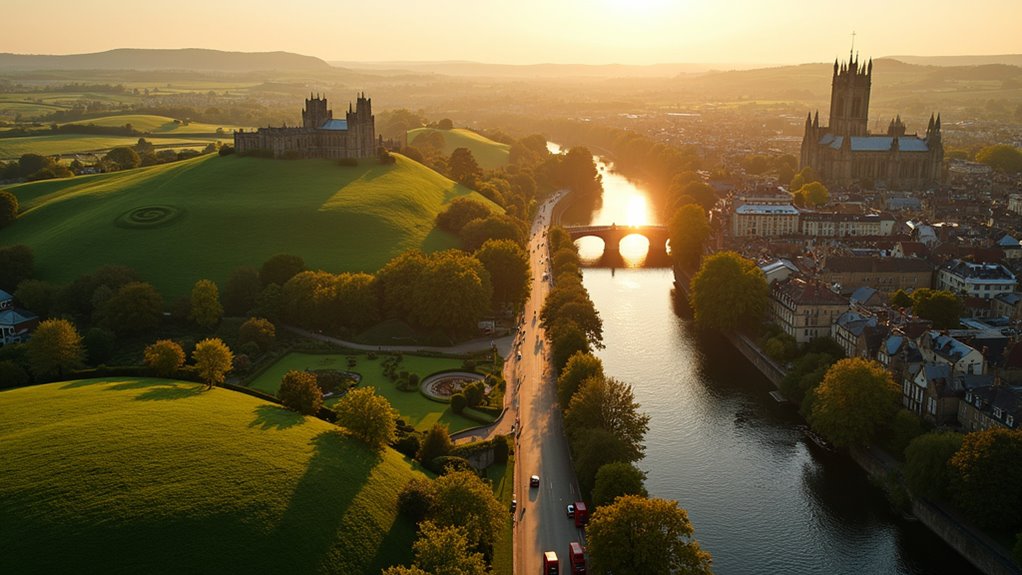
You’ll find England packed with experiences that span centuries—from ancient stone circles to cutting-edge botanical domes. Whether you’re drawn to royal palaces, world-class museums, or dramatic coastlines, this country delivers memorable moments at every turn. The challenge isn’t finding something to do; it’s choosing from an overwhelming array of options that could easily fill weeks of exploration. Here’s where to start when you want to make the most of your time.
- Explore the British Museum’s Ancient Treasures for Free
- Take the Train to Windsor Castle and Great Park
- Climb the Tower of London for Crown Jewels and History
- Wander Through Kew Gardens’ Botanical Wonderland
- Stand Among the Mysterious Stones at Stonehenge
- Experience Shakespeare’s Globe Theatre in London
- Discover Cornwall’s Dramatic Coastline and Seaside Towns
- Hike the Lake District’s Fells and Valleys
- Tour Hampton Court Palace’s Tudor Splendor
- Visit the Tate Modern for World-Class Contemporary Art
- Explore the Eden Project’s Futuristic Biomes in Cornwall
- Walk Through St Paul’s Cathedral and Climb the Dome
- Experience Manchester’s Industrial Heritage and Museums
- Discover Hidden Gems in Yorkshire’s Historic Towns
- The Sum Up
Explore the British Museum’s Ancient Treasures for Free

When you step into the British Museum, you’re entering one of the world’s greatest treasure troves—and it won’t cost you a penny. You’ll discover iconic artifacts like the Rosetta Stone in Room 4, which revealed the secrets of Egyptian hieroglyphics.
Don’t miss the 3,300-year-old mummy of Katebet in Room 63, showcasing ancient burial practices.
Head to Room 33a for intricate Indian temple sculptures from Amaravati, or explore Room 40’s medieval Lewis Chessmen carved from walrus ivory. The museum’s nearly 1,000 employees include curators, researchers, and conservators who ensure these precious artifacts are expertly maintained and presented.
The museum houses the world’s largest Chinese collection outside Asia, plus fascinating African artifacts including a 600-year-old brass king’s head.
With interactive displays and over 100,000 Egyptian objects alone, you’ll need multiple visits to appreciate this incredible collection fully.
Take the Train to Windsor Castle and Great Park
After exploring London’s museum treasures, you’ll want to venture beyond the capital to discover England’s royal heritage. Take a train from London Paddington or Waterloo to Windsor Castle—it’s just 30-60 minutes away with frequent services.
You’ll arrive at the world’s oldest inhabited castle, where you can tour the State Apartments filled with masterpieces by Rembrandt and Rubens. Don’t miss St George’s Chapel‘s stunning Gothic architecture or the Changing of the Guard ceremony.
Extend your visit to Windsor Great Park‘s 4,800 acres. Walk the tree-lined Long Walk connecting the castle to Snow Hill, spot free-roaming red deer, or explore Virginia Water’s artificial lake with Roman ruins. The entire estate operates as a working royal estate that has functioned continuously for over 1,000 years since its Norman origins. The Savill Garden offers beautiful ornamental landscapes, while numerous trails accommodate walking and cycling.
Climb the Tower of London for Crown Jewels and History
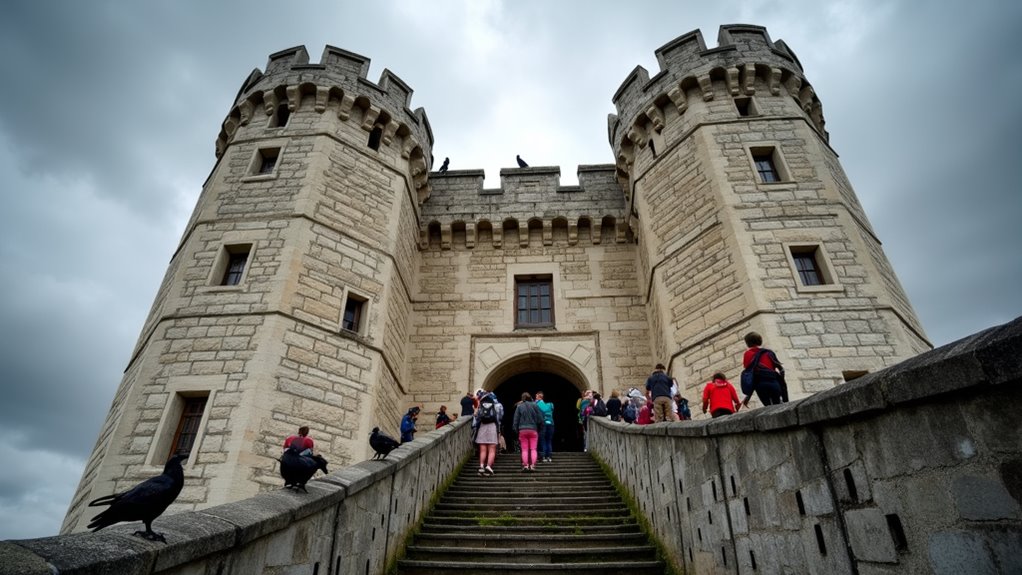
No single attraction in England combines nearly 1,000 years of royal drama, priceless treasures, and medieval fortress architecture quite like the Tower of London. You’ll explore where Anne Boleyn and Guy Fawkes were imprisoned while marveling at the Crown Jewels’ 23,578 gemstones, including the world’s largest clear-cut diamond, the Cullinan I.
Don’t miss the Yeoman Warder tours—these “Beefeaters” deliver enthralling historical narratives that bring the fortress to life. You can also explore at your own pace with audio guides through the Medieval Palace, Bloody Tower, and Ravens’ enclosure.
As England’s most visited paid attraction with 3 million annual visitors, you’ll want to book ahead. The Tower has maintained its position as the top visited heritage site in England both before and after the pandemic. Note that some areas may have limited access in 2025 due to ongoing conservation efforts.
Wander Through Kew Gardens’ Botanical Wonderland
Where else can you walk among 27,000 living plant species while exploring 40 historic buildings across 326 acres of UNESCO World Heritage landscape? Kew Gardens delivers an unmatched botanical experience that’s captivated over 2.27 million visitors annually, making it England’s 12th most popular attraction.
You’ll discover extraordinary glasshouses like the iconic Palm House and Temperate House, each showcasing rare and endangered species from around the globe. Treetop walkways offer unique perspectives while art installations and seasonal exhibitions enhance your journey through specialized garden zones. Despite external roadworks affecting access to some botanical destinations, Kew continues to provide seamless visitor experiences.
The gardens aren’t just beautiful—they’re scientifically significant. With 8.3 million herbarium specimens and 300+ scientists conducting indispensable conservation research, you’re experiencing a living laboratory that’s influenced agriculture, medicine, and environmental policy worldwide since 1759.
Stand Among the Mysterious Stones at Stonehenge
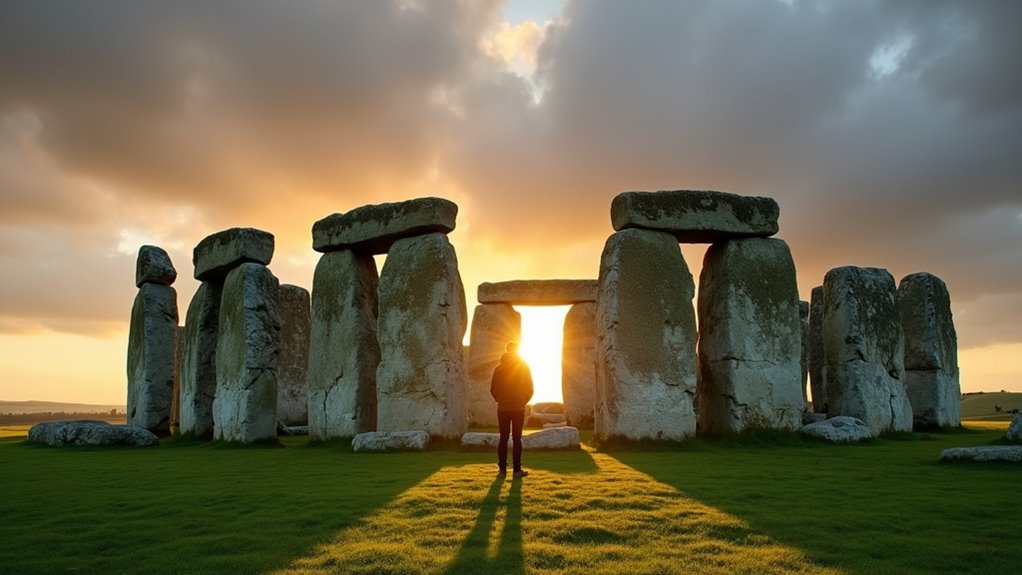
From botanical wonders to ancient mysteries, England’s most iconic prehistoric monument awaits your discovery. Standing among Stonehenge’s massive sarsen stones—each weighing up to 25 tons—you’ll witness humanity’s remarkable prehistoric achievement. These towering monuments, alongside smaller bluestones transported 225 kilometers from Wales, create an unforgettable experience on Salisbury Plain.
You’re exploring a site that’s evolved over 1,500 years, from 3000 BCE to 1520 BCE. Archaeological evidence reveals this wasn’t just a stone circle—it served as Britain’s largest prehistoric burial ground, where 150-200 individuals found their final rest.
During peak periods, up to 4,000 people gathered here for seasonal festivals. The site’s alignment with solstices demonstrates its importance for ancient astronomical observations and seasonal ceremonies.
The surrounding landscape holds equal fascination, with over 1,300 related prehistoric monuments within the World Heritage Site, making your visit a journey through ancient Britain’s spiritual heart.
Experience Shakespeare’s Globe Theatre in London
Step into the world’s most famous theatre and you’ll find yourself where Shakespeare’s greatest works first came to life. The Globe Theatre’s faithful 1997 reconstruction brings you as close as possible to experiencing Elizabethan drama as audiences did 400 years ago.
You can catch authentic Shakespearean performances in this open-air amphitheater, where you’ll either sit in covered galleries or stand as a “groundling” in the yard near the stage. The theatre maintains historical accuracy with its timber frame construction and thatched roof, though modern safety standards keep you protected.
Beyond performances, you’ll discover guided tours and educational programs that reveal the theatre’s fascinating history. Shakespeare himself was a shareholder here, making this venue central to his legendary career and the development of English drama. The original theatre met its dramatic end when it burned down during a performance of Henry VIII in 1613 after a theatrical cannon misfired.
Discover Cornwall’s Dramatic Coastline and Seaside Towns
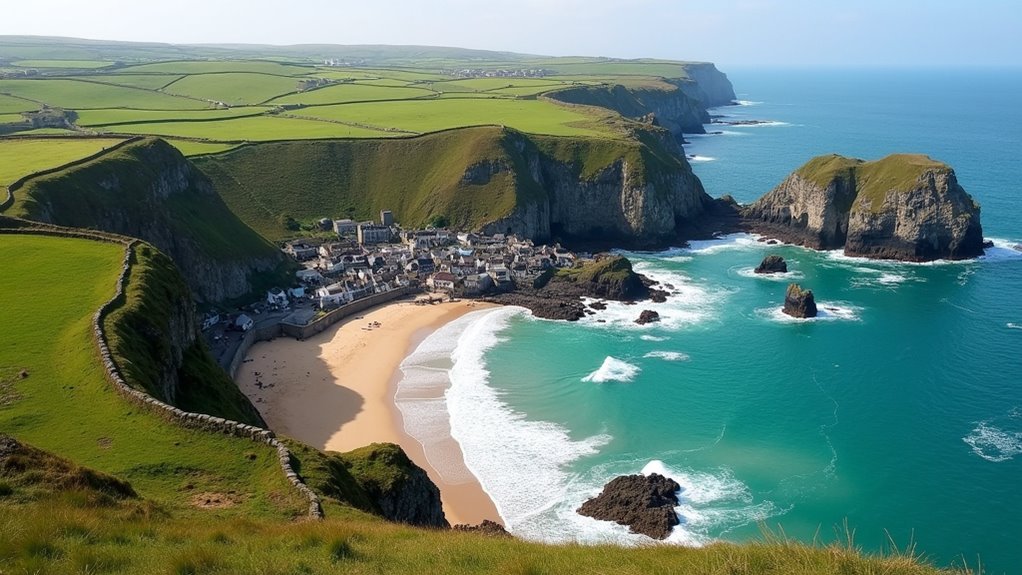
Cornwall’s southwestern coast delivers some of England’s most spectacular scenery, where ancient granite cliffs plunge into turquoise waters that rival the Mediterranean. You’ll discover dramatic highlights like Kynance Cove’s serpentine rock formations and Bedruthan Steps’ iconic sea stacks. Land’s End offers rugged clifftop views as England’s most westerly point.
Explore charming seaside towns with distinct personalities. St Ives combines fishing heritage with sandy beaches and thriving art galleries, while Newquay serves as Cornwall’s surfing capital centered around Fistral Beach. For quieter experiences, visit picturesque Polperro with its smuggling museum or St Agnes for uncrowded coastal beauty. The mystical St Michael’s Mount rises from Mounts Bay as a tidal island castle connected to Marazion by a causeway at low tide.
Family-friendly beaches like Watergate Bay and Porthcurno provide golden sands and clear waters. The South West Coast Path connects these treasures, offering spectacular walking routes between hidden coves and historic landmarks.
Hike the Lake District’s Fells and Valleys
The Lake District’s 214 fells and mountain valleys offer England’s premier hiking destination, where dramatic peaks rise from pristine lakes and ancient stone paths wind through landscapes that inspired generations of poets and adventurers.
You’ll find everything from gentle valley strolls to challenging summit scrambles across thousands of miles of footpaths.
Tackle iconic peaks like Scafell Pike, England’s highest mountain, or try the famous Striding Edge on Helvellyn for serious adventure.
For easier options, Catbells offers stunning Derwentwater views without extreme difficulty.
Pack layers and waterproofs—expect 200 rainy days annually and summit conditions that demand winter gear year-round.
Start early before 9 AM to secure parking and avoid crowds. Many routes are wheelchair accessible, including scenic walks around Tarn Hows, Friars Crag, and Buttermere Lake that showcase the region’s beauty without requiring mountain fitness.
Bring coins for car parks and download offline maps alongside traditional Ordnance Survey charts for reliable navigation.
Tour Hampton Court Palace’s Tudor Splendor
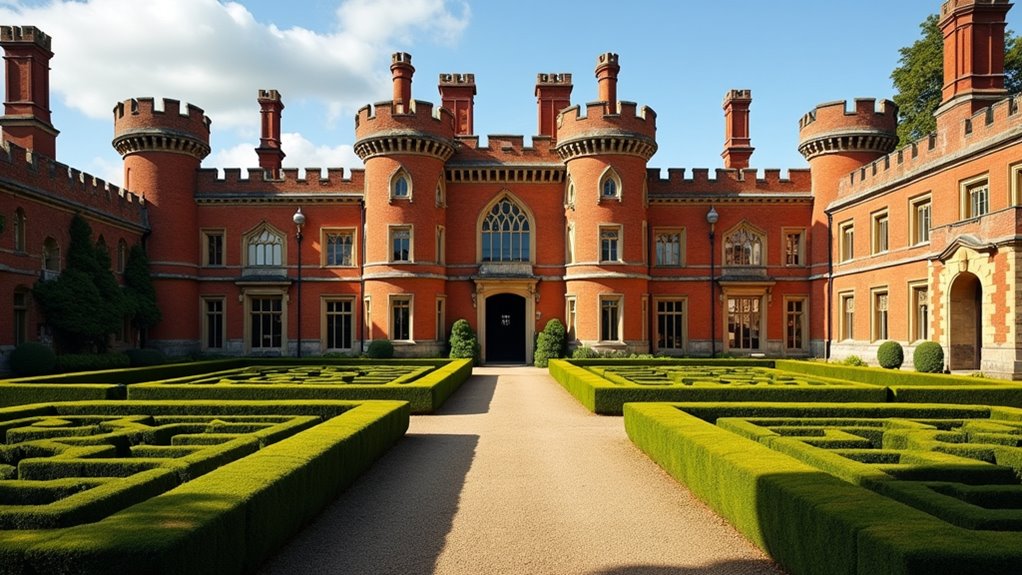
Where else can you walk through the actual halls where Henry VIII courted his six wives and held court in England’s most magnificent Tudor palace? Hampton Court Palace offers you an unparalleled glimpse into Tudor royal life, from Cardinal Wolsey’s original 1514 creation to Henry VIII’s extensive additions.
You’ll marvel at the Great Hall’s carved hammerbeam roof, the last medieval great hall built for an English monarch. Don’t miss the Chapel Royal‘s vaulted ceiling with Tudor pendants, where Edward VI was christened in 1537. Located 19 km east of London along the River Thames, the palace provides easy access for day trips from the capital.
Explore the Tudor kitchens that fed Henry’s massive court and play tennis on one of the world’s oldest surviving courts.
The palace gardens feature Henry VIII’s original layout, including the famous Maze and Great Vine, perfect for completing your royal experience.
Visit the Tate Modern for World-Class Contemporary Art
Housed in a former power station on London’s South Bank, Tate Modern stands as the world’s premier destination for contemporary art, drawing over 4.6 million visitors annually who come to experience groundbreaking exhibitions and iconic masterpieces.
You’ll discover works by renowned artists like Andy Warhol and Salvador Dalí alongside emerging contemporary talents. The museum’s strategic programming blends established and cutting-edge art, maintaining its global reputation since 2014.
Take advantage of extended weekend hours until 9 PM for a more accessible visit. The gallery has shown remarkable post-pandemic recovery, ranking as the UK’s fourth most visited attraction.
If you’re between 16-25, join the free Tate Collective membership—it’s the world’s largest arts youth program with over 180,000 members. The gallery’s diverse programming includes performances, talks, and workshops, making it an essential cultural experience that attracts young visitors who comprised 70% of attendees during special events.
Explore the Eden Project’s Futuristic Biomes in Cornwall
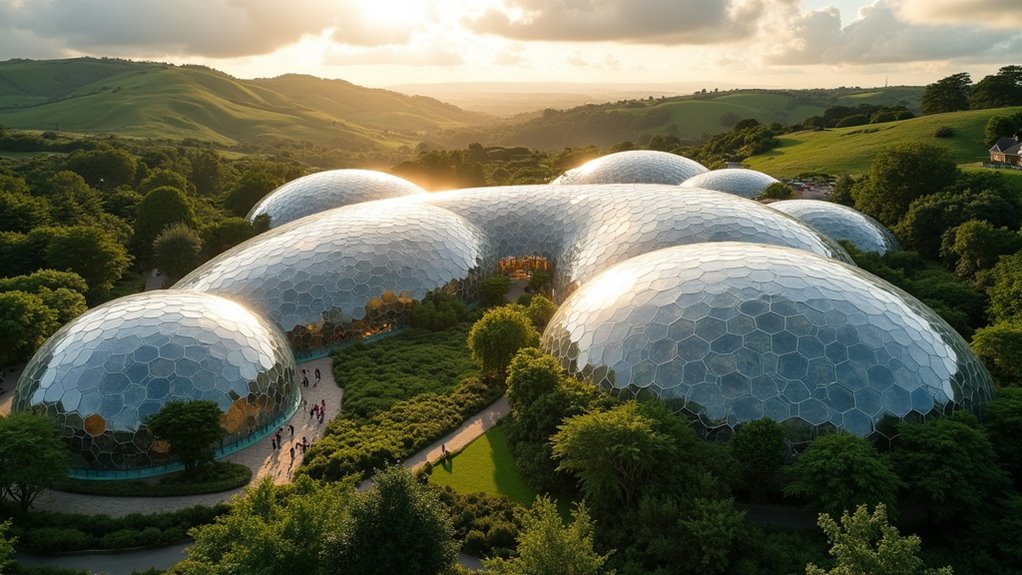
Rising dramatically from a reclaimed china clay pit in Cornwall, Eden Project’s futuristic biomes create an otherworldly landscape where you’ll journey through diverse ecosystems under massive transparent domes.
You’ll explore the world’s largest indoor rainforest, walking along a 50-meter canopy walkway above tropical plants including cacao, coffee, and giant bamboo. The Mediterranean Biome transports you through olive groves and citrus trees from warm climates worldwide.
Plan at least three hours to wander the 30-acre site’s outdoor gardens featuring over 3,000 plant species and interactive sculptures. You’ll find cafes, guided tours, and family-friendly activities throughout. The educational hub called The Core features exhibits on sustainability and climate change beneath its distinctive sunflower-shaped roof.
Remember to bring sun protection since the UV-transmitting dome materials require it. This educational charity promotes sustainability while offering an unforgettable botanical adventure.
Walk Through St Paul’s Cathedral and Climb the Dome
Towering 111 meters above London’s skyline, St Paul’s Cathedral’s magnificent dome offers you an unforgettable journey through 523 steps and three spectacular galleries.
You’ll start at the Whispering Gallery, 30 meters up, where whispers mysteriously carry across the dome’s interior. The moderate climb rewards you with stunning views of the cathedral’s ornate interior.
Continue to the Stone Gallery at 53 meters for your first outdoor panorama of London, though the narrow, steep stairs can feel dizzying.
The Golden Gallery sits at 85 meters, providing the highest viewpoint with breathtaking city views. The entire dome structure weighs an impressive 65,000 tonnes, making it one of the world’s most substantial cathedral domes.
Remember, you can’t turn back once you’ve started climbing certain sections, so consider your comfort with heights.
Allow two hours for the complete experience, including exploring Sir Christopher Wren’s architectural masterpiece below.
Experience Manchester’s Industrial Heritage and Museums
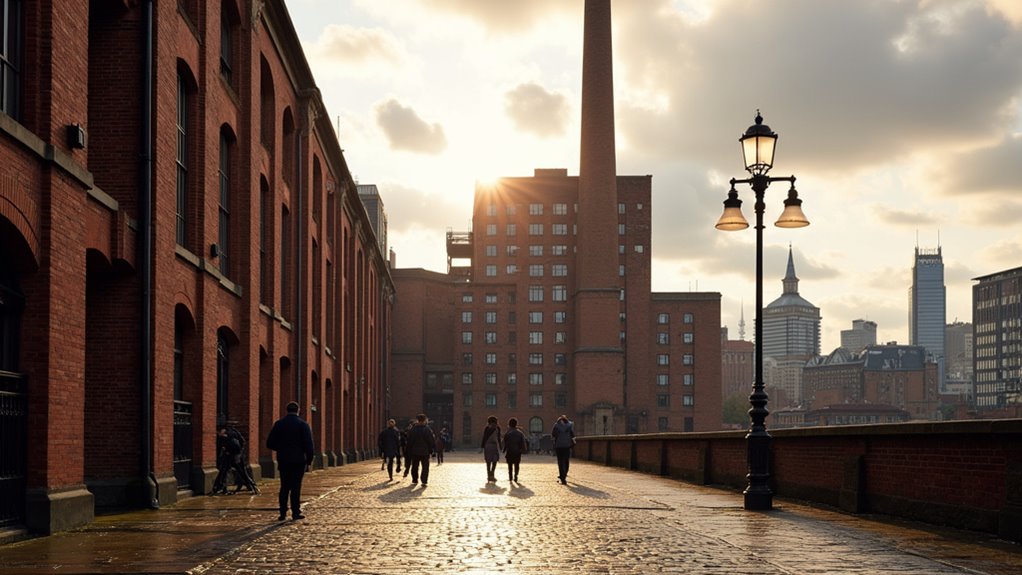
While London showcases England’s royal and religious grandeur, Manchester tells the grittier story of the Industrial Revolution that transformed the modern world. You’ll discover this fascinating heritage at the Science and Industry Museum, built on the world’s first passenger railway station site from 1830. Here, you can explore working steam engines, locomotives, and textile machinery that powered global change.
Don’t miss walking through Ancoats, once the “workshop of the world,” where cotton mills and workers’ housing reveal industrial life’s reality. Visit Castlefield to see Roman ruins alongside the pioneering Bridgewater Canal, and explore Trafford Park, the world’s first planned industrial estate. The museum also houses a replica of the Manchester Baby, one of the earliest computers, highlighting the city’s continued role in technological innovation. These sites showcase how Manchester’s innovations in mechanized cotton production, steam power, and transportation networks launched the modern industrial age.
Discover Hidden Gems in Yorkshire’s Historic Towns
Beyond Yorkshire’s famous attractions lies a treasure trove of medieval villages, Norman castles, and historic market towns that reveal England’s authentic past. You’ll find Selby Abbey, a Norman monastery from 1069 featuring the Washington Window that inspired America’s flag. Explore Wharram Percy’s abandoned medieval village ruins, accessible via a one-mile walk that transports you to life before 1500.
Don’t miss Pateley Bridge’s world’s oldest sweet shop, operating since 1827 in a 1661 building. Knaresborough offers spectacular railway viaducts and Mother Shipton’s Cave, England’s oldest tourist attraction.
For coastal charm, visit Robin Hood’s Bay with its distinctive terracotta roofs and Staithes‘ cobbled streets. The charming village of Hovingham features beautiful houses and a village beck flowing through its center. Each destination provides authentic glimpses into Yorkshire’s rich heritage without overwhelming crowds.
The Sum Up
You’ve got an incredible country to explore right at your fingertips. Whether you’re drawn to London’s world-class museums, ancient mysteries like Stonehenge, or the rugged beauty of Yorkshire’s countryside, England delivers unforgettable experiences at every turn. Don’t try to see everything at once—pick a few destinations that spark your curiosity and dive deep. You’ll discover that England’s real magic lies in those unexpected moments between the must-see attractions.